Category Archives: Other kinds of Loss

Yellow (Day 28 of NaPoWriMo)

Day 28 The prompt today was to write a poem about a color.

Yellow

You were so red, so white.
So much of you was blue.
Yellow is what I missed in you—
that brilliant optimism—
that power of the sun.
There was that black in you
that cancelled it out.
You were the artist who understood color the most.
That color created by the union of yellow and black, you knew.

Your white hair, confined in a pony tail
or streaming down your back
in your wild man look
prompted strangers to ask
if you were a shaman,
or declare you to be one.

That red that flamed out from your work,
subtly put there even in places where it had no
logical purpose for being.
That red tried to make things right.

All of us who knew you
knew the blue.
It was the background color of all of your days.
It was the blanket in which we wrapped ourselves at night,
trying to be close,
but always always divided
by blue.

For fifteen years,
I believed that one day I’d bring you to yellow.
There were splashes of it, surely,
throughout our lives together.
You on the stage, reading your heart,
me in the audience, recognizing
all the colors from within you—even yellow.

Finding the pictures you had taken of me
at the art show, looking at your work—
those pictures taken even before we ever met.
I discovered, after you’d passed,
that you had recognized
me even then, when I thought
I was the only one
angling for a meeting—
sure of my need to know those secret parts of you
that I will never know
now that you have given yourself
to the black
or blue
or red
or even to the white.

Whatever your ever after
has delivered you to.

A new life later,
I am suffused
by my own canvas
of memories of you—
every other pigment
splashed against
a vivid background
of yellow.

“Escape” Day 16 of NaPoWriMo

NaPoWriMo Day 16 Prompt: Write a “translation” of a poem written in a language you don’t actually know . . . (and try not to peek too much at the translation). Now, use the sound and shape of the words and lines to guide you, without worrying too much about whether your translation makes sense. (In my case, I didn’t look at all at the translation until after I’d written my poem. I wrote a translation of each line according to my intuition, then edited, trying to stay close to the original thread of the idea. My original was in Italian—a language I do not know.) Since I speak a bit of Spanish, there were three or four words whose meaning I could guess at, even though most of these guesses were found to be incorrect; nonetheless, they sped me on my way. I love getting to the part of my mind where something other than myself guides me, even though I hold the reins all the way–especially during the editing.

The poem I chose:

SPIAGGIA SETTEMBRE DEL ’64,  by Gabriele Frasca  (Link to that poem and its translation.)

The poem I wrote:

ESCAPE

Your life catches in its static house.
Nothing but the lightest footfall betrays its presence.
The door to the greatest house of all, the ocean’s edge,
tempts you to leave yourself and enter.
This echo of the ocean is the dove in you
that carries the message that you want to fly.
Motionless dove, I want to ride on your back
to the crack of sunrise—to its flower.
Forget your lone compulsions.
Leave your comfort.
Desert the logic that has frozen you.
If you could let this sick time pass,
you might grow less diverted as your distance from it grows.
Time’s ricochet might drive you to the canyon’s rim,
revealing to you that you no longer want to fall.
The stress of guilt slows down and if you choose to let it, falls behind.
Time will devour your past no matter how grand its scale––
revoke the sentence and set the guilty free.
You will pass and repass it on your round journey,
until your father, his wife, and your recalcitrance
finally wear away.

April 16, 2013, Judy Dykstra-Brown

Three Pantuns (Day 15 of NaPoWriMo)

Today’s assignment was the pantun, which consists of rhymed quatrains (abab), with 8-12 syllables per line. The first two lines of each quatrain aren’t meant to have a formal, logical link to the second two lines, although the two halves of each quatrain are supposed to have an imaginative or imagistic connection.

Here are three I dashed off quickly in an hour, after a too-busy day. It would be nice if there were room for poetry in every day, unfortunately that is not always so. NaPoWriMo gives us that additional shove to make some time for it, even if that time is very short.

She grows exasperated with his love.
See how his fingertips caress her face?
The hand that fits too tightly in the glove
Might chafe from the embrace of even lace.

The coat tossed idly over kitchen chair.
Inside the pocket is a diamond ring.
The branch outside the window stark and bare.
One tries in vain to pay the birds to sing.

The window that is your connection with the world,
when darkness falls, shows only you.
The author writes, his characters’ truths unfurled,
but it is he the readers view.

Confessions of a Retired Superheroine (Day 14, NaPoWriMo) (really dumb, I know, but at least I did the prompt!)

This is the prompt: “I challenge you to write a persona poem — that is, a poem in the voice of a particular person who isn’t you. But I’d like you to choose a very particular kind of person. How about a poem in the voice of a superhero (or a supervillain)?”

Confessions of a Retired Superheroine

What’s happening tomorrow?
the same thing that happens every Friday
since I was forced into retirement last year.
I’m going to go make my collections.

It will be my first day
off the diet
I’ve been on for a week––
and my leathers aren’t at all as close-fitting
as they were before,
so I deserve a small reward.

I’ve washed my hair—
Well, no surprise. I do every day.
A bit OCD on that activity,
but today I washed all of it.
Every inch.
Ears, too.

I can’t remember when I first thought
of the lucrative business
I’ve been opurrrrrrrating since my retirement;
but I do remember that tomorrow is the day
I go from door-to-door doing collections.

I usually dress in leathers,
which I look pretty good in for a mature sex-kitten.
No, not a biker chick.
I am more of a femme fatale
with a haunting and mesmerizing voice.
Everyone says it sends chills down their back–
a sort of backyard Les Mis.

My parking garage is six blocks away,
so I take a shortcut: leaping over walls,
soft-toeing it along the top edge of fences.

Sometimes I crouch in the bushes,
waiting for strangers to pass.
As I do, I sharpen my fingernails—
a weapon no one can take away from me.
Anyway, what good would a gun be
for a woman with no opposable thumbs?
Hey. Don’t feel sorry for me, okay?
I’m Puurrrrrfectly happy with my lot in life.
I’m puurrrrfect without them.

Sushi? Yes.
A trip to the beach? No.
Not unless there is raw fish involved
that I don’t have to catch myself!

I’m a night person.
I sleep for most of the day
and go out every night.

I am sexy, fit and nimble.
I fill out my leathers in all the right places.
I can jump to the ground from a rooftop,
land on my feet and be off before you see
any more of me than a shadow.
I am a thief by birth and inclination, and I
I pre”fur” my daily fare to be purrrrrrloined.

I can take swift revenge and kill mercilessly,
or curl up and enjoy
a long petting session,
as docile as you please.

Actually, I don’t know why I’m giving you this sales pitch.
I usually ignore people,
so when I actually notice them,
they are honored.

The diet? Well, low-protein, low carb and low fat.
That leaves nothing but grass, right?
And the problem with that is that everyone thinks you are sick
and so tries to trick you into a dose of this or that.
The cod liver oil isn’t bad,
but I’ve never developed a taste for Pepto Bismol.
My neighbor sneaked some into my cream a few months ago
and I gagged so hard I coughed up a hare-ball.
Just the nose and whiskers, actually, but it created a sensation, nonetheless.
I was at a party and no one was yet drunk enough
to take it in their stride.

Anyway, I’ve gotten distracted.
I’m just going to smooth my hair a bit
and then go to bed and get rested up
for tomorrow’s collections.

What kind of brilliant female was I to create a job for myself like this?

“Cat Woman Pest Disposal––You trap them, we collect them.”

I actually get paid for going from door to door,
collecting a course here and a course there.
No of course, no matter how hungry I am after my week’s fast,
I will not reward myself in my client’s presence.
I always wait until I get to my catmobile to have my first nibble.
After all, even a retired superheroine has to watch her image.

Interloper (Day 13 of NaPoWriMo)

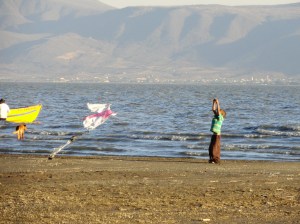
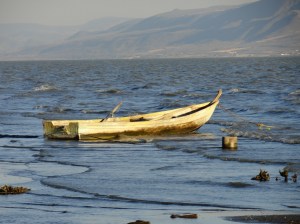
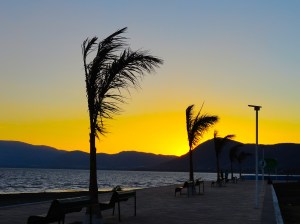
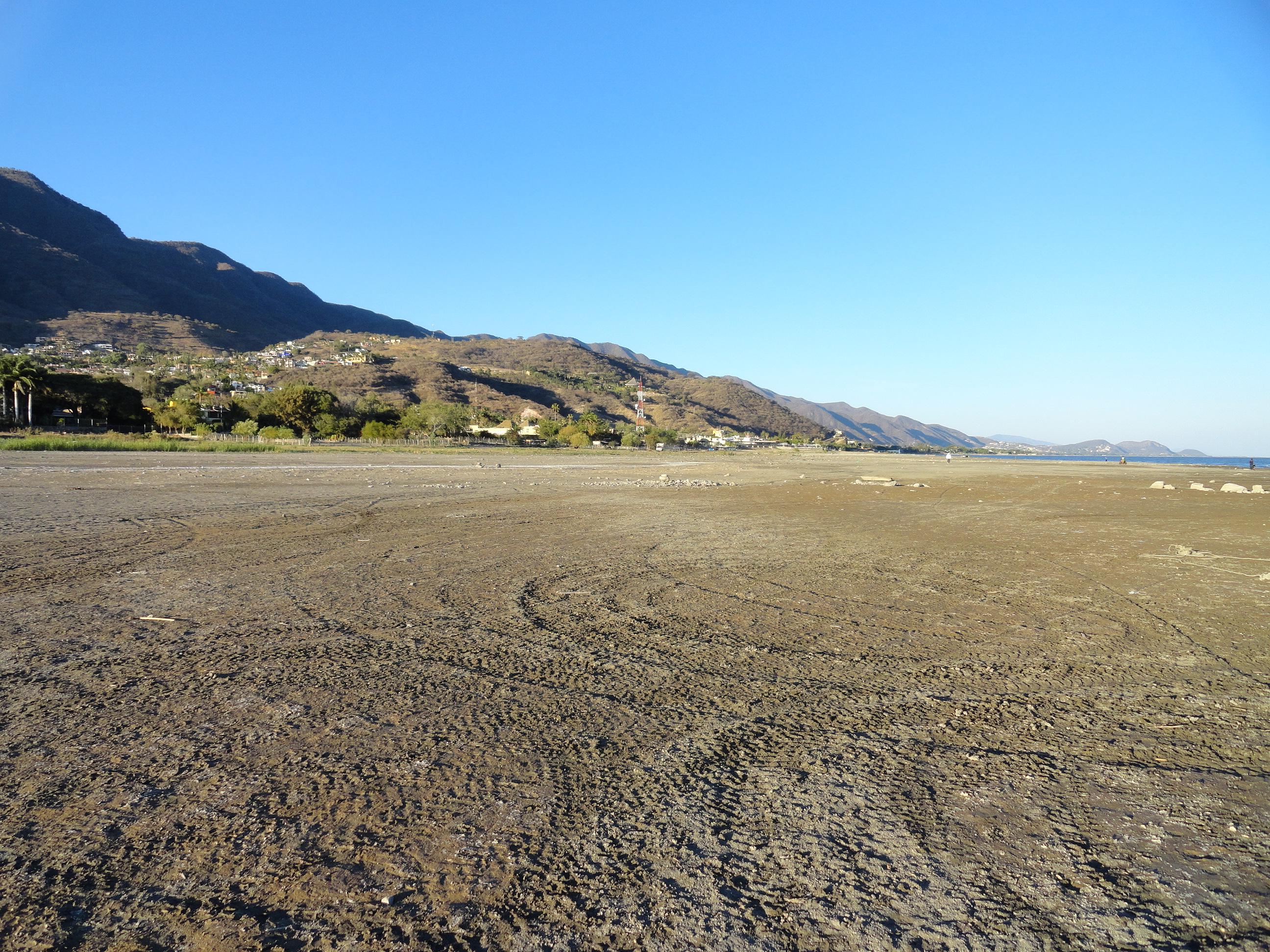
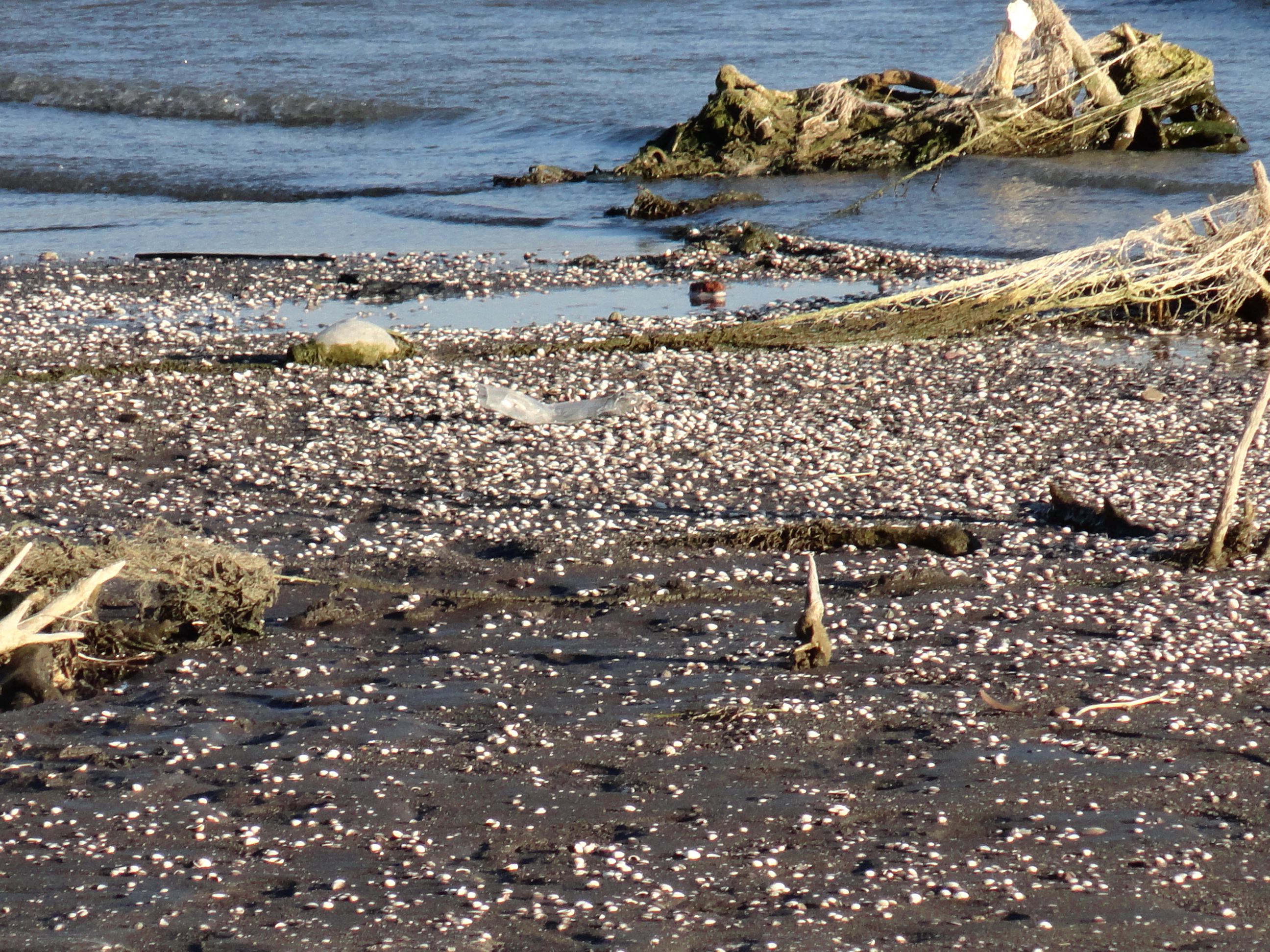
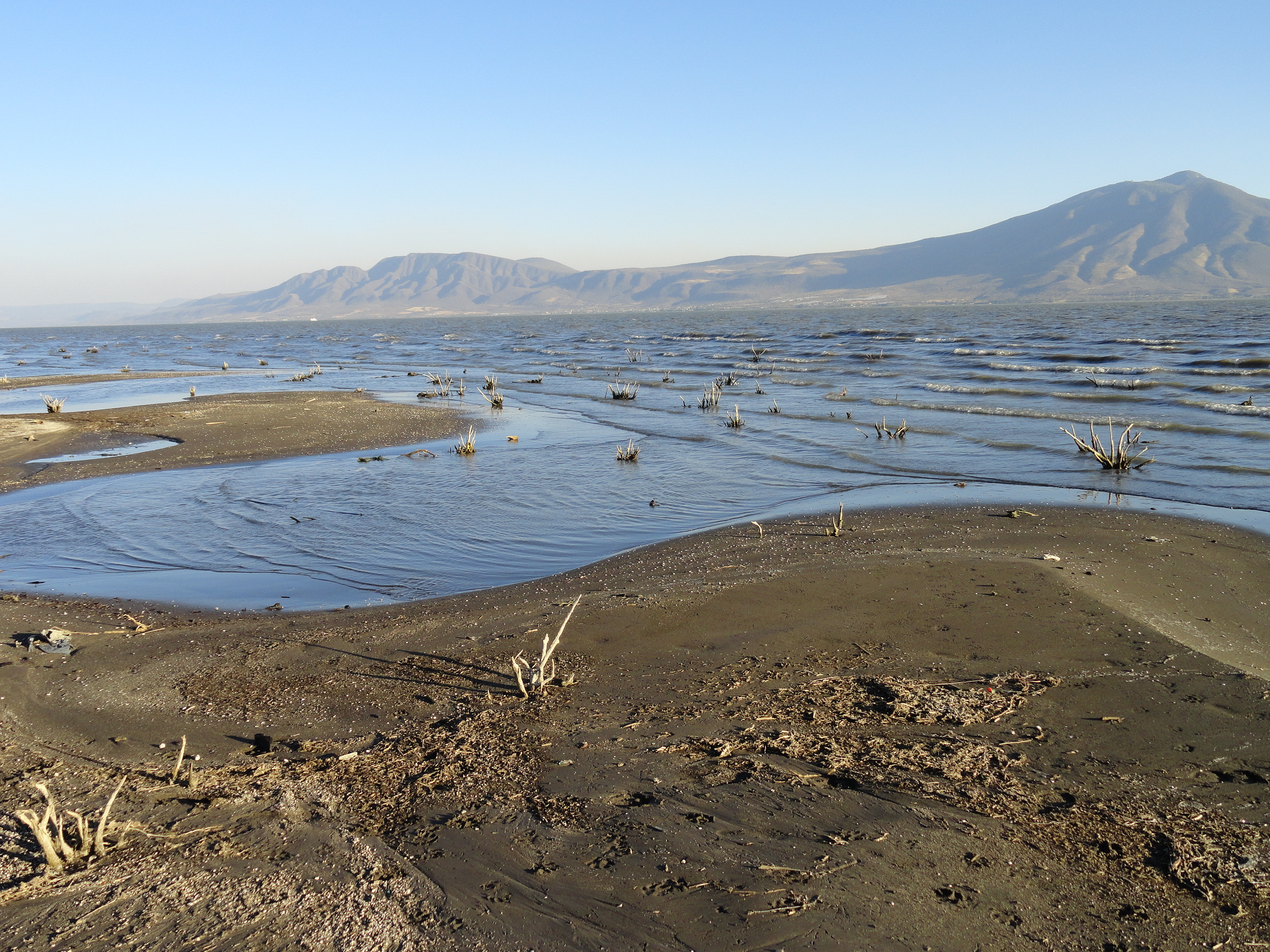
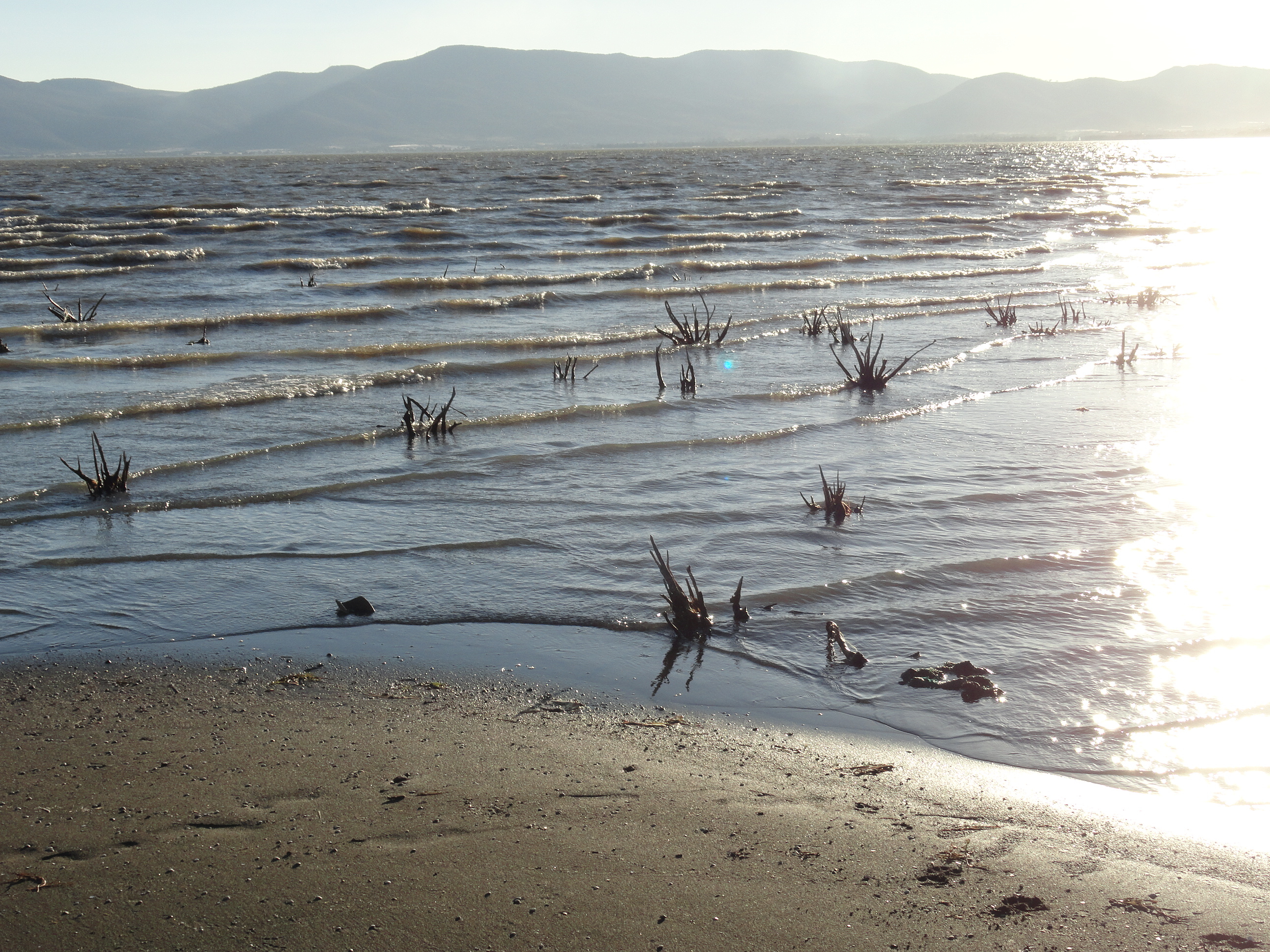
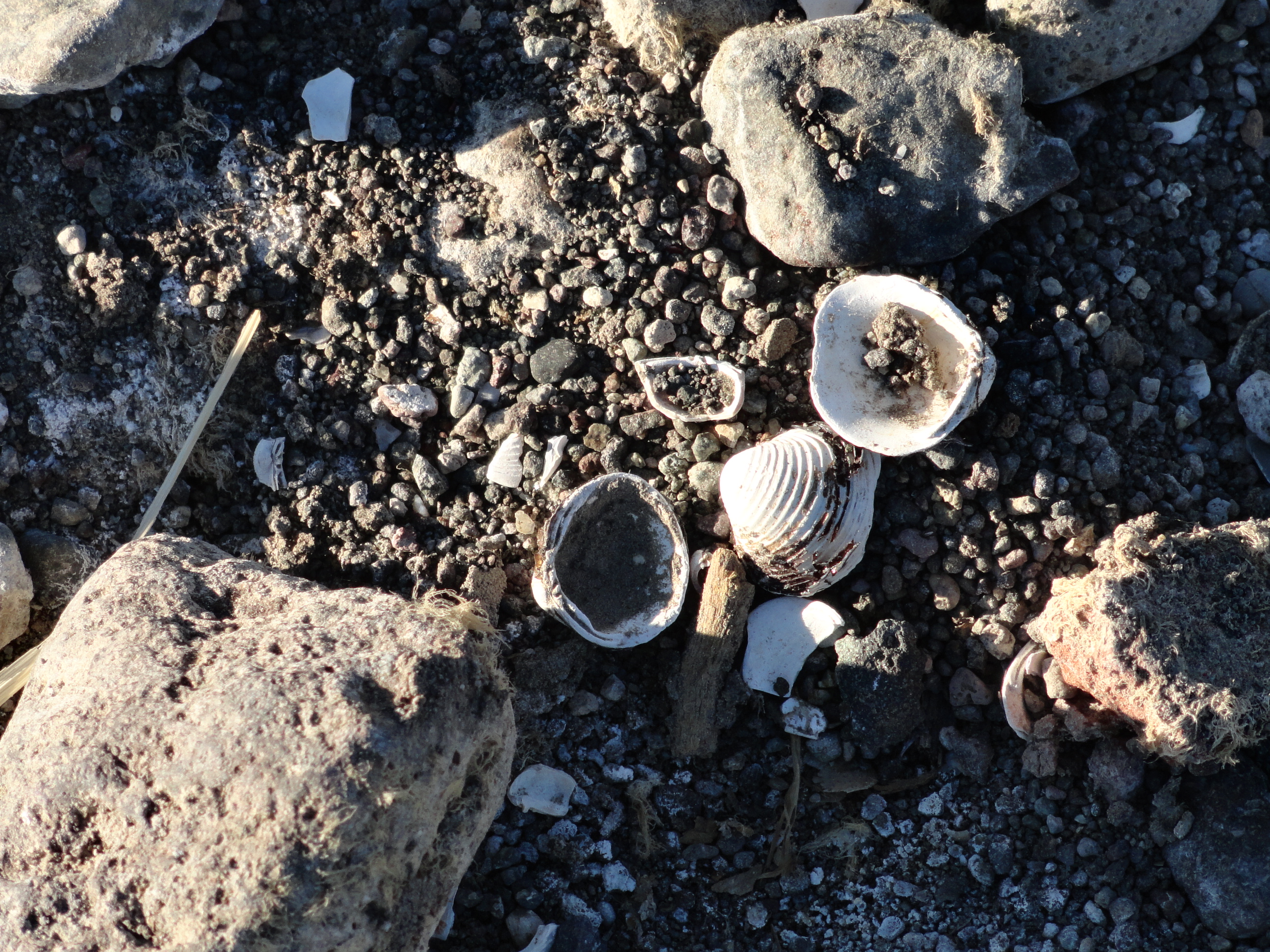
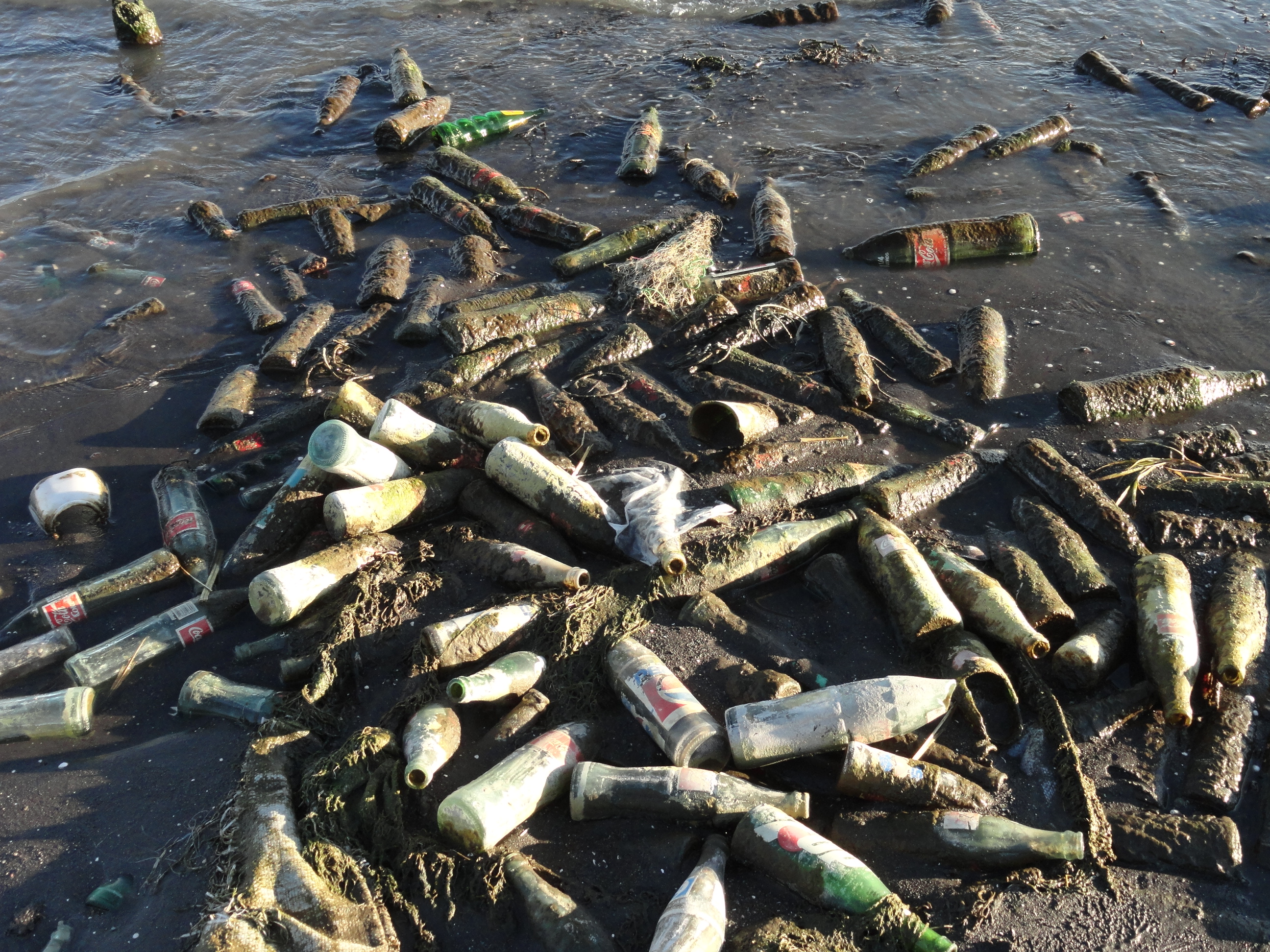
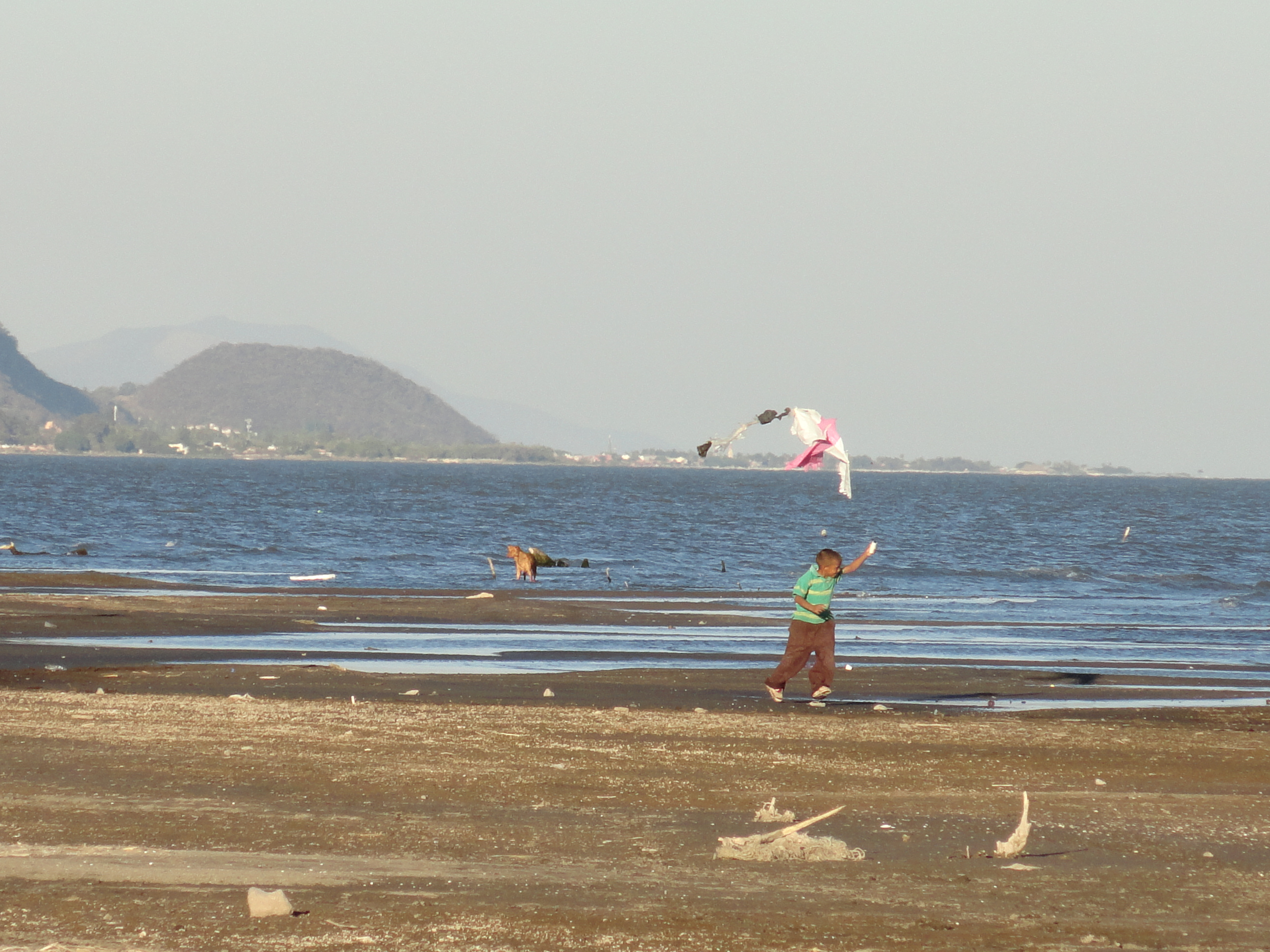
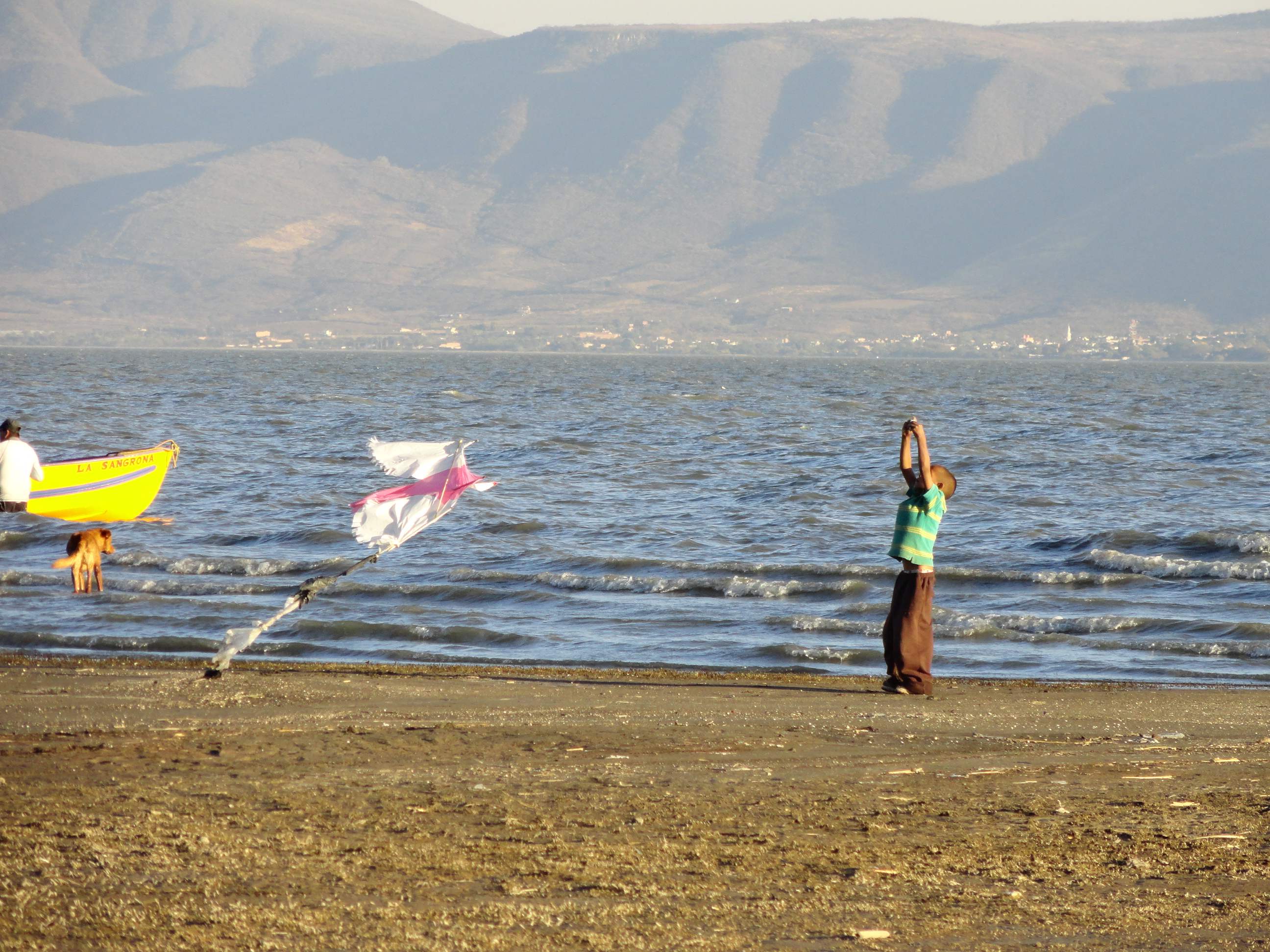
The assignment today was to take a walk and to translate that experience into a poem. It was a very busy day and I didn’t get around to taking my walk until about an hour before sunset. I finally finished my poem at around 11 PM. An hour to spare! Takes the pressure off a bit. The lady I’m talking about who spreads her skirts under the extinct volcano known as Señor Garcia is Lake Chapala, the usually beautiful lake whose shores I have lived upon for twelve years. Ringed by the Sierra Madre mountains, she reclines in the heart of Mexico, about an hour from Guadalajara. It is a view of her from Tony’s porch that graces the cover of our book. When I moved here twelve years ago, they thought the lake would be completely dried up within five years due to low rainfall and three big dams further upstream which drew off most of the water. At that time, the sixty-mile long lake had shrunk to a point where it was actually necessary to take a taxi from the Chapala pier to get out to the water! It was at this time that I started to take my daily walks on a lakebed that was once under water. This land had sprouted a new civilization of herds of horses left to wander free, cattle, burros, wild dogs, flower nurseries, fishermen’s shacks, small palapa restaurants, huge thickets of willow trees and acres and acres of tall cattails. A few years later, when the lake filled up again, all of this was lost. Of course, it was fortunate that rains and legislation concerning water usage swelled the dying lake; so although I missed my old walking ground, I did not mourn it. Unfortunately, the lake is again in dire straits. It has once again shrunk, but this time it has left a wasteland of rocks, dead tree stumps and a beach littered with fresh water shells and abandoned graveyards of soda bottles. This was the first time I’d walked in my old walking grounds and it was a somewhat depressing experience that nonetheless contained some hopeful signs toward the end. I hope to include some pictures to accompany this piece.

Interloper

If you live long enough,
what others consider history
will become your life.

Twelve years ago,
I walked for hours every day
on this dry lake bottom,
in places the lake
a mile further out
from its usual banks.

Then, five years
from its supposed extinction,
the rains came.
The floodgates
of the dams upstream
opened as well
and the lake swelled to its former girth.

My old walking trails
through the cattails
and the willows
became suffused in a watery world.
Tree tops became the perches for egrets
scant inches above the waterline,
and the lake became once more
the private property
of homes and landowners who fronted
on the water.

But now, again,
the water has retreated,
and for the first time
in eleven years,
I am again walking
on what was once lake bottom.
I see for myself how this
venerable lady
who spreads her skirts under the mountain
known as Señor Garcia,
has done so in a curtsy,
before beating a hasty retreat.

Freshwater shells pave the dry silt.
Discarded soda bottles , moss-covered and corroded,
lie in a pile as though emptied like catch from a fisherman’s net.

Coots and grackles replace the white pelicans
who have circled over in their last goodbye
like other snowbirds heading north.
Sandpipers whistle their reedy pipes,
as if to rein in the small boy
who runs with a rag of kite
streaming out behind him,
creating his own wind.

A man in red shorts wades out
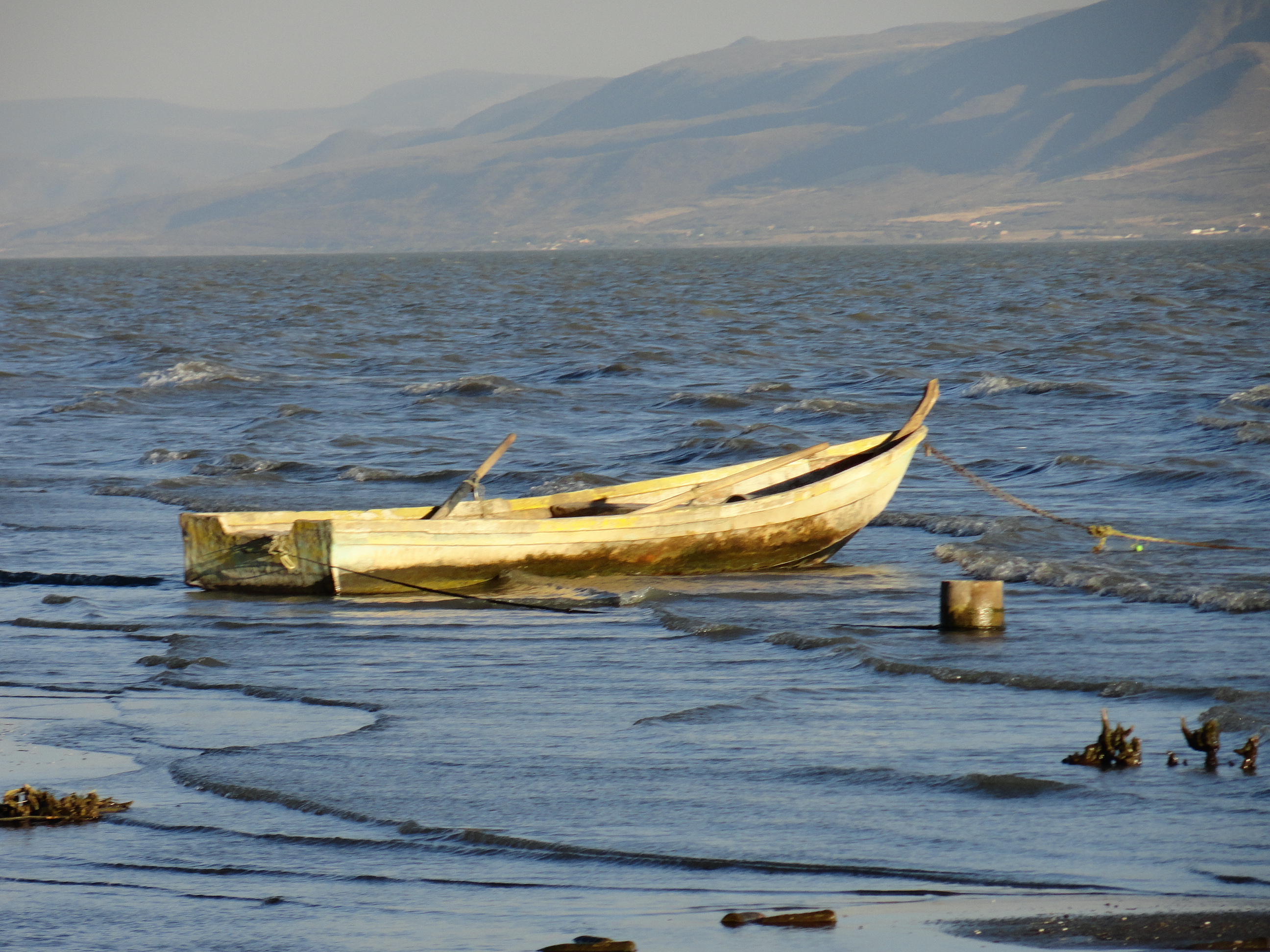
to a bright yellow boat,
lugging a five gallon gas container.

The kite pilot
and his two brothers,
as tattered as their kite,
walk past,
then circle as though I’m prey,
to sit behind me on an archipelago
of large stones
that form a Stonehenge
around the sheared-off skeletons of willows.

I wrote about these willows in their prime—
when the villagers had come to clear and burn them
eleven years ago,
not knowing they would not grow back.

What had been foremost in their prayers for years would soon happen.
The lake would rise
again to her former banks.

But now she once again
beats a hasty retreat,
leaving the stubs and skeletons
of trees revealed again.
It is a wasteland
stripped of
the life of water or of leaves.

“Rapido!” the boy in the green shirt
demands of his brother.
Their sister pulls the bones of the kite
from their plastic shroud.
Rags turn back to rags,
their flight over.

The brother in the black Wesley Snipes T Shirt
winds the coil of string as though it is valuable
and can’t be tangled or lost.

The sun is half an hour from setting.
“Be off the beach by nightfall,”
a man had warned me
as I set off for my walk.
He was a gringo,
yet still I am ready
to start back.
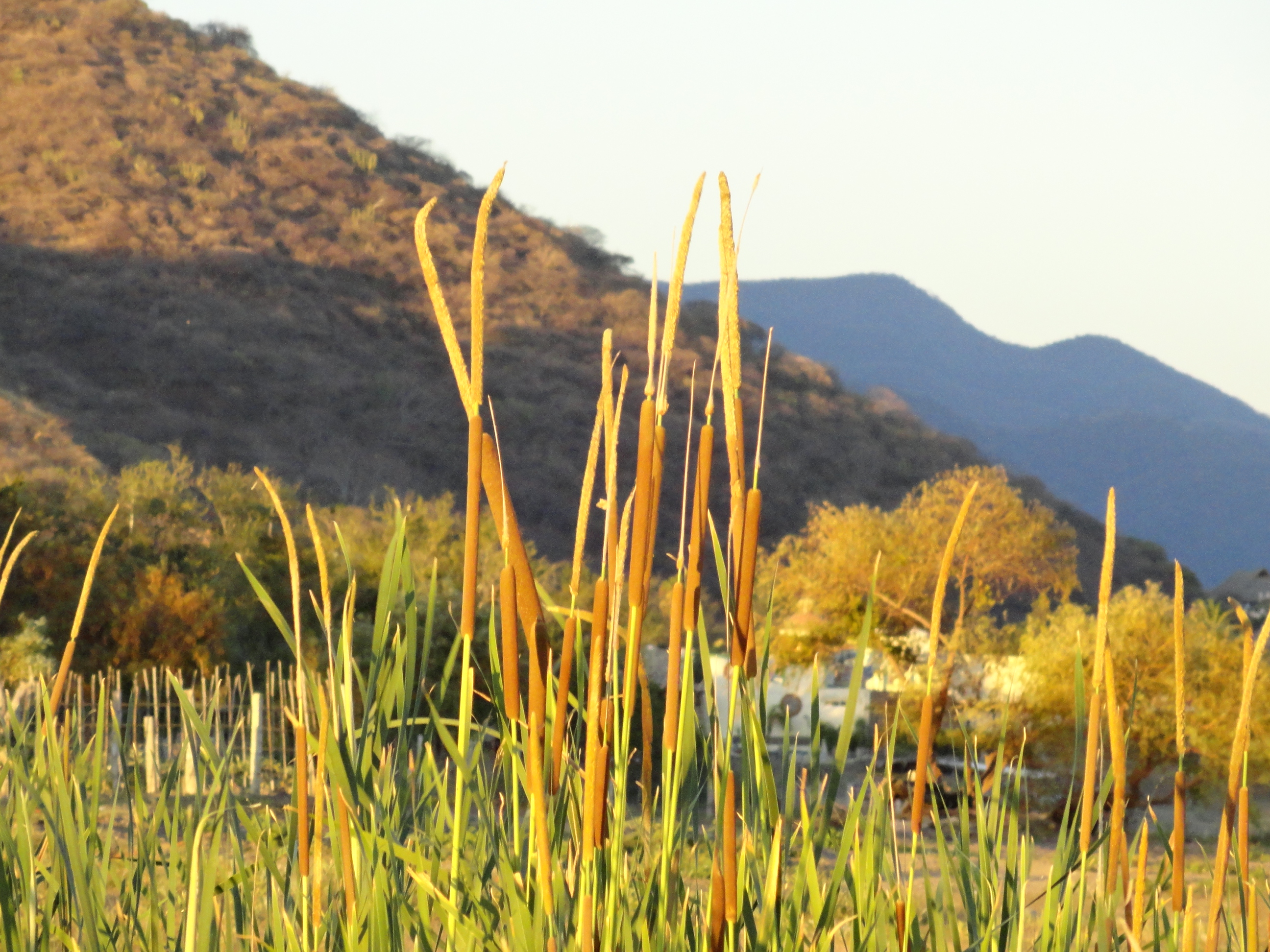
I remember the banks of blackbirds
that used to settle in clouds in the reeds—
acres and acres of cattails—
enough to get seriously lost in.
At sunset, the birds would lift in funnels
by the thousands–
a moving tornado of winged black
that moved as one.
But they are history, now.

La Sangerona—
that bright yellow boat
whose name translates
as “the annoying one”
does not disappoint.
Despite her fresh infusion of fuel,
she has to be pulled manually ashore.
She is like a princess
being towed
up the Nile.
She expends no energy
to further her own movement.

A red dog,
wet sand to his high tide mark,
settles politely in the sand beside me.
Like iron filings drawn to their pole,
the children gather closer.
They pull at the rocks
as though mining for worms—
prod at the packed sand,
casting eyes up, then away.
Curious but silent.

Now, all run away.
I am left with one grackle,
three sandpipers
and fourteen coots,
drawn out by the waves
and pushed back in,
over and over
in a lullaby.

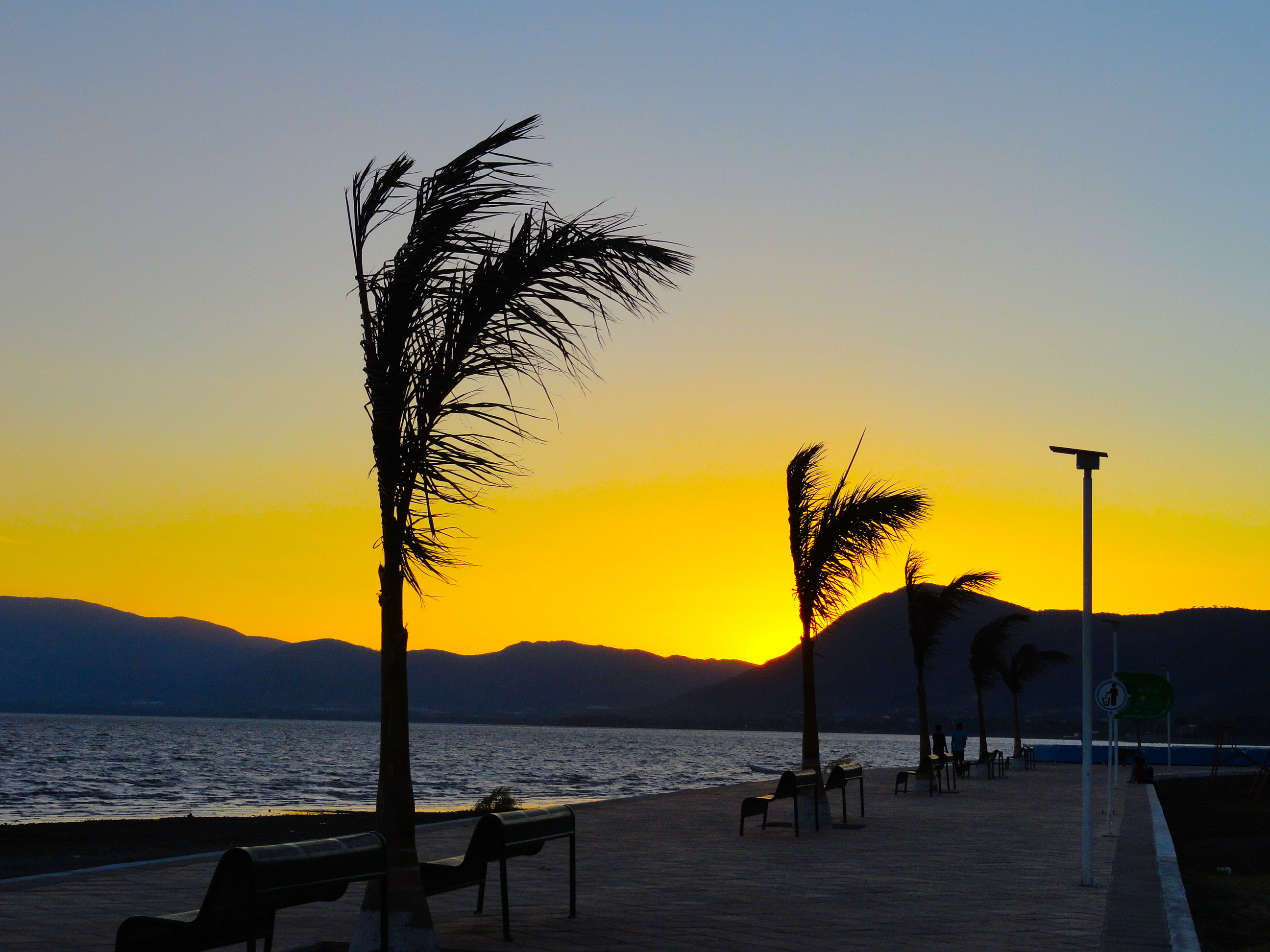
As I climb to the malecon,
the sun dissolves
into the mountains
to the west.
Shadows of palms
are blown in a singular direction,
all pointing north.
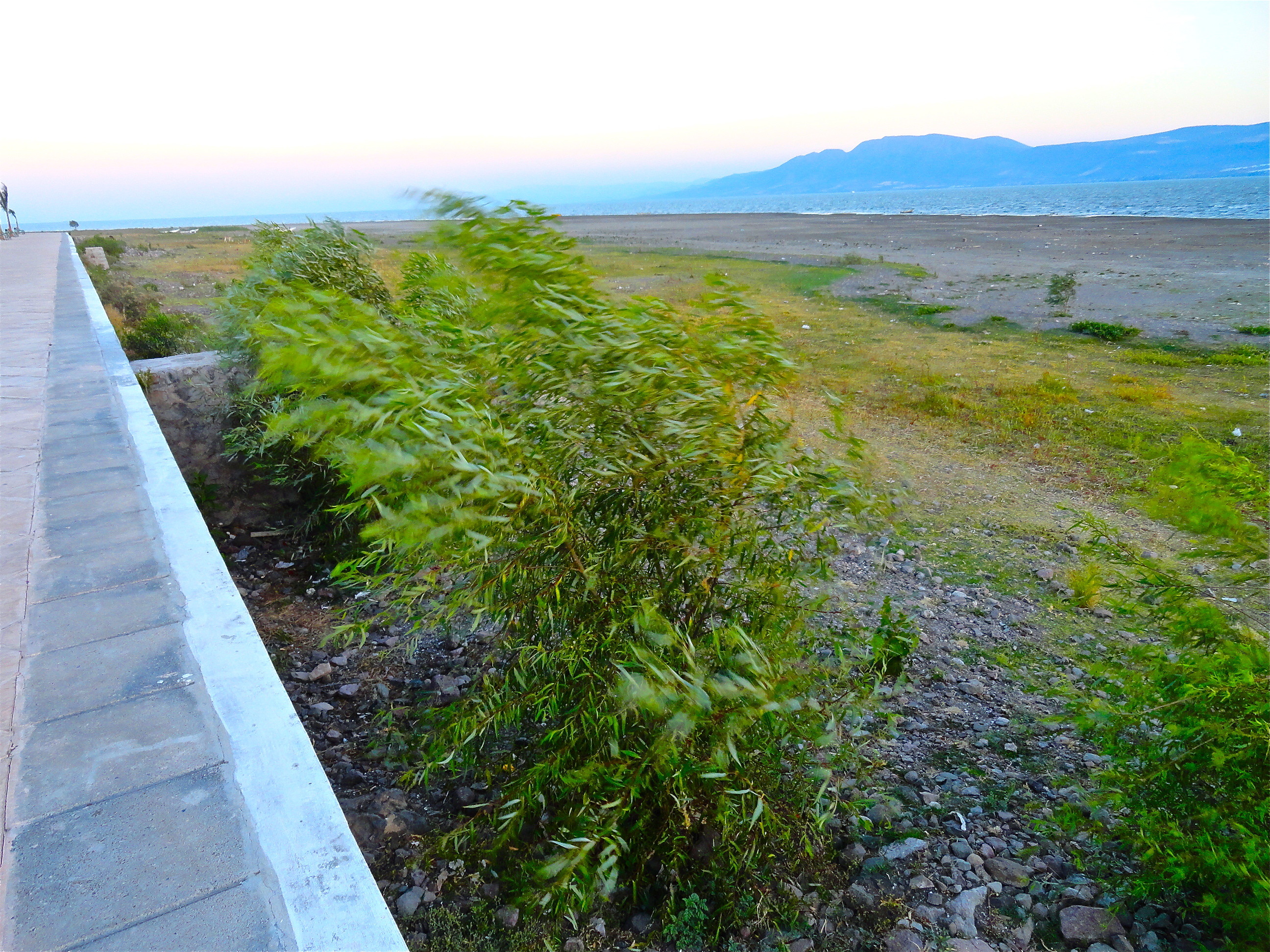
Below them,
the skirts of lesser trees,
as low as bushes
but lush in their fullness,
toss with abandon,
as though this lower wind
did not know its own direction.
I have a hunch, go closer and examine.
I am rewarded.
They are willows,
swaying to obscure
a fresh stand of cattails,
once again beginning their
long march of dominance.
The water that was interloper
is history. And I am part of it.
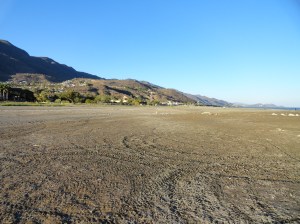
Dry lakebed.  Once again revealed

Dry lakebed. Once again revealed   (CLICK PHOTO TO ENLARGE)
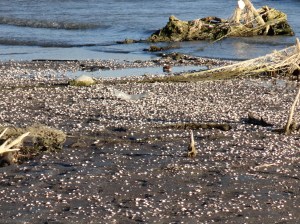
Freshwater shells revealed by retreat of lake
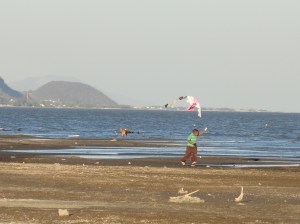

new serpentine shoreline

bones of the old willows again revealed

closeup of freshwater shells

closeup of freshwater shellsFresh catch!Fresh catch!

DSC07734Creating a breeze

DSC07741The kite flyer

DSC07719

palms point northwards in the sunset breeze
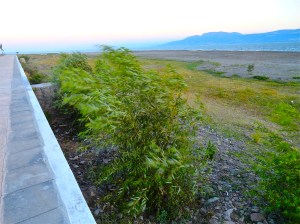
palms point northwards in the sunset breeze

The first surprise.  New willows!

The first surprise. New willows, and, below, cattails!!!
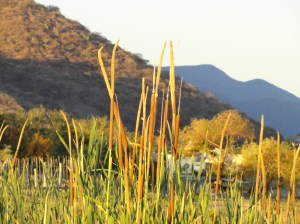
DSC07751

A lake sunset
A lake sunset

The Ways I Do Not Love You, Day 10 NaPoWriMo (Phew–with one second to spare.)

“An un-love poem isn’t a poem of hate, exactly — that might be a bit too shrill or boring. It’s more like a poem of sarcastic dislike. “

The Ways I Do Not Love You

I do not want to count the ways I do not love you.
To do so casts me too solidly in your image
without your excuses
for doing what you did:
that you were crazy-jealous,
crazy-in love, crazy-in rejection,
crazy period.

I had always wanted to be loved to distraction,
but being loved to craziness is another thing:
your deep truck tracks carving artless Nazca lines
into the fresh sod of my yard,
the new mailbox snapped off at its base,
the queries from strangers who had met you in a bar
and heard all of the intimate details
of your insane version of our love affair.
The letters to every member of the school board,
every administrator in the district, every lawyer,
every preacher in our town of 50,000,
telling of the wild schoolteacher
and outing her gay friends.

I do not want to count the ways
you proved the heartbreak
of your love for me,
those ways that now delineate
the ways I do not love you.

I do not even love the memory of you
at Vedauwoo, standing on the monolithic rock,
your sun-shy son crouched in its shade.

I do not love the memory
of driving to Jackson Hole,
the twelve-foot-high banks of snow
on either side of the highway
that made it impossible to slide off the road.
The dark, split by our headlights,
pixelated by the mesmerizing onslaught of snow;
and suddenly, the miraculous glimpse of the giant elk
arcing from the left hand snow mass, high above us, over to the bank on the other side,
leaving us spellbound and mute,
as though this was a miracle
neither of us had the words to describe.

What are you, about 21? You asked
that first night at the Ramada.
The music was starting
and I thought you were there to ask me for a dance.
When I answered 26, you smiled that crooked smile
and walked away.
That unpredictable mystery of you
was what kept me intrigued.
I never could stand the ordinary.

Not that I love the memory of this.
And not that I know how long the list would be
of why I do not love you any more.
My mind wanders through the memory of you
like a lazy woman picking chocolates:
testing one and discarding it.
Choosing another.
Finally deciding
perhaps it is the brand of chocolates
that does not suit.
Oh, my once-darling,
I despise the thought of you.
Even these intrusive memories
cannot win me back.

You told me once, “Babe, you are so good
that you don’t even realize your powers.”
You’d lost your job and most of your friends
and blamed it all on me.
Even your friends had chosen my side, you said,
blaming me when I didn’t even know there was a game,
let alone its rules or its consequences.

I do not want to number all the ways
I do not love you anymore.
Suffice it to say that once over,
love might as well have never been.
Like a snowflake on a sun-warmed sidewalk,
there is no evidence
of its ever having existed.

Better to exhaust one’s efforts on a new love,
for there is no way to list the ways you do not love.
No way to bring to light now that list
that you have never written.

That list.

That list that you keep hidden
in the back of your heart
with all of your life’s other
impossibilities.

Lost Person (Later, Gathers Her Own Reward) Day 9, NaPoWriMo

Lost Person
(Later, Gathers Her Own Reward)

She is lost in her home town.
She lives there like a tourist.
Things she sees every day
still don’t look familiar.
Everyone there finds her odd
and she goes into their houses
as though they are foreign countries.

Some of us find the world
in the places where we were born.
Some of us can find no place there at all
except in retrospect.

We write books about these lost places
as though we knew what they were all about;
as though just by living there, we understood that place.
Actually, by writing about them we visit them again
and feel as much a stranger as we did before.
That is how we can stand to write about them.
They become the exotic other lands we’ve traveled to.
Misfortune becomes the best part of the story;
and we, at last, are grateful for it.

Different types of Loss

Okay.  I’ve hinted and I’ve come right out and asked, so I’m going to use another tactic.  I would really like to hear some thoughts about types of loss other than death.  I know so many people who have moved to be nearer parents who have Alzheimer’s or who need more care.  They give up their lives, friends, houses to do so.  This is a huge loss even before the eventual loss of their parents.  Any thoughts?  I went to visit my sister who was at the stage of Alzheimer’s where it was becoming obvious to all of us that she would soon need to move into a care facility.  It was heartbreaking but also a very intimate time together with a sister who was 11 years older than me and so who had always thought of herself more as my “boss” than my sister–in my eyes, as well.  We had been a bit estranged for years, so this chance to be with her for a few weeks was both very special and very hard at times.  I’m printing a poem I wrote about the experience, hoping it will prime the pump for other peoples’ memories.  Please share them.  –Judy

I will be the first.  This is a poem I wrote while I was at my sister’s house. She is now in a managed care facility which is very hard for her.  She keeps thinking she is in a hotel or back in college or even back in our home town in South Dakota.  One thing is constant.  She keeps wanting to go home.  This was written during my last visit with her before she had to move.

When My Sister Plays the Piano

The first notes, beautiful and true, float like a memory up the stairs.
In the week I’ve been here in her house with her, she has not played the piano
and so I thought her music was gone like her memory of what day it is
or whether I am her sister, her daughter or an unknown visitor.

Yet on this morning after her 76th birthday celebration,
music slips like magic from the keys: song after song
from “Fur Elise” to a sweet ballad I don’t know the name of—
sure and correct at first,
then with a heartfelt emotion we had both forgotten.

“Midnight Concerto,”
“Sunrise, Sunset”—
song after song
expressed
in an unfaltering language—
some synchronicity of mind and hand
her brain has opened the door to.

While I listen, time stands still for me
as it has for her so often in the past few years
as yesterday and today shuffle together to
crowd out all consideration of future fears.

For ten minutes or more, she segues
from melody to melody
with no wrong note.
Then “Deep Velvet,”
a song she has played from memory
so many times,
dies after twenty-four notes.
Like a gift held out and snatched away,
I yearn for it, pray she’ll remember.

After an uncharted caesura, her music streams out again,
sweet and sure, for a staff or two—
the sheet music giving her a guide her brain so often can’t.
But after a longer pause, I know it is lost
like the thread of so many conversations.
A hiccup of memory, folding itself away.

“Come And Worship” chimes out
like the tolling of a bell.
The wisp of the old hymn, two phrases only—
before it, too, fades.

That sudden muffled sound.
Is it a songbook displaced from its stand as she searches for another;
or the lid of the piano, quietly closing on yet another partial memory?