Category Archives: Book Burning

Bonfire of the Vanities–A Review of a Non-review for SOCS!

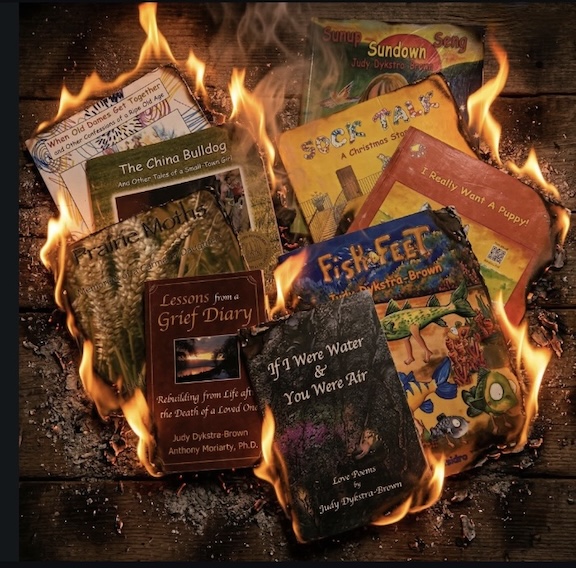
       These are the nine “Vanity Press” books I’ve published in the past 17 years.

In response to the SOCS prompt of “Review,” I can’t help rerunning a blog I wrote 14 years ago, replicating a letter I received from an organization that shall go nameless that I had asked to review my book. Since I had just started blogging, it only received 3 views, but I think the message is as appropriate today as it was then. This is that blog entry:

Vanity Depressed

Today, I received the below email from a well-known organization that reviews children’s books:

Dear Judy Dykstra-Brown,

Thank you for your interest in XXXXXXXXXXXXXX. Unfortunately, we can’t review books from vanity presses like CreateSpace*. For more of our submission guidelines, please see our website here: XXXXXXXXXXXXXX.

XXXXXXXXXX
Editorial Assistant
XXXXXXXXXXXXXXXXX

*note from Judy: CreateSpace was a company within Amazon that aided self-publishing authors in formatting,, printing and distributing their books. It is now called KDP.

My feelings about being labeled a “vanity press” author will be best expressed by displaying here the letter I wrote back to the assistant who had written the letter:

Dear XXXXXXXX,

I thank you for your prompt reply to my inquiry.

Although I certainly understand your reasons for not wanting to consider privately published material, I would like to bring one matter to your attention.

I have been writing for over 50 years. I have written and published three books, published nearly 40 articles in print and online magazines, won a national first prize for my poetry, edited a poetry journal and now coordinate a popular poetry series. I am in the process of having five more children’s books illustrated and working on a novel and two poetry anthologies. In my early career, I taught literature and writing for ten years and edited a teenage poetry anthology.

I mention these facts to explain why I feel it is an insult to have my decision to publish my own work called a “vanity”. Certainly, I am aware of the term, just as I am aware of other racial and physically derogatory terms that were once considered the norm but which in an enlightened age have come to be recognized as insulting and prejudicial.

May I ask your group to consider not using the term “vanity press” as a blanket term for self-published material?

I thank you for your efforts to reward excellent work in the field of children’s literature.

Best Regards,
Judy Dykstra-Brown

I would be most interested in other bloggers’ thoughts about this matter. Is blogging, also, considered just another “vanity” means of expression? I know that a great deal of status is attached to being published by a recognized publishing company, but do all writers who choose another path deserve to have their efforts considered as mere vanity? Is that our main goal?  Is that what we deserve to be labelled as?  Is it too much to ask to be labelled as what in truth we are—self-published?

Frida Kahlo had two gallery exhibitions in her entire lifetime. One of her paintings just sold for 5 million dollars!!! Were her artistic endeavors, in her lifetime, mere vanities? What of Van Gogh? Or Emily Dickinson? Only a few of Franz Kafka’s works were published during his lifetime. Johann Sebastian Bach was widely known as an organist, but his fame as a composer occurred after his death. Henry David Thoreau could not find a publisher for many of his works.

Certainly, I am no Emily Dickinson or Henry David Thoreau, and those who go through the rigors and humiliations of trying to find an agent and publisher certainly deserve plaudits for possessing determination as well as talent. I admit that I have neither the inclination nor the energy to jump through the hoops necessary to find a “legitimate” publisher. I just want to write, and I will not accept the label of “vanity” being attached to my writing.

Yes, I am proud of my efforts in doing all of the work myself that a publisher and editor normally do. Yes, I am proud of the fact that I have continued to write for 50 years with very little monetary recompense. But I don’t think my need to be heard is prompted by vanity any more than the determination of professionally published authors is. We write because we need to write. It is a drive and what, in my case, gives meaning to my life. If that is vanity, then long live vanity! But please say it behind my back—not as an official representative of your guild or company or association or library or agency or board of merit.

Now I will climb down off my soapbox and get back to work on what I do for love, not vanity. If I’ve struck a chord, please add your voice to my protest by publishing your comments on my blog.

The SOCS prompt today is “Review.” The image was created with the aid of DeeVid AI.
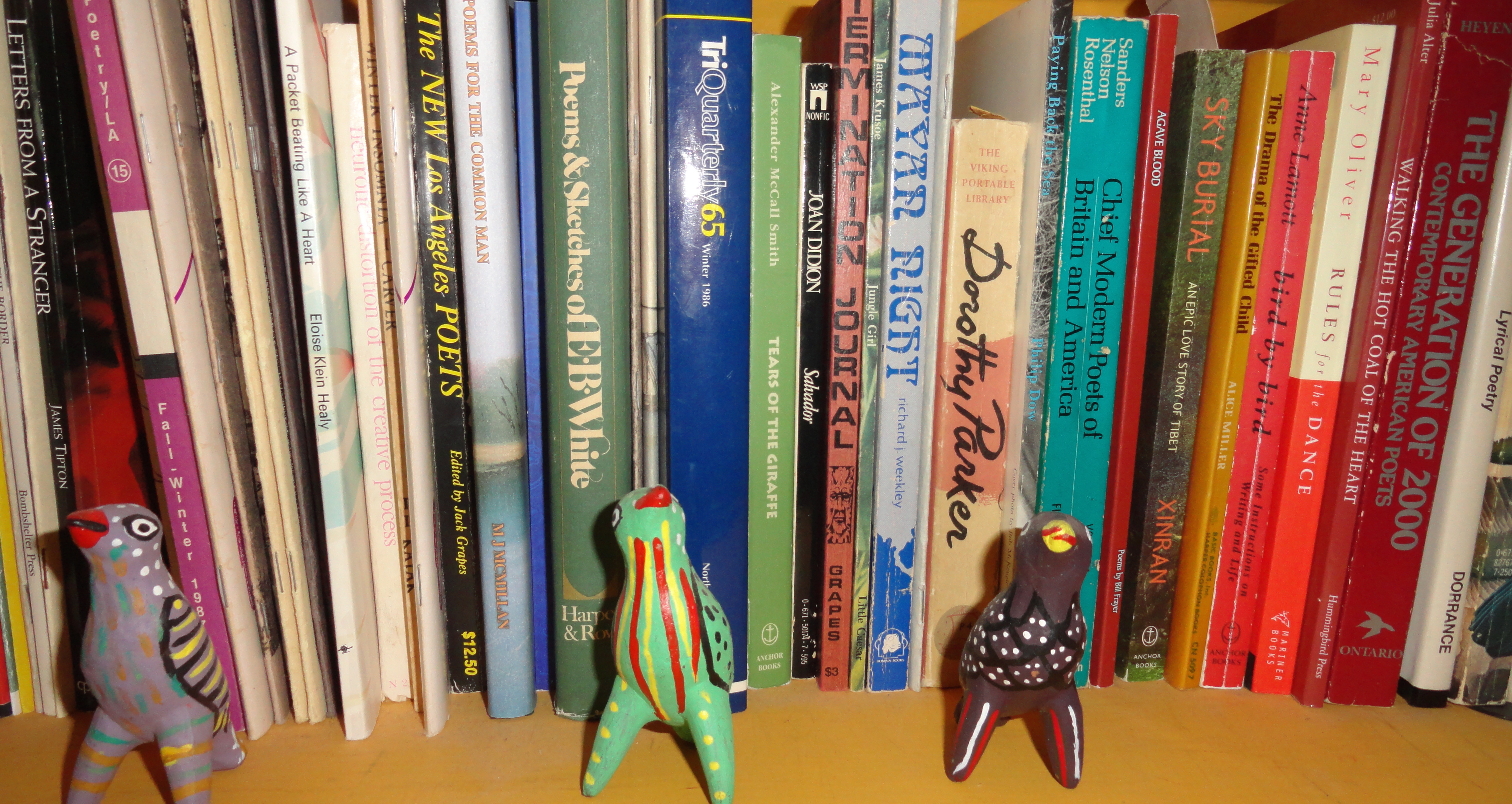
IMG_1316

Books

The fresh bookstore smell of them,
bending the pages to crack the spine,
notes scribbled in the margins,
underlines,
hearts with initials on the flyleaf,
something to loan or to wrap for a gift,
something propped up on the bathtub edge,
its paper sprinkled with drops-—
pages wrinkled into a Braille memory—
that rainstorm run through,
how he put it in his back pocket.

Poetry touched by fingers.
Single words met by lips.
Words pored over by candlelight or flashlight
in a sleeping bag or in a hut with no electricity.
Books pushed into backpacks
and under table legs for leveling.

Paper that soaked up
the oil from fingers
of the reader
consuming popcorn
or chocolate chip cookies
in lieu of the romance on the pages—
finger food served with brain food.
Passions wrapped in paper and ink—
the allure of a book and the tactile comfort.
The soul of a book you could touch, fold, bend.

Books are the gravestones of trees
but also the journals of our hearts.
Cities of words,
boards and bricks of letters,
insulated by hard covers or the curling skins
of paperbacks.
Something solid to transfer the dreams
of one person to another in a concrete telepathy
of fingers and eyes.
Books are the roads we build between us,
solid and substantial—
their paper the roadbed,
the words the center lines directing us.

What will fill the bookcases of a modern world?
Wikipedia replacing dictionaries,
Google already an invisible bank of Encyclopaedia Britannicas.
What will we use our boards and bricks for,
if not to hold up whole tenements of books?
How will we furnish our walls?
What will boys carry to school for girls?
What will we balance on heads
to practice walking with perfect posture?
What will we throw in the direction of the horrible pun?

Will there be graveyards for books, or cities built of them?
Quaint materials for easy chairs or headboards for beds?
Will we hollow them out for cigar boxes
or grind them up for packing material?
Where do books belong in the era of Kindle and Audible?
These dinosaurs that soon will not produce more eggs.
Perhaps they’ll grow as precious as antiques.
Perhaps the grandchildren of our grandchildren
will ponder how to open them. Will wonder at their quaintness,
collecting them like mustache cups or carnival glass,
wondering about the use of them—as unfathomable as hieroglyphics.
That last book closing its pages—one more obsolete mystery
fueling the curiosity of a bygone era that has vanished
into a wireless universe.

search search-1
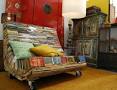
Yes, you are right. These are chairs made out of books.


In response to The Daily Post’s writing prompt: “Going Obsolete.” Of all the technologies that have gone extinct in your lifetime, which one do you miss the most?

Exhortation in Support of the Written Word!

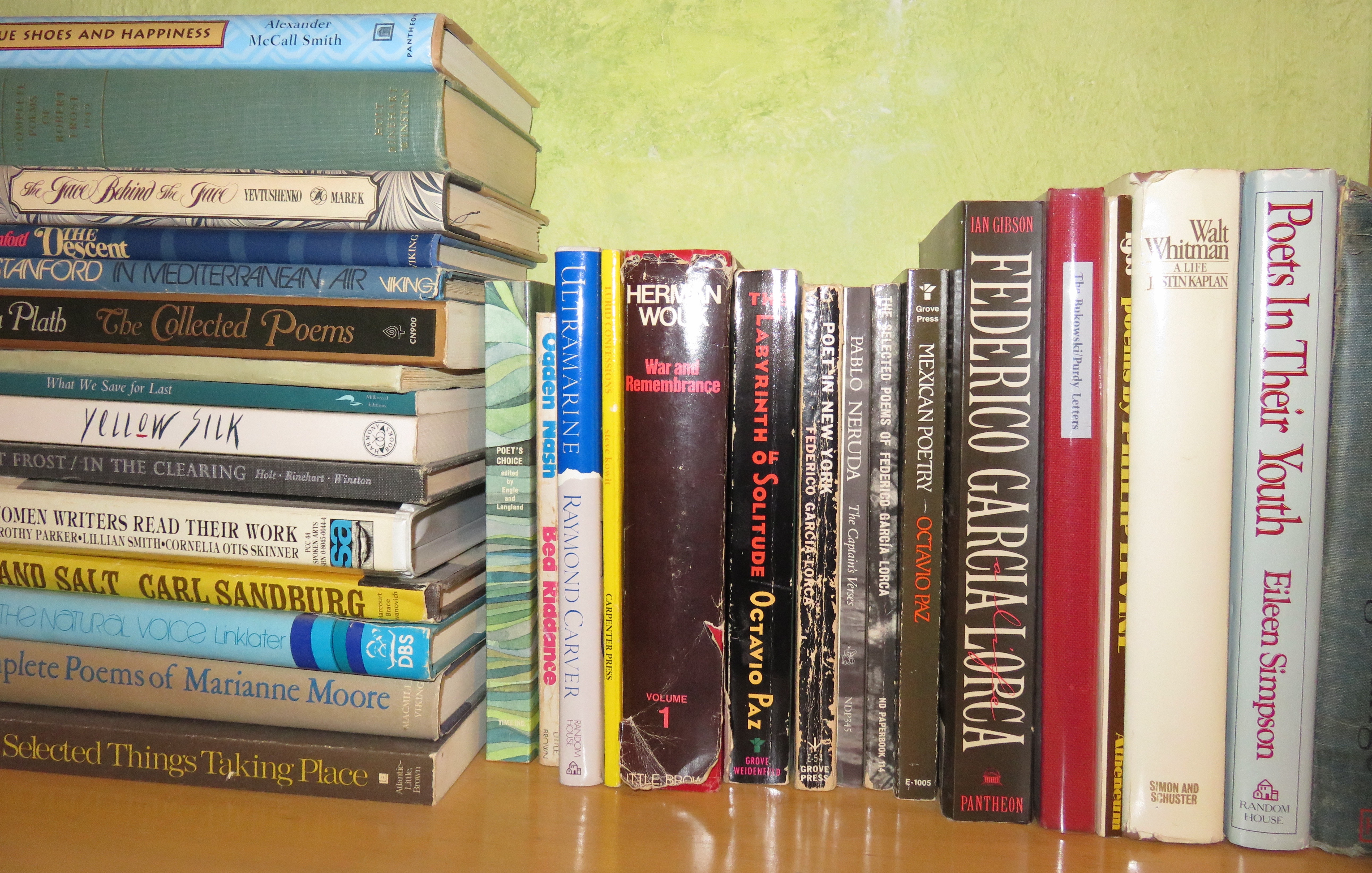
DSC08454

Exhortation
in Support of the Written Word!

Discussing a good book can improve any conversation,
while other books just serve us as a means of rumination.
Books come in many forms from poetry to exhortation.
Some use them to improve their minds, others as decoration.

Books furnish everyone a chance to get an education
as writers entertain us and provide elucidation.
Ghost stories and horror books give rise to palpitation.
Action and adventure lead to heights of exultation.

Comics lead to laughter and beyond—to jubilation.
Histories tell tales of conquerors and usurpation—
deprivation due to wars, like bombing raids and rations,
slaughter, mayhem, battle strategies and amputations.

Some books furnish thrills while some serve only as sedation.
Some books read as sermons, others bombastic oration.
Preachers read from Bibles to provide their congregation
with words that furnish some with hope, others with trepidation.

Some dread books they feel may raise their “lessers” to their station.
Some fear the joy they rouse in us and label our elation
as the hands of Satan, which they’ll cure with amputation,
labeling their action as an act of “God’s creation.”

Driven to destroy the means of all our excitation,
having few words of their own, a zealot’s main “quotation”
is burning books they fear in a colossal conflagration
that gives another meaning to the word “illumination!”

Whatever you might like to read, a certain exultation
waits for you when reading is your favorite vocation.
A torrid romance may work best while on a beach vacation,
(the heat a good excuse for your excessive perspiration.)

Mysteries serve for planes and trains—all forms of transportation—
either while you’re riding or just waiting in the station.
Books are everywhere. They form a great accumulation.
They bore us, reassure us, or provide great inspiration.

Information in most books serves as a vaccination
against hate and bigotry and all discrimination.
For those trapped by fate, they make a good means of migration,
as reading has no borders as to neighborhood or nation.

The Prompt: Reader’s Block—What’s the longest you’ve ever gone without reading a book (since learning how to read, of course)? Which book was it that helped break the dry spell? (My consideration of books took me off on a slightly different tangent, but the prompt is to get us started. Right?)