
This anthurium has been blooming constantly for over 6 months! Amazing. And I think these are the original flowers!
For Cee’s FOTD
This anthurium has been blooming constantly for over 6 months! Amazing. And I think these are the original flowers!
For Cee’s FOTD
This piece about Joe Biden is to touching. Thanks, Sam, for letting me reblog it.

This came to me through my first cousin, Spencer Turner, It was posted by a person named, Donna Apter, who I do not even know, but it points out what kind of a person our next president, Joe Biden is, and it is well worth reading. No Joe may not have a silver tongue, but we all know he has a heart of gold, showing Love instead of hate for ALL Americans. He is well known all over the world and is able to be friends with all persons in Congress, not making enemies with all; this is what America needs right now to undo the harm done to our great country over almost four years.
HERE IS THE ORIGINAL POST
”The story I’m about to share with you about Joe Biden is special — in fact, I’m fairly certain I’m the only living person left who actually witnessed it…
View original post 517 more words
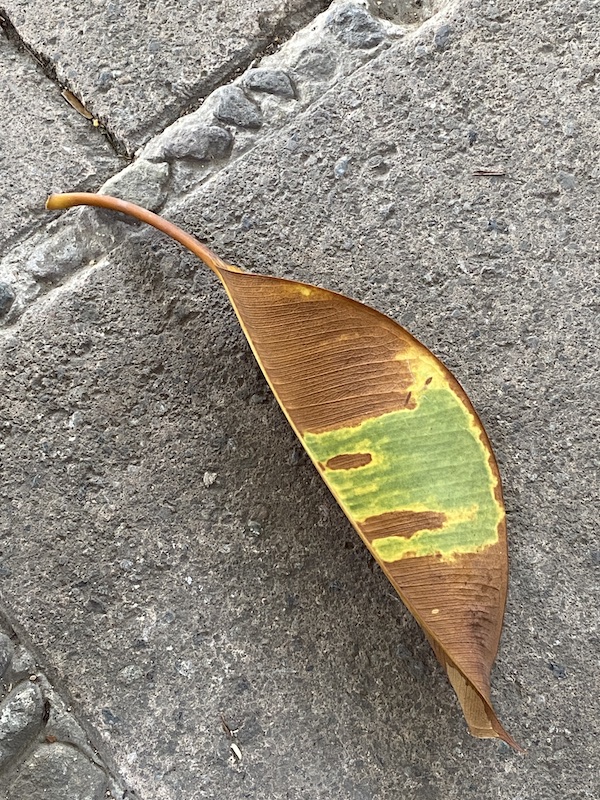
This was a huge leaf from a rubber tree that fell whizzing past my head during a writers’ group reading at the Nueva Posada. For some reason, it just captured my fancy.
For Cee’s FOTD
 Innocents in Mexico
Chapter 11
That night, we moved in. At $600 a month, it was twice the price of the other apartment we liked, but it was worth it. The rent included the three times weekly services of Theresa, who lived only two doors away. She was gentle and Susan said she was shy, but we did not find her to be so. Did she speak English? No. Good. We needed to be encouraged to learn Spanish more quickly.
When we arrived at “our” house, Stucco Steve Kelsoe, the friend who had been housesitting the house, was still there. He understood we were coming tomorrow, he told Susan, but she assured him she told him today. She left and we talked to Steve about the house, which he designed and built for Jim, the owner, who was visiting Disneyland with his girlfriend. We raved about the house and he told us more about it over a Corona. How he reduced costs by building the sides of the house right at the property line, so the exterior walls were also the back and part of the side compound walls. (We later grew to regret this fact.) He had also done the planting. He pointed out the ruins we had passed as we entered the lot and that they had preserved, he told us. A few hours later, he ran up to check his e-mail and to send a letter, then switched off the computer. The phone rang immediately. It was our credit card phone provider, who had been trying to call for two hours, but the phone was busy thanks to Stucco Steve. Robert, our agent, explained to me the intricacies of how to make phone calls so they appeared on our credit card and not Jim’s phone bill.
Eventually, he left, and we went out to sit on our patio. The garden was beautiful––the plants exactly the ones I would have chosen. Bearcat moved easily and inquisitively around the courtyard, padded upstairs one stairway, around the U of the loft and back down the other stairway. We could hear the click of his claws on the polished wood of the stairway. He was completely peaceful for the first time since leaving home two weeks earlier. He knew we were home for awhile.
“Are you pleased with the house?” I asked Bob as we rocked in the twin wooden rocking chairs which were the sole furniture in the sala (other than two twin beds covered with Guatemalan throws and pillows which served as twin sofas against the walls)
“I’m pleased with everything.” He answered.
Earlier, we had gone to Gigante and purchased basic necessities. When I awakened from a deep sleep after a late afternoon nap, the air was still hot, but the fans blew cool air down onto the bed. Bob was below, still in the rocking chair.
“We missed the sunset,” I said. “Have you eaten?”
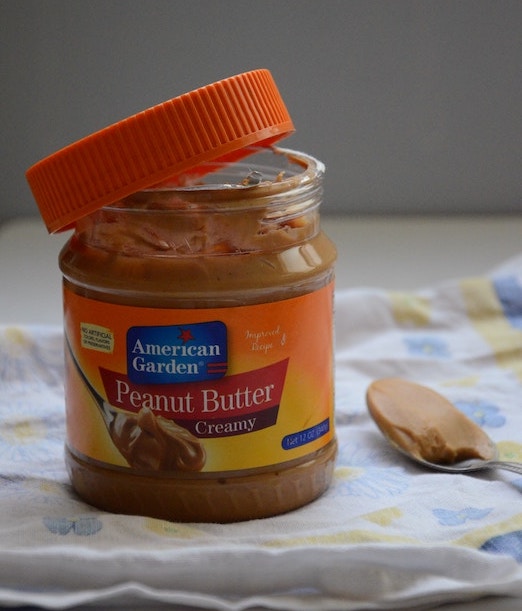
He had had a peanut butter sandwich. I had an avocado and onion and cheese sandwich made on wonderful Mexican bread. Then I had another. We sat up late, just looking out at the courtyard. Bob read the English phonebook and the San Miguel guide while I read a book from the large box of books I’d brought along. When we turned off the lights to go upstairs to bed, moonlight streamed down from glass bricks in the ceiling. As we fell asleep, the dog who lived on the roof next to us joined a choir of roof dogs. Bearcat stirred by our feet, but did not run under the bed. We all felt contented here, relaxed and safe.
(Look at previous days’ blogs for Chapters 1-10. See Chapter 12 HERE.

No Stone Unturned
Turning over stones can be overly unpleasant
due to all the denizens likely to be present.
Yet I profess it’s cowardly to just let them lie,
I’m sure you’ll prove your manliness and flip them by and by!
For Pensitivity’s Three Things Challenge, the words are: STONE UNPLEASANT COWARDLY.

Soon available on Amazon. I’ll let you know when!!!

For Fibbing Friday, May 19, 2023 we are asked to provide definitions for the following:
Philatelist: Mr. Silver’s “do not re-invite” record of guests who do not arrive in a timely fashion to parties.
2. Botanist: Someone who creates programs that fulfill tasks without human intervention.
3. Naturalist: The characteristic veering off the vertical that occurs in the human spine due to aging.
4. Taxidermist: A doctor who specializes in dermatological problems associated with passengers’ sensitivity and resultant toxic reactions to the inside surfaces of public conveyances.
5. Anthropologist: Someone who studies aging insects
6. Scientist: A doctor who specializes in the study of exhalation due to disappointment or sadness.
7. Strategist: Someone canonized for their kind treatment of rodents.
8. Protagonist: Someone in favor of graffiti.
9. Pharmacist: Someone terrible at spelling who is very good at raising cows and pigs and corn.
10. Biologist: A scientist who is equally attracted to women and men.
Image by LydianTurner on Unsplash.
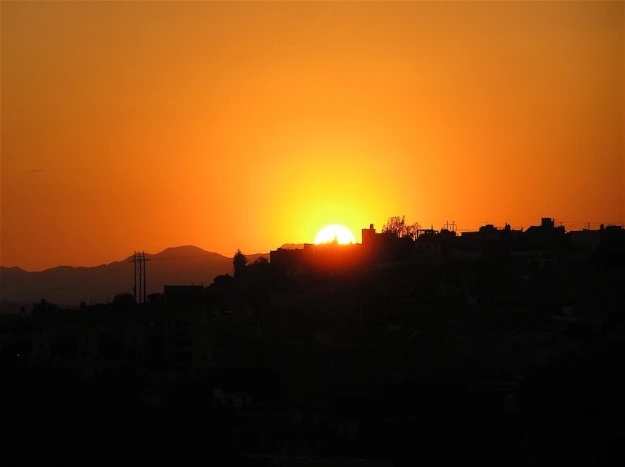 San Miguel Sunset from the Roof of the House We Chose to Rent
Innocents in Mexico
Chapter 10
On our sixth day of searching, we found three houses we wanted to rent. One had the advantage of being blocks from the jardin and a block from the market. It was stark and small, but we could fix it up. There were many patios, but I would have to supply the plants. If we were renting for a year or two, it would be worth fixing up, but not for a month. As we left, Bob toed aside a large, dead cockroach.
The second apartment was in an area above the Biblioteca which we had not seen before. The man who owned the house was a large-scale metalsmith and would share his tools and space with Bob. The apartment was charming––decorated with flair. It had one bedroom, kitchen and bath with a small sitting room on the ground floor. He, his wife and children and assorted art students lived above. We were free to use any of his studio space as well. He was so anxious to rent to us that he said he would do anything to please us. He came down $200 from his original offer when we had done nothing but ask him the price again. The $300 a month covered utilities, and he would pay half of our parking nearby. We were sure we would take this place, but we had first, as a courtesy to Susan, to go see the house she had been trying to get us in to see for three days. We went back to see Clello’s house by the mercado, found yet another dead cockroach under the sink, then returned the key and told her we had decided to take a different house.
We then remembered that we had forgotten to tell the metalsmith that we had a cat. It was no problem, he told us, when we called to tell him. He would do anything to get us to take the apartment.
“But first” we said, “we must go to see one other house.”
We went to La Conexion, Susan’s internet business, and she loaded us into her van. On the passenger side door were vivid purple scribbles.
“My kids did that. It’s not graffiti,” she told us.
Her van looked like ours––lived in. Crayons littered the backseat floorboards, a Eudora instruction booklet lay on the dashboard. I piled my San Miguel guidebook, book of notes and phone numbers, Spanish dictionary and town map on top of it.
We went a different route to the house than the first time––when we had seen the neighborhood but couldn’t get in to see the house. It was in a Mexican neighborhood a short way out of town. From the road in front of the house, we could see the half-unoccupied shopping mall whose only prosperous inhabitant seemed to be the huge grocery/notions store named Gigante. The road was dirt, the field to its right littered with plastic bottles and paper bags. At first, I thought it was a dump, but it was just the refuse which was the normal byproduct of being so close to a market. The neighborhood looked less bleak this time. On the long road that ran past the house were two metalworking shops, which interested us both. Susan opened the gate to the courtyard and we stepped in. It was a beautiful modern stucco house constructed in the Mexican style, using Mexican methods and materials––two stories with a rooftop patio. Two second story patios served as roofs for two ground floor patios which flanked the house. A brick pathway vee’d and then joined as it approached the house. Around us were bougainvilleas in various shades of purple, burgundy, wine, rose, orange and gold. A 15’ long wall of organpipe cacti stretched far up into the air, running parallel to the side wall, but well out from it. A mesquite tree spread over the central courtyard and the walls of a small ruin which they had left intact and which contained a quirky artist’s shrine. As we stepped into the house, we saw first of all a huge picture of the Virgin of Guadalupe which dominated the 30’ high back wall . On closer inspection, we saw that it was a beaded curtain meant to hang in a doorway. Ceiling fans above it sent air currents which caused it to gently sway in minute waves out from the wall and back. The effect was an underwater effect––or one of heat waves in the road in front of you when driving through a desert. The house was spectacular. One large central room opened to the 30’ high ceiling. To the right was an open kitchen which led to the right front patio, where the glass top dining room table and chairs were. To the left were the guest bedroom and bath, which sported the only inner door in the house. In front of us, two open stairways formed a V leading up to the office on the right and the master bedroom/bath on the left. Both were bounded by just an open balcony railing overlooking the main living space. Most walls were whitewashed adobe brick, but a few walls were kept unpainted. The vent over the stove was covered with vivid yellow tile and the cement floors were painted an aged terracotta, blue or yellow, then waxed. Rugs added warmth to the floors. As we moved through the house, the image of the Virgin de Guadalupe was repeated over and over on glasses in the kitchen, in small shrines and in a tiled tray on the patio. An autographed picture of Beaver and Wally Cleaver sat on the stand beside the desk. To its left was a small shrine to the Rolling Stones. Elsewhere in the house were pictures of the Swami Yogananda, a print of Remedios Varo, whose work we had earlier seen in Ziwok, a wall devoted to Bob Dylan (We had included all of Bob Dylan’s tapes in our limited cache of tapes brought along to Mexico.) On the open clothes rod at the end of the master bathroom were sedate Hawaiian and batik shirts that could have been Bob’s. On the shelves were shorts and loose pants that look like the ones packed in his bag back at the hotel. When we saw a picture of Jim, the owner, he had long light hair, like Bob, and was of a similar stature and size.
I loved the house. I looked at Bob. He loved the house. Prior to this we had looked at no fewer than 10 houses and apartments, and had only agreed about these last two. We took the house. Sadly, I called the metalsmith to break the bad news about not taking his apartment. He was very disappointed, I could tell. I promised to tell anyone I met about his place.
See Chapter 11 HERE.
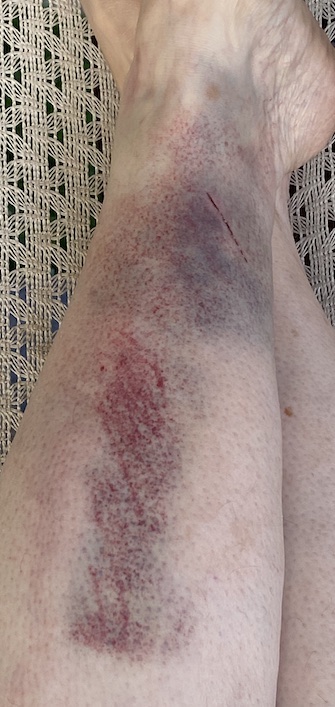
For those who asked, here is the state of the leg 24 hours later. Swelling down. Doesn’t hurt except when my masseur forgot a couple of times this morning and touched it. Then, Ouch!!! That said, I promise no more photos of sore subjects…

 lifelessons - a blog by Judy Dykstra-Brown