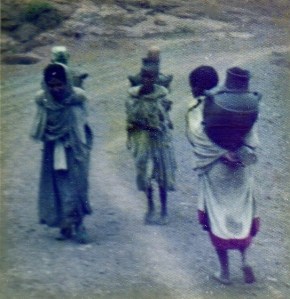
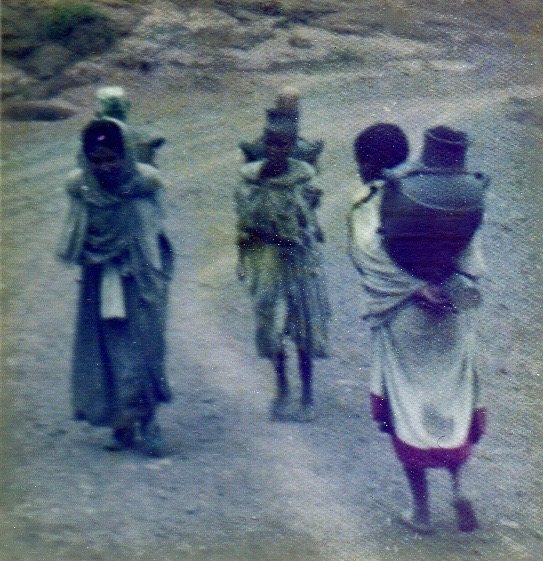
The essay I am reproducing below is a reply to a comment made in my blog by OromianEconomist regarding the pictures and short essay on my blog (You can find them HERE.) in which I referred to the Ethiopian drought of the early 1970’s. This was his comment:
I wrote this initially short reply to the Oromian Economist’s comment on my blog, but then I seemed to just keep writing and writing until it turned into an essay of sorts. The facts are from memory and I realize I need to do some further research and I’d be open to any comments by people more in the know than I was at the time, but this is a short view of what I observed in Ethiopia when I traveled and lived there in 1973 and 1974:
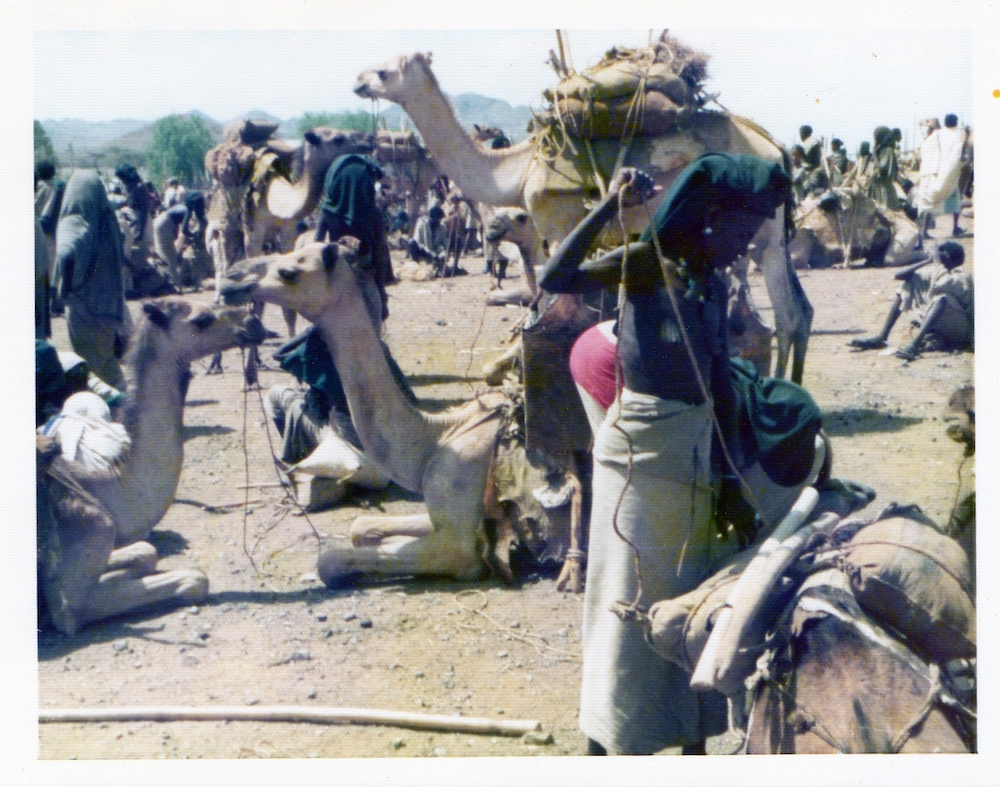
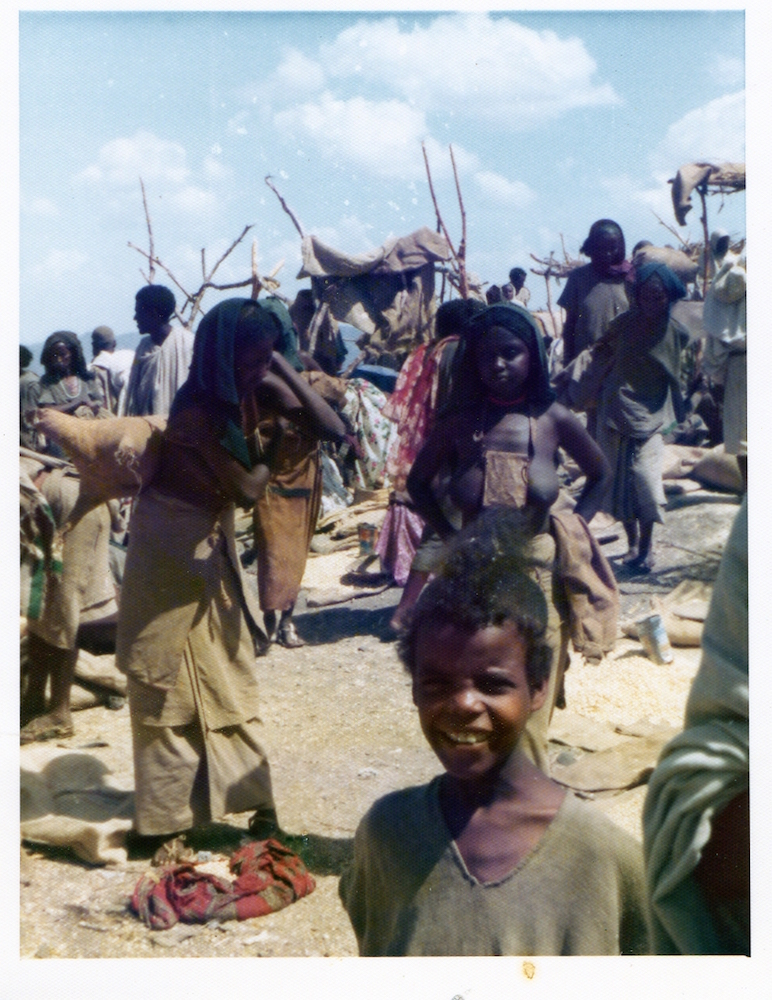
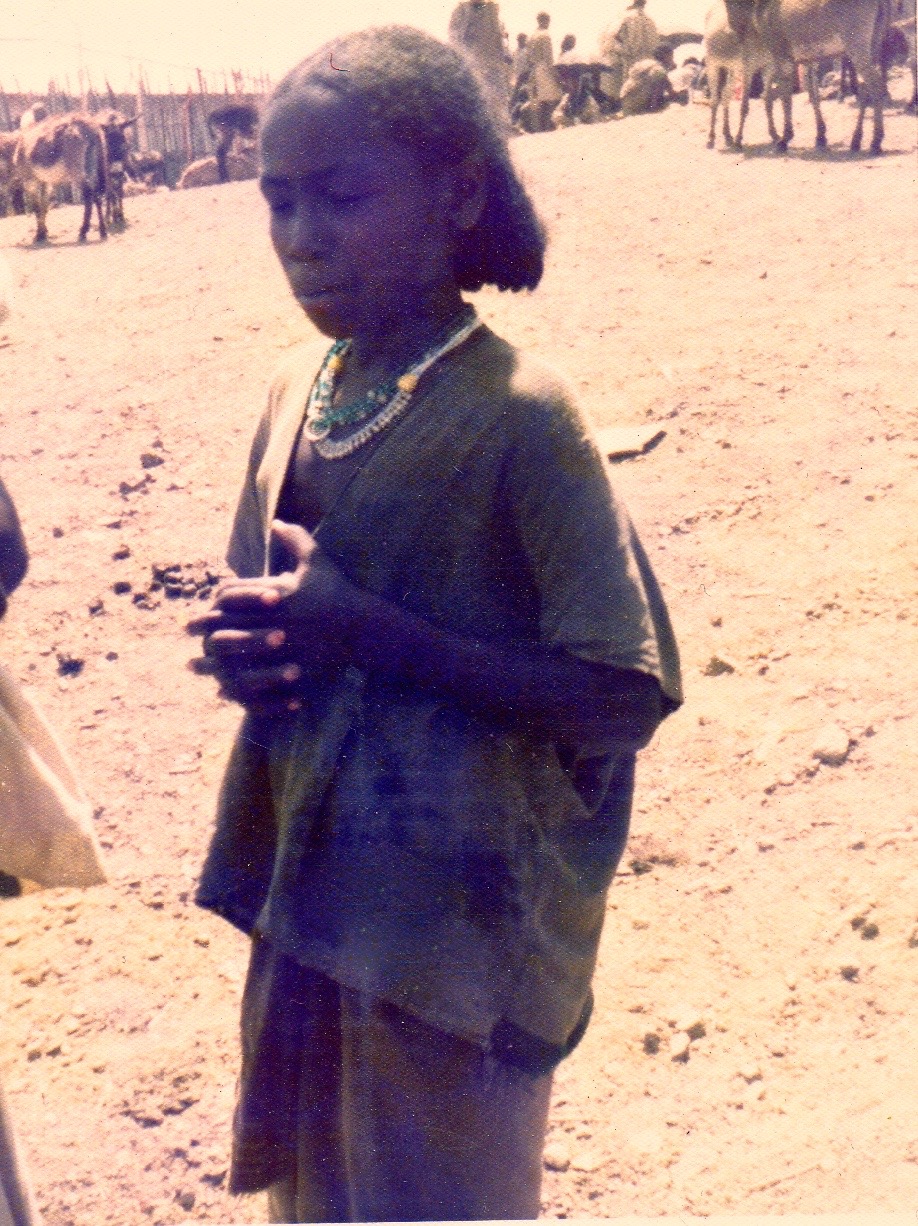
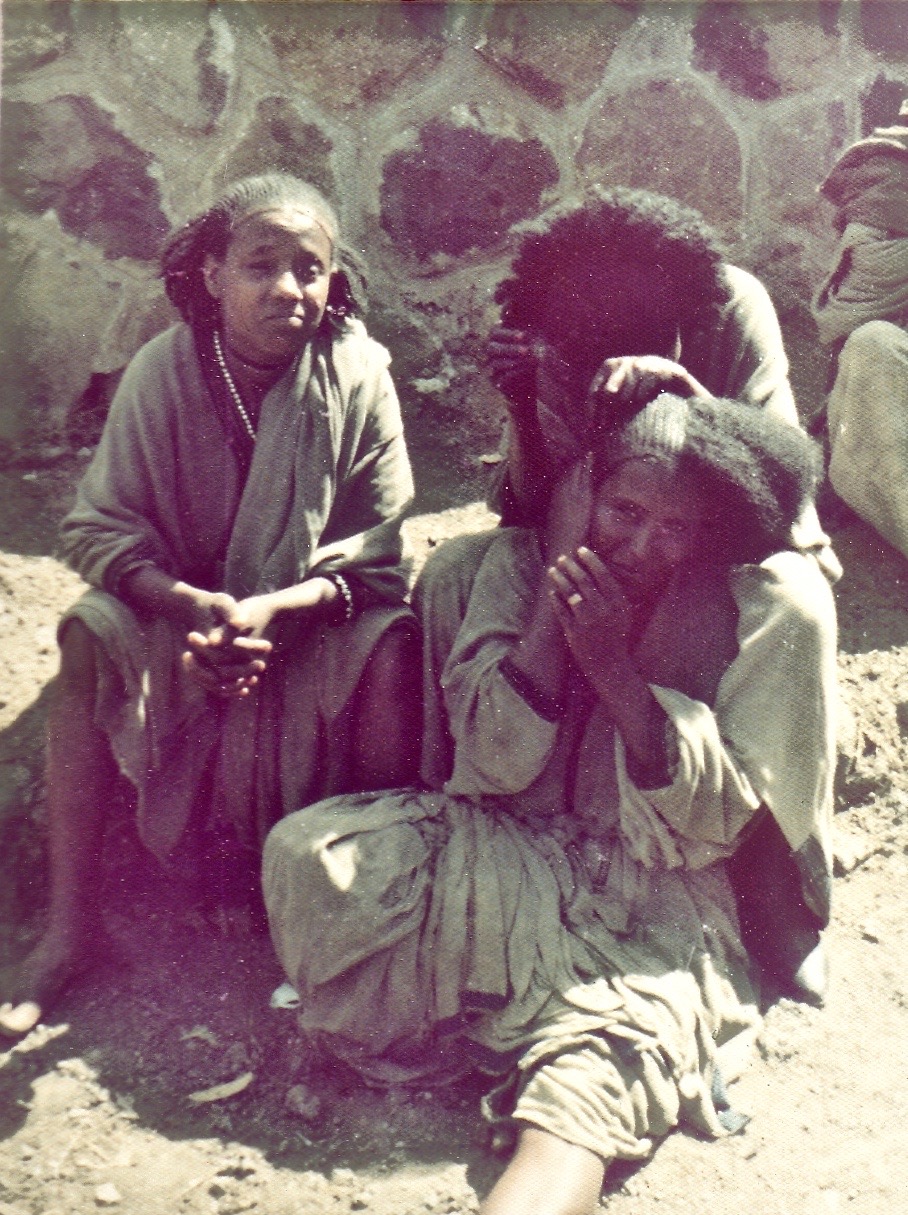
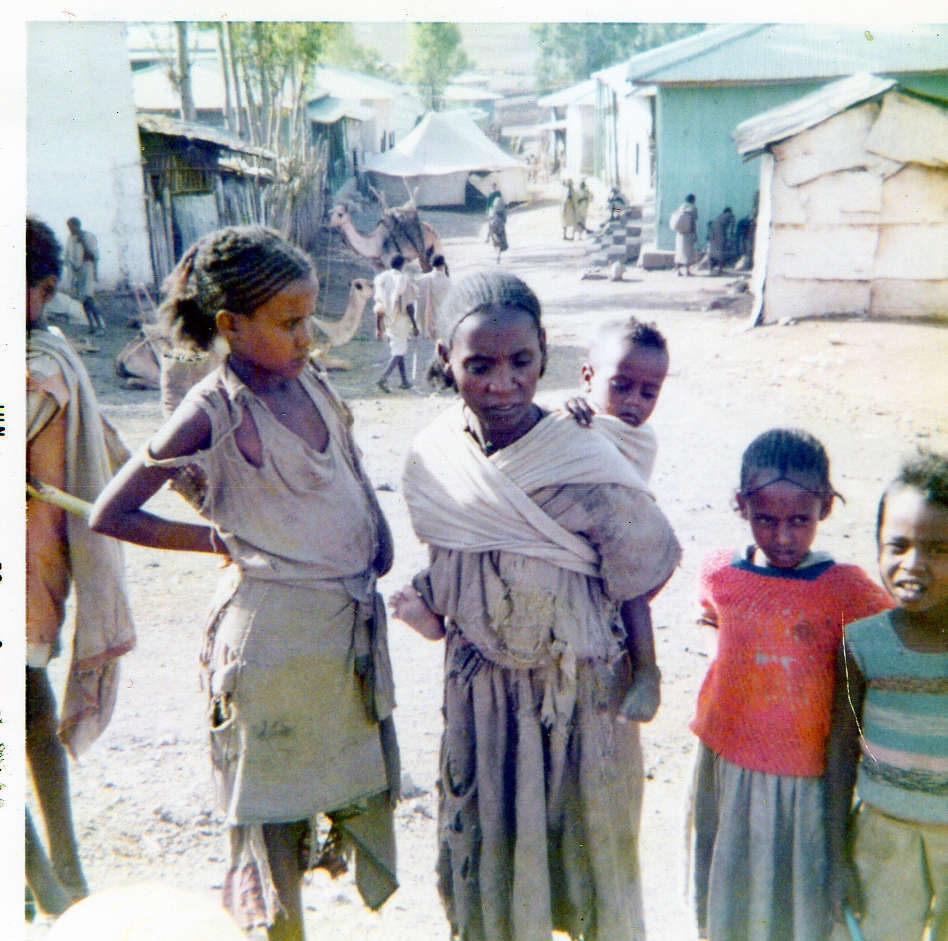
I was in Ethiopia in the drought years of 1973 and 74. I saw the sacks of grain for sale in the market in Addis Ababa that said, “Gift of the people of the United States of America.” The grain was being sold and the money pocketed by government ministers. One month the teachers in my school (Medehane Alem T’mhrtebet) elected to forego our salaries and use the money to buy food and hire trucks to take it to the drought areas. I was on the committee set up to deal with this transfer, but the government said it could not allow private citizens (or expats such as myself) to handle the money or the distribution. What actually happened was that the government did hold back the money, but they merely used it to pay our next month’s salary. Not a penny of that money was ever used for drought relief.
Many people at that time were not even aware of the drought because the starving people were not allowed to migrate into the cities but were held back by military. We were only aware because we traveled out in the country via bus. Dead cattle dotted the countryside and in places people formed human chains across the road to stop the buses. This was in Wollo Province, enroute from Addis to Dessie. We threw all the food and money we had out of the windows of the bus, but then traveled on. There didn’t seem to be anything being done at that time nor any means for anyone to deal with the problem.
There was one relief agency and I can’t remember whether it was Swiss or Swedish, where the aid was brought to Africa and distributed by the country it was being sent from. I had a friend who was employed by this organization and I traveled with him at one point. He told me that this was the only aid that was actually getting to the people and that no other country actually sent people to insure that the aid was being distributed to the people who needed it. This was a long time ago and my memory is spotty, but I am thinking that they were setting up schools that he was inspecting, but it may have been other agencies.
We traveled from Addis past Bahir Dar and Lake Tana (source of the Blue Nile) and Gondar, up to Asmara. This was through the Semian mountains, noted for shiftas (robbers) and we traveled by caravan with armed guards as actually I had earlier when I had come out of the Lalibela region and back into Addis. Other trips were to the Awash Valley and then later to Gambela, to camps where Sudanese refugee camps had formerly been set up. My friends were Ethiopian nurses there.
When we traveled to Harrar, it was because all of the schools in Addis had been closed down due to student demonstrations and strikes. They had started stoning buses. The rumors were that the buses were all owned by members of the royal family, but I don’t know if this was true. In spite of the fact that almost no students were still attending school, we teachers were told that so long as one student showed up for class that we needed to show up. On my last day of school, I was on a bus that was stoned. A large stone shattered the glass near the window where I was standing, as the bus was full. The next stone whistled past just grazing my ear. After that, the buses all stopped running and they closed down my school. We had been wanting to go to Harrar, so we traveled by train. The trains were totally full with people standing and sleeping in the aisles as well. At times we would see people standing by the side of the tracks with camels. Someone from the train would open one of the doors and throw huge sacks of smuggled goods out to these desert nomads who were contraband runners.
After a few days in Harrar, we rode the train back into Addis and as we rode into the city, we saw the students swarming over the tracks behind us. I think we were on the last train back into Addis. The revolution had been going on for some time but we were just seeing it as student protest. The military later took over the airport and the night of my birthday and good-bye celebration, (my sister and I were due to leave the next day to travel further in Africa and then to go back to the states to see my father who was very ill) the coup was staged. The military had used the students to start the revolution but in the coming years, most of the young people I knew were killed by one wave of revolutionaries after another. They had more or less been used by the military for their own purposes and my only friends who made it through that period alive were ones who came to the U.S. or Canada.
My boyfriend who was shot defending me the first day after the coup miraculously survived a bullet that went all the way through his body and out the other side. I stayed for another month until he was out of hospital, then came back to the United States and have never returned to Ethiopia. My boyfriend became involved in politics and two years later, he was warned to leave Ethiopia by yet another wave of revolutionaries espousing a different branch of communism. When he refused, he was assassinated in the road right outside the hospital where we had spent our last month together.
I blindly stumbled through this very sad and violent slice of Ethiopian history not fully understanding all that was going on. My efforts to write about it since have always been stopped by my realization that I really didn’t fully comprehend the magnitude of everything that was happening and probably still don’t. But, for sure, I realize that my experiences in no way equalled those of Ethiopian citizens caught within those circumstances. They could not just travel blithely through them as I did. And few of them lived to tell the story I am telling only sketchily, according to my own experience and probably faulty memory.
I was there for that lavish celebration staged for Haile Selassie’s birthday. When members of the royal family were arrested after the coup, they were put in the prison that was on the other side of the garden wall of my house near Mexico Square. When Haile Selassie was removed from the Royal Palace after my return to the states, he was arrested by my boyfriend’s father, who was a Colonel in the military and put into a little blue Volkswagon that was the car Andy and I used while I was in Addis. I saw Selassie say something to Colonel Getachew as he got into the car and I asked Andy what he had said. What he said was, “Am I reduced to this–riding in a Volkswagen?” In reply, Col. Getachew said, “Your majesty, most of your subjects walk.”
In my years in Ethiopia, I had seen Selassie riding around the countryside in the backseat of his Rolls Royce, sitting on a jumper seat to raise him up enough to see and be seen through the windows, his Chihuahuas running back and forth in the back window. Everyone along the roads bowed as he passed and Andy tried to pull me down into a bow. “It is for respect for our emperor,” he told me, but I told him I refused to bow to this man who lived in a palace and rode through his country in a Rolls and walked through the marketplace dispensing birr notes to the people when other subjects were starving. If he saw us, and if he saw the little blue Volkswagen parked at the side of the road, little did he know that one day he would be driven away in that very car. History can be chilling and its stories full of ironies that, known by few, blow away like leaves in the winds of the next event and the next and the next.
https://dailypost.wordpress.com/dp_prompt/worlds-colliding/ (This prompt called for taking two fictional characters from different books and having them meet and interact. I have chosen to depict events that occurred when a real person chose to enter a different world. Truth can be much more interesting than fiction. I found this to be true during my years in Ethiopia.)
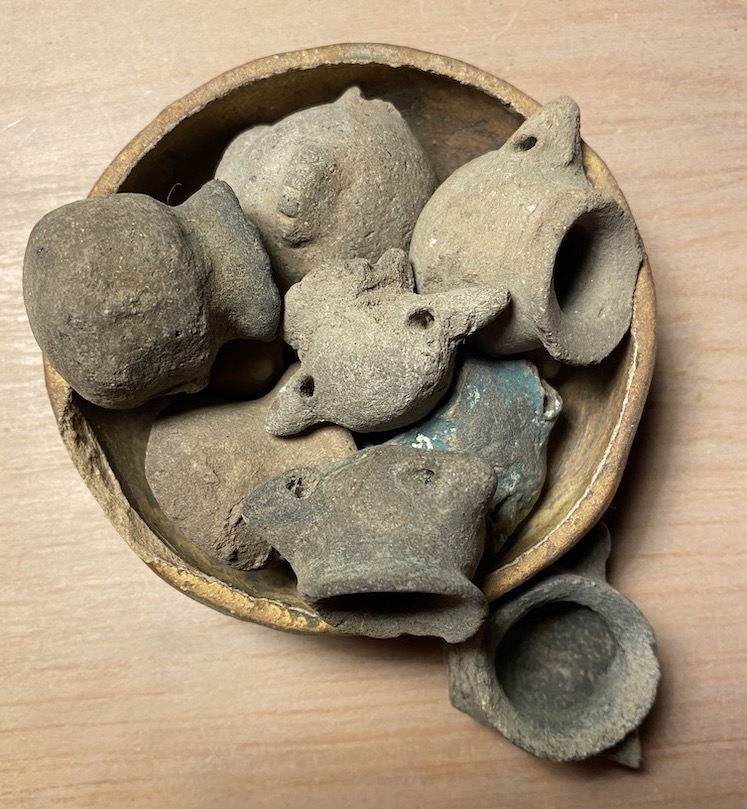 These are some of the ancient tiny jars used for sacrificial blood offerings that washed up on the shores of the lake during the period when it shrank to 1/4 of its former size.
 lifelessons - a blog by Judy Dykstra-Brown