Click on first photo to enlarge all.


For Jennifer’s Halloween Prompt: Graveyard.
Panteon Afternoon–Dia de los Muertos in Ajijic, Mexico, 2015
I was driving home from Ajijic today and as I drove by the Ajijic Panteon, I realized I haven’t really walked through a cemetery on the Day of the Dead for a few years, so my car veered off. From past experience, I knew that the graves would run the gamut between wildly and extravagantly decorated to sadly neglected for years to tragically neglected for decades. This is some of what I saw as I walked through the graveyard for the next hour and a half: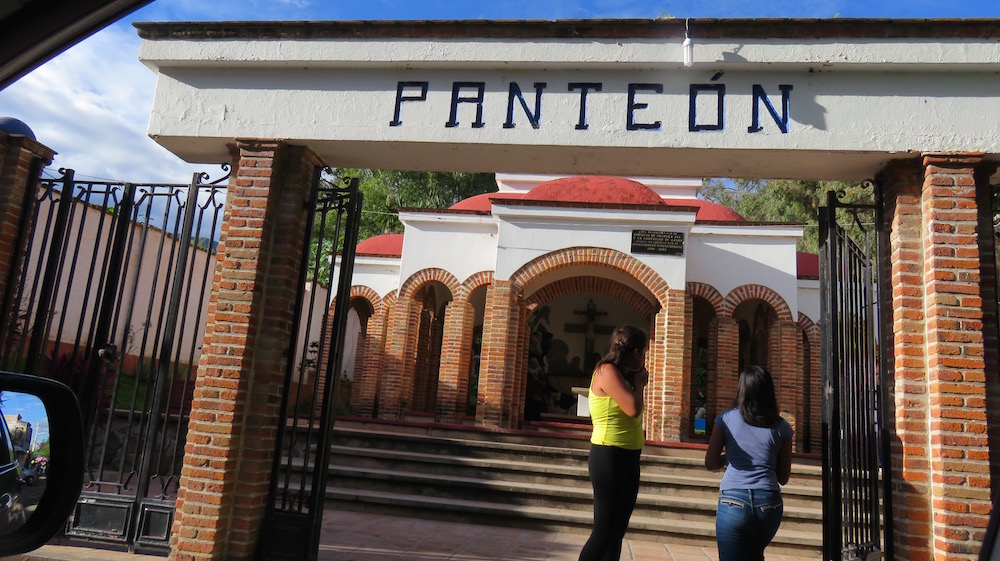

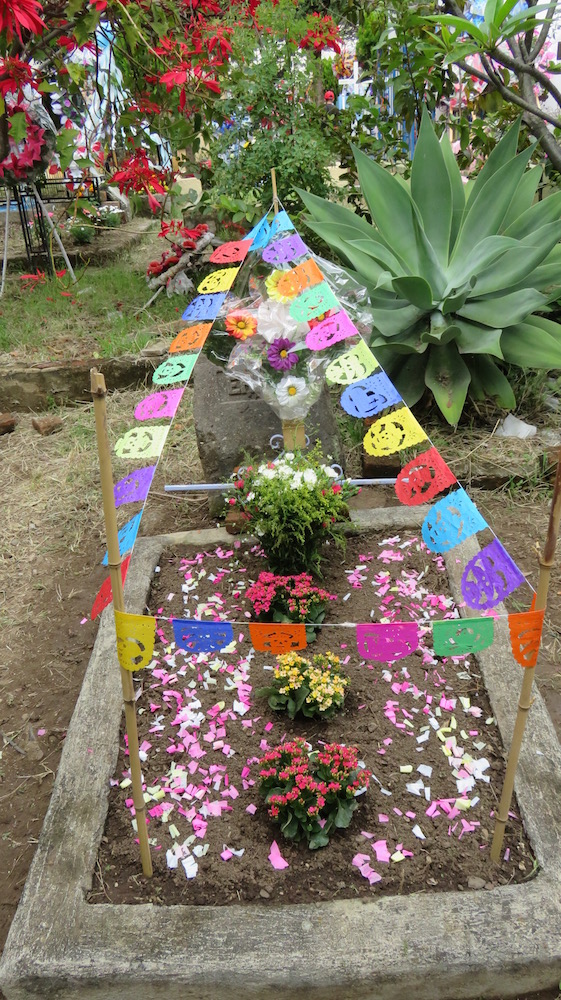
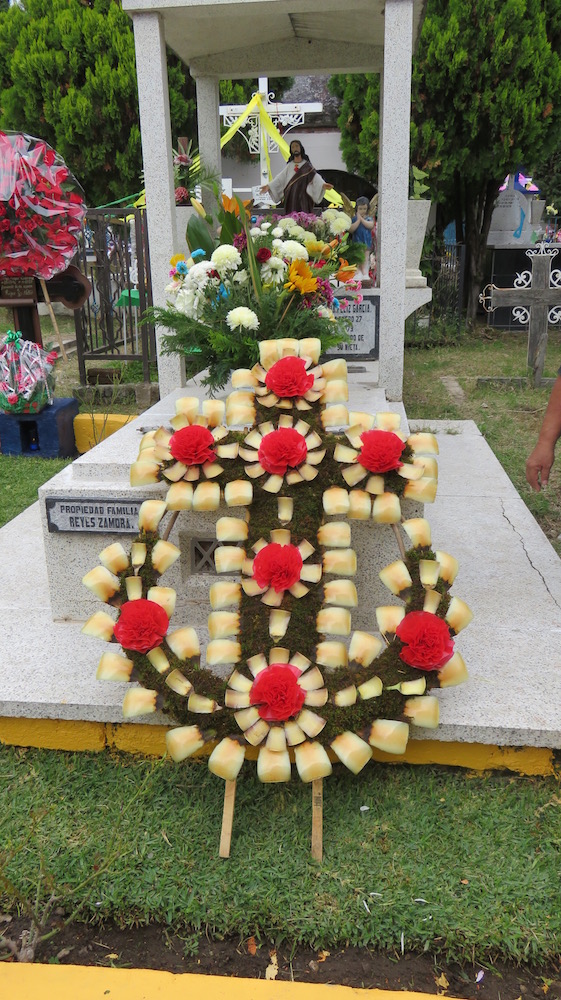
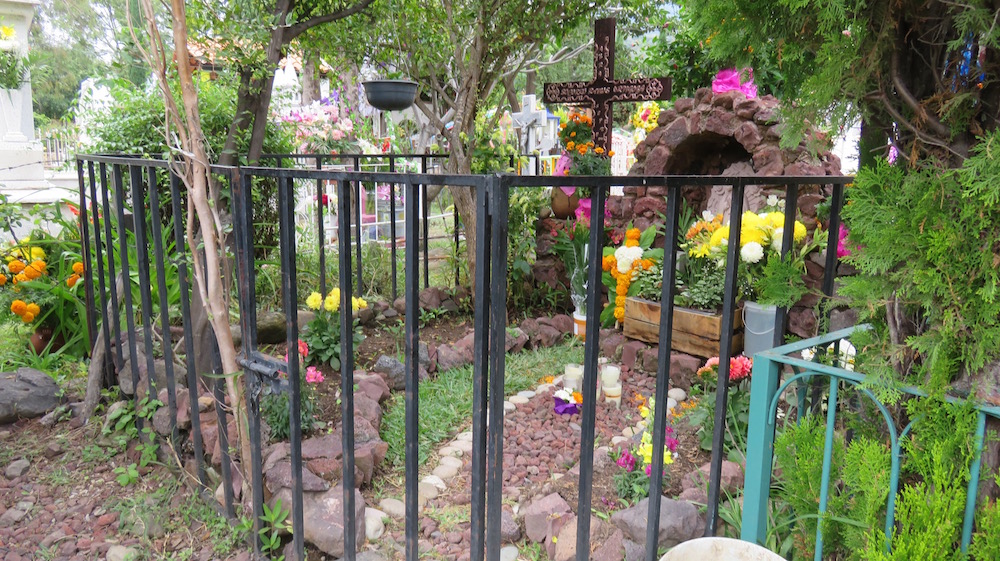
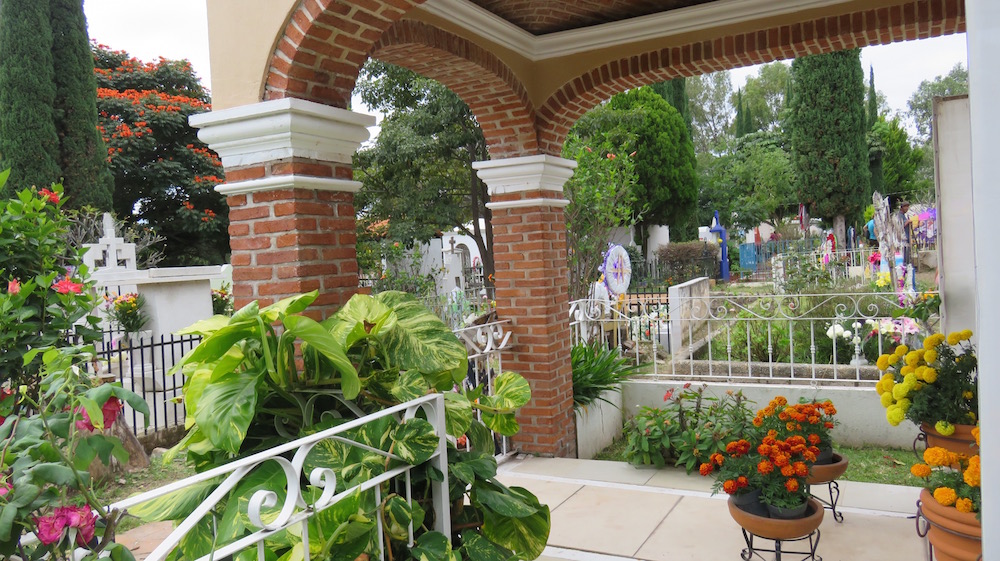
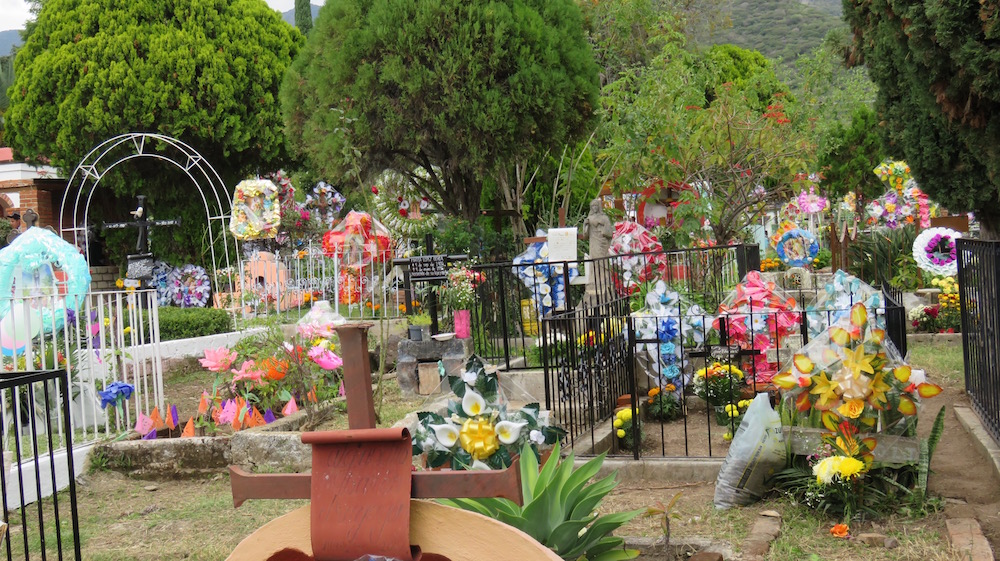
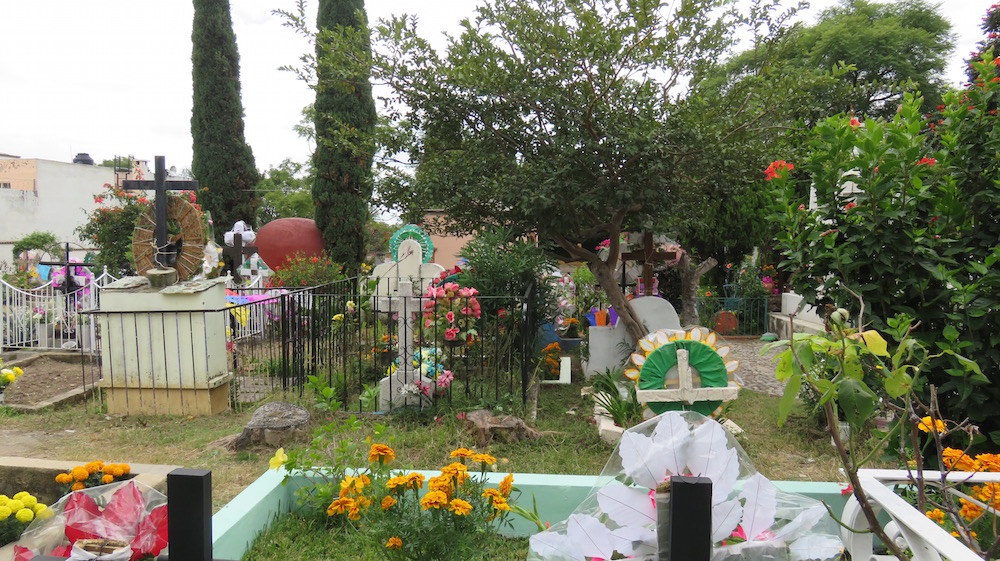
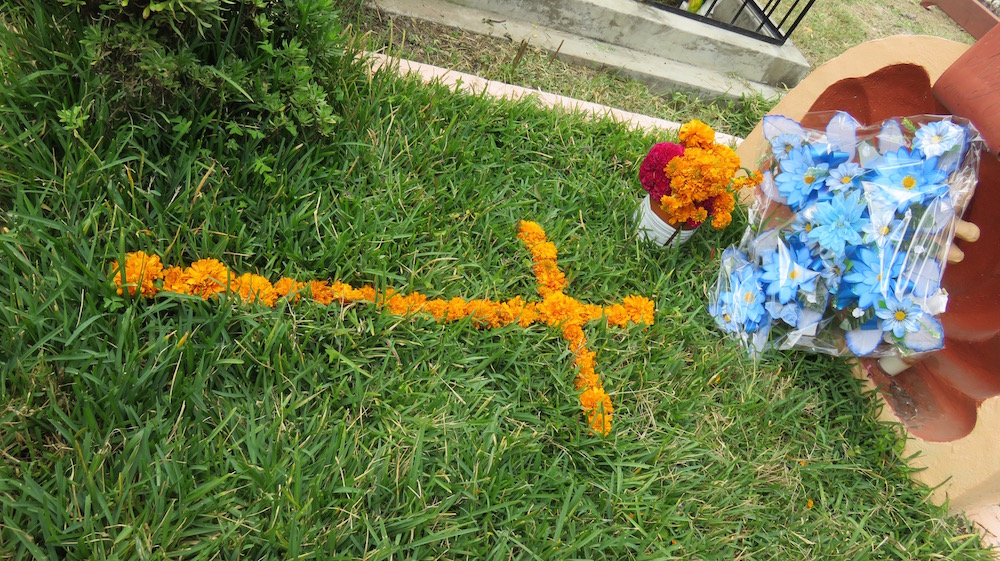
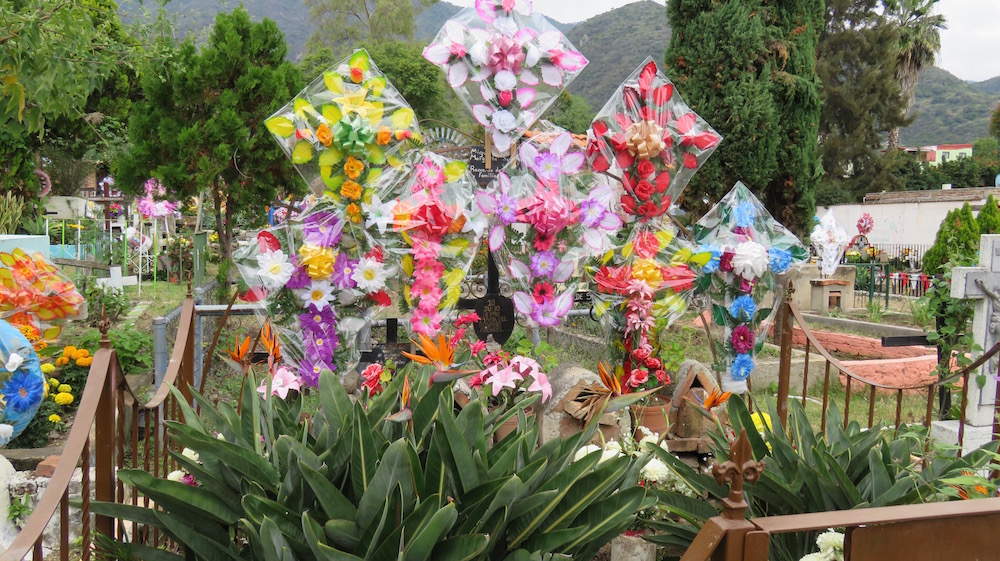
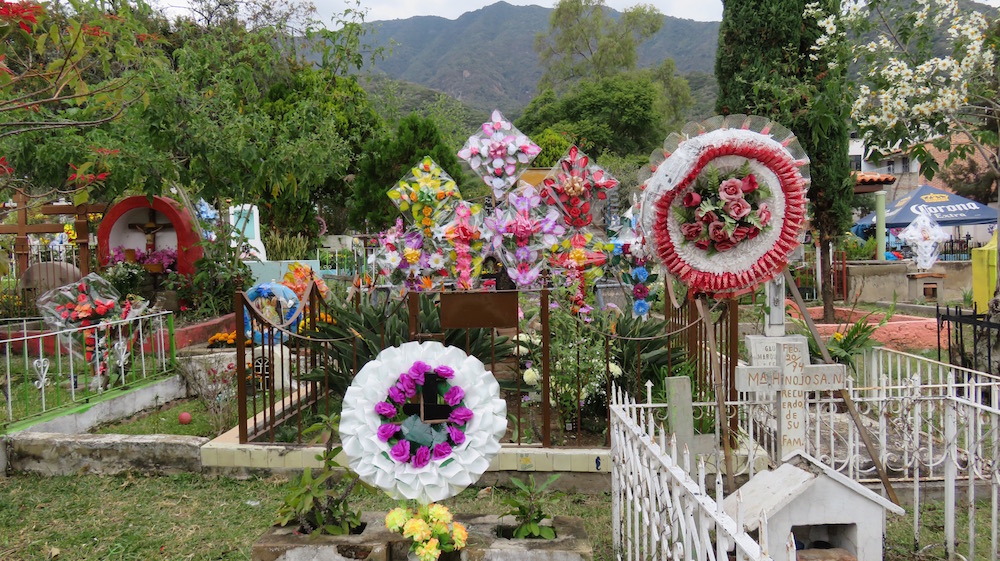
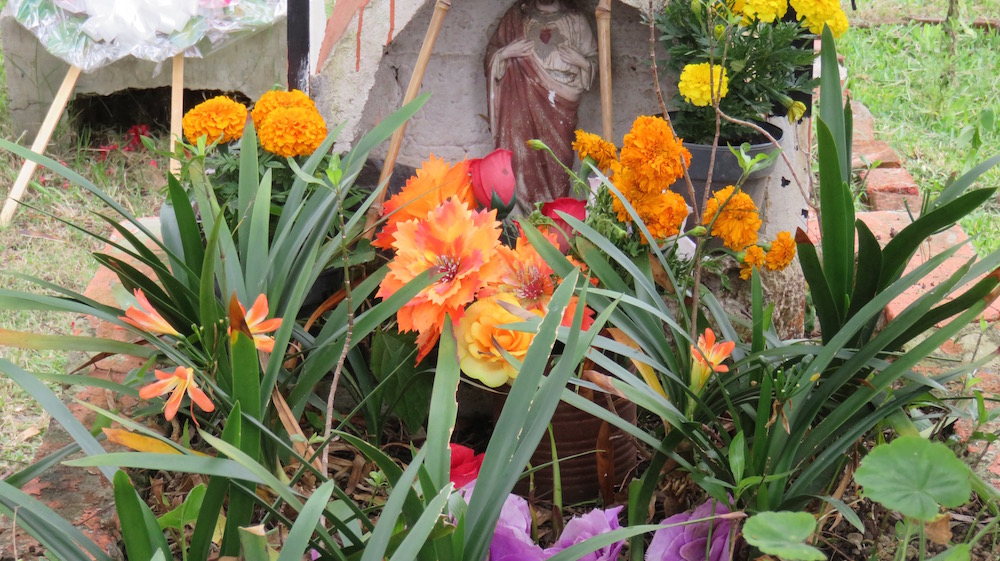
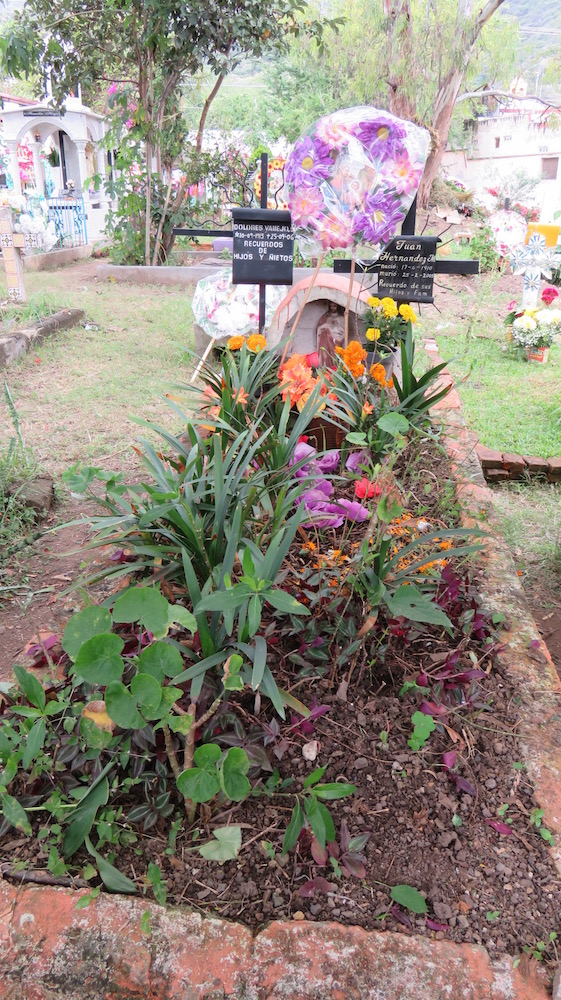
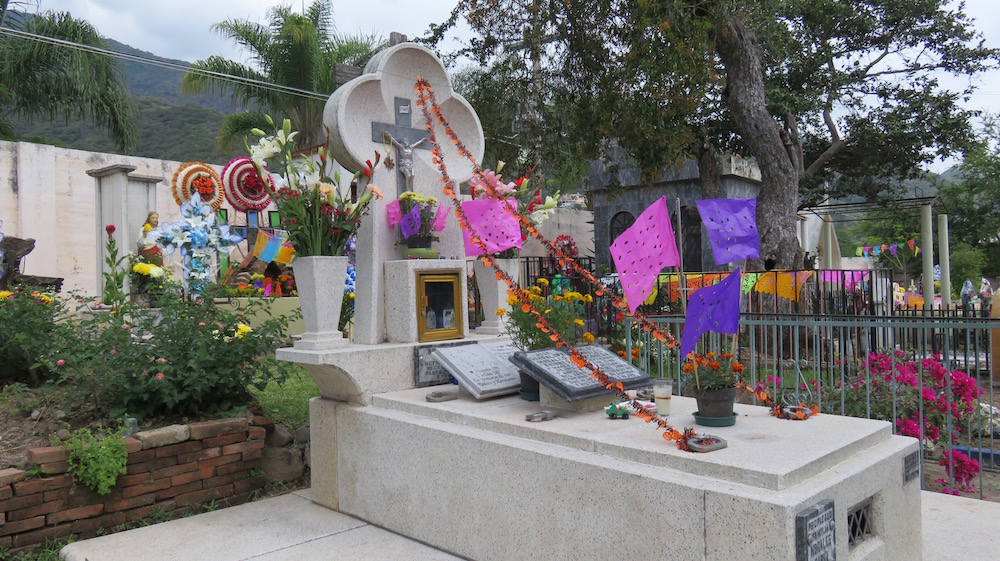
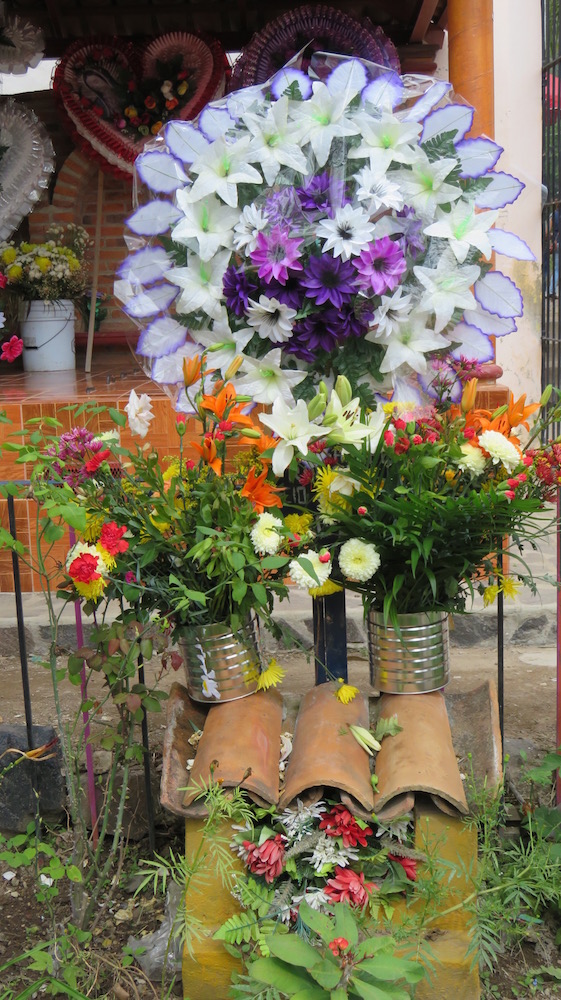
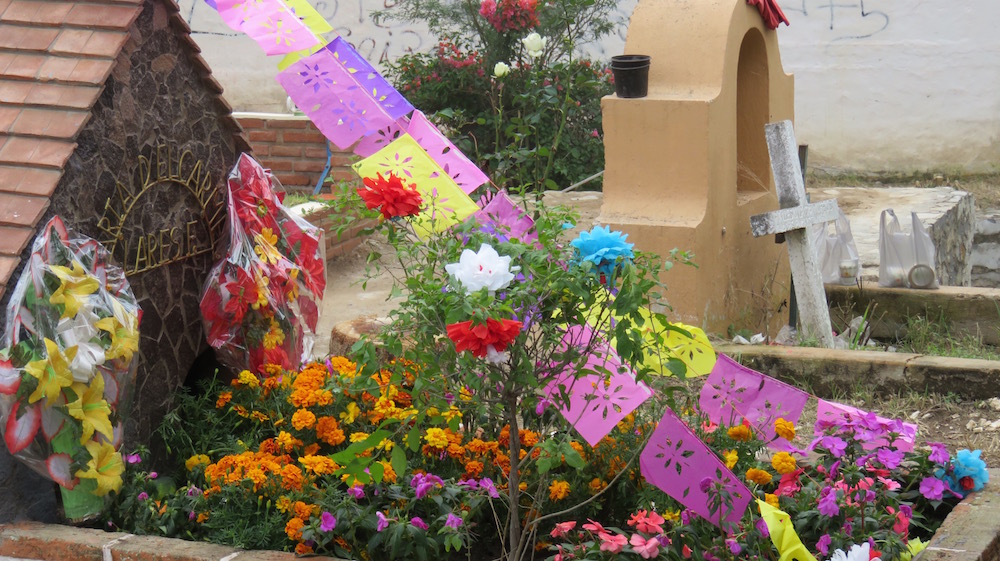
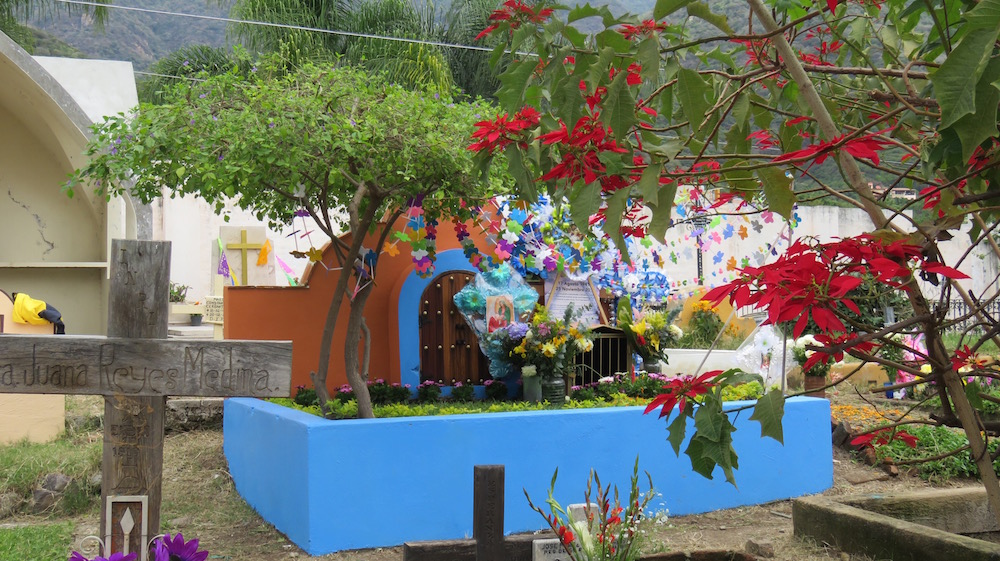
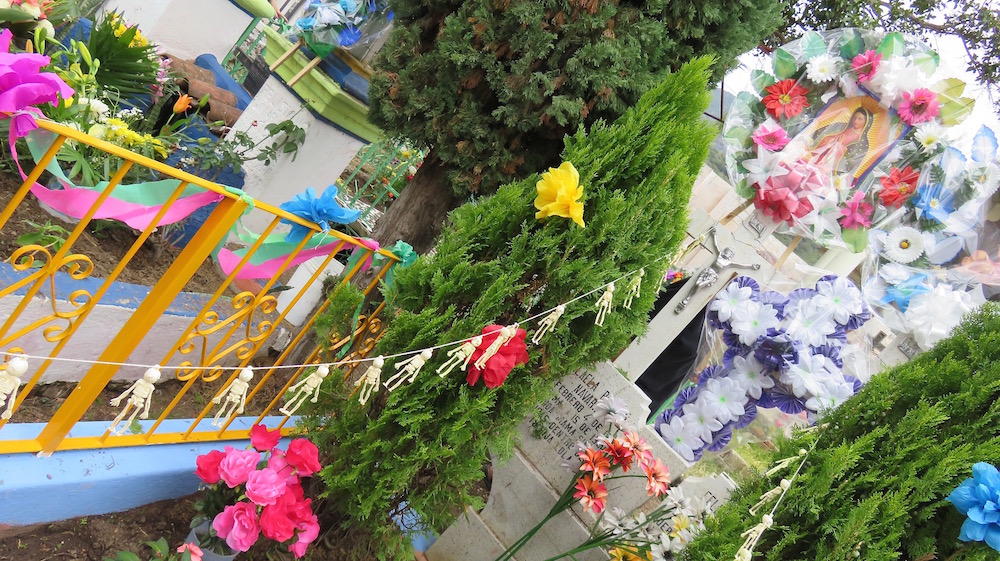
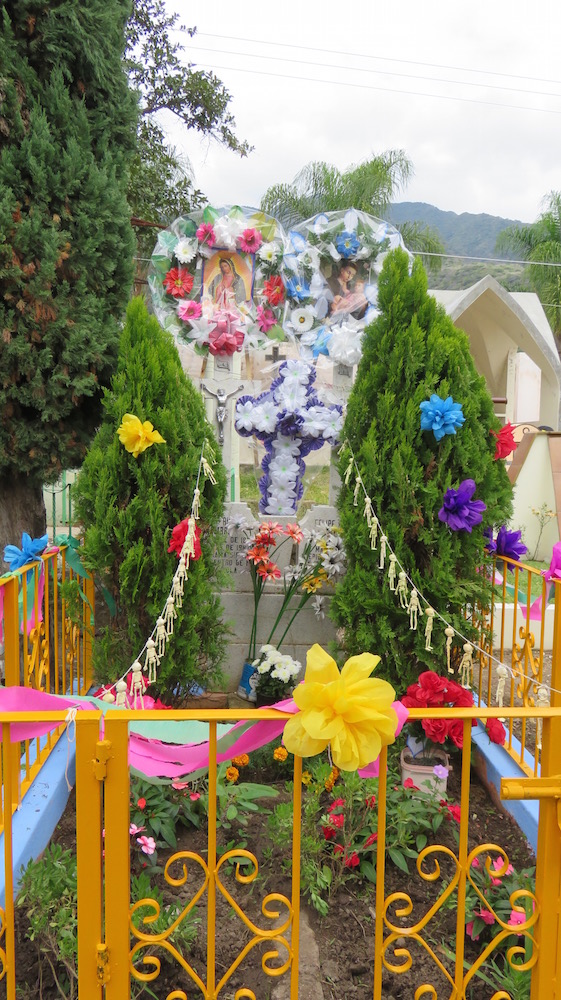
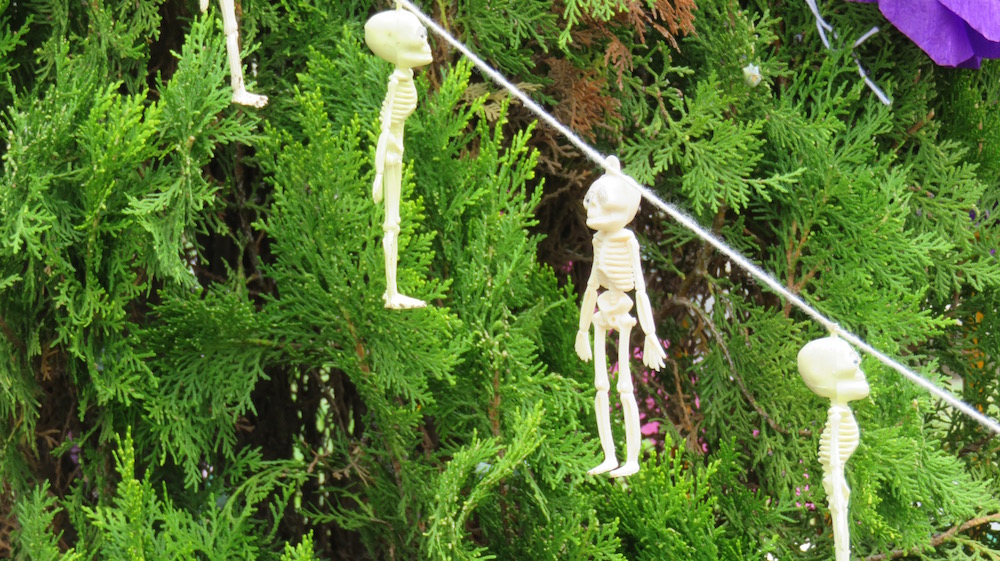
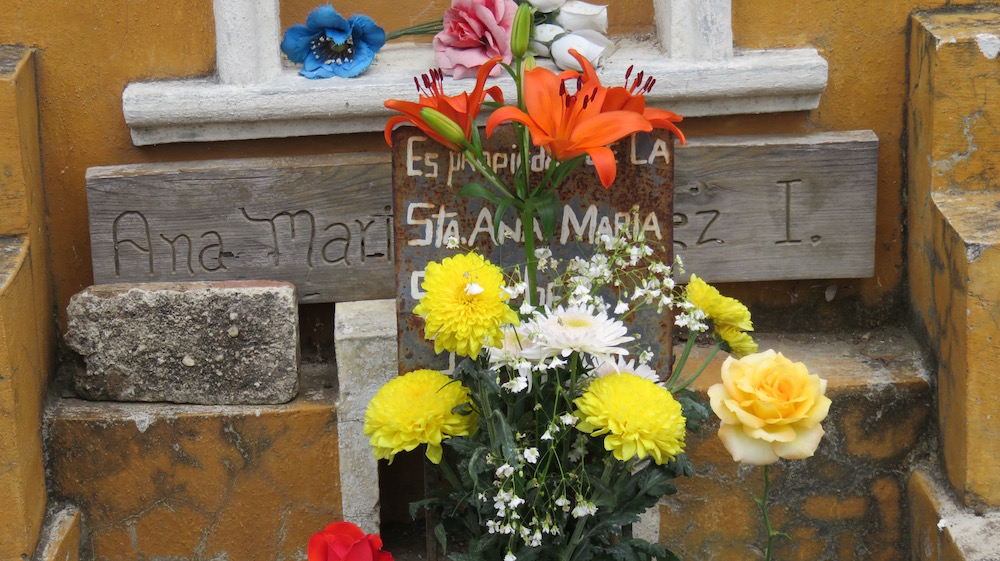 Women were trimming flowers and sweeping gravestones and dirt. Men were touching up paint and clearing away a year’s debris. Abuelas were unpacking huge covered bowls of food, opening tins of tuna to make sandwiches, asking where the paper plates were. Small children were zigzagging through the narrow passages between graves or perched nonchalantly on the low walls surrounding the graves or even on top of the headstones:
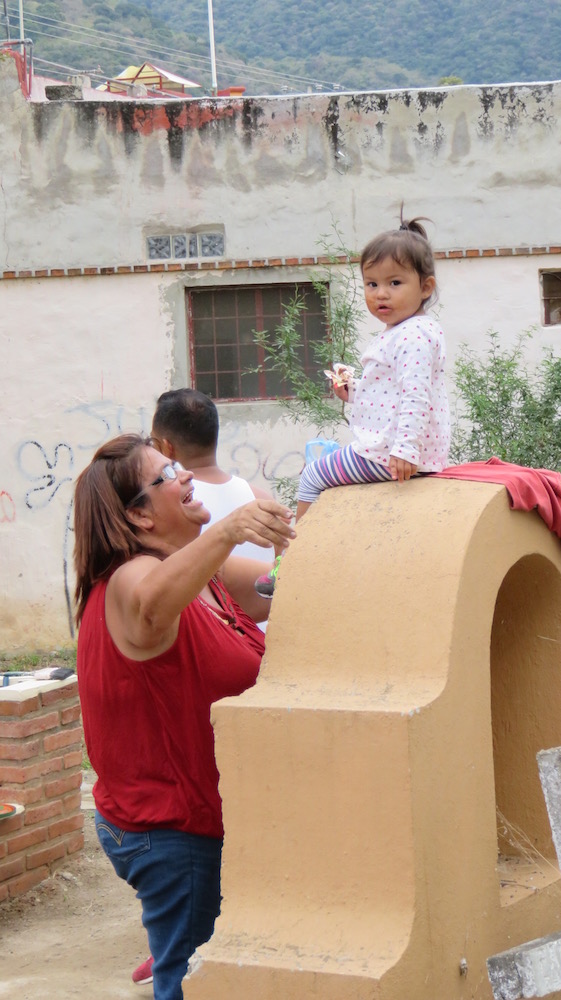 But not all the children.
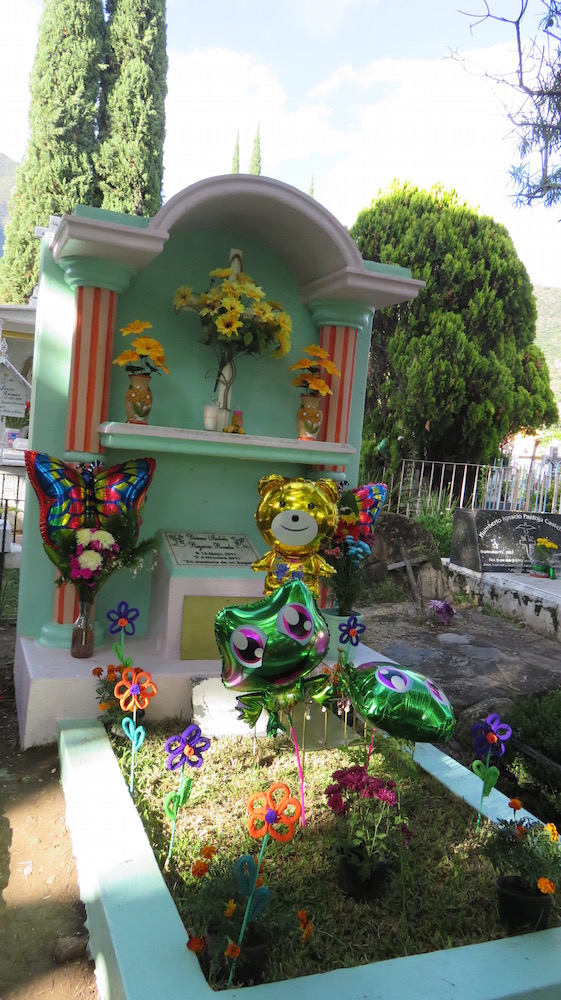
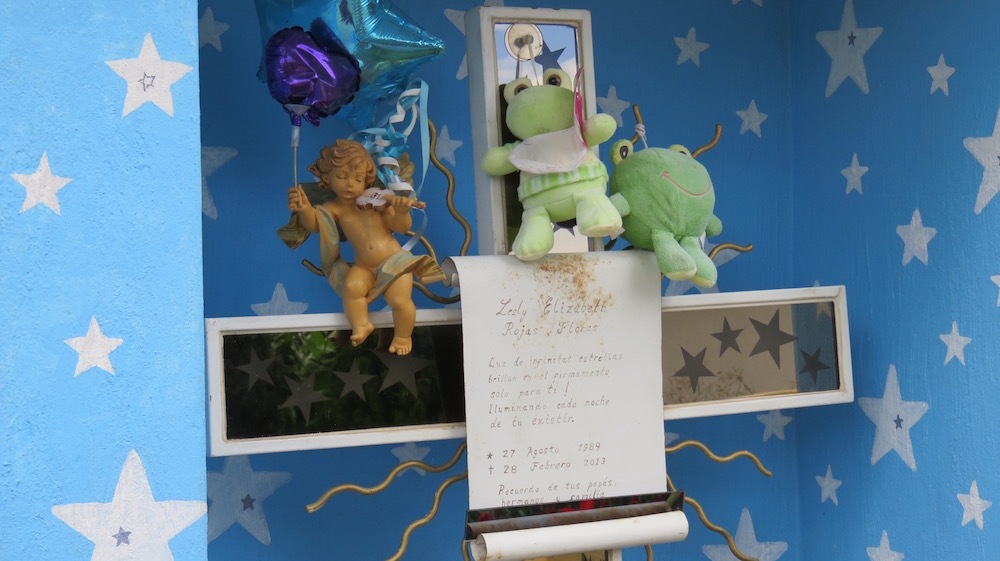
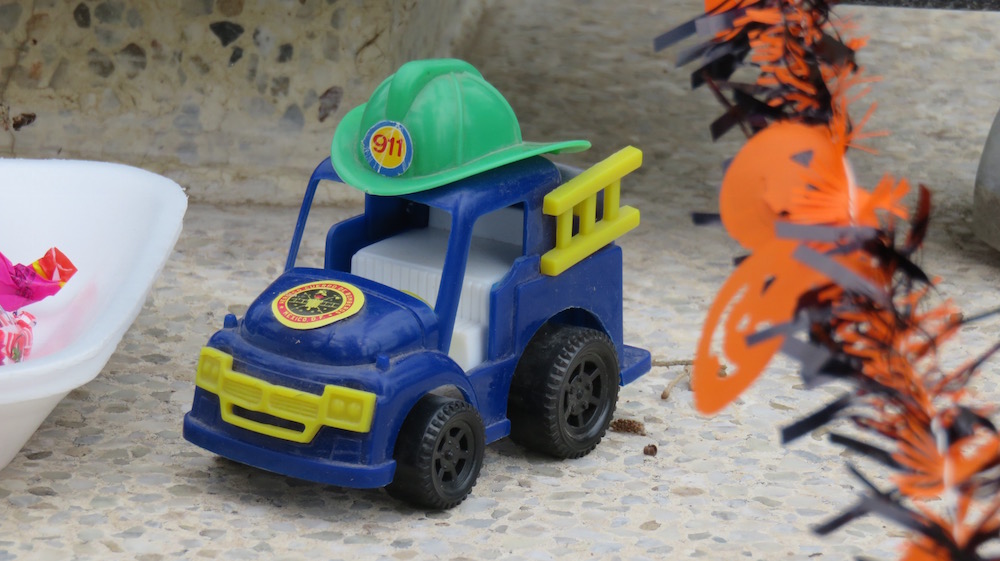
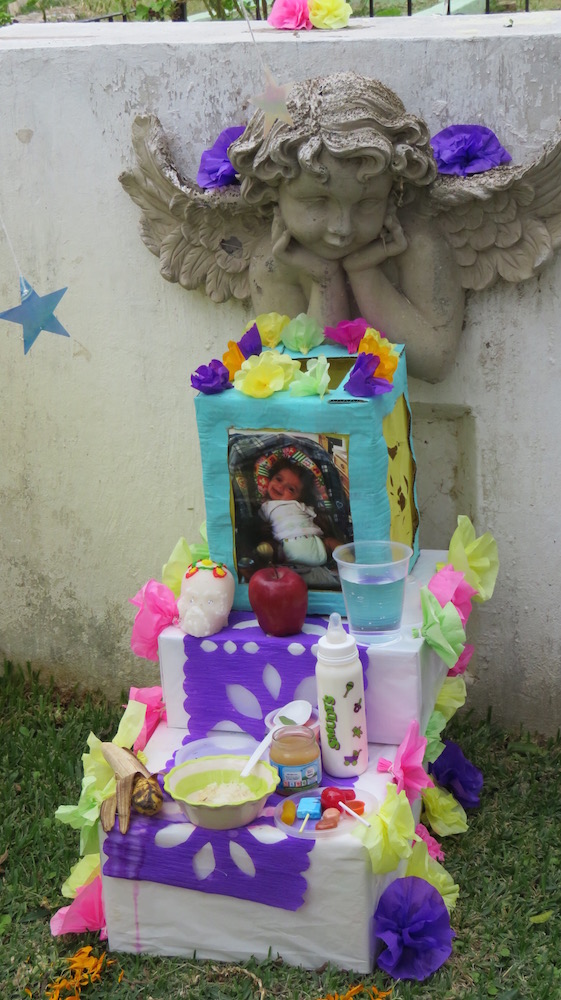
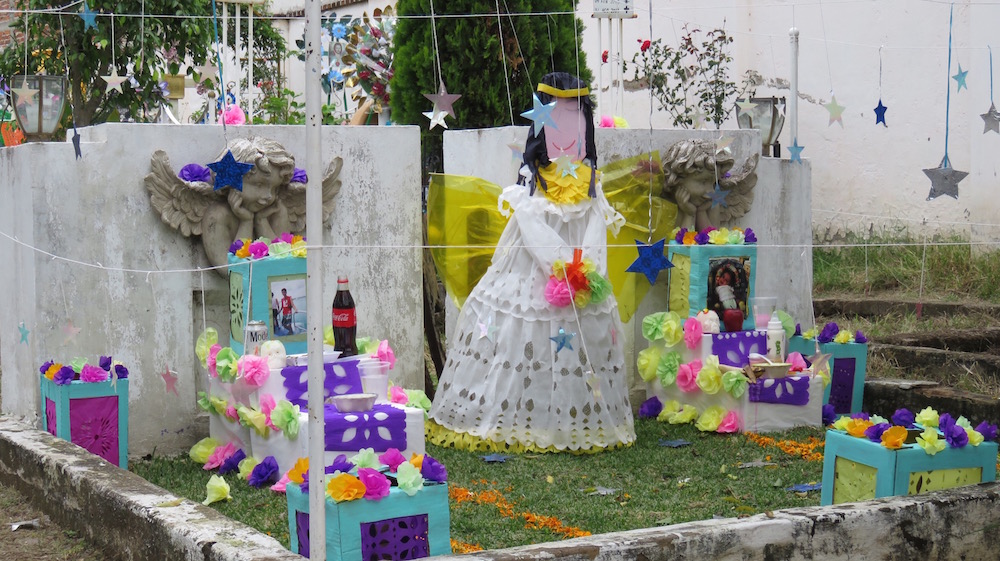 Some of the most elaborately decorated graves were sadly those of children. It is most clearly here that you can see what an emotional outlet is furnished by this daily celebration of the life of loved ones. This is evidenced by the fact that the only tears shed for the hours I was there were shed by me. But I’m getting ahead of my story.

The beauties of the day are obvious in the few scenes I’ve shown, but it very quickly became obvious to me on earlier visits and during this one as well that the contrasts were as vivid as the colors.
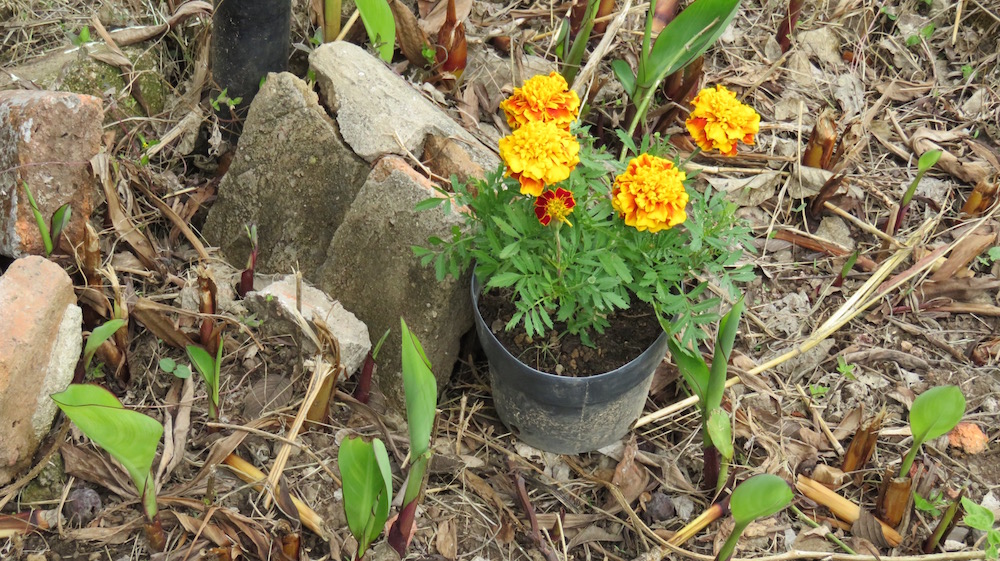
 Some of the grave markers and headstones were sunk so far into the ground that it was impossible to know who they had been placed there for. They stood lopsided, sunken, broken and forgotten with no flower or personal food or drink or object to reflect the personality of the one who resided beneath. And this is why I made the long trip back out to the front of the Panteon to where vendors were selling pots of marigolds.
 I started to decorate the most neglected graves. When the first two plants were quickly depleted, I started to instead pull petals off the flowers to form the traditional cross made of marigold petals. Still, I returned to the vendor two more times to purchase more flowers.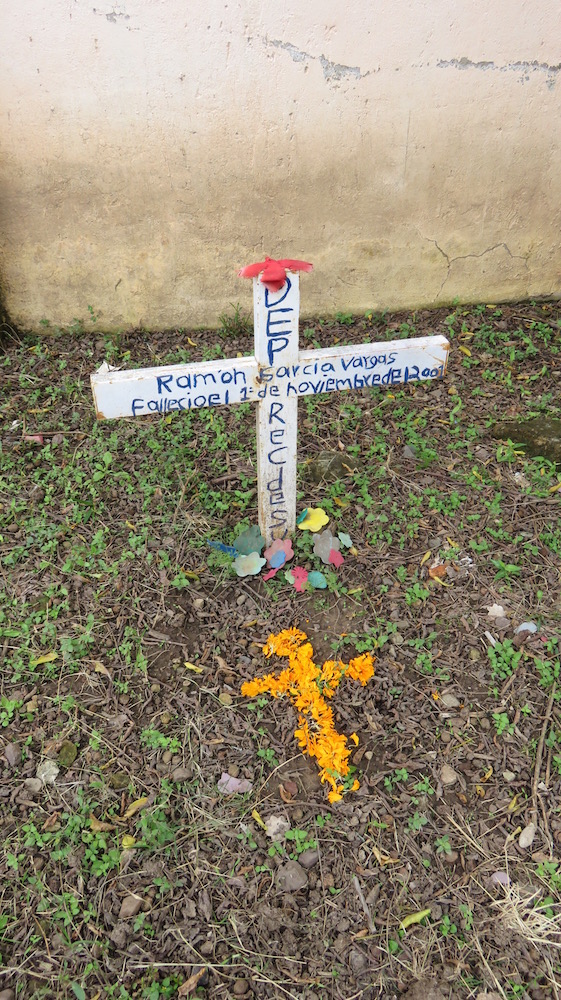
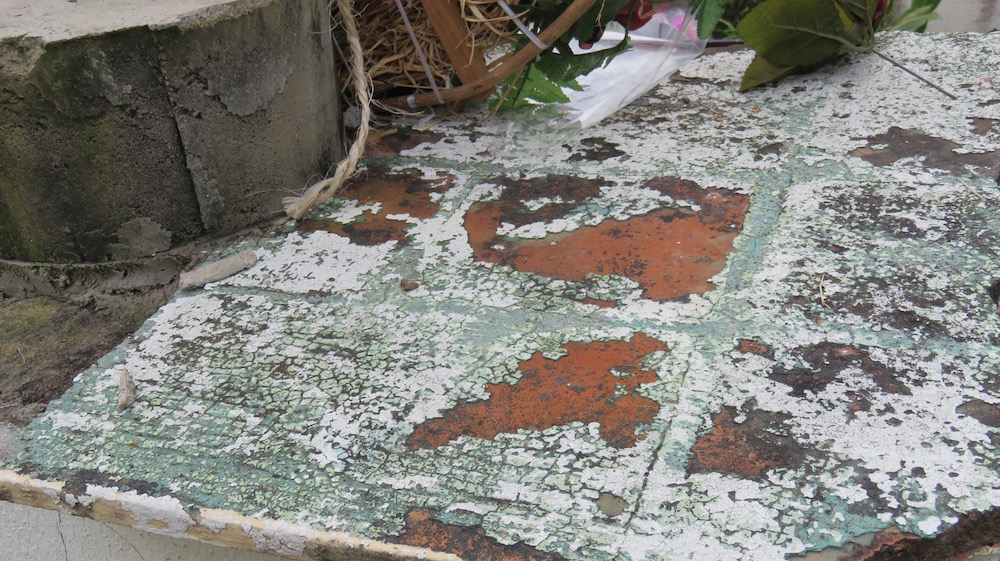
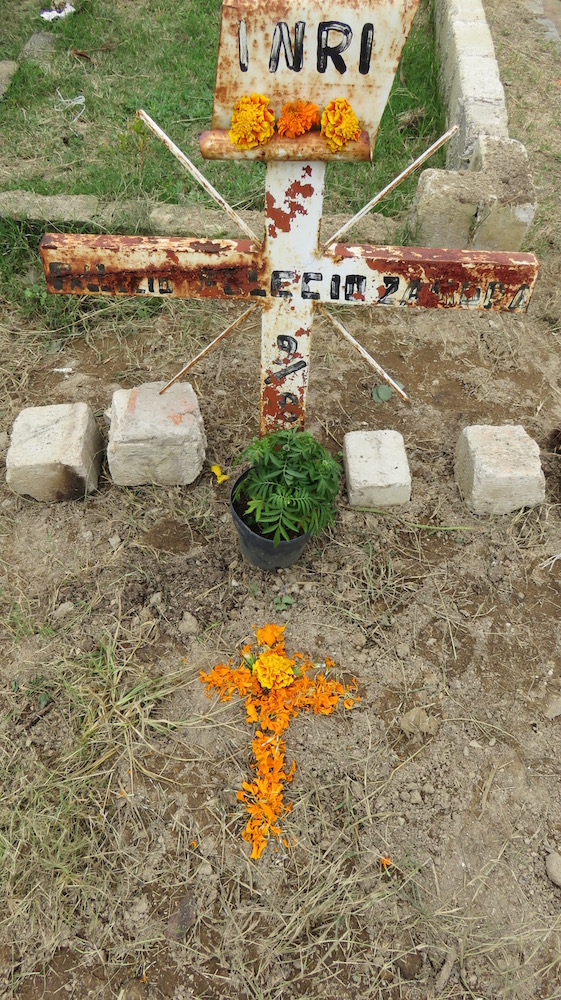 Then, in a plot next to one of the largest and most elaborately decorated plots, I found this:

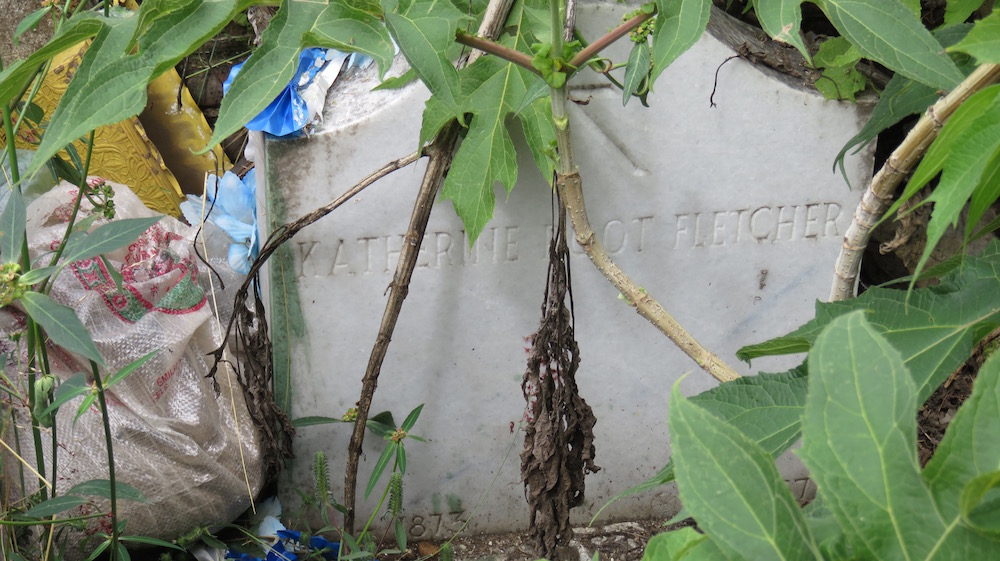
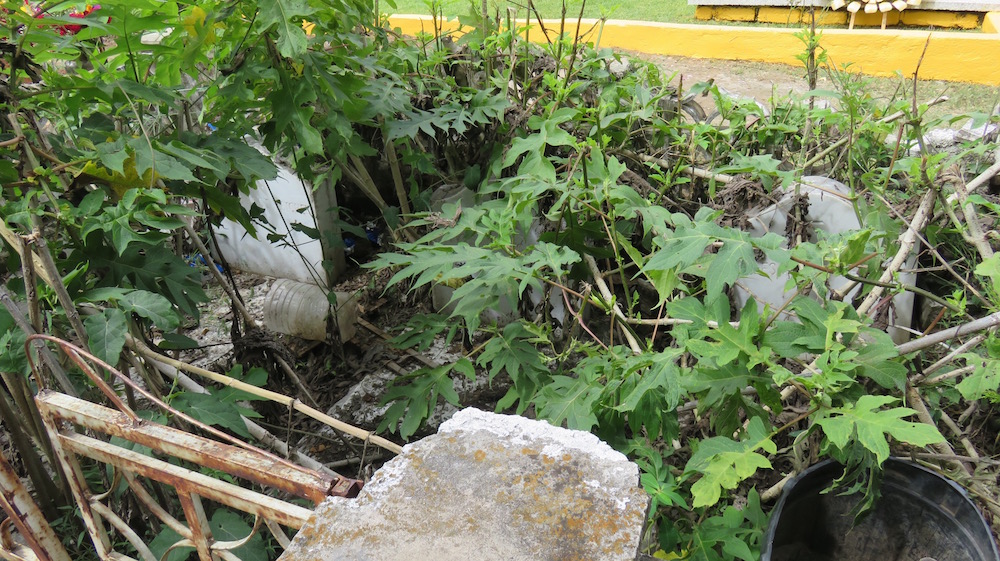 It was by far the worst plot I’d seen. It had been entirely taken over by huge plants and it was obvious that it had been used as a trash dump for those decorating other graves. Years of pop bottles, plastic pots, paper, broken glass, discarded wreaths and flowers and bricks and stone had been tossed over the rusted leaning gate or the carved stone fence that surrounded the three gravestones. Unlike many of the other smaller sites I’d decorated with simple marigold crosses and stones, this was a large site with big marble stones, albeit tipped and stained from years of neglect. “This must be a family that has died out,” I said to the women of the large family taking great pains to decorate the plot next to where this jungle was. “Americanos,” said one woman, and when I looked closely, I saw that this was true. They all shared the same family name. The first, a woman, had died in 1957, the last in 1966–the year after I graduated from high school. The name of a man I first believed to be the husband of one of the two women, turned out to have been born 20 years after her. A son, I thought, and the “Frances” I took to be a woman was probably his father.
Had they ever seen anyone visit this grave, I asked the family who obviously had visited their family plot every year for years. As neighbors, they had to be the experts concerning this grave. No, señora, they said with shakes of their head. No one ever visited this grave. Suddenly, sadness washed over me. The idea of these people remembered by no one–people who had loved Mexico enough to live here at a time when there were no paved roads to Guadalajara or around the lake, no galleries or restaurants and if any, only one hotel–just took control of me and in this place where all was joy and industry and eating and drinking and music, I who knew not one person here was the one sobbing.
“You have a tender feeling,” said one woman, taking my hand. No one snickered, seeing this gringa who obviously did not understand the whole spirit of Dia de los Muertos. I was definitely the party pooper in this crowd!
On my way out of the Panteon, I encountered two policemen–one of whom spoke enough English not to be frightened by my Spanish. Were there people who hired out to clear graves? I asked. They accompanied me back to the far lower end of the graveyard, saw the plot, located a man. We negotiated a price. Be back in one hour he said. One hour? Surely it would take longer than this! But he said many men would make fast work of it, and to return in an hour and a half.
I drove quickly home and when I returned, it was with garbage bags full of aloe plants and sun rose vines I’d trimmed from my garden. Trowels, diggers, candles, matches, a bottle of Bohemia beer (which I’m sure someone has pilfered and drunk by now), a can of Coke. One the way down the hill I stopped at our little market and bought the last loaf of “Dead Bread” (Yes, they really do call it this.)
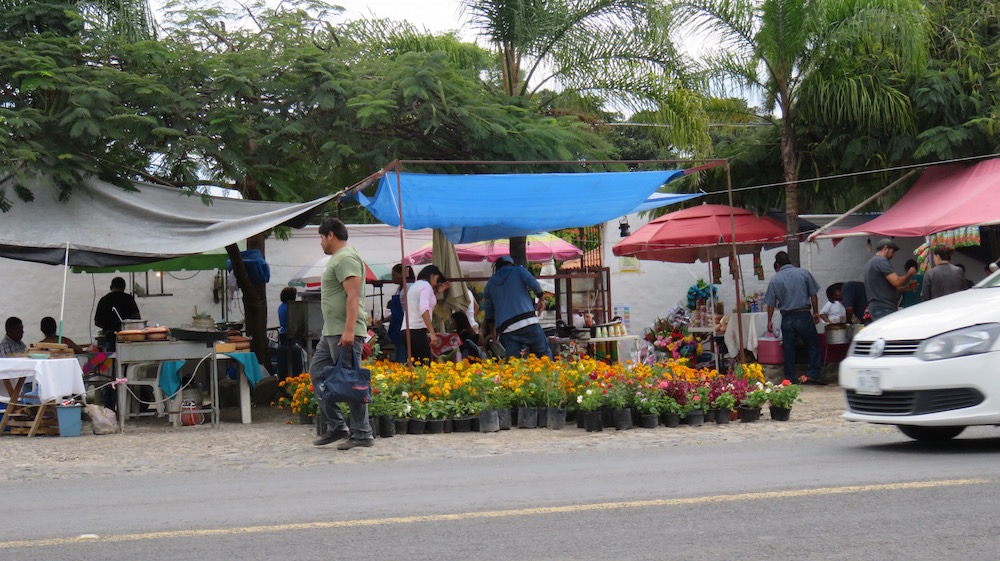
This time, I parked by the lower entrance to the Panteon, wending my way with three large bags among vendors selling pizza, boiled peanuts, stir-fried garbanzos, cheap plastic toys, candles, flowers, ice cream, Cokes, beers. I looked for the white crypt one of the policemen had pointed out for me to use as a guide in finding the graves, but I had walked right by them when a woman stopped me and turned me around to look at the spot I’d just passed. There was no way I would have recognized it as “my” spot. This is what I saw (minus the plants, candles and offerings. I was so stunned by the difference, I forgot to take a picture until after I’d done my simple decorations.):
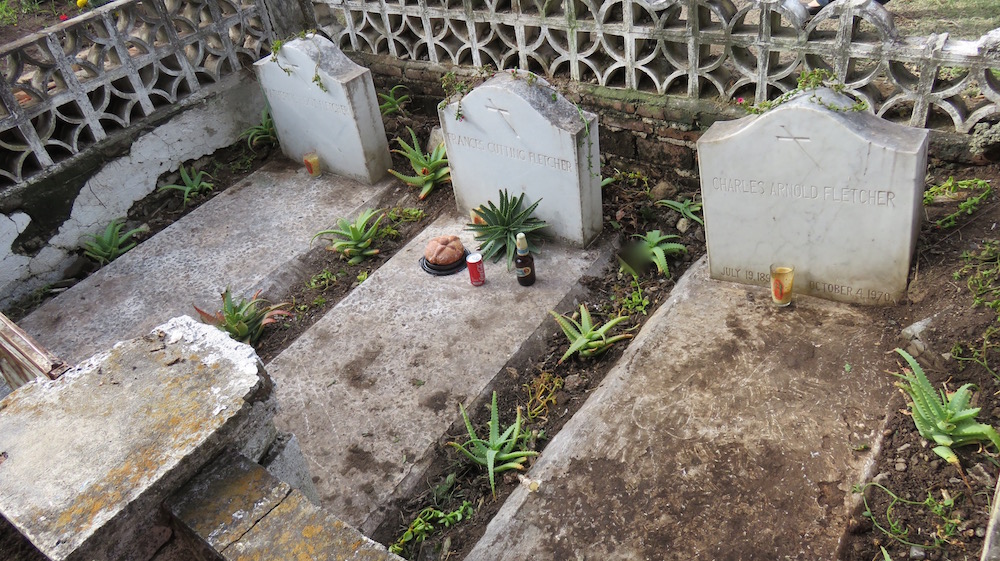
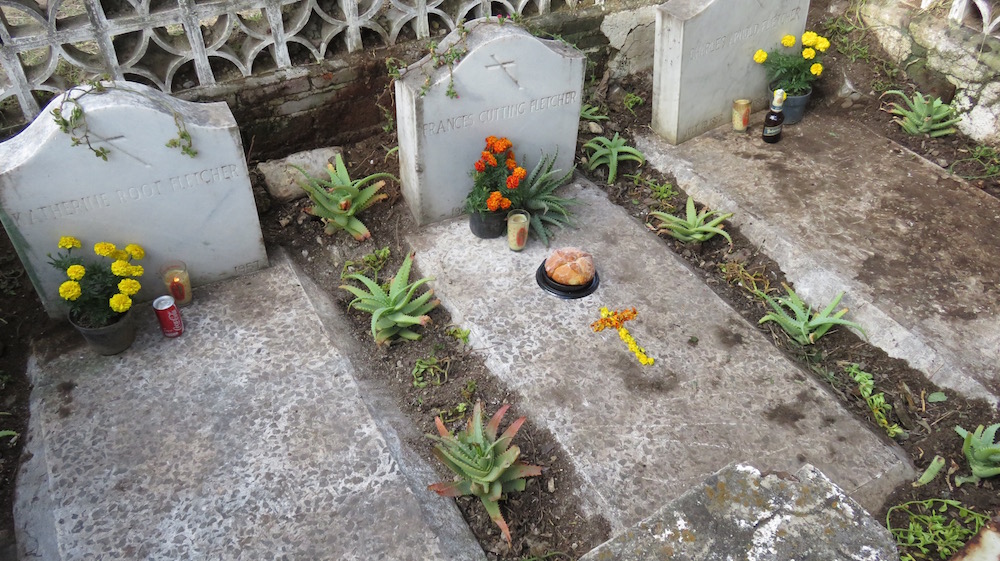
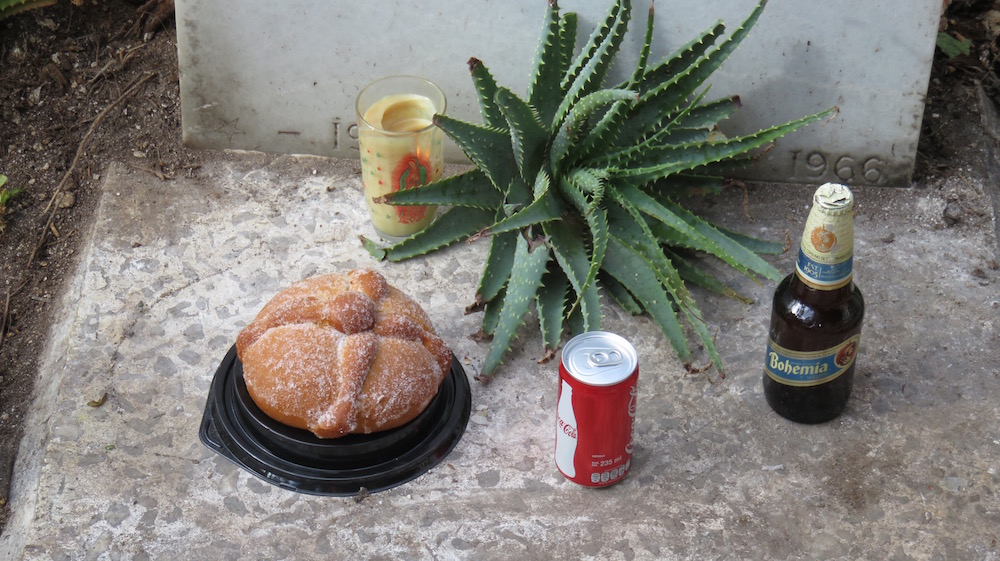
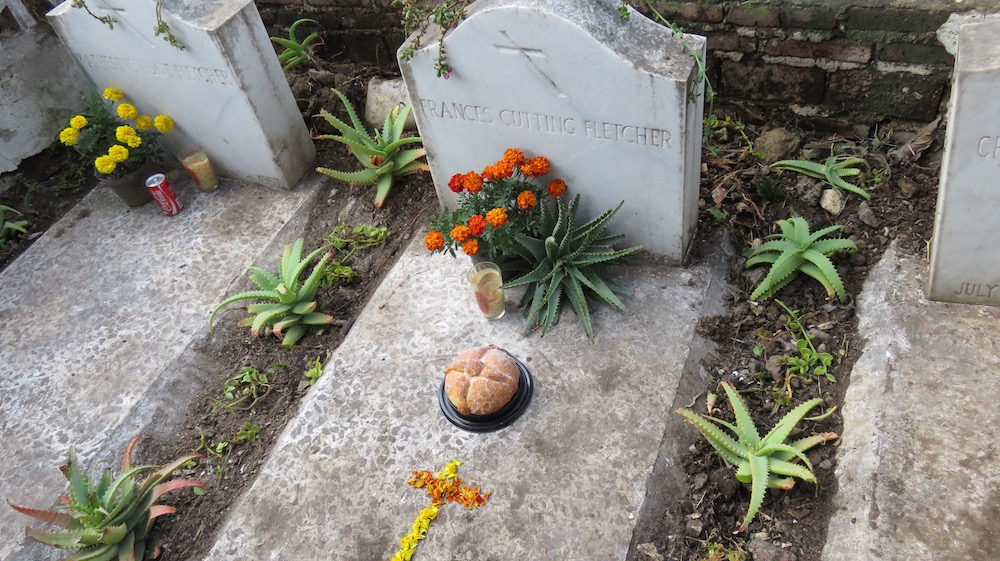 The decorations are sparse, perhaps laughable to those who have decorated the resting places of loved ones that surround these three graves. But hopefully the aloe will survive and spread, even without watering. Perhaps the sun roses scattered between them and around the edges and draped over the headstones will take hold and so when I return, I will be able to plant something more colorful.
The two policemen returned and posed for me:
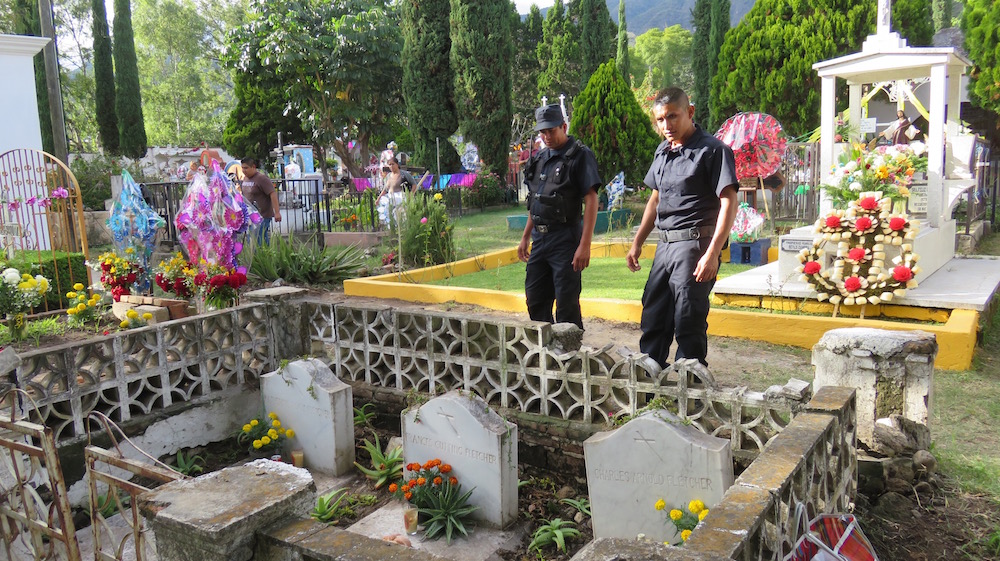 Did I pay $……..pesos, they asked, mentioning a sum 5 times what I actually paid. No doubt they were expecting their cut from the men who had cleared the brush from the grave. “No, I paid $……..,” I told them, quoting the price they had heard me offer. It was twice the minimum wage for a full day’s labor–not only a fair price, but a generous one. They nodded their heads and strolled off to other regions, as did I, feeling a little more connected to this country where I’ve lived for 14 years. Yes, I know there are living people here who need my help more than these gringos dead for most of my life, but doing a small thing to honor their memory takes nothing from anyone else. There is still enough for the living, even after spending a bit of effort and a few pesos on the dead. And after all, we have just spent the past three days immersed in the celebration of death. Why not honor it with my actions as well?
http://ceenphotography.com/2015/10/25/cees-odd-ball-photo-challenge-2015-week-43/
 lifelessons - a blog by Judy Dykstra-Brown