Tag Archives: Medicine

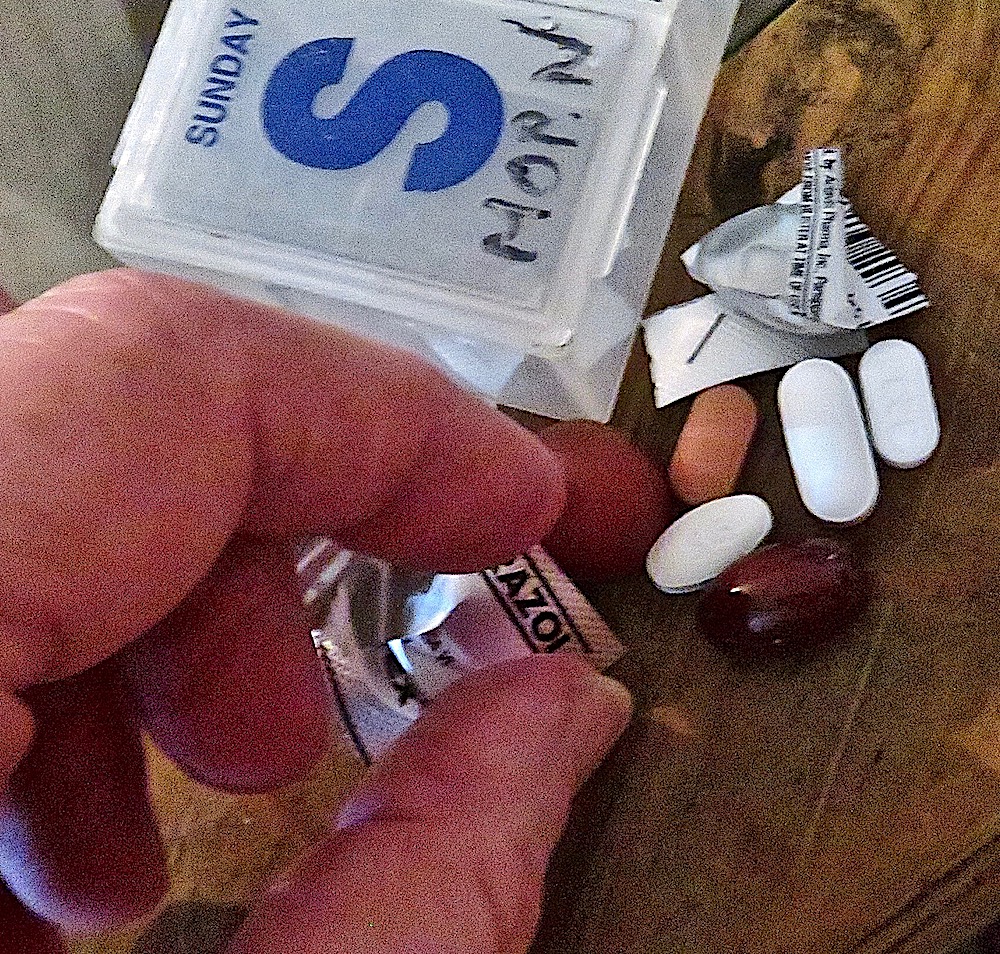
“Take 2 Aspirin,” for the Writers Workshop

Take 2 Aspirin––

For all the world’s diseases and all life’s little ills
they’ve been inventing medicines, elixirs, syrups, pills.
But those crafty bacteria, viruses and germs
keep running on ahead of us as we come to terms
with ways to counteract them. They’re crafty little mites
who somehow slip inside of us through food or air or bites.
So in spite of all our science—our test tubes and our beakers,
all that malevolent mini-world just don their little sneakers
and keep on evolving a little bit ahead.
Enough to keep us sneezing or roiling in our bed.


The Writers Workshop prompt is “Medications.”

Blackberry Balsam

Screen Shot 2020-06-25 at 6.41.06 PM

Blackberry Balsam

Blackberry Balsam, the scourge of my youth.
It was repulsive, my father uncouth
for presenting this mucous-like liquid most vile,
insisting I swallow the ghastly brown bile.
I gritted my teeth and went sullen and wild,

but how could I refuse? I was only a child.

Gagging and choking, I chased it with Coke,
expecting another dose when I awoke.
All these years later, its flavor unfaded,
its vomitous odor my memory invaded.
Blackberry Balsam? No taste could be worse,
proving sometimes the cure is worse than the curse.

Biologist explains how marijuana causes tumor cells to commit suicide

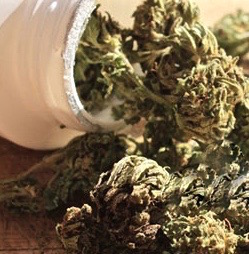
Prescription-Marijuana-Drugs-Joint-Bottle (1)Photo and article reprinted from the Natural News

Biologist Explains how Marijuana Causes Tumor Cells to Commit Suicide

(NaturalNews) The therapeutic potential of cannabis appears limitless, extending far beyond just relieving nausea or pain in the terminally ill. Christina Sanchez, a molecular biologist from Compultense University in Madrid, Spain, has been studying the molecular activity of cannabinoids for more than 10 years, and during this time she and her colleagues have learned that tetrahydrocannabinol, or THC, the primary psychoactive component of cannabis, induces tumor cell “suicide” while leaving healthy cells alone.

This amazing discovery was somewhat unexpected, as Sanchez and her team had initially been studying brain cancer cells for the purpose of better understanding how they function. But in the process, they observed that, when exposed to THC, tumoral cells not only ceased to multiply and proliferate but also destroyed themselves, both in lab tests and animal trials. Sanchez first reported on this back in 1998, publishing a paper on the anti-cancer effects of THC in the European biochemistry journal FEBS Letters.

“In the early 1960s, Raphael Mechoulam from the Hebrew University in Israel categorized the main compound in marijuana producing the psychoactive effects that we all know,” explained Sanchez during an interview with Cannabis Planet. “After the discovery of this compound that is called THC, it was pretty obvious that this compound had to be acting on the cells, on our organism, through a molecular mechanism.”

Sanchez expounds upon this and much more in a five-minute video segment available here:
Vimeo.com.

For more of the article, go HERE.