Tag Archives: memories

IMG_1482

Old Stories

Like the lyrics to a favorite song,
half-remembered as we sing along,
the stories that we love the best
and relate with the strongest zest
are those that we have half forgotten–
misplacing details ill-begotten.
Like wrinkles smoothed with Photoshop,
we know where truth is meant to stop.
We smooth the bumps and oil the friction
by sugaring the truth with fiction.

In response to The Daily Post’s writing prompt: “Memory on the Menu.” Which good memories are better — the recent and vivid ones, or those that time has covered in a sweet haze?

                                                   Revisioning a Life

I don’t know if it helps much to revision the past.  I think we make decisions according to our background and our chemical makeup and genes and “knowing” that different choices might have contributed to your life turning out differently doesn’t necessarily mean that you would make different decisions even if you knew how they would play out.

When I was a little girl, I always wanted to be around people.  I think this was primarily because I didn’t have a clear enough idea about what to do when I was alone.  If I’d had art classes or someone who encouraged me to write stories when I was small, I might have developed a need for lots of time alone earlier.  As it was, I started reading to fill out my days and nights, but even then, I probably would have traded in those books for more activity.

By the time I got to college, I was accustomed to “wasting” large amounts of time by doing nothing or by playing games, watching TV and listening to music.  I had never been anyplace where there had been clubs and activities to join other than the band, choir and MYF (Methodist Youth Fellowship) of my junior high and high school years.  I don’t know if it was lack of confidence or lack of interest that kept me from joining activities in college where I would have met more people, but I am quite sure that I had a small town inferiority complex that made me think people would probably not want to meet me.

Although in the dorm and around female friends I was outgoing and a leader of sorts, at mixers with fraternities, I was shy and held back.  I didn’t go to the student union much–preferring the smoking room at our sorority house, playing bridge with the hashers and watching soap operas with the Lenzi twins–my partners in prevarication.  Somehow I fell back on the lazy habits of my youth, even though I was now in an environment that provided more stimulating possibilities.

I see this tendency spreading like a stain throughout my life.  Yes, I traveled all over the world, but once there, in an exotic or  unfamiliar place, I didn’t necessarily make use of all the possibilities for socialization or discovery.  Once again I fell back on nights spent alone, reading or puttering around the house.  It wasn’t that I didn’t meet people and make friends.  I gave dinner parties and big parties and went to the houses of friends.  It was just that I also held back.  Pulled out by friends, I would go, but if I had to make the decision myself, I would stay home.

Now that I am in my retirement years, I still feel this pull and push of life.  If someone asks me to do anything, I do it.  I have had a few big parties but in recent years I prefer dinner with one to four friends.  The vast majority of my time, however, is spent alone, even though I know I could be busy every minute of the day with one or another social activity.  I fill out my days with writing or, in month or two-month spurts, working in my art studio.  I belong to three writing groups, two of which I go to regularly.  The reading series I coordinated, I let die a natural death when the coffee house where we met closed.  Others have urged me to resuscitate it, but i haven’t.

The reason I know I would probably not change my college habits even though I now know I should have been more active is because now that I am in possession of this knowledge, I still choose not to change.  I am a social person who has an even bigger need for privacy and alone time, but now it is because I have two worthwhile activities with which to fill that alone time. Whether there is much value in what I produce is a moot point.  I think we create in order to recreate our selves, in a way.  It is a place where we have a power we grant to ourselves and perhaps in a way this is a success which, although unheralded by the world, creates a smaller world of our own where we can become whatever we want to be.

In response to The Daily Post’s writing prompt: “Revisionist History. Go back in time to an event you think could have played out differently for you. Let alternate history have its moment: tell us what could, would or should have happened?

DSC06905

back when we were baby birds

feeding each other
cold spaghetti worms
in grass clipping nests
empty summer stretched in front of us

stale plastic wading pools
pressing yellow circles
into grass
that smelled like wet bandaids

during a game of hide-and-seek
dust bunnies behind the chest
full of old prom dresses
in the upstairs hall

mouse droppings
in the basement
pits from sour cherries
scattered on the back steps

scraps of soggy paper
dried into small sculptures
under the weeping willow tree
revealing part of each original message

mommy is . . .
. . . ate my cookie
I hope Sharon . . .
my doll doesn’t . . . your doll . . .

summer just an empty cup
we filled each day
with the long summer rains
of daydreams.

In response to The Daily Post’s writing prompt: “In the Summertime.” What has been the highlight of your Spring or Summer?

To see my other post today, go HERE.

IMG_0002 (1)

In response to The Daily Post’s writing prompt: “Generation XYZ.” What can you learn from the generation immediately in front of you or the one immediately in back of you

                                                    Generation “Haven’t A Clue!”

I really do not know what name was given to my generation. Someone born into a small town in the forties was more or less protected from being classified into any generation, at least for their first eighteen years.  The mass-education and pasteurization of the internet had not yet happened.  We didn’t have television until I was eleven–when the first transfer station was built in my part of South Dakota.  Even then, the programs were idealized. Ozzie and Harriet, Father Knows Best, The Danny Thomas Show , Leave it to Beaver and The Donna Reed Show presented squeaky-clean prototypes of the American family for us to gauge ourselves against.

Drugs had not yet worked their way into the American mainstream.  The first time I even knew about pot was in college, when a few kids of California opened up a network, via the post office, for educating the naive plains states kids about the glories of escaping the pressures of homework, exams and pecking order by escaping on a cloud.  Crystal meth had not yet been invented, nor crack cocaine, nor any of the other drugs that have since given so much of the developed world society a total escape–and in the offing, created huge social problems.

All-in-all, I’m grateful that i was born into the generation I was born into.  Although the world of computers, texting and social networking have reached out and grabbed us, we nonetheless have a memory of a time without–when books were held in the hand and messages were delivered mouth-to-ear with a hand held in front to prevent information leakage.  Today’s world with instant texting with a camera attached is just an invitation for bullying and the sharing of private information and acts that should never have occurred in the first place. Every bully becomes his own broadcasting network and increasingly violent programs on the television and both big and tiny screens have desensitized the world.

Witnessing act after act of violence and cruelty and a world obsessed by “reality” shows makes us numb to reality–as though it is not enough.  We crave sensationalism even as we tsk tsk and shake our heads at it.  I am truly afraid for the generations that continue to be exposed to this widespread compulsion to view each violent act–be it on the news, via YouTube or on the fictional screen of choice.

Screens get ever larger or ever smaller, so they fill the wall in our media room or get lost in our pockets; but whatever the side of our viewing device, our brains slowly fill with depravity that rivals the Colosseum, the gulags or the German concentration camps. This wholesale violence is the real lethal drug unleashed upon our world, and I don’t know a way out of it.  It is no longer of influence primarily in the big cities, for with the advent of the internet, the entire world has become one colossal city.  We know of the most violent act of the flogging of bloggers in the Mideast or the stoning of homosexuals in Iran or raped women in Africa.  We know of senseless and seemingly motiveless mass murders in churches and schools and fast food restaurants, beheadings in Mexico, suicides of bullied teens and murders of children by their mothers–but all of them occur too far away to be influenced by any action we might take.

We know too much about a world where we have no influence, and so all that happens is more hate, disgust and a further drawing away and warlike attitude toward societies that we don’t understand enough to judge.  And so we hate an entire society instead of hating the violent part of that society that, as in our own society, commits the violent acts that we judge the entire society guilty of.

In the meantime, our politicians are drawn ever more into judging their actions according to economic results rather than humanistic or ecological considerations.  So our cars get fancier, our kitchens are turned into little museums of opulence, our TV screens turn into movie screens and our hand held devices fit on our wrists.  Yet we increasingly turn to takeout and what we watch either warps us, disillusions us or totally removes us from a world of performance and action.  Technology has made it possible to wage wars without leaving the control room–to spy with drones and mount combat with missiles.  We find romance by watching staged reality shows, watch others plan their weddings and pick their wedding dresses, watch million dollar staged weddings and then day-to-day reports of the divorce a few months later.

Yes, the world is crazy, and growing crazier with each technological advance.  So you might have surmised that I would not have chosen to have been born at a later date than my 1947 birth.  And in spite of my yearning to be out in the wider world for most of my earlier life, I am not sorry that my explorations began in my twenties.  I saw the world with new eyes–not having seen The Wild Kingdom, The Discovery Channel or any of the other programs that show us idealized views of far off worlds.  All of my shocks of discovery were purely my own and many of the countries I visited were undeveloped.  I took ferries across rivers now bridged, strolled the dirt paths of towns now paved over and filled with tourists.  I lived in countries I knew nothing about before I lived there, formed my opinions according to my own experience. I was naive, uninformed, ignorant and young.  What better way to see the world?

So, long story short, I would not have chosen to be in any generation but my own.  I did not participate in demonstrations until my fifties when I was an expat living in Mexico.  I was not a flower child, didn’t live in a commune or go vegan.  I was too ignorant to protest the Vietnam war until it was over. But neither was I exposed to crystal meth, heroin or crack cocaine. My mode of escape in college was bridge, not texting, and in my youth it was Monopoly, Cops and Robbers and Drop the Handkerchief!  Perhaps it is pure nostalgia that makes me say I prefer my generation to all others, but I don’t think so.  I think it is the realization that I’ve lived in two worlds and appreciate the perspective this gives me.  Perhaps this is true of every generation, but if so, I wonder what horrible future will render the events of this generation a patina of nostalgia.

“Holy Beginnings”

Holy Beginnings

I always wanted a set of those panties that had a day of the week embroidered on each one, but I grew up in an era when kids didn’t ask for things.  I know my mom would have bought them for me if she’d known, or my grandma would have ceased her endless activity of sewing sequins on felt butterflies or crocheting the edges of pillow shams long enough to embroider the days of the week onto the baggy white nylon panties jumbled into my underwear drawer. I never asked, though.  Never told.

So it was that on Sunday I’d arise and put on the same old underpants, cotton dress with ruffle, white socks, patent leather shoes. I’d take a little purse no bigger than the makeup case in the suitcase-sized purse I now carry. Into it I’d drop a quarter my dad had given me for the collection, a hanky and the lemon drop my mother always put inside just in case of a cough. I never coughed, but always ate the lemon drop, sucking on it during Sunday School and sometimes asking for another from the larger supply in her purse during church.

Why my mom never sang in the choir I don’t know.  She had a fine true voice.  Both of my older sisters did and so did I, once I was in high school.  I remember when I was little watching the choir in their fine robes that looked like they were graduating every Sunday.  They sat facing us, in three rows to the preacher’s left, as though checking up on us to make sure we didn’t misbehave or yawn or chew gum.  In addition to lemon drops, my mother always carried Wrigley’s Spearmint Gum in her purse.  Sometimes the gum was a bit red  from the rouge she always had on her fingertips on days she applied makeup. It seemed to me like the rouge flavored the gum a bit.  It tasted of clove and flowers.

“Just hold it in your mouth,” my mother instructed, my sister and me; and if we chewed, she would take it away from us. “Just chew it enough to make it soft and then hold it in your mouth.”  This was an almost impossible challenge for a child and actually even for a teenager.  By then, we’d learned to crack the gum and to blow bubbles even when it wasn’t bubble gum.  That fine pop and final sigh of air as the bubble broke–so satisfying. The threat and memory of everything we could be doing with that gum resided in each small wad of it held in our cheeks as we sat lined up like finely dressed chipmunks listening to the minister drone on.

Hymns were like the commercial breaks on television–a chance to move around a bit and look at something other than the preacher–to ponder the curious lyrics such as, “Lettuce gather at the river,” “Bringing in the sheets” and “Let me to his bosom fly.”  (Just what was a bosom fly and what had lettuce and collecting sheets from the clothesline to do with religion? Once again, we didn’t ask.)

Then we’d sit down again for the Apostle’s Creed or a prayer or benediction or the interminable expanse of the sermon–half an hour with no break.  I’d listen to the drone of the flies buzzing in circles at the window, or the sound of cars passing in the summer, when the front and back doors were left open to encourage  breeze where no breeze existed.

Now and then a curious dog would wander in and be ushered out by the man who stood at the door to hand out church programs.  Everyone would hear the scramble of dog toenails on the wooden aisle and turn to watch and laugh.  Even the minister would laugh and say say something like, “All of God’s creatures seek to commune with him upon occasion.”  Then everyone would laugh softly again before he turned his attention back to telling us what was wrong with us and how to remedy it.

That afternoon, Lynnie Brost and I were going to play dress up and have a tea party under the cherry trees and bury a treasure there.  We’d already assembled it: my mom’s old ruby necklace, a handful of her mom’s red plastic cancer badges shaped like little swords with a pin at the back to put on your collar to show you’d given to the campaign,  my crushed penny from the train track, her miniature woven basket from South America that her missionary sister had brought her, a tattered love comic purloined from her older sister. (We’d “read” it first–which at our age meant looking at the pictures.)

I fell asleep thinking of what else we could add to our cache, to be dug up again in ten years or for as long later as we could stand to put off exhuming it. I leaned against my mother as I slept, and if she noticed, she did nothing to awaken me.  She shook me a bit, gently, as the congregation stood after the sermon, singing “Onward Christian Soldiers” as the minister marched down the aisle, smiling and greeting parishioners and the choir followed him, as though they were being let out early for good behavior.  At the door, we greeted the preacher again, standing in line to shake hands and be blessed, then ticked off his mental list of who had been among the faithful on this fine summer day when they could have been out mowing the grass or rolling in the piles of grass emptied from the clipping bag.

Then we drove the block home, for no one ever walked in a small town.  Well done rump roast for dinner, as we called the noon meal. Mashed potatoes, brown gravy, canned string beans, a salad with homemade Russian dressing and ice cream or jelly roll for dessert.  All afternoon to play. Another small town South Dakota Sunday of an endless progression strung out from birth to age eighteen, when I departed for college and the rest of my Agnostic life.

In response to The Daily Post’s writing prompt: “The Early Years.”  Write page three of your autobiography.

Clouded

Version 5

Clouded

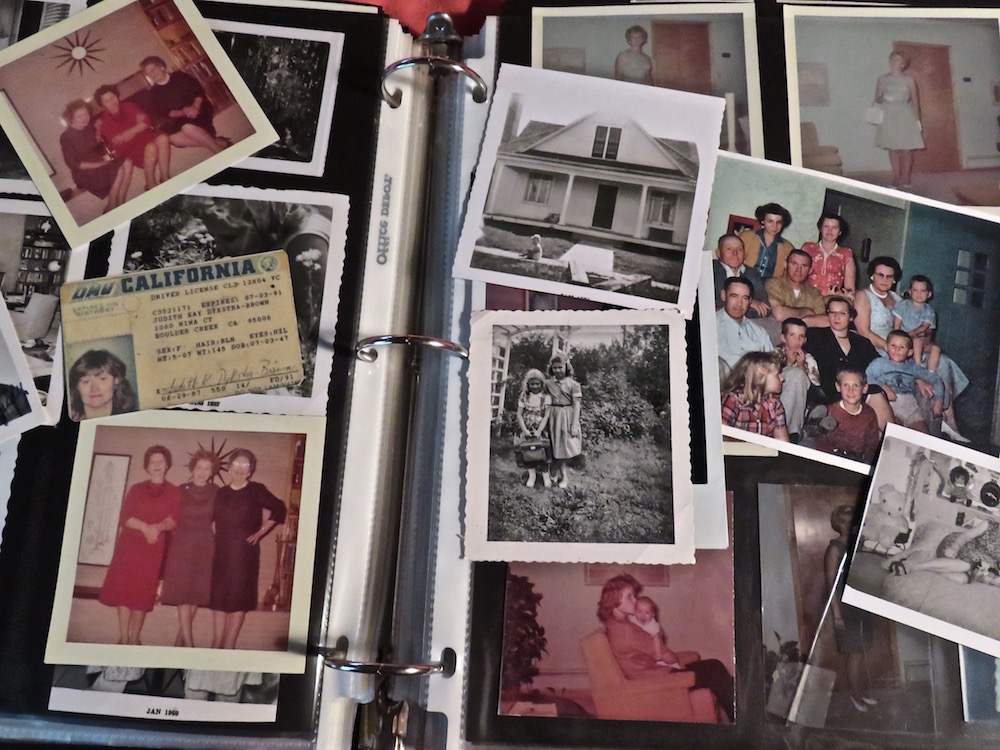
How many family albums have been thrown away
to make room for Tonka trunks and ruffled dresses,
Tinker Toys scattered across closet shelves?

Of what use are lives lived fifty years ago or more?
Store them neatly on computers,
sealed behind glass for all to easily see,
taking up space
only somewhere
in a cloud–floating above

so if the cloud is ever broken,
they will float down like rain
to soak white sheets hanging on clotheslines,
or onto windshields to be scraped away
by wiper blades–
like fine gnats or raindrops–

vertical memories
floating onto our horizontal world,
bringing the past to soak into the present.
Falling action becoming forward motion,
carried to the future.  All things indivisible.

Everything still here–
even if as ash
from burning albums,
curling crisply
and blown away.

The Prompt:  Do Not Disturb–How do you manage your online privacy? Are there certain things you won’t post in certain places? Information you’ll never share online? Or do you assume information about you is accessible anyway?

Small Reunion

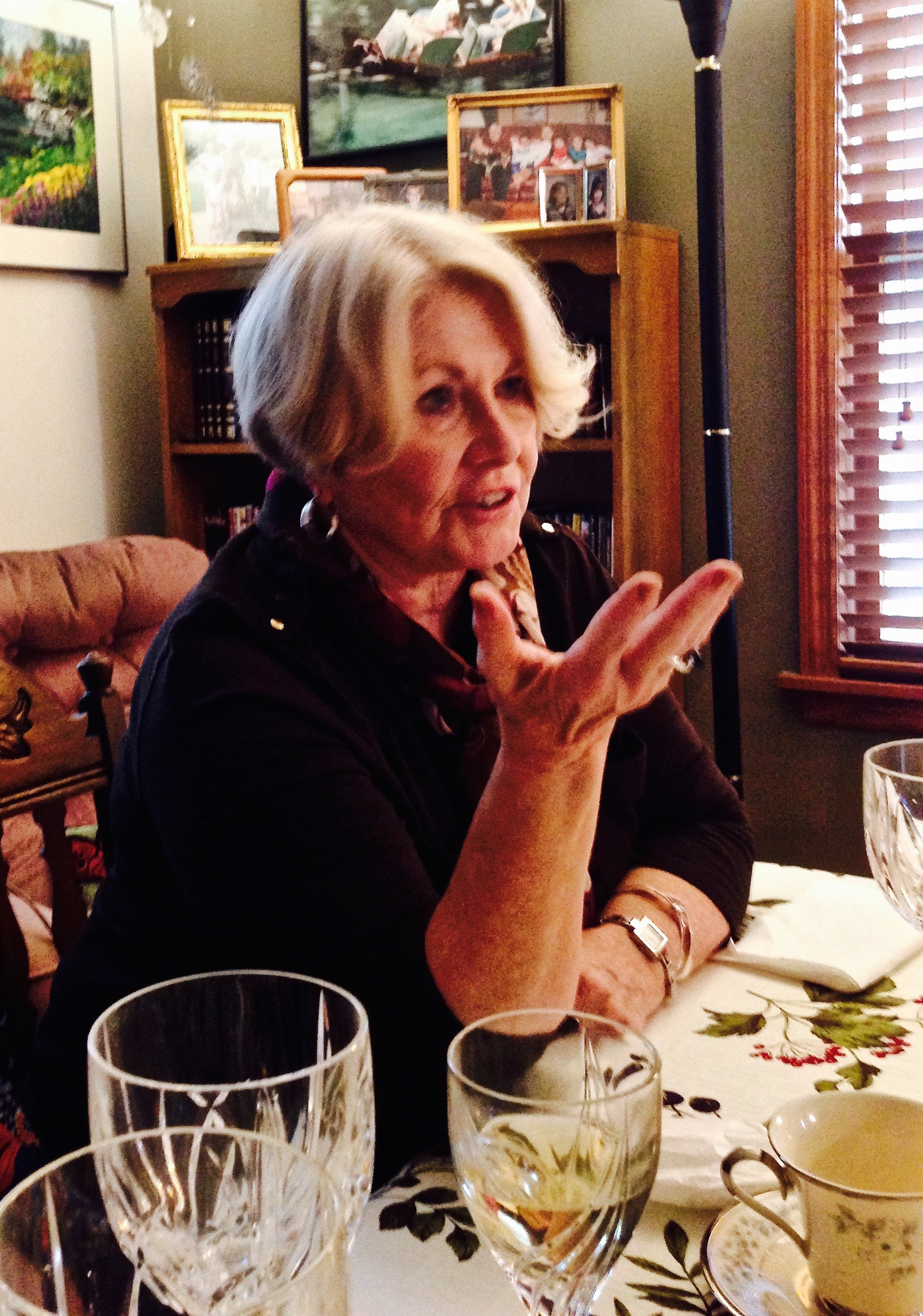
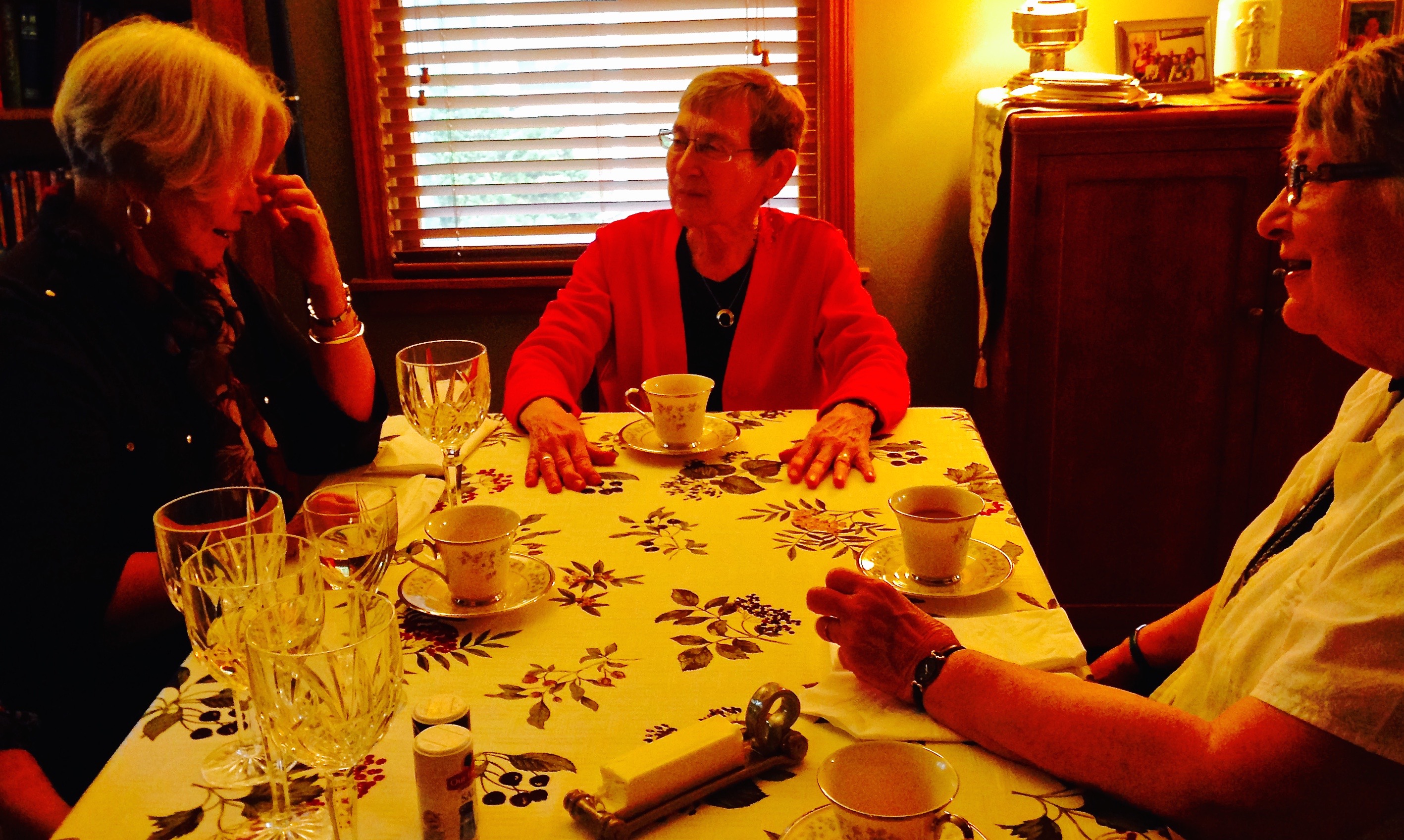
IMG_0574 IMG_0603
IMG_0509 IMG_0471IMG_0496IMG_0602IMG_0543

Small Reunion

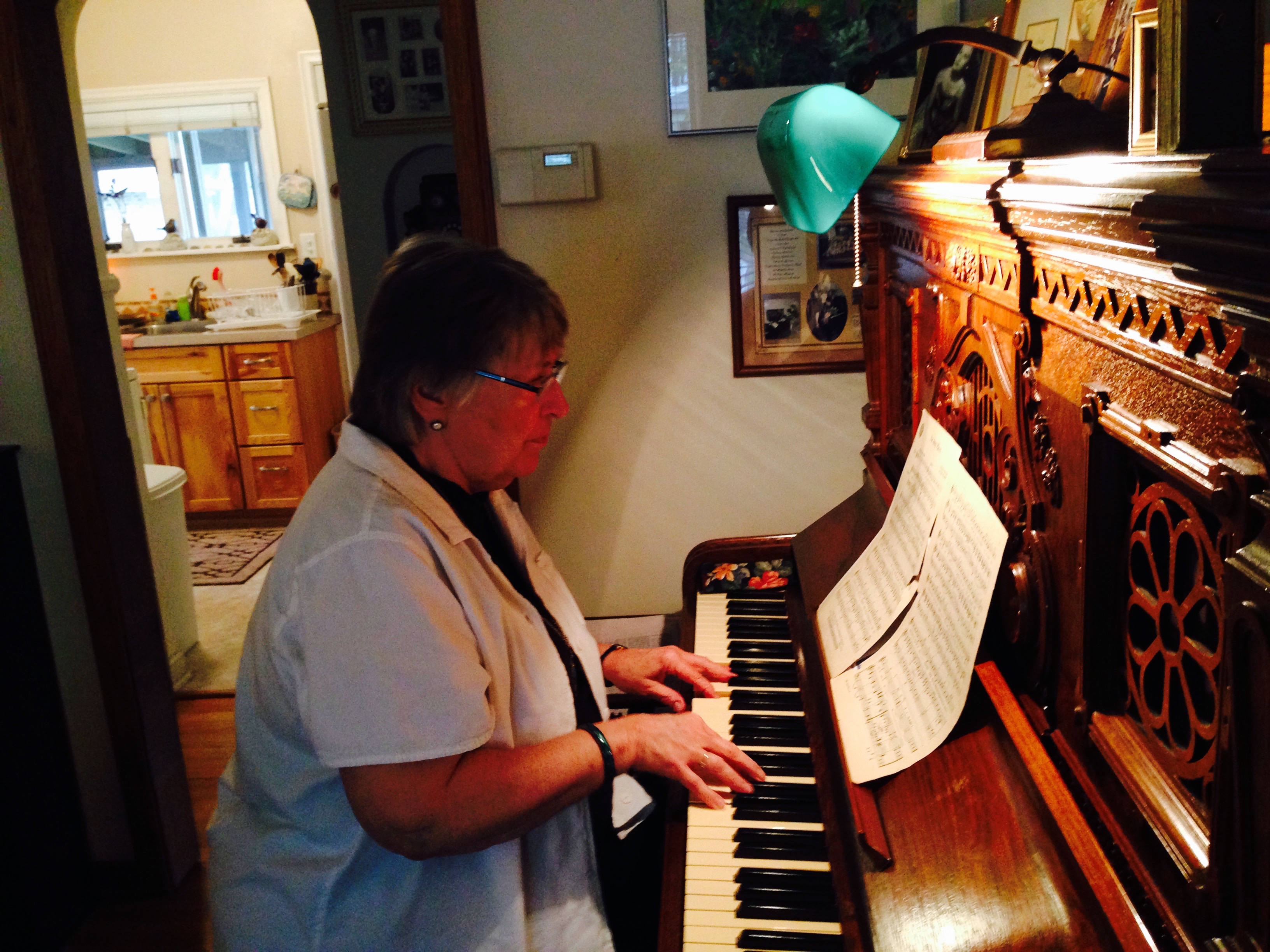
At the piano, the music chords easily.
The soprano’s voice slides smoothly from her throat
while we others strain until “Dear Heart” syrups our vocal chords
and we slip with less effort up and down the scale–
old friends singing even older songs.

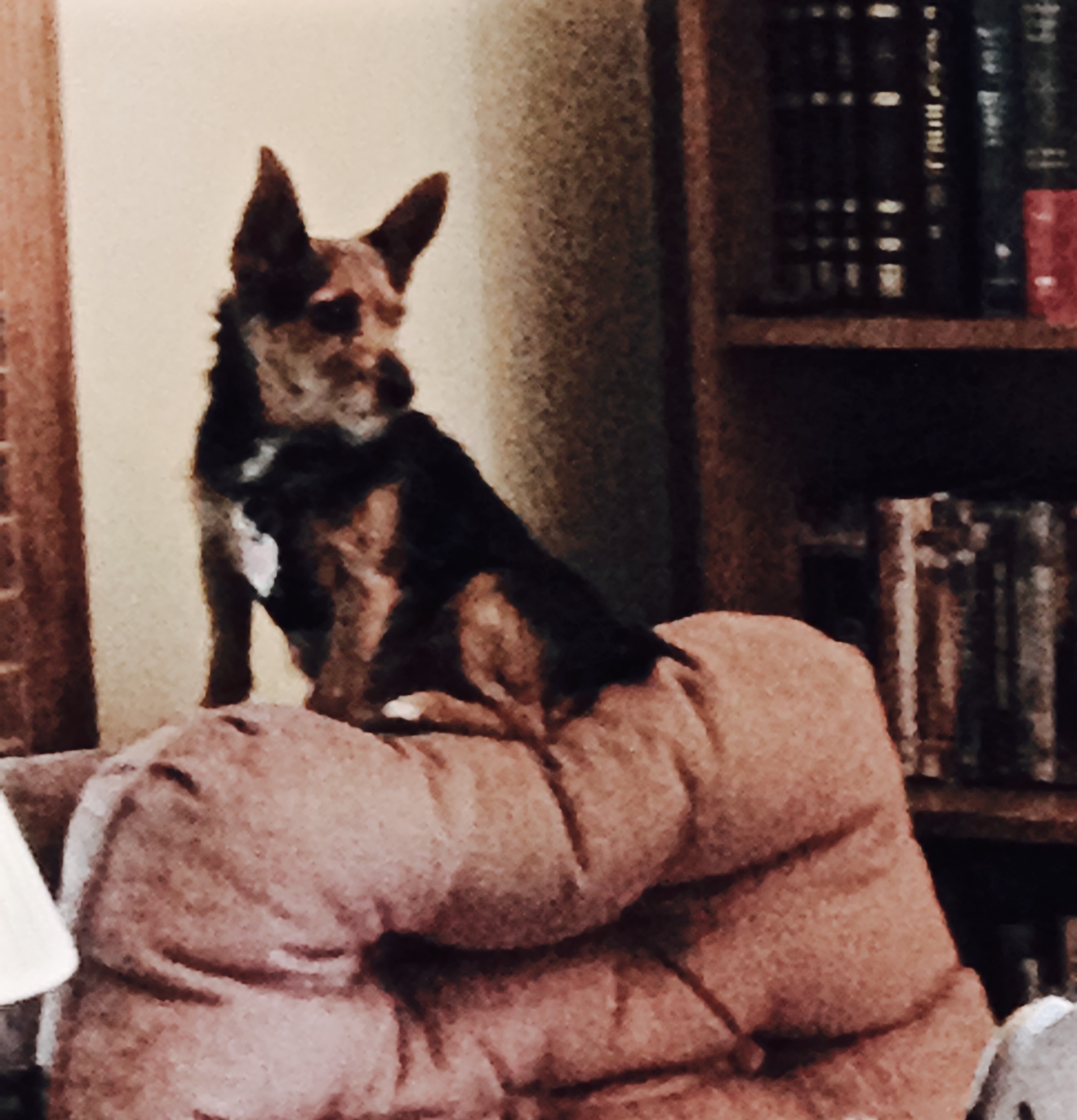
The small dog snuggles in,
balancing on the plush chair back.
The mother of the pianist and the soprano
observes from her frame atop the piano.
All husbands out and about other business.

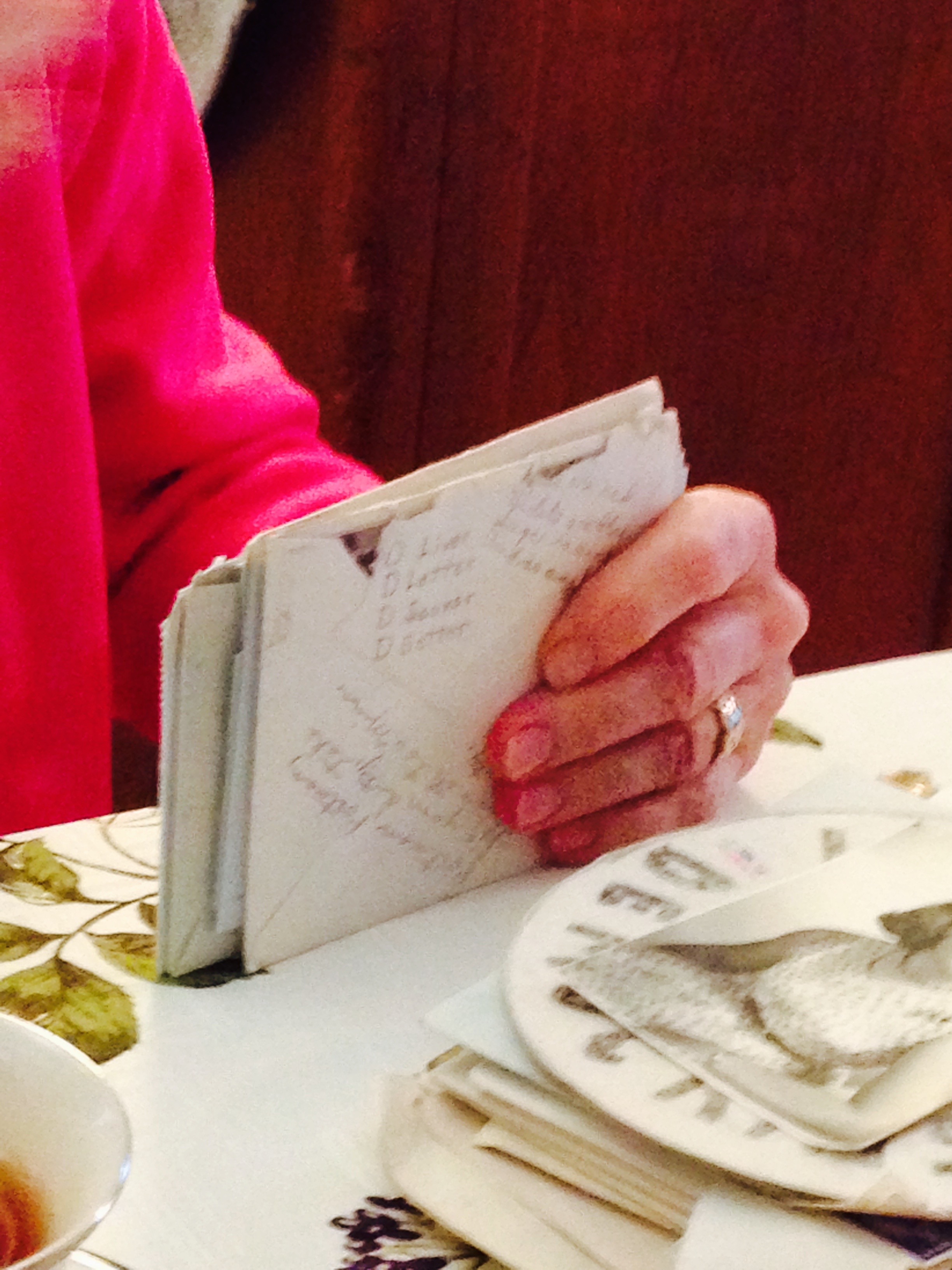
Old letters reread, old memories pulled from forgetfulness,
each of us left at the end richer–hearts refilled
from a shared past. Every word
a song of its own.
Our notes blending together
into perfect harmony.

Disclaimer: I obviously haven’t mastered the art of taking pictures with my cell phone, so these are terrible, but they do convey a bit of the action and mood, so I’m including them.  Unfortunately, I had the camera on video during the entire singing session, so no photos…too bad. 

Meeting an Old Friend

With no time to wait for the prompt, please excuse this bit of sentimentality in lieu of following a prescribed theme today.  I’m still in Minnesota.  Yesterday we saw my older sister. Today we go for brunch with the childhood best friend of my sister–moved away from our small town over sixty years ago.  Impossible.

Meeting an Old Friend

Sixty years since you lived one block away.
In one hour we meet for brunch and memories.
Really my sister’s friend,
but in small towns, so devoid of much else to do,
people still living and moved away
become legends.
Your mother the nightclub singer
with the distinctive whistle that called you home
from behind trees and low in ditches at night,
the rest of us still caught in the thrlll of “ditch ‘em”–
our version of hide-and-seek.
I was the tag-a-long, the watcher
to your games of Tarzan
and the neighborhood plays
raising nickel-after-nickel for a memorial plaque
for the small boy killed from a fall from the tallest slippery slide.
That slide gone soon after, the plaque never installed,
as you were gone to a larger town
and voice lessons translating your pure high voice
to the more studied operatic perfection
of a sweet bottom in a tight girdle.
Still a small town girl at heart
now, all these years later,
you pull our somewhat
off-tune unschooled
voices to you
over years
and miles
to sing
the
old
school
song.

https://dailypost.wordpress.com/dp_prompt/nightmares/

Actually, as I am ready to walk out the door, today’s prompt to write about a nightmare came through.  Since I published a picture and short write-up of my childhood nightmare two days ago, I guess that qualifies.  You can read about it HERE. (Look for the picture of the bridge and the words below it.)

Linger

It is those times
over dinner
when we have lifted a glass
or two–

those times
without husbands, who are home
watching a game
or out with gun and skeet–

those times
with long-ago college schemes
or scandals
remembered–

when, although no longer hungry,
we nonetheless order a dessert
with three forks
as an excuse to linger.

In response to The Daily Post’s writing prompt: “Linger.” 

Bob’s Rope

DSC09975

                                                                        Bob’s Rope

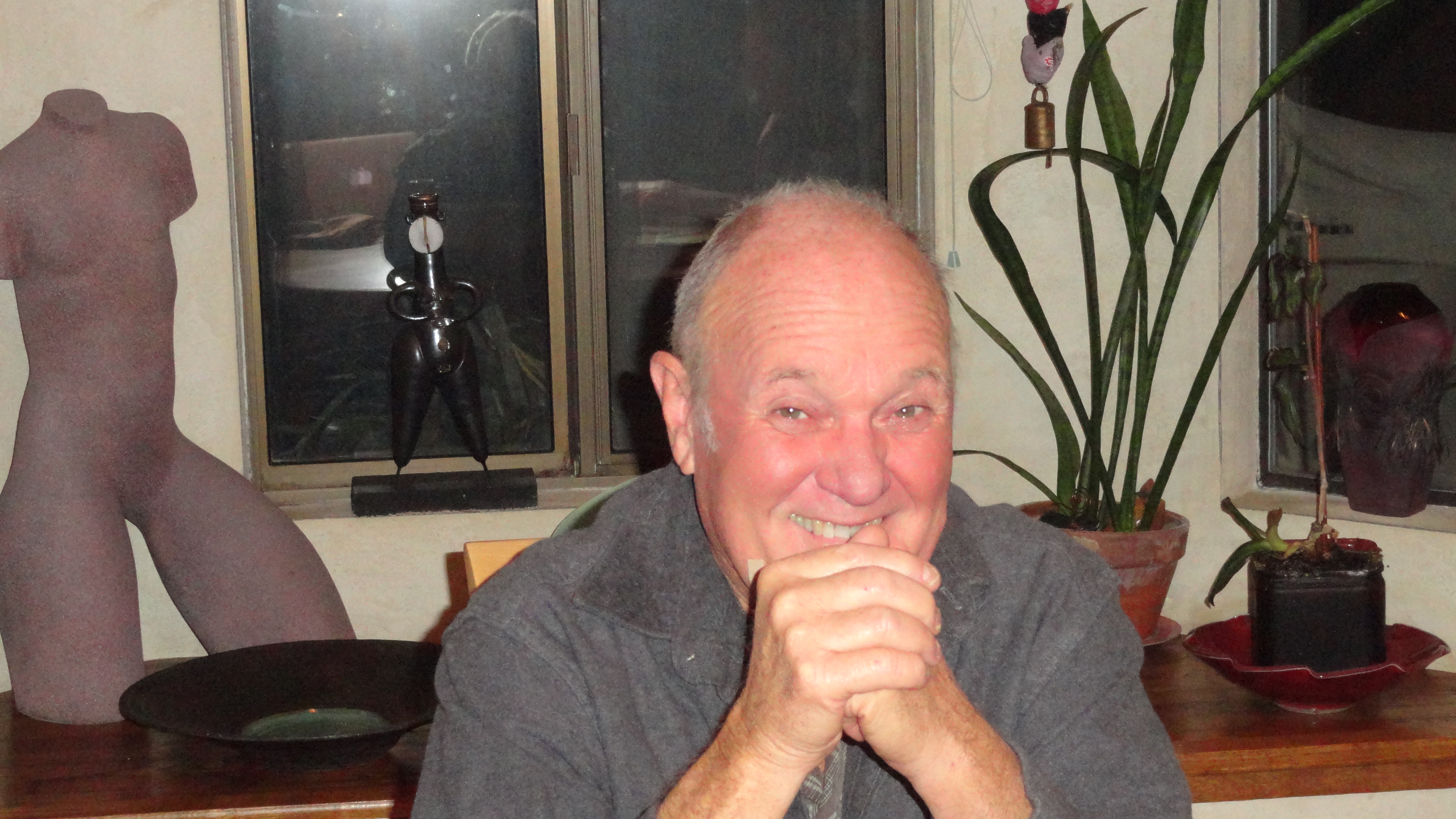
A week ago, I drove to the Santa Cruz, CA area to visit old friends. It has been fourteen years since I left there to move to Mexico, and when I spent the night with my friends Linda and Steve, they invited my other good friends Dan (pictured above) and Laurie to come for dinner. When we fell to comparing our present physical ills, as old farts like us are prone to do, I admitted that over the past year I have experienced a number of anxiety attacks when I go to bed, mainly centered around fears that I will soon stop being able to breathe. When I told Dan about these attacks, he said that he, too, had been having them for a long time but that he’d found a cure–that cure being Bob’s rope. The story goes like this.

About twenty years before, Dan and Laurie had decided to drive down to Baja and asked my husband Bob and me to accompany them. We took two cars because they had to come back before us as Laurie didn’t want to leave her elderly aunt for too long. Dan said he had felt terrible anxiety before the trip. What if their car broke down? With no big towns in Baja, what would they do? Nonetheless, we went, and on our second day of driving, we fell behind them a mile or two. We were nearing the crest of a big hill when we suddenly saw a big engine part lying in the road. We swerved around it and as we passed over the summit, we spied Dan and Laurie’s car down below at the bottom of the hill. We thought they were waiting for us to catch up, but then saw Dan get out of the car and wave us down.

Part of the engine had fallen out of their van! We went back to pick it up and discovered that it was the universal joint or some part of the engine that contained the universal joint, which is a vital part of the engine, or so I was told. Dan was sputtering a bit, but Bob just went to the back of our Blazer and pulled out this colossal hemp rope…maybe twenty feet long and about two or three inches thick. This he tied to our trailer hitch and to the chassis of Dan and Laurie’s van. We then towed them about 20 miles until we found a tiny “town” consisting of a small gas station. We pulled in and Dan, who knew more Spanish than we did at the time, (we knew none) asked the station man where the next garage might be. There were a sum total of three little houses in the town that we could see, and the man pointed to one across the road and said we should go see Jose.

Jose had about 5 old cars parked in his yard and when he inspected the part we’d retrieved from the center of the road, he said he’d see what he could do. He scrounged around in the various cars and came up with a part which he promptly dropped in the dirt, at which point all the bearings dropped out onto the ground, rolling every which way and burying themselves under powdery dirt and sparse grass clumps. He laboriously scavenged, picking bearings out and cleaning them off on his shirt before dropping them into wherever bearings go. He worked for a half hour or so–maybe longer.

This part of the story I didn’t witness as Laurie and I were across the street in the shade of the service station eating the best tamales I’ve ever had in my life. We’d purchased them from a little woman who had a stand by the side of the road. They were incredible in that every single bite tasted different from every other bite. She had put everything into them: pork, pineapple, cheese, mild chilis. Each bite was a totally new tamale experience and the masa was moist and light and wonderful. I was thinking that it was worth Dan’s U-joint just to get to eat these tamales! We thought we should buy some for Dan and Bob, but as time wore on, we ended up eating theirs as well. Only so much can be expected of girls marooned in the heat with only the shade of a forlorn little gas station for comfort.

At any rate, I’m sure we bought more tamales for the male members of our expedition and eventually, they drove up in Dan’s van. As they (probably) ate their tamales, Dan spoke in wonder of the fact that Jose had somehow been able to gerrymander the part from the pieces of the different cars–none of which were vans or even the make of his van. And, when he asked how much he owed them, they said, “Oh, 150 pesos!!!” This at the time was about $15. He said he would have paid more but alas, that happened to be all the cash he had on him and I’d spent all our money on tamales and gas.

So it was that we went on to a few more days’ adventures before they headed north again and we continued to Mulege and points south, took the ferry over to Guaymas on the mainland of Mexico and drove up the coast and back home. Later, Dan reported to us that he’d stopped by to see Jose on the way back up to California and left him with a couple of cases of beer and a bit more money, which he felt he had certainly earned, even though he had not commanded a higher price.

A happy Dan drove his van home and for 6 months it performed perfectly; but he started worrying about it and thinking it was bound to eventually give him problems, so he went to the authorized garage of whatever make his van was and had them order the correct U-joint and install it. Afterwards, he had had nothing but trouble with the van and they ended up trading it in. He admitted then that he never should have meddled with the perfection of Jose’s repair job.

Now, he said, every time he felt anxiety, he thought of Bob’s rope and it would calm his fears and remind him that things worked out because they had to and that there was really nothing to be so anxious about that it kept him from doing what he wanted to do. When Bob died and I moved to Mexico, I asked them what they would like to have from our house to remember us by and Dan quickly requested the rope! He’s had it ever since. They now split their time between their house in Boulder Creek, CA and a house near the southern tip of Baja and every trip they’ve taken down, they have carried that rope in the trunk of their car. Dan still suffers night anxiety attacks as I do but he said when he does he thinks of Bob’s rope coiled in the trunk of his car and that calms him.

That is the story of Bob’s rope–how it came to have such importance in Dan’s life and how it has come to have a potential for comfort in my life as well.
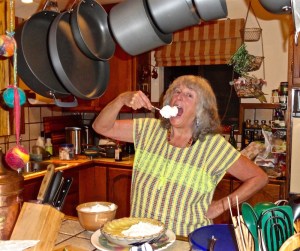
                                                     Laurie seems to have life whipped.

The  Prompt: Tell us about a journey you have taken, either physically or emotionally.
https://dailypost.wordpress.com/dp_prompt/journey/