Tag Archives: NaPoWriMo 2019

NaPoWriMo 2019, Apr 19

Loving Thy Enemy

Age
becomes
creative.

Don’t ever fictionalize
great heroic intimacies.

Just keep looking
major nemeses over,
proudly quieting
rash stabbing thoughts.

Under violent words,
xenophobic
yearnings
zing.


****


Raw Savage Thoughts

Zealous young
xenophobic wanderers
veer under
the sun’s rays,
quitting promenades
over nomadic mesas.

Let’s keep jumping
into harsh green fields,
eternally delving closer
before age accents
belligerent crankiness.

Delicious effervescence
froths gushingly homeward
in jugulars,
keeping lymphatic matters
normal or palpitating,

quickening
raw savage thoughts.
Understanding vulcanizes
woman’s X-rated,
yearnful zest.


The NaPoWriMo prompt asked that we write a poem using the alphabet in sequence for either every word in the poem or for beginning of lines.

Footnote to the Revolution, Elegy for Napowrimo Apr 18, 2019

At two different times in the past year, I have suddenly had a flood of signs in one day that I should continue the book I started to write about my years in Ethiopia leading up to and during the first stages of the revolution that deposed Haile Selassie. Yesterday, the first was an email message from an Australian  woman I was traveling with at the time who said I must complete the book.  The second was a Facebook message from an  Ethiopian friend, showing me a photo of Andualem and I that had shown up on a Facebook page in a group (of almost 200,00 members) dealing with historical photos of Ethiopia. Everyone was speculating on who we were–this good-looking tall young Ethiopian man kissing a long-haired blonde caucasian woman. Who could they be? The third sign seems to be this prompt, so I’m sharing again this elegy I wrote after I learned of his death.

Footnote to the Revolution

The red clay from the cane field in your hair,
leaves pressed into my neck from lying in the tall stalks,
we heard in the trees
the movements of the shepherd
who had watched.
Later, at the Filowaha baths,
we washed ourselves from each other
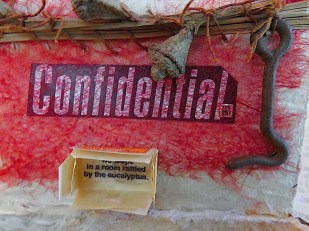
and slept in a room
rattled
by the eucalyptus.
I would have wanted you more in that room
if I’d known about the bullet
already starting its trajectory through the minds
of men spending youth fresher than ours
in revolution.
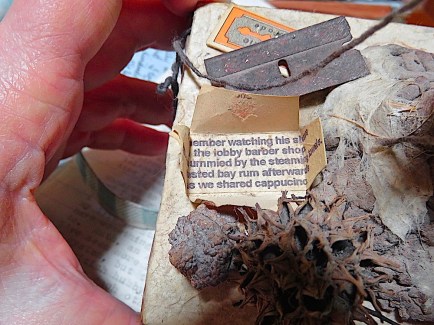
I remember watching your shave
in the lobby barber shop,
your face mummied by the steaming towels.
I tasted bay rum afterwards
as we shared cappuccino.
Parked at the roadside near enough to hear our parting,
I imagine they drank katikala,
its bite sealing brotherhood
your blood would buy in the street
outside the Filowaha baths.


In 1973-74, I journeyed to and lived in Ethiopia. It was not my original intention to do any more than visit and pass through, but fate had a different plan in mind. I was first detained by violence, then by love. The Filowaha baths in Addis Ababa, Ethiopia, were probably the equivalent of the “No Tell Motels” in Mexico, but for Andy and me, they were a place to be alone, to soak in hot water together and to make love with no listening ears. I guess that is what they were to everyone who visited, but there was nothing illicit in our relationship. We were both single and in what at the beginning we thought was a committed relationship that would end in marriage. His family had accepted this. My parents, thousands of miles away, had long ago given me the message that they did not want to know anything that, as my mother had stated, “would make them feel bad.” My sister knew, but they never did.

This poem actually chronicles two different visits to the Filowaha baths–one near the beginning of our relationship and the other our last night before I departed to fly back to the United States. On this second visit, we both knew we would probably never see each other again. Once again, we had figured out that the relationship wasn’t going to work, and our own feelings were complicated by the revolution that was already raging around us. We had both just spent a month in the hospital–Andu Alem recovering from the bullet that had gone all the way through his body as he defended me from a man whose intention was to kill me. Not able to return to my house, I had stayed in the hospital with him so we could both be guarded by his father’s soldiers.

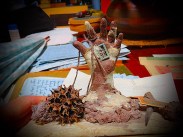
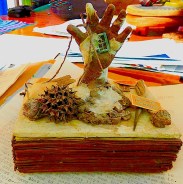
Years later, when I made my first assemblage boxes, I made this music box that told the story I’d already told in the poem years before. The song it plays is “The Way We Were.” I’m now trying to tell the story a third time in a book. Now that I know the true ending to our story, I might have changed the poem, but I leave it as I once thought it was. There are many truths in our lives, according to which vantage point we are telling them from.  This story is as true as the very different story I will eventually tell, if I have the courage to face up to it. Please enlarge the photos go see the details which should be self-explanatory. The hand I sculpted out of clay. I photographed the assemblage box on the table where I had been rereading letters I’d written home from Ethiopia as well as letters Andualem and other friends living in Ethiopia had written me once I returned to the states.

Napowrimo prompt: write an elegy of your own, one in which the abstraction of sadness is communicated not through abstract words, but physical detail.

Entreaty: NaPoWriMo 2019, Apr 17

Entreaty

I lie obscured behind a pot.
The pot is dry, but I am not.
Thanks to an active little doggy,
my usual state is chewed and soggy.
But, I should introduce y’all
to who I am—a small green ball.
And though I’m meant to just play tennis,
I fear I face a greater menace.

The antagonist of my sad story
is a Scottie dog named Morrie,
and though all humans find him cute,
his proclaimed merits I’ll refute.
If you’ll forgive a bit of kvetching,
I will explain—he’s fond of fetching.
Hour on hour, day after day,
he makes humans cast me away.

He  likes to fetch and chew and drool,
then toss me back into the pool
for whomever happens to be
taking a swim to rescue me
and throw me back down in the yard
so that hairy little card
can race back down to find where I
have been tossed down to and now lie.

I was once pristine—so green and soft—
perfectly planned for bounce and loft,
my lifetime planned and guaranteed
until she broke my seal and freed
me to what I was sure would be
the perfect gaming life for me.
But soon I was given pause
when I was seized between the jaws

of a leaping frenzied pup
who promptly tried to chew me up
and failing this, launched me into
the swimming pool’s warm watery blue.
I’ve lasted, now, three days or four.
It’s doubtful I can last for more.
For after days of constant chewing,
A ball’s not fit for sport or viewing.

Seams split and release air,
sink in the pool and languish there.
The only hope for my abiding
is if I can stay in hiding.
Please don’t reveal my little lair.
Help me preserve my seams and air.
For I will surely lose my bounce
if I’m exposed to one more pounce,

to one more bite or one more chew.
Please save my life. I’m begging you.
If you would simply pick me up
before I’m found by that damn pup,
and throw me over that far wall,
no one would know of it at all.
Perhaps some tennis buff would meet
me lying there upon the street.

He’d pick me up and take me where
I could be sailing through the air
racket to racket—kiss by kiss,
for surely I was made for this!!!
I’ve done my penance, served my time.
I’ve earned a life that’s more sublime.
So hear my plea and heed my call.
Bend down, pick up and throw the ball!!!


The NaPoWriMo prompt is to write a poem from an unusual point of view.


Bucket Listless: NaPoWriMo 2019, Apr 16

IMG_3741

Bucket Listless

Please don’t ever make me go back to Cancun.
If I never return there, I’ve visited too soon.
Don’t make me go to church again or listen to more rap.
Don’t make me go to bed at eight or take a daily nap.
I don’t want to do those things I don’t want to do.
Don’t make me look at animals trapped up in a zoo.

Brains are meant for keeping up farther in your head.
To have to eat the things I think with fills my mind with dread.
Don’t make me eat anything only adults eat:
liver, caviar, pate, kidneys or pigs’ feet.
All of those are parts of animals I’ve come to fear,
for none of them are meant to put in human mouths, my dear.

I think that I’ll live longer without jumping from above.
For bungee cords or parachutes I have no sort of love.
Even roller coasters present uncalled-for risk.
For me a walk upon the beach is adequately brisk.
Anything that’s bumpy, jerky, swooping, fast or twirly
makes me want to arrive late and go home really early.

Please don’t make me listen to those who rant and rave.
If I meet them in the street, I’ll merely nod and wave.
Let bores much given to monologues find another ear;
because those who never listen, I have no wish to hear.
Tea-partiers, loud mouths, bigots and folks in the elite
are on my list of strangers I do not need to meet.

I hope no radiation or chemotherapy
is ever necessary to make me cancer-free.
No machines to make me breathe and no dialysis.
As little poking, pushing, testing and analysis
as possible is what I wish for on my “do not” list.
Just let me go gently into that final mist.

I’ve grown to hate the overuse of “bucket list” as label
for what folks want to do before their death if they are able.
So please be more original in thinking what to call
that list of things that you most want to do before you fall.
For the thing that I don’t want as “I am” turns into “been”
Is to ever hear the phrase of “bucket list” again!


The NaPoWriMo prompt today is to write a poem using a list to defamiliarize the mundane. This poem fulfills part of that prescription.

Almost a Miracle (Monologue) NaPoWriMo, Apr 15, 2019


Almost a Miracle

I need to explain to you how it happened.
I know you don’t require it, but I need to tell you,
much as a good Catholic needs absolution from her priest or her god,
I need absolution from you.
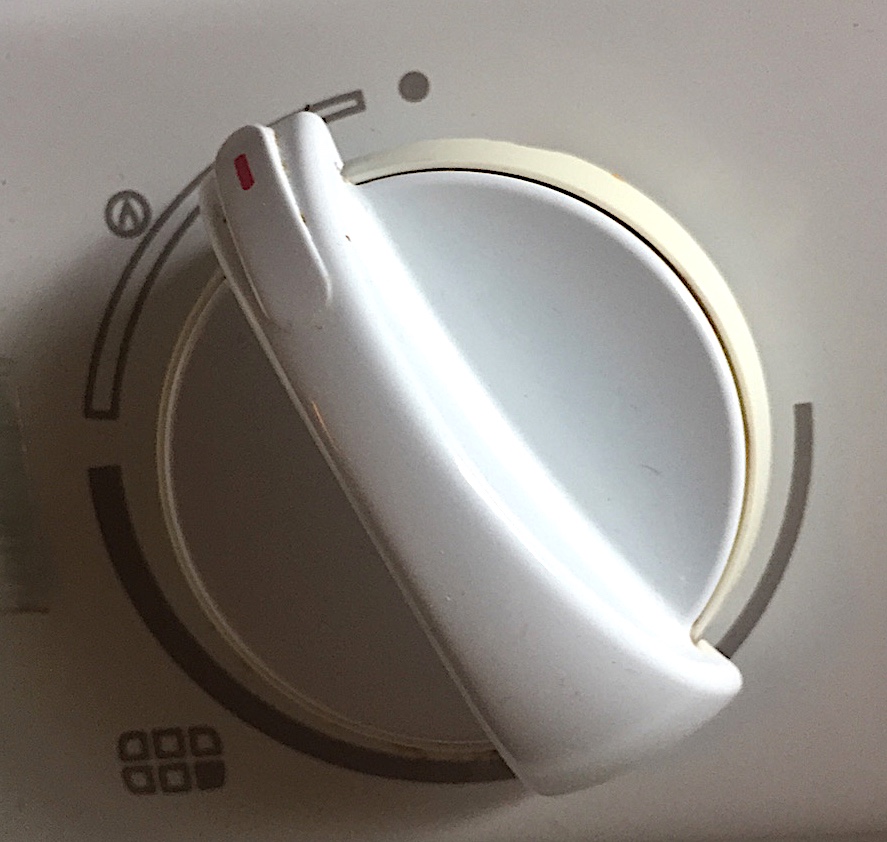
It began with a simple mishap—the gas left on after cleaning the stove.
I do not remember this action,
yet it must have been me who left the dial turned not quite shut. 
A dark part of me, because with God as my witness, I do not remember doing so.

I did remember that every payday Saturday night when he came home reeling from the tavern, he went to turn on the striker to light his cigar.
If I had actually planned it, I could not have planned it better. 
My mother and the other children had gone to Talpa
for the four day pilgrimage to the virgin
and it was my night to stay with the children
of the people whose house I cleaned.
We did this weekly to afford them the chance
to be together with their friends,

away from their demanding children.
And it gave me an opportunity to avoid my father. 

To avoid the sound of his entrance at the front gate,

the heavy pounding of his boots upon the cobbles,
the creak of the front door and his slipping the bolt
so that I knew once again that I was in the prison of his making. 
His footsteps upon the tile stairs as I lay still, my lips moving in rapid prayers,
“Our Lord, dear lord, help him pass my door tonight. 
Help him to proceed past the doors of my sisters and my brothers
and let him move to visit my mother. 
Help him to relieve the cares of his week in her presence. 
Help it to be his wife who smells the tequila of his breath,
to taste the lime on his lips.
Help me on this night not to be the partner of his sin.”

Rare was the Saturday night when my prayer was heard.
But this night, perhaps I had answered my own prayer. 
Later on, the villagers would talk about the night they heard the boom—
saw the streaking image of a man run from the front door aflame
to run down the street screaming.
“Such a tragedy,” they would say,
“but how fortunate that his wife and children were not present.
God must have been watching,” they would say,
“but then to have blinked a moment.
It was almost a miracle,” they would say. “Almost.”


The NaPoWriMo prompt is to write a dramatic monologue.

A Letter from Mother Earth: NaPoWriMo 2019, Apr 14


All of these photos are either taken from my house or from an area within one block of it. These are photos of just one fire and one flood/avalanche that have decimated the area where I live, and they are nothing, I’m sure, compared to the California fires and the cyclones  and tidal waves elsewhere on earth.


A Letter from Mother Earth

All the riches you have stolen may be won in vain.
As you exploit my waterways and open every vein,
surely you can hear me crying out in pain?

When it comes to my riches, each madman wants a piece
at the cost of reason, willing to break the peace.
Will there be no ending? Will the warlords never cease?

As you grow one more spare tire around your spreading waist,
the spoils build up around you: the garbage and the waste.
How much plastic carnage will serve to suit your  taste?

As you fill me full of chemicals, I become more weak.
Yet still you spray and pillage, hour by day by week.
The death of soil that nourishes can’t be what you seek!

Fluorocarbons, Roundup, radiation, lead––
all the earth’s blind children just follow where they’re led.
Swallowing all the poisons, devouring what they’re fed.

All the bleating sheep, the entire driven herd
do their best to overlook all the things they’ve heard—
every threat of doomsday, every warning word.

The cyclones swirl above you. The fires burn me bare.
How many floods and blizzards will your children bear?
Why don’t you heed the warnings? Don’t you even care?

When it comes to what you’re leaving to your son and heir,
there may be no more water and there may be no more air.
Does this ever bother you? Do you even care?

If every son and daughter voiced their pleas aloud
and questioned all these foolish sins their fathers have allowed,
would they bend their heads in grief? Can they be shamed and cowed?

If they beg and bargain, if they plead and pray,
will parents listen to the ones who’ve been their prey,
or will they keep on throwing their children’s lives away?


Here is the NaPoWriMo prompt: Today, we’d like to challenge you to write a poem that incorporates homophones, homographs, and homonyms, or otherwise makes productive use of English’s ridiculously complex spelling rules and opportunities for mis-hearings and mis-readings.

Down in Grandma’s Cellar: NaPoWriMo Apr 13, 2019

Down in Grandma’s Cellar

Sleeping over at Grandma’s, her rooms all stuffed with treasure
there for my explorations, their pillaging my pleasure.
The barn so full and shadowed with pigeons, mice and more,
I did not venture farther than to peek in through the door.
But the basement was forbidden, so I overcame my fear.
To test my new maturity, I had to venture near.

Down in Grandma’s cellar, I could not see the stars.
There weren’t any planets like Jupiter or Mars.
But still it was as dark as night. The light from one mere candle
seemed the only light the ghosts who lived down there could handle.
As I creaked down the ladder rungs, glass rattled on the shelves
as though the time-dulled canning jars told stories on themselves.

Rhubarb on the nearest shelves, peaches in the back.
Watermelon pickles seemed poised for the attack,
swaying on the upper shelves, dusted by the years.
I gathered up my courage, pushing down my fears.
So many eyes caught in the dark. Glassy gleaming sprites
waiting there to satisfy the family’s appetites.

But no one came to gather them and spread them on a plate.
The waste of it was senseless—their empty, useless fate.
How many hours she’d labored to gather nature’s fruit.
How many other hours used up in the pursuit
of washing, peeling, cutting, and packing them in glass,
packing them in cauldrons and boiling them en masse.

Where did the hungry mouths go? Why did they go untasted?
What happened all those years ago that their richness was wasted?
Accustomed to the secrets kept hidden behind blinds,
we kids retained the questions that stirred our tiny minds.
So many of these mysteries lie hidden in my past.
Remarkable how long their spreading shadows seem to last.

I still have some of Grandma’s old canning jars, now relegated to a decorative use.
(Click on photos to enlarge.)

NaPoWriMo prompt: Today, we’d like to challenge you to write a poem about something mysterious and spooky! 


Memento: NaPoWriMo 2019, Day 12

Memento

The ring is dull with tarnish that I will not wash away
for half of its life stories are wrapped up in the gray.
The silver was the fairytale­­––the fantasies they dreamed
before they discovered life was much more than it seemed.

Thousands of daily scrubbings of tablecloth and shirt.
Another thousand cuppings of fingers through the dirt
retrieving carrots, beets and potatoes for the table.
She wouldn’t have removed the ring, even if she were able.

Through my whole long childhood, I saw it on her hand,
wondering at the beauty of that simple silver band.
Worn thin with age along with fingers sinewy and spare,
the silver gleam lost to the ring wound up in her hair.

It’s pattern now worn down with age, it nestles in a box
with other family memories: jewelry and rocks,
a tiny woven figure and a buttonhook and key––
each one rich with happenings still held in memory.

All worn and rusted, tarnished with the lives that they were part of,
I don’t know all their endings and I do not know the start of
many of these objects that now are all that’s left
of the family members of which we are bereft.

Their lives rest in these objects in their depleted beauty.
They’re here to provide evidence, as though it is their duty
to tell entire stories, both the pleasures and the pain,
so the lives they’ve touched upon have not been lived in vain.

And though I do not wear the ring, I cherish all its beauty––
all its former silver gleam obscured by toil and duty.
For the years since she first left us, I have kept it tucked away,
like so many of her virtues, hidden to the light of day.


Here is the NaPoWriMo prompt: Today, we’d like to challenge you to write a poem about a dull thing that you own, and why (and how) you love it. Alternatively, what would it mean to you to give away or destroy a significant object?

What I am, NaPoWriMo 2019, Day 11


What I Am

I am from thick ankles and steady determination. Stubborn Dutchmen, prairie dirt, waving wheat fields, night sounds that carried me away. Inkwells and Our Miss Brooks, Christmas tree tinsel that hurt your fillings when you chewed it, chicken pox and neighbors’ dogs, tiny bunnies rescued from furrows, my sister’s old prom dresses in a trunk in the upstairs hall. I am cherry trees and cherries for pitting. Pitched tents and new friends, prayer and questions, spelling bees and math, Annie-I-Over and hollyhocks. Sunday rollerskating on the basketball court. Ten-cent movies and Bit-o-Honeys, ditch ’em and long summer nights. An attic never opened, a basement too frequently explored, dust of Sunday explorations down long dirt roads. Small prairie towns and flights of fancy. Pretending my real self, while trying to be from where I was. Caught in a net with scissors. Cutting my way out. Taking any road elsewhere.  A highway, a plane, a ship, an escape, a looking for, a finding, a losing, a continual origin story of my own making. Full breaths. Sinking in. Making memories. Remembering memories made for me. I am. I am becoming. What I was I still am. Self changing self and sinking back into self.

The day 11 NaPoWriMo prompt is: to write a poem of origin. Where are you from? Not just geographically, but emotionally, physically, spiritually? Maybe you are from Vikings and the sea and diet coke and angry gulls in parking lots. Maybe you are from gentle hills and angry mothers and dust disappearing down an unpaved road. And having come from there, where are you now?


Shelter: NaPoWriMo 2019, Day 10


Shelter

On the prairies of Dakota, 
weather often came with exclamation marks.
My father’s forehead was ringed like an old tree,
white from above his eyebrows to his fast-retreating hairline,
from his hat pulled low to guard from every vagary of weather.
“It’s hot as the hubs of Hell!” he’d exclaim as he sank into his chair at noon,
sweeping his hat from his head to mop his brow.
A nap after lunch, then Mack’s Cafe for coffee with his friends,
then back to work in the field until dark, some days.

Those long Julys, we kids strung tents across the clothes lines in the back yard
or lazed under cherry trees,
no labors more strenuous than wiping the dishes
or dusting the bookshelves in the living room.
Books were our pleasure during those long hot summers:
our mother on the divan, my sisters and I on beds in dormered rooms
with windows open to catch infrequent breezes,
or deep beneath the veils of the weeping willow tree.

“Cold as a witch’s teat in January!” was as close to swearing 
as I ever heard my dad get, November through March, stomping the snow off rubber
overboots in the garage, tracking snow from his cuffs through the mudroom/laundry.
Cold curled like Medusa’s ringlets off his body. We learned to avoid his hands,
red with winter, nearly frozen inside his buckskin gloves.
His broad-brimmed hat, steaming near the fireplace
as we gathered around the big formica table in the dining room.
Huge beef roasts from our own cattle, mashed potatoes and green beans.
Always a lettuce salad and dessert. The noon meal was “dinner”—main meal of the day.
Necessary for a farmer/rancher who had a full day’s work still ahead of him.

Our weather was announced by our father
with more color than the radio weather report.

Spring was declared by his, “Raining cats and dogs out there!” 
We knew, of course, from rain drumming on the roof as we sat, deep in closets,
creating paper doll worlds out of Kleenex boxes for beds and sardine cans for coffee tables, rolled washcloth chairs and jewelry box sofas. 

Only afterwards, now, have I really thought about how we were protected
from the vagaries of weather as from so much else.
A mad dash across the street to school was the extent of it,
or short trip from car to church or store or school auditorium.
It was a though my father bore the brunt of all of it, facing it
for us, easing our way. It was his job.
As my mother’s job was three hot meals a day, a clean house, afternoons spent
over a steaming mangle, ironing sheets and pants and arms and bodices of blouses.
After school, one or the other of us girls at ironing board, pressing the cuffs and collars.

We were sheltered, all of us,
from those extremes of that land I didn’t even know was harsh
until years later, living in milder climates:
Australia, California and Mexico.
Our lives, seen in retrospect,
as though for the first time, clearly.
Remembering the poetry
of how a man who really lived in it
gave us hints of its reality.

The NaPoWriMo prompt is to write a poem making use of a regional phrase describing the weather.