Tag Archives: SoCS

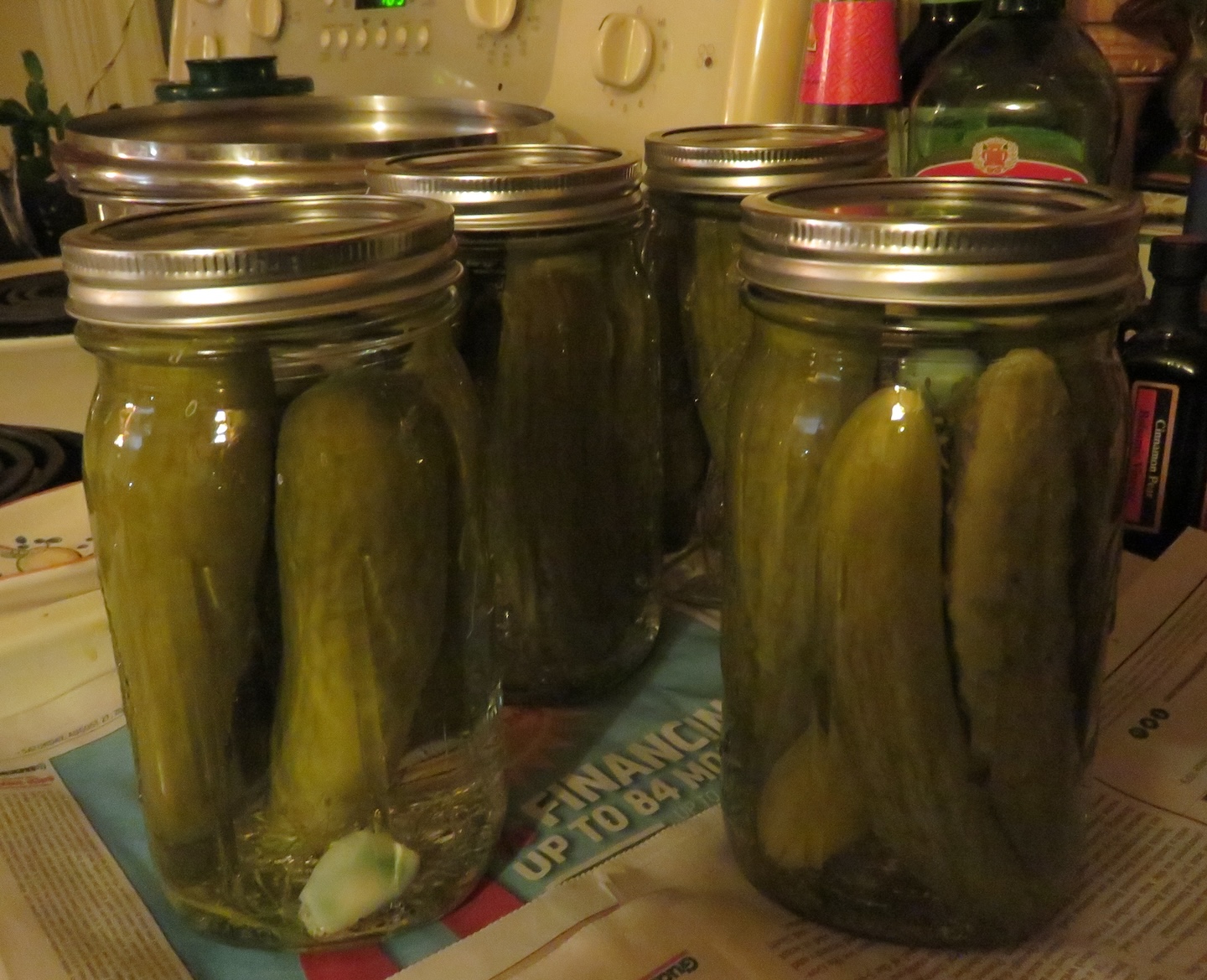
“Pick”led for SOCS, Jan 17, 2025

“Pick”led

Pack a peck of pickle parts
in a silver jar.
If you feed them to a lover,
he will not stray too far.
Neither pocket book nor hockey puck
will sway his thoughts for long.
You’ll have him humming melodies,
then you’ll pick out your song
repeated in sweet harmony
as he sings along.

For SOCS the prompt is: “pack/peck/pick/“pock/puck.” Use one or use ’em all for bonus points—it’s up to you!  https://wordpress.com/read/feeds/24840312/posts/5529707414

“Making Tracks” for SOCS, Jan 4, 2025

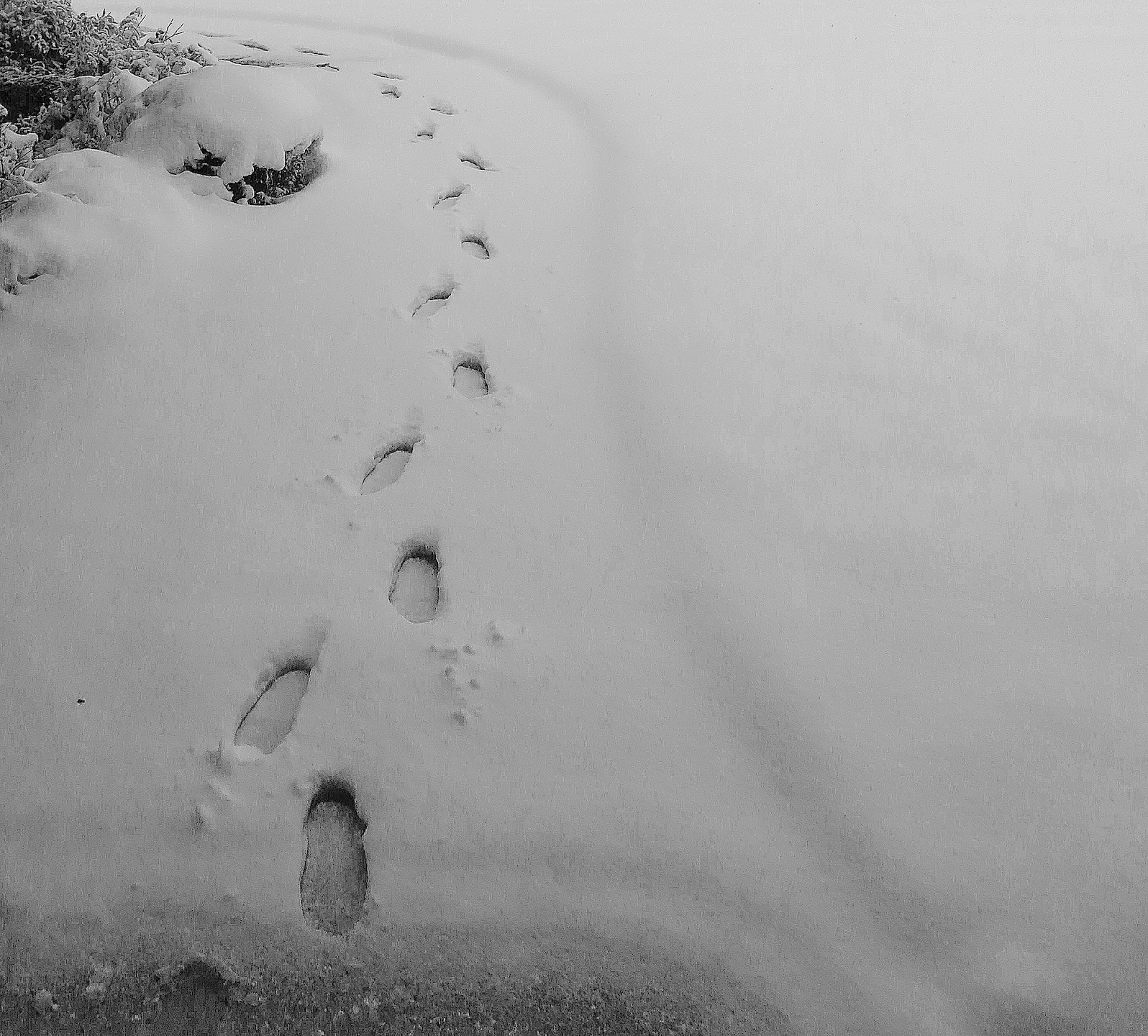
Sheridan, Wyoming–the only snow I have been able to walk through for the past 23 years.

Making Tracks

To be in front, you must not mind
that others will be left behind.
The more you gain, the more they lack
trudging along behind your back.
I hope, however, that you’ll be kind
to all of those you’ve left behind.
They’ll be rewarded for what each lacks,
for they can follow in your tracks.
So whether you go fast or slow,
please be careful where you go.
For no matter what you do,
no doubt someone will follow you.

The Prompt for SOCS is “In Front, and/or Behind.”

“The Wish” for SOCS, Dec 20, 2024

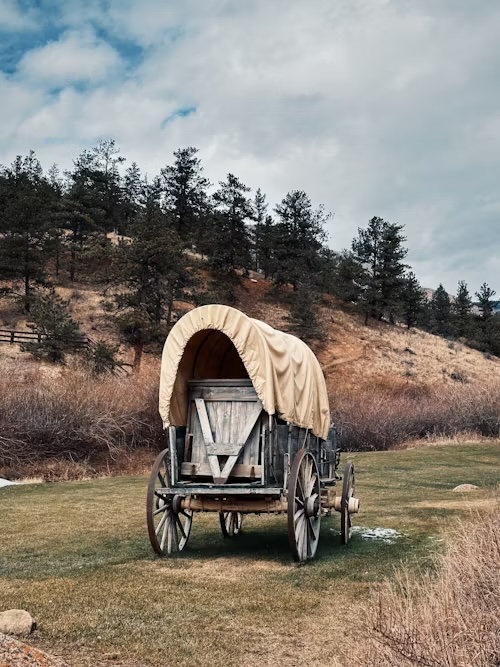
Wish Wagon

Hear the clanging pots, the squeaky wheels?
Over the rise comes the peddler’s cart––
horse with head down, pulling the load,
the jolly man just dangling the whip over her flanks.

Pitchers, fry pans, mops and brooms,
a doll for sis and kites for the boys
who run to greet this week’s happening,
hoping that Pa has spare bills in his wallet this time.

Now hear the “Whoa, Nell!” and see Zeke, the peddler,
swing his bent frame down from his high perch,
Ma drying her hands as she emerges from the kitchen door,
sis attached to her skirts, shy but drawn irresistibly from safety

to see the wonders that the peddler draws from his wagon:
penny candies by the jar and safety pins.
Needles, spoons and dime novels.
Cloth for Ma of calico and new boots for Pa.

Rag rugs made by Ma and traded for a bucket
and a wash pan his last trip here
that haven’t sold and so he won’t need more.
Jangly bracelets like the city women wear.

Her brief laugh scoffs at them.
The very idea. But one finger runs them round
before it draws away. And in her eyes
there is a wistfulness we will not see again

for thirty more years, until another wagon
crests the hill and drives away with her,
that look again frozen on her face
for eternity.

The SOCS prompt is “wish.” Image from Unsplash.

Food, Food and More Food, for SOCS

The prompt for SOCS is “Food.”

“Cold Storage” for SOCS, Nov 30, 2024

Cold Storage

Lately, the mornings had grown crisp. Even here, below the tropic of Cancer, where they were rumored to have the second best climate in the world, they suffered a few weeks of weather where she regretted having neither heat nor air conditioning in her house. Its brick and concrete walls held-in the cool air. In the summer, this was a welcome fact. Now, in mid-November, it created the effect of the cold storage locker at the butcher shop in the small South Dakota town where she had grown up.

The butcher shop had a room-sized walk-in freezer that functioned as a meat safety-deposit vault. People in the town paid to rent private lockers. Ranchers could bring  a live cow to the butcher and he and his family would kill it, age the meat, wrap it in neat packages labeled hamburger, rib eye, chuck roast, rump roast or sirloin; and then stow it away in drawers big enough to hold an entire dismantled cow. When she was very small, she could remember going to the locker with her mother or father to get the week’s meat from the drawer that had their name scrawled on a piece of masking tape stuck on its front.

The locker also sold ice cream sandwiches by the carton of 50 or so, which they would take home and store in the freezer compartment of their refrigerator. They were square little bars—half the size of the bigger ones you could buy individually at the supermarket–—and she grew chubby the year she turned nine, probably mainly due to her mother’s lack of rules about how many could be consumed daily. When the supply grew sparse, it was replenished by whomever went to the locker—her mom or dad or oldest sister.

It is early morning and she puts off getting out of bed to face the brisk air. Water is streaming into the pool. She can hear its hiss as the hot volcanic water hits the cooler water of the pool. She can hear Pasiano the gardener clearing his throat down below. Later, when Yolanda arrives, the dogs will grow restless and bark to be fed. It is not the bright morning promised by the precognition of the weather channel. Even through the white scrim of the manta cloth drapes, she can tell that the sun is muted. The past two days have been marked by intermittent rain showers coming from a sky permanently cottoned-over by a layer of clouds that now and then the sun peeks through. As she lies in bed typing, she can see a light ray through the curtains, but it fades quickly away.

8:01. It is now legal for the noises of the day to begin. The upstreet neighbor’s spoiled son roars by in his ATV that is muffler-less. The harsh sound slashes a gash through the gentler sounds of the day: the whisk whisk whisk of Pasiano’s broom, the surge as a steadier supply of hot water streams into the pool from the pipe hidden within the concrete form of a plumed serpent that spews water from between the fangs of its open mouth.

She has fantasized about stringing a wire across the cobblestone road to spill that teenaged brat from his ugly machine. This is the violence prompted by an early morning slaughtered by his ear-splitting exit. On weekends, he is up the hill and down the hill with his friends. Once, when she went to protest, they steered their monster tricycles in her direction, veering off just as she jumped back onto the sidewalk. She couldn’t hear their laughs above the deafening din of three bikes, but the girls on the back of the vehicles  turned to look at her as they roared away, and their mouths were stretched in broad grins of amusement over this aged gringo who had come out with a frown to comment on the fun of youth.

They have gone. She can hear their mechanical beasts speeding down the road toward the carretera, their loud roars terrorizing neighborhood after neighborhood as they pass. She returns to the house to make the phone call to the office that will protest this noise and this small terrorist action.

“Yes, senora, we will look into it.”

“Will you call their father this time?”

“Yes, senora. The father is in Guadalajara now, but when he comes, we will call him.”

“They veered their bikes toward me so I had to jump back on the sidewalk!”

“Yes, senora. We will tell them.”

She hangs up knowing they will not tell the parents anything. They are important enough to have a huge house here in the tennis club where she lives— a house they use on occasional weekends. A house which sits empty for most of the year. A house where they once brought their children and their cousins and friends to swim in the steaming hot water of the club pool or their own pools. A party house for their children, now that they have reached their teen years.
The father would be an important business man with connections, perhaps a judge or politician. It was rumored that one of the houses on her street, one farther up the mountainside, was owned by a member of the cartel.

Whatever the truth of this, the complaint would not be made. In Mexico, so long as their misdeeds did not come too completely to the surface, the rich were invulnerable—cushioned by a layer of privilege augmented by mordida.. No foreigner who chose to come up against a Mexican would ever win—no matter how large the misdeed. Murderers might be caught, but the case would then fade away in time so that they might never be tried, but again would be released on some technicality given birth to by mordida. Houses and land paid for in full by gringos could be reclaimed by entrepreneurs or ejidos powerful enough to know the right judge or the right politician.

Now the roar of the ATV’s is forgotten with the passing of the first truck hauling gravel and stone up to the construction site at the highest point presently reachable on the mountain. One day those mountains that rose so beautifully above her would be filled with houses to the very top; but for now, as the noise of the churning engine fades into the cold white sky, she contemplates what she will write about now that the demands of the prompt have been met. She will not write a funny rhyme today. Her mind has already been trapped by the mood prompted by the demands of this day’s topic.

She wonders how the parts of what she has written can be brought together. It is as though she has written a beginning and an end with no middle. Perhaps that was how a novel was begun in the mind of a novelist—to start out with meat in a cold storage locker and end up with a neighbor’s son terrorizing the neighborhood on an ATV. Was that how it went? Could she stuff those two vignettes with enough information to stretch them apart like a bota bag full of sweet wine? Did she have the capacity to grow those grapes, the skill to ferment them and siphon them into the bag she has created on this cold morning that only now was beginning to let the rays of sunlight through? That strong Mexican sun made more powerful by the high elevation of this place at the almost top of a mountain on a street set at such an angle that if there were ever snow here, she could step outside her house and sled in one straight line down to the lake that was a mile away, across its frozen surface, all the way to the other side.
 

For SOCS

Just Beyond My Grasp For SOCS, Nov 23, 2024


Just Beyond My Grasp

When I’ve passed a restless night,
to once more welcome morning light,
I do not leave a lover’s grasp.
No knitted legs need to unclasp.
What time on waking I can afford
is simply spent unwinding cord:
the earbud cord around my neck,
my PC power cord from the wreck
of pillows, comforter and sheet
that somehow, now, are at my feet.
My MacBook Air, just by my shoulder
has come unplugged and so is colder
to my touch. It won’t power on.
Then, when plugged in, my poem is gone.

For SOCS

Fine Fabric for SOCS, Nov 16, 2024


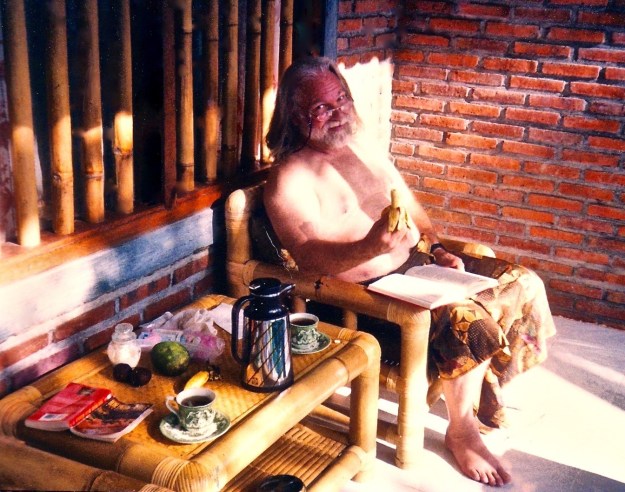
Bob in “the” sarong, Bali, mid-1990’s jdbphoto

Fine Fabric

The fabric of my batik blouse seems to have grown too thin
as though what keeps the world out suddenly wants in.
A small tear on the shoulder and a long rend on the hem—
At first I wondered what it was that could be causing them.
Its fabric was durable— a fine hand-dyed sarong
spotted in the market and purchased for a song.
Young travelers in Bali, we had watched them being made—
as they traced the delicate patterns, we stood there in the shade.

And then I remembered it was nineteen seventy three
forty-four years ago that I brought it home with me
still smelling from the wax used as a resist for the dye.
The palm trees and the gamelan, the ocean and the sky
are memories wrapped up in that sarong I purchased there.
I used for a wrap–around, a towel for my hair,
a curtain and a picnic blanket, bedspread and a shawl,
a tablecloth and blanket—it served for one and all
as we traveled with our backpacks, on foot and boats and plane
then I took it with me when I went back home again.

Twenty-some years later, with my husband now along
I returned to Bali and brought my old sarong.
We found another like it—one for me and one for Bob.
Whenever clothes were called for, those sarongs did the job.
For years since then, I’ve used them for tablecloth or shawl,
for coverups around the pool, a curtain for the hall.
I had a caftan made of one. Now on another shore,
I wear it nearly every day and this is how it tore.

The woven equipale chair with tiny nails within it
reaches out for fabric every time  I go to sit.
It gets my lovely caftan. and another favorite, too.
I know I shouldn’t sit in them, and yet I often do.
These memories are torn from us. It’s no good to resist.
All the parts of those gone days retreating in the mist.
Its fragile fabric wears away in spite of all our care.
It will not last forever. One day it won’t be there.
Later, I will  join it through the tears life’s made in me.
All things are made or born to this inevitability.

 (Click on first photo below to enlarge all and read captions.)

For SOCS the prompt is: blanket.

Sandwiched (Optimum Positioning) for SOCS


Sandwiched–(Optimum Positioning)

Under “over” is “between,”
hardly ever heard or seen
because it has “over” on top.
It’s pinned by it so it can’t flop,
and to further stem its flow,
it has “under” down below.
So if you have the chance to tell
the one who chooses where you dwell
what place it is you’d rather go,
you’d best choose “over” or “below!”

For SOCS, the prompt was “Under.”  Photo thanks to Unsplash.

“Mugs I Have Known” for SOCS Nov 8, 2024

Click on photos to enlarge.

Happy, sad, silly or smug,
I can’t resist snapping a mug!

For SOCS the prompt is Mug.

Chillin’ for SOCS

Chillin’

If I were the queen of time, in charge of all its flow,
I’d speed it at the dentist, while dessert would progress slow.
Each bite of pie, with me in charge, would take at least a minute.
An ice cream cone would last an hour while I enjoyed what’s in it.

If I controlled the seconds, the hours and days and weeks,
a hummingbird’s flight would slow way down to afford us peeks.
A fine ballet would then commence whenever they flew by—
each move so delicate and slow—detectable by the eye.

House work would vanish quickly as the clicking of a finger,
while foot rubs, hugs and kisses would be the things that linger.
The time between waking and sleep would flow as swift as water
If I were grandmother of hours—time passing’s favorite daughter.

If I could slice time thick or thin and serve it out in portions,
I’d speed up each painful death as well as birth’s contortions.
I’d slow down bullets leaving guns and thus destroy their power.
I’d slow how fast the ice cube melts, the lifetime of each flower.

Sunsets would last for hours and time with friends for days,
so we’d enjoy together each evening’s parting rays.
Plane rides with their narrow seats and no room for our knees
would pass as fast as possible, as quickly as you’d please.

Time before a party would go slow to afford time
for the cleaning of the house, the cutting of each lime.
And once each flower is put in place, the buffet table done,
time’s pace would be restored again and revelry begun.

When we need more or less of it, time would be there for us.
Our favorite songs would be strung out. Braggarts would never bore us.
There’d be more time for writing, for eating and the arts.
Headaches would pass in seconds. So would  anger, fights and farts!

If I controlled the hours,  the world would be run smoother.
Instead of causing us much angst, time would be our soother.
If I could dole out time so it was spread on thin or thickly,
perhaps I could have managed for this poem to end more quickly!


For SOCS: Chill