Mexican Color
I have spent hours trying to identify this plant and I’m no closer now than I was a year ago. Whatever it is, Here it is again in detail. The leaves look like a heliconia or ginger, but although I once found a picture of it by Googling heliconia, I think it was just a random picture placed in that category as it wasn’t labeled at all and I can’t find it elsewhere. *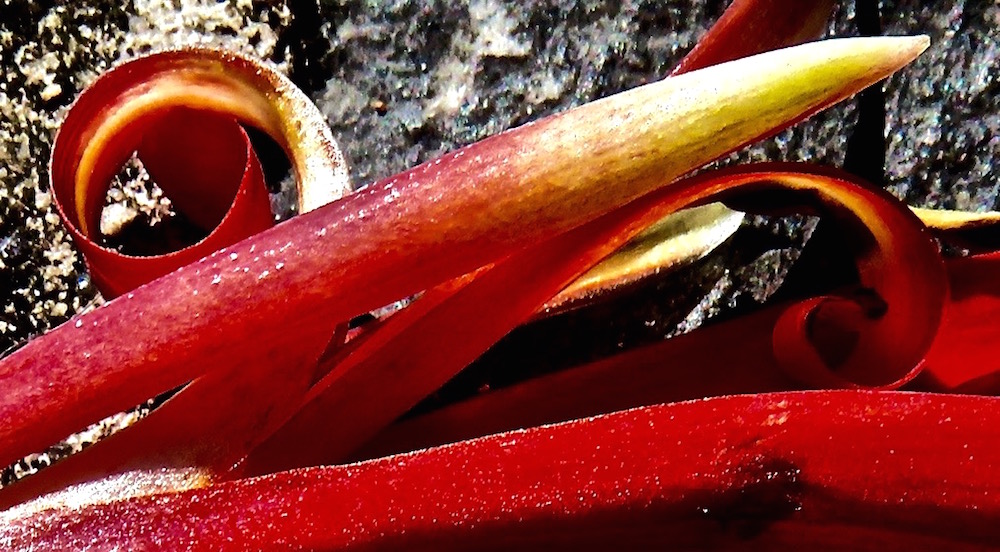

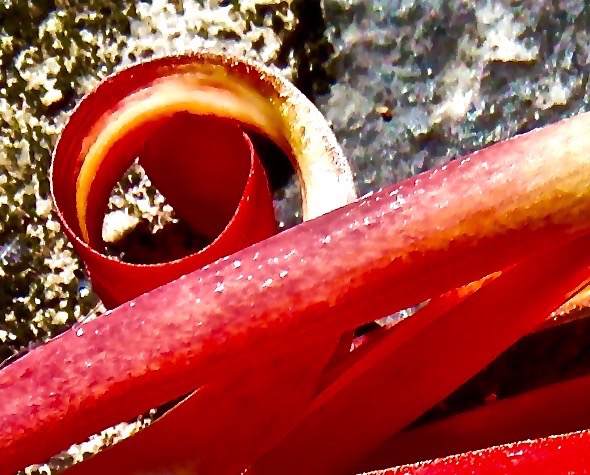
 *News Flash!!! My lovely, smart, kind, curious, researching genius friend Marilyn Armstrong has identified this plant I’ve been trying to identify for fourteen years! After she told me the various names for it, I looked it up in Wikipedia and this is some fascinating information about it:
Canna indica is a perennial growing to between 0.5 m and 2.5 m, depending on the variety. It is hardy to zone 10 and is frost tender. The flowers are hermaphrodite.[3][4][5][6] Canna indica sps. can be used for the treatment of industrial waste waters through constructed wetlands. It is effective for the removal of high organic load, color and chlorinated organic compounds from paper mill wastewater.[7][8]
The seeds are small, globular, black pellets, hard and dense enough to sink in water.[5] They resemble shotgun pellets giving rise to the plant’s common name of Indian Shot.[citation needed] The seeds are hard enough to shoot through wood and still survive and later germinate. According to the BBC “The story goes that during the Indian Mutiny of the 19th century, soldiers used the seeds of a Canna indica when they ran out of bullets.“[9]
“Cee” more flowers HERE.
 lifelessons - a blog by Judy Dykstra-Brown
I think it’s this:
Canna indica L. (also known as saka siri, Indian shot, canna, achira, bandera, chancle, coyol, or platanillo, Marathi:kardaL करदळ, Sanskrit: vankeLii वनकेळी, sarvajayaa सर्वजया[1]) is a species of the Canna genus, belonging to the family Cannaceae, a native of the southeastern United States (Florida, Texas, Louisiana, South Carolina), Mexico, Central America, the West Indies and much of South America.
LikeLike
Marilyn!!! How on earth did you find this? You have no idea how much time I’ve spent looking for this information!!! I owe you big time and I am very impressed by your researching genius. It absolutely drives me insane not to be able to identify plants. This stems from early rides with my dad who, as we drove along, would tell me the names of all the crops and wildflowers. I developed an insatiable need to know what was growing on either side of the road that has pursued me around the globe. I thought perhaps I had evaded this side of my personality until I started doing Cee’s prompts and then it popped up again–a sort of mental herpes. I can’t stand to post without knowing the name of the flower, yet I’ve posted pictures of these cannas several times without identifying them, to my shame. I am sooooooo happy. You have no idea. Your Karma has stepped up at least one level today. I have ordained it. oxoxoxo
LikeLiked by 1 person
My friend Mary’s mom used to grow these in flower boxes when I was growing up. I recognized them. She was the “rich” kid on the block; they had a real gardener. I looked at it and some kind of ancient memory was triggered. The word “CANNA” popped into my brain, so I went hunting. Voila 🙂
LikeLiked by 1 person
Such a bright and lively color. Thanks Judy.
LikeLike
Loved the taste of history!
LikeLike
Love this—fourteen years of mystery solved! 🌿 Huge credit to Marilyn, and wow… a plant that’s beautiful, bullet-tough, and helps clean wastewater? Nature really went all out on this one. Also visit us for gaining more insights into flowers.
LikeLike