At two different times in the past year, I have suddenly had a flood of signs in one day that I should continue the book I started to write about my years in Ethiopia leading up to and during the first stages of the revolution that deposed Haile Selassie. Yesterday, the first was an email message from an Australian woman I was traveling with at the time who said I must complete the book. The second was a Facebook message from an Ethiopian friend, showing me a photo of Andualem and I that had shown up on a Facebook page in a group (of almost 200,00 members) dealing with historical photos of Ethiopia. Everyone was speculating on who we were–this good-looking tall young Ethiopian man kissing a long-haired blonde caucasian woman. Who could they be? The third sign seems to be this prompt, so I’m sharing again this elegy I wrote after I learned of his death.
Footnote to the Revolution
The red clay from the cane field in your hair,
leaves pressed into my neck from lying in the tall stalks,
we heard in the trees
the movements of the shepherd
who had watched.
Later, at the Filowaha baths,
we washed ourselves from each other
and slept in a room
rattled
by the eucalyptus.
I would have wanted you more in that room
if I’d known about the bullet
already starting its trajectory through the minds
of men spending youth fresher than ours
in revolution.
I remember watching your shave
in the lobby barber shop,
your face mummied by the steaming towels.
I tasted bay rum afterwards
as we shared cappuccino.
Parked at the roadside near enough to hear our parting,
I imagine they drank katikala,
its bite sealing brotherhood
your blood would buy in the street
outside the Filowaha baths.
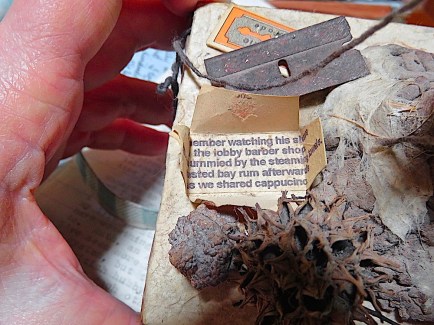
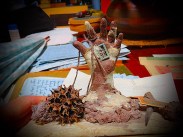
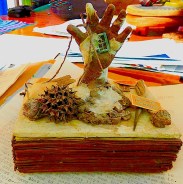
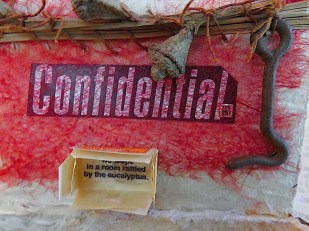

In 1973-74, I journeyed to and lived in Ethiopia. It was not my original intention to do any more than visit and pass through, but fate had a different plan in mind. I was first detained by violence, then by love. The Filowaha baths in Addis Ababa, Ethiopia, were probably the equivalent of the “No Tell Motels” in Mexico, but for Andy and me, they were a place to be alone, to soak in hot water together and to make love with no listening ears. I guess that is what they were to everyone who visited, but there was nothing illicit in our relationship. We were both single and in what at the beginning we thought was a committed relationship that would end in marriage. His family had accepted this. My parents, thousands of miles away, had long ago given me the message that they did not want to know anything that, as my mother had stated, “would make them feel bad.” My sister knew, but they never did.
This poem actually chronicles two different visits to the Filowaha baths–one near the beginning of our relationship and the other our last night before I departed to fly back to the United States. On this second visit, we both knew we would probably never see each other again. Once again, we had figured out that the relationship wasn’t going to work, and our own feelings were complicated by the revolution that was already raging around us. We had both just spent a month in the hospital–Andu Alem recovering from the bullet that had gone all the way through his body as he defended me from a man whose intention was to kill me. Not able to return to my house, I had stayed in the hospital with him so we could both be guarded by his father’s soldiers.
Years later, when I made my first assemblage boxes, I made this music box that told the story I’d already told in the poem years before. The song it plays is “The Way We Were.” I’m now trying to tell the story a third time in a book. Now that I know the true ending to our story, I might have changed the poem, but I leave it as I once thought it was. There are many truths in our lives, according to which vantage point we are telling them from. This story is as true as the very different story I will eventually tell, if I have the courage to face up to it. Please enlarge the photos go see the details which should be self-explanatory. The hand I sculpted out of clay. I photographed the assemblage box on the table where I had been rereading letters I’d written home from Ethiopia as well as letters Andualem and other friends living in Ethiopia had written me once I returned to the states.
Napowrimo prompt: write an elegy of your own, one in which the abstraction of sadness is communicated not through abstract words, but physical detail.
 lifelessons - a blog by Judy Dykstra-Brown
Judy – this is the most inspirational piece I have come across, and as with each blog I get to know you better! You must write this book!
LikeLiked by 1 person
Thanks, Noreen.
LikeLike
You have led such an interesting life. I love discovering more and more when I read your blog. I agree with Noreen, you must write this book.
LikeLike
Thanks, Jose. To do so, I’d have to take away from most of the time i spend blogging, and I hate severing those ties, but perhaps I’ll take your advice…
LikeLike
I’d love to read your book. Probably I would cry while reading it. What a story, and knowing that you lived through it. These pieces are amazing as well.
This prompt didn’t make me cry though. The only thing I have lost so far are things. A shoe, for example:
LikeLike
I loved this poem. More comments in your comments section!
LikeLiked by 1 person
What an incredible story of passion and revolution, Judy, and the way you are expressing it through art and poetry is very powerful! Do finish that book, my friend!
LikeLiked by 1 person
Well, there is a further story to this story that happened today, but two dogs and three kitties are yowling and howling for food, so it must wait.. and hard to know how to tell the story..I’ll leave it as a cliff-hanger.
LikeLiked by 1 person
Looking forward to the sequel…
LikeLike
Write the book and tell the story!
LikeLike
Okay.. that’s what I ‘ve been doing all night. Trying to get a 15 minute excerpt to read at the Nueva Posada tomorrow. I have quite a story to tell you about something going on right now. We need to get together.
LikeLike