Category Archives: Prose

Second Round, Two Saves for RDP

1956, Johnssen’s Dam

Since the prompt for RDP is “Second,” I wrote the word into my search bar for my blog and this was the earliest  hit that came up. I guess it was because it somehow detected that it was about the second time something happened in my life. At any rate, it was written over ten years ago about two events I had since totally forgotten about,  so I decided I’d give it a second chance at publication. At the time I wrote it, I’d been at the beach for 7 weeks and early in that period, I’d spilled a Coke over my Mac computer, and in spite of attempts to rescue it, it had been declared unsaveable by a local tech guy. I was trying to write on a different computer which obviously I didn’t understand how to use, thus the notes below:

Two Saves

Okay, this is a reblog of a blog from January, 2015. The day’s WordPress Daily Prompt was Daring Do – Tell us about the time you rescued someone else (person or animal) from a dangerous situation. What happened? How did you prevail?)

This was my response:

The prompt today, which I cannot copy here because I don’t know how to do it on the pc I have been using for the first time, or trying to, over these past two days since I murdered my (sob) Mac Air laptop, has something to do with some time when you have saved someone.  After thinking long and hard, mainly because I couldn’t figure out how to use the document software on the pc and then realizing I had no way to transfer it to my blog, anyway, I just decided that some power in either me or the universe (which is really the same thing) has decided that it is time for me to back away from technology for a time. If you don’t believe this, take into account that after both my Mac and my Kindle stopped working, then my phone did so also.  Thinking it was probably that I needed to buy more time, I resolved to do so only to find that its charger has absolutely vanished from my life.  I’ve turned the house upside down and it is nowhere.  Ah well, I’ll concentrate on photography, thought I, then realized I had no place to put the photographs.  After stumbling around for about 4 hours, I almost by mistake got them downloaded to this (devil) Acer pc, which promptly told me none had been downloaded.  A few hours later, I stumbled upon them but have no idea how to get them onto my blog…and, deciding to just give up on writing or talking to anyone I know outside of my immediate proximity, I took camera in hand…only to discover that my camera, also, is absolutely unoperational.  I think I wrote about this last night and sent it to a friend to post for me, but it was never received, so I won’t bore you with the details, other than that my camera has become a little turtle, constantly extending its head and neck only to withdraw them again, forever, until the battery wears out. Slip in a new battery and the same happens. I put it out of its misery, removed the battery and stuck it in a bag of rice, where it is keeping company with my Mac. Countless people tell me this is a remedy for waterlogged nonhuman entitites. I don’t know what is wrong with the camera, but that big bag of rice was sitting there handy, so why not? Anyway, this is why I am incommunicado and not posting .  Instead, I made a salad and chicken soup for a dinner I’m giving for departing friends tonight and got in the hammock with a good book, dozing a bit just in time for a friend to come by, jar me awake and ask if I was sleeping, then depart (her, not me) for a walk up the beach. So, what does this have to do with saving anyone?  Nothing.  Just a chance to unload on someone other than Forgottenman, who has been bearing the brunt of my frustration.  I do, however, have an answer to the question.

I have, in fact, saved two babies from drowning.  One was at a housewarming party given by my boyfriend’s son in California in 1984.  We’d all been given the tour, including the garden and hot tub, which was up on a raised patio out of view of the house.  One of the couples had a two-year-old child and I noticed he was not with his mother. Looking in the other room, I saw he wasn’t with his father, either, and I suddenly had a strong feeling that something was wrong. I ran out of the house and into the garden just in time to see him at the top of the stairs leading to the hot tub.  He walked over to the side, fell in and sank like a stone.  I ran up the stairs, jumped in the hot tub and fished him from the bottom before he ever bobbed to the surface.  I remember the entire thing in slow motion and have a very clear memory of the fact that it seemed as though his body had no tendency to float at all, but would have remained at the bottom of the deep hot tub.  The parents reaction was shock.  I can’t remember if they left the party or if they really realized how serious it was.  I know they didn’t thank me, which is of no importance other than a measure of either their inability to face the fact that their child had been within seconds of drowning or simply their shock and the fact they were thinking only of their child.

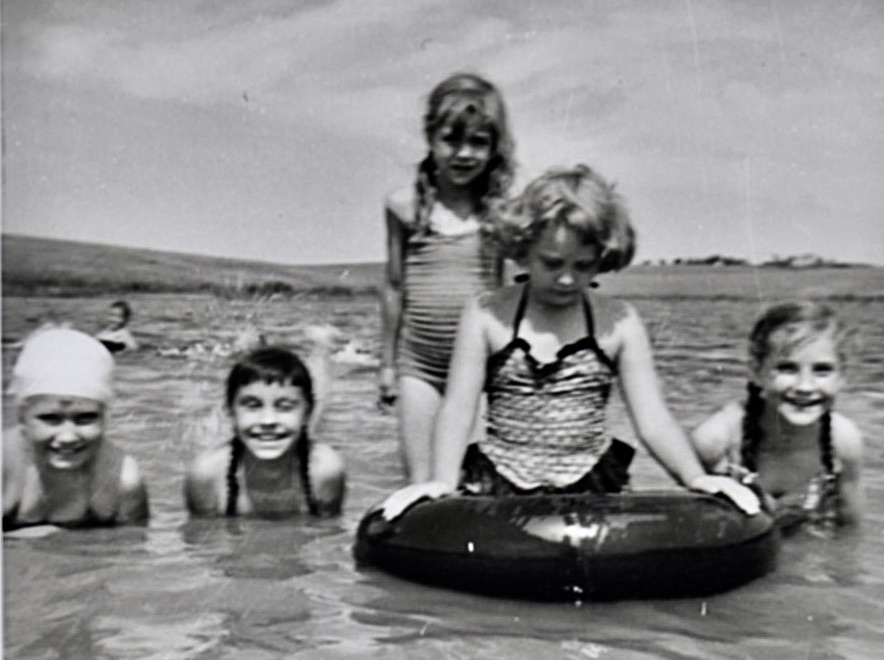
Strangely enough, this had happened before, at a stock pond just outside of the little South Dakota town where I grew up. (I have found a photo of me swimming with friends in that pond, taken a few years before the described even,  that I included above.) Everyone went swimming there, as there was no pool in town.  When I was still in jr. high, I’d just arrived when I saw a very tiny girl—really just a baby—fall into the dam (which is what we called a pond) and sink straight down under the very heavy moss that grew on the top of the water.  Her mother had her back turned, talking to a friend, and no one else noticed.  I jumped in and fished her out, returning her to her mother, who quickly collected her other children and left.  Again, no word of thanks.  It is not that it was required, and I mention it here only because it happened twice and, having not thought about this for so many years, I am wondering if it wasn’t embarrassment and guilt on the part of the parents that made them both react so matter-of-factly.

For RDP the prompt is second.
“Cold Storage” for SOCS, Nov 30, 2024

Cold Storage

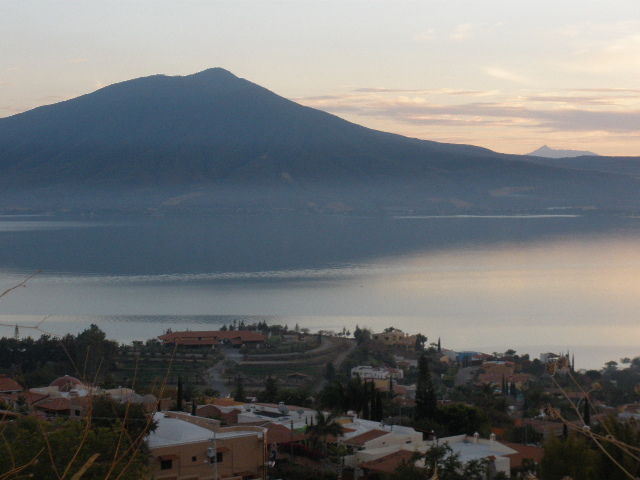
Lately, the mornings had grown crisp. Even here, below the tropic of Cancer, where they were rumored to have the second best climate in the world, they suffered a few weeks of weather where she regretted having neither heat nor air conditioning in her house. Its brick and concrete walls held-in the cool air. In the summer, this was a welcome fact. Now, in mid-November, it created the effect of the cold storage locker at the butcher shop in the small South Dakota town where she had grown up.

The butcher shop had a room-sized walk-in freezer that functioned as a meat safety-deposit vault. People in the town paid to rent private lockers. Ranchers could bring  a live cow to the butcher and he and his family would kill it, age the meat, wrap it in neat packages labeled hamburger, rib eye, chuck roast, rump roast or sirloin; and then stow it away in drawers big enough to hold an entire dismantled cow. When she was very small, she could remember going to the locker with her mother or father to get the week’s meat from the drawer that had their name scrawled on a piece of masking tape stuck on its front.

The locker also sold ice cream sandwiches by the carton of 50 or so, which they would take home and store in the freezer compartment of their refrigerator. They were square little bars—half the size of the bigger ones you could buy individually at the supermarket–—and she grew chubby the year she turned nine, probably mainly due to her mother’s lack of rules about how many could be consumed daily. When the supply grew sparse, it was replenished by whomever went to the locker—her mom or dad or oldest sister.

It is early morning and she puts off getting out of bed to face the brisk air. Water is streaming into the pool. She can hear its hiss as the hot volcanic water hits the cooler water of the pool. She can hear Pasiano the gardener clearing his throat down below. Later, when Yolanda arrives, the dogs will grow restless and bark to be fed. It is not the bright morning promised by the precognition of the weather channel. Even through the white scrim of the manta cloth drapes, she can tell that the sun is muted. The past two days have been marked by intermittent rain showers coming from a sky permanently cottoned-over by a layer of clouds that now and then the sun peeks through. As she lies in bed typing, she can see a light ray through the curtains, but it fades quickly away.

8:01. It is now legal for the noises of the day to begin. The upstreet neighbor’s spoiled son roars by in his ATV that is muffler-less. The harsh sound slashes a gash through the gentler sounds of the day: the whisk whisk whisk of Pasiano’s broom, the surge as a steadier supply of hot water streams into the pool from the pipe hidden within the concrete form of a plumed serpent that spews water from between the fangs of its open mouth.

She has fantasized about stringing a wire across the cobblestone road to spill that teenaged brat from his ugly machine. This is the violence prompted by an early morning slaughtered by his ear-splitting exit. On weekends, he is up the hill and down the hill with his friends. Once, when she went to protest, they steered their monster tricycles in her direction, veering off just as she jumped back onto the sidewalk. She couldn’t hear their laughs above the deafening din of three bikes, but the girls on the back of the vehicles  turned to look at her as they roared away, and their mouths were stretched in broad grins of amusement over this aged gringo who had come out with a frown to comment on the fun of youth.

They have gone. She can hear their mechanical beasts speeding down the road toward the carretera, their loud roars terrorizing neighborhood after neighborhood as they pass. She returns to the house to make the phone call to the office that will protest this noise and this small terrorist action.

“Yes, senora, we will look into it.”

“Will you call their father this time?”

“Yes, senora. The father is in Guadalajara now, but when he comes, we will call him.”

“They veered their bikes toward me so I had to jump back on the sidewalk!”

“Yes, senora. We will tell them.”

She hangs up knowing they will not tell the parents anything. They are important enough to have a huge house here in the tennis club where she lives— a house they use on occasional weekends. A house which sits empty for most of the year. A house where they once brought their children and their cousins and friends to swim in the steaming hot water of the club pool or their own pools. A party house for their children, now that they have reached their teen years.
The father would be an important business man with connections, perhaps a judge or politician. It was rumored that one of the houses on her street, one farther up the mountainside, was owned by a member of the cartel.

Whatever the truth of this, the complaint would not be made. In Mexico, so long as their misdeeds did not come too completely to the surface, the rich were invulnerable—cushioned by a layer of privilege augmented by mordida.. No foreigner who chose to come up against a Mexican would ever win—no matter how large the misdeed. Murderers might be caught, but the case would then fade away in time so that they might never be tried, but again would be released on some technicality given birth to by mordida. Houses and land paid for in full by gringos could be reclaimed by entrepreneurs or ejidos powerful enough to know the right judge or the right politician.

Now the roar of the ATV’s is forgotten with the passing of the first truck hauling gravel and stone up to the construction site at the highest point presently reachable on the mountain. One day those mountains that rose so beautifully above her would be filled with houses to the very top; but for now, as the noise of the churning engine fades into the cold white sky, she contemplates what she will write about now that the demands of the prompt have been met. She will not write a funny rhyme today. Her mind has already been trapped by the mood prompted by the demands of this day’s topic.

She wonders how the parts of what she has written can be brought together. It is as though she has written a beginning and an end with no middle. Perhaps that was how a novel was begun in the mind of a novelist—to start out with meat in a cold storage locker and end up with a neighbor’s son terrorizing the neighborhood on an ATV. Was that how it went? Could she stuff those two vignettes with enough information to stretch them apart like a bota bag full of sweet wine? Did she have the capacity to grow those grapes, the skill to ferment them and siphon them into the bag she has created on this cold morning that only now was beginning to let the rays of sunlight through? That strong Mexican sun made more powerful by the high elevation of this place at the almost top of a mountain on a street set at such an angle that if there were ever snow here, she could step outside her house and sled in one straight line down to the lake that was a mile away, across its frozen surface, all the way to the other side.


For SOCS

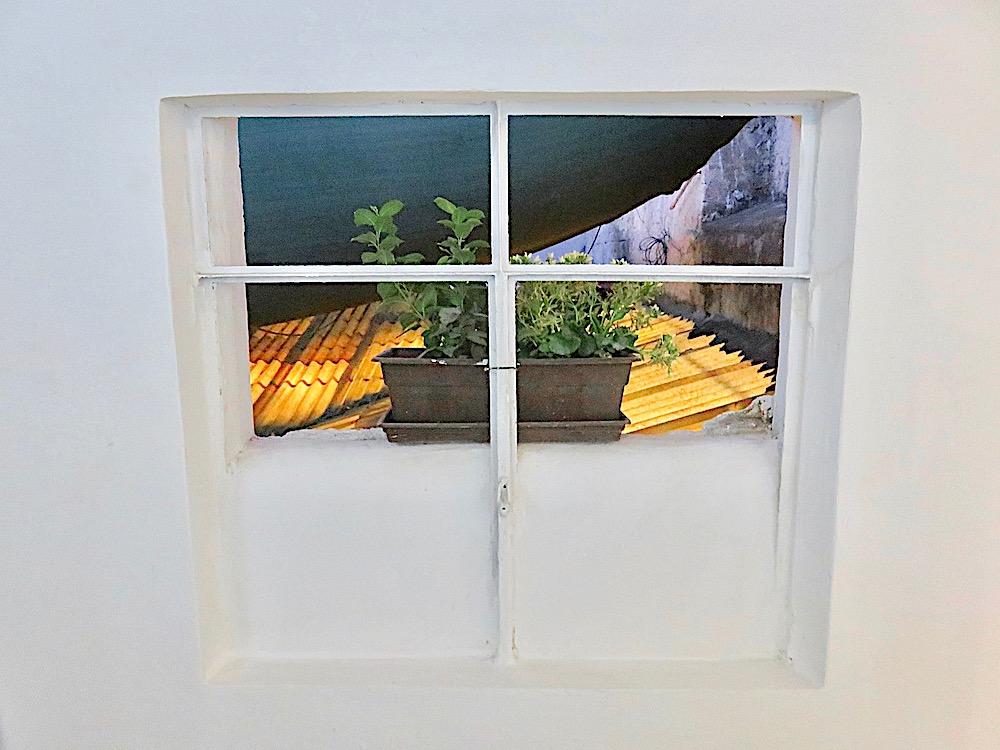
A Room. A Window. (For Thursday Inspiration #226)

A Room.  A Window.

Outside the window, an entire world that I have not moved through for so many years.  Some of the world comes to me, it is true, and I am not so reclusive that I do not let it in.  Marietta brought her newest baby just yesterday, and I held it as though I have held a baby every day of my life, in spite of the fact that I have not held a baby since that baby slipped away from me, into the arms of another woman I have never known the name of. That baby was ripped more violently from my arms than it had been pulled from my female regions hours before.  I was not given a choice.  No one knew.  The baby vanished and then I vanished, off to another country.  Off. . . .

A cough.  I spin around and look behind me.  It is a new intruder.  After so many years alone, two people entering my world.  Perhaps if I’d kept the door unlocked all these years, more people would have come other than the boy who brings my groceries and the other woman with the many layers of skirts who brings me new medicine when I have need of it.

I do not know this new person.  It is a young man who carries a machete in his hand.  He is very tall.  Very very tall for a Mexican, so perhaps he is a Bedouin or some other Arab from a tall tribe, plopped down in this country  in the way many of us have been positioned here by fate, by circumstance or by force.  His skin is that beautiful golden coffee color of someone naturally dark who has also been in the sun for long period of time or for a long lifetime.

“Disculpe, senora,” he says, as he moves into the room.  When I speak to him in English, he switches to English.  He has seen my tall palm with the fruit and the seeding husks hanging dangerously loose.  He can scale this tree and cut them for me.  It needs to be done, senora, and if I have no money to pay, he will do it for no more fee than my friendship.  And if I have no friendship to offer, then he will do it for the good grace it will bring him in the universe and perhaps an easier ingress into heaven.

It is an omen, I think, and I surprise myself when I give him permission to trim the tree.  He cannot know how much he looks like a young man in my past and he cannot know how uncharacteristic it is for me to allow anyone at all into my life, my room, my trust.  Now I have an obligation to this man I know nothing about.  He may be dangerous.  Certainly, he carries a weapon.  The branch of the pomegranate tree taps taps on my window, as though a strong breeze has come up in this still day.  It is the fingers of the afternoon reminding me.  Warning me.  But then I see that it is the movement of the young man as he brushes past the tree that has set it in motion.

A large turquoise dragonfly rests on the branch that has stopped moving and that now sits isolated.  Another dragonfly approaches it and seems to attach itself in an arch and they go flying away together in this impossible configuration—a broken circle.  How two creatures can move as one is not something I have ever learned, not since the one person who was a part of me for so many months was pulled from my arms still weak from childbirth.  If they’d waited, I would have been strong enough, I tell myself.  I have been telling myself for most of my life.
After they took from me what was mine, we took a drive to a large place with many chairs.  Many chairs and many people, then a corridor.

Then I was on an airline and in spite of my terror, I fell asleep. I was an eleven year old girl, accustomed to doing what I was told to do.  I woke up in America, where I was driven to the beautiful house of my aunt.  It was here I lived for ten more years.  Here that they expected to give me a new life to encourage me to forget my old life, but as I sit for all these years in my isolation, it is the old life that I remember and remember and remember.

For Thursday Inspiration #226: Whenever, Wherever

This is a 5 minute inspiration piece I wrote for a writing retreat a few years ago.  It was buried in my poetry file, for some reason, but I resurrected it as it seemed to fit the “Whenever, Wherever” prompt so well.  Like its subject, it has been tucked away for too long. 

Almost a Miracle

Almost a Miracle

        I need to explain to you how it happened. I know you don’t require it, but I need to tell you, much as a good Catholic needs absolution from her priest or her god, I need absolution from you.

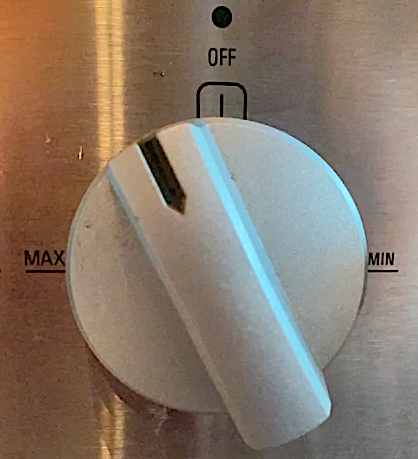
It began with a simple mishap. The gas left on after cleaning the stove. I do not remember this action, yet it must have been me who left the dial turned not quite shut.  A dark part of me, because with God as my witness, I do not remember doing so. I did remember that every payday Saturday night when he came home reeling from the tavern, he went to turn on the striker to light his cigar. If I had actually planned it, I could not have planned it better.  My mother and the other children had gone to Talpa for the four-day pilgrimage to the Virgin and it was my night to stay with the children of the people whose house I cleaned.
I did this weekly to afford them the chance to be together with their friends, away from their demanding children. And it gave me an opportunity to avoid my father.

To avoid the sound of his entrance at the front gate, the heavy pounding of his boots upon the cobbles, the creak of the front door and his slipping the bolt so that I knew once again that I was in the prison of his making.  His footsteps upon the tile stairs as I lay still, my lips moving in rapid prayers, “Our Lord, dear lord, help him pass my door tonight.  Help him to proceed past the doors of my sisters and my brothers and let him move to visit my mother.  Help him to relieve the cares of his week in her presence.  Help it to be his wife who smells the tequila of his breath, to taste the lime on his lips. Help me on this night not to be the partner of his sin.”

Rare was the Saturday night when my prayer was heard. But this night, perhaps I had answered my own prayer.  Later on, the villagers would talk about the night they heard the boom—saw the streaking image of a man run from the front door aflame to bolt down the street screaming. Such a tragedy, they would say, but how fortunate that his wife and children were not present. God must have been watching, they would say, but must have blinked for a moment. It was almost a miracle, they would say.  Almost.

 This is actually a chapter from “Holy Vacation,” a book I have been writing for years about 5 nuns and five children in a home for orphans that they manage.

The prompt for Stream of Consciousness Saturday is Mostly/Almost

A Curious Happening

A Curious Happening

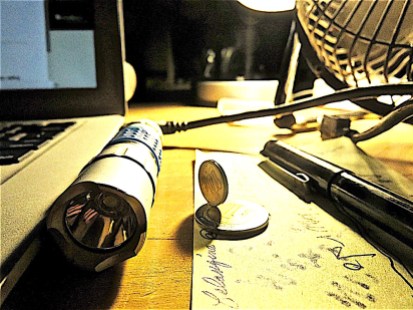
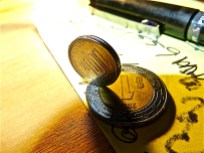
This is a reprint of something that happened eight years ago, and I swear it is true.  I came in, tossed some change down on the desk and opened my computer.  After working for a few minutes, I looked down and this is what I saw.  Luckily my camera was handy just a few steps away.  What are the chances that the coin would balance itself on edge like this???? Curious, I tried at least a dozen times to balance a coint on its edge and couldn’t balance it.  Finally, I decided my friendly desk poltergeists must have had a hand in it.

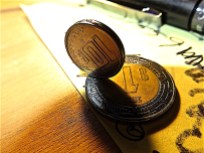
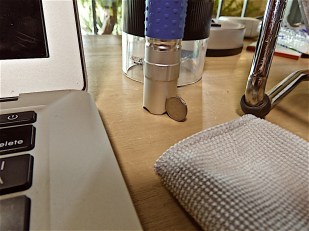
Then, the next day, I’d  been at my desk for about an hour, off and on, running to the kitchen, doing little things around the house, and when I finally sat down to type, I happened to glance at my desk and this is what I saw:

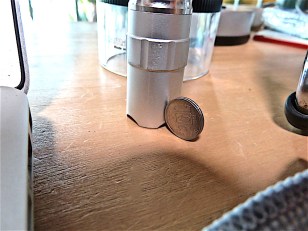
There had been no one else in the house.  I don’t know what happened to the larger ten peso piece from the day before, but I do know I was clicking the flashlight off and on last night.  I did not, however, place this smaller coin next to it or upright!.

To test out a theory, I just now lifted up the flashlight and knocked the coin over, then put the flashlight next to it, thinking perhaps one or the other had been magnetized, but the coin stayed in place flat on the desk and did not rise to the occasion. Then I tried placing the coin on edge several times, to no avail.When I sat the coin on edge propped up against the flashlight and moved the flashlight, however, the coin stayed on its edge. When I tried tossing it on the desk or dropping it, never once has it landed on its edge.  Very very strange. I know it is just a coincidence, but I’m curious about how I could have moved the coins without being aware of it and it is a huge coincidence that the small coin should wind up on edge twice in a row when in 68 years of life, I’ve never had this happen before.

Daily Prompt #18: What Are You Curious About?

Innocents in Mexico, Chapter 13

Innocents in Mexico

Chapter 13

            That night, I sliced chicken breasts and sauteed them with green, yellow and red peppers, garlic, onion and carrots.  I sliced potatoes and boiled them, then added them to the pan.  While they browned, I made a salsa of the mangoes and sweet onions I’d bought in the market. 

            No bread tonight.  We remained firm in our resolve. We had been very bad about bread and pastries, which were so cheap and good in the town shops and markets and even cheaper and better in the large bakery at Gigante.  Here bread, rolls, pastries, donuts and cakes were piled in bins or displayed on large trays.  Customers walked around with tongs and pizza trays, choosing what they wished, then stood in line to have them bagged and tagged at the cash register. The first time we had visited, we had filled up two bags and the total came to about $2.  The store was so close that we couldn’t even walk off the calories by walking to get them. 

            We tried to eat by candlelight on the unwalled patio off the kitchen.  I kept lighting candles, but the wind kept blowing them out.  We had begun to notice a pattern in the weather.  Hot days gave way to cool windy evenings.  At 9, all the doors in the house blew shut, the trees were swaying, and I pulled on a long-sleeved t-shirt against the chill. Then by 9:30 it had warmed up again and the wind had died down.  By 10, it was dead still and I had discarded the long-sleeved shirt.                       

            Today, Bob went to town to replace the large stretched and framed canvas we had lost off the top of our car in the desert.  Then we went back to town in the afternoon to look at a possible long-term rental and to shop in the market. As we waited for Susan at La Conexion, a continual stream of people ducked in and quickly out again, having grabbed their mail from their boxes. There were several of these mail delivery places in town.  Your address was a mailbox in Texas.  Then they bulk shipped the mail UPS to San Miguel so the mail never went through the unreliable Mexican postal system.  They would also accept faxes and would print out three pages of e-mails a day for customers. 

            Bob pointed out a stack of videos of San Miguel piled on the counter.  We hadn’t noticed them before.  A few minutes later, a small neatly dressed woman came in.  She left and came in again, smiling at us both times and talking to a woman in the computer section of the room.  She had a genteel air, and when she smiled and talked, she resembled Jessica Tandy.  When she came back in our direction, she spoke.  “Have you noticed the video?” she asked. 

            When we told her we were just commenting on it, she said, “We’re having a viewing here tomorrow night at 6.  It’s the first viewing.  You should come.”  She then told us of an earlier video about San Miguel. 

            ‘”Were you in film production before you came to San Miguel?”  I asked her.  Something she had said had given me the idea that this was her video.

            “Oh, no, I’m just a woman who knows how to talk and has a lot of money, so I get things done!”  she told us, giving  me the impression that she had bankrolled or produced the video.

            In the Jardin, we ran into Lisa, the girl we met in the bank our first day.  We told her we’d rented a temporary house, thanks to her, and showed her the pictures we’d taken of it that we’d just picked up from the photo store.  Lisa lived in a motorhome parked at a friend’s house and was preparing for a showing of her works which would occur while we were back in the States.  She breezed away from us through the Jardin, on her way to her daily errands.


***Note: If you are still reading these daily chapters, would you please leave a brief note in comments to tell me so? I am wondering if I should keep posting them or retire them for the time being. If enough people are interested, I’ll keep posting them. 

See Chapter 14 HERE.


Innocents in Mexico, Chapter 10


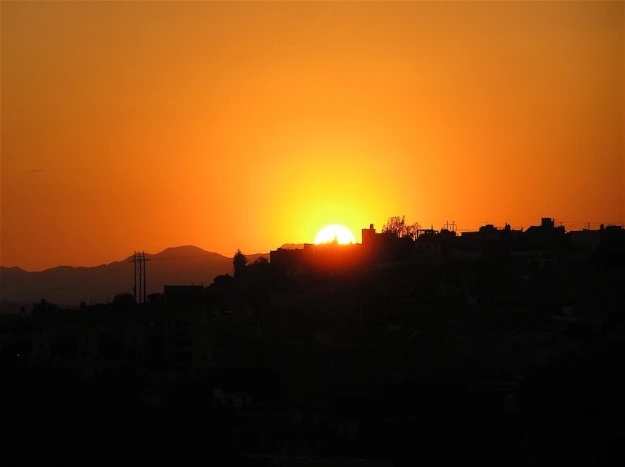
San Miguel Sunset from the Roof of the House We Chose to Rent

Innocents in Mexico

Find Chapter 1 HERE  Chapter 2 HERE   Chapter 3 HERE
Chapter 4 HERE
  Chapter 5  HERE  Chapter 6 HERE Chapter 7 HERE  Chapter 8 HERE  and Chapter 9 HERE,

Chapter 10

            On our sixth day of searching, we found three houses we wanted to rent.  One had the advantage of being blocks from the jardin and a block from the market.  It was stark and small, but we could fix it up.  There were many patios, but I would have to supply the plants.  If we were renting for a year or two, it would be worth fixing up, but not for a month.  As we left, Bob toed aside a large, dead cockroach. 

            The second apartment was in an area above the Biblioteca which we had not seen before.  The man who owned the house was a large-scale metalsmith and would share his tools and space with Bob.  The apartment was charming––decorated with flair.  It had one bedroom, kitchen and bath with a small sitting room on the ground floor.  He, his wife and children and assorted art students lived above.  We were free to use any of his studio space as well.  He was so anxious to rent to us that he said he would do anything to please us.  He came down $200 from his original offer when we had done nothing but ask him the price again.  The $300 a month covered utilities, and he would pay half of our parking nearby.  We were sure we would take this place, but we had first, as a courtesy to Susan, to go see the house she had been trying to get us in to see for three days.  We went back to see Clello’s house by the mercado, found yet another dead cockroach under the sink, then returned the key and told her we had decided to take a different house. 

            We then remembered that we had forgotten to tell the metalsmith that we had a cat.  It was no problem, he told us, when we called to tell him.  He would do anything to get us to take the apartment. 

            “But first” we said, “we must go to see one other house.”

            We went to La Conexion, Susan’s internet business, and she loaded us into her van.  On the passenger side door were vivid purple scribbles.

            “My kids did that.  It’s not graffiti,” she told us. 

            Her van looked like ours––lived in.  Crayons littered the backseat floorboards, a Eudora instruction booklet lay on the dashboard.  I piled my San Miguel guidebook, book of notes and phone numbers, Spanish dictionary and town map on top of it. 

            We went a different route to the house than the first time––when we had seen the neighborhood but couldn’t get in to see the house.  It was in a Mexican neighborhood a short way out of town.  From the road in front of the house, we could see the half-unoccupied shopping mall whose only prosperous inhabitant seemed to be the huge grocery/notions store named Gigante.  The road was dirt, the field to its right littered with plastic bottles and paper bags.  At first, I thought it was a dump, but it was just the refuse which was the normal byproduct of being so close to a market.  The neighborhood looked less bleak this time.  On the  long road that ran past the house were two metalworking shops, which interested us both.  Susan opened the gate to the courtyard and we stepped in.  It was a beautiful modern stucco house constructed in the Mexican style, using Mexican methods and materials––two stories with a rooftop patio.  Two second story patios served as roofs for two ground floor patios which  flanked the house.  A brick pathway vee’d and then joined as it approached the house.  Around us were bougainvilleas in various shades of purple, burgundy, wine, rose, orange and gold.  A 15’ long wall of organpipe cacti stretched far up into the air, running parallel to the side wall, but well out from it.  A mesquite tree spread over the central courtyard and the walls of a small ruin which they had left intact and which contained a quirky artist’s shrine.  As we stepped into the house, we saw  first of all a huge picture of the Virgin of Guadalupe which dominated the 30’ high back wall .  On closer inspection, we saw  that it was a beaded curtain meant to hang in a doorway.  Ceiling fans above it sent air currents which caused it to gently sway in minute waves out from the wall and back.  The effect was an underwater effect––or one of heat waves in the road in front of you when driving through a desert.  The house was spectacular.  One large central room opened to the 30’ high ceiling.  To the right was an open kitchen which led to the right front patio, where the glass top dining room table and chairs were.  To the left were the guest bedroom and bath, which sported the only inner door in the house.  In front of us, two open stairways formed a V leading up to the office on the right and the master bedroom/bath on the left.  Both were bounded by just an open balcony railing overlooking the main living space.  Most walls were whitewashed adobe brick, but a few walls were kept unpainted.  The vent over the stove was covered with vivid yellow tile and the cement floors were painted an aged terracotta, blue or yellow, then waxed.  Rugs added warmth to the floors.  As we moved through the house, the image of the Virgin de Guadalupe was repeated over and over on glasses in the kitchen, in small shrines and in a tiled tray on the patio.  An autographed picture of Beaver and Wally Cleaver sat on the stand beside the desk.  To its left was a small shrine to the Rolling Stones.  Elsewhere in the house were pictures of the Swami Yogananda, a print of Remedios Varo, whose work we had earlier seen in Ziwok, a wall devoted to Bob Dylan (We had included all of Bob Dylan’s tapes in our limited cache of tapes brought along to Mexico.)  On the open clothes rod at the end of the master bathroom were sedate Hawaiian and batik shirts that could have been Bob’s.  On the shelves were shorts and loose pants that look like the ones packed in his bag back at the hotel.  When we saw a picture of Jim, the owner, he had long light hair, like Bob, and was of a similar stature and size. 

            I loved the house.  I looked at Bob.  He loved the house.  Prior to this we had looked at no fewer than 10 houses and apartments, and had only agreed about these last two.  We took the house.  Sadly, I called the metalsmith to break the bad news about not taking his apartment.  He was very disappointed, I could tell.  I promised to tell anyone I met about his place.


See Chapter 11 HERE.

Innocents in Mexico, Chapter 9

Treading the Sidewalks of San Miguel

Find Chapter 1 HERE  Chapter 2 HERE   Chapter 3 HERE
Chapter 4 HERE
  Chapter 5  HERE  Chapter 6 HERE Chapter 7 HERE  Chapter 8 HERE.                                                                                         

Innocents in Mexico

Chapter 9


            I was trying to write a letter home for our friends to circulate among themselves. I knew that many had already traveled to Mexico and so they would be most interested in the people we had met. Who were the people we had met in San Miguel?  I began to list them. The first was the woman who gave us her map, but who severely dealt with each child who tried to sell her a cloth doll or old woman who held out her hand for coins.  There was the man who explained to me that I must sign my name to the list of people waiting to see the insurance officer at Lloyd’s, then return at 1 to wait for her.  There was Yvonne, the receptionist at Lloyd’s who spoke flawless Spanish and equally flawless English.  When I asked her whether she was Mexican or North American, it turned out  that like me, she was born and raised in South Dakota. 

            The morning of our first day in San Miguel, we met Ernesto, the Mexican gentleman who told us he had 5,000 acres in Baja near Bahia de Concepcion , who split his life between Key West and San Miguel and who spent his life, it seemed, meeting people at the Biblioteca or in the Jardin. Most importantly, so far, he was the one who introduced us to the Posada de los Monjes.

            We met him at various times for an hour or so and during these times he brought a tray of small cut stones and asked us to choose one as a gift, then showed us an opal from the mine he said he has outside of town.  “I am not trying to sell you this,” he said, but I wondered.  “One day I will take you to the mine. I will show you.”

            Later, over margaritas and Coronas, he told us fantastic stories of the millionaire who had given over part of his hacienda for a school where Ernesto would teach lapidary to poor children, of the man who offered him full use of his yacht to use, charter or live in if he would just arrange for permits to berth it in Mexico and let him use it a few weeks a year.  But when he had approached a friend in government to ask him to expedite the permission to berth the yacht in Mexico, the friend had been disdainful.  “Are you a yachtsman? “ he asked.  “What do you know about boats?  You are a man of the city.  What do you want of a boat?”  So Ernesto had regretfully turned down his other friend’s offer.  As we walked down the street with Ernesto, he begged our pardon and crossed the street to talk to an old man.  When he returned to us, he told us that the old man had 7 ranchos and no sons.  He wanted to give one rancho to Ernesto. 

            “Every time I see him, he asks me if I will have one of his ranchos.” 

            “Why don’t you take it?” I asked him.

            “I am no rancher,” sighed Ernesto.  “Do you want a ranch?”

            “I am no rancher either,” I told him.  “I just got rid of a ranch.” 

            I started to explain to him that I was a rancher’s daughter who had inherited part of his ranch, but Ernesto was not the least interested in who I was or in my stories.  He wanted to tell me his. 

            He wanted to tell me about the time in Bahia de Concepcion when a young man came to him and asked to buy $1,000 worth of land.  Ernesto didn’t want to sell his land, so he asked an elderly friend, who had beach property adjoining his, if he wanted to sell the young man beach property. 

            “Have him choose his land,” said the old man.  So Ernesto took the young man to the beach and he chose a small piece of land. 

            “But I have only $l,000,” said the young man. 

            When they took the old man the money, he said, “This young man wants my land? “

            “Yes,” said Ernesto.

            “And he is a friend of yours?”

            “Yes,“ said Ernesto.

            “Then the land is a gift.  I do not want his money.”

            Then, as Ernesto told it, the young man spent the $1,000 to put up palapas and buy hammocks.  The people who came with boats stayed in the palapas while they fished and then another man started flying in fishermen to fish.  In two years, the young man owned a boat and an airplane and to this day was a wealthy man.  Every time he saw Ernesto, he stood on the table and shouted his praise and thanked him for contributing to his great wealth.

            Ernesto was full of such stories.  He had inherited a mansion from his Mother in New Orleans, but he hated New Orleans. He once had owned 15,000 beach front acres in Baja, near Mulege, but the government had nationalized all but 5,000 acres, which he still owned.  Later, he admitted he had given the land to his daughter and ex-wife.

            “All of it,” he told us, making outward brushing movements with his hands. 

            Ernesto was a pilot, a lapidarist, an opal mine owner.  He brought us a “Town and Country” magazine which sported an article on the homes of Canadian expatriate artists  in San Miguel.  The woman artist with the horses and the huge house and the art collection was his friend, he said.

            Once he was married, but his wife just wanted him as a chauffeur, he told us.  And he cooked for her.  He did all the cooking.  Finally, when she became an alcoholic, he divorced her.  Then he had a girlfriend who dreamed of driving across Canada. 

            “Take me to Canada,” she said to Ernesto.

            “And I almost did,” said Ernesto.  “Then I thought, I had one wife who wanted me to drive her.  I don’t want to drive anymore.”  So he said no and sold the car.

            “Do you still have the same girlfriend?” I asked.

            “No,” huffed Ernesto, making the same brush-away movements with his hands.

            In two days he would take us to the hacienda, he said, and introduce us to his patron, who had given over a part of the hacienda for an art school for the poor.  He had said that we might rent a room in the hacienda, said Ernesto, for not very much.  For $18 a night, he said.  We would take Dirk with us. 

            Dirk was the man with the house that Ernesto wanted us to see.  He had had open heart surgery just two months before, and we feared for his health as he rushed around, moving as fast as he talked.  Dirk had as many stories as Ernesto.  At eighty, he had a Mexican wife who appeared to be in her forties.  He had children in their fifties and a stepson in high school in Miami. Like Ernesto, he was a pilot and a lapidarist.  He rushed to our hotel to pick us up to come see his house.  He parked a block away and ran uphill to get us, then back down to the car.  Panting, he told us about the points of interest along the way as we circumnavigated the roads around the city.  That hotel belonged to Cantinflas, he told us.  This house on 15 acres belonged to a rich Swiss couple.  See how their property was like a park?  This studio was of a Canadian painter.  See how large her studio was?  Behind that wall was a swimming pool and tennis court.  Here was the shortcut to Gigante, the huge shopping mall.  Here was his route to the bus.  We hurried into the house for a quick run-through before rushing back to town to pick up his wife.  He had gotten the times wrong.  He should have told us he would pick us up at 7:15 instead of 6:15. Then he could have picked up his wife on the way.  She insisted on working to give meaning to her life.  He should have put his foot down because it was really a bother to take her and pick her up, but it made her happy.  She was a big town girl.  To her, San Miguel was a village. 

            He rushed us into his house, through the rooms.  This computer he would take with him to Miami, but we could use the computer table.  This cat came with the house, but must stay outside as it was not declawed.  It ate one scoop of dry cat food in the morning and one at seven at night.  He always placed the food here, on this bench.  But the cat stayed always outside.  This was their patio.  Here were the orchids he told us about.  They had a gardener, which we might keep for $4 a week, but they had fired the maid.  His wife was Mexican, and liked to do things herself. I rather liked the house, but Bob told me privately that he found it too small. We decided, however, to tell this to Ernesto instead of Dirk, hoping to let him down easier as he seemed to have such hopes that we would like it.

            Then we rushed back to the car and back to town.  This was the mirador  (scenic overlook) he said, but we didn’t stop.  This was the other mirador, he said, a few minutes later.  As we sped by, I caught a glimpse of a beautiful panoramic view of the city.  Again, he grew short of breath and I asked if this was healthy for him to rush so much.  “Oh, that was eighteen months ago,” he said.  “I’m all right, now.”  Earlier, he had shown me his identification card, for some reason, but covered his picture with his thumb.  “The picture was taken right after my surgery.” he said.  “I looked awful.”  “I’ve lost 14 kilos since the surgery, but I’ve gained some of it back again.” 

            We met Susan, a Colorado girl with a Texas accent.  The married mother of three small children, she ran an internet exchange and mailbox business as well as a real estate business on the side.  She told us of the rich German woman who had set up a maternity hospital in a poor section of San Miguel––of how she was now so famous that her story was on the front page of the Wall Street Journal.

            When I asked Susan about the fantastic sculptures we had seen along the road between El Paso and San Miguel, she told us that the government had built them.  She was disapproving.  There were so many in poverty, and they built sculpture.  It made me regret my shallowness in delighting at their beauty, yet I couldn’t help it.  I loved the beauty of Mexico and sought it out while people who were undoubtedly my betters dealt with the pregnant mothers and worried about the poor.

            Did art serve a purpose in the world?  Bob thought so, and I did, too, in the abstract.  But did art feed the soul enough to atone for the hunger of the poor?  Philosophers more able than I had dealt with the matter, but I knew I would have to deal with it on a more personal level in order to live with myself.  Once all of this business of moving was over, I would need to consider this.

Find Chapter 10 HERE.

Innocents in Mexico, Chapter 8

We passed under this arch to get from the Plaza Principal to our hotel.

ind Chapter 1 HERE  Chapter 2 HERE   Chapter 3 HERE  Chapter 4 HERE  Chapter 5  HERE  Chapter 6 HERE Chapter 7 HERE


Innocents in Mexico

Chapter 8

          Today we met several interesting people and reconnected with the young woman we’d met our first morning in the bank.  All of these connections led to houses to look at. Clello, the woman who owned the shop where we posted an ad for a house, sent us first to look at an apartment, which was nice but much too small.  Then she sent us to a house.  Its entrance proved to be too low for the van, but she assured us we could park at her sister’s hotel a half block away.  We went to the hotel and found what the fee would be, then ambled through the artisan’s market and the food market, which were a stone’s throw from the house we considered renting.
            It was interesting that all of the homes of foreigners seem to be decorated in the best colonial or traditional Mexican style with massive furniture and folk art, whereas the Mexican owned houses and apartments were furnished with western furniture.  Having looked at pictures in the windows of several (closed) real estate offices, we found this house plain in comparison with the pictures of houses that resembled movie sets with lush gardens, art, rugs and furniture.  Today Bob was off to immigration and I was to meet Ernesto to look at still another house.  Then I would make more calls and visit hopefully open real estate offices, renew our car insurance, collect our e-mail, send e-mail.  Bob thought we could get out of our present hotel (which in the states would have been called a motel) by tonight, but I didn’t think so.  He also thought he was going to meet me back there at noon, but I thought he was naive about the length of lines he would encounter at immigration.
            The night before, we had eaten at Ziwok, a delightful restaurant operated by Juan Pablo, a half Mexican/Spanish, half Swedish man with a passion for Frida Kahlo and Remedios Varo.  The front room of his perfectly decorated cafe was devoted to Frida––her self-portraits, photographs and a massive shrine assembled in a niche along one wall.  Basket chandeliers and neatly potted plants accented  the walls, which were beautifully faux painted in light and dark terracotta.  Tablecloths, cloth napkins and napkin rings were all in yellow and green.  The back room was a dark green and was totally devoted to the work of Remedios Varo, a French surrealist who moved to Mexico during the second world war.  Frida, who thought one female surrealist was enough in Mexico, saw her as a rival and hated her,  Juan Pablo told us.  Along with Varo’s exquisite bizarre prints he had displayed his own work: elaborate constructions of parts of animal skeletons, plants, sea life, seeds––any natural object he could find––which he had assembled into fantasy animals and covered with sand cemented in place with cyanoacrylate glue.  The effect was surreal, but although the assemblage animals seemed to come out of a nightmare  (a winged frog, a blowfish with snout, legs and an armadillo tail) they were curiously believable, thanks to his meticulous craftsmanship.
            After a close inspection of the art in both rooms, we went back to our table and watched him in his small open kitchen, cooking our meal in four woks.  Bob had tempura shrimp and vegetables, I had vegetables and rice.  Our plates arrived, along with a cruet of mango sauce and another of ginger.  The food was as different and delicious as the decor.  Prior to leaving, we had spent a half hour or so poring over his book of the work of Remedios Varo and listened to the story of first her life, then his. Every detail here was perfect and immaculate, down to the decoupaged menus and the hand-fashioned box of matches he gave me as we left.
            This night at Ziwok was another flower plucked from the bouquet of San Miguel.  We had found a new favorite restaurant––our most recent favorite having been the outside terrace where we had breakfasted that morning on frittata of eggs, potato and bacon with black bean sauce, fresh baked rolls with butter and jam or a delicious white cheese, pepper and avocado sauce in oil.  Every restaurant  we had  been to here we had wanted to go back to, but there was always a new one to try and we always liked it better than the last.  I had been amazed that in our hour in the restaurant, we were the only customers, but someone had told us that in San Miguel, there were 7,000 restaurant seats and on any given night, an average of 500 diners to fill them.  With odds like this, the restaurant market was a competitive one.  We didn’t think we would find one we liked better than Ziwok, but part of the pleasure was variety, so we would try others on our list before returning.  As we left, a young couple and child made their way to the back room.  “More customers,” I said.  “No, they are my friends,” he said.  “She plays the accordion in Mama Mia’s.”  It was another restaurant that would come to be a favorite.
            Apartment hunting continued to fill our days.  Meanwhile, we were piling up hotel bills at the rate of $100 every two days.  We began to think we might be ahead just getting a $1000 apartment.  At this rate, our hotel bills would mount up to the difference, anyway.  A few days before, we had run into Lisa, our former acquaintance from the bank, while checking out a bulletin board in a small cafe.  She was sitting with the owner of the cafe.
            “Wine?”  he urged, “Something to eat?”  When we said no, we had just eaten, he insisted, “It’s free.”  A large table in the back room was spread with food.  People moved around it, filling their plates.  A few more people moved around the small room, examining paintings on the wall.
            “It’s an opening.  See the woman with the large flower in her hair?  She is the painter.”
            When he urged wine on us once more, I asked for white and we sat down to talk.  Bob, impatient to read the bulletin board and be on to apartment hunting, seemed a bit exasperated.  At this rate we would never find an apartment, he insisted, but in the end, this is how we found one.  Lisa’s friend Pancho, the owner of the bar attached to the gallery, insisted that we must see Susan, the woman who ran a mail agency and internet service, at the front of the cafe and gallery.  “She knows many good apartments.  She knows everyone,” he told us. We sat and talked for a short time while I finished my wine.  The waiter urged more wine on Lisa.  “He’s trying to get me drunk so I’ll be a bad girl,” she laughed.
            The next day, we called Susan and made an appointment to meet her later in the day.  She took us in her car to see the house of a friend, but the inhabitant did not answer the door.  Then we went on to see a house which she assured us was a steal at $85,000.  Although we were not in the market to buy a house, Bob was sold by the huge studio.  I didn’t like the location or the house.  The owner had built it in an area quite far from town––an area chosen because it was far from the foreign enclave, where people might find objection to the large jewelry production studio which was attached.  Here, 15 employees made jewelry which she wholesaled in the States.  Because she had built her house in a poorer neighborhood, she had no problem finding workers who could actually walk to her studio to work for four dollars a day.  As we went into her patio, a huge Doberman rushed up.  All of the doors and windows were locked, even though the house was surrounded by a tall wall.  I didn’t think I would like to live in a house this luxurious in comparison with the neighborhood around it.  If real estate was location, location, location, then this seemed to be a poor choice for real estate investment.  Susan assured us that in 5 years this house will have tripled in value, but the spirit of the house seemed wrong to me.
            Later in the day, we went to see the house of Dirk, the man I’d met through Ernesto.  He had plans to spend a year in the States, and wanted to rent us his house.  It was in an enclave of extremely large and expensive homes, but it was equally as far out from the center.  I liked the house, which was esthetically more pleasant than the last house, with arched brick ceilings and tile more to my taste.  It was surrounded by patios and plants and had a large rooftop patio where Bob could work, but now that he had seen the house with the large studio, nothing could rival it.  He found this house too small.
            When we had moved to Central California from L.A. fourteen years ago, it had taken us a year of driving back and forth each weekend to find the right house;  but we had neither the time nor the energy to do so now.  The double task of finding a place to live for a month and a place to return to for a year was wearing us down.  I just wanted to try to get into the swing of life here––to see what it would be like to live and work in San Miguel.  But all we were doing was business–– like at home.  Visas, permits, money changing, setting up accounts, looking for houses, finding internet servers, finding personal mailboxes––these details ate up our days.  Bob had predicted that the annoying minutiae of dealing with the details of living would follow us here, and he was right, but I hoped that after this interim period we could settle into a simpler life.

See Chapter 9 HERE.


Innocents in Mexico, Chapter 7 Posada de las Monjas


Find Chapter 1 HERE  Chapter 2 HERE   Chapter 3 HERE  Chapter 4 HERE  Chapter 5  HERE  Chapter 6 HERE

Innocents in Mexico

Chapter 7: Posada de las Monjas

It was Sunday, May 13, at 1:30 a.m. It was our first night in our new room, and someone was setting off fireworks.  They soared up into the air and exploded with ear-splitting booms.  Dogs barked from half the rooftops of San Miguel.  There were too many lights in town, even at this late hour, for the stars to be visible.  It was a shame as our room was so high that we had a panoramic view of the city and the sky.  Below us, tin roofs broke the spell, but we had occasional glimpses into courtyards full of plants and trees.  A cat yowled below and Bearcat stood and stretched but did not scoot under the bed as he had that afternoon when he heard the same caterwauling.  He was getting braver every day, but a car backfiring a block away or a door slamming across the courtyard could still send him into hiding.  We had no yard now for our midnight walks.  All of the courtyards  and terraces in this hotel were of cobblestone or cement.  He was an illegal alien here.  When we sneaked him out on his leash at night for a walk through the deserted outside corridors, he was calmer, walking as close to the curtained windows of each room as though eavesdropping for any possible news of his new environs. Although the management didn’t know we had a cat, some of the staff knew but they never told. This first night, we settled to bed, finally, by 2 a.m.  and  I penned this poem  a mere four and a half hours later:

San Miguel Morning

The sounds of rooting cats
like infanticide
accompany
tuba music
in 4/4 time.

Fireworks.
Roosters.
Donkey brays.
6:29 in the morning.

All’s right with the world.

Today was Mother’s Day.  It was the first in my life where I had no mother to send flowers to.  The same was true of Bob.  On our way through Tucson, we had stopped to see my mother’s crypt for the first time.  I had meant to bring flowers, but I could see that they didn’t allow fresh flowers, and I couldn’t bring myself to leave plastic ones.  Some of the crypts had metal flowers attached, and I decided to try to have something special made in Mexico.  Those would be the flowers I sent this year.

On this day, we took the van out of the courtyard of the hotel to go look at an apartment.  It was a bother to do so, because it meant getting a man to open the portal––not only the one that could be reached from ground level, but also the high one 8 or more feet off the ground.  Today, the guard used a tall metal pipe to pry the hatches open, Yesterday he had attempted to climb up on the lower lock to reach the top one, but it was a tricky maneuver and he had fallen off..  Then we scraped the bumper of a new yellow pickup trying to back out.

The apartment we saw was a depressing empty house in an extremely poor neighborhood.  On the floor of the bare living room was a pair of men’s slacks, rumpled as though he had climbed out of them and left them as they were.  Half-full bags of grout  lay abandoned.  In the shed, there was the overpowering smell of oil paints.  What had been described as a garden was hard baked earth with a few abandoned flower pots.  Even the weeds were dried and skeletal.  The house described as furnished in the newspaper ad was dark, in poor repair and completely empty.  The woman told us she had no money to buy furnishings, but maybe they could get one bed and a refrigerator.

That afternoon, we had been looking  at  pictures  of rentals in a rental office near our hotel.  The apartments and houses were all picture perfect––decorated, furnished with art and gardens complete with gardeners.  The contrast was so depressing that it made me again question whether I wanted to stay here.

The disparity between the gringo sections of town and the local sections was so great.  And yet in the restaurants and galleries, I saw the majority of people were Mexican––well-groomed and prosperous looking––eating the same food and drinking the same drinks we were drinking.  Our hotel, too, was filled with Mexican travelers, so the difference was not so much one of nationality as of level of prosperity.  The same economic differences existed in the United States, but there, as here, we were shielded by the distances between our living areas.

Even in the U.S, there were places we never went.  Why would we?  In those places there were no restaurants, theaters, gyms.  In those places, there were none of our friends to visit.  Our kids didn’t go to school in those neighborhoods, so for us, they didn’t exist.  Every American we talked to said not to have a car here––to depend on public transport or walking,  but public transport did not take them through these neighborhoods, so for most, I am sure they did not exist.

By the time we got home again, we were exhausted from trying to negotiate the maze of unmarked streets. To compound our frustration, we found that  the lot that had been  nearly empty when we left was now completely packed––with all cars double parked.  The guard fit us diagonally into one corner of the large courtyard in a place where we blocked four cars instead of two.  He refused to take our car keys, so we imagined an early knock on our door to get us to come move it. We had already made the decision to keep the van in the compound for the rest of our stay, but this cinched it! On Monday, we would take a taxi to immigration and the real estate office.  Already, our new van had rattles in every part of its chassis from two days of bumping over cobblestones.  The side was scraped and the running board dented in.  If we had to count the number of streets backed down or tight spaces we had turned around in, it would reconfirm our decision.  A car in this town was crazy.  A full-sized van was lunatic.  People drove vans the size of ours as buses here.

It was a moral struggle to sit in the Plaza Principal.  Every time I sat down, an old woman came to sit next to me to tell me she was hungry.  When I told her I didn’t understand, she sighed.  She sat for fifteen minutes, sighing every few minutes or so.  Finally, she asked me the time.  At first, I didn’t understand.  I thought she was pointing out the dark freckles on my arms.  Then I understood the word “Hora.”

Seis?”  she asked.

Siete,” I answered.  I knew some Spanish.  Now she would suspect I really understood her.  Well, I guess I did, even without words.  On our first day, Bob and I gave money out to most who asked.  When the same people approached us later on their next round, we realized that it was endless.  To encourage the woman and children selling cloth dolls meant no time ever in the jardin when we would be free to read a book or watch the strollers or the church facade changing colors as the sun moved across its face.  It meant constant interruptions to the peace and tranquility we had come here to find.

It was a major conflict that all of us face in this world.  Were we here to enjoy the world or to confront and deal with its miseries?  Was it fair to choose the ways in which we tried to make the world a better place?  Was it making the world a better place to encourage begging?  Was there any alternative to begging for those who did so?  I remembered the old woman who fell down in a faint in front of the church in Oaxaca.  Kind tourists  helped her into a sitting position,  fanned her, pressed coins upon her.  Then one of the locals laughed and told us that she was one of the richest women in town––so good at her daily act that she made more than most wage earners.

I remember the children in Bombay whose parents had cut off their arms or legs to make them more successful at their begging.  Where were the easy answers?  There were none.  If we taught at the free art school, would it make a difference?  It would make a difference for us, ease our guilt.  But would it do enough to ease the suffering in the world?  The answer was clear.  We would do what we could do:  try to be kinder, try to notice instead of reacting the same to every person who asked for our help.  We would live here not quite adequately, as we had lived in every place.  We were not Mother Teresa, nor were we Hitler.  We were fugitive Americans trying to find a better way.  We were trying.  Looking.  Tomorrow we would see what happened.

Again, the old woman sat by me in the Plaza Principal.  I was no longer sure that she remembered me as the same person every time she sat down.  This time she asked me if I lived here and when I said no, she asked me where I lived.

“El Norte,” I told her.  Bob and I were sitting on extreme ends of the same bench because each end had a tree which sheltered us from the brief afternoon rain.  She crowded with me under my arboreal umbrella.

“You have beautiful hair,” she told me, which I did not understand until she pulled at her own hair and said, “Amarillo.  Bella.”

When I pulled out a bottle of water.  “Ah, Agua” she sighed, and pulled out a plastic bottle of Pepsi from her string bag to take a drink.

Ese es su esposo?” she asked, pointing at Bob.

“Si.”

For the next ten minutes or so, she sighed, now and then, asking me for money for food under her breath, but I could feel that her enthusiasm had waned.  Occasionally, she commented on those who passed us.

Buenos tardes, senora,” I said, when we got up to leave, but she was already moving to another bench.

For Chapter 8, go HERE.