


For Sunday Stills
The Willow Cutters.
They gather in circles as the day ends.
Men sit in one circle, closer to the lake.
Women, still standing, cluster laughing around a ribald tale.
They’ve been cutting old willow, then burning it for weeks to clear the mud flats.
Now new willow, red-veined with opalescent skin, springs up from the graves of the old.
The teeth of slender leaves cup up to catch the far-off whirr of rain bugs in the hills.
Every night louder, their repetitious whirr is as annoying
as the temperature, which grows hotter every day.
The birds all seek their evening perches—
night heron on the fence post in the water,
blackbirds in orderly evening strings,
swallows in frenzied swooping snarls.
A young girl lies on her back in the short cool grass
that in the past few weeks has sprung from the cracked mud.
With her baby in arms, she rolls over to face the red sun and in her journey,
sees the ones from her pueblo who burn off last year’s growth.
Sees also the gringa who cuts the tender willow.
She is an interloper who watches birds, and as she watches,
is watched—the bright colors of her clothes drawing eyes.
She is the one for whom being a foreigner isn’t enough—
an ibis among herons, a cuckoo among blackbirds,
Now and then, all flock here.
As mother with child stands to go,
the willow cutter, too, straightens her back
and trudges heavy, arms filled with willow,
toward her car far up the beach.
As sun like a cauldron steams into the hill,
horses stream smoothly back to claim their turf,
and the other willow cutters circle longer, telling stories, moving slow.
Children run races with the night as sure as new willows
grow stubbornly from the ground of parents
uprooted, but victorious.


This is a poem written the year I moved to Lake Chapala, sixteen years ago. Every day for two years, I walked on land that had formerly been lake. There were acres of willow that I later learned townspeople were hired to clear before Semana Santa, when hordes of tourists from Guadalajara always descended. I was there to cut willow to make lamps. When the lake came up to its former banks a few years later, all of those willows, that grew back yearly, were destroyed. Only their bones now stick up when the lake recedes a bit again every year. They make perfect roosting places for birds. I rarely walk on the lakeside anymore. The lake has remained high enough so all of my former walking places are under water. Instead, I stay home and write poems and post blogs. As usual, click on any photo to enlarge all.
This single post sticking up far from the shore of Lake Chapala is the epitomy of isolation, but as I zoomed in on it, I learned more of its story.

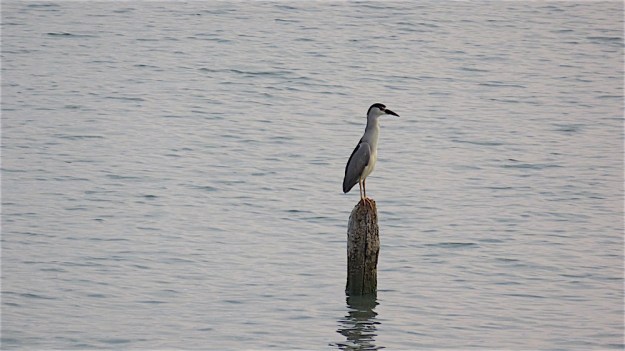
It is in fact a handy perch for this solitary night heron.
Cee’s prompt was “Isolated Subjects.”

Night heron in the mangroves, La Manzanilla Laguna, Jalisco, Mexico, February, 2016 Judy Dykstra-Brown Photo
I was invited by Cee from ceenphotography.com to participate in a challenge called Seven Day Nature Photo Challenge. (Check out Cee’s wonderful nature photos by clicking on the link above.
As part of this challenge, I am to post one nature photograph a day for one week and to ask one other person to join the seven-day challenge each day I post. Today I ask you to check out the photography in Our Rumbling Ocean as I’m nominating him to take part in the Seven Day Nature Challenge as well. I hope you will check out his link just above. You won’t be disappointed.
 lifelessons - a blog by Judy Dykstra-Brown