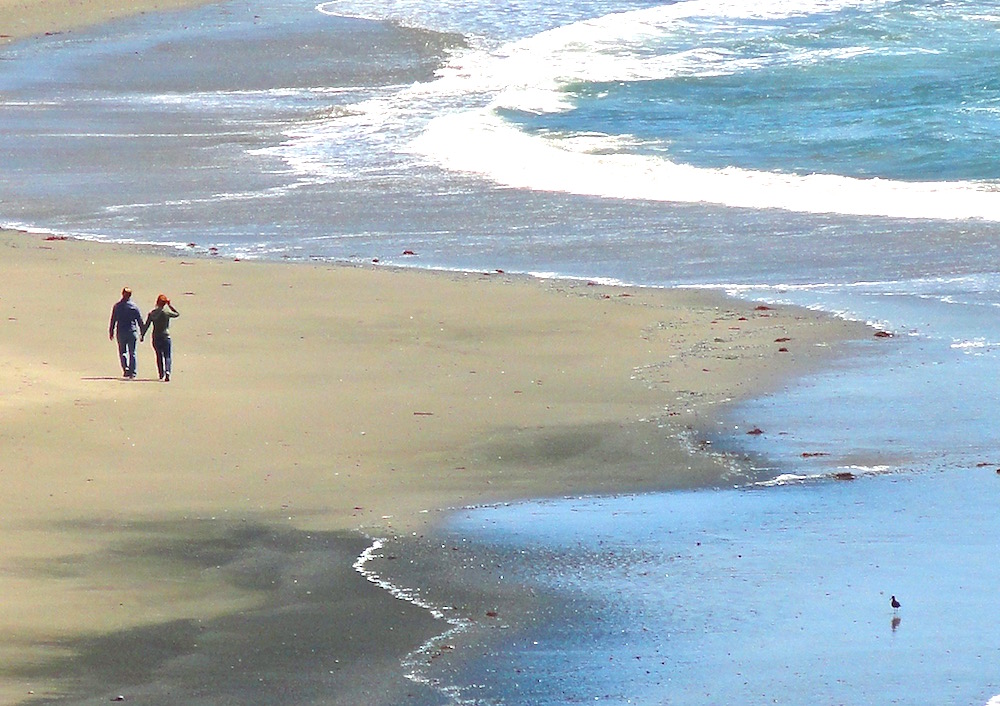
Tag Archives: Judy Dykstra-Brown poem

Lucky School: JNW’s Prompt Generator

P2030401

Lucky School

I don’t often write of it since it is such a bore,
but bad luck’s had a hold on me since nineteen eighty-four.
The tragedies that equal mine are just the stuff of lore:
sad tales of loves and lives lost–tales of heartache, blood and gore.

Don’t beg to hear my stories, for I won’t tell you more.
Thinking of my problems has me tired to the core.
I want to concentrate on now without the past’s loud roar,
and banish former labels such as “victim, tragic, poor.”

My friends all chipped in for me to go to Lucky School–
believing positive thinking might prove a handy tool.
They figured they’d transform me into wizard from a fool,
so that drawing fortune to me would become my daily rule.

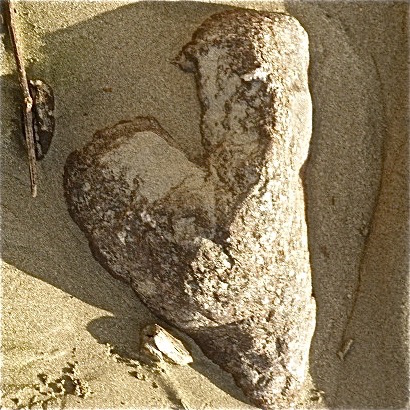
I found a four-leaf clover and a heart shaped like a stone.
I got the longest section when I broke the wishing bone.
I found a silver dollar and rubbed it ‘til it shone,
then gave it to a beggar—a hump-backed aged crone.

The lessons that they taught me in my Lucky School
were that stones may be more valuable than a precious jewel.
Good luck’s never garnered from actions that are cruel
and to never save our gift-giving for birthdays or the Yule.

The way we gain good luck is just to give it all away
every single moment of every single day.
Our trying to hoard it is what keeps good luck at bay.
The luck you give to others is the luck you’ll get to stay.

Good luck is not for finding. It’s simply what you do.
When you hand it off to others, somehow it sticks like glue;
first adhering to the lucky one that you gave it to,
then doubling so an equal part remains right there with you.

The way life keeps the truth obscured sometimes seems most cruel.
How many years I wasted playing the selfish fool.
My friends needn’t have squandered their money on my school,
for all I really needed was to heed the Golden Rule.

The prompt provided me by JNW Topic Generator was: Lucky School. Go Here to receive your own prompt. * *

DSC07914

Sound Bites

When the daylight takes its bite
eating up the dark of night
I begin my daily rite
of finding all the words to cite
that serve to bring my thoughts to light.

I write and write and write and write–
filling up my blogging site
until my dogs begin to fight,
and finally I know it’s quite
necessary to do what’s right.

And this is when I find I might
secure my laptop lid up tight
and give my brain a small respite.
It is my  second day’s delight
for they have tried to be polite

lest they disturb me or incite
words that in their haste are trite.
With an open door, I now invite
their appetites–now at their height.
Each jumps and spins–high as a kite,
and comes to have his morning bite.

In response to The Daily Post’s writing prompt: “Forward Drive.” https://judydykstrabrown.com/2015/09/04/from-the-back-a-photo-a-week-challenge/ What is the one thing that drives you to wake up in the morning and do whatever it is you do? Is it writing, family, friends, or something else entirely?

 daily life color063 (1)

Druthers

What child does not plot and yearn to turn into a teen?
What teen does not look forward to leaving that age between?

Adults can drive and travel and stay up rather late.
They never have to introduce their parents to their date.

Adults do as they wish. They live at their own bidding–
at least until they marry and start in their own kidding.

Then once again they hustle to their family’s beck and call,
so it would seem that no one has a favorite phase at all.

For family life may leave us feeling exhausted and harried.
I guess the ideal phase, then, is perpetually unmarried!

In response to The Daily Post’s writing prompt: “Golden Age.” If you had to live forever as either a child, an adolescent, or an adult, which would you choose — and why?

The Combiners (Entire Poem)

At Irene’s request, I am publishing the poem that I published the ending to yesterday in its entirety today.  Audrey and Betty–you may not want to read this one!

Combine (1)

The Combiners

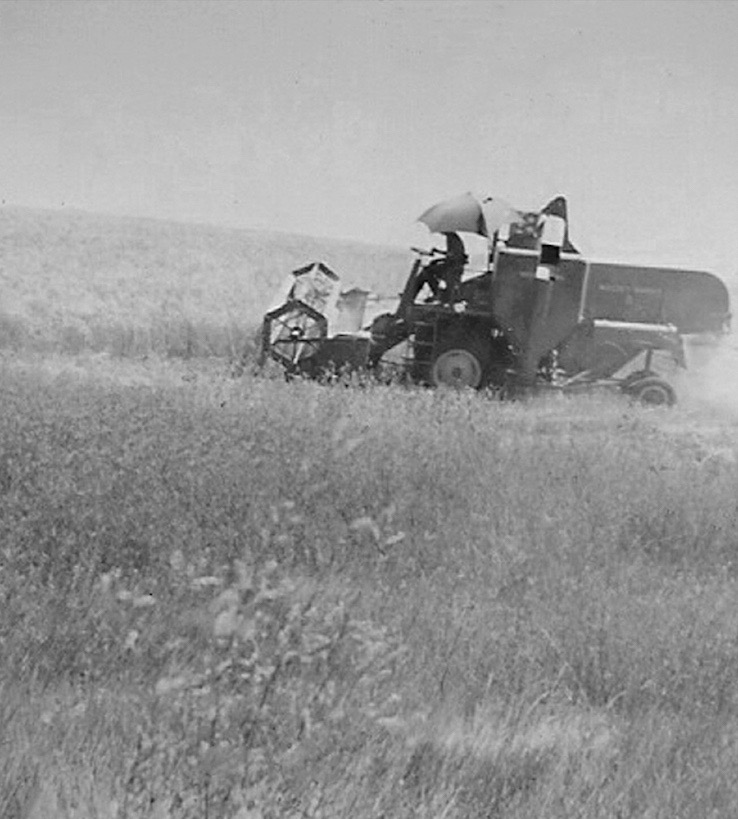
They used to roll in mile-long parades
down the two-lane highway that led to our town–
big trucks carrying bigger combines,
like mothers still carrying their much-too-large sons.

Once we followed a string of twenty combines
for fifty miles—
Passing them all an impossibility,
as much for their sheer numbers
as for the almost constant tourist traffic
in the oncoming lane.
When the caravan pulled off the road at last,
sixty cars squealed by, accelerating.
From opened windows, fists were raised,
and not in solidarity.

They ringed the football field,
parking far out against the fence
like floats after a homecoming parade.
In an inner ring, camping trailers, cars and pickups
With license plates from Kansas or from Oklahoma,
drew into a not-much-smaller circle,
like wagons protecting themselves
from a too-easy invasion of natives.

The next morning, the combines
and most of the cars and trucks
pulled out,
leaving the trailers like war brides behind them
as men and machines moved out to the land
to bring in the harvest
before the hail or rain hit.

These machine monsters
Were not the air-conditioned luxury cruisers
of today, but the dusty, scratched, hot,
wheat chaff-blanketed, insect-filled,
open-to-the-one-hundred-degree air
combines of the fifties.

Each summer in July,
when these droves of men and boys
came northwest
from Kansas and Oklahoma,
we were told by our mothers to
stay away from the school football field
for the weeks of the harvest,
to stay away from the boys
in the downtown cafes
and the movie theaters
and the weekend dances.
Especially, to stay away from boys
in pickups or in cars
with out-of-state license plates
as they “U’d” main on Saturday night.
To stay away from their soft southern drawling voices
and their sun-baked work-hardened hands
and the tanned sinews of their arms.
Away from their breath
and their eyes,
their slow smiles
and their syrup voices.

These same boys we came to know
as shy farm boys
or college students
earning tuition with a summer job,
were dangerous in the minds of our mothers,
who either remembered
magnetic strangers of their own
or knew the dangers in the way of small towns:
by watching the lives of others.

Our fathers’ memories
of teenage yearnings
or present urges, fulfilled or unfulfilled,
swelled their minds with possibilities as well;
but fathers didn’t talk to daughters about such things.
The mothers were their buffers and their adjutants,
and so the fathers watched and mothers warned
the day the combiners came to town, plague or gift,
to camp in their Airstreams in the high school football field.

What better gift could be brought to a teenaged girl
In a prairie town of 700 people?
It was a treeless, riverless, lakeless town
sixty miles from nowhere.
A town where most of the boys went home
right after football practice
or basketball practice
or track.
Where on weekends they shot rats at the city dump.
Where in the summers, they worked
on their dads’ farms
And barely came to town at all.
A town where my particular age group of boys–
five of them in a class of fifteen–
were all late bloomers when it came to girls
and who even when they did bloom in their senior year,
didn’t date us,
but dated, instead,
freshman girls who made them feel secure.
What better gift, then, could be brought to us
than Oklahoma boys, soft-speaking, tanned and dangerous?

There were three restaurants in our town–
two for locals, one
for tourists and special occasions–
And in all three,
the majority of waitresses
were high school girls.
It was here that we came to know their
soft-drawl voices as they ordered,
sly-shy smiles when we filled their tea glasses,
the bump of their tanned knuckles against our wrists
as they took the ketchup bottle.
Here, our mothers could not insulate us from
the clean smell of their after-work showers
and the scent of wheat chaff lingering under it,
their tanned arms and their tanned faces,
their foreignness and their taboo charm.

The dances in Vivian, 40 miles away,
started at 10, when the shows let out,
and ended at 1:30.
There were kids from all the high schools
for 60 miles around.
The drinking dads of some of my school friends went there,
and college kids,
guys from Pierre–the biggest town we knew–
as well as from Presho and Kennebec and Chamberlain.
These dances in the town gym were famous.
Only sodapop or coffee were sold at the concession stand,
but drinking went on in cars
and in the bar down the street,
before, during and after.

The summer I was sixteen,
sneaking a smoke in the parking lot before the dance,
we noticed the pickups with the out-of-state license plates.
This was a first for us–
an extension of the neutral ground of restaurants.
Later, inside, we saw them dancing with the Vivian girls.
Each of us felt like we owned a particular combiner
that we’d noticed on the street or,
more likely, in some cafe,
so that their dancing with Vivian girls
seemed to us an infidelity
that we might or might not forgive them for.

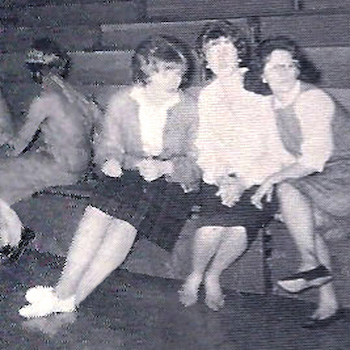
I saw him first on the bleachers
on the other side of the floor.
As dancers came together and parted,
I saw him and then didn’t see him.
After the music stopped, I craned my neck
around the legs that stood in front of me,
trying to see him across the cleared dance floor.

Then the voice at the top of the legs
asked me to dance, and I looked up–at him.
Feeling uncertain, wicked and wild,
I answered yes.

I’d served him once or twice
at Restaurant 16–
that highway-fronting restaurant
as exotic as its name.
I knew he was working the Weston place
with an outfit my dad had never used.
He liked his steak well-done,
French dressing, no tomatoes.
Butterscotch sundaes made him cough.
Over the water pitcher and order pad,
we had traded a look or two.
I knew he wore Old Spice
and drank Cokes with breakfast,
but I didn’t know his name.

When we got to the dance floor,
he took my hand,
put his other hand on my damp waist.
It was a slow dance and the night was hot.
The dance was work.
I was awkward–too inhibited to get as intimate
as following in dancing requires.
Over the music, we tried to shout our names,
tried to find a mutual rhythm,
finally giving up both endeavors
to dance the slow song, untouching,
moving our arms in fast song 60’s style
to the slow song rhythms.

When the music stopped,
he walked me back again
to the bleacher
he had plucked me from,
reinserted me into the correct space in the line of girls,
smiled, and walked away.

My friends closed around me
like a sensitive plant
to hear the news.
I watched his back,
blue short-sleeved shirt,
his pressed Levis
and his cowboy boots.
I watched the Oklahoma swing of his hips–
danger on the hoof.
He wouldn’t ask me to dance again,
yet, his sun-blackened arms,so finely muscled,
had held me for a minute or two.
His bleached blue eyes
had seen something of worth in me.
He had asked my name, touched my waist,
and walked me off the dance floor.
And, since this was as spicy
as any of our stories would likely be
all summer long,
I turned to my friends to tell the tale.

I definitely think this suits today’s prompt:  https://dailypost.wordpress.com/dp_prompt/take-a-chance-on-me/

Dem Bones: JNW’s Writing and Prompt Generator

This is a very strange poem written at an exceedingly early hour to the prompt: Orange Bone (If you read this on the Reader, you won’t see all facets of the poem.  You must go to my site to do so.)

                                                                      Dem Bones

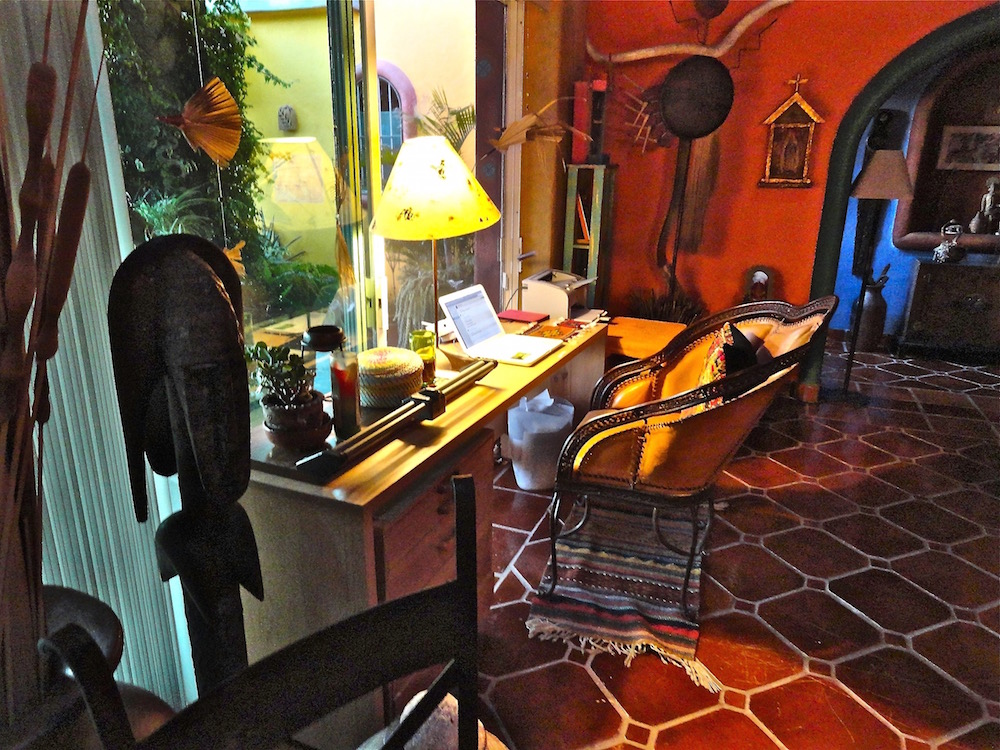
Mexico has tickled my orange bone–
every sedate instinct concerning décor
flown out the window like a freed hummingbird.

A bright gold house with fuchsia trim.
Orange living room with blue and green and red arches.
Denim blue entryway and chartreuse hall.
A turquoise beam in the pumpkin kitchen.

If you have a bone to pick with me over my choice of colors,
it will tickle my funny bone tell you
that I am bone tired
of beige and cream and grey.
Any bonehead can paint a house eggshell or vanilla.
Use marrow of bone
to flavor the soup,
but give me colors that will stir my crazy bone.

Give me cinnamon, mustard, raspberry, persimmon.
Those are colors to make a meal of.
These colors excite and wear me out–
make me bone lazy.

Boney Maroney
with paint under my fingernails.
Vivid. Flashing. Vibrant.
Colors that have satisfied
my orange bone.

DSC07604

This prompt was generated from:  http://jennifernicholewells.blogspot.mx/2015/08/jnws-writing-photo-prompt-generator.html

*

Sixteen!! The Combiners (Excerpt)

                                        Sixteen!! The Combiners (Excerpt)

This is an excerpt from a longer narrative poem in my book, Prairie Moths.  It is the final section of  “The Combiners” –a poem about the itinerant workers who would drive up from Oklahoma each summer to harvest the wheat crop in South Dakota.  This infusion of fresh young men was, of course, exciting to teenaged girls whose own male classmates were a bit immature. Not that any of us ever did anything about it.  Imagining and talking was enough for us at the age of sixteen!

combiners dance

The Combiners

I saw him first on the bleachers
on the other side of the floor.
As dancers came together and parted,
I saw him and then didn’t see him.
After the music stopped, I craned my neck
around the legs that stood in front of me,
trying to see him across the cleared dance floor.

Then the voice at the top of the legs
asked me to dance, and I looked up–at him.
Feeling uncertain, wicked and wild,
I answered yes.

I’d served him once or twice
at Restaurant 16–
that highway-fronting restaurant
as exotic as its name.
I knew he was working the Weston place
with an outfit my dad had never used.
He liked his steak well-done,
French dressing, no tomatoes.
Butterscotch sundaes made him cough.
Over the water pitcher and order pad,
we had traded a look or two.
I knew he wore Old Spice
and drank Cokes with breakfast,
but I didn’t know his name.

When we got to the dance floor,
he took my hand,
put his other hand on my damp waist.
It was a slow dance and the night was hot.
The dance was work.
I was awkward–too inhibited to get as intimate
as following in dancing requires.
Over the music, we tried to shout our names,
tried to find a mutual rhythm,
finally giving up both endeavors
to dance the slow song, not touching,
moving our arms in fast song 60’s style
to the slow song rhythms.

When the music stopped,
he walked me back again
to the bleacher
he had plucked me from,
reinserted me into the correct space in the line of girls,
smiled, and walked away.

My friends closed around me
like a sensitive plant
to hear the news.
I watched his back,
blue short-sleeved shirt,
his pressed Levis
and his cowboy boots.
I watched the Oklahoma swing of his hips–
danger on the hoof.
He wouldn’t ask me to dance again,
yet, his sun-blackened arms,so finely muscled,
had held me for a minute or two.
His bleached blue eyes
had seen something of worth in me.
He had asked my name, touched my waist,
and walked me off the dance floor.
And, since this was as spicy
as any of our stories would likely be
all summer long,
I turned to my friends to tell the tale.

https://dailypost.wordpress.com/dp_prompt/only-sixteen/

The Dating Game

DSC00413

The Dating Game

The prompt I generated on JNW’s Prompt Generator was: “tender opportunity.” I hit the generator button again and got “repulsive industry,” When I saw both prompts together, a perfect topic came  to mind. These prompts, in tandem, seemed to describe the two sides of the online social-introduction industry perfectly, so I decided to try to use both prompts. Although this poem sounds a bit bitter, it is really meant tongue-in-cheek as the first phrase was tweaked a bit by the second. I’ve met some really nice guys in the past six years I’ve been on social sites, but just none where both of us wanted to make it permanent.

In the past couple of years, OKC has changed a lot and doesn’t seem to be the special place it once was. They’ve taken away journals, forums, awards, search engines and erased the first few years of information. I’ve pretty much replaced it with blogging, which seems to work better for really getting to know people and the focus has changed from searching for love in all the wrong places to forming real bonds with words, not faces. A few good friends have even followed me from OKC. You know who you are. Here is my little ditty on the subject of the two prompts mentioned above:

When I Joined OkCupid

I considered it to be
a tender opportunity.
Instead I fear it just became
a sort of endless dating game.

Crabby grandpas, lying spouses,
hermits shut up in their houses,
voyeurs looking for a thrill,
twenty-somethings with time to kill.

Men who say they want to talk
who, when asked questions, merely balk.
Whatever it claims to be,
It’s a repulsive industry

a place that doesn’t want to match us
but rather just to try to catch us
in a web of constant circulation–
a type of lovelorn masturbation.

Years later, I’ve made special friends
and yet the cycle never ends.
Though I’d like love with every fiber,
I fear my love life remains cyber.

 *

“The One Who Got Away” Devil #3, Part II (Conclusion)

In response to The Daily Post’s writing prompt: “Helpless.” Helplessness: that dull, sick feeling of not being the one at the reins. When did you last feel like that –- and what did you do about it? This is the conclusion to a true story that was begun yesterday. I don’t think you want to read the ending without reading the beginning first.  To do so, go HERE.

“The One Who Got Away”

Devil #3, Part II

Perhaps if I acted normal, it all would go away–
this little game they’d started that I didn’t want to play.
I said, “Please let me out right here, a friend lives down the block!”
But silence met my pleas, as though they couldn’t hear me talk.
As the three of them kept talking about which way to turn,
the man I’d danced with quickly turned cold and taciturn.

He had said he was a stranger who came from the east coast,
yet he didn’t ask directions of the one who knew the most.
“Which way should we go, man?” He asked the one behind
as though there was a certain road he wanted to find.
Of me they took no notice–as though I wasn’t there.
The driver just looked straight ahead with a hardened stare.

My life’s worst fear had been to be in someone else’s power,
so the thought of what was happening made me want to cower
and beg and plead and scream and cry; but I did none of that,
though I felt like a bird first toyed with by a cruel cat.
My heartbeat raced but my thoughts raced ahead of them to find
escape from what must have been planned by his devious mind.

They took the road past houseless land—a golf course and a farm.
I knew the way led out of town—a cause of much alarm.
“Turn right here,” I said as we approached a lighted junction,
but as he turned left I knew that there would not be any unction.
I won’t go into all the times I pleaded with them to stop.
“My friend lives down this road,” I said, “Just leave me at the top!”

“Are we heading out for Casper?” said the stranger on my right.
I wondered what would happen if I chose this time to fight.
To slug him once and climb over to jump out of the car,
but with three of them I knew that I would not get far.
I also knew the stretch of lonely road from here to there.
The bodies found along that road—and knew how I would fare.

When I had left my house a party had been going strong.
I wondered who would still be there for I’d been gone so long.
Yet it was a plan and there were neighbors who might hear my screams,
so I gave them an alternative to their frightening schemes.
“It’s so far to Casper,” I said in a normal voice,
“Perhaps it would be better if you made another choice.

A good night’s sleep and food and drink is what might serve you best.
I live alone, my house is near. Why don’t you come and rest
and start out again tomorrow for wherever you are going?
If you are strangers here, then you could have no way of knowing
how far it is to Casper with no place to stop for gas.”
My suggestions fell on deaf ears. No one answered me, alas.

Once on the open road I would have no chance to escape,
What would happen next? Would it be Torture? Murder? Rape?
In less than a mile we would reach the Interstate–
the beginning of the ending of this ill-fated date.
I thought of all the stories where women were abducted.
It was a grim sorority into which I’d been inducted.

How would they tell my mother, my sister, my best friend?
Would I be another story for which no one knows an end?
I tried to think how I could end it, but could see no way.
No knife, no gun, no poison to aid me on this day.
I looked at the glove box. Was there a gun inside?
Was there at least one bullet in it? Enough for suicide?

Years ago when I first worried how I’d fare if I were one
of those unfortunate women snatched for a sadist’s fun,
I thought I’d get a capsule of cyanide that fit
on a chain around my neck in case I needed it.
But that seemed so excessive, so improbable and crazy.
Now I chided myself for being too damn lazy

to cover every angle to protect myself for what
I realized was happening –and this was the cruelest cut.
How did I feel? Not panicked, just the deepest sort of dread
of all that they could do to me before they left me dead.
Though I’m brave, I don’t do well with pain, so I have to say
I’ve always known if tortured, I’d give everything away.

There was no chance these men’s intentions were anything but grim,
so I kept my eyes upon the road and never looked at them.
Then I shifted to the dashboard. Was there any help for me
I was overlooking? And then I spied the key.
What if I grabbed the keys out and threw them in the air
into the grass beside the road. I wondered, did I dare?

Then I saw two headlights in the mirror, far back, but coming fast.
At nearly 4 a.m., I knew this chance would be my last.
As the truck got nearer, I reached out for the keys,
ripped them from the ignition, and then fast as you please,
hurled them from the car into the tall grass by the side.
The car came to a rolling stop as the engine died.

The man next to me grabbed out for the handle of the door,
but the driver screamed out to him with a mighty roar.
“Don’t leave the girl,” he said, and then he told the other guy
to hop out and find the keys—and then I knew that I would die
if I didn’t make a move and so I wedged my back and feet
and catapulted from the front right into the back seat.

I rolled over the car’s rear trunk and it was just my luck
that I landed in the road just as the headlights of the truck
came up behind and brakes went on and I went running back,
pursued by all three members of that frightening pack.
The driver of the truck was young—twenty-two or twenty-three
I beat upon his window, saying, “Help me! Please help me!

These men are trying to kidnap me! Please, let me in your truck!”
By then my former “savior” had arrived to try his luck.
“Don’t believe her, she’s a con artist. She’ll hit you in the head
and make away with all your money. Leave you in the ditch for dead!
She tried to do it to us, man. We were trying to find a cop
when she grabbed the keys out of the car and brought us to a stop!”

“My name is Judy Dykstra. I teach English at Central High.
Please don’t leave me with these men, for if you do, I’ll die!”
The driver then called out to him—angry to the core,
“You’re making a mistake, man,” as he opened up the door.
I ran around and climbed inside. The last things we could see
were three backsides in the grass, searching for a key.

We knew they couldn’t follow us, but still he floored the pedal
while I went on and on about how he deserved a medal.
“Thank you, thank you, thank you,” I said three times or more.
Then, “Why did you believe me and open up the door?”
“Because two of those characters looked so low down and crass,
but mainly ‘cause my sister had you last year for a class!”

This story that I’ve told you could have had a different end,
But as it was I spent the night with a longtime friend
who persuaded me that I should never ever tell
what happened on this evening, for it had turned out well.
“Do you know their plate number? Can you describe their car?
Could you tell their face descriptions? Do you know where they are?

And even if they find them, what could you possibly say?
They’ll say that you were just a girl picked up along the way.
They met you in a crowded bar. You asked them for a ride.
They walked you to their car and you chose to get inside.
You asked them all to stay with you, but they all said no.
Then you suddenly got angry and said you had to go.

They didn’t want to let you out and leave you all alone.
They said that they would rather take you safely to your home.
But you were drunk and even though they all said, ‘Lady, please. . . ‘
You reached out and suddenly you grabbed for the keys.
You threw them in the tall grass and jumped out of the car
a totally different person than that lady in the bar!

You convinced some poor kid they were kidnapping you.
And there was nothing else that they could think of they could do!
They didn’t try to stop you or to argue if you please.
They simply went back looking to try to find their keys.
Can you imagine in a trial what they would make of this?
You know you are the sort of person that they love to diss.

A female teacher out at bars who had been heavily drinking,
closing down the barroom. What could you have been thinking?
Your friends all say that when they left, you just didn’t show.
So you left the bar at 3 A.M. with someone you don’t know.
You get into his car with two more men you’ve never seen
For a teacher you appear to be other than squeaky clean.

You could lose your job for this, and your reputation!”
She ended her soliloquy in a state of great frustration.
So tell me please what do you think, was I right or not
In not reporting these three men, so they were never caught?
All I can say is that I wonder to this very day
how many other women died because they got away.

*

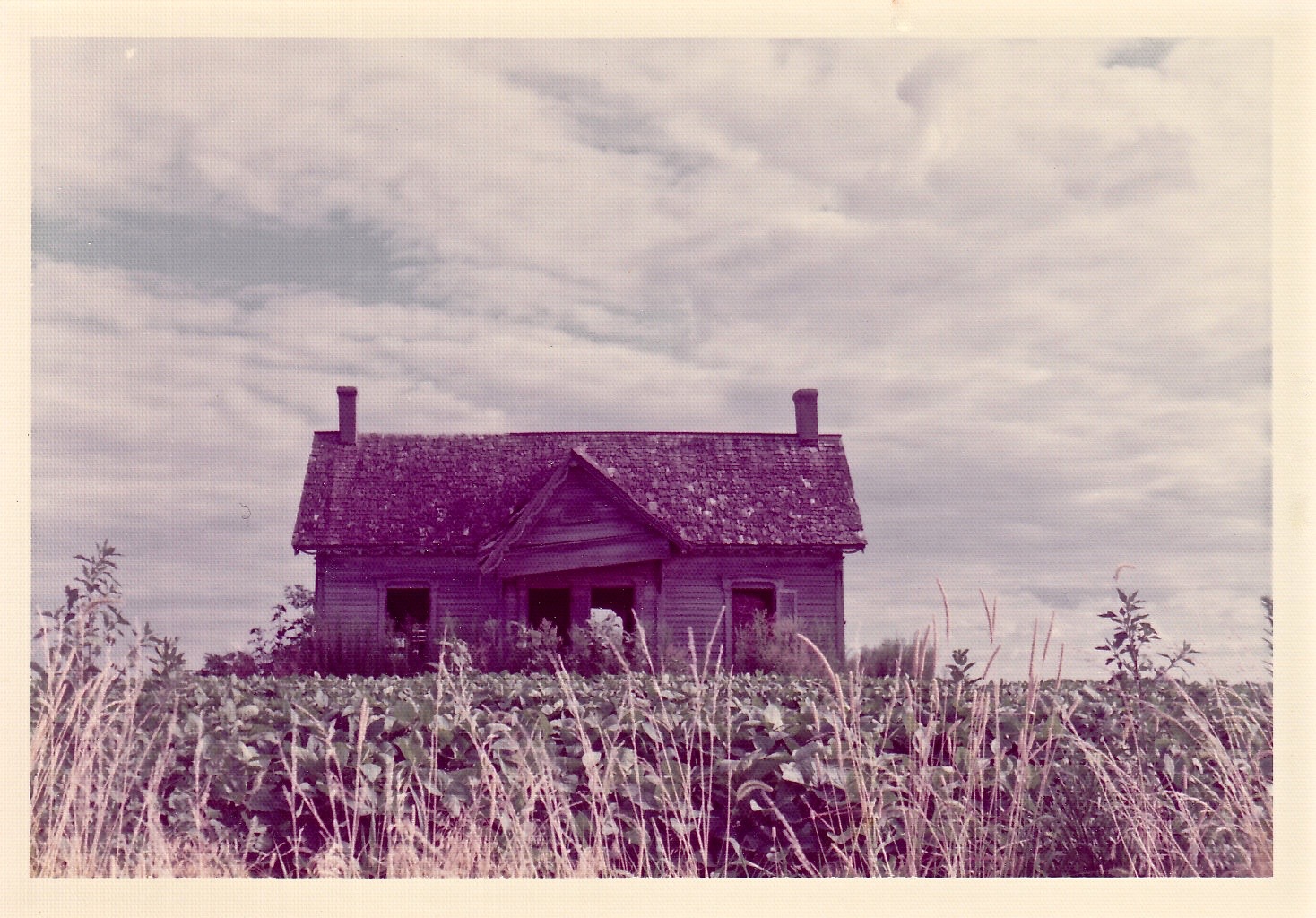
For Red: The Summer Home

The Summer Home

Decaying Farmhouse in Missouri Soybean Field

Photo by okcforgottenman, aka flycatcher

THE SUMMER HOME

When my dad bought the land
where the Big White River and Little White River joined,
I couldn’t believe that we owned land with trees on it.
While he plowed the small field,
I walked the woods and found the abandoned shanty.
Its door was open; in fact it could not shut.
Inside was a mysterious, sweet and fecund smell–
a mouse smell new to me
that I couldn’t stop myself from breathing in.
The mildew and the dust,
the musk of warm linoleum,
every new smell and sight was magic.

I was enchanted by this house emptied
of chairs and tables and beds,
yet full of the accumulated energy of past tame lives
and present wild ones:
the moving of leaf shadows
across the chipped linoleum of the L-shaped kitchen,
the dents on the floor where the kitchen chairs had set,
as though someone had taken care each day
to line up the legs in their holders.
Upstairs I found crayon scribbles halfway up the wall–
the arm reach of a three-year-old.

When I asked about the house,
my dad said that it was our summer home,
and the next time we went to the field,
I brought a broom.

I cleaned out the mouse droppings and the tumbleweeds.
I collected the peeled tile fragments,
imagining gluing them back again.
I washed out a quart canning jar at the pump
and filled it with spring water
and sweet clover,
putting it on the floor
between the kitchen chair holes
in the exact middle of the vanished table.
With the old shirt I found in the corner,
I rubbed mud and river sand
from the linoleum counter tops.
More sand worked as Ajax to scrub out sinks.

All summer long I worked on our summer home,
and for that summer and many summers to come,
I waited in vain for our move to the river house.

I sat on its screened front porch.
Outside the screen grew spearmint and peppermint.
On the top leaf of the tallest branch was a grasshopper,
the kind that left tobacco stains in your hand
when you held it.
All around me were the trees–
the swaying shedding cottonwoods
and scrub chokecherries.
It was a wealth of trees I’d never seen before
in the town where we lived on the bare prairie
nor on the roads we traversed for hundreds of miles
to see a movie or a dentist
or to buy clothes.

Around the screens buzzed the heavy flies,
their motors slow in the heat of July–
all the flies on the outside
wanting to get in
and all the flies on the inside
pressing the screen to get out–
like I longed to get out
to the freedom of trees
where black crows
and dull brown sparrows
rustled their wings
and flew from branch to branch.

In the distance, meadowlarks called
the only birdcall I ever recognized.
No squirrels, no chipmunks; but, rabbits? Yes.
My father said no bears,
but he’d told me the story of Hugh Glass,
mauled by a bear,
walking this river for a hundred miles
past this very joining of the Big and Little White,
in search of help;
and I could imagine one last bear or two
hidden in my woods.

So at night, at home in our winter house in town,
when he told the story I loved the best,
I was the one who discovered the bears’ cottage,
and the cottage was our summer home.
The chairs–too hard, too soft, just right—
I sat upon in turn,
taking great care every time to nestle each leg
back into its correct place on the kitchen linoleum.
And when I lay in the perfect bed of the little bear,
I could touch the crayon markings on the wall.

So when the three bears found me asleep
in the little bear’s room,
they weren’t really very scary;
but I ran anyway,
into my dark and shadowed owl-calling woods,
my woods still echoing the day lit fluted calls of meadowlarks,
their music shaken from the snarled leaves
in the evening breeze.
I ran to trees–
their leaves frosted by moonlight and the Milky Way,
vibrating with the power of the Big Dipper and Orion,
the Seven Sisters and the North Star.

Into the trees
to where I stored my memories
in the frog-croaking depressions under clumps of grass,
in the tangles of Creeping Jenny
and the fluff of dandelions,
in the sand hollows
that crept up from the riverbanks,
in the cocklebur and the chigger-infested grass,
in the crooks of cottonwoods and caves of thickets,
in the tiny cupped palms
of sweet clover and purple alfalfa,
in the wheat grass and the oats and trefoil.

The year my dad decided to expand the field
on the river bottom,
I pleaded, I cajoled, I promised, I prayed
for the summer home
where I had lived for neither one summer
nor one night, in actuality,
but where, nevertheless, I’d had faith
I would someday live.

Of course, there was no saving the woods
and summer house.
It was rich river land, prime for irrigation.
The trees were a waste of soil.
The summer home–everybody’s gentle joke on me.

After the cats and bulldozers were through,
I went with my dad to see
where trees had been ripped out,
the house burned to the ground,
the soil turned and planted
with crops that would build the land.
Their woods now furrowed soil,
the crows and sparrows
had gone to some other shaded place;
the mice, back to the fields.

My former references of trees forever gone,
the present references of sky and fence posts
too wide and new,
I wasn’t sure where my summer home had stood.
The house’s ghost destroyed by the bright sunlight,
the woodland paths replaced by tractor treads,
I watched instead a meadowlark
soar over brown fields and settle on barbed wire,
claiming the new field for its own.
With no house or forest left,
my only shade was chokecherry bushes,
my only chair, the pickup running board.
And so my summers at the river
vanished in the smoke of my summer home
and smoldering tree stumps.

But every night, my woods again threw still shadows
over the summer house,
and I ran once more the corridors of moonlight
cut through dense trees
like parts in a small girl’s hair.
I ran in the wet dew of the condensing summer heat.
I ran on the fuel of my need for magic
and wildness
and rivers
and trees.
I ran fueled by my need to be with something
that lived outside my window
as I passed long nights in my winter house.

It lay in the dark tapping of the trumpet vine branch
against my window
and the crunching of gravel
as someone walked by on the unpaved street–
out past midnight and I couldn’t tell who.
It lay in the pricking of the hair on my arm
as I stuck it out from the bed
and pressed it to the screen.

Always, in town, it lay outside of me–
except for when I floated the paths
of the woods surrounding the summer house,
joining it in dreams,
night after night and then less frequently
until the dreams came once a month
or once a year–
in darkness, always recognized;
but nonetheless forgotten in the light.

So by the time I saw the river field grown lush with corn,
I was a teenager in my first grownup swimsuit,
floating the milky Little White in an inner tube,
down to its junction
with the clear and colder-running water of the Big White,
my best friend next to me,
our cooler full of Coca-Colas and ham salad,
our conversations full of boys and music.

At the border of the field, to get to the river bank,
we crawled over the border of large tree trunks
laid horizontal, half-buried in sand.
I guess I knew they were the bones of my midnight woods.
I guess some part of me felt
the ghost of my summer house.
But, as I lay on my back on the submerged sand bank,
the warm water flowed so sensuously over my shoulders
and down my legs
that my suit seemed to peel itself
from my shoulders, breasts, thighs, calves.
And in a dream I floated the muddy water
of the Little White,
turning in the current
until the water seemed to flow inside of me,
floating me down
to the cool clear water of the Big White,
farther and farther away
from the summer home.

This poem was posted specifically as a response to THIS post on Red’s Wrap.

“The Summer Home” is excerpted from Prairie Moths–Memories of a Farmer’s Daughter, which is available Available on Amazon in Print and Kindle Versions and at Diane Pearl Colecciones and Sol Mexicana in Ajijic, MX


Wheat Cover 34 font

 Just as moths rise from prairie grasses to fly away, so did the author yearn to be free from the very place that nurtured her. Judy Dykstra-Brown’s verse stories and accompanying photographs give a vivid portrayal of rural life in the fifties and sixties, evoking the colors and sounds of the prairie and the longing a child with an active imagination feels for faraway places. From a small child curled up on the couch listening to her father’s stories of homestead days to pubescent fantasies of young itinerant combiners to her first forays into romance in the front seat of a ’59 Chevy, her memories acquire a value in time that she did not acknowledge while living them. Lovers of good poetry and those who miss the magic of childhood will relish Prairie Moths. (Excerpted from a review by Harriet Hart)
 

DSC00994 - Version 2

Devil # 3

In response to The Daily Post’s writing prompt: “Helpless.” Helplessness: that dull, sick feeling of not being the one at the reins. When did you last feel like that –- and what did you do about it?

Okay, I was going to give this prompt a “miss” and went to the new prompt generator I’ve been using for the past few days.  I hit the button and was served up the two-word prompt: “Ill Devil”.  At first I read this as #3 Devil, and I must admit, I got a chill, because what I immediately thought about when I read the prompt was the third time I was in a near-death situation where I felt totally helpless.  What are the chances, I thought, that these two prompts would line up?  This must be something I’m meant to write about.  But then reason stepped in and I realized this prompt always gave an adjective and a noun.  What they probably meant by the prompt was ill Devil. (Changing the capital to a small “i” clarified the prompt.) But then I realized that ill devil described the occurrence I am trying not to talk about as much as #3 devil did, so I guess, prodded on twice by fate or coincidence or synchronicity, I will try.

I have written to a similar prompt twice in 2015, so probably most of you who read my blog have chanced upon one of those posts, but when I wrote to a similar prompt in June of 2014, I wrote a different piece and since I had few of my present-day readers then, I’ll mention that THIS is what I wrote.  It may not be obvious that the topic given in today’s prompt was what I was really talking about then, however, because it was a poem where I actually stood to one side of what I was really remembering and wrote about the subject as an onlooker rather than a participant.  I only alluded to the real subject, which is what I’m going to attempt to write about today. That real subject is Ted Bundy and how otherwise respectable women sometimes fall prey to such predators.  Okay, deep breath. I’m going to tell to the world something I have actually told to very few people. Yes, this is a true story.

Devil # 3

Nineteen seventy-something. In the bar with friends.
When you are in your twenties, the partying never ends.
It was rodeo season  and the big one was in town.
As one by one they ordered drinks, I couldn’t turn them down.
We were a rather rowdy bunch of teachers in our prime
Devoted in the classroom, but wild on our own time.

The bar was crowded hip to hip, the music barely heard
over the loud cacophony of laugh and shouted word.
It was my turn to buy a round. I struggled towards the bar.
My polite “Excuse me’s!” really hadn’t gotten me too far
when a guy appeared in front of me and moved the crowd aside
as though he had appointed himself to be my guide.

As I returned with eight full drinks, again he stemmed the tide
by walking close in front of  me and spreading elbows wide.
He smiled and then departed, back to the teeming mass.
Impressive that he had not even tried to make a pass!
My friends all wondered who he was. I said I had no clue.
Tall and dark and ivy-league, he vanished from our view.

This story happened long ago. Some details I’ve forgotten,
and any memories he retains, you’ll learn were ill-begotten.
I think we danced a dance or two. I know we talked awhile.
I liked his fine intelligence, his low-key polite style.
At three o’clock the barman’s bell commenced it’s clanging chime
and I made off to find my friends, for it was closing time.

Two lines of men had split the bar, lined up back to back.
Their hands locked and their arms spread wide–they moved into the pack.
One line moved east, the other west, forcing one and all
Either out the front door or towards the back door hall.
I was forced out the back way–out into the alley.
My friends and I had made no plans of where we were to rally

and so I walked around the block, sure that was where they waited,
but there was no one there at all–the crowd had soon abated.
I went back to the alleyway to see if they were there.
but all was dark and still, and soon I began to fear
that both carloads of friends had thought I was with the other.
I had no recourse but to walk, though I prayed for another.

I combed my mind to try to think of anyone at all
living in this part of town where I could go to call
a friend to come and get me and furnish me a ride
for 3 a.m. was not a time to be alone outside.
There were no outside phone booths and I lived so far away
I simply had to rouse someone, but what was I to say?

But since I had no other choice I thought I’d check once more
if any single soul was waiting at the bar’s front door.
And as I left the alley to be off to see,
I saw a new familiar face looking back at me.
It was my dancing partner, his face split in a grin.
It seems that he was going to save me once again.

He had asked me earlier if needed a ride,
but I had told him wisely that I had friends inside
and so I thought he’d left, but I could see he was still there.
Yet, ride home with a stranger?  Did I really dare?
And yet I had no other choice, abandoned as I was.
And so I said I guess that yes, I would, simply because

I knew there was just one of him and I was young and strong.
And he seemed kind, polite and gentle.  What could go so wrong?
His car was just a block away. Our walk was short and brief.
And when he pointed out his car, I felt a great relief.
For it was a convertible–and easy to escape
If I detected the first signs of robbery or rape!

He opened up the door for me. I got in the front seat.
But as he started up the car, my heart skipped a beat.
For from the bushes, two more men emerged and jumped inside–
one man in the backseat, the other at my side!
He pulled out into the street, though I protested so.
I didn’t really want a ride, so please, just let me go!

(And here I have to beg off and say I’ll finish this story tomorrow.  Right now my heart is pumping and my head throbbing as though I’m re-enacting this whole tale physically as well as mentally.  I’m totally exhausted.  Why I decided to write this in rhyme I don’t know. Perhaps I thought it would be easier, or more fun or more lighthearted, but there is simply no way to write this from any other frame of mind but the terror I felt that night. So, sorry, but I will resume tomorrow. You all know that I’m here telling the story, so be assured that the worst didn’t happen…but the story is by no means over, so join me tomorrow for the rest.  I, for one, could really use a drink, but it is only 1:40 in the afternoon so I’ll find some other means of escape.)

To see the conclusion of this poem, go HERE.

If you’d like to try out Jennifer’s new prompt generator, go HERE.