My Name


My Name
It would have never occurred
to my mother or father
to look up the meaning of the name
before giving it to me.
In the Apocrypha,
Judith slew the Asian general
to save her people.
In Ethiopia, Judith is “Yodit,”
cruel usurper of the throne
and destroyer of Axum.
These women my parents had no knowledge of
might well have scorned the “Judy” I evolved into,
despite my mother’s best intentions
of always calling me Judith Kay.
Uncle Herman called me Jude
and I loved that,
but for years,
until I married,
nobody else ever did.
I never had many nicknames,
except from my father who called me Pole Cat
and my sister who called me Jooj Pooj.
My oldest sister, Betty Jo,
knows her name
might have been prompted
by the popularity of Betty Boop
and my sister Patti Adair
has the same middle name
as her cousin Jayne
because my mother named them both,
but there is no story
for my given names.,
except that my mother liked them both.
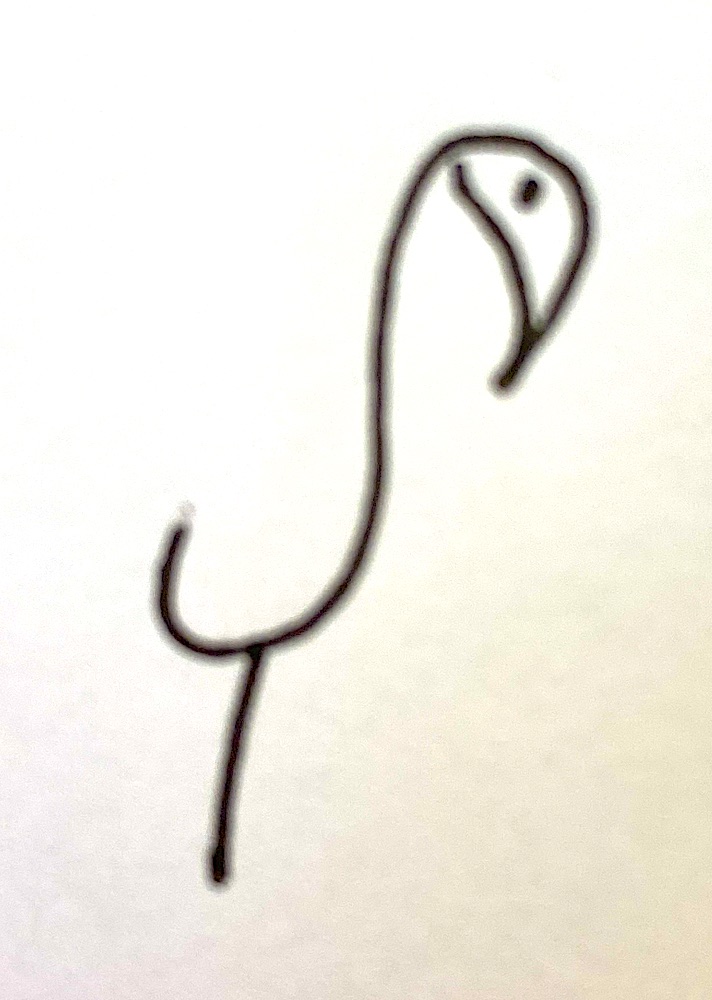
I can draw a wading bird
using just the letters of my first name
in the correct progression,
lifting the pen off the paper only twice,
to form the eye and leg.
 Yet for years,
my name was a bird
that hadn’t found its wings.
My surname was carried to America
in the hull of a ship—
when my grandmother,
born of Dutch-immigrant parents,
married to an immigrant
Dutch baker to have a son
who passed the name Dykstra on to me.
Judy Kay Dykstra
The last two letters of my first name
and my middle initial
are the first three letters of my last name,
and the remaining four letters, rearranged, spell “star.”
Nobody planned that.
Judykstra
Judykstar.
The “dyke” part of my name is self-explanatory,
and the suffix “stra” is derived from
the old Germanic word “sater,”
meaning “dweller,”
and although I’ve never lived by a seawall,
I like my name in its Dutch Shoes.
My surname
is not frequently seen
in the phonebooks
of most towns.
I’m not the one
who put it in famous places
like “Dykstra Hall” at UCLA or
in baseball statistics
on the sports page,
and it was John Dykstra
who had it engraved
on the academy award.
But it was my name written
along with my phone number
over the urinal at the library
in turquoise magic marker
by a disgruntled student,
and it took one month of late-night phone calls
from men asking, “Do you . . .?”
before a caller admitted
where he found the number
and was persuaded
to wash it off the wall.
And it was my name
written on the label of
a favorite coat left at the pier
and never returned,
so ever afterwards,
perhaps, my name
pressed against someone else’s neck.
I keep trying to change my name
into something else.
Into a bird.
Into a married name.
Drop mine, take his.
Keep mine and his,
I take his, he takes mine,
so we exchange names, both keeping both.
In the end, though, he drops mine, I keep both.
Judith Kay Dykstra-Brown. Bob Brown
My name next to his on a gravestone
in my hometown in South Dakota,
only mine open-dated.
My name on a paycheck every month for years,
and in the records of the tax collector,
then on a social security check.
For so long,
I was not yet within my name.
I wanted it to hold me,
but I couldn’t squeeze into it.
Until, finally,
my name on books and art
that told its full story.
Judy Dykstra-Brown.
I made it mine.




 lifelessons - a blog by Judy Dykstra-Brown