Dakota Dirt
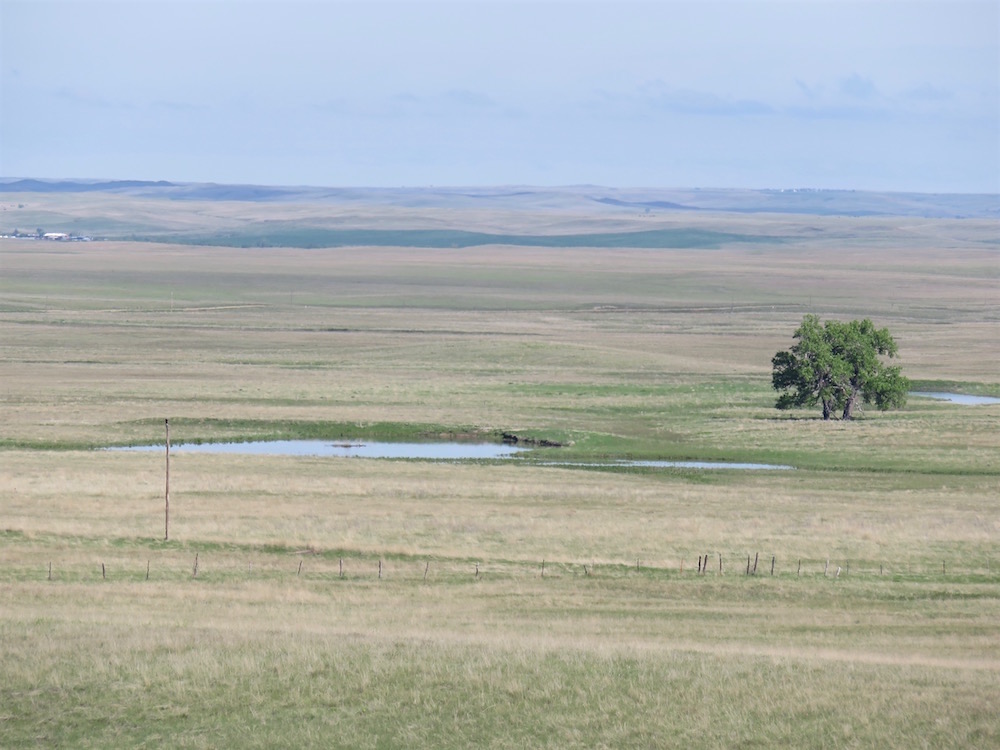
Dakota Dirt
My father toiled for fifty years,
facing the worries and the fears—
the gambles that a farmer faced
when all his future he had placed
as seeds beneath Dakota dirt.
Every year, he risked the shirt
right off his back. With faith, he’d bury
his whole future in that prairie.
Sticky gumbo, that fine-grained silt
upon which his whole life was built.
Then, closer to our summer home,
near the river, in sand and loam,
he hoped he could prepare for ours:
our clothes, our college, and first cars.
Then came those years that brought the change
that altered fields and crops and range.
The rain that formerly turned to rust
plows left untended, turned to dust
that, caught up in the wind’s mad thrust
caused many a farmer to go bust
as a whole nation mourned and cussed
black clouds of dirt that broke the trust
that nature would provide for all.
What formerly fed, now brought their fall.
It broke the men who couldn’t wait
for the drought years to abate,
but my father kept his faith in soil.
Found other paying forms of toil
building dams to catch what rain
might later fall on that dry plain.
And though others thought his prospects poor,
he kept his land and bought some more.
He learned to vary furrow line,
believing it would turn out fine.
So when good fortune returned again,
bringing with it snow and rain,
he welcomed and was ready for it.
That April it began to pour, it
filled his dams and nourished what
soil remained. He filled each rut
with clover, alfalfa and wheat.
Allowed the summer sun to beat
and change them into fields of gold—
into grain and feed he sold.
Bought cattle. Planted winter wheat.
Once more secure on his two feet,
expanded and as he had planned,
bought more cattle and more land.
Some said that he had just exploited
those whose land he’d reconnoitered
and purchased after they’d given up,
empty hands transformed to cup.
He was a hero unsung, unknown,
until long after when I was grown.
At the centennial of our town,
I learned a bit of his renown
when others told to me how he
shared nature’s generosity.
He sent three daughters to university,
then shared with his community
to build a church and give more knowledge
to those young men he sent to college.
Then made loans without fame or thanks
to other farmers denied by banks.
I’d always known how rich my life
was made by all his toil and strife—
the insurance he gave his family
that enabled us all to be free.
But, aside from daughters, wife and mother,
I’d never know of every other
soul he’d helped to prosperous ends:
neighboring ranchers, sons of friends.
Could my father have known he’d also planned
all these other futures when he bought the land?
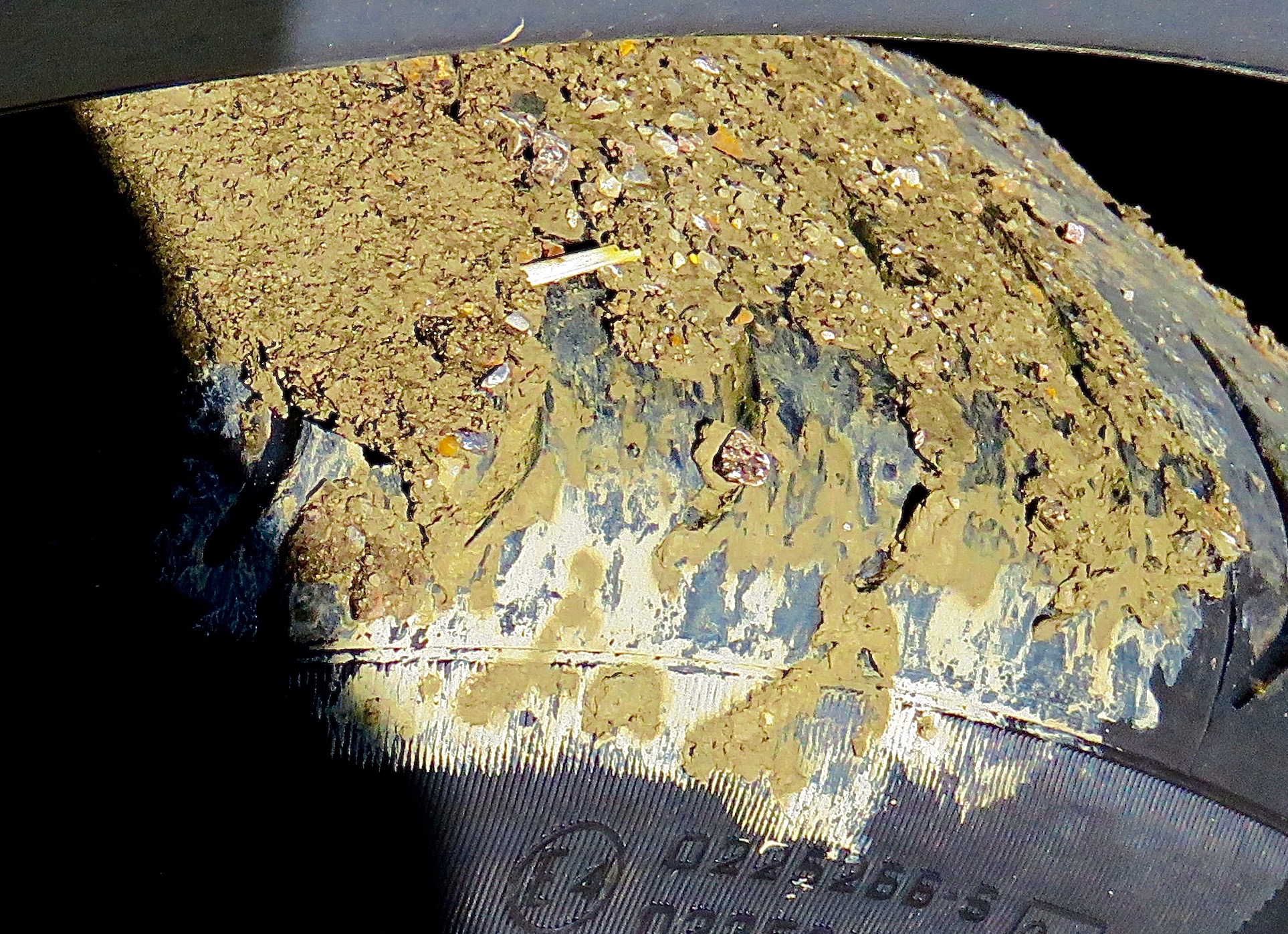
This rich Jones County gumbo on the treads of my tire at one of our all-town reunions a few years ago is what sent me to college!
For dVerse Poets “Embodying a Landscape” prompt.
 lifelessons - a blog by Judy Dykstra-Brown
Pingback: #FF — It’s Always Christmas – Tao Talk
Judy, cannot imagine how proud you must be of your father, and for so many reasons. I think of the person Rudyard Kipling wants us to be in his poem “If” as your father after reading this. Beautiful writing to the prompt ❤
LikeLiked by 1 person
I wish he could read it, Lisa. He did read some of the poems I wrote about him, I hope. Can’t remember if I sent them to him or not. Most were written after he died, I fear. I do have a funny poem I wrote about him on a birthday card to him once..it was Dr. Seuss-ish.
LikeLiked by 2 people
❤
LikeLike
This is beautiful, Judy. My family’s story runs close to this…
LikeLiked by 1 person
What is your family story, Martha? If you’ve written about it, give me a link. So many years, so many stories. I don’t even remember my own until I read them again.
LikeLiked by 1 person
A thousand words — the high plains of Montana in the 40s/30s/20s https://marthakennedy.blog/wp-content/uploads/2026/03/s.a.-beall-with-calf-hole-in-the-ground.jpeg
My grandfather with a calf and cow
My grandmother during the Depression filling the cistern. The Percherons pulled a sledge to drag it home.

My mom and her sisters and brothers in front of their house. My mom is the littlest one.
LikeLiked by 1 person
Looks just like the photos of my Dad’s family. You’ve seen them, right? Thing that amazes me is how clean everyone always looks…given what their mom must have gone through to wash clothes and provide baths.
LikeLiked by 1 person
I wish someone had taken photos of the insides of the houses..But no Brownie camera back then. Main thing was to photograph the people and so glad they did.
I’ve lost track of what stories I’ve told but sure I’ve told that after I published my first book with a pic of my Dad’s Mother, sisters and their kids at their homestead, I got a letter from a man in Idaho in his late 80’s who said he was the youngest child in that photo..a baby in arms. His mother was my father’s half-sister none of us had seen since I was about 11 years old. We had totally lost track of their family…of 7 boys! He invited us to come to the reunion in idaho and we did..My sisters from Wyoming and Minnesota, me from Mexico…and met at least 100 relatives we never would have met otherwise. I have no idea how he happened to get my book, but so glad he did. If I’ve told you this story before, please excuse…but get used to it. I’m at that stage of life. Used to illustrate how happy I am that at least a few photos like the ones you sent were taken.
LikeLike
It’s crazy. My water was off for 6 hours and I about lost it. I had no warning and that was part of it…
LikeLike
Thanks so much for sending these photos, Martha.
LikeLiked by 1 person
You’re welcome, Judy. The relics of those lives are all around me here. If you ever get to Hardin, Montana they have that kind of museum where you can see the buildings — houses, stores, all that — how people lived. I’m sure there’s that in South Dakota, too. Outside Chadron there was a great museum that included a sod house and a one room school. I’m a little jaded on all that stuff, in a way, but I also have deep respect for those people. I know that I grew up to be a person who could do what I did when I cracked my femur because those people were my ancestors. I didn’t even think. I just knew I had to get to a place where I could get help. It truly was, ‘Quit yer cryin’ you have work to do.’ I miss my aunts very much.
LikeLike
We have an 1880’s town where they took alot of the old buildings and set up a town with general store, etc.
LikeLike
His faith in the land, his will to provide, made your father the man you celebrate so lovingly, Judy, in this ballad, his actions speaking louder than words. I admire the deft strokes of imagery and storytelling combined to paint the landscape and the man. So beautifully written and a joy to read.
LikeLiked by 1 person
Thanks, Dora. I wasn’t sure I was keeping to the prompt but in the end a prompt is pretty much something to get you going anyway, isn’t it?
LikeLiked by 1 person
Indeed. But you were aligned with it beautifully.
LikeLike
amazing dad & wonderful tribute to him!!
LikeLiked by 1 person
Sounds like a smart, steady and generous man!
LikeLiked by 1 person
Very smart, even with just an 8th grade education. He read constantly and could keep up a good conversation with anyone.
LikeLiked by 1 person
judy this is such a great tale and a fitting tribute to your father. it just started raining as i was reading this! i was in north dakota last year and was totally taken by the place.
LikeLiked by 1 person
and of course the farmers know best the landscape. bravo!
LikeLiked by 1 person
I haven’t spent much time in N.D., strangely enough. Just crossed it once south to north to get to Canada.
LikeLiked by 1 person
An amazing story and a great tribute to your father, Judy. It’s not easy being a farmer, especially when faced with drought. These lines are particularly stirring:
‘Then came those years that brought the change
that altered fields and crops and range.
The rain that formerly turned to rust
plows left untended, turned to dust’.
I was delighted to read about the turn in fortune, that his faith in soil paid off.
LikeLiked by 2 people
When people said, “Ben, too bad you had three daughters and no son to pass your ranch down to,” He said,” If I’d had sons, I wouldn’t have wanted them to be ranchers. I’d want them to go to college and find another profession.
Ranching is the biggest gamble there is. I wouldn’t wish it on any of my kids. I wouldn’t trade my girls for anyone. I had three smart daughters–not a dummy among the lot!” Ha.
LikeLiked by 2 people
A great tribute poem, heartfelt and genuine. Loved the rhyme scheme (I especially enjoyed ‘reconnoitered’) He sounds like an amazing man.
LikeLiked by 1 person
He was… appreciative of everyone and able to hold his own in every strata of society..from the Governor to someone panhandling in the street. They were all the same to my dad.
LikeLiked by 1 person
Judy, as a routine traveler across those flattened midsections, lands windswept by nature’s breath. Your poem is lovingly romantic, touching my emotions.
Judy, your poetic love for lands steeped within your soulful memories of love detailing your father’s dedications, sufferings to survive off and prosper upon those flattened lands.
LikeLiked by 1 person
I have such an appreciation for my parents. Always did, but now even more so. You would identify with that need to be let go of… and they did. They let me be free at a very young age.
LikeLiked by 1 person
Love the rhymes/off-rhymes in this great tribute Judy 👏
LikeLike
Thanks, Shaun
LikeLike
What a wonderful poem of family history. So full of the rhythms of life and life lessons. Your father’s is a proud legacy.
LikeLiked by 1 person
Thanks, Sean.
LikeLike