
Favorite double-sized one-of-a-kind cup, fresh new iced coffee with creamer and sweetener, high traffic zone where I’m most likely to go barefoot, so of course this is the inevitable result!!!
Favorite double-sized one-of-a-kind cup, fresh new iced coffee with creamer and sweetener, high traffic zone where I’m most likely to go barefoot, so of course this is the inevitable result!!!


Click on photos to enlarge.

Last week, the former head of the Social Security Administration issued a grave warning to the American people:
“You’re going to see the system collapse and an interruption of benefits. I believe you will see that within the next 30 to 90 days.”
Why is former Social Security Commissioner Martin O’Malley sounding the alarm?
By the way, Elon Musk recently said this on the mega-popular Joe Rogan podcast: “The fundamental weakness of Western civilization is empathy.”
Why are we letting someone who thinks that way mess with any part of the federal government, much less one of the most important and successful programs in our nation’s entire history?
Thanks for taking action.
For progress,
– Robert Weissman & Lisa Gilbert, Co-Presidents of Public Citizen
Donate | Public Citizen | 1600 20th Street NW | Washington DC 20009 | Unsubscribe


Heather Cox Richardson
Letter from an American, Heather Cox Richardson:
This morning, Ted Hesson and Kristina Cooke of Reuters reported that the Trump administration is preparing to deport the 240,000 Ukrainians who fled Russia’s attacks on Ukraine and have temporary legal status in the United States. Foreign affairs journalist Olga Nesterova reminded Americans that “these people had to be completely financially independent, pay tax, pay all fees (around $2K) and have an affidavit from an American person to even come here.”
“This has nothing to do with strategic necessity or geopolitics,” Russia specialist Tom Nichols posted. “This is just cruelty to show [Russian president Vladimir] Putin he has a new American ally.”
The Trump administration’s turn away from traditional European alliances and toward Russia will have profound effects on U.S. standing in the world. Edward Wong and Mark Mazzetti reported in the New York Times today that senior officials in the State Department are making plans to close a dozen consulates, mostly in Western Europe, including consulates in Florence, Italy; Strasbourg, France; Hamburg, Germany; and Ponta Delgada, Portugal, as well as a consulate in Brazil and another in Turkey.
In late February, Nahal Toosi reported in Politico that President Donald Trump wants to “radically shrink” the State Department and to change its mission from diplomacy and soft power initiatives that advance democracy and human rights to focusing on transactional agreements with other governments and promoting foreign investment in the U.S.
Elon Musk and the “Department of Government Efficiency” have taken on the process of cutting the State Department budget by as much as 20%, and cutting at least some of the department’s 80,000 employees. As part of that project, DOGE’s Edward Coristine, known publicly as “Big Balls,” is embedded at the State Department.
As the U.S. retreats from its engagement with the world, China has been working to forge greater ties. China now has more global diplomatic posts than the U.S. and plays a stronger role in international organizations. Already in 2025, about 700 employees, including 450 career diplomats, have resigned from the State Department, a number that normally would reflect a year’s resignations.
Shutting embassies will hamper not just the process of fostering goodwill, but also U.S. intelligence, as embassies house officers who monitor terrorism, infectious disease, trade, commerce, militaries, and government, including those from the intelligence community. U.S. intelligence has always been formidable, but the administration appears to be weakening it.
As predicted, Trump’s turn of the U.S. toward Russia also means that allies are concerned he or members of his administration will share classified intelligence with Russia, thus exposing the identities of their operatives. They are considering new protocols for sharing information with the United States. The Five Eyes alliance between Australia, Canada, New Zealand, the United Kingdom and the U.S. has been formidable since World War II and has been key to countering first the Soviet Union and then Russia. Allied governments are now considering withholding information about sources or analyses from the U.S.
Their concern is likely heightened by the return to Trump’s personal possession of the boxes of documents containing classified information the FBI recovered in August 2022 from Mar-a-Lago. Trump took those boxes back from the Department of Justice and flew them back to Mar-a-Lago on February 28.
A CBS News/YouGov poll from February 26–28 showed that only 4% of the American people sided with Russia in its ongoing war with Ukraine.
The unpopularity of the new administration’s policies is starting to show. National Republican Congressional Committee chair Richard Hudson (R-NC) told House Republicans on Tuesday to stop holding town halls after several such events have turned raucous as attendees complained about the course of the Trump administration. Trump has blamed paid “troublemakers” for the agitation, and claimed the disruptions are part of the Democrats’ “game.” “[B]ut just like our big LANDSLIDE ELECTION,” he posted on social media, “it’s not going to work for them!”
More Americans voted for someone other than Trump than voted for him.
Even aside from the angry protests, DOGE is running into trouble. In his speech before a joint session of Congress on Tuesday, Trump referred to DOGE and said it “is headed by Elon Musk, who is in the gallery tonight.” In a filing in a lawsuit against DOGE and Musk, the White House declared that Musk is neither in charge of DOGE nor an employee of it. When pressed, the White House claimed on February 26 that the acting administrator of DOGE is staffer Amy Gleason. Immediately after Trump’s statement, the plaintiffs in that case asked permission to add Trump’s statement to their lawsuit.
Musk has claimed to have found billions of dollars of waste or fraud in the government, and Trump and the White House have touted those statements. But their claims to have found massive savings have been full of errors, and most of their claims have been disproved. DOGE has already had to retract five of its seven biggest claims. As for “savings,” the government spent about $710 billion in the first month of Trump’s term, compared with about $630 billion during the same timeframe last year.
Instead of showing great savings, DOGE’s claims reveal just how poorly Musk and his team understand the work of the federal government. After forcing employees out of their positions, they have had to hire back individuals who are, in fact, crucial to the nation, including the people guarding the U.S. nuclear stockpile. In his Tuesday speech, Trump claimed that the DOGE team had found “$8 million for making mice transgender,” and added: “This is real.”
Except it’s not. The mice in question were not “transgender”; they were “transgenic,” which means they are genetically altered for use in scientific experiments to learn more about human health. For comparison, S.V. Date noted in HuffPost that in just his first month in office, Trump spent about $10.7 million in taxpayer money playing golf.
Josh Marshall of Talking Points Memo pointed out today that people reporting on the individual cuts to U.S. scientific and health-related grants are missing the larger picture: “DOGE and Donald Trump are trying to shut down advanced medical research, especially cancer research, in the United States…. They’re shutting down medicine/disease research in the federal government and the government-run and funded ecosystem of funding for most research throughout the United States. It’s not hyperbole. That’s happening.”
Republicans are starting to express some concern about Musk and DOGE. As soon as Trump took office, Musk and his DOGE team took over the Office of Personnel Management, and by February 14 they had begun a massive purge of federal workers. As protests of the cuts began, Trump urged Musk on February 22 to be “more aggressive” in cutting the government, prompting Musk to demand that all federal employees explain what they had accomplished in the past week under threat of firing. That request sparked a struggle in the executive branch as cabinet officers told the employees in their departments to ignore Musk. Then, on February 27, U.S. District Judge William Alsup found that the firings were likely illegal and temporarily halted them.
On Tuesday, Senate majority leader John Thune (R-SD) weighed in on the conflict when he told CNN that the power to hire and fire employees properly belongs to Cabinet secretaries.
Yesterday, Musk met with Republican— but no Democratic— members of Congress. Senators reportedly asked Musk—an unelected bureaucrat whose actions are likely illegal—to tell them more about what’s going on. According to Liz Goodwin, Marianna Sotomayor, and Theodoric Meyer of the Washington Post, Musk gave some of the senators his phone number and said he wanted to set up a direct line for them when they have questions, allowing them to get a near-instant response to their concerns.” Senator Lindsey Graham (R-SC) told reporters that Musk told the senators he would “create a system where members of Congress can call some central group” to get cuts they dislike reversed.
This whole exchange is bonkers. The Constitution gives Congress alone the power to make appropriations and pass the laws that decide how money is spent. Josh Marshall asks: “How on earth are we in this position where members of Congress, the ones who write the budget, appropriate and assign the money, now have to go hat in hand to beg for changes or even information from the guy who actually seems to be running the government?”
Later, Musk met with House Republicans and offered to set up a similar way for the members of the House Oversight DOGE Subcommittee to reach him. When representatives complained about the random cuts that were so upsetting constituents. Musk defended DOGE’s mistakes by saying that he “can’t bat a thousand all the time.”
This morning, U.S. District Judge John McConnell Jr. ruled in favor of a group of state attorneys general from 22 Democratic states and the District of Columbia, saying that Trump does not have the authority to freeze funding appropriated by Congress. McConnell wrote that the spending freeze “fundamentally undermines the distinct constitutional roles of each branch of our government.” As Joyce White Vance explained in Civil Discourse, McConnell issued a preliminary injunction that will stay in place until the case, called New York v. Trump, works its way through the courts. The injunction applies only in the states that sued, though, leaving Republican-dominated states out in the cold.
Today, Trump convened his cabinet and, with Musk present, told the secretaries that they, and not Musk, are in charge of their departments. Dasha Burns and Kyle Cheney of Politico reported that Trump told the secretaries that Musk only has the power to make recommendations, not to make staffing or policy decisions.
Trump is also apparently feeling pressure over his tariffs of 25% on goods from Canada and Mexico and an additional 10% on imports from China that went into effect on Tuesday, which economists warned would create inflation and cut economic growth. Today, Trump first said he would exempt car and truck parts from the tariffs, then expanded exemptions to include goods covered by the U.S.-Mexico-Canada trade agreement (USMCA) Trump signed in his first term. Administration officials say other tariffs will go into effect at different times in the future.
The stock market has dropped dramatically over the past three days owing to both the tariffs and the uncertainty over their implementation. But Trump denied his abrupt change had anything to do with the stock market.
“I’m not even looking at the market,” Trump said, “because long term, the United States will be very strong with what’s happening.”
—
Notes:
https://www.cbsnews.com/news/trump-elon-musk-government-workforce-cuts-opinion-poll-2025-03-02/ (despite the title, this is the Ukraine-Russia poll.)
https://apnews.com/article/trump-speech-congress-transcript-751b5891a3265ff1e5c1409c391fef7c
https://www.npr.org/2025/02/18/g-s1-49450/elon-musk-doge-leader
https://www.cnn.com/2025/02/25/politics/amy-gleason-doge-acting-administrator/index.html
https://www.newsweek.com/doge-plaintiffs-trump-elon-musk-congress-speech-2040150

https://www.ncbi.nlm.nih.gov/books/NBK231336/
https://www.huffpost.com/entry/donald-trump-golf-doge_n_67b50fbfe4b0319f377e6c6a
Megan Lebowitz and Julie Tsirkin “Trump and Sen. Marshall baselessly claim angry constituents are paid ‘troublemakers,’” NBC News, March 4?, 2025. (I did this article this way because it’s one of those awful “live” streams that make it impossible to find anything.)
https://thehill.com/homenews/house/5175061-house-republicans-town-halls-protests/
https://talkingpointsmemo.com/edblog/act-now
https://www.washingtonpost.com/politics/2025/03/05/musk-congress-anger-doge/
https://talkingpointsmemo.com/edblog/new-wapo-piece-on-post-constitutional-america
https://www.cnn.com/2025/02/28/politics/trump-seized-boxes-returned-air-force-one/index.html
https://www.nytimes.com/2025/03/06/us/politics/embassies-consulates-closures.html
https://www.politico.com/news/2025/02/27/trump-state-department-cuts-l00206494
https://www.wcpo.com/transgender-mice-fact-check-trump-2025
https://www.nytimes.com/2025/02/28/us/politics/musk-federal-bureaucracy-takeover.html
https://www.nytimes.com/2025/02/25/upshot/doge-spending-cuts-changed.html
https://www.axios.com/2025/02/28/trump-federal-employees-firing-court-judge

https://www.npr.org/2025/03/06/nx-s1-5312069/trump-federal-funding-freeze-court-order
https://www.courtlistener.com/docket/69585994/161/state-of-new-york-v-trump/
https://www.thedailybeast.com/trump-in-massive-backtrack-on-tariffs-after-stock-market-plunge/
https://www.politico.com/news/2025/03/06/trump-cabinet-musk-025093
https://www.bbc.com/news/articles/c5y03qleevvo
X:
radiofreetom/status/1897682676590551081
onestpress/status/1897611749597020461
Bluesky:
meidastouch.com/post/3lisr5cfd2k2m
yasharali.bsky.social/post/3lis4q5meph2f


The aftermath of the Fat Tuesday parade in San Juan Cosala. Instead of confetti, they throw flour! Thank goodness it didn’t rain.

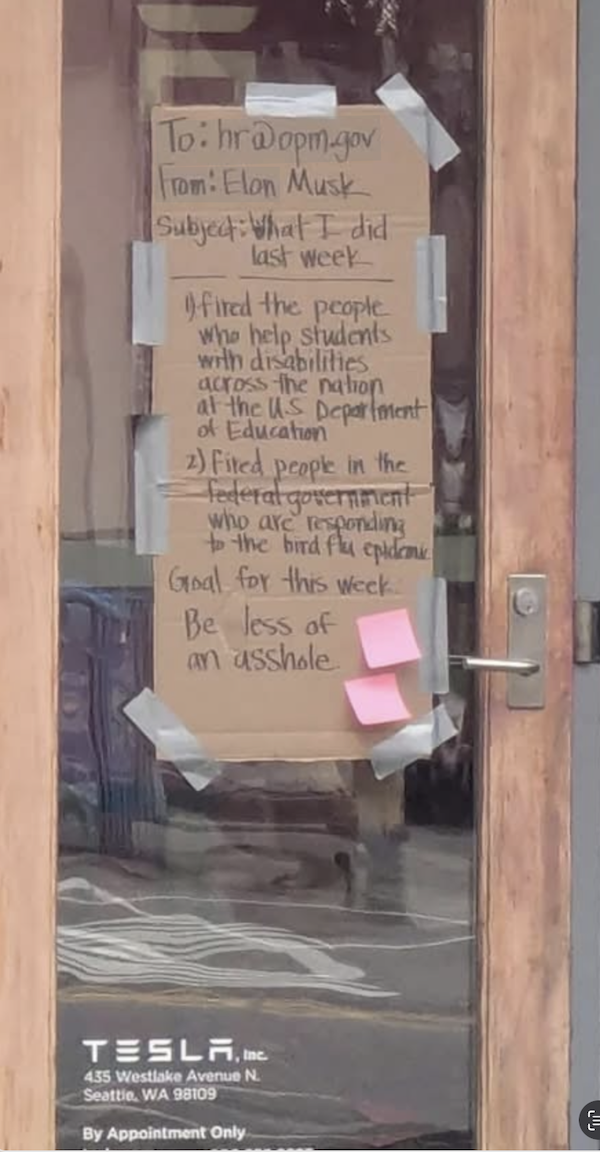
I’d like to know what the little post it notes said as well! (Thanks, Brad, for passing this on to me.)
What is the logic of not believing in abortion but believing it is okay to let babies die of Ebola in Africa because we have cut off aid to fund vaccinations…or to allow children to die of measles because our misguided head of national health does not believe in vaccinations? Nothing in the Bible says charity should be ended at national borders or that the rich should profit by the neglect of the poor. Think, people, think! And please read this poem written by my friend Andrea Huelsenbeck at: https://arhtisticlicense.com/about-artistic-license/:



Welcome to “The Numbers Game #62.” Today’s number is 183. To play along, go to your photos file and type that number into the search bar. Then post a selection of the photos you find that include that number and post a link to your blog in my Numbers Game blog of the day. If instead of numbers, you have changed the identifiers of all your photos into words, pick a word or words to use instead, and show us a variety of photos that contain that word in the title.This prompt will repeat each Monday with a new number. If you want to play along, please put a link to your blog in comments below. Here are my contributions to the album.
Click on photos to enlarge.

It’s true..Chocolate Cigarettes of the Seventies!!
For Fibbing Friday this week’s task is:
General knowledge this week, so wrong answers/fabrications please!
1. What three symbols featured on the game invitation card on Squid Game? Ink blobs.
2. What do Sumo Wrestlers use to purify the ring before a match? Sum Saki.
3. What is the name of the sport played on broomsticks in Harry Potter? Air Hockey.
4. What is the name of the unique language spoken by Furbies? Purrsian.
5. Which chocolate product had the slogan ‘The lighter way to enjoy chocolate’? Chocolate Candy Cigarettes.
6. What unit of measurement is used for electrical resistance? Hotfeet.
7. In what sport would you use the term ‘Daily Double’? A drinking game.
8. Which fashion label popularised the velour tracksuit in the 2000s? “Lane” Bryant
9. Where would you find the Mariana Trench? On Mariana’s bottom.
10. Which two words begin a darts match? “Present arms!!!”

