Tag Archives: Andu Alem

Lalibela: For Sunday Whirl’s Wordle 568

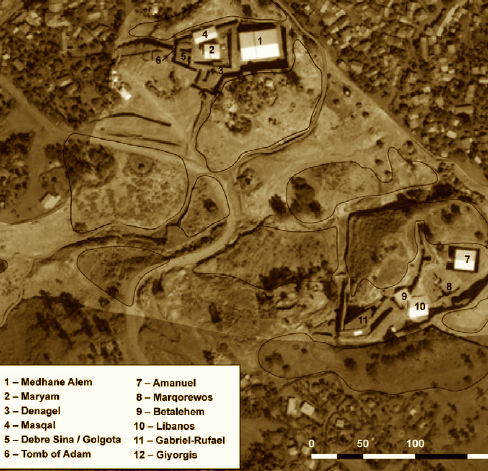
Lalibela

I kiss the map where memories lie in the vast stillness of the past.
Your broad laugh silenced so long ago that no remnants of it last.
What I had felt and hoped to see mirrored on your joyful face
was demonstrated as you drew me into our first long embrace.

Sparrows swoop those ancient halls where we loved and laughed and talked,
but only whispers of our love echo the chambers where we walked.
That holy place where we first kissed—the ancient pulpit that we found
buried deep within the earth—religious zeal gone underground.

Corridors carved from living stone that could not check the carver’s zeal
foretold my resolution to resist denying what I feel
so many long years afterwards, when lacking sense and reason,
I remember those short months when love bloomed out of season.


Prompt words for Sunday Whirl’s Wordle 568 are: sparrows vast stillness hope face silent check pulpit lack whisper kiss map


Footnote to the Revolution, Elegy for Napowrimo Apr 18, 2019

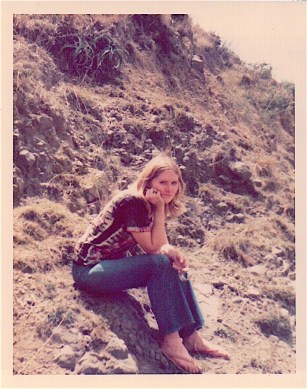
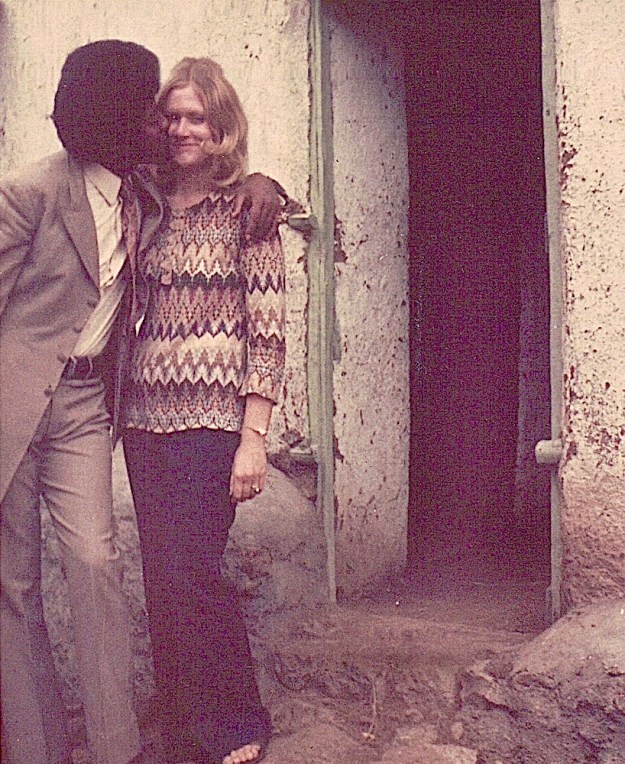
At two different times in the past year, I have suddenly had a flood of signs in one day that I should continue the book I started to write about my years in Ethiopia leading up to and during the first stages of the revolution that deposed Haile Selassie. Yesterday, the first was an email message from an Australian  woman I was traveling with at the time who said I must complete the book.  The second was a Facebook message from an  Ethiopian friend, showing me a photo of Andualem and I that had shown up on a Facebook page in a group (of almost 200,00 members) dealing with historical photos of Ethiopia. Everyone was speculating on who we were–this good-looking tall young Ethiopian man kissing a long-haired blonde caucasian woman. Who could they be? The third sign seems to be this prompt, so I’m sharing again this elegy I wrote after I learned of his death.

Footnote to the Revolution

The red clay from the cane field in your hair,
leaves pressed into my neck from lying in the tall stalks,
we heard in the trees
the movements of the shepherd
who had watched.
Later, at the Filowaha baths,
we washed ourselves from each other
and slept in a room
rattled
by the eucalyptus.
I would have wanted you more in that room
if I’d known about the bullet
already starting its trajectory through the minds
of men spending youth fresher than ours
in revolution.
I remember watching your shave
in the lobby barber shop,
your face mummied by the steaming towels.
I tasted bay rum afterwards
as we shared cappuccino.
Parked at the roadside near enough to hear our parting,
I imagine they drank katikala,
its bite sealing brotherhood
your blood would buy in the street
outside the Filowaha baths.


In 1973-74, I journeyed to and lived in Ethiopia. It was not my original intention to do any more than visit and pass through, but fate had a different plan in mind. I was first detained by violence, then by love. The Filowaha baths in Addis Ababa, Ethiopia, were probably the equivalent of the “No Tell Motels” in Mexico, but for Andy and me, they were a place to be alone, to soak in hot water together and to make love with no listening ears. I guess that is what they were to everyone who visited, but there was nothing illicit in our relationship. We were both single and in what at the beginning we thought was a committed relationship that would end in marriage. His family had accepted this. My parents, thousands of miles away, had long ago given me the message that they did not want to know anything that, as my mother had stated, “would make them feel bad.” My sister knew, but they never did.

This poem actually chronicles two different visits to the Filowaha baths–one near the beginning of our relationship and the other our last night before I departed to fly back to the United States. On this second visit, we both knew we would probably never see each other again. Once again, we had figured out that the relationship wasn’t going to work, and our own feelings were complicated by the revolution that was already raging around us. We had both just spent a month in the hospital–Andu Alem recovering from the bullet that had gone all the way through his body as he defended me from a man whose intention was to kill me. Not able to return to my house, I had stayed in the hospital with him so we could both be guarded by his father’s soldiers.

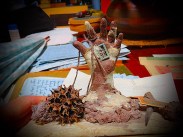
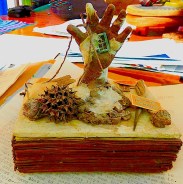
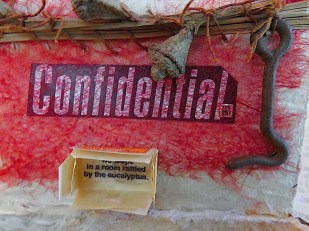
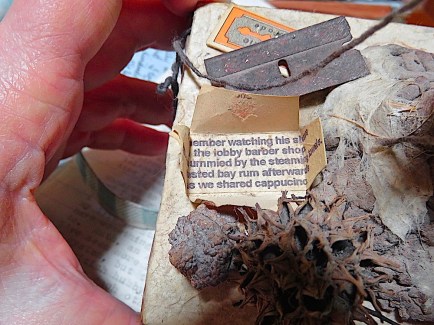
Years later, when I made my first assemblage boxes, I made this music box that told the story I’d already told in the poem years before. The song it plays is “The Way We Were.” I’m now trying to tell the story a third time in a book. Now that I know the true ending to our story, I might have changed the poem, but I leave it as I once thought it was. There are many truths in our lives, according to which vantage point we are telling them from.  This story is as true as the very different story I will eventually tell, if I have the courage to face up to it. Please enlarge the photos go see the details which should be self-explanatory. The hand I sculpted out of clay. I photographed the assemblage box on the table where I had been rereading letters I’d written home from Ethiopia as well as letters Andualem and other friends living in Ethiopia had written me once I returned to the states.

Napowrimo prompt: write an elegy of your own, one in which the abstraction of sadness is communicated not through abstract words, but physical detail.

Footnote to the Revolution

Footnote to the Revolution

The red clay from the cane field in your hair,
leaves pressed into my neck from lying in the tall stalks,
we heard in the trees
the movements of the shepherd
who had watched.
Later, at the Filowaha baths,
we washed ourselves from each other
and slept in a room
rattled
by the eucalyptus.
I would have wanted you more in that room
if I’d known about the bullet
already starting its trajectory through the minds
of men spending youth fresher than ours
in revolution.
I remember watching your shave
in the lobby barber shop,
your face mummied by the steaming towels.
I tasted bay rum afterwards
as we shared cappuccino.
Parked at the roadside near enough to hear our parting,
I imagine they drank katikala,
its bite sealing brotherhood
your blood would buy in the street
outside the Filowaha baths.


In 1973-74, I journeyed to and lived in Ethiopia. It was not my original intention to do any more than visit and pass through, but fate had a different plan in mind. I was first detained by violence, then by love. The Filowaha baths in Addis Ababa, Ethiopia, were probably the equivalent of the “No Tell Motels” in Mexico, but for Andy and me, they were a place to be alone, to soak in hot water together and to make love with no listening ears. I guess that is what they were to everyone who visited, but there was nothing illicit in our relationship. We were both single and in what at the beginning we thought was a committed relationship that would end in marriage. His family had accepted this. My parents, thousands of miles away, had long ago given me the message that they did not want to know anything that, as my mother had stated, “would make them feel bad.” My sister knew, but they never did.

This poem actually chronicles two different visits to the Filowaha baths–one near the beginning of our relationship and the other our last night before I departed to fly back to the United States. On this second visit, we both knew we would probably never see each other again. Once again, we had figured out that the relationship wasn’t going to work, and our own feelings were complicated by the revolution that was already raging around us. We had both just spent a month in the hospital–Andu Alem recovering from the bullet that had gone all the way through his body as he defended me from a man whose intention was to kill me. Not able to return to my house, I had stayed in the hospital with him so we could both be guarded by his father’s soldiers.

Years later, when I made my first assemblage boxes, I made this music box that told the story I’d already told in the poem years before. The song it plays is “The Way We Were.” I’m now trying to tell the story a third time in a book. Now that I know the true ending to our story, I might have changed the poem, but I leave it as I once thought it was. There are many truths in our lives, according to which vantage point we are telling them from.  This story is as true as the very different story I will eventually tell, if I have the courage to face up to it. Please enlarge the photos go see the details which should be self-explanatory. The hand I sculpted out of clay. I photographed the assemblage box on the table where I had been rereading letters I’d written home from Ethiopia as well as letters Andu Alem and other friends living in Ethiopia had written me once I returned to the states.

Happy Ending

IMG_0001
Andy and I outside our luxurious home formed of mud, manure and straw.  Dirt floors.  No running water. No bathroom. No electricity.

Mary has asked that I tell more of the story about the trial of the man who abducted me and the aftermath––especially  about Andu Alem and why I ended up not leaving Ethiopia after this horrid occurence.  I think the lady craves a happy ending, so here it is.  In the past segment, found HERE, I skipped over most of the information about the trial.  Here is more information as well as some of the aftermath, including Andy.  It starts the morning after I was accosted by two of Solomon Kidane’s friends who threatened my life and the life of my friends if I didn’t withdraw charges against him. The story continues:

The next day I went with my attorney and we started making the rounds of government offices and officials, eventually making it up to the equivalent of the national Attorney General. The way the Ethiopian justice system works is to hear an hour or two of testimony per week for each case it is adjudicating. This can lead to very long trials—sometimes a matter of years—and businessmen learn to devote one day a week to sitting in court to plead various issues before the court. After hearing my story, however, the Attorney General granted special dispensation for my testimony to be heard in one or two long sessions or for as long as it would take so I could then be free to leave the country. The fact that he had suspended this custom for me was remarkable, explained my attorney, in that it was without precendent. A court date was set for the following week.

The day of the trial, my lawyer and the embassy interpreter picked me up in a taxi and we rode to the courts building. They led me to the courtroom, where another case was being heard. Interestingly enough, it was the trial of a young Tegrian woman who had been among the hijackers who had hijacked the Air Ethiopian plane that I have mentioned formerly. Ironically enough, she was the cause of “Solomon Kidane” and the other security guards being on my plane and so was responsible for my kidnapping as well. It is a further irony that the hijacking had been done to call attention to the revolutionary cause that Solomon Kidane and his friends were also sympathetic to.

The first day of the trial, I sat in court watching several other cases being presented. I was curious about what was being said, but remained unenlightened for all of the testimony was, of course, in Amharic. When my case came up, they charged a young man sitting on the right hand side of the aisle with the crime. When they asked if his name was Solomon Kidane, he said no, presenting his identity papers. Clearly, his attorney said, they had arrested the wrong man. The judge told him to turn around and face me and asked me if this was the man who had abducted and molested me. I was confused. Solomon Kidane had had a full Afro, whereas this young man had closely cropped hair. Could they have substituted someone else in his place? What could have happened? He looked so different. How could I be sure that this was the man who assaulted me? Then I noticed the huge goose egg on his forehead in the exact same place where I had hit him over the head with the lamp. At the same time, I remembered him showing me various i.d.’s that he had used in his role as a secret security agent.

“I am sure he is the man,” I said to the three judges hearing my case, and went on to explain to them that Solomon Kidane was just one of his many identities.

For the next three hours, his lawyer did more to prove my moral turpitude than to defend his client. Was I a virgin, he asked? How many men had I slept with. Why was I crying when the airplane left Lalibela and who were the two men who had brought me to the plane? Had I slept with one of them? I answered truthfully that yes, I had. Had I slept with both of them? No, I had not. Why was I traveling alone he asked, and did I sleep with many men as I traveled. No, I did not. Had I not propositioned this man and asked to meet his family? When he came, had he presented me with a gift? Yes, I answered. In accepting this gift, was I not expressing an interest in this young man, and did I feel it was proper to accept a gift from a man who was a stranger. It was a cheap shamma that could be purchased in the marked for the equivalent of $3 American, I answered, and I felt it would be rude to refuse. In return, I had given him a hat I had bought that had cost much more. Was I aware that in Ethiopia an exchange of gifts like this could indicate an intention to wed, he asked? No, I answered. And was I aware that abduction of a bride was still a behavior often practiced there?
“And is saying you are going to kill your bride after raping her also an established tradition? “ I asked.

At the end of my three hours of testimony, in which his lawyer did everything to discredit me and to prove my moral unworthiness, Solomon Kidane was arrested and ordered to stand trial. The judges then released me from obligation to the court.

One very interesting twist to the story is that I was in sympathy with the E.L.F. cause and felt it justified, and so I never did reveal to police, my attorney, the embassy or the judges that these men were all E.L.F. members. If Solomon Kidane was to go to jail, I wanted it to be for his personal actions, not his political ones. I believe to this day that the men didn’t realize that I could understand their political ravings as they got drunker and by the time the night was over, they had given away a secret that I was wise not to reveal I understood.

The day after my court testimony finished, I was preparing to depart for Khartoum to join Deirdre when a letter was delivered to me via Poste Restante. It was from Andy, who stated that he had heard what “that man” had done to me. “He is just devil!” he stated in his usual colorful English, and he went on to say that sending me away was the biggest mistake of his life, and that I should come back to Lalibela to live with him until they were forced by the upcoming rainy season to journey out over the mountains via Land Rover to go back to Addis. “After that, we will travel to Kenya, and then we will marry,” he said.

Two days later, I was soaring low over a familiar grass landing field. Andy and Tessie met me with arms full of flowers. How did they know I was coming? I asked. It was Tessie who answered that they had met every plane since Andy had written the letter telling me to come back. When we went to the Seven Olives that night for a welcome back celebration, I noticed that the flower garden was completely shorn of flowers. “Every day, they granted us permission to cut flowers for your arrival,” admitted Andu Alem. “By the time you finally came, we had had cut every flower.” That night, lay singers in the Tej house once again sang the song of my coming back, and staying with Andy, and opening up “The Judy and Andy Souvenir Shop.” They had predicted it, they insisted. As it turns out, the ending to our story did not turn out as foretold, but in this way I nonetheless entered into the lore of this mountain village so far removed from civilization.

(Even though the name he used with me was fictional, I have changed the false name he used to “Solomon Kidane.” Ironic that I would change a real false name to a false false name, isn’t it?)


Winsome and Then Some

Most of you probably haven’t read the story of the beginning of my life in Ethiopia, but since my search for today’s prompt word presented it as one of the few posts prompted by the word “winsome,” and because I’ll be busy all day packing for the beach before my house sitters get here, I’m linking to it again today.  Here is the beginning.  If you’d like to read all of it, click on the link at the end:

Romance Underground

I’ve given a few segments of the story of my time traveling and living in Ethiopia.  Some people have requested more of this story, so here is an expanded prose version of yesterday’s poem. The year is 1972.  This is long so you might want to read part of it and come back later.

IMG_0009

I was 24, just out of college, headed for whatever foreign country would hire me with no experience. The winner was Australia, and I headed out on my big life’s adventure. Setting out alone to somewhere where I knew no one, I was not scared. I was elated. I had no idea what people were like in this new environment. Perhaps they were more like me. I think I already knew that I was someone who enjoyed being the stranger. If I was the stranger, it meant all new territory for me. No one knew my family or anything about me. A youngest child, I could be judged for once completely on my own merits.

Australia was exciting, but after a year and a half of recruiting teachers from elsewhere, they decided they were overstocked and offered any of us willing to leave a payout equal to the amount of income taxes we’d been paid during the time we were in Australia. I cashed in and made $600! Wow! I thought this was enough to travel to London. My Australian roommate, Deirdre, decided to go with me. We planned to work enroute if we could and bought bus tickets from Sydney to Darwin and airline tickets from Darwin to Timor to Bali to Singapore to Sri Lanka.

Unfortunately, once we got to Timor, we discovered that the airline we’d booked our flights on all the way to Sri Lanka had gone bankrupt, so we were a bit stranded. We made our way by World War II Troop barge, which we “rented” from some Indonesian fishermen, then by foot through the jungles. This was the second biggest adventure story of my life and one told in an earlier posting, but that is not the story I am telling today. Suffice it to say that eventually, after about 4 months, we made it to Africa. (If you want to read the rest of this tale, go HERE.)

The prompt today was winsome.

The Rutted Road

The Rutted Road

It’s been two years since I wrote about the bad decision that led to life-threatening events that turned into one of the most exciting adventures of my lifetime.  If you haven’t already read about my life in Ethiopia in the 1 1/2 years that led up to the revolution that deposed Haile Selassie, go HERE. After spending an hour finding links to the different segments of that story and getting ready to post this, I see that I posted a link to this story in July of 2015, so if you’ve already read it, you may choose not to read it again.  I’ll post another response to this prompt later today.  if you haven’t read it and have some time, then go to the link above. (In fact, I meant to post this twelve hours ago but just found it in drafts.)

The Prompt: The Road Less Traveled––Pinpoint a moment in your past where you had to make a big decision. Write about that other alternate life that could have unfolded.