Tag Archives: Elegy

Elegy for Eunice: Mono No Aware, For dVerse Poets 5/20/24

When I was little, life seemed like one long summer day.

Elegy for Eunice

Most who might have mourned her
have followed or preceded her to dust.
Those few who still do,
think of her less often every year.
It is only in the fleeting moments
when beauty she might have appreciated
crosses our vision
or a song she once favored is heard
that a sweet pang of missing her
stabs into our busyness
and we remember
how she guided our footsteps,
taught us a gentle way with animals,
prodded us to attain more
and let us go.
This is an elegy to one we have forgotten
too easily and too soon.
One that calls her back to mind,
restores her to her rightful place.

The dVerse Poets prompt today is to write a haibun making use of mono no aware—the beauty of transience. My post is not a haibun, but I hope it meets the rest of the prompt. You can see how others responded to the prompt HERE.

Mono no aware is not simply a morbid attitude toward impermanence. Rather, it is accepting “the beauty of passing things.” As such, Mono no aware lies at the heart of Japanese poetry. Basho, the progenitor of the haibun, exemplifies mono no aware in an excerpt from his “Narrow Road to the Interior” that you can read on the dVerse Poets prompt above.

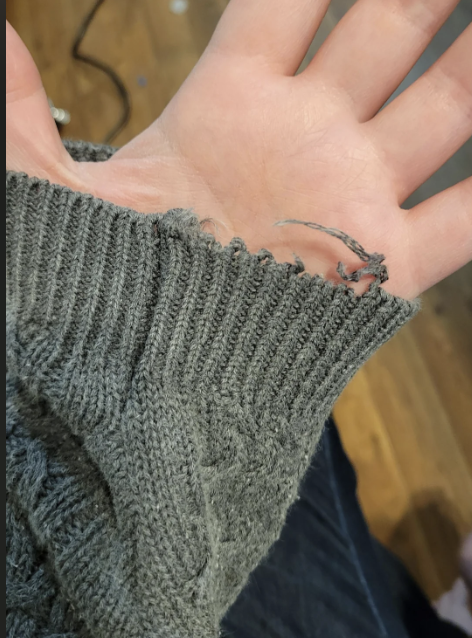
An Elegy to the Ravelled Sleeve for NaPoWriMo 2024, Day 29

The prompt for NaPoWriMo was to write a poem making use of one of ten words from Taylor Swift lyrics. Once again given to excess, I’ve written a poem making use of them all.  Here are the words: Cardigan, elegy, Mercurial, antithetical, albatross, self-effacing, altruism, incandescent, Machiavellian, clandestine.


An Elegy to The Ravelled Sleeve

Here’s an elegy from this bard again,
to my worn-out cardigan.
It’s challenged in its warp and weave,
unravelling about the sleeve,
and yet I wear it, nearly neckless,

causing folks to call me feckless.
I persist in my rebellion,
feeling slightly Machiavellian.
The opposite of narcissism
is my act of altruism
as I decide that it is better
to donate money for a sweater
to my local homeless shelter
so someone lacking clothes that swelter
can thereby don and thus bedeck
an albatross around their neck!
Self-effacing to the end,
perhaps I’ll start another trend
by donning daily my sweater’s dregs
instead of slit-pants on my legs.
Antithetical to current fashion,
clandestine in my garment passion,
Mercurial and incandescent,
my  mood purely effervescent,
I’ll stride down the street with glee,
my favorite sweater surrounding me!

(My apologies to Mr. Shakespeare!  )

Footnote to the Revolution, Elegy for Napowrimo Apr 18, 2019

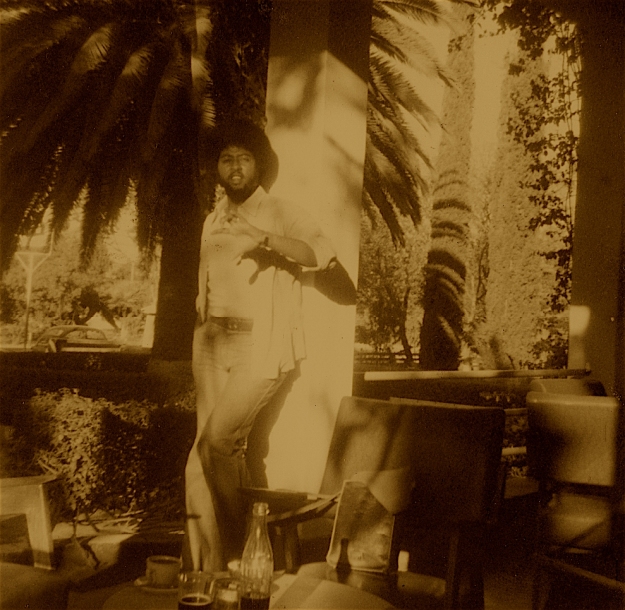
At two different times in the past year, I have suddenly had a flood of signs in one day that I should continue the book I started to write about my years in Ethiopia leading up to and during the first stages of the revolution that deposed Haile Selassie. Yesterday, the first was an email message from an Australian  woman I was traveling with at the time who said I must complete the book.  The second was a Facebook message from an  Ethiopian friend, showing me a photo of Andualem and I that had shown up on a Facebook page in a group (of almost 200,00 members) dealing with historical photos of Ethiopia. Everyone was speculating on who we were–this good-looking tall young Ethiopian man kissing a long-haired blonde caucasian woman. Who could they be? The third sign seems to be this prompt, so I’m sharing again this elegy I wrote after I learned of his death.

Footnote to the Revolution

The red clay from the cane field in your hair,
leaves pressed into my neck from lying in the tall stalks,
we heard in the trees
the movements of the shepherd
who had watched.
Later, at the Filowaha baths,
we washed ourselves from each other
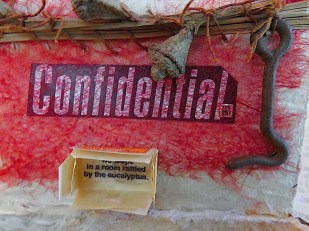
and slept in a room
rattled
by the eucalyptus.
I would have wanted you more in that room
if I’d known about the bullet
already starting its trajectory through the minds
of men spending youth fresher than ours
in revolution.
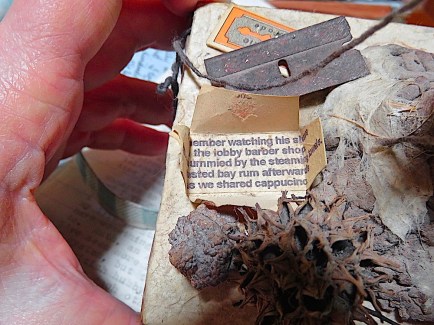
I remember watching your shave
in the lobby barber shop,
your face mummied by the steaming towels.
I tasted bay rum afterwards
as we shared cappuccino.
Parked at the roadside near enough to hear our parting,
I imagine they drank katikala,
its bite sealing brotherhood
your blood would buy in the street
outside the Filowaha baths.


In 1973-74, I journeyed to and lived in Ethiopia. It was not my original intention to do any more than visit and pass through, but fate had a different plan in mind. I was first detained by violence, then by love. The Filowaha baths in Addis Ababa, Ethiopia, were probably the equivalent of the “No Tell Motels” in Mexico, but for Andy and me, they were a place to be alone, to soak in hot water together and to make love with no listening ears. I guess that is what they were to everyone who visited, but there was nothing illicit in our relationship. We were both single and in what at the beginning we thought was a committed relationship that would end in marriage. His family had accepted this. My parents, thousands of miles away, had long ago given me the message that they did not want to know anything that, as my mother had stated, “would make them feel bad.” My sister knew, but they never did.

This poem actually chronicles two different visits to the Filowaha baths–one near the beginning of our relationship and the other our last night before I departed to fly back to the United States. On this second visit, we both knew we would probably never see each other again. Once again, we had figured out that the relationship wasn’t going to work, and our own feelings were complicated by the revolution that was already raging around us. We had both just spent a month in the hospital–Andu Alem recovering from the bullet that had gone all the way through his body as he defended me from a man whose intention was to kill me. Not able to return to my house, I had stayed in the hospital with him so we could both be guarded by his father’s soldiers.

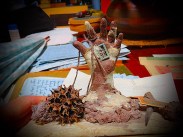
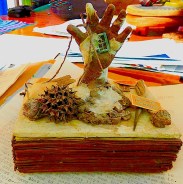
Years later, when I made my first assemblage boxes, I made this music box that told the story I’d already told in the poem years before. The song it plays is “The Way We Were.” I’m now trying to tell the story a third time in a book. Now that I know the true ending to our story, I might have changed the poem, but I leave it as I once thought it was. There are many truths in our lives, according to which vantage point we are telling them from.  This story is as true as the very different story I will eventually tell, if I have the courage to face up to it. Please enlarge the photos go see the details which should be self-explanatory. The hand I sculpted out of clay. I photographed the assemblage box on the table where I had been rereading letters I’d written home from Ethiopia as well as letters Andualem and other friends living in Ethiopia had written me once I returned to the states.

Napowrimo prompt: write an elegy of your own, one in which the abstraction of sadness is communicated not through abstract words, but physical detail.

Elegy for Eunice

Elegy for Eunice

Most who might have mourned her
have followed or preceded her to dust.
Those few who still do,
think of her less often every year.
It is only in the fleeting moments
when beauty she might have appreciated
crosses our vision
or a song she once favored is heard
that a sweet pang of missing her
stabs into our busyness
and we remember
how she guided our footsteps,
taught us a gentle way with animals,
prodded us to attain more
and let us go.
This is an elegy to one we have forgotten
too easily and too soon.
One that calls her back to mind,
restores her to her rightful place.


My mother’s given name was Eunice Lydia, but we only ever knew her as Pat.  For some reason,, in this elegy, I wanted to use her real name. No doubt she will wreak some revenge for this, so if things start going too wrong in my life, I will substitute her assumed name for the present title. The NaPoWriMo prompt today is to write an elegy.

NaPoWriMo2017, Day 3: Reliquary

daily life color241
Reliquary

On Sunday morning under orange bougainvillea,
Your picture spills from an old album.
You were on a verandah under purple bougainvillea,
drinking the hot noon from your coffee cup
as I drank passion fruit and watched Lake Tana birth the Nile.

Later, kneeling by the river, I made my hand into a cup,

but you called out that slow death swam the blood
of those who touched the river,
while behind you on harsh branches,
black birds barked stark music.

Now, on Sunday morning under orange bougainvillea,
half a world and half a life away,
 I restore you to your proper place, remembering how,
when they laid you down to dream beneath the purple bougainvillea,
it was passionfruit’s sweet poison that flavored my life.


Please also see this elegy: https://judydykstrabrown.com/2016/10/11/look-up-poem-for-a-good-good-girl/

The NaPoWriMo prompt today was to write an elegy.

NaPoWriMo Day 8: Slack One Lying On the Cobblestones

Our prompt today is to write a poem based on another famous poem. The poem suggested is this one written by Cesar Vallejo and translated by Robert Bly:

Black Stone Lying On A White Stone

I will die in Paris, on a rainy day,
on some day I can already remember.
I will die in Paris–and I don’t step aside–
perhaps on a Thursday, as today is Thursday, in autumn.

It will be a Thursday, because today, Thursday,
setting down these lines, I have put my upper arm bones on
wrong, and never so much as today have I found myself
with all the road ahead of me, alone.

César Vallejo is dead. Everyone beat him
although he never does anything to them;
they beat him hard with a stick and hard also

with a rope. These are the witnesses:
the Thursdays, and the bones of my arms,
the solitude, and the rain, and the roads. . .

This is my version of Vallejo’s self-eulogy:


Slack One Lying On the Cobblestones

I will die in Mexico, on a zany day,
on some day when memory fails me.
I will die under the feet of a burro––as I don’t step aside––
perhaps on market day, as today is market day, in a fall.

It will be a market day because today, market day,
buying new shoes, I have put them on
the wrong feet, and never so much as today do I find myself
having problems negotiating all the cobblestones ahead of me, alone.

Remi is dead. That burro walked on her
although she never did anything to him;
he tromped her hard with his hooves and hard also

with his trailing rope. This is what was left:
her shopping bag, the bones of her dignity,
her bolillos, her new huaraches, and the road. . .

(Note:  Remi is my preferred name to be called by friends, although few consent to do so.)