Tag Archives: Poetry

I’ll Have to Go

The Prompt: Finite Ceatures—At what age did you realize you were not immortal? How did you react to that discovery?

I’ll Have to Go

This journey of our lifetime is a one-way ride.
I realized the truth of this the day my father died.
But in the living of it, I forgot again—
concentrating on the present and where I had been
instead of thinking of the future and mortality.
There’s something in a busy life that sets the spirit free,
convincing us that we’re immortal. That we’ll always be.

The many times that I was made to see I might have died:
the time I was abducted and taken for a ride,
the time he held the gun up to my head and pulled the trigger,
as I fell to the street, somehow my life seemed to get bigger;
and I saw all of it at once, spread out there below me,
and somehow though I wasn’t dead, I felt that I was free,
and for awhile, I found it was enough to simply be.

There have been other times when death has had me in its clench:
the time not long ago when that limb missed me by an inch,
the time I nearly drowned when I knew I was gone for sure,
yet somehow, death rejected me—released me from its lure.
It’s just at night when I’m alone that all comes tumbling back
and I begin to calculate all that my life might lack,
and life becomes a tempting peddler opening his pack.

The places never visited, the loves I let pass by,
and all the other things I thought to do before I die
all tumble out to tempt me and I think perhaps I still
have some things to do before I climb that final hill.
I think, perhaps, there’s one more love. One journey yet or two.
So many things that I have left I always thought I’d do.
So I am getting ready—only waiting for my cue.

That’s why at night I lie awake, sometimes remembering.
At other times just wondering what this next year will bring.
If I am lucky, I have thirty years or more till death
takes away these memories and stills my final breath.
Until then, I’ll live life fully and go where I must go.
I’ll follow my own pathway and ignore the status quo.
Instead of drifting lazily, I’ll row and row and row!

You’ve Got Mail

lead pencils in metal cup isolated on white(stock photo)

The Prompt: Fourth Wall—You get to spend a day inside your favorite movie. Tell us which one it is — and what happens to you while you’re there.


You’ve Got Mail

That bouquet of sharpened pencils? They had me from the start.
Who knew that Mr. Hanks had that effect upon my heart?
I know it was the writers. I’m a writer. I’m not dim!
And it was just a role he played—it really wasn’t him!
Nor was it his main character that penned those words so fine.
It was his alter ego that he only used on-line!

Suspending disbelief is what we writers count upon.
In another lingo, we might call it a fine con.
We take our readers from themselves into a new dimension,
where we create a world that’s purely of our own invention;
and there we spin a fantasy that catches them within it—
offering a prize so rare that readers want to win it.

And films use music, too, to try to capture our emotions,
wiping out our common sense and filling us with notions.
The track to “You’ve Got Mail” was as romantic as could be!
If little birds fly oe’r the rainbow, why, indeed, can’t we?
We all identified and put ourselves into the tale,
and when it ended happily, we all read, “You’ve Got Male!”

Bali-Bound


daily life color017 daily life color016

Bali-Bound

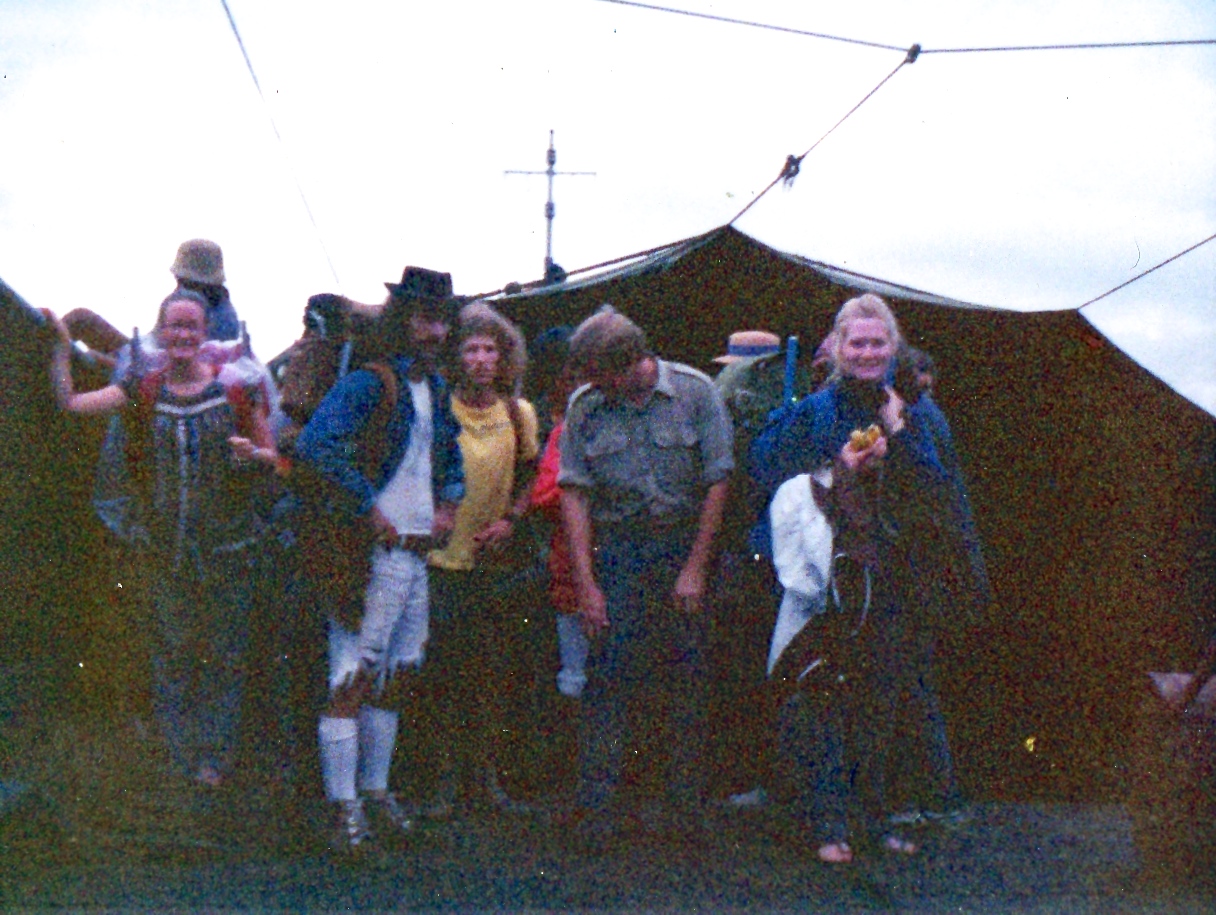
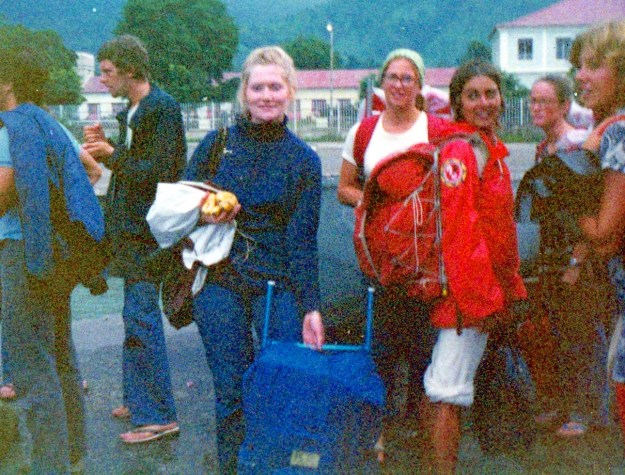
Germans, Aussies, Kiwi, Brit, Dutch, Canadians, Swiss.
I was the lone American who was pulled into this
adventure—just thirteen of us, including them and me
in a tank barge left from WWII, across the Timor Sea.
We did not know that Bugis pirates still set sail out there,
for we were young and reckless, and we didn’t care.
We still felt invulnerable. We would never die.
We all sought our giant chunk of the adventure pie.
We sailed all day and through the night and part of a new day.
Most of the cash that we had left was what we had to pay
to reach the west shore of an Island lashed by monsoon rain.
All bridges and all roads washed out, we searched for rides in vain.
A lonely store stocked not with much—some cans of cheese, two Cokes.
Not adequate provender for such starving, thirsty folks.
We crossed from Portugese Timor onto Indonesian ground.
Although we all had traveler’s checks, there was not much cash found
within our empty pockets, yet to Bali we were bound.
Still an unspoiled paradise—a haven with few cars
or partying Australians or honeymooning stars.

We stopped at one last little hut where I took off my sandals
to ease my feet, and thus were they made off with by some vandals.
And so it was that we set out through jungles vined and rooted,
fording rivers filled with leeches. I, alas, barefooted!
But chivalry was still in vogue and one or two or three
of my fellow travelers shared their boots with me
taking turns at walking barefooted for awhile
as we walked through the jungle, mile after mile.
Till late in the afternoon we came across an inn
(By then my resolution grown dangerously thin!)
Alas, we had no money for dinners and our room,
and here was where the two Swiss guys dispelled our sense of gloom.
They traded the two ten-speed bikes they’d carried or they’d ridden
most of their way around world—and they did it unbidden
by any of us, for we knew those bikes were like their kin;
and yet they gave up both of them for one night in this inn
for all of us, plus dinner—a repast full and rich,
and furthermore, our breakfast and the promise of a hitch
on a truck loaded with grain bags that was headed out tomorrow.
They did this for all of us and did not show their sorrow.
After showers poured from pails, (I noticed, I’d grown thinner)
some of us had a little nap and then a welcome dinner.
And when the Germans both pulled out their guitars for a song,
the sons of our innkeeper brought out theirs and sang along!
We all chipped in to teach the lyrics to Bobby McGee.
Our beds and food cost dearly, but the music was all free.

Next morning, we climbed high upon the grain bags for our ride
while Indonesians hung onto the rear and either side.
That truck looked like a peddler with his wagon piled high,
not with the usual notions, but with humans far and nigh.
We rode along uncomfortably, hour after hour.
No songs for us this long, long day, our mood was turning dour.
When it was nearing dusk, that truck gave one tremendous lurch
that very nearly threw us all from our precarious perch.
The Indonesians climbed on down and vanished all but one,
while the drivers told to us this next stage in our fun.
The axle cleanly broken, they would start out to get aid.
They’d come for us tomorrow—but they wanted to be paid!
We waved them off with promises—just one more awful bungle
and looked around for sleeping spots in this dense, darkening jungle.

We settled on a little hillock clear of trees and vine.
Rolled out all our sleeping bags. On what were we to dine?
One tiny little can of cheese and sardines in a tin
and those two Cokes we’d purchased—our provisions were most thin.
Hans had pellets with him meant for purifying water.
Guys headed out in search of it like lambs led to the slaughter.
The sky was darkening, but I knew I had to go to pee.
I headed down to where the trees afforded privacy,
pulled down my pants and put my hand, to balance, on a tree
when a sudden piercing pain shot from my hand through all of me!
I screamed and all my traveling friends came running down the hill.
I think of all my crises they were soon to have their fill.
I felt as though a burning dart had pierced through my right hand.
Toppled and now hobbled, I was unable to stand.

They helped me pull my pants up, sadly with a still-full bladder
as I heard the Timorese man say that it had been an adder.
I’d die within the hour, there was nothing we could do.
They emptied all their pills out and decided I’d take two
of everything we carried in our pockets and our packs,
for all of us were traveling with a drugstore on our backs.
To wash them down they offered up the ultimate in gifts:
the Cokes that we were hoarding, then they sat with me in shifts.

My finger swelled to such a size that the one ring I wore
cut off circulation until Peter cussed and swore,
“We’ll have to cut it off, so Trevor come here with your knife.
We have to cut if off of her to try to save her life.”
They put my hand upon a rock, I was delirious.
Trevor was looking rather green. Could they be serious?
He brought the knife down to my finger, but his wrist went limp.
The Germans gave a severe look, as though he were a wimp.
They told him to get on with it, but still he chose to linger.
“I just can’t do it,” Trevor said, “I can’t cut off her finger!”
“Not the finger, fool,” they said, “Just cut the ring away!”
And Trevor used the saw blade, for he had no more to say.
All night they held my arm aloft and manned the tourniquet,
It’s clear to me that I will be forever in their debt.
When I hadn’t died after an hour, the old man rubbed his eyes
and said it was another snake and I’d be paralyzed
on my right side but wouldn’t die—somewhat of a relief,
and still, I must admit I viewed paralysis with grief.

Eight hours later, still awake, I heard a distinct pop
and the swelling went down, but the throbbing did not stop.
Years later when I read “The Pearl” by Steinbeck just for fun,
when the baby nearly died, stung by the scorpion,
in just eight hours the swelling went down. That’s how I came to see
that it was probably a scorpion that had stung me.
They came with a new axle and we were on our way
and made it to our destination later that next day.
We caught a plane to Bali, but I got there in a haze,
to fall in bed where I was passed out cold for three more days.
Covered with red rashes from the rivers that we’d forded,
we were treated by the women in the houses were we boarded,
who tended to our wounds from leeches and our dysentery.
Yes, Bali then was paradise, but entrance wasn’t free.

Still, we’d paid the price and we were there right at the start,
before the rush of travelers destroyed some of its heart.
We rented bikes and rode the island, town to town to town
without meeting any traffic to try to mow us down.
A quarter for our rooms each night, a quarter for our lunch.
A lobster dinner for fifty cents—we were a happy bunch.
Processions down the streets at night, where gamelans abounded.
and temple ceremonies—all-in-all, we were astounded.
Magic mushrooms by the grocery bag cooked into omelets for us,
everywhere we went, the people just seemed to adore us.
Kuta beach was lazy then, and as we strolled along,
the most commercial thing we faced to buy was a sarong.
No beggars and no hawkers and no motorbikes to meet.
No half-an-hour to stand and wait to try to cross the street.
You might have guessed from hints I’ve given that there’s been a change.
Everything has altered now and become very strange.
Poppies restaurant—a tiny place in ‘73,
has grown into a restaurant chain with dishes gluten-free.
Hotels abound and hawkers flog their watches on each street.
Young Australians in each bar must drink to beat the heat.
We lived on just one dollar a day, in homes on Kuta Beach,
for there were no hotels yet anywhere within our reach.
There are more stories I could tell, and might, another day.
This tale has gone on for too long, so I must fade away.
But first I must apologize for this long-winded view
and say if you’re in Bali, we were there ahead of you!

The Prompt: Avant Garde—From your musical tastes to your political views, were you ever way ahead of the rest of us, adopting the new and the emerging before everyone else?


The Twenty-fifth Hour

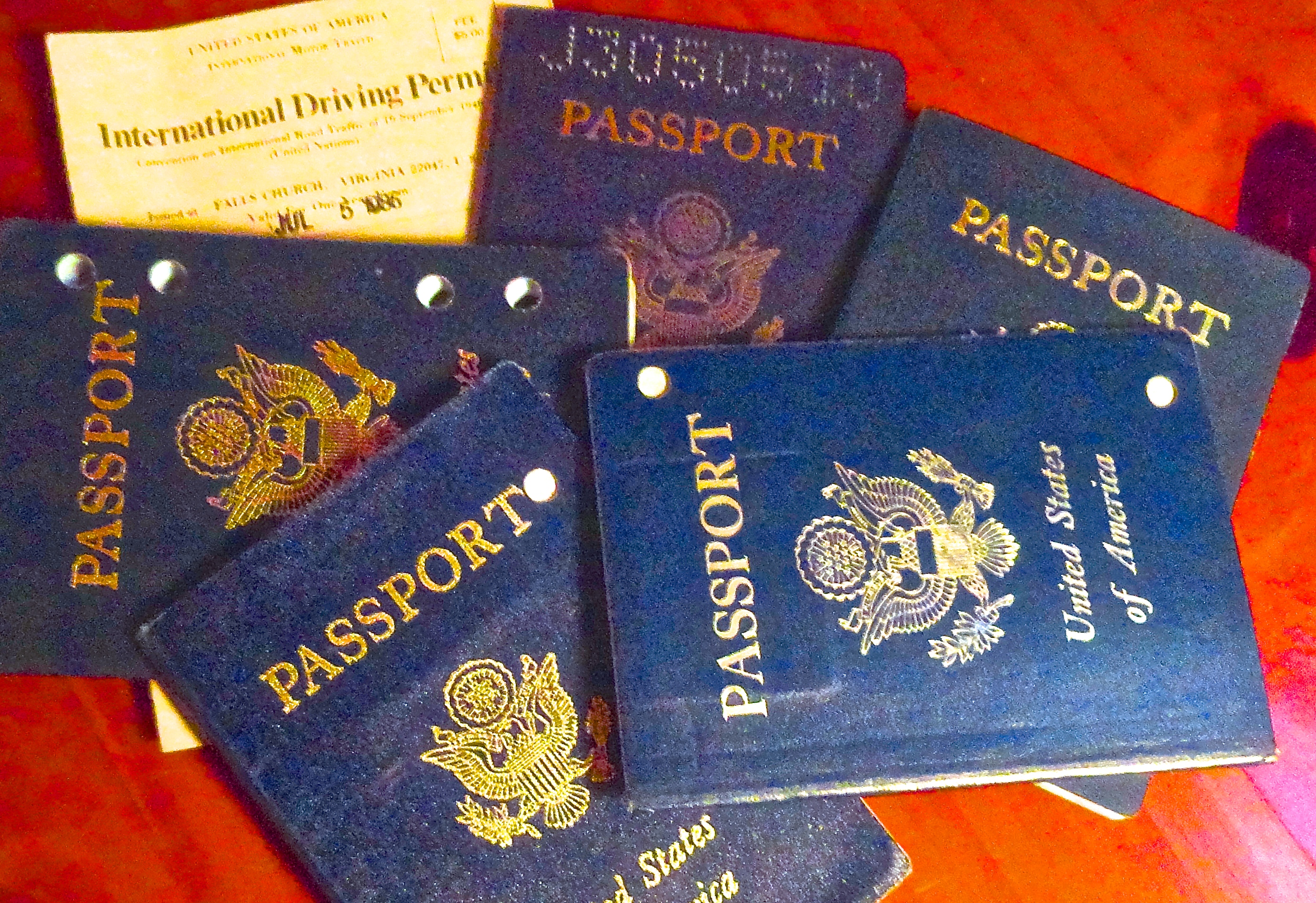
DSC08473I found five old passports and an international driving permit from 1986.
Why, oh why can I not find my current passport?


The Twenty-fifth Hour

An extra hour would be nice. A day’s not long enough.
I know I’d use the extra hour looking for lost stuff!
My passport has gone missing and it’s been a major pain.
I would give most anything to have it back again.
I’ve looked in all my files, my drawers and every purse.
I have too many places. It couldn’t get much worse.
If I ever find it, I’ve made myself a vow to
make my life much simpler, if I just could figure how to!

Post Script: I actually lost my passport a few years ago. I looked for it for  4 or 5 hours without finding it, but  my housekeeper found it in 5 minutes when she came the next day–in a place where I’d looked twice!!! She lit a candle and said whenever I lost things I should do the same. She says her friend has a Virgin and Child statue, and whenever she loses anything, she takes the baby out of the mother’s arms and says she’ll return it when she has helped her to find whatever she has lost!! Talk about blackmail in high places! Ha. A simple solution.

Exhortation in Support of the Written Word!

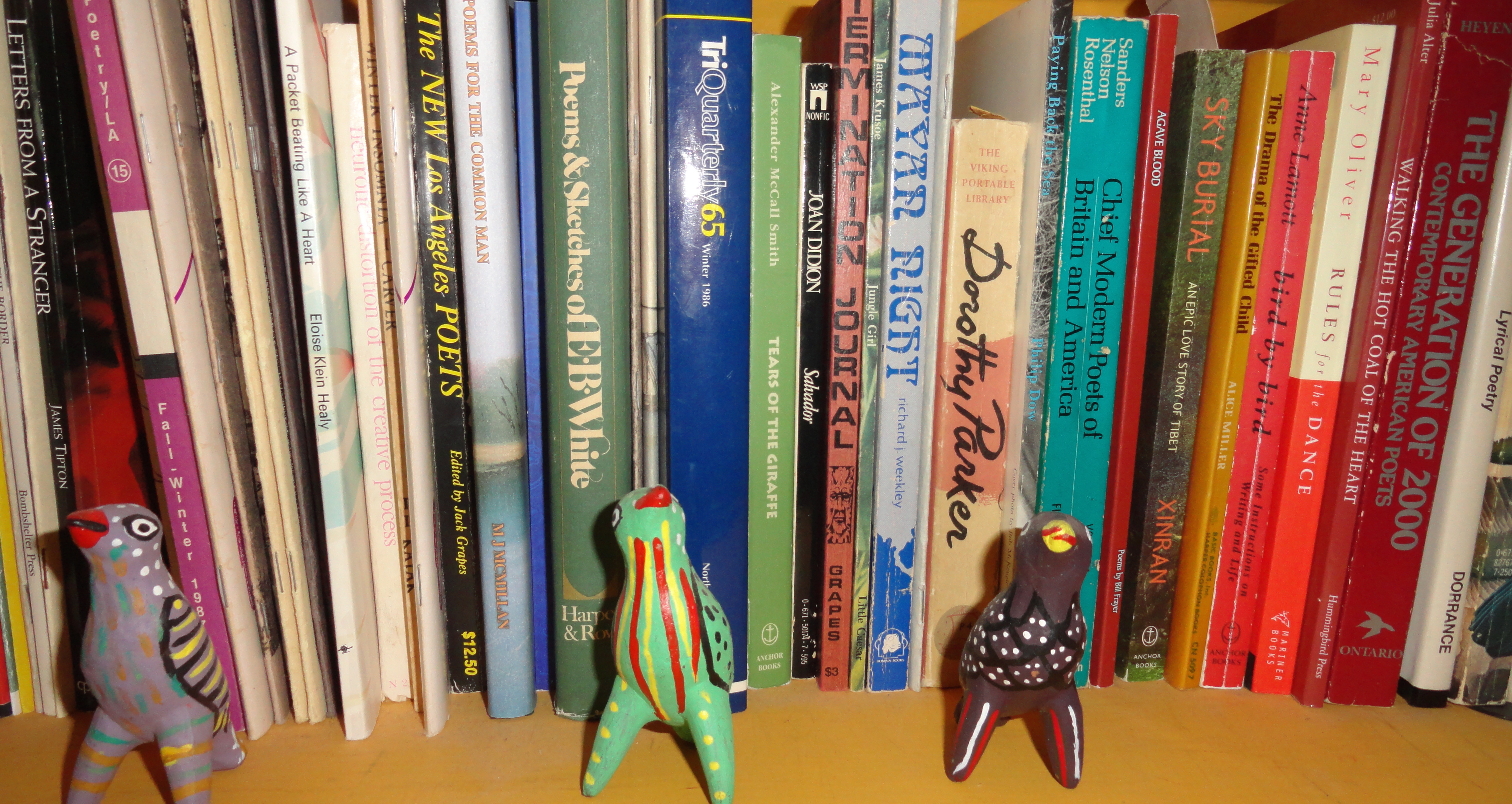
DSC08454

Exhortation
in Support of the Written Word!

Discussing a good book can improve any conversation,
while other books just serve us as a means of rumination.
Books come in many forms from poetry to exhortation.
Some use them to improve their minds, others as decoration.

Books furnish everyone a chance to get an education
as writers entertain us and provide elucidation.
Ghost stories and horror books give rise to palpitation.
Action and adventure lead to heights of exultation.

Comics lead to laughter and beyond—to jubilation.
Histories tell tales of conquerors and usurpation—
deprivation due to wars, like bombing raids and rations,
slaughter, mayhem, battle strategies and amputations.

Some books furnish thrills while some serve only as sedation.
Some books read as sermons, others bombastic oration.
Preachers read from Bibles to provide their congregation
with words that furnish some with hope, others with trepidation.

Some dread books they feel may raise their “lessers” to their station.
Some fear the joy they rouse in us and label our elation
as the hands of Satan, which they’ll cure with amputation,
labeling their action as an act of “God’s creation.”

Driven to destroy the means of all our excitation,
having few words of their own, a zealot’s main “quotation”
is burning books they fear in a colossal conflagration
that gives another meaning to the word “illumination!”

Whatever you might like to read, a certain exultation
waits for you when reading is your favorite vocation.
A torrid romance may work best while on a beach vacation,
(the heat a good excuse for your excessive perspiration.)

Mysteries serve for planes and trains—all forms of transportation—
either while you’re riding or just waiting in the station.
Books are everywhere. They form a great accumulation.
They bore us, reassure us, or provide great inspiration.

Information in most books serves as a vaccination
against hate and bigotry and all discrimination.
For those trapped by fate, they make a good means of migration,
as reading has no borders as to neighborhood or nation.

The Prompt: Reader’s Block—What’s the longest you’ve ever gone without reading a book (since learning how to read, of course)? Which book was it that helped break the dry spell? (My consideration of books took me off on a slightly different tangent, but the prompt is to get us started. Right?)


Two Will Do

DSC08414

Two Will Do

I used to like friends by the score
squeezed wall-to-wall and door-to-door.
A party didn’t even count
until the guests began to mount
up to sixty, seventy, more.
But now, I’m finding crowds a bore.

Now I find that two-by-two
is something I prefer to do.
Conversations more intimate
make it simpler to relate.
So though I used to be a grouper,
now I’m just a party-pooper.

The Prompt: Counting Voices—A lively group discussion, an intimate tête-à-tête, an inner monologue — in your view, when it comes to a good conversation, what’s the ideal number of people?

Back and Forth

Back and Forth

If I should find a time machine, I might or might not buy it.
And even once I bought it, I might or might not try it.
To think about the future always makes me sweat,
for I am trepidatious about how bad it might get.
I foresee live-in bubbles for one or two or three
who merely turn on YouTube for whomever else they see.
Pollution would be too advanced to venture far outside—
the world turned way too violent for most folks to abide.

If I visited the future, chances are I’d see
the death of friends and loved ones—perhaps the death of me!
See our country crumble due to earthquakes or to slaughter.
See Monsanto poison food crops after ruining our water.
Our seasons turned to drought, tornado, hurricane and flood—
by turn made dry or spinning or blown away or mud.
I know there are alternatives, but I can’t help but doubt
that current politicians will let it all work out.

But if I went into the past, perhaps I’d also rue it.
I might just be happier if I chose to eschew it
I might see as a toddler that I was just a brat—
a little squirming dervish—graceless, spoiled and fat.
I might hear that my singing voice was just a bit off-key
and see the looks the others gave as they were hearing me.
If I encountered me, we might just end up in a fight
like ones I had with sisters—and discover they were right!

Yet, this probably won’t happen and perhaps it might be fun
to have another look at what I’ve seen and what I’ve done.
And though to relive some things would leave me feeling queasier,
I know that it would certainly make memoir-writing easier.
What fun to relive Christmases from year to year to year,
To see my mom and dad again, what’s more, to get to hear
all the stories of my dad and this time to record them—
to spend time with my sisters and to show how I adored them.

What fun to watch me with my friends— Rita, Lynn and Billy—
to see when we were children if we were just as silly
as little kids I see today who just seem to be reeling
with energy and foolishness and excesses of feeling.
I’d drive on roads with fewer cars to spots no longer there.
Go roller skating in Draper gym. Fall on my derriére!
I’d have a Coke in Mack’s Café and then I’d shop at Gambles.
Buy love comics at Mowell’s Drug and then expand my rambles

down to the playground monkey bars, where I would do a flip.
Then to the Frosty Freeze where I would have another sip
of orange slush and then I’d have to buy a barbecue.
(I fear that in my tiny town, that’s all there was to do!)
I’d skip ahead, then, many years, to 1971,
and fly off to Australia for adventures in the sun.
Then Singapore and Bali, Ceylon and Africa.
See everything as it once was, when it was new and raw.

Regrets? Of course. I’m human, and so I’ve had a few,
but over precognition, I prefer déjà vu.

The Prompt: One-Way Street—Congrats! You’re the owner of a new time machine. The catch? It comes in two models, each traveling one way only: the past OR the future. Which do you choose, and why?

Hard Transit

Hard Transit

My grandfather and his two teenaged daughters
drove a wagon to Dakota to claim a homestead.
I never asked how many weeks they traveled, or the hardships that they faced.
The young don’t know what answers they will wish for when it’s too late;
so only imagination serves to describe the heat,
day after day with no water except for what they carried,
coyotes, gray wolves and the glaring sun of the treeless prairie.
My aunts were just young girls dealing with the difficulties young girls face
in the sparsest of conditions. No mother. No water.
The jarring ride—grasshoppers so thick the wagons skidded off the tracks,
and that loneliness of riding into
the emptiness of a strange world.

Now, I stand impatiently at the immigration window,
then the ticket line and the security line.
I empty pockets, discard water bottle,
remove computers from their cases, take off shoes,
raise my arms for the check,
struggle up the escalator with bag and purse,
find the right gate,
negotiate the walkway to the plane,
lift the heavy carry-on and lower myself into the too-small seat.
“Plane travel isn’t what it used to be,” my neighbor says,
and we console each other about how hard it is.
“Nine hours from Guadalajara to St. Louis—
a plane change and a three-hour layover in Atlanta,”
I grumble, and he sympathizes.

The Prompt: In Transit—Train stations, airport terminals, subway stops: soulless spaces full of distracted, stressed zombies, or magical sets for fleeting, interlocking human stories?

Torn Love

Since today was still another free topic, I have chosen to take the Poets and Writers weekly prompt which is: The Flip Side—This week, think of something that has happened to you recently that was stressful, traumatic, or unpleasant. Write a poem about this event as you experienced it, regardless of anyone else’s perspectives or feelings on what occurred. Then rewrite the poem from the perspective of someone else involved in the situation. This new poem may not reflect the truth, but sometimes it’s important to remind ourselves that everything has a flip side.

I

Torn Love

Still standing close,
each on our own side of this terrible rending,
how can we see things so differently?
This little flap of skin
you keep pulling open
wants to close.

This is how cancers start—
this worrying and worrying of an old injury.
My darling. Leave it alone
and let us heal.
This is only a biopsy
of our changed love affair.

If it is cut out of us,
it will be by your decision;
and no number of late-night arguments
will ever change that fact.
What you need to remember
the next morning,
you will remember.

If it were up to me,
we would still be friends,
but if you need an enemy
to console you in your actions,
I guess I must be that too.
I always was a figment
of your imagination.
Believe that
if it makes this easier for you.

II

Cicatrix

I know better than you
what lies buried under
my healed-over self.

The raised part of me
grown to protect the wound
creates this distance
that I once warned you of.

I need to thicken that part of me
where part of you remains,
and if for this time you gasp for air,
it is my thick skin growing over you,
like an orb spider winding you in my web

until you become
the one in me hidden so deep
that even you
believe you’ve disappeared.

Gather

Today’s prompt: Verbal Confirmation—To be, to have, to think, to move — which of these verbs is the one you feel most connected to? Or is there another verb that characterizes you better?

Gather

We gather a new world
as we collect marks
in straight black lines
on white paper.

And yes, it is a new world
every time
and we have the power
of each world
we pull around us.

I may have called this poem
“Utter Sovereignty,”
but I did not, for rulers are
sad folks, and lonely.

We are the gatherers and so
we draw to us what we need
and are never alone.
There is nothing we lack for
in this storehouse where
the shelves hold words
the bins ideas
and the walls are covered
by imagination.

We gather to set free again.
This is the pattern of the world
that no one has ever broken.

Everything flying apart,
every moment of the day,
and all of us
gathering
it back together
again.