Tag Archives: Poetry

South Dakota Gumbo

South Dakota Gumbo

When the rains came in hot summer,  wheat farmers cursed their harvest luck, for grain sodden by rain just days before cutting was not a good thing; but we children, freed from the worry of our own maintenance (not to mention taxes, next year’s seed fees and the long caravans of combines already making their slow crawl from Kansas in our direction) ran into the streets to glory in it.

We were children of the dry prairie who swam in rivers once or twice a year at church picnics or school picnics and otherwise would swing in playground swings, wedging our heels in the dry dust to push us higher. Snow was the form of precipitation we were most accustomed to–waddling as we tried to execute the Xs and Os of Fox and Geese bundled into two pairs of socks and rubber boots snapped tighter at the top around our thick padded snowsuits, our identities almost obscured under hoods and scarves tied bandit-like over our lower faces.

But in hot July, we streamed unfettered out into the rain.  Bare-footed, bare-legged, we raised naked arms up to greet  rivers pouring down like a waterfall from the sky.  Rain soaked into the gravel of the small prairie town streets, down to the rich black gumbo that filtered out to be washed down the gutters and through the culverts under roads, rushing with such force that it rose back into the air in a liquid rainbow with pressure enough to wash the black from beneath our toes.

We lay under this rainbow as it arced over us, stood at its end like pots of gold ourselves, made more valuable by this precipitation that precipitated in us schemes of trumpet vine boats with soda straw and leaf sails, races and boat near-fatalities as they wedged in too-low culvert underpasses.  Boats “disappeared” for minutes finally gushed out sideways on the other side of the road to rejoin the race down to its finale at that point beyond which we could not follow: Highway 16–that major two-lane route east to west and the southernmost boundary of our free-roaming playground of the entire town.

Forbidden to venture onto this one danger in our otherwise carefree lives, we imagined our boats plummeting out on the other side, arcing high in the plume of water as it dropped to the lower field below the highway.  It must have been a graveyard of vine pod boats, stripped of sails or lying sideways, pinned by them.  We imagined mind soldiers crawling out of them and ascending from the barrow pits along the road to venture back to us through the dangers of the wheels of trucks and cars.  Hiding out in mid-track and on the yellow lines, running with great bursts of speed before the next car came, our imaginary heroes made their ways back to our minds where tomorrow they would play cowboys or supermen or bandits or thieves.

But we were also our own heroes.  Thick black South Dakota gumbo squished between our toes as we waded down ditches in water mid-calf.  Kicking and wiggling, splashing, we craved more immersion in this all-too-rare miracle of summer rain.  We sat down, working our way down ditch rivers on our bottoms, our progress unimpeded by rocks.  We lived on the stoneless western side of the Missouri River, sixty miles away. The glacier somehow having been contained to the eastern side of the river, the western side of the state was relatively free of stones–which made for excellent farm land, easy on the plow.

Gravel, however, was a dear commodity.  Fortunes had been made when veins of it were found–a crop more valuable than wheat or corn or oats or alfalfa. The college educations of
my sisters and me we were probably paid for by the discovery of a vast supply of it on my father’s land and the fact that its discovery coincided with the decision to build first Highway 16 and then Interstate 90.  Trucks of that gravel were hauled  to build first the old road and then  the new Interstate that, built further south of town, would remove some of the dangers of Highway 16, which would be transformed into just a local road–the only paved one in town except for the much older former highway that had cut through the town three blocks to the north.

So it was that future generations of children, perhaps, could follow their dreams to their end.  Find their shattered boats.  Carry their shipwrecked heroes back home with them.  Which perhaps led to less hardy heroes with fewer tests or children who divided themselves from rain, sitting on couches watching television as the rain merely rivered their windows and puddled under the cracks of front doors, trying to get to them and failing.

But in those years before television and interstates and all the things that would have kept us from rain and adventures fueled only by our our imaginations, oh, the richness of gumbo between our toes and the fast rushing wet adventure of rain!

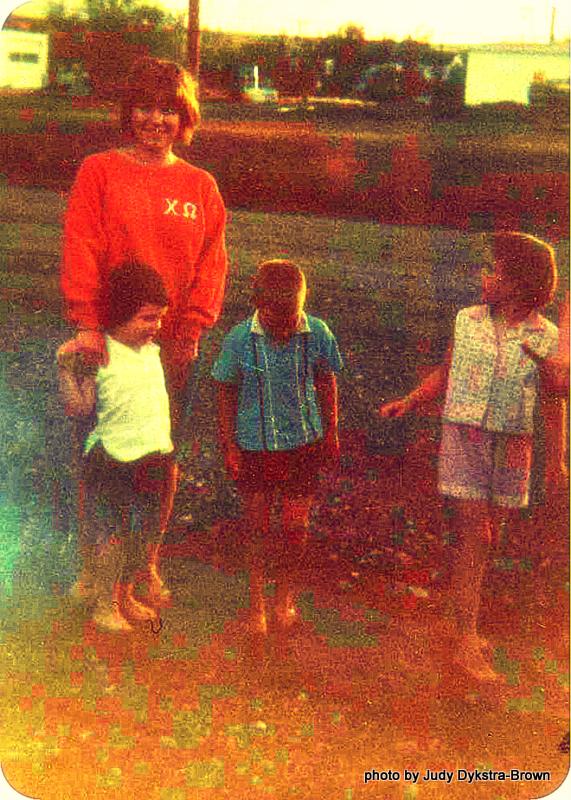
Writer’s note:  I know my sister Patti is going to read this and cry, and so I want to present you with this mental picture of her, college age, Levi cuffs rolled up above her knees, surrounded by five-year-old neighbor kids, enjoying her last big adventure out into the ditches of Murdo, South Dakota, during a July rain.

But wait!  A mere two hours of digging and another hour of editing has produced this proof of my former statement, so to augment your mental image, here is the real one:
Patty in mud 001-001

Not quite the gusher depicted in the childhood vignette, but nonetheless, Patti’s final puddle adventure. She had taken my visiting niece out. The next day the neighborhood kids rang our doorbell and asked my mom if Patti could come back outside to play! Ha.

The Prompt: Free Association–Write down the first words that come to mind when we say . . . home. . . soil . . . rain. Use those words in the title of your post.

Under the Skin

The Prompt: New Skin—If you could spend the next year as someone radically different from the current “you” — a member of a different species, someone from a different gender or generation, etc. — who would you choose to be?

Photo on 7-3-14 at 11.35 PM #2 - Version 3

Under the Skin

Like the ugly oyster creates the lovely pearl,
I’ve made starts at being a better sort of girl.
I’ve starved and exercised until I made a brand new me,
hoping that a siren was what I would set free.
But no matter what I look like, whatever I could be,
At the end of all of it, I find I’m only me.

If I Were Water and You Were Air

The Prompt: For this week’s writing challenge, take on the theme of H2O. What does it mean to be the same thing, in different forms?
DSC01117

If I Were Water and You Were Air

I used to be restless water—
only the froth and currents
of a moving life.

Now I am still water,
sinking down to where
I can be found
by anyone willing to stand quietly
and look.

Is it true that moving water never freezes?
Is it true that still waters run deep?
Is it true that we are wed in steam?

“What if, caught by air,
it never lets me go?” I ask.

“But even water
turned to air
must fall at last,” you say.

“And what if I fall farther from you?”
I say. “Or what if I never again find banks
that open to contain me?”

I used to be swift flowing water.
Now I am a pool that sinks me deeper every year.
So deep, so deep I sink
that on its way to find me,
even air may lose its way.

https://dailypost.wordpress.com/dp_writing_challenge/ice-water-steam/

Blank Page

The Prompt: All Grown Up—When was the first time you really felt like a grown up (if ever)?

P2220226

Blank Page

It stretches forever in front of me.
There, no future happens until I create it.
And that is the power of words
that rub like pieces of gravel in my shoe.
I become less of a child in bearing them,
grow to adolescence as I pry them from my shoe.
In storing them on the page, I become my own creator—
writing a new world with each decision of word.
On the page, I can, if I so choose,
grow up again and again.
Each page filled or every edit of the last
becomes another part of me
that tells the same story:
that growing enough to fill the space inside of me
never happens.


Lost Poem

 Lost Poem

A button pushed.
No lives lost.
Just newborn words,
vanished
and mourned.

Consider them
a sacrifice to the muses,
he says.

Consider them
parts of me
I’ll never remember again,
I say.

A Christmas Gift for You All!

A Christmas Gift for You All!!!

I have been combing my brain trying to think of some gift I could give you all to thank you for your support over the past year and it suddenly occurred to me that I had the perfect one already made. Below, I am presenting my entire Christmas storybook, minus the pictures (except for one) in the hope that you will read it aloud to someone you love this Christmas. 

The other day I got a fan letter from the uncle of a two-year-old who laughs out loud every time they mention Aunt Knox and demanded that it be read to her every night for three nights in a row.  (What has happened since then, I do not know.) I also received a video of an 8-year-old reading it aloud (without faltering over one word) except, with typical 8-year-old humor, he substituted “spanking” for the word “sox” every time, in spite of the protestations of his Grandma. His younger brother thought he was hilarious, so perhaps it was a kid thing.

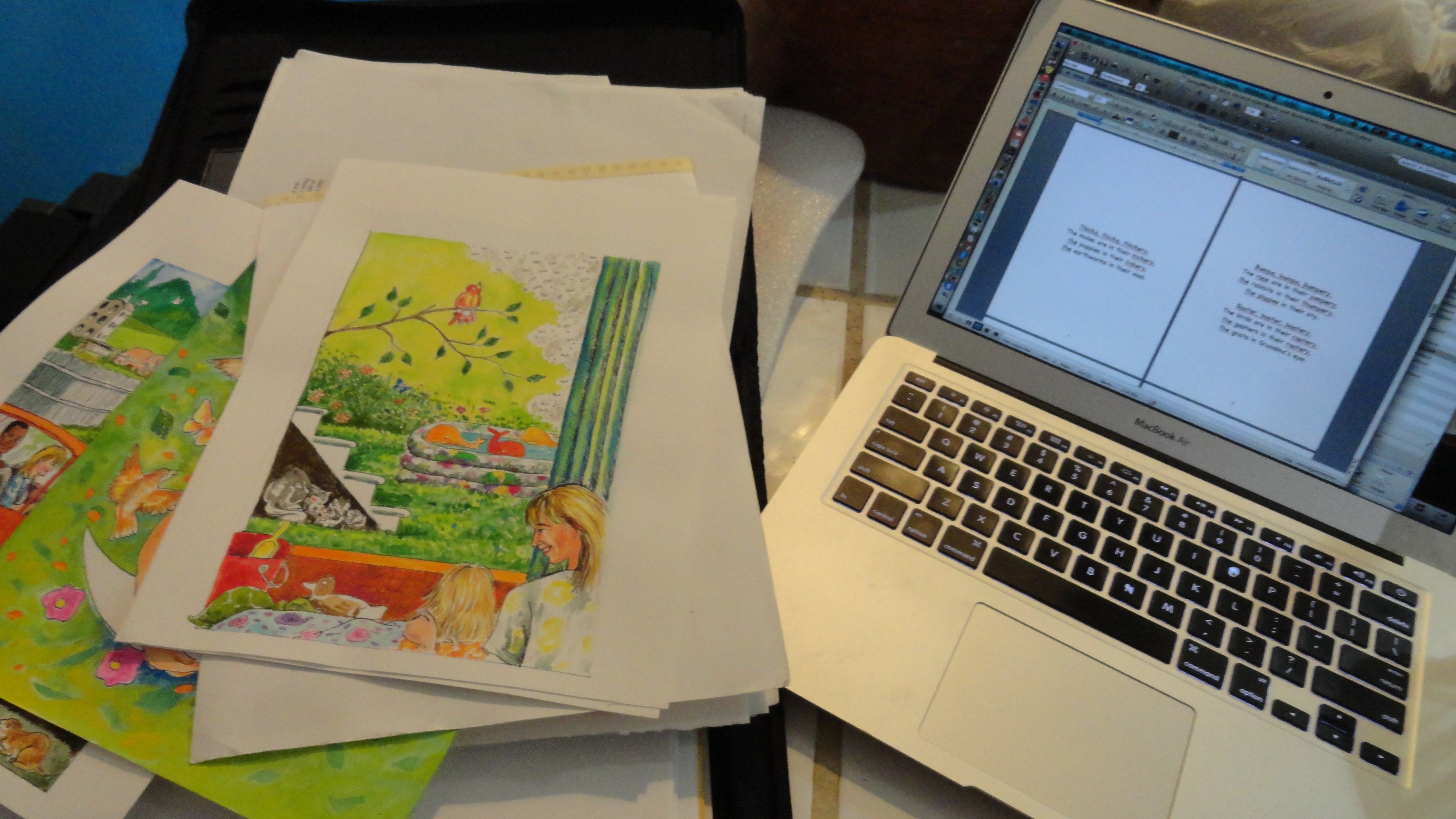
So, here it is, my present to you.  What you do in the way of altering it to suit your own brand of humor is up to you.  I am also including one illustration so you can get a mental image of Aunt Knox! The cover is pictured on my “Children’s Books” page on this blog if you crave seeing one more illustration by the talented Isidro Xilonzóchitl. There are 16 in all in the book.  He did have fun with the gift-listing ones!!

I also just received his illustrations for our next book, which I hope will be out by April.

Copyright© Judy Dykstra-Brown, 2014. (please do not transmit in its entirety in any form. If you wish to reprint an excerpt, please include a pingback to the original.)

Sock Talk
(A Christmas Story)

by
Judy Dykstra-Brown

I’d heard the story many times
of Great Aunt Knox’s beastly crimes—
toward Mom, who, as a kid like me
was as upset as she could be
whenever she received a box
from her Aunt Knox.

For, in tinsel or in birthday wrap,
in ribbon or in mailing strap,
whatever it came wrapped up in,
whatever the gift could have been,
twice a year from her Aunt Knox,
my mom got sox.

I wished that I could have some talks
with this Aunt Knox.
“Aunt Knox,” I’d say while we were talking,
“a Christmas gift goes in a stocking,
not the other way around.
Stockings never should be found
inside a present,
’cause it’s not pleasant
to wait and wait and wait and wait
for the proper opening date
just to open up a box
of sox!”

Of course, these talks were all imaginary.
I was never even very
sure of whether Great Aunt Knox was still alive.
I didn’t know how long a great aunt could survive.
So when my mother got a letter
from Aunt Knox and said, “I’d better
ask her here, I haven’t seen her for so long.”
“I was wrong,”
I thought, “the dread Aunt Knox
still walks!”
And when Aunt Knox called up to say
she’d visit us for Christmas day,
I knew that this would be the year
I’d bend her ear.

I went to buy Aunt Knox perfume
and put fresh flowers in my room.
I’d even give Aunt Knox my bed
and sleep upon the floor instead.
But it was still hard to believe
that in our house on Christmas Eve
I’d finally have those long-planned talks
with my Aunt Knox.

Blog Sock Talk

I’d never met Aunt Knox before,
but when I met her at the door,
she gave my nose a playful tweak,
and ruffed my hair and kissed my cheek.
(Aunt Knox’s kiss was surely wet.)
She asked me what I hoped to get
for Christmas. Then she pulled me near
and cupped her ear.

“She’s kind of deaf,” my mother said,
So I got right up beside her head
and shouted to my Auntie Knox,
“I wouldn’t mind a bird that talks,
a sand pail or a music box,
a robot that both speaks and walks,
a diary with keys and locks,
a tumbler that can polish rocks,
some overalls or painters’ smocks,

but you know what?” I said, “Aunt Knox,
when I rip into a box,
It seems as bad as chickenpox
to just get sox.”

I asked her if she understood.
She smiled and said she surely could.
She asked what else and bent her head
closer to me, so I said,
“I’d like lots of other things:
paints, crayons, ruby rings,
a horse, a Barbie doll, some books,
a new toy oven that really cooks,
a ball, some blocks, a jigsaw puzzle,
a baby crocodile with muzzle,
bubbles, bracelets, purses, beads,
comic books, sunflower seeds,
a kid’s Mercedes just my size,
or even a Crackerjack surprise
I could accept
except,
please,” (And here I gave her hand a squeeze,)
“please, please,
Aunt Knox,
don’t give me sox!”

She rose and said she’d heard enough,
although she’d missed some of the stuff
I’d said because she’s hard of hearing.
She said with Christmas quickly nearing,
she’d be off to do some shopping,
and she assured me she’d be stopping
for a special gift for me.

And sure enough, beneath the tree
that night there was a package wrapped,
my name on it. I poked and tapped.
I squeezed and shook it, poked its side,
but never could I quite decide
what it was. She wouldn’t say.
She said to wait till Christmas day.
At bedtime, though, she kissed my ear
and said, “It’s on your list, my dear.”

All night I lay upon the floor
listening to Aunt Knox snore.
I didn’t mind the noise at all
’cause I was sure she’d bought the doll.
And just before I fell to sleep
I prayed the Lord Aunt Knox to keep
safe from harm
and dry and warm.

On Christmas morning, while Aunt Knox dressed,
we pushed and prodded, shook and guessed
what was tied up in each bow.
And my Aunt Knox was surely slow.
I ran upstairs three times or four
and knocked and knocked upon her door
while Aunt Knox said that she’d be there
after she had curled her hair.

I thought Aunt Knox was never coming.
My brother drove me crazy drumming.
So when Dad joined in his prum prum prumming
I accidentally elbowed Roy
to the beat of “Little Drummer Boy.”
Then mother almost made me go
upstairs to bed again and so
our Christmas started sort of slow.

Then, finally, Aunt Knox came down
attired in her morning gown
to give my nose another tweak,
to ruff my hair and kiss my cheek—
a wet one, but I didn’t care,
’cause my Aunt Knox was finally there!
I grabbed my present from the tree,
the one Aunt Knox had bought for me.
Again, her words rang in my ear.
She’d said, “It’s on your list, my dear.”

I couldn’t wait to see in it.
I wondered what could be in it.
Perhaps it was a bird that talks,
a sand pail or a music box,
a robot that both speaks and walks,
a diary with keys and locks,
a tumbler that can polish rocks,
some overalls or painters’ smocks.
But when I opened up that box,
my Aunt Knox
had bought me sox!!!!

A dozen pair were there inside—
sox long,sox short, sox thin and wide.
The clock advanced by tics and tocks
as I glared up at mean Aunt Knox,
but I couldn’t think of a word to say
appropriate to Christmas day.

“Well, try them on,” my mother said,
but I just nudged the box instead.
I’d had such fantasies of dolls
and ruby rings and bowling balls.

Then Aunt Knox came and kissed my head.
She’d meant to give a doll, she said,
till she remembered that in our talks
she was sure I’d mentioned sox
many times, while she could not recall
whether I had mentioned doll
at all.

“Why don’t you try them on, my dear?”
my Aunt Knox asked with awful cheer.
And she was grinning ear to ear
as she held out some sox with seals
emblazoned on their toes and heels.
I took them as my brother Roy
gleefully unwrapped his toy.
The robot that both speaks and walks
was what he got from Great Aunt Knox.

“Do try them on,” my mother said,
but I just stood and hung my head.
I could have gotten something great.
Instead, these sox would be my fate
forever, like a family curse.
I tried to think of something worse
but couldn’t. And I rued the day I’d had those talks
with my Aunt Knox.

Meanwhile, Mom was rifling through
sox red and yellow, pink and blue
to pull a pair of lumpy sox
from the bottom of my Christmas box.
“Why don’t you try these on?” she said.
The sox were gray with purple thread
around the legs—
the very dregs
of that whole gruesome box
of sox.

So I pulled on the seal-decked sox
held out to me by Auntie Knox.
I craved the robot Roy had got,
but sox were not too bad, I thought,
and clicked my heels and did a dance
to try to give those sox a chance.
I turned three somersaults in all,
then slid my sox on down the hall.
I stuck my sox up in the air
to show old Roy I didn’t care.

But pretty soon I said, “You know
there’s something in this stocking’s toe.”
I pulled it off and felt inside—
something round and not too wide,
something empty in the middle.
I pulled in out to solve the riddle
and while I thought I’d find some “thing,”
I found instead a ruby ring

Well, then I dove into that box,
reaching into piles of sox,
shaking out sox thin and wide,
seeing what could be inside.
I found a ball, some blocks, some beads,
a Barbie doll, sunflower seeds,
a diary with keys and locks,
a puzzle and a music box.
I shook out sox both short and long.
I shook out sox all morning long.
I finally shook out so much stuff
that even I had had enough—
almost.

I was only six back then,
but now that I am nearly ten,
every year my Auntie Knox
sends Roy bowling balls or blocks
She sent my dad a cuckoo clock.
She even sent my mom a wok.
Twice.
Sometimes she sends me something nice—
a robot or a music box—
but if I’m lucky, my Aunt Knox
sends me SOX!!!!!

And to all a good night!!

RESOLUTION

The Prompt: To Be Resolved—We’re entering the final days of 2014 — how did you do on your New Year’s resolutions these past 11.75 months? Is there any leftover item to be carried over to 2015?

  DSC01249

Resolution

It isn’t my fault that my storybook’s still
thirty-two pages piled in a hill
next to the scanner on my kitchen table.
I’ll get it formatted when I am able.
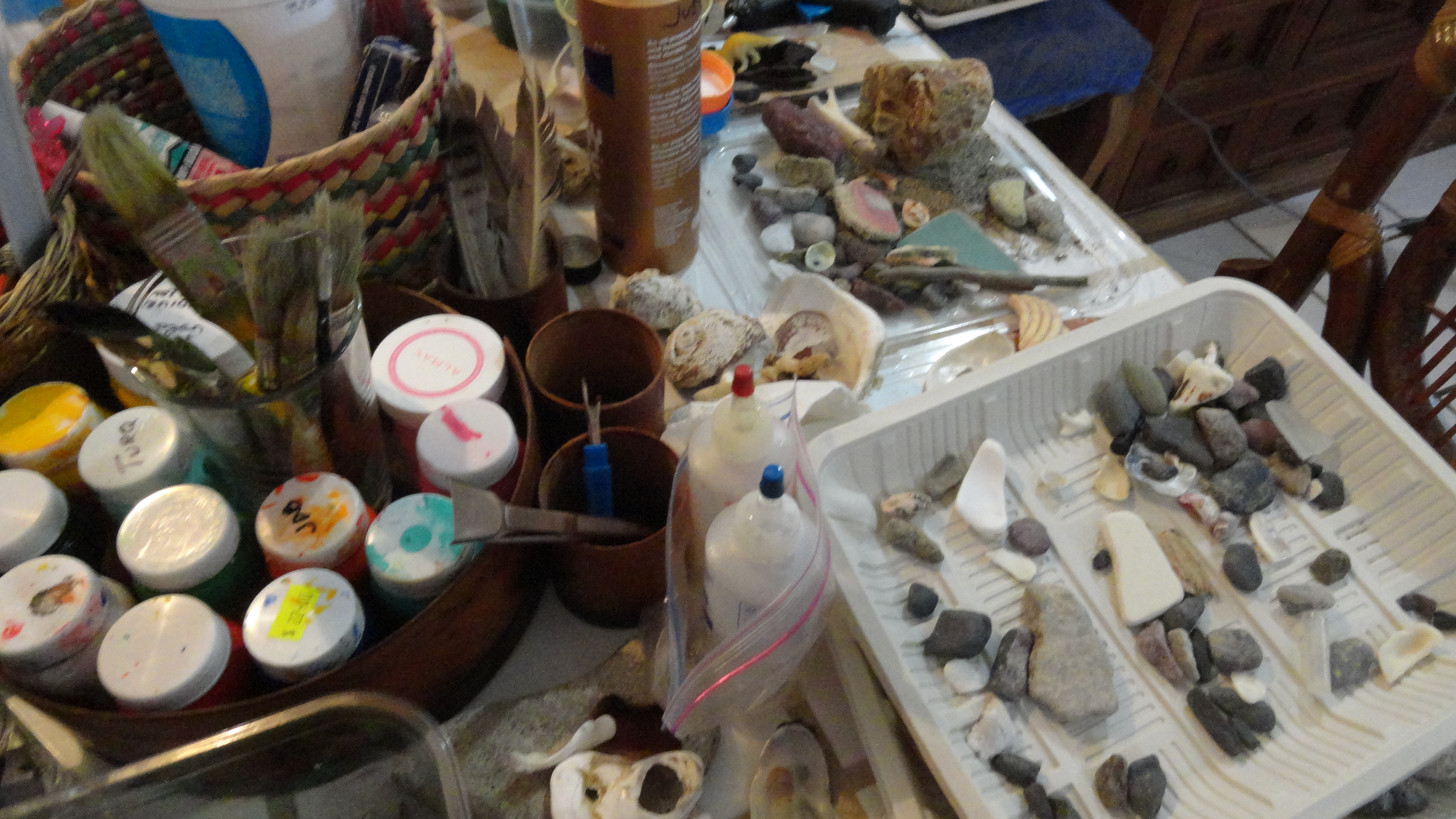
Right after I glue all this beach stuff together—
each seashell and heart stone and pelican feather—
to make a Yule tree, then to make a Yule altar.
For weeks I’ve worked on them. Never did I falter.

DSC01251

Then I had beach walks to do, daily swims,
tequila to drink as the sun slowly dims.
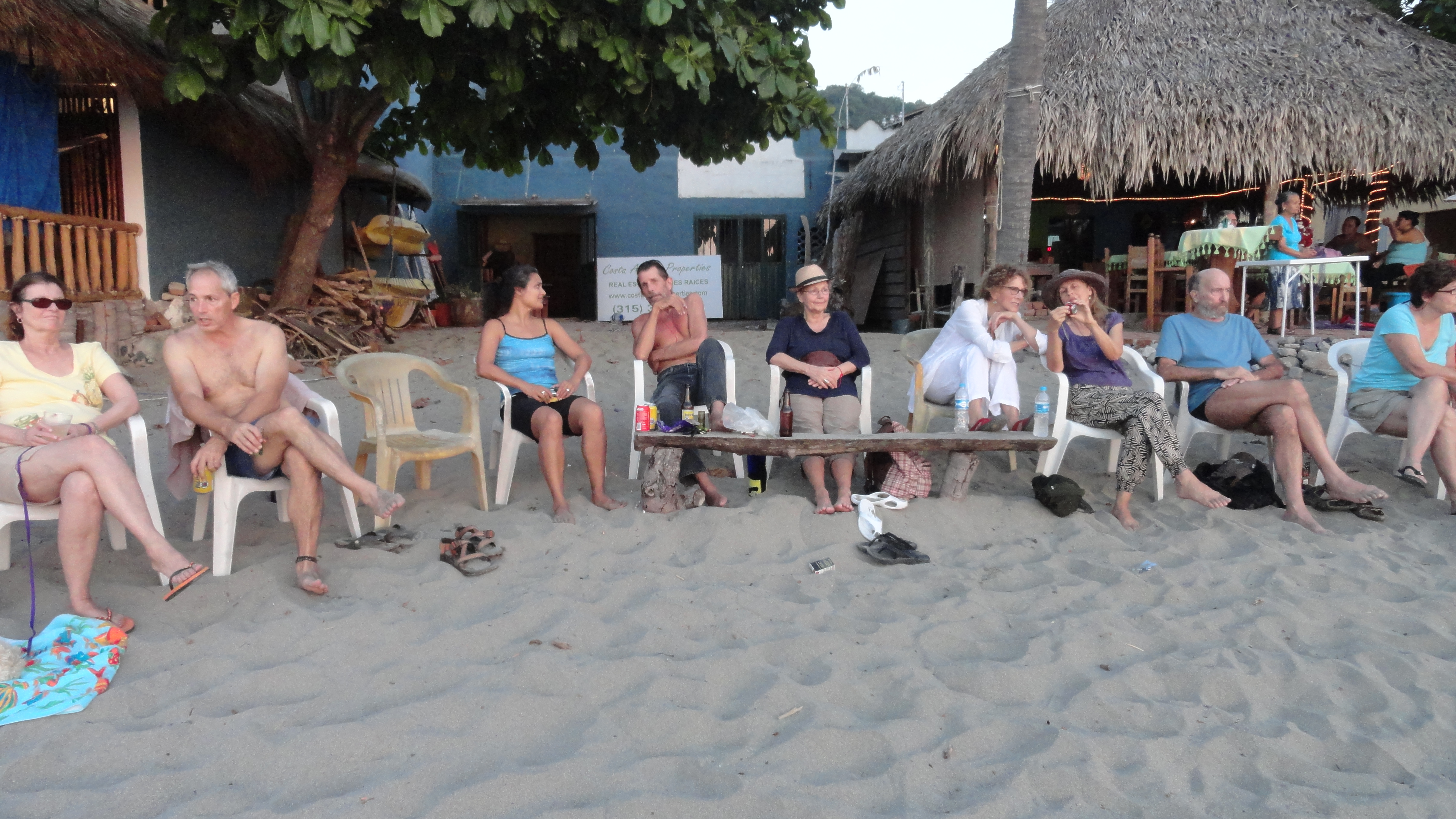
Everyone gathered to put down the day
and bring on the night time. What more can I say?

DSC00123
DSC00126

A Saturday writing group, dinner with friends.
Of new obligations, the list never ends.
Now it’s two days till Christmas with parties to go to.
And a party to give that no one has said no to.

And so I’m not sure how many will come
I said “bring your friends” which I fear was most dumb.
It seems that I really don’t know how to do
a party where I only ask just a few.
I don’t  know how much food or know just how many
napkins to buy. Plates and cups? How uncanny
that I haven’t planned this thing better this year.
I’m not only slipping—I’ve lost it, I fear.

My thought streams are verging on, “Hey, what the fuck!”
I don’t know how many are bringing potluck
so there may be no food and not enough booze.
This party I’m giving may be a real snooze.
And right after this one are three potlucks more.
I think that it calls for a trip to the store.
I must clear out my house once I am able.
Clear all of my art projects off of the table.

 Hide my computer, relocate my scanner,
put up more Christmas lights under the banner.
There is so much for this writer to do
that I fear it will take one more week, maybe two
to format my book both for Kindle and print,
for somehow, my time has just got up and went.
This retreat to make time for my book has been taken
once more by busy work, book tasks forsaken.

But right after New Years, I swear they’ll be done.
No more excursions and no more beach fun.
I’ll sit at the table, right there in my chair.
I’ll chew on my pencil and worry my hair
and get this book formatted. Then get it sent
off to the printer so I can say “went.”
Instead of “will go” when all my friends ask
the state of the manuscript, stage of my task.

“I’m finished!” I’ll say. “Glory be, I am done!”
And I’ll feel less guilty for swimming and fun.
Then I’ll start in on the next book or two.
It won’t be hard, for there’s nothing to do
to distract me or keep me from doing my task.
Nothing to go to. No one to ask.
Except for my writers’ group, Friday night dance,
and a trip up the coast, if we have a chance.

The art show where I said I’d show a few pieces—
a ” few” obligations? The list never ceases.
I guess the truth is that our lives are made up
of what we must do and what we give up.
The irony, though, of the whole situation
is that it’s a matter of choice and duration.
The more tasks we find that we just have to do,
the more that we put off the remaining few.

I guess it’s a case of just fitting in
who we will be with who we have been.
That I keep on writing’s important because
I’d rather write “is” instead of put “was”
in front of “a writer” for the rest of my life;
but also in front of a friend, sister, wife.
For if we don’t put off living, doing and seeing,
the best stories we write will be tales of our being.

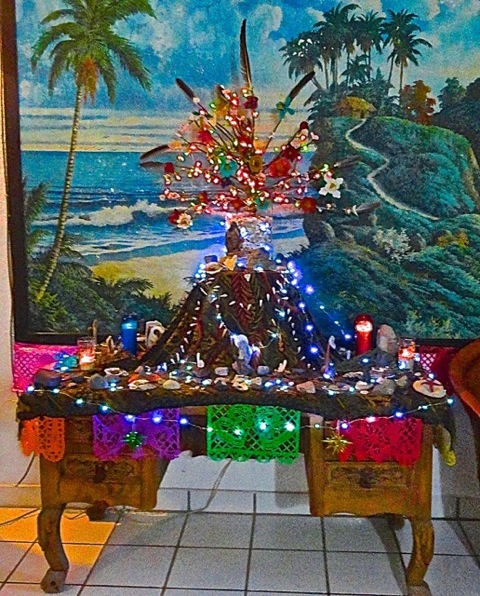
This is the tree in daylight. Palm fruiting stem covered in heart-shaped rocks and shells found on the beach, pelican feathers and flowers I made out of painted egg cartons.

Merry Christmas, Happy New Year, and may all your resolutions be met.

Dorothy Parker and Picasso at the Beach

DSC09684

Why Dorothy Parker Remains a Good Sport in the Heat

Dorothy Parker at the beach,
a dry martini within reach.
Lots hotter than the Algonquin.
Heat dissipates when served with gin!


Why Picasso is Not a Beach Person

Picasso simply can’t abide
that fish with both eyes on one side.
If from the norm he wants to vary,
he’ll have to paint it ordinary!

The Yellow Dress

The Prompt: Cause, Meet Effect—You can singlehandedly create a causal relation between two things that are currently unconnected — a word and an emotion, a song and an extreme weather event, wearing a certain color and winning the lottery. What cause would you link to
what effect, and why?

P4170219 - Version 2

The Yellow Dress

When she wears it, worlds collide.
Men collect on either side.
Women seek her company.
Children seek to grace her knee.

Potentates, senators, kings
bring her necklaces and rings.
Scholars write her name in books.
Jealous women exchange looks.

There is hardly anything
that nature does not seek to bring.
Winds blow harder, streams divert
when she wears that saffron skirt.

The very heavens note where she went.
Tsunamis curl, volcanoes vent.
Soldiers line up to parade.
Mimes begin their mute charade.

Actors emote better to
this goddess in her sunny hue.
Mourning doves just bill and coo.
Old boyfriends seek her out anew.

Yet as she stands before her glass,
surveying both her front and ass,
her mate says, “Are you wearing that?”
and she surmises she looks too fat.

As she changes into basic black,
the lava cools, the seas hold back.
Her suitors cease their clamoring press.
She does not wear the yellow dress.

https://dailypost.wordpress.com/dp_prompt/cause-meet-effect/

The Spinster and the White Hunter on Safari / Not Crème Brûlée

Okay, here is a poem I read at my writers’ group today and they say I should post it.  There was much controversy about how to pronounce Cuba Libres, but they’ve been my drink of choice for 40 years, so believe me, I know how they are pronounced outside of Spanish-speaking countries, and everywhere else (including Africa) Cuba Libre rhymes with zebra!

The Spinster and the White Hunter on Safari

After giraffes and elephants and zebras,
and one-too-many Cuba Libres,
love under white mosquito-netting
was not so much a matter of her letting
as it was of giving back what she was getting.


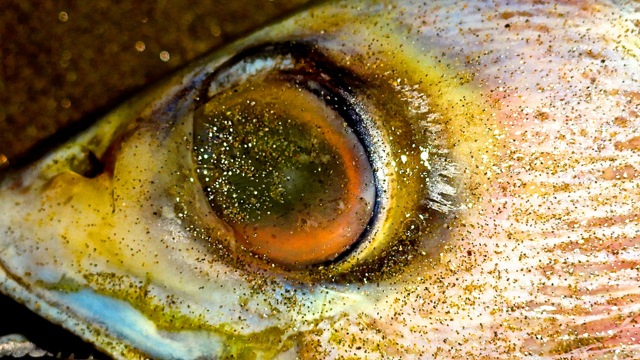
And then, the full picture of the detail I published for the “Yellow” photo challenge here No, it isn’t crème brûlée.  What it is is a detail of this detail:

DSC00403

Detail of a dead fish on the beach. Are those really eyelashes?

I really didn’t mean to fool you!