Play Date
My sister’s house has sold and they are cleaning out her attic. My niece and I make one trip more and I find my old dollhouse, collapsed, in the garbage can. I take the pieces out—some of them—and stash them in her trunk. I’d thought them gone forty years ago when the tornado took the roof off my parents’ house, but now, here they are like the leaves of memory blown miraculously back to me.
When she sees I’ve taken them, my niece asks what she should do with the dolls she found in the back recesses of her mother’s attic storage room—the one I hadn’t got to on my last visit—perhaps because of the roofing nails sticking through the wood which made reaching back behind the eaves a physical danger.
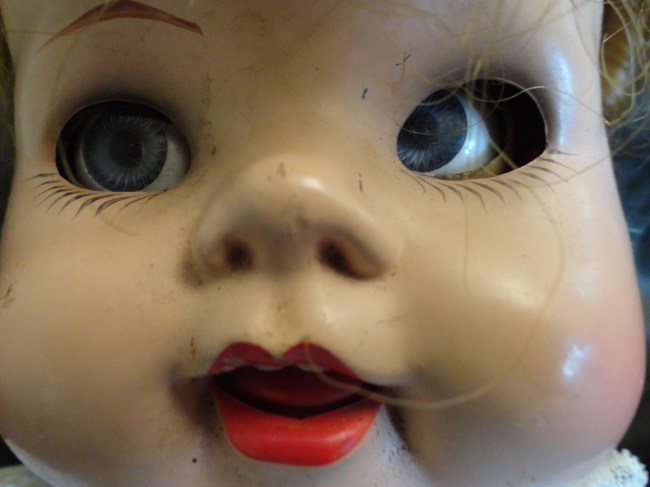
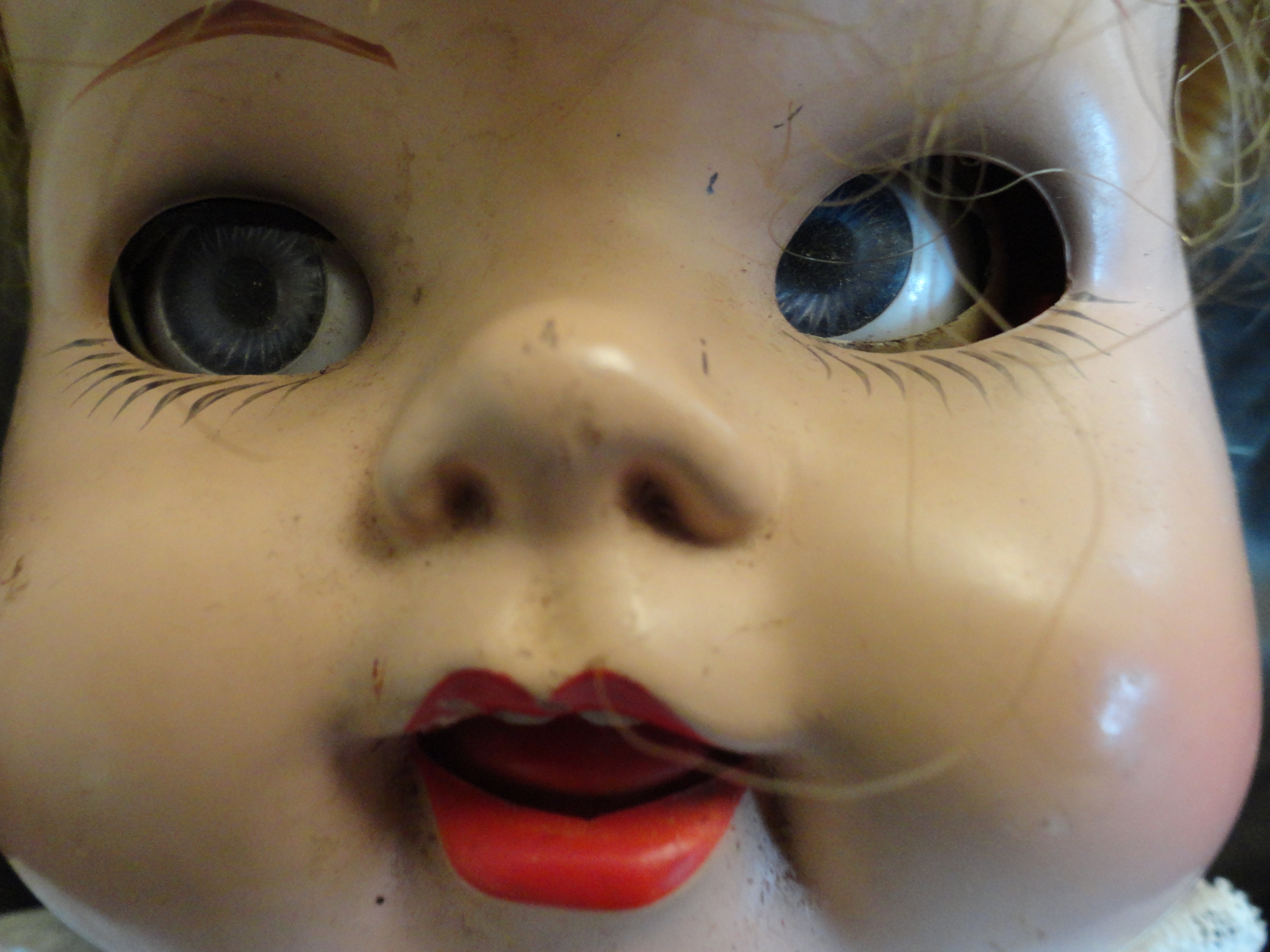
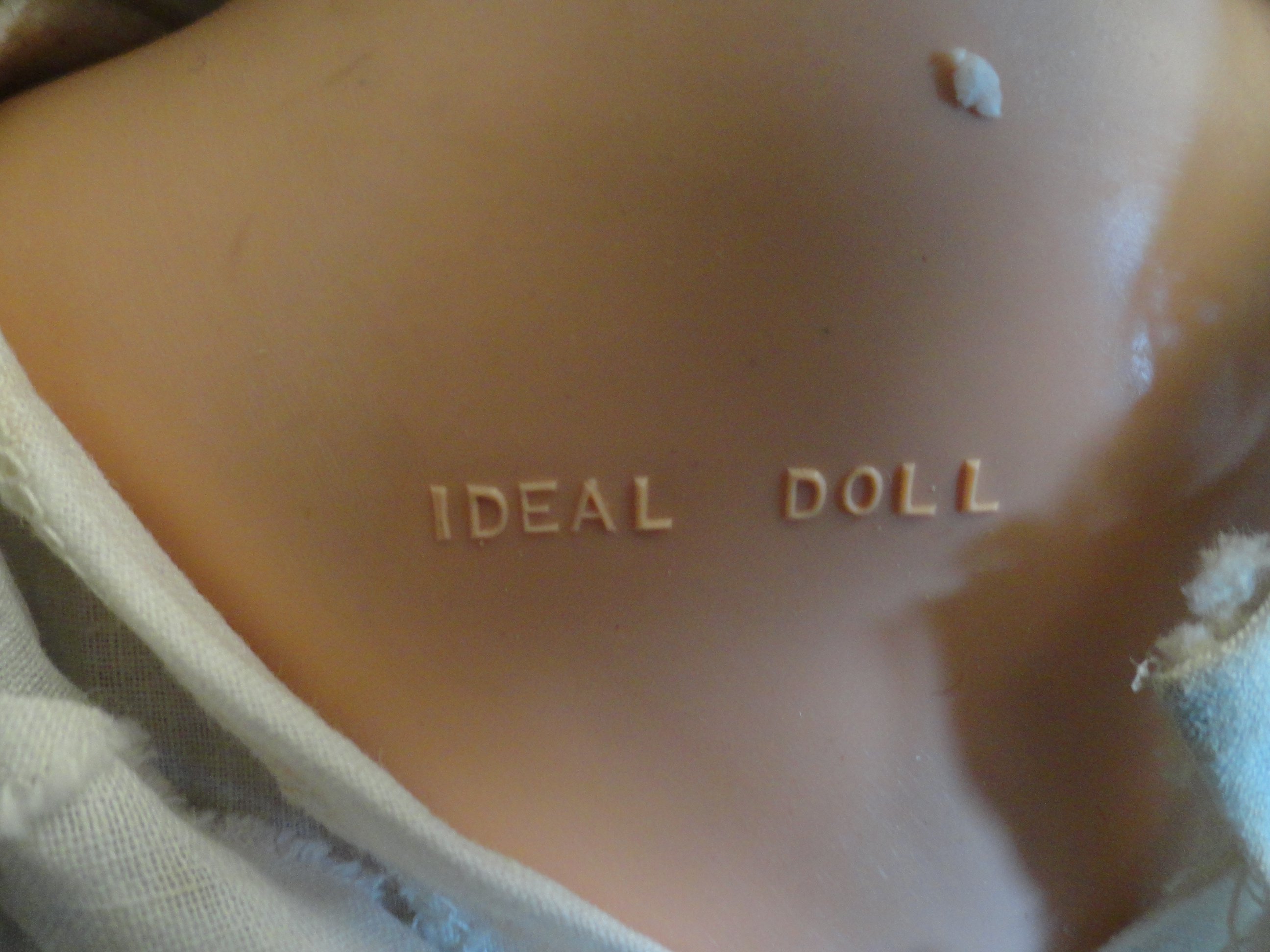
I find them where she has stashed them In a suitcase in her garage, and when I open the case and see the first doll staring up at me, I think it is a “find” from some antique store, like the dishes in my sister’s China cabinet or the tiny figures on her shelves. One rubber arm, sticky with age, has burst open and streams kapok like a froth of bleached and fermented blood. Other limbs have decayed to nothing but empty puddles of congealed rubber. Only the torso, held in place by a sagging pink fancy gown; and the face, stained red in places from some surface it’s been pressed against for too long, are still intact. As I lift the first doll from the suitcase, the other doll—the size of a toddler—stares up at me, one eye unhinged, her hair in pigtails sealed with rubber bands. When I lift her by one arm, her head turns, her legs pump and I realize this is my Ideal walking doll. When you raise her arms, one at a time, she walks toward you and her head swings, side-to-side. Hard and beautiful, she was not a doll to cuddle and she would not sit. She stood propped up against one corner of my room, rarely played with. What, I wonder, has happened to the bright blue dress she wore? Then I look closer and see that she’s still wearing it—faded to paleness even in the dark. What is here is original—her hair, her limbs, her dress, her petticoat—but her shoes and socks have been lost to another little girl, perhaps, or have jiggled off in some trunk and been left behind.
I’m 1500 miles away from home, yet I load the child-sized dollies into my boyfriend’s trunk: my sister’s doll in it’s fancy pink floor-length formal, my doll with her eye gone wild in its socket. They won’t make it home to Mexico in my suitcase this time, but it is impossible to leave them there in the suitcase to be thrown away by someone who has no memory of them. They are not collector’s items. They have been too neglected in their lives since they stood propped up in the corners of our rooms, then in the corners of our closets, the basement, my sister’s trunk and then her attic 800 miles from where they called us their owners and stimulated our imaginations to the extent they were able.
They’ll now reside in my boyfriend’s garage in Missouri until the time comes when I can carry them back in an extra suitcase or he can mule them down for me. If they were miniatures, I could include them in a retablo or a memory box, but each head is larger than the largest assemblage I’ve ever made. The closets of my house are full and overflowing, as are the wall-to-ceiling cabinets in my garage and studio and every area of my house where I’ve had room to build a closet. But I must use them. Give them some purpose for still existing other than to fill up room in some box on some cupboard shelf.
I imagine a memory box of gigantic proportions and suddenly, I have to make it, even if it takes up all the work room of my studio, and I start to plan how I could take my own doll back with me and what I’ll have to leave: the case of books that I’ve just had printed or my clothes or all the cartridges for my laser printer? If I wear a baby carrier, will they believe it is my baby, sound asleep? And what sensation will I cause when I try to stuff her into the overhead rack?
When I start to plan what else will go in the memory box with her, I remember the metal dollhouse sides and suddenly, I’m planning another trip back to Missouri, where I will make the mother of memory boxes—four feet square—and I wonder how my boyfriend will react to this and what I’ll do with it when it is finished. But somehow all these practicalities do not matter, because this dolly, relegated to corners for its whole life, is finally going to get played with!!!
The Prompt: Antique Antics: What’s the oldest thing you own? (Toys, clothing, twinkies, Grecian urns: anything’s fair game.) Recount its history — from the object’s point of view.
 lifelessons - a blog by Judy Dykstra-Brown