Author Archives: lifelessons

Unknown's avatar

About lifelessons

My blog, which started out to be about overcoming grief, quickly grew into a blog about celebrating life. I post daily: poems, photographs, essays or stories. I've lived in countries all around the globe but have finally come to rest in Mexico, where I've lived since 2001. My books may be found on Amazon in Kindle and print format, my art in local Ajijic galleries. Hope to see you at my blog.

True West: Social Stereotypes in a Small South Dakota Town

Prompt: West End Girls. Every city and town contains people of different classes: rich, poor, and somewhere in between. What’s it like where you live? If it’s difficult for you to discern and describe the different types of classes in your locale, describe what it was like where you grew up — was it swimming pools and movie stars, industrial and working class, somewhere in between or something completely different?
IMG_0078

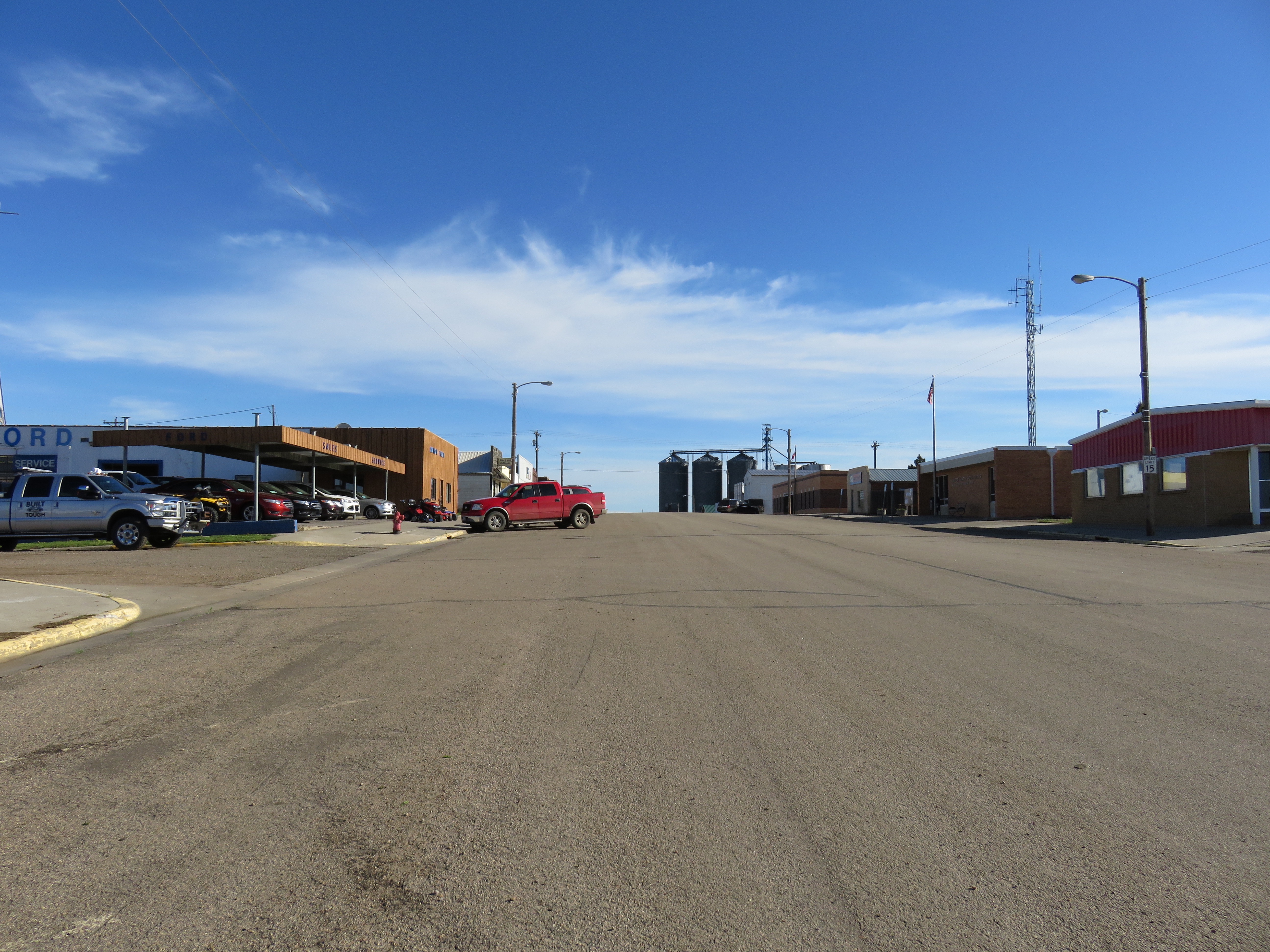
True West: Social Stereotypes in a Small South Dakota Town

I grew up in a very small town (population 700) on the prairies of South Dakota. I was not aware of a wide disparity of classes at the time; but looking back, I see that there really were classes based on economic and racial factors.  Since my town was situated quite near to several Indian reservations, there was often at least one native American in my class.  In the second grade, it was Clifford Leading   Cloud–14 years old and placed in the second grade.  Needless to say, he towered over the 7-year-olds. No doubt this was why he was constantly stoop-shouldered and his demeanor was apologetic and shy.  He was a wonderful artist, and I still have several of his drawings.  “Clifford drew this for me!” I proudly wrote beneath two colored-pencil sketches in my scrapbook, but when I took them home to show them to my mother,she said, “Be sure to always wash your hands after you touch those.”  Obedient at this stage of my life, I remember complying, but I was always puzzled about why.

Since my name began with a “D” and our placement was always determined alphabetically, I sat behind or in front of all of the Native American kids who joined our class for a year or two before disappearing: Clifford Leading Cloud, Phoebe Crazy Bear, Nordine Fink (Who was my assigned “date” for Freshman initiation, but who somehow disappeared during the year.) Phoebe had very long black hair that I loved to brush during Geometry. (In spite of former warnings from mothers who told us to be careful not to contract lice from the “Indian” kids.) She was a good student, and I liked her dry sense of humor; but although I invited her to slumber parties, she never came and she, too, vanished by the end of our Sophomore year.

I know there was a division in our community between the white population and the Native Americans, many of whom still lived in tents along the railroad tracks because it was federal land and the head of the railroad allowed them to live there free of charge.  When I was given release time from study hall to teach P.E. and reading to first graders my Jr. year in high school, the sweetest and most beautiful first grader was another Leading Cloud–who, probably due to living in a tent with no bathroom facilities and no running water–had such a strong stench that it brought tears to my eyes to stand over her for long as I guided her in her reading.  My mother attributed this to the use of “bear grease” in the hair, but I think she was a few generations behind in her thinking.

The factors of difference in culture, living arrangements and economic factors divided us from the Native American citizens of our town so that aside from actual classes as school, they faded away into the environment in a manner that should have been impossible in a town as small as ours.  They did not attend games, dances, or participate in any of the extracurricular activities of the school. They did not attend church or hang out in restaurants.  I do remember my mother asking us to sit in front  and back and either side of her when we went to the movies in White River–32 miles away.  Closer to the reservation, there was a higher Native American population and my mother, sensitive to smells, wished to take all proper precautions.

My mother was not unkind. She fed any hobo who showed up at our door. She took boxes of clothing out to the dump and set them where foragers could easily find them.  She also told me never to mention that clothing had been mine if any of the Native American kids showed up wearing one of my give-aways. But she was the product of an age where we had not yet thought to struggle against racial stereotypes.  My father regularly employed seasonal workers from the reservation and even learned to speak some Sioux.  He was a natural born storyteller who loved gleaning material from all and sundry and a broad-minded thinker. One of the few Democrats in town, he counted everyone among his friends–from his Hunkpapa Sioux employees to the Governor of the state.

Yet, should the doorbell ring when my dad was not at home and  if my mom were to see that it was someone from the reservation stopped at our house to ask for work on his way into town, she would tell us not to answer the door and would cower in the hallway out of sight. Again, I know my mother well enough to know it was genuine fear that prompted her actions, not meanness or hatred.

There were two families of Sioux lineage in the town who did manage to bridge the gap of cultures.  In one case, it was a handsome young man who was an incredible basketball player whose name revealed his mixed Sioux and French genes. He was the secret heart-throb of many a girl, and his sister, as beautiful as he was handsome, was a cheerleader and generally accepted, I believe, although they were enough older than I am for this all to be hearsay.

The other family that was able to bridge the two cultures was also of mixed lineage–white and Sioux.  Another beautiful family, their son was also an excellent ball player and both of their daughters were cheerleaders.  (This was the highest rank of success in our town–far above Valedictorian.) In both cases, the cultural differences were only a matter of skin color.  They were not living in tents along the railroad tracks or migrating back and forth from the reservation.  In  most respects, their lifestyles were no different from our own.  Still, I have heard that when one of our most popular young men married one of the popular young ladies I’ve just mentioned, that his mother was heard to say, “He’s marrying that half-breed!”  (Or, perhaps, “He’s marrying that squaw.”  Of the two discriminatory statements, the second seems even worse than the first, although it was commonly used to describe any “Indian” woman when I was growing up.)

It seems as though the major factor, then, that created a class structure in our town was one of culture coupled with economic duress.  Yes, there were poor families in our town and many times they did not participate as fully in what little social life there was in our town, and yes, although I started out inviting everyone in my class to parties, in time the parties got smaller and the guest list included mainly those friends from my neighborhood or those I found to be the most fun or who participated in the same activities I participated in.

This narrowing of social circles is natural, I think, but when I look at who was excluded, I don’t feel as though I used any criteria other than whom I enjoyed being around.  I would have loved it if Phoebe had come to my slumber parties.  She was smart and even then I had a curiosity about other cultures and other ways of life.  I was the first friend of any new girl who moved to town–a fact that caused some resentment on the part of my old friends, I now see clearly.

We all make excuses for ourselves when it comes to discussing our own prejudices, and I am no exception to the rule. Native Americans were stereotyped because the most extreme cases of behavior were the most obvious. The few women from the reservation who came to drink and lay sprawled in the street created the stereotype that all “Indian” women were “drunken squaws.”  No one ever saw any of the mothers of the children we went to school with.  They were no doubt at home trying to scrape out a meal or school clothes for their children’s next next day at school.  And their fathers were probably out working in the fields for our fathers.  But we did see the drunks on the streets every Saturday night as we exited the movies, and so this is the stereotype that formed in our minds, no matter how much our actual experience with kids at school rivaled that stereotype.

Many years ago, I started to write a book called “Vision Quest” about a young Native American boy who grew up in our town.  This was a work of fiction, but I drew of course upon actual experience for details of plot.  I know I came back to it at least twice, but never got beyond the first few chapters, probably because I had so little experience to draw upon; for in spite of the fact that I grew up in a state that contained numerous reservations and in spite of the fact  that all of the surrounding towns contained a Native American population, in fact our cultures were so widely divided that I had as little insight into their lives as they must have had into mine.

The term “Native American” had not been coined when I last lived in my hometown, and neither had the sensibilities that I hope go with it.  When Dennis Banks and Russell Means were heroes to much of the rest of the world, they were outlaws and trouble makers to those non-Native Americans who lived in their midst.  To someone stopped from driving on highways where they had always driven, they appeared to be highwaymen or brigands.  It is hard to make a hero of someone you grew up feeling superior to, and hard not to stereotype any race or cultural group according to what you know about the few representatives of that group with whom you have come in contact.

But I have to say that coming back to my town and hearing one of the supposedly kindest and admittedly hardest-working members of the church I grew up in describing the wife of a local boy as a “N—–” and scathingly speaking of the Native American Rights movement of the seventies made me take a really long look back at my own past as well as to reappraise my former affection for this woman whose small-mindedness revealed itself at a time when I myself was in love with an African man, teaching African children and living with African housemates.

The last time I visited my hometown, I did not go to see this lady and by the time I next went, she had passed away. Hopefully with the demise of these last citizens of the old ways, prejudice will pass away with them.  I am afraid, however, that prejudice is born anew in each generation–perhaps towards yet a new group of immigrants or transplants who threaten the so-called “American Way of Life.”  It would do us all well to remember that America was meant to be a melting-pot, and as in any recipe, it is made more palatable by a variety of spices.
“The One Who Got Away” Devil #3, Part II (Conclusion)

In response to The Daily Post’s writing prompt: “Helpless.” Helplessness: that dull, sick feeling of not being the one at the reins. When did you last feel like that –- and what did you do about it? This is the conclusion to a true story that was begun yesterday. I don’t think you want to read the ending without reading the beginning first.  To do so, go HERE.

“The One Who Got Away”

Devil #3, Part II

Perhaps if I acted normal, it all would go away–
this little game they’d started that I didn’t want to play.
I said, “Please let me out right here, a friend lives down the block!”
But silence met my pleas, as though they couldn’t hear me talk.
As the three of them kept talking about which way to turn,
the man I’d danced with quickly turned cold and taciturn.

He had said he was a stranger who came from the east coast,
yet he didn’t ask directions of the one who knew the most.
“Which way should we go, man?” He asked the one behind
as though there was a certain road he wanted to find.
Of me they took no notice–as though I wasn’t there.
The driver just looked straight ahead with a hardened stare.

My life’s worst fear had been to be in someone else’s power,
so the thought of what was happening made me want to cower
and beg and plead and scream and cry; but I did none of that,
though I felt like a bird first toyed with by a cruel cat.
My heartbeat raced but my thoughts raced ahead of them to find
escape from what must have been planned by his devious mind.

They took the road past houseless land—a golf course and a farm.
I knew the way led out of town—a cause of much alarm.
“Turn right here,” I said as we approached a lighted junction,
but as he turned left I knew that there would not be any unction.
I won’t go into all the times I pleaded with them to stop.
“My friend lives down this road,” I said, “Just leave me at the top!”

“Are we heading out for Casper?” said the stranger on my right.
I wondered what would happen if I chose this time to fight.
To slug him once and climb over to jump out of the car,
but with three of them I knew that I would not get far.
I also knew the stretch of lonely road from here to there.
The bodies found along that road—and knew how I would fare.

When I had left my house a party had been going strong.
I wondered who would still be there for I’d been gone so long.
Yet it was a plan and there were neighbors who might hear my screams,
so I gave them an alternative to their frightening schemes.
“It’s so far to Casper,” I said in a normal voice,
“Perhaps it would be better if you made another choice.

A good night’s sleep and food and drink is what might serve you best.
I live alone, my house is near. Why don’t you come and rest
and start out again tomorrow for wherever you are going?
If you are strangers here, then you could have no way of knowing
how far it is to Casper with no place to stop for gas.”
My suggestions fell on deaf ears. No one answered me, alas.

Once on the open road I would have no chance to escape,
What would happen next? Would it be Torture? Murder? Rape?
In less than a mile we would reach the Interstate–
the beginning of the ending of this ill-fated date.
I thought of all the stories where women were abducted.
It was a grim sorority into which I’d been inducted.

How would they tell my mother, my sister, my best friend?
Would I be another story for which no one knows an end?
I tried to think how I could end it, but could see no way.
No knife, no gun, no poison to aid me on this day.
I looked at the glove box. Was there a gun inside?
Was there at least one bullet in it? Enough for suicide?

Years ago when I first worried how I’d fare if I were one
of those unfortunate women snatched for a sadist’s fun,
I thought I’d get a capsule of cyanide that fit
on a chain around my neck in case I needed it.
But that seemed so excessive, so improbable and crazy.
Now I chided myself for being too damn lazy

to cover every angle to protect myself for what
I realized was happening –and this was the cruelest cut.
How did I feel? Not panicked, just the deepest sort of dread
of all that they could do to me before they left me dead.
Though I’m brave, I don’t do well with pain, so I have to say
I’ve always known if tortured, I’d give everything away.

There was no chance these men’s intentions were anything but grim,
so I kept my eyes upon the road and never looked at them.
Then I shifted to the dashboard. Was there any help for me
I was overlooking? And then I spied the key.
What if I grabbed the keys out and threw them in the air
into the grass beside the road. I wondered, did I dare?

Then I saw two headlights in the mirror, far back, but coming fast.
At nearly 4 a.m., I knew this chance would be my last.
As the truck got nearer, I reached out for the keys,
ripped them from the ignition, and then fast as you please,
hurled them from the car into the tall grass by the side.
The car came to a rolling stop as the engine died.

The man next to me grabbed out for the handle of the door,
but the driver screamed out to him with a mighty roar.
“Don’t leave the girl,” he said, and then he told the other guy
to hop out and find the keys—and then I knew that I would die
if I didn’t make a move and so I wedged my back and feet
and catapulted from the front right into the back seat.

I rolled over the car’s rear trunk and it was just my luck
that I landed in the road just as the headlights of the truck
came up behind and brakes went on and I went running back,
pursued by all three members of that frightening pack.
The driver of the truck was young—twenty-two or twenty-three
I beat upon his window, saying, “Help me! Please help me!

These men are trying to kidnap me! Please, let me in your truck!”
By then my former “savior” had arrived to try his luck.
“Don’t believe her, she’s a con artist. She’ll hit you in the head
and make away with all your money. Leave you in the ditch for dead!
She tried to do it to us, man. We were trying to find a cop
when she grabbed the keys out of the car and brought us to a stop!”

“My name is Judy Dykstra. I teach English at Central High.
Please don’t leave me with these men, for if you do, I’ll die!”
The driver then called out to him—angry to the core,
“You’re making a mistake, man,” as he opened up the door.
I ran around and climbed inside. The last things we could see
were three backsides in the grass, searching for a key.

We knew they couldn’t follow us, but still he floored the pedal
while I went on and on about how he deserved a medal.
“Thank you, thank you, thank you,” I said three times or more.
Then, “Why did you believe me and open up the door?”
“Because two of those characters looked so low down and crass,
but mainly ‘cause my sister had you last year for a class!”

This story that I’ve told you could have had a different end,
But as it was I spent the night with a longtime friend
who persuaded me that I should never ever tell
what happened on this evening, for it had turned out well.
“Do you know their plate number? Can you describe their car?
Could you tell their face descriptions? Do you know where they are?

And even if they find them, what could you possibly say?
They’ll say that you were just a girl picked up along the way.
They met you in a crowded bar. You asked them for a ride.
They walked you to their car and you chose to get inside.
You asked them all to stay with you, but they all said no.
Then you suddenly got angry and said you had to go.

They didn’t want to let you out and leave you all alone.
They said that they would rather take you safely to your home.
But you were drunk and even though they all said, ‘Lady, please. . . ‘
You reached out and suddenly you grabbed for the keys.
You threw them in the tall grass and jumped out of the car
a totally different person than that lady in the bar!

You convinced some poor kid they were kidnapping you.
And there was nothing else that they could think of they could do!
They didn’t try to stop you or to argue if you please.
They simply went back looking to try to find their keys.
Can you imagine in a trial what they would make of this?
You know you are the sort of person that they love to diss.

A female teacher out at bars who had been heavily drinking,
closing down the barroom. What could you have been thinking?
Your friends all say that when they left, you just didn’t show.
So you left the bar at 3 A.M. with someone you don’t know.
You get into his car with two more men you’ve never seen
For a teacher you appear to be other than squeaky clean.

You could lose your job for this, and your reputation!”
She ended her soliloquy in a state of great frustration.
So tell me please what do you think, was I right or not
In not reporting these three men, so they were never caught?
All I can say is that I wonder to this very day
how many other women died because they got away.

*

Good Times Just Don’t Pass Away

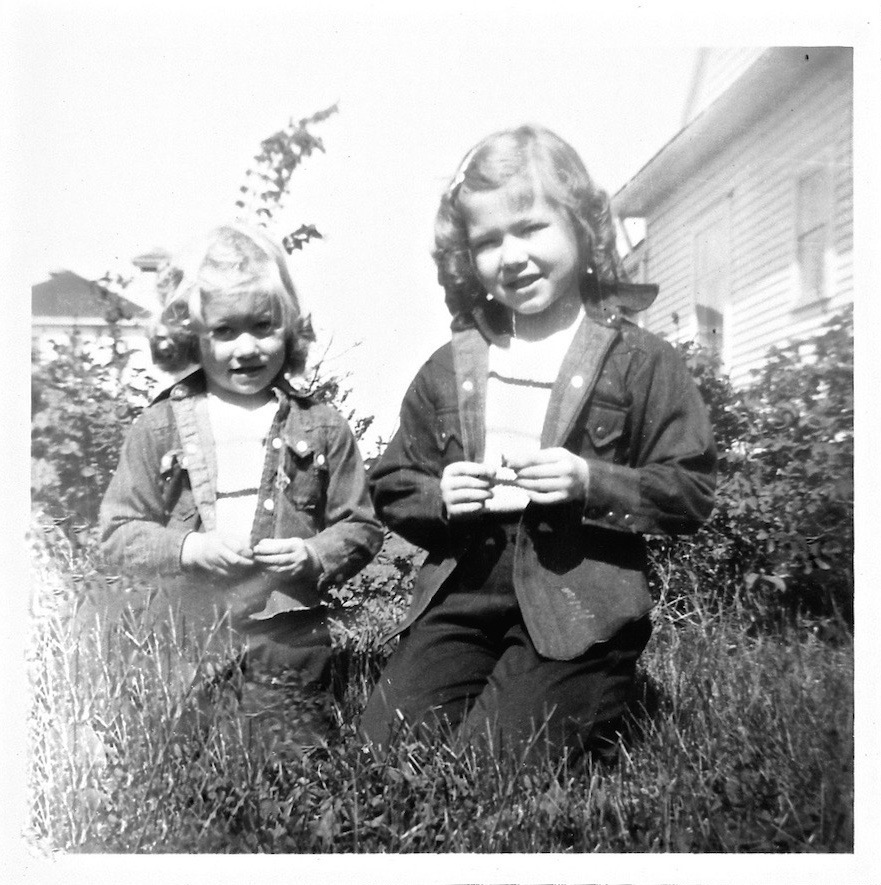
daily life color062 (2)My sister Patti and I doing our “sister act.”  Now we call ahead to make sure we aren’t wearing the same outfit! Half of my childhood was spent in this yard and in almost every picture, I have something in my hands from nature, examining it…as in this picture, I just noticed.

In response to The Daily Post’s writing prompt: “Nothin’ But A Good Time.” Imagine that tomorrow, all of your duties and obligations evaporate for the day. You get the day all to yourself, to do anything you please. What types of fun activities would make your day?

Since I wrote to this prompt over a year ago, I’m just going to give a link to that prompt: https://judydykstrabrown.com/2014/11/20/4406/

Travel Theme: Mellow Yellow

Mellow Yellow

DSC00442 DSC00446 - Version 2 DSC00484 DSC00448

DSC00442 - Version 3

http://wheresmybackpack.com/2015/08/14/travel-theme-mellow/

Silk Floss Tree–Cee’s Flower of the Day Prompt 8/19/15

Here’s a closeup view of the  wonderful flowers of the Silk Floss Tree.   It is  ceiba speciosa- such an interesting tree that I’m going to do another posting on it, showing its trunk and large seed pods as well.)

IMG_3875 IMG_3864 IMG_3895 (1) IMG_3877

IMG_3921

Enter a caption

IMG_3898

And, the tree itself.

IMG_3913

http://ceenphotography.com/2015/08/19/flower-of-the-day-august-19-2015-bearded-iris/

For Red: The Summer Home

The Summer Home

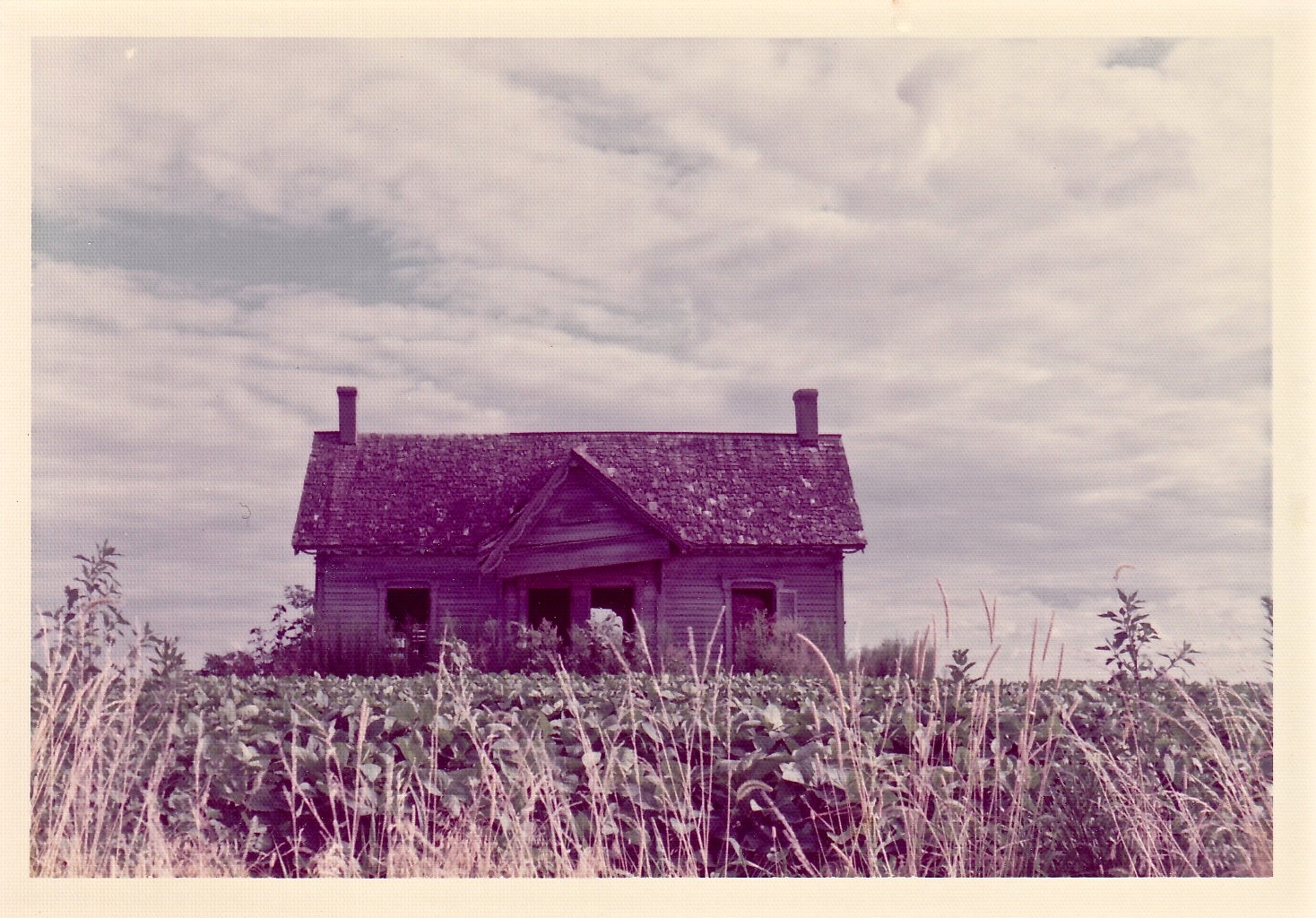
Decaying Farmhouse in Missouri Soybean Field

Photo by okcforgottenman, aka flycatcher

THE SUMMER HOME

When my dad bought the land
where the Big White River and Little White River joined,
I couldn’t believe that we owned land with trees on it.
While he plowed the small field,
I walked the woods and found the abandoned shanty.
Its door was open; in fact it could not shut.
Inside was a mysterious, sweet and fecund smell–
a mouse smell new to me
that I couldn’t stop myself from breathing in.
The mildew and the dust,
the musk of warm linoleum,
every new smell and sight was magic.

I was enchanted by this house emptied
of chairs and tables and beds,
yet full of the accumulated energy of past tame lives
and present wild ones:
the moving of leaf shadows
across the chipped linoleum of the L-shaped kitchen,
the dents on the floor where the kitchen chairs had set,
as though someone had taken care each day
to line up the legs in their holders.
Upstairs I found crayon scribbles halfway up the wall–
the arm reach of a three-year-old.

When I asked about the house,
my dad said that it was our summer home,
and the next time we went to the field,
I brought a broom.

I cleaned out the mouse droppings and the tumbleweeds.
I collected the peeled tile fragments,
imagining gluing them back again.
I washed out a quart canning jar at the pump
and filled it with spring water
and sweet clover,
putting it on the floor
between the kitchen chair holes
in the exact middle of the vanished table.
With the old shirt I found in the corner,
I rubbed mud and river sand
from the linoleum counter tops.
More sand worked as Ajax to scrub out sinks.

All summer long I worked on our summer home,
and for that summer and many summers to come,
I waited in vain for our move to the river house.

I sat on its screened front porch.
Outside the screen grew spearmint and peppermint.
On the top leaf of the tallest branch was a grasshopper,
the kind that left tobacco stains in your hand
when you held it.
All around me were the trees–
the swaying shedding cottonwoods
and scrub chokecherries.
It was a wealth of trees I’d never seen before
in the town where we lived on the bare prairie
nor on the roads we traversed for hundreds of miles
to see a movie or a dentist
or to buy clothes.

Around the screens buzzed the heavy flies,
their motors slow in the heat of July–
all the flies on the outside
wanting to get in
and all the flies on the inside
pressing the screen to get out–
like I longed to get out
to the freedom of trees
where black crows
and dull brown sparrows
rustled their wings
and flew from branch to branch.

In the distance, meadowlarks called
the only birdcall I ever recognized.
No squirrels, no chipmunks; but, rabbits? Yes.
My father said no bears,
but he’d told me the story of Hugh Glass,
mauled by a bear,
walking this river for a hundred miles
past this very joining of the Big and Little White,
in search of help;
and I could imagine one last bear or two
hidden in my woods.

So at night, at home in our winter house in town,
when he told the story I loved the best,
I was the one who discovered the bears’ cottage,
and the cottage was our summer home.
The chairs–too hard, too soft, just right—
I sat upon in turn,
taking great care every time to nestle each leg
back into its correct place on the kitchen linoleum.
And when I lay in the perfect bed of the little bear,
I could touch the crayon markings on the wall.

So when the three bears found me asleep
in the little bear’s room,
they weren’t really very scary;
but I ran anyway,
into my dark and shadowed owl-calling woods,
my woods still echoing the day lit fluted calls of meadowlarks,
their music shaken from the snarled leaves
in the evening breeze.
I ran to trees–
their leaves frosted by moonlight and the Milky Way,
vibrating with the power of the Big Dipper and Orion,
the Seven Sisters and the North Star.

Into the trees
to where I stored my memories
in the frog-croaking depressions under clumps of grass,
in the tangles of Creeping Jenny
and the fluff of dandelions,
in the sand hollows
that crept up from the riverbanks,
in the cocklebur and the chigger-infested grass,
in the crooks of cottonwoods and caves of thickets,
in the tiny cupped palms
of sweet clover and purple alfalfa,
in the wheat grass and the oats and trefoil.

The year my dad decided to expand the field
on the river bottom,
I pleaded, I cajoled, I promised, I prayed
for the summer home
where I had lived for neither one summer
nor one night, in actuality,
but where, nevertheless, I’d had faith
I would someday live.

Of course, there was no saving the woods
and summer house.
It was rich river land, prime for irrigation.
The trees were a waste of soil.
The summer home–everybody’s gentle joke on me.

After the cats and bulldozers were through,
I went with my dad to see
where trees had been ripped out,
the house burned to the ground,
the soil turned and planted
with crops that would build the land.
Their woods now furrowed soil,
the crows and sparrows
had gone to some other shaded place;
the mice, back to the fields.

My former references of trees forever gone,
the present references of sky and fence posts
too wide and new,
I wasn’t sure where my summer home had stood.
The house’s ghost destroyed by the bright sunlight,
the woodland paths replaced by tractor treads,
I watched instead a meadowlark
soar over brown fields and settle on barbed wire,
claiming the new field for its own.
With no house or forest left,
my only shade was chokecherry bushes,
my only chair, the pickup running board.
And so my summers at the river
vanished in the smoke of my summer home
and smoldering tree stumps.

But every night, my woods again threw still shadows
over the summer house,
and I ran once more the corridors of moonlight
cut through dense trees
like parts in a small girl’s hair.
I ran in the wet dew of the condensing summer heat.
I ran on the fuel of my need for magic
and wildness
and rivers
and trees.
I ran fueled by my need to be with something
that lived outside my window
as I passed long nights in my winter house.

It lay in the dark tapping of the trumpet vine branch
against my window
and the crunching of gravel
as someone walked by on the unpaved street–
out past midnight and I couldn’t tell who.
It lay in the pricking of the hair on my arm
as I stuck it out from the bed
and pressed it to the screen.

Always, in town, it lay outside of me–
except for when I floated the paths
of the woods surrounding the summer house,
joining it in dreams,
night after night and then less frequently
until the dreams came once a month
or once a year–
in darkness, always recognized;
but nonetheless forgotten in the light.

So by the time I saw the river field grown lush with corn,
I was a teenager in my first grownup swimsuit,
floating the milky Little White in an inner tube,
down to its junction
with the clear and colder-running water of the Big White,
my best friend next to me,
our cooler full of Coca-Colas and ham salad,
our conversations full of boys and music.

At the border of the field, to get to the river bank,
we crawled over the border of large tree trunks
laid horizontal, half-buried in sand.
I guess I knew they were the bones of my midnight woods.
I guess some part of me felt
the ghost of my summer house.
But, as I lay on my back on the submerged sand bank,
the warm water flowed so sensuously over my shoulders
and down my legs
that my suit seemed to peel itself
from my shoulders, breasts, thighs, calves.
And in a dream I floated the muddy water
of the Little White,
turning in the current
until the water seemed to flow inside of me,
floating me down
to the cool clear water of the Big White,
farther and farther away
from the summer home.

This poem was posted specifically as a response to THIS post on Red’s Wrap.

“The Summer Home” is excerpted from Prairie Moths–Memories of a Farmer’s Daughter, which is available Available on Amazon in Print and Kindle Versions and at Diane Pearl Colecciones and Sol Mexicana in Ajijic, MX


Wheat Cover 34 font

 Just as moths rise from prairie grasses to fly away, so did the author yearn to be free from the very place that nurtured her. Judy Dykstra-Brown’s verse stories and accompanying photographs give a vivid portrayal of rural life in the fifties and sixties, evoking the colors and sounds of the prairie and the longing a child with an active imagination feels for faraway places. From a small child curled up on the couch listening to her father’s stories of homestead days to pubescent fantasies of young itinerant combiners to her first forays into romance in the front seat of a ’59 Chevy, her memories acquire a value in time that she did not acknowledge while living them. Lovers of good poetry and those who miss the magic of childhood will relish Prairie Moths. (Excerpted from a review by Harriet Hart)


Marooned in Burgundy: Cee’s Fun Foto Challenge 8/18/15

Version 3
These coleus leaves seem to be on the cusp of maroon, burgundy and fuchsia! 
DSC08673And here he is, folks, the “Greater Burgundy Flycatcher”–right here in my own kitchen!!!

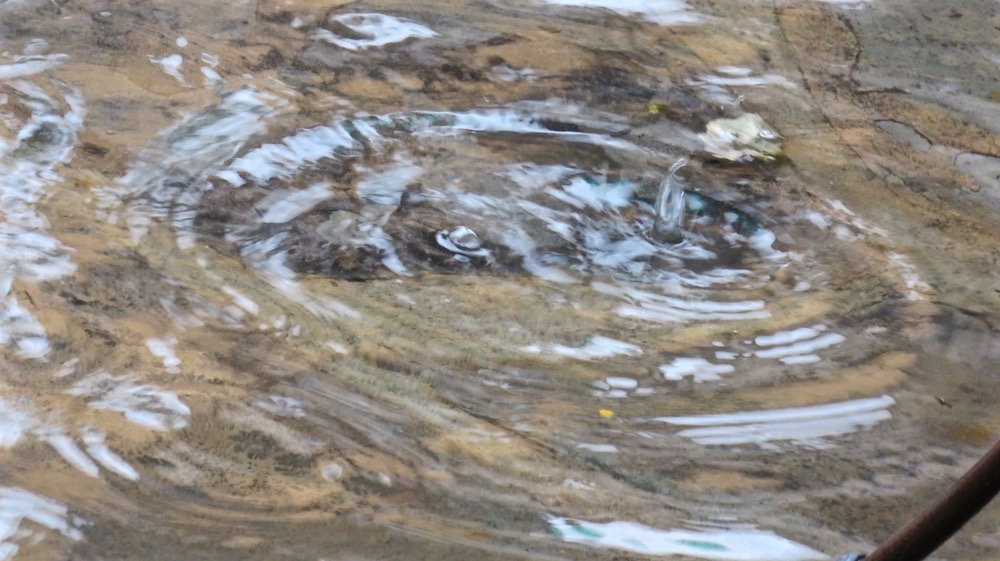
PB060254 - Version 2This is a detail from one of my retablos based on Tina Medotti’s epitaph written by Pablo Neruda. This detail depicts the “foam.” The epitaph is below.

Pure your gentle name, pure your fragile life,
bees, shadows, fire,snow, silence and foam
combined with steel and wire and pollen
to make up your firm and delicate being.

SB_3875262920Here is the entire retablo.  It is the largest one I’ve done so far–26 inches high.

http://ceenphotography.com/2015/08/18/cees-fun-foto-challenge-burgundy-or-maroon/

DSC00994 - Version 2

Devil # 3

In response to The Daily Post’s writing prompt: “Helpless.” Helplessness: that dull, sick feeling of not being the one at the reins. When did you last feel like that –- and what did you do about it?

Okay, I was going to give this prompt a “miss” and went to the new prompt generator I’ve been using for the past few days.  I hit the button and was served up the two-word prompt: “Ill Devil”.  At first I read this as #3 Devil, and I must admit, I got a chill, because what I immediately thought about when I read the prompt was the third time I was in a near-death situation where I felt totally helpless.  What are the chances, I thought, that these two prompts would line up?  This must be something I’m meant to write about.  But then reason stepped in and I realized this prompt always gave an adjective and a noun.  What they probably meant by the prompt was ill Devil. (Changing the capital to a small “i” clarified the prompt.) But then I realized that ill devil described the occurrence I am trying not to talk about as much as #3 devil did, so I guess, prodded on twice by fate or coincidence or synchronicity, I will try.

I have written to a similar prompt twice in 2015, so probably most of you who read my blog have chanced upon one of those posts, but when I wrote to a similar prompt in June of 2014, I wrote a different piece and since I had few of my present-day readers then, I’ll mention that THIS is what I wrote.  It may not be obvious that the topic given in today’s prompt was what I was really talking about then, however, because it was a poem where I actually stood to one side of what I was really remembering and wrote about the subject as an onlooker rather than a participant.  I only alluded to the real subject, which is what I’m going to attempt to write about today. That real subject is Ted Bundy and how otherwise respectable women sometimes fall prey to such predators.  Okay, deep breath. I’m going to tell to the world something I have actually told to very few people. Yes, this is a true story.

Devil # 3

Nineteen seventy-something. In the bar with friends.
When you are in your twenties, the partying never ends.
It was rodeo season  and the big one was in town.
As one by one they ordered drinks, I couldn’t turn them down.
We were a rather rowdy bunch of teachers in our prime
Devoted in the classroom, but wild on our own time.

The bar was crowded hip to hip, the music barely heard
over the loud cacophony of laugh and shouted word.
It was my turn to buy a round. I struggled towards the bar.
My polite “Excuse me’s!” really hadn’t gotten me too far
when a guy appeared in front of me and moved the crowd aside
as though he had appointed himself to be my guide.

As I returned with eight full drinks, again he stemmed the tide
by walking close in front of  me and spreading elbows wide.
He smiled and then departed, back to the teeming mass.
Impressive that he had not even tried to make a pass!
My friends all wondered who he was. I said I had no clue.
Tall and dark and ivy-league, he vanished from our view.

This story happened long ago. Some details I’ve forgotten,
and any memories he retains, you’ll learn were ill-begotten.
I think we danced a dance or two. I know we talked awhile.
I liked his fine intelligence, his low-key polite style.
At three o’clock the barman’s bell commenced it’s clanging chime
and I made off to find my friends, for it was closing time.

Two lines of men had split the bar, lined up back to back.
Their hands locked and their arms spread wide–they moved into the pack.
One line moved east, the other west, forcing one and all
Either out the front door or towards the back door hall.
I was forced out the back way–out into the alley.
My friends and I had made no plans of where we were to rally

and so I walked around the block, sure that was where they waited,
but there was no one there at all–the crowd had soon abated.
I went back to the alleyway to see if they were there.
but all was dark and still, and soon I began to fear
that both carloads of friends had thought I was with the other.
I had no recourse but to walk, though I prayed for another.

I combed my mind to try to think of anyone at all
living in this part of town where I could go to call
a friend to come and get me and furnish me a ride
for 3 a.m. was not a time to be alone outside.
There were no outside phone booths and I lived so far away
I simply had to rouse someone, but what was I to say?

But since I had no other choice I thought I’d check once more
if any single soul was waiting at the bar’s front door.
And as I left the alley to be off to see,
I saw a new familiar face looking back at me.
It was my dancing partner, his face split in a grin.
It seems that he was going to save me once again.

He had asked me earlier if needed a ride,
but I had told him wisely that I had friends inside
and so I thought he’d left, but I could see he was still there.
Yet, ride home with a stranger?  Did I really dare?
And yet I had no other choice, abandoned as I was.
And so I said I guess that yes, I would, simply because

I knew there was just one of him and I was young and strong.
And he seemed kind, polite and gentle.  What could go so wrong?
His car was just a block away. Our walk was short and brief.
And when he pointed out his car, I felt a great relief.
For it was a convertible–and easy to escape
If I detected the first signs of robbery or rape!

He opened up the door for me. I got in the front seat.
But as he started up the car, my heart skipped a beat.
For from the bushes, two more men emerged and jumped inside–
one man in the backseat, the other at my side!
He pulled out into the street, though I protested so.
I didn’t really want a ride, so please, just let me go!

(And here I have to beg off and say I’ll finish this story tomorrow.  Right now my heart is pumping and my head throbbing as though I’m re-enacting this whole tale physically as well as mentally.  I’m totally exhausted.  Why I decided to write this in rhyme I don’t know. Perhaps I thought it would be easier, or more fun or more lighthearted, but there is simply no way to write this from any other frame of mind but the terror I felt that night. So, sorry, but I will resume tomorrow. You all know that I’m here telling the story, so be assured that the worst didn’t happen…but the story is by no means over, so join me tomorrow for the rest.  I, for one, could really use a drink, but it is only 1:40 in the afternoon so I’ll find some other means of escape.)

To see the conclusion of this poem, go HERE.

If you’d like to try out Jennifer’s new prompt generator, go HERE.

Orange Thunbergia: Cee’s Flower of the Day Challenge

Orange Thunbergia: Cee’s Flower of the Day Challenge

Hard to believe that yes, this, too, is a thunbergia! I bought this plant years ago and had Pasiano plant it, but it was invisible–obscured by bougainvillea  and ferns.  I thought it had died out long ago, then yesterday I saw it  rising up from the thick undergrowth and twining up this wire at the entrance to my house.  Perfect!

IMG_3927 IMG_3933IMG_3926

Now, go HERE for Cee’s perfect detail of an iris and flowers by others!


Balance

IMG_3962

“Too much happiness or too much unhappiness render us
oblivious to any good or bad changes around us.” 
—Alka Girdhar

 Balance

Happiness, like sadness, takes up too much room–
like a greedy house guest usurping our closets with their excess.
What bride notices the homeless on her bridal route?
What new mother thinks first of the starving hidden half a world away?

Sadness, like happiness, eats up our world.
The hungry yearn first for bread,
the ill for surcease from pain.
Who feels the thorn may overlook the rose.

Life is balanced, not within each,
but within the all.
What seems unfair to the single eye
is perfect harmony for the all-seeing.

So much easier
for the fortunate to feel worthy of their lot.
to feel, somehow, that their place in the  world
was created just for them.

Do the cursed feel equally singled out for hunger, cold, pestilence and misery?
Does a master mason have an intended place for every stone?
Does a baker single out a single speck of flour for inclusion?
Is a bee instilled with life to pollinate a certain flower?

What kind consciousness could have borne the guilt
of thinking through a plan more specific than the overplan–
the functioning of the grand machine of the universe
wherein happiness and sadness
swing like a pendulum
that somehow balances all.

The writer who provided the quote that prompted this poem has also written an article about Abdul Kalam  that you can find HERE. The link to the article the above quote was in can be found by clicking on her name above. We would both be interested in what others might write in response to this prompt. If you do, please send a link to both of us!  We want to know what you think.