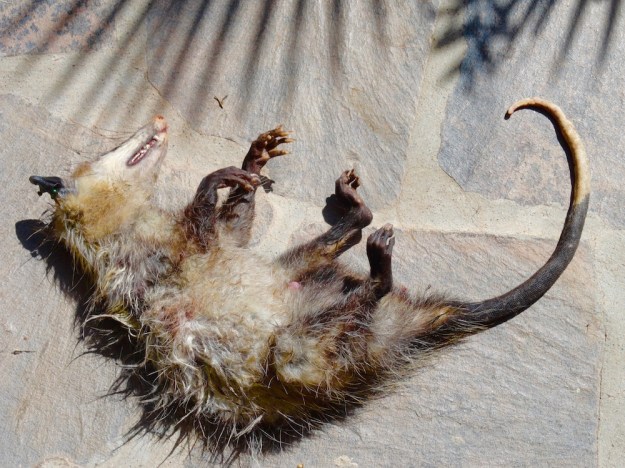
Dead Possum
A rude surprise,
it lay like breakfast rejected
on the patio outside the dogs’ sleeping room.
The dogs were restless this morning,
barking for their kibble,
unwilling to follow the rules
that decreed paws known all too well
as lethal weapons needed to be contained,
the dogs in their open cages before I’d venture out to feed.
But some wildness recently sated
drove them to assault the door
and refuse repeated demands to
go to their beds.
They staged their impatient war dance,
telling with growls and claws
the tale of the hunt—
That won battle.
I lock them in their cages
and, order restored, I dish their meals
and free them to their feed.
I walk behind them to secure the sliding glass door,
gather dust pan and broom, plastic pail.
Their quarry too large to fit, let alone be lofted
by a dust pan, I grasp the tail and lower the possum
like a colossal tea bag for a dipping,
into the wash bucket,
walk the long path down to the lower wall,
heft it over into deep underbrush
of the vacant lot next door.
I own that land.
It has been the burial place
of sixteen generations of those possums
too slow for escape,
with teeth and claws insufficient for defense––
every one a battle won
by the dogs
and each one equally mourned––
their wild ferocity not enough
to best even dogs seemingly grown docile
until these night battles
gone unnoticed in my dreams
are brought to view in light of day.
The possum’s fur wet and matted but only slightly torn,
every time I hopefully delude myself
that perhaps it’s playing witness to its name
and only playing possum.
Optimistically, I don heavy gloves and winter coat,
ready for the struggle as I try to save
what an adult part of me knows
no longer is in need of saving.
Each corpse ironically made heavier by loss of life,
that dead weight of it
is echoed in a central part of me
as I try to lift with reverence
this newest evidence
that most of life
and all of death
is out of our control.




 lifelessons - a blog by Judy Dykstra-Brown