She
She was fingers drumming lightly on my arm while I fell asleep,
a box of candy that my dad had to hide or it would be gone by morning,
fingerprints of bright coral rouge staining the top of her powder puff.
She was a girl’s rhymed diary that told of filling the church elders’ hats full of Bon Ami powder.
A fatherless girl sleeping with her sisters on a sun porch in Kansas.
A sister of a girl who wore a nightgown to a ball,
the sister of a man who couldn’t stop drinking,
the sister of a girl who died in the great flu epidemic of 1918
and of a father who died in the great flu epidemic of 1918.
She was the sister of a woman who died in childbirth
and the sister-in-law of a man she did not marry to raise her sister’s child.
A woman who liked radish and onion sandwiches
and cornbread and orange Jello with shredded carrots and pineapple.
She was a girl late to marry who lied about her age until in her nineties.
A woman who never told her real name to daughters
until her daughters were women as well.
She was a good friend who never revealed secrets.
A woman who finished her housework quickly to lie on the divan and read.
A woman with a mangle who ironed the body and arms of shirts
while her daughters ironed the collars and cuffs.
A member of the Progressive Study Club who wrote all the plays for State Conference.
The woman who wrote the play, “The Hillbilly Wedding”
that started out, “Ye critters and Ye varmints, we are are gathered here today
to wed this man and woman in hillbilly sorta way.
H’ebenezer, Hannabella, do ye promise to be true and always love each other?”
“We do, We do.”
She was the mother who played silly tricks on her pre-teenage daughter
and hid in the closet to see if they worked.
The woman who had all her teeth pulled on the same day and nearly bled to death.
A town girl who lived in a tiny trailer with my father on the empty prairies of Dakota
and traveled from dam building site to site with him the first year they were married.
The town girl with no bathroom, so they had to park by service stations to use theirs.
The girl who counted to see how long she could hold her hand in the oven
to determine when the heat was right to bake cakes in her wood-burning oven
and who swam with her mother-in-law in a large stock tank.
She was the woman who took her daughter out on summer nights to look for U.F.O.’s.
The woman who never learned how to play the piano
but insisted her daughter take lessons for 8 long years,
and the woman whose daughter never really learned how to play the piano.
She was the trainer of dogs and parakeets and baby bunnies
rescued from the prairie by my dad.
The assembler of Halloween costumes and the decorator of Christmas trees.
She was the woman whose Christmas decorations one year were entirely silver and pink
and who made an elaborate chandelier ornament out of sprayed coat hangers.
The woman who drove her daughters 60 miles to buy saddle shoes
and 150 miles in the opposite direction to see an eye doctor.
She was the woman whose husband loved babies—
the woman who collected spare babies in restaurants
to take them to her husband to hold
while their mothers finished their meals.
She was the woman who showed her daughters how to make
Philippine lanterns to use as May baskets.
The woman who dressed up as a witch for Halloween and was so good in her role
that she sent children screaming down the sidewalk.
The woman who took off her mask for the rest of the night.
She was the woman who made up long rhyming poems about what pieces of the body
were being handed around the circle in a darkened room on Halloween:
a peeled grape, a bowl of spaghetti, a piece of liver.
She was the woman who covered lamps with sheets and pinned on
paper ghost eyes, nose,mouth.
and who collected corn stalks for decorations.
She was the woman who loved Halloween
but loved Christmas even more.
The woman who hid grass nests full of jelly beans and sugar eggs
all over the house every Easter.
The woman who found one of her own nests when decorating for Christmas.
She was the woman who loved to read who could read her daughters like a book.
The woman who could sometimes read her husband like a book—
the woman who said, “What did you do? You brought home another animal, didn’t you?”
the day my dad entered the living room with a sheepish look,
even though he’d left the rubber boot with the tiny puppy inside in the mud room.
She was the woman who had said the same thing
when he brought home the bunnies, the kittens, the tiny mole, the raccoon and the magpie.
She was the woman with the quilted satin robe with the long train
that the baby bunny hopped up on for a ride around the house.
The woman who taught Chipper, the parakeet, to say,
“Hello, Betty Jo. Judy Kay. Judy Kay. Patti Adair. Gee you’re cute!
Gimmee a kiss (kissing sounds). Baaaaaaad Benny!”
She was the woman named Pat whose husband was named Ben.
They were the couple whom later we later learned were really
Eunice Lydia and Gerben Sylvanus.
She was the wife of a rancher but gave him three girls.
They were the ones to insist all three girls go to college.
She was the mother whose travels had extended from Kansas to South Dakota to Iowa
who gave permission for her daughter
to set out to travel around the world
when she was still in her teens.
She was the woman who convinced her husband to move to Arizona
the year her youngest went off to college.
The woman who sold her mangle and became a fashion plate again in her 50’s.
She was a woman with four swimsuits
who did 1,000 exercises in her Arizona pool every day.
A woman who went dancing every Friday night,
who tried to take up golf and failed,
who lay on her chaise on her patio and read books
while her husband went to the corner café to regale his new audience with old stories.
She was the woman who flew to Australia to visit her daughter.
The woman who traded houses every few years
for the fun of buying and decorating a new one.
She was the grieving wife who said, “Ben always hated that clock!”
and watched it fall off the wall.
She was a girl and woman and old woman who believed in ghosts
and who slept near Hadrian’s Wall in the haunted room
of an eleventh century Abbey in Scotland.
She was a woman who played with a cat on Dylan Thomas’s sea wall
and who slept in a room over a pub as well as the Grosvenor House in London,
where she saw Garfunkel walk across the hotel lobby.
She was a woman who liked to sit and look at the decorations in her living room.
An old woman who drank aloe vera and vinegar
and did leg exercises in her bed each morning.
An old woman who got a machine to help her read.
An old woman who listened to the news all day when her eyesight failed.
A woman who bought a breathing machine when her breath failed
and walked around her condo trailing a long rubber oxygen tube.
An old woman who lived to be 91
and who lived alone till the day she died.
A woman who put on makeup and jewelry and who dressed up
every day until the day she died.
I was her collaborator in writing silly rhyming poems to send to my sisters in college.
I was her collaborator the day she dressed like an old woman
and sat in my dad’s chair,
setting him up by saying, “Dad, there’s an old woman here,
and I can’t get her to say anything.”
When she sat hunched over in her white wig,
her shoulders shaking with suppressed laugher,
he said, “We’d better call the sheriff. I think she’s having a fit.”
She was the one who actually never grew old in my father’s eyes.
The one who lived alone for nearly 30 years after he died.
She was the one who wanted a boyfriend to take her dancing whom she didn’t have to kiss.
The one who wore the Evening in Paris perfume
I bought her every mother’s day
until I was in my teens.
The one who fed the baby coon with a doll bottle
and bathed and baby powdered it every day
and put it underneath my covers when I had the measles.
The one who went from matronly house dresses
to wearing my castoff college clothes.
The one who created a whole new life
when her children left and pulled my father after her.
She is the one who has been gone for 13 years.
The one who very rarely passes through my thoughts.
The mother who did what the best mothers always do.
Who released her children into the world and let them go.
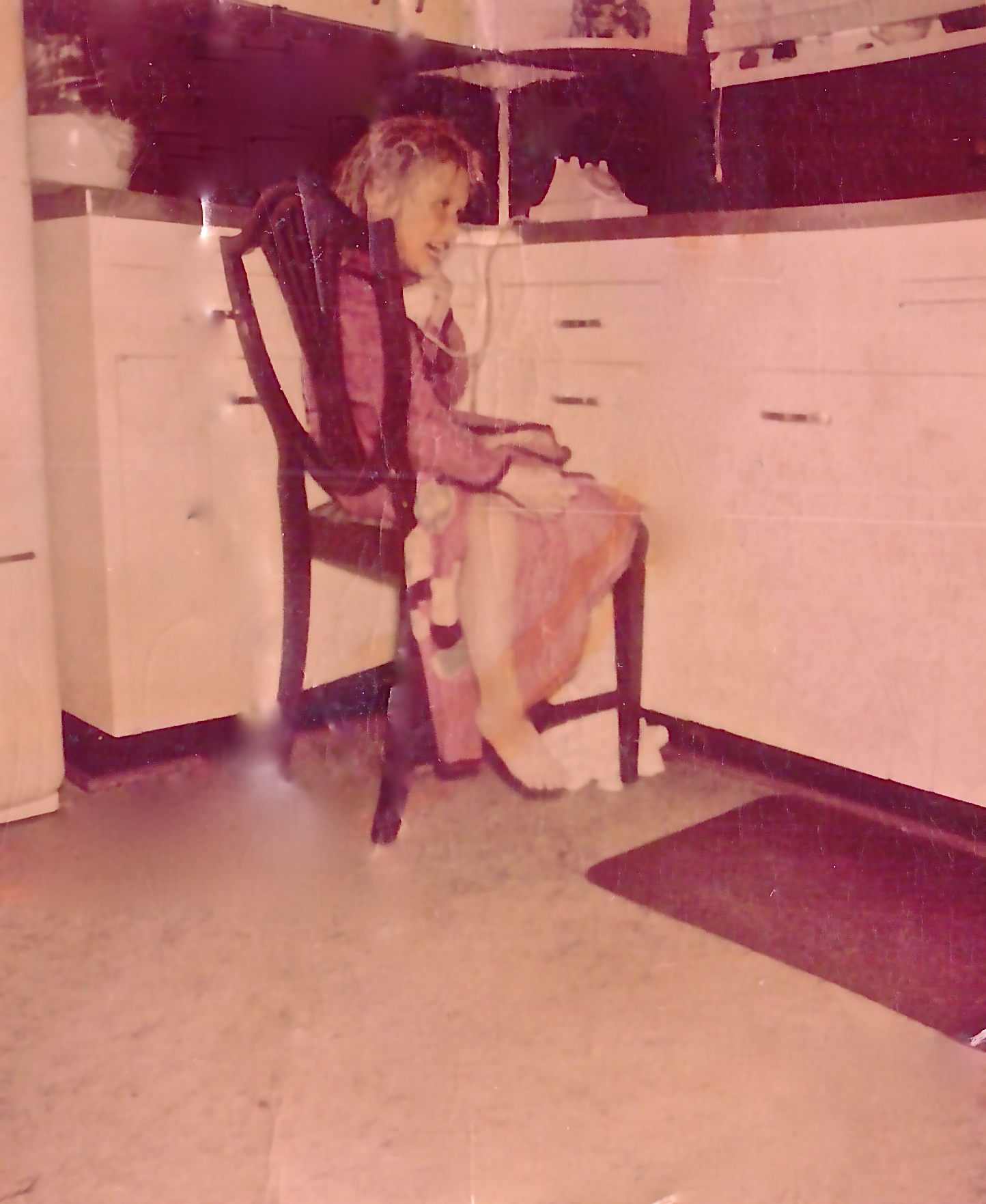
Here is a link to the photo of my mother I wanted to use with this poem three years ago when I wrote it but couldn’t find then : https://judydykstrabrown.com/2018/08/01/parental-support/
Today’s prompt was to write a poem using Anaphora–a literary term for the practice of repeating certain words or phrases at the beginning of multiple clauses or, in the case of a poem, multiple lines.


 lifelessons - a blog by Judy Dykstra-Brown