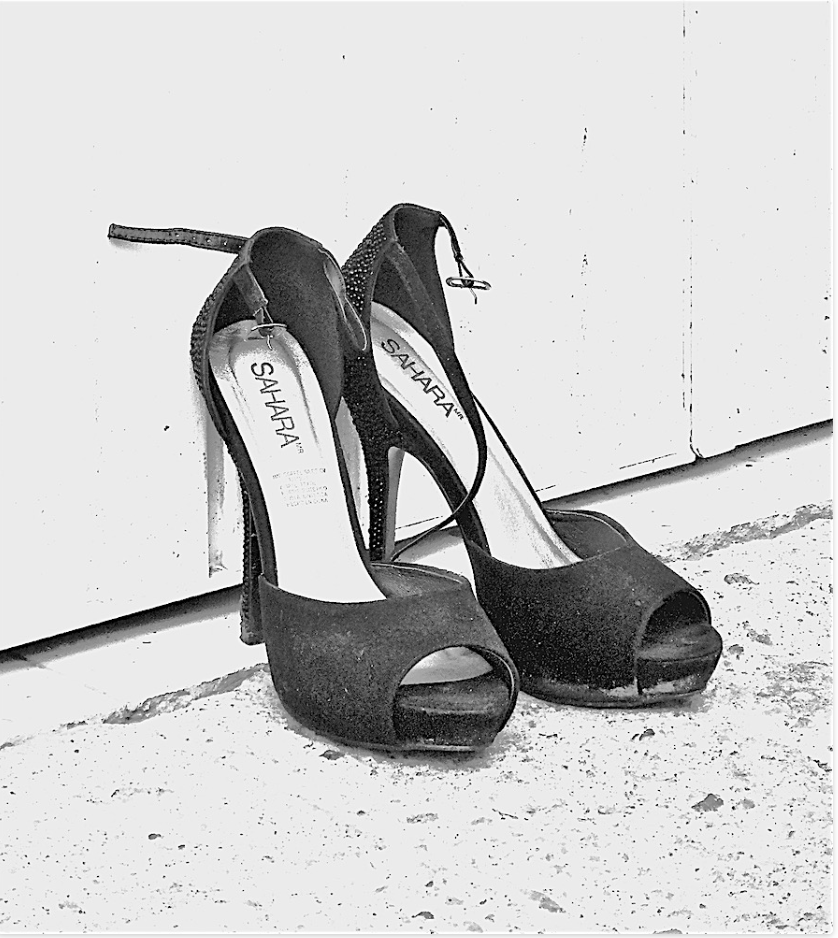
For Becky’s Square Challenge
the prompt words are:
- Move Forward
- Reconstruct
- Renew
- and/or are Burgeoning (beginning to grow or increase rapidly; flourishing.)
For Becky’s Square Challenge
the prompt words are:
From Heather Cox Richardson, Apr 30, 2024:
This morning, Time magazine published a cover story by Eric Cortellessa about what Trump is planning for a second term. Based on two interviews with Trump and conversations with more than a dozen of his closest advisors, the story lays out Trump’s conviction that he was “too nice” in his first term and that he would not make such a mistake again.
Cortellessa writes that Trump intends to establish “an imperial presidency that would reshape America and its role in the world.”
He plans to use the military to round up, put in camps, and deport more than 11 million people. He is willing to permit Republican-dominated states to monitor pregnancies and prosecute people who violate abortion bans. He will shape the laws by refusing to release funds appropriated by Congress (as he did in 2019 to try to get Ukraine president Volodymyr Zelensky to smear Hunter Biden). He would like to bring the Department of Justice under his own control, pardoning those convicted of attacking the U.S. Capitol on January 6, 2021, and ending the U.S. system of an independent judiciary. In a second Trump presidency, the U.S. might not come to the aid of a European or Asian ally that Trump thinks isn’t paying enough for its own defense. Trump would, Cortelessa wrote, “gut the U.S. civil service, deploy the National Guard to American cities as he sees fit, close the White House pandemic-preparedness office, and staff his Administration with acolytes who back his false assertion that the 2020 election was stolen.”
To that list, former political director of the AFL-CIO Michael Podhorzer added on social media that if Trump wins, “he could replace [Supreme Court justices Clarence] Thomas, [Samuel] Alito, and 40+ federal judges over 75 with young zealots.”
“I ask him, Don’t you see why many Americans see such talk of dictatorship as contrary to our most cherished principles?” Cortellessa wrote. No, Trump said. “‘I think a lot of people like it.”
Time included the full transcripts and a piece fact-checking Trump’s assertions. The transcripts reflect the former president’s scattershot language that makes little logical sense but conveys impressions by repeating key phrases and advancing a narrative of grievance. The fact-checking reveals that narrative is based largely on fantasy.
Trump’s own words prove the truth of what careful observers have been saying about his plans based on their examination of MAGA Republicans’ speeches, interviews, Project 2025, and so on, often to find themselves accused of a liberal bias that makes them exaggerate the dangers of a second Trump presidency.
The idea that truthful reporting based on verifiable evidence is a plot by “liberal media” to undermine conservative values had its start in 1951, when William F. Buckley Jr., fresh out of Yale, published God and Man at Yale: The Superstitions of “Academic Freedom.” Fervently opposed to the bipartisan liberal consensus that the federal government should regulate business, provide a basic social safety net, protect civil rights, and promote infrastructure, Buckley was incensed that voters continued to support such a system. He rejected the “superstition” that fact-based public debate would enable people to choose the best option from a wide range of ideas—a tradition based in the Enlightenment—because such debate had encouraged voters to choose the liberal consensus, which he considered socialism. Instead, he called for universities to exclude “bad” ideas like the Keynesian economics on which the liberal consensus was based, and instead promote Christianity and free enterprise.
Buckley soon began to publish his own magazine, the National Review, in which he promised to tell the “violated businessman’s side of the story,” but it was a confidential memorandum written in 1971 by lawyer Lewis M. Powell Jr. for a friend who chaired the education committee of the U.S. Chamber of Commerce that insisted the media had a liberal bias that must be balanced with a business perspective.
Warning that “the American economic system is under broad attack,” Powell worried not about “the Communists, New Leftists and other revolutionaries who would destroy the entire system.” They were, he wrote, a small minority. What he worried about were those coming from “perfectly respectable elements of society: from the college campus, the pulpit, the media, the intellectual and literary journals, the arts and sciences, and from politicians.”
Businessmen must “confront this problem as a primary responsibility of corporate management,” he wrote, launching a unified effort to defend American enterprise. Among the many plans Powell suggested for defending corporate America was keeping the media “under constant surveillance” to complain about “criticism of the enterprise system” and demand equal time.
President Richard Nixon appointed Powell to the Supreme Court, and when Nixon was forced to resign for his participation in the scheme to cover up the attempt to bug the headquarters of the Democratic National Committee in the Watergate Hotel before the 1972 election, he claimed he had to leave not because he had committed a crime, but because the “liberal” media had made it impossible for him to do his job. Six years later, Ronald Reagan, who was an early supporter of Buckley’s National Review, claimed the “liberal media” was biased against him when reporters accurately called out his exaggerations and misinformation during his 1980 campaign.
In 1987, Reagan’s appointees to the Federal Communications Commission abandoned the Fairness Doctrine that required media with a public license to present information honestly and fairly. Within a year, talk radio had gone national, with hosts like Rush Limbaugh electrifying listeners with his attacks on “liberals” and his warning that they were forcing “socialism” on the United States.
By 1996, when Australian-born media mogul Rupert Murdoch started the Fox News Channel (FNC), followers had come to believe that the news that came from a mainstream reporter was likely left-wing propaganda. FNC promised to restore fairness and balance to American political news. At the same time, the complaints of increasingly radicalized Republicans about the “liberal media” pushed mainstream media to wander from fact-based reality to give more and more time to the right-wing narrative. By 2018, “bothsidesing” had entered our vocabulary to mean “the media or public figures giving credence to the other side of a cause, action, or idea to seem fair or only for the sake of argument when the credibility of that side may be unmerited.”
In 2023, FNC had to pay almost $800 million to settle defamation claims made by Dominion Voting Systems after FNC hosts pushed the lie that Dominion machines had changed the outcome of the 2020 presidential election, and it has since tried to retreat from the more egregious parts of its false narrative.
News broke yesterday that Hunter Biden’s lawyer had threatened to sue FNC for “conspiracy and subsequent actions to defame Mr. Biden and paint him in a false light, the unlicensed commercial exploitation of his image, name, and likeness, and the unlawful publication of hacked intimate images of him.” Today, FNC quietly took down from its streaming service its six-part “mock trial” of Hunter Biden, as well as a video promoting the series.
Also today, Judge Juan Merchan, who is presiding over Trump’s criminal trial for election fraud, found Trump in contempt of court for attacking witnesses and jurors. Merchan also fined Trump $1,000 per offense, required him to take down the nine social media posts at the heart of the decision, and warned him that future violations could bring jail time. This afternoon, Trump’s team deleted the social media posts.
For the first time in history, a former U.S. president has been found in contempt of court. We know who he is, and today, Trump himself validated the truth of what observers who deal in facts have been saying about what a second Trump term would mean for the United States.
Reacting to the Time magazine piece, James Singer, the spokesperson for the Biden-Harris campaign, released a statement saying: “Not since the Civil War have freedom and democracy been under assault at home as they are today—because of Donald Trump. Trump is willing to throw away the very idea of America to put himself in power…. Trump is a danger to the Constitution and a threat to democracy.”
Tomorrow, May 1, is “Law Day,” established in 1958 by Republican president Dwight D. Eisenhower as a national recognition of the importance of the rule of law. In proclaiming the holiday today, Biden said: “America can and should be a Nation that defends democracy, protects our rights and freedoms, and pioneers a future of possibilities for all Americans. History and common sense show us that this can only come to pass in a democracy, and we must be its keepers.”
To subscribe to Heather Cox Richardson’s Emails, visit https://heathercoxrichardson.substack.com/account
Notes:
https://time.com/6972021/donald-trump-2024-election-interview/
https://time.com/6972022/donald-trump-transcript-2024-election/
https://time.com/6972024/donald-trump-fact-check-2024-election-interview/
https://scholarlycommons.law.wlu.edu/powellmemo/
https://www.merriam-webster.com/wordplay/bothsidesing-bothsidesism-new-words-were-watching
Twitter (X):
Mike_Podhorzer/status/1785348580334501936
Click on Photos to Enlarge.
White Owl
All these years, I ‘ve done without your heavy breath and gentle touch.
My mind turned to other things. Sounds in the night, the call of birds.
But it’s time. The owl asks “Who? Who?” Leaves me to find the answer.
The prompt for NaPoWriMo today was to write a Sijo. This is a traditional Korean verse form. A sijo has three lines of 14-16 syllables. The first line introduces the poem’s theme, the second discusses it, and the third line, which is divided into two sentences or clauses, ends the poem – usually with some kind of twist or surprise. I reblogged a poem I wrote to the same prompt three years ago.
Showing Up Late for Happy Hour at the Corner Cantina
I’m late because of accidents and countless little slips
like toothpaste down my shirt front, hair caught in my zips
and a seat belt that was caught and wouldn’t span my hips.
So bring out all your arsenal—your bludgeons and your whips.
I deserve your censure, your curses and your yips.
Perhaps it is my fault that you’re in tequila’s grips!
By looking at the tablecloth and counting all the drips,
It seems that all the salsa’s not contacting your lips,
and all your margaritas aren’t winding up as sips.
I’m making the assumption you might need more chips,
and more salsa fresca and guacamole dips,
which means our busy waiter must make some extra trips.
He doesn’t seem amused by all your clever quips
which increase with the frequency of your little nips,
so I’m hoping the aforementioned will earn him larger tips!
For SOCS: The prompt word is “Show”
For Fibbing Friday, today’s enticements are:
1. Who do you associate with ‘green fingers’? The Jolly Green Giant, of course.
2. Who or what was the Red Baron? The Scarlet Pimpernel’s exercise trapeze.
3. What was the significance of yellow ribbons around oak trees? So they could tell the girl trees from the boy trees when trimming out the hedgerows and thus guarantee the next year’s acorn harvesting.
4. Why did Alice follow the White Rabbit? Because she was next in line.
5. Who was The Black Knight? Balthazar, earlier in his career.
6. What is a Blue Moon? A crude gesture by the guy who sat in the blueberry pie during the picnic.
7. Do brown cows produce coloured milk? Nope, but they are definitely British or Canadian.
8. Why was the Pink Panther pink? Embarrassment.
9. Why are pandas black and white? Mixed panda marriages.
10. What is a Silver Shadow? The effect of sunlight on one of grandma’s best forks borrowed by her grandkids and left sticking up vertically in the sand pile.
Judy’s Advice on Preparations for the Afterlife
(For Jim)
Do you get a discount
or will there be none
when your time on Earth
will finally be done?
Whether it is better
to be raw or roasted well
depends on where you’re going.
Is it Heaven or to Hell?
I received this request for a poem from Jim Anshutz:
Some of my thoughts on cremation. 1. I will ask if they give senior discounts.. 2. I will also inform them that I sit out in the sun each day and get quite sunburnt. My question is, “do I get a discount for being pre-cooked? You can take it from here, Jude. Please make this a very humorous piece of poetry. Hit it, Jude![]()
![]()
![]()
If this poem left justifies, click on it to get it to center as it is a shape poem!
After 15 Years
Your memory cuts so sharply
through my dream’s beginning that I wake,
gasping like a fish on the sand
left by some fisherman
too intent upon his next catch
to end it cleanly.
In its tight skin,
I gasp for air,
rise as it cannot rise
and like you cannot rise
out to that night sea air
which is the only coolness
in a month of burned days.
My memory, curving round,
pulls in the memory of you
like gills seeking to understand
the waterless air.
Landed by some bigger fisherman
whose bait you couldn’t resist,
“Oh,” you said, just “Oh,”
before you took the hook,
slipping from my grasp
as I held on, held on,
let go.
This is one of the poems in my book of 50 years of love poems titled
If I Were Water and You Were Air, about to be published on Amazon.
Posted in response to the dVerse Poets Open Link Night.
See how others responded to the prompt HERE.
Every day, the great debate
as I attempt to set it straight.
Yet despite how hard I try,
it continues to go awry.
The straight and narrow is not its schtick.
It’s stubborn, willful, obtusely thick.
It wanders from my planned-out way.
Down former paths it prefers to stray.
Daily, I attempt to guide,
while it goes against the tide.
Unruly tangles and snarls abide
while I would choose to smoothly slide
down tresses lovely, shiny, straight,
instead, alas, it is its fate
to wander this way and then that.
(Perhaps it’s best to wear a hat
when wandering away from home?)
This hair will never succumb to comb!!!
The NaPoWriMo prompt today is to write a poem in which two things have a fight.