Many people have asked me about the level of pollution in Lake Chapala, the largest lake in Mexico which I happen to live on. Here is an article about the state of the lake that echoes what I have been telling people. The author, Kristina Morgan, is a local realtor and a long-time citizen of Chapala. It might be of interest to both Lakeside residents and Word Press bloggers that although he lives in Texas, her great uncle, Marion Couvillion, is a WP blogger (his blog is entitled Los Perdidos) and also a contributor to the Ojo del Lago.
Dr. Todd Stong offers expert 2020 State of Lake Chapala assessment
By Kristina Morgan
Despite widespread and persistent myths and misconceptions, Lake Chapala is healthier than most people realize.
So says expat and civil engineer, Todd Stong, PhD, in a recent interview. Dr Stong is well-known in our area for 17 years of involvement in studies and projects related to the lake, local wells, water treatment and related matters. He donates his expertise and is widely considered our region’s most objective and informed advocate for Lake Chapala.
As he puts it, “Mexico will offer you an infinite number of latter life missions. Providing clean water where it’s needed is mine. I’m a free engineer for any county around Lake Chapala that wants me.”
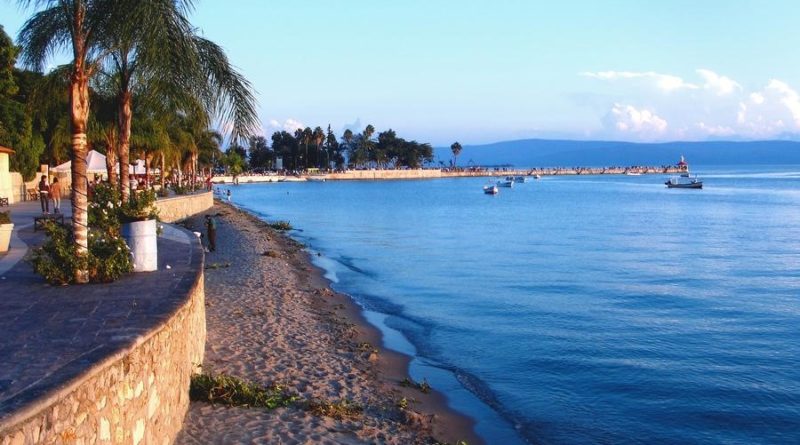
Dr. Stong helped plan the picturesque Malecon (boardwalk) in Jocotepec and spear-headed the 3-kilometer sewer pipe in Chapala to keep sewage out of the lake.
This is not a glossy portrayal to boost tourism or sales and not a horrifying picture to line pockets with money. The state of Lake Chapala, as in most things in life, has a more moderate reality and knowing the truth, we can enjoy the blessings we have at Lake Chapala as well as work to make the lake even better for our generations to come.
Evolution of Lake Chapala
It is important to first understand the evolution of Lake Chapala. Thousands of years ago, the lake was a mile deeper than its average depth of 14 feet today. Over time, sediment has turned it into a shallow lake with a clay and silt bottom that gets stirred up by the movement of the waves at the shoreline, making it appear dirtier than it is. Moving away from the shoreline about 300 feet the water is almost clear.
A Look at Lake Levels
Up until 1978 water flowed out of the NE corner of the lake via the Santiago River. No water has flowed out of the lake into the Rio Santiago since 1978. Lake Chapala is dependent on the Rio Lerma for 90% of its water and the remaining 10% from annual rainfall.
To Lake Chapala’s detriment, between 1980 and 2002 more than 500 dams were constructed on the Rio Lerma by thousands of farmers using the 470 miles of river water to irrigate their crops. Lake levels dropped significantly as a result.
Is Lake Chapala dying?
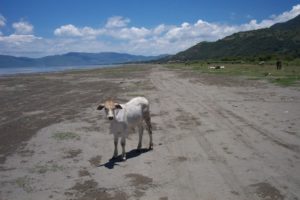
Due to the diversion of water, in 2001-2003 the lake fell to just 15% of capacity. The shoreline receded over a mile from Lakeside villages. Lake Chapala was on the verge of dying.
When the city of Guadalajara realized there wasn’t enough water in the lake to pump to their residents and people at Lake Chapala witnessed the alarming physical evidence of the lake disappearing, they became a squeaky wheel to save the lake. Lake Chapala is the only viable fresh water reservoir for 3 million residents in Guadalajara, so Guadalajara and the residents here have a vested interest in maintaining the levels and the quality of the lake.
As a result, the federal government drew up an agreement with the five states that the Rio Lerma passes through allocating 80% of the water from the Rio Lerma to be used by farmers, while maintaining Lake Chapala at 60% capacity at least and Lake Chapala became a protected lake under the RAMSAR convention and the Living Lakes Foundation.
Although the lake has been over 60% full since 2004, with periods during the rainy seasons when it is 80% full, misconceptions that the lake is drying up and dying persist to this day.
How Lake Chapala’s Water is Utilized
Contrary to popular belief, Lakeside Chapala’s villages obtain their water from deep wells, rather than the lake. However, as mentioned earlier, Lake Chapala is the primary water source of water for nearby Guadalajara, Mexico’s 2nd largest city.
Approximately 2,500 gallons per second 24 hours/per day are piped from our lake, passing through a 30-year-old pipe. There is concern the pipe could break. Should the pipe rupture, it would devastate Guadalajara’s water supply and cause extreme damage and flooding at the location it breaks.
Dr Stong is working to convince authorities to approve the use of an electro-magnetic testing device to map the pipe and highlight where there are leaks in order to do repairs and avoid a costly and lengthy pipe replacement. Mexico City has already mapped their aqueduct successfully with this device.
Is Lake Chapala dirty and polluted?
As stated above, it is important to note that although it’s widely assumed that Lake Chapala is the water source for the villages here, that’s not the case. The water piped into homes at Lake Chapala comes from deep wells that the Federal government drilled 50-70 years ago for the 30 villages around the lake.
About 40 years ago the Rio Lerma was a significant source of pollution for Lake Chapala, based on the deep sediment in the lake showing heavy metals. However, today the Rio Lerma has over 200 waste-water treatment plants over 466 miles, far more than most regions of Mexico. So, while not perfect, the treatment plants on the Lerma River have eradicated most of the industrial and agricultural pollutants.
In addition, the slow, meandering nature of the lower third of the river allows most sediment to sink to the bottom of the river before it reaches the lake.
Stong says, “Contrary to the easy assumption that pollution accumulates as the river flows, it is found that the best of the water in this river is that which enters the lake.”
Lake Chapala itself has 16 waste-water treatment plants. This region has far more facilities than most of Mexico to treat wastewater. As may be expected, every year one or two fail and they leak.
Dr Stong recommends that local governments test regularly and publish their findings monthly. He envisions a red flag/green flag system, letting citizens know the water quality on the shore of their village, similar to how it is done in the US. He also would like to see 1% of the shore become engineered wetlands, to provide a natural filter for contaminants and give the fish and birds a safe place to propagate.
Is the lake safe for recreation and swimming?
Contrary to common belief, Lake Chapala is safe for boating and swimming. With the lake currently averaging 70-80% of capacity, contamination levels are minimal.
• Bacteria level: The bacteria level in Lake Chapala is normally 75% below the health safety limit for recreational use, thus four times better than found at an average California beach.
• Mercury level: Despite lingering false reports, the internationally reported testing of over 200 fish from 20 locations in the lake has proven that heavy metal contamination of the fish does not exist, and is 60% below the international limit for health safety. This represents the same aunt of mercury found in a can of tuna in the US and Canada.
• E-Coli/Coliform: According to the US official recreational water quality standards, e-coli cells should not exceed 200 per 100 ml of water. Mexico measures 240 and below as safe. In three years of testing at 20 different sites around Lake Chapala, the level of coliform bacteria measured 50-60 on average, which is 4-5 times lower than the amount Canada, the US and Mexico will allow. In other words, the lake bacteria level is normally 75% below the US health safety limit for recreational use., thus four times better than what you’ll find at an average California beach. By contrast, a fourth of California’s beaches are closed each day due to coliform bacteria levels that are over 800.
• Lirio Water Hyacinth: Lirio, as it is called locally, was introduced years ago to combat pollutants and evaporation of lake Chapala. It multiplied out of control and has been a problem in years past, requiring periodic manual removal. Lirio coming down the Lerma River to the lake has been light this year.
Dr Stong recommends that as in Asia, lirio could be combined with the areas abundant chopped corn stalks to create an excellent livestock feed that is 30% protein.
Primary obstacle to recreation
The primary obstacle to lake recreation is underwater dangers. During the years when the lakeshore receded, a large area of the shoreline was exposed. Although legally under federal control, some people saw opportunity and began to put up barbed wire fences and walls to delineate the new lakefront as “their” land.
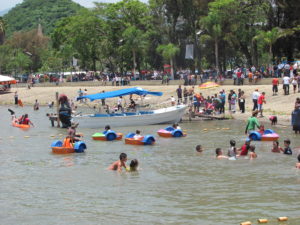
But when the lake began to recover, these fences and such were left in place and remain under water today, making some areas near the shore unsafe for swimming, boating, etc. Chapala has a safe swimming beach and a boat launch, as well as several other places in villages that are deemed safe for swimming and recreational activities.
In short, the water is safe, but you need to go to designated beaches, such as the one off of Chapala’s Malecon, to swim or boat due to the debris that is still underwater.
The shorelines are Federal Zones that prohibit commercial use, so any businesses that could open up for boating, jet skiing, parasailing, restaurants on the water, etc. aren’t currently permitted. Consequently, Mexico’s largest lake appears UNUSED by the public for recreation and tourism.
Dr. Stong recommends that the 9 counties about the lake must appeal to Jalisco and Michoacán States for authorization from the government to be permitted to create public and commercial facilities along the lake shore. Dr. Stong is working to convince the Federal Government to allow 1-2% of over 200 miles of shoreline to be used by the villages that live here to encourage recreation and commerce which would be a benefit to our communities here financially.
What about fishing at Lake Chapala?
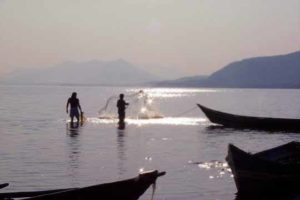
The many pueblos surrounding Lake Chapala have traditionally been known as fishing villages. Over 15 years ago, nearly 3000 Lakeside families gained their livelihood from fishing the lake; today that number is closer to 600 due to unregulated overfishing and inadequate restocking by the government.
So, while the fish is safe to eat, the lake has been over-fished.
Dr. Stong conducted a three-year pilot program to test the viability of floating cage aquaculture wherein high value fish could be economically raised in cages in the lake that has been very successful and could provide up to 15,000 jobs for the Mexican people with the use of just 1% of lake surface area. Restocking the lake is also an option, but fishing locally would have to stop until the fish reached maturity and were able to successfully propagate.
Protecting our National Treasure
We have a national treasure in Lake Chapala and an obligation to protect it for generations to come. Ongoing water testing with transparency, education, maintenance, and preservation of wetlands for birds and fish need to be in balance with the need for communities to develop some recreational waterfront to help support their towns and local businesses.
Editor’s Note: If you would like to get involved in the protection and improvement of Lake Chapala or want more information, please feel free to contact the author of this article at AskKristina@choosechapala.com. She can provide Todd’s 25-page report detailing his findings to the Governor of Jalisco.
* * *
 ABOUT THE AUTHOR: Kristina Morgan
Kristina has lived and worked in Mexico and the Lake Chapala area for over 17 years. Three of her four children were born and raised here, and are now living north of the border. Kristina is an Unlimited License General Contractor, as well as a Real Estate Broker and relocation specialist currently working for Lake Chapala Real Estate in Ajijic. She has codirected an info-tourism group and loves writing about her experiences in Mexico.