Tag Archives: essay

The Time to Be Good

                      IMG_1180

The Time to Be Good

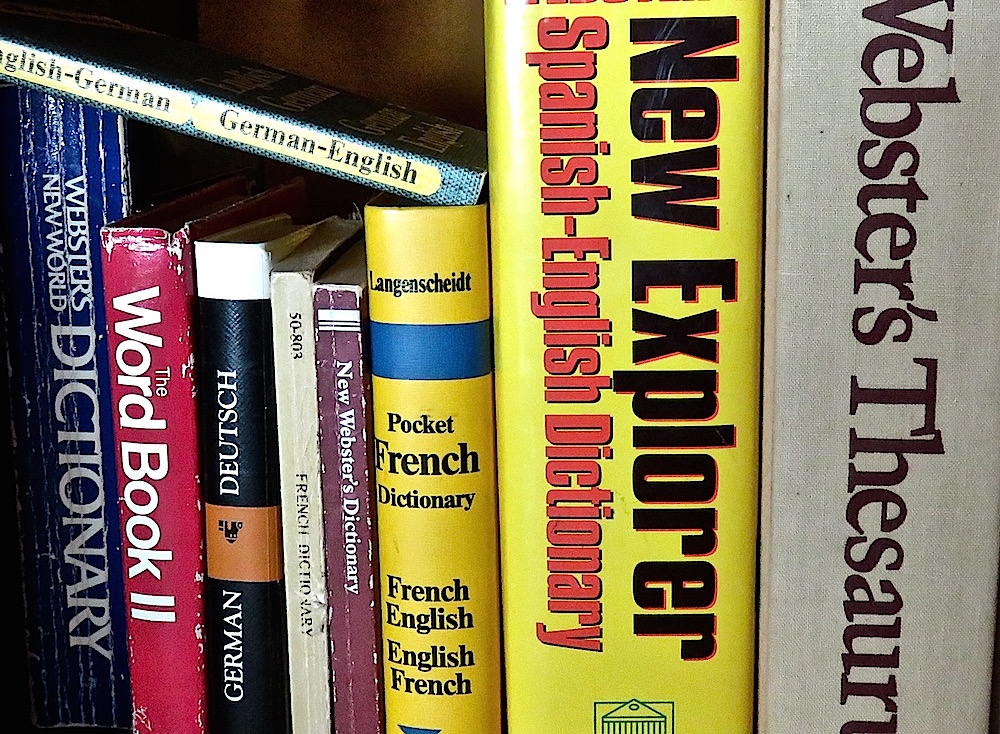
In a study by Oxford Online, associated with the Oxford English Dictionary, “the” was found to be the most frequently used word in the English language and each of the other words in my title was the most common word in the English language for its part of speech. It is no surprise to me that the word “the” heads the list. “The creates specificity. It helps us to define and narrow the field. It wins us precisely what we want. Ours is an era of so many choices––a plethora of brands of everything from potato chips to lipstick. Don’t even get me started on coffee. Starbucks alone maintains that it offers 87,000 combinations of coffee choices! Reason enough to need a bit of “the” in our vocabulary. Plain coffee Americano decaf with soy milk and stevia? That is “the” choice I make every time.

“To” is indicative, I think, of our modern need to be elsewhere. A Ted Talk that I recently viewed showed a video that depicted all of the airplane flights occurring simultaneously, then all of the ships enroute. If it had tried to depict commuter traffic, I’m not so sure that much of the U.S. would have been lit up, rendering any distinction between vehicles or routes to be impossible to make out. We drive to work, to play, to school, to recreational facilities. Then on the weekends we drive elsewhere to “escape,” but in doing so, are trapped in more traffic. In airports, we watch people coming off a plane to come “to” where we are as we await the opportunity to board the same plane to go “to” where they just came from. We are almost constantly going “to.”

I was surprised that “time” is the most commonly used noun in the English language, mainly because, with all of our labor saving devices, somehow we have less time rather than more. If someone disagrees, please, please inform me of how you have managed this. I no longer even have time to read unless I listen to an audiobook and combine my reading with other activities such as driving, working in the studio or kitchen or while trying to fall asleep at night.

So why is the word “time” so frequently used? As I tried to figure out why, a number of phrases I’ve used in the past 24 hours swam into memory. While preparing to leave for two months at the beach, I have almost constantly worried about not having “time” to arrange for everything I needed to arrange for in order to leave on “time.” I won’t bore you with the list, but it is long and varied and has kept me so busy for the past two weeks that I found my “time” had run out last night. I was due to leave this morning, but had not found time to say good bye to best friends, let alone time enough to write this blog and finish packing. So I delayed my departure by a day in order to gain “time” to depart in a more leisurely fashion. I made “time” for things important to me, such as this essay I am writing right now and the possibility of saying good bye to friends such as Audrey, whom I haven’t seen for weeks because neither of us has had the “time.” Perhaps it is our complaints of having so little of it that cause us to overuse the word?

The most commonly used words that I am most heartened by are best when combined. “Be good.” What better advice for each of us and what message is most needed in a world of cyber shaming, corporate greed, Isis and the seeming impossibility of gun control, let alone control over the kids and crazies who refuse to exercise control? It is a selfish world we live in. “Be” is too often considered in regard to only ourselves. But “good?” It seems to be an aim that more and more of us yearn for—hoping to combine it with “be” in order to restore sanity and love and caring for our fellow human beings––whatever their skin color or religion or social group or national background.

Perhaps in our choice of most commonly used words, be they conscious or unconscious, we are all sending ourselves a message. Like a crossword puzzle, we just need to combine them in the right way. It truly is the time to be good!!!

(If you’d like to see other most commonly used words, go HERE.)

The Prompt: Morphing—Language evolves. The meaning of a word can shift over time as we use it differently—think of “cool,” “heavy,” or even “literally.”Today, give a word an evolutionary push: give a common word a new meaning, explain it to us, and use it in the title of your post.
https://dailypost.wordpress.com/prompts/morphing/

Listed or Listless

The Prompt:  Have you ever made a New Year’s Resolution that you kept?

IMG_0893

Write it down!!!!


Listed or Listless?

Of course I have accomplished my New Year’s Resolutions.  A few times.  Once I did a project with a friend where we each wrote down what we wanted to accomplish.  I believe I had eight things.  Since we illustrated our resolutions, my quotes of what I wanted were scattered throughout my illustrations.  Shortly after we did this, she moved back to the states and in time I forgot my little artwork.

A few years later, I found it when I was cleaning and reorganizing my studio.  I looked at my page, turning it this way and that to read the resolutions that twisted around and through the colored sketches.  I was surprised to find I’d accomplished every one, including losing weight, getting a book published (actually by the time I found it, I’d self-published three books), and finding a partner (now a friend, but nonetheless, I managed to reenter the dating scene after years of still feeling married to my deceased husband.)

I don’t remember what the rest of my resolutions were and a new search of my studio didn’t result in finding it.  Perhaps it requires actually cleaning and reordering the studio to warrant this reward; but, this exercise taught me what I’d learned long before and forgot.  Writing resolutions down has a sort of magic.  I think it moves them to a different, more active part of our brain.  Even though that part of the brain might still be in the subconscious regions, somehow our written-down resolutions sit there as little telepathic cheerleaders, urging us onward to action.

Lest I grow too listless again, I think perhaps it is time to make another list!!!

https://dailypost.wordpress.com/prompts/resolved/

New Year Wisdom

IMG_0936

New Year Wisdom

After going to a New Years party for a few hours, I came home to welcome in the New Year online with okcforgottenman. I was railing on about the fact that a prompt site for which I wished to download an app only had apps for phones and tablets. When I asked if they had an app for my Mac computer, they said no, the place they went to set up the prompt site didn’t have a setup for a Mac computer.  This, in addition to the fact that more and more apps and software are being set up to accommodate the tiny screens on cellphones and tablets without taking into consideration that some of us are on computers has caused me to wonder if  computers are becoming obsolete!

The fact that many baby boomers are now well into their sixties and approaching their seventies means our eyesight is not going to get any better, and frankly, I need the bigger screen. In addition, somehow those born in previous generations (at least mine) seem to have been born with larger thumbs than more recent generations, for I find it is physically impossible for me to navigate a phone or Kindle or tablet keyboard with even my fingers, let alone thumbs.

I then mentioned how everywhere I went, people were all on their phones—playing games, talking to people other than the people they were with, reading the news or blogs or email. No one was where they actually were! He replied that this didn’t bother him but then seemed to do an about-face by admitting, “I think something big is going to happen that will bring about the end of civilization, but I don’t necessarily know what it is. It might be Isis and it might be iPhones!”

What he has just said has the ring of truth to me. I’ve been thinking exactly the same thing, but never put it so well. I am frightened about how smart phones have taken us away from our surrounding people and environments. We are no longer one place at one time. Even if we are not talking on the phone, there is the potential of every person we know calling us at any time and any place. And most of us make that call a priority over whatever is going on at the time.

Okcforgottenman then told me about a new app that photoshops the faces of those talking on the computer, fixing the glitches, covering up all those details that Photoshop is so adept at covering up. Again, I had a feeling of déjà vu,  because I’ve been reading Ultimate Jest by David Foster Wallace, and just today, he talked about a time in the future when people on social networks are able to download an app that Photoshops their faces.

Eventually, the app makes changes to the point where people no longer really want to meet in person, because they feel they have become the false representation of themselves—or at least prefer it. No need to put on makeup, comb your hair, get dressed. Virtually, they will be perfected!! The trend reaches its zenith when in time, the app doesn’t even bother to start with the real image of the speaker but instead uses the image of a movie star or other “beautiful person” who most resembles the speaker–eventually coming to the place where what they have in common is four limbs and the same color of hair!

What he describes is so close to what okcforgottenman describes to me that I get a chill down my back and the brain freeze I always get when I’m faced with a startling truth I’ve never thought of before. Is there any science fiction that will not eventually become fact????

David Foster Wallace describes a turn that eventually makes people reject their fake personas and to go back to voice-only conversations that do not even present any images at all. In time, those who use the visual phones with face and body altering apps come to be seen as narcissistic, gauche and behind the times. This is something I cannot imagine happening as our dependence on cyber unreality becomes more and more prevalent.

As we retreat more and more into fantasy and living in the far distance, what will happen to the immediate world around us? Will it cease to have importance as anything other than providing for our immediate creature comforts such as food, bed, warmth, water and medical attention? Will all of our psychological, artistic, amorous, social and familial needs be met through our online devices? And as these devices get smaller and smaller, will we ourselves evolve into miniature beings capable of managing them? Are we evolving back down to subatomic size, and is this a cycle? Has it happened before?

Ridiculous. I’m being ridiculous. And yet who among us, born in the forties or fifties, would have ever imagined we could communicate with both words and pictures through the air, watch a movie on a device smaller than the hand piece of a telephone, or that people would be living their “real” lives out and even choosing husbands and wives on TV for all to see? How do we tell the difference between what is possible and what is  impossible anymore? I’m afraid it is hard to predict with any confidence at all.

https://dailypost.wordpress.com/prompts/stroke-of-midnight/

One No Trump: JNW Prompt Generator

Today, in honor of my sixth posting to Jennifer’s site, I decided to take the first six prompts given by her prompt generator and to try to use them all, in order, in a poem, story or essay. What occurred was this short short story. The phrases that were generated were: hurt awareness, fair incident, muddy kitchen, innocent ring, tired reputation, stupid recommendation.

th-1
One No Trump

I wouldn’t say that she was totally disillusioned with life, but she did carry this air of hurt awareness that one unfair incident after another had worked against her best interests in life. She remained stubbornly sure that her choices, if they had worked out, would have led to a glorious life. No one even tried to convince her that her goals and means toward them were destined to fail from the first–not because the plans themselves were not worthy ones, but because she had an innate talent for messing them up.

She started in working diligently to attack the one wrong thing in her life she could most easily alter: her muddy kitchen. When the first giant crashes of thunder had been loosed upon the world, the dogs had set up a tremendous chorus of howls, scratches at the door and barks. She had let them in immediately, not realizing that the little one had been amusing himself in her new flower bed. In their great rush, one had upset the water dish and that combined with Hampton’s muddy paws, had made quick work of her earlier labors in creating a spotless kitchen.

She washed the mop out in the kitchen sink, creating a second dark ring around the sink. It was the innocent ring—dark black—that paralleled the slightly raised reddish-rust ring a few inches above. It was that red ring that she needed to scrub off before the break of day. It would not do to let anyone see that guilty ring. No matter what her justifications were, the world would not believe her. She had one of those unlikable faces that turned people against her, no matter how reasonable her arguments were. It was too late to alter the frown lines that pulled her lips downward, the darting eyes that said “I am not entirely believable” and the hands that wrung themselves by habit.

It was not, given the record of her entire life, that she did not have an adequate reputation—respected family, charitable acts, donations to the correct causes. It was just that over the years she had started espousing strange causes and slowly her actions had started becoming a bit odd as well. Chasing odd cars down the rows of the Walmart shopping center screaming abuse at their drivers for the sentiments revealed on their bumper stickers. Standing on a corner on Main Street holding up a placard that read “Polluter!” each time a car or truck passed, spewing black smoke.

She called the parents of children she witnessed bullying other children as she sat on a park bench near the school crossing and harangued the parents of large families about zero population growth. She was so scathing in her criticism of her bridge partner when, even though he had opening count himself, he had failed to raise her one trump opening bid, that he’d dropped out of bridge club; and when no one else would consent to be her partner, she, too, had been forced to quit.

So, it wasn’t so much that she had a bad reputation but that she had a tired reputation. She just couldn’t bother with the niceties anymore. She said what she thought—without taking tact into account. Bastards didn’t deserve tact. But even her best friends, the few of them she had left, admitted that her behavior was becoming ever more aggressive and bizarre.

And this is how she came to have that damned second ring in her sink. She knew she never should have gotten into a discussion about politics with anyone in this town, let alone a stupid plumber who lived up to all the stereotypes of plumbers when he knelt down showing his butt crack.  What tipped the balance was the cretin smugness of the plumber as, seeing her Hillary sticker on the fridge, he declared that he was going to vote for Trump just to see the fun that resulted.

This, coupled with the coincidence of his request that she give him the big wrench, had caused her, for that one moment in her life, to act to the full extent of her wishes. She gave him the wrench full force over the back of his head. He then departed this life with no fuss, no struggle, merely sinking forward into a full bow, his forehead against her kitchen floor.

There was a lot of blood, and although it was an unplanned act, she congratulated herself in her choice of locales—the kitchen being the best possible place to get rid of the evidence. That was why she had taken care of the hard job first, digging the new flower bed a good bit deeper, dragging his body out, head in a black garbage bag pulled tight, pouring the quick lime and then covering the body well with soil, planting the bushes that would establish the deepest roots. Putting the ring of flowers around the bushes and raking a solid cover of largish stones over them, fooling herself into believing this would discourage the new terrier’s digging instincts.

So now, taking the pup’s paws into account, she supposed she’d have additional work to do on the flowerbed, too; but her first priority was the blood rings in the sink. Like Lady Macbeth, no matter what she did, those stains held fast. She rued, then, that penurious nature which had caused her not to replace the porous old sink, older than she by far, that held stubbornly on to everything that passed its way–blueberries, coffee. Blood. She scrubbed to no avail.

Looking out the window, she could see where the puppy had uprooted Peony bushes and flowers and ground cover. More work there to complete before sunup. Hours ago, she had called a housekeeping company in another town to ask about the best way to remove bloodstains from a worn porcelain sink. The woman had been no help. “Call a plumber,” she had said,“He should be able to solve your problem!” Stupid recommendation.

https://topicgenerator.wordpress.com/      https://dailypost.wordpress.com/dp_prompt/que-sera-sera/

True Grit

DSC01208

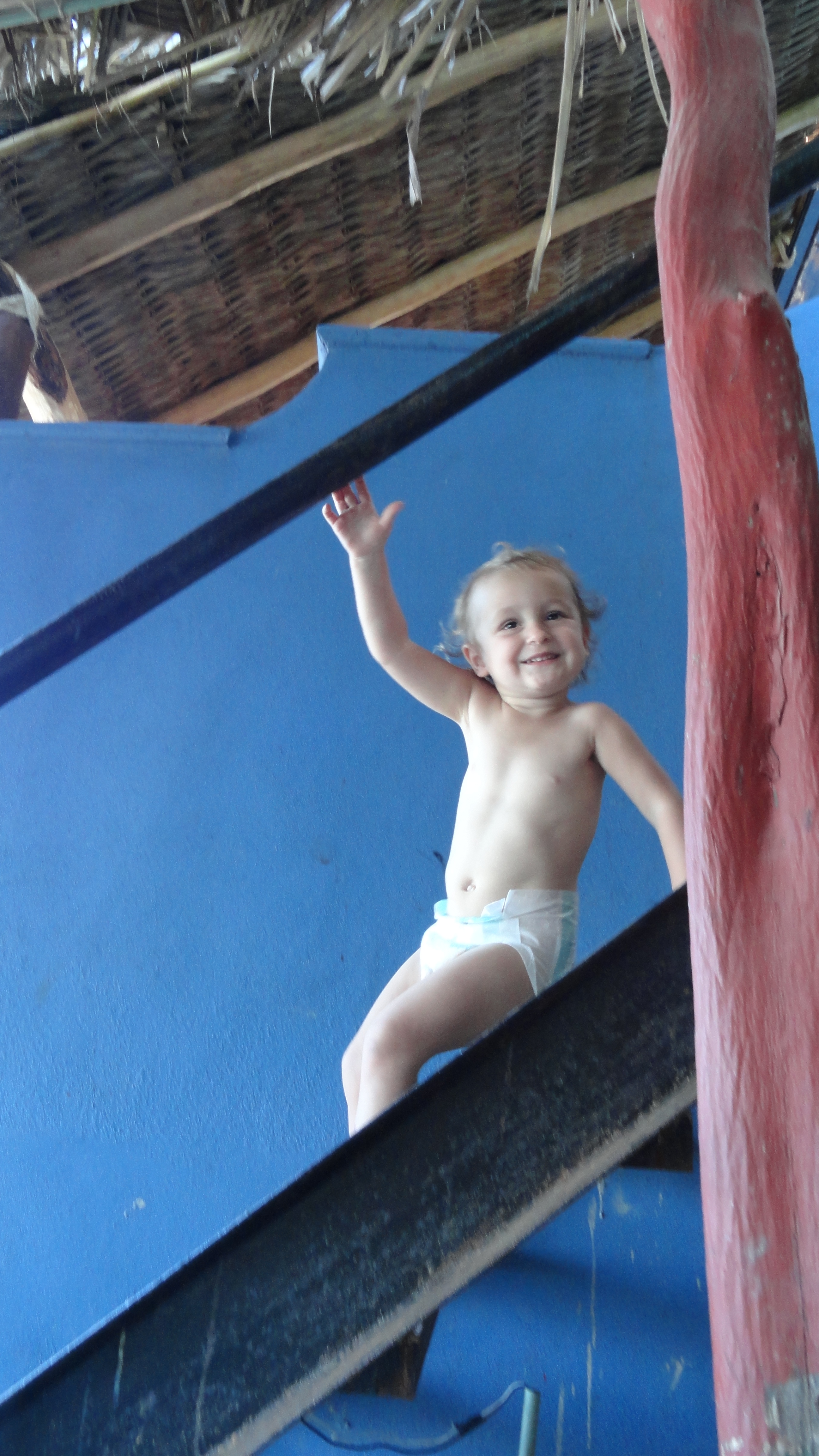
I want to be like this little girl who wandered away from her parents in the sand and into the beach restaurant where I was typing this blog. She came in to meet and entertain me, then to climb the stairs to the upstairs apartment—a dangerous enterprise with no side slats to keep her from falling. Her mom watched from nearby. I moved closer, just in case. But she made it up and down with no injuries, came over to chat a bit longer and then departed. I felt a bit happier and a bit braver myself by the end of our interlude.

The Prompt: Be the Change—What change, big or small, would you like your blog to make in the world?

True Grit

I’d like my blog to be Grit magazine, Ann Landers and the funny papers—all rolled in to one. I’d like it to be the first love comic grabbed off the shelf, the thing everyone wants to read, hot off the presses. I want it to be true, uplifting and fun to read. Entertaining. A collection of words that make people feel better after reading. I want it to be the thing you go to after reading of the last cuts to social services for the poor, the latest fool elected to public office, the last school massacre or child who mistakenly shot an adult with a gun provided to him by an adult. The thing you read when you’ve had enough of police brutality, plane wrecks, financial crashes, reverse Robin Hoods, pit bulls attacking humans, humans abusing dogs, cartels, corporations, slanted news agencies, corrupt rulers, crimes against women, drought, Ebola, HIV and dengue.

Yes, all of these ills exist and we need to know about them, but do we need to know about them ad nauseam, day and night, hour after hour? Do we need them served with our morning coffee, our evening meal, our drive to work? Need we dream them, fill our thoughts with them every hour of the day? And need those thoughts be hopeless and without remedy?

It is not that I want to avoid reality, but rather that I’d like to give that reality my twist and I’d like one major strand in that twist to be optimistic, another to be humorous, another to gentle the cruel realities, another, if it is of any influence at all, to be a catalyst to understanding and a feeling that something may be done in this world.

If you don’t remember the Grit magazine mentioned earlier in this piece, Google it. You will learn that it was formerly a weekly newspaper popular in the rural US during much of the 20th century. It carried the subtitle “America’s Greatest Family Newspaper.” It was full of human interest stories, usually with an uplifting slant. I can’t remember whether it came in the mail or whether we purchased it in the grocery story or in Mowell’s Drug, but I do remember grabbing it out of Mom’s brown paper bag when she got home from a trip down town and making off with it to my room or a grassy place in the shade of an elm tree to be the first to read it.

Perhaps you will label me as superficial if I admit that the first things I read in The Mitchell Republic—that “real” newspaper actually delivered to our front door—were Ann Landers, the comics (We called them “the funny papers”) and the crossword puzzle. I guess I wanted to be entertained, but I also wanted that assurance that something could be done about the bad things in life. Dick Tracy could solve the crimes. Mary Worth could be of worth in helping out. Ann Landers could find a solution to the ache of love and every puzzle could be eventually solved with hard work and perhaps a peek at the dictionary.

Now Google makes puzzle-solving a snap, so long as one is not shy about cheating and using that larger universal brain to solve the Sunday Cryptic Crossword, but in revealing so much, Google causes bigger problems—mainly, what to do with all of this knowledge of the world. For me, what I do with it is to write about it and within the world of my creation, to try to alter it enough to put a bit of hope into the world—to tinge it with a sense of humor or a sense of creation or a stab at a solution—however fanciful or impossible or romantic or homespun or illogical it may be.

This blog is like the biggest purse in my collection of very big purses indeed. In it lie jumbled together all my memories, dreams, hopes, heartaches, genius, stupidities, foibles, schemes, assurances, doubts, mistakes, successes, affections and affectations. The clasp I leave open for all to dip inside to see what they might find. One day, draw out a ditty, the next a tirade, the next a soggy handkerchief, soaked with my tears or an unused Kleenex to dry your own tears that were soaking your pillow when you woke up.

I want to be that thing you sneak off with before the rest of the family cottons on to its presence and take up to your bedroom to read with your back pressed up against the bolster on your bed or roll up and stick up your sleeve as you make off to the hammock or that shade in the grass beneath the tree.

And when you finish reading, it would be neither the hugest compliment nor the hugest insult you could give if you just thought, “That girl’s got grit!” I think a knowledge that she had prompted that statement would make the little girl or teenage girl who snatched that weekly magazine from the grocery sack very happy.

Fruit Salad

Fruit Salad

It was 1973. I’d been in Australia since September of 1971 and was ready to travel again. You’ve heard part of the story—the hard and adventurous part through Timor— but I was now in Bali, which was an undiscovered paradise at that time. I spent over a month there, sipping “magic ice juice” and trying to avoid durian. We were living well on $1 a day. 25 cents for bed and breakfast, a quarter for lunch and 50 cents for a lobster dinner at night. Pot and magic mushrooms were available by the grocery bag full and were not yet a hanging offense. Everyone was high all the time!

We stayed in a house with a man who had 4 wives, but was the loneliest man in Bali, afraid to spend time with his beautiful new wife lest his oldest wife find out and demand equal attention. If he bought one wife a gift, it was the law (of both his religion and his house) that he buy an equal gift for all of the others, and feeling financially challenged, the result was that he stayed away from home and his “crony wives” as much as possible. He took us to the rice paddies to see where the village bathed and was disappointed, I think, when we didn’t remove our clothes and join them.

We toured temples where signs said, “It is forbidden to enter women during menstruation” and visited elephant caves, the homes of famous artists, had massages and avoided bare-breasted old women who kept trying to raise our blouses to see what our breasts looked like. Certainly there must be something wrong with them that we kept them covered all the time. One of our fellow-travelers, a very large-breasted woman who was a practical nurse from New Zealand, posed nude for a Balinese batik artist, but we never saw the fruits of his labor.

On certain evenings, the entire town of Kuta turned into one huge gamelan orchestra with the floors of entire small buildings covered with kneeling players, mallets in hand. Processions would wind through the street toward temples, the women with high stacks of baskets and floral offerings, the priests making animal sacrifices of small chickens—everyone in the trance of the music and the occasion, some of us still under the trance of the magic mushrooms we’d consumed in an omelet 3 days before.

You couldn’t eat the salad, but the fruit, the music, the rice paddies, the temples, the sacred monkey forest, the art, the people and the price—you couldn’t beat.

The Prompt: Salad Days—Is there a period in your own personal life that you think of as the good old days? Tell us a story about those innocent and/or exciting times (or lack thereof).