Tag Archives: Essays

Roar


Roar

The ceiling fans turn above five women. One holds an almond cookie in her mouth as her hands adjust her notebook and reach for her pen. She moves the rest of the cookie into her mouth with the hand that has finished turning to the correct page, then brushes away the crumbs from the glass table. Another woman sits hunched over a tablet in her lap. She is wearing a black swimsuit and sits on the white canvas cushion of a rattan couch.

A third taps on her computer—a fact that has driven her former sofa neighbor out to the terrace to write––that tapping too distracting. Next door, the crash of chisel on concrete furnishes a counter-tempo to the gentle tapping of the keys. The ocean swells in a continual basso…the notes and words of a plaintive Mexican song straining in over the fence as well. The sparseness of the view––sea dunes, succulent ground cover, crashing ocean and sky–– is augmented by so many sounds that they blend into a cacophony that can be overlooked…or underheard, as the case may be.

I am the fifth woman, and as the other four write about whatever world each is in, their imagined voices fill my thoughts to a point where my own voice is lost. I can only record what I see and hear. It is as though my own imagination has been sucked up by the morning, lost in the profusion of thoughts of others that grow like liana in my mind.

The blades on the fans spin. Tiny upside-down crosses are formed by the bolts that secure the glass globes of the lights below the fans. Like crucifixes the tortured have slipped free from, they stand useless as metaphors but necessary in actuality. All of the crucified have scurried away…survivors of someone else’s bigotry or fears or cruelty.

Some of the survivors climb up the legs of the coffee table and pull themselves onto my computer keys. They jump on keys to say, “We have voices that will not be stilled. We sacrifice that bullies may be overcome. We expect you to resist as we do. Frightening as it is, it is the only way. Life is choice after choice and those choices, if easy, are not worth making.”

I take over. Brush them like crumbs from my keyboard.  I get to choose how profound my life will be, at least on the page, and I don’t want to write about crucifixion, church bombings, the Paris massacre, the San Bernardino shootings. I have six friends who live in San Bernardino. I haven’t checked Facebook. I don’t want to know.

I want my senses filled with tappings and poundings and too-loud strains of music and where the fridge will go in the tiny new sleeping/feeding room I’m having constructed for my dogs. I want another almond cookie, and a sip, two sips of hazelnut coffee. Some of us have to have a happy life. Some need to go on in spite of the slaughter, greed, small-mindedness. We win in this way. Something exists in spite of the horrible chaos some would make of the world.

We win by fighting, but we also win by being. By remaining. By choosing to be happy. The ocean roars and sometimes I must roar, also. But not always.

Note: No, my essay above was not written to the prompt.  I did start a poem on the WordPress  life-line subject of fortune-telling, and I’ll publish it later, but on my way to posting it, I found this snippet written in response to a prompt at the three day women’s writing retreat I went to last week, so I want to publish it, too. (HERE is a link to my poem on the subject of fortune telling.)


“To the Moon, Alice!”

“To the Moon, Alice!”
th

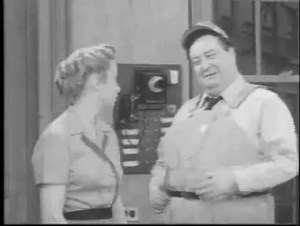
On “The Honeymooners,” Ralph Kramden (played by Jackie Gleason) had a phrase that those of us of a certain age can’t help but remember.  “To the moon, Alice, to the moon!” he would rasp at his wife (played by the inimitable Audrey Meadows) whenever he had no less predictable comeback to her never predictable jibes. Of course, the idea was that this was how far he would knock her.  An upraised fist often accompanied his threat.

The audience, of course, would roar.  So hilarious this empty threat, for America knew that Ralph would never make good on the threat. Even Alice never flinched–supposedly because she, too, knew those words signaled an empty threat.  But underneath those words and the fact that viewers found them to be so hilarious, was the idea that such threatened violence was funny–and, somehow, that such treatment of his wife was a man’s right.

Alice’s only defense was her wicked wit, and unlike many abused wives then and now, she was never really punished for it.  Somehow America knew that if he ever made good on the threat, that Alice would be out the door and probably within a manner of days, on the arm of a man who didn’t weigh 300 pounds plus–a man who made more than the $65 a week Ralph made as a bus driver.

All-in-all, the situation was not very believable–that trim beautiful (sharp-tongued) Alice would ever be wooed and won by fat, acerbic, not-too-clever Ralph required a suspension of disbelief we were well-accustomed to in the early years of TV, not to mention the movies.  From “The Honeymooners” to “Doctor Who,” we were willing to believe anything to be entertained, but the element of violence toward women found so howlingly funny in the Jackie Gleason show was at least not echoed in the wildly implausible “Dr. Who” plots.  There it was highly likely that one would in fact (or in this case, fiction) be flown to the moon–something that never quite happened on “The Honeymooners.”

How far would I go for someone I loved?  Certainly not as far as Alice went. For although it is true that in my lifetime at least a dozen men have “sent me to the moon,” that is beyond the limits of where I’d allow anyone to knock me to!  Yes, I would and have done many things for those I’ve loved.  I have faced up to a gunman, done nursing tasks I never thought I would have done in a million years, faced up to a police captain to release a man  from jail (and succeeded) in a situation I should have had the good sense to know was impossible, and stayed in a country torn by revolution until I knew the man I loved would live, but one thing I would not do is allow myself to be knocked to the ground, let alone to the moon.  Abuse is something I would not take–by a husband, a lover, a parent or a friend.

It was inevitable that one clever cartoonist would come up with this answer to the question, “What did the astronauts find when they landed on the moon?”  Of course, Alice Kramden! But let me tell you, one person she would never have as a companion there is me! “I’d do anything for you, dear,” is a song those of us “of that certain age” will find familiar, but in my case it is not true.  I will not take abuse–either orally or physically–from anyone, no matter how close the connection, and have absolutely no expectations that anyone would take it from me.

In response to The Daily Post’s writing prompt: “Take Me to the Moon.” How far would you go for someone you love? How far would you want someone else to go for you?

One No Trump: JNW Prompt Generator

Today, in honor of my sixth posting to Jennifer’s site, I decided to take the first six prompts given by her prompt generator and to try to use them all, in order, in a poem, story or essay. What occurred was this short short story. The phrases that were generated were: hurt awareness, fair incident, muddy kitchen, innocent ring, tired reputation, stupid recommendation.

th-1
One No Trump

I wouldn’t say that she was totally disillusioned with life, but she did carry this air of hurt awareness that one unfair incident after another had worked against her best interests in life. She remained stubbornly sure that her choices, if they had worked out, would have led to a glorious life. No one even tried to convince her that her goals and means toward them were destined to fail from the first–not because the plans themselves were not worthy ones, but because she had an innate talent for messing them up.

She started in working diligently to attack the one wrong thing in her life she could most easily alter: her muddy kitchen. When the first giant crashes of thunder had been loosed upon the world, the dogs had set up a tremendous chorus of howls, scratches at the door and barks. She had let them in immediately, not realizing that the little one had been amusing himself in her new flower bed. In their great rush, one had upset the water dish and that combined with Hampton’s muddy paws, had made quick work of her earlier labors in creating a spotless kitchen.

She washed the mop out in the kitchen sink, creating a second dark ring around the sink. It was the innocent ring—dark black—that paralleled the slightly raised reddish-rust ring a few inches above. It was that red ring that she needed to scrub off before the break of day. It would not do to let anyone see that guilty ring. No matter what her justifications were, the world would not believe her. She had one of those unlikable faces that turned people against her, no matter how reasonable her arguments were. It was too late to alter the frown lines that pulled her lips downward, the darting eyes that said “I am not entirely believable” and the hands that wrung themselves by habit.

It was not, given the record of her entire life, that she did not have an adequate reputation—respected family, charitable acts, donations to the correct causes. It was just that over the years she had started espousing strange causes and slowly her actions had started becoming a bit odd as well. Chasing odd cars down the rows of the Walmart shopping center screaming abuse at their drivers for the sentiments revealed on their bumper stickers. Standing on a corner on Main Street holding up a placard that read “Polluter!” each time a car or truck passed, spewing black smoke.

She called the parents of children she witnessed bullying other children as she sat on a park bench near the school crossing and harangued the parents of large families about zero population growth. She was so scathing in her criticism of her bridge partner when, even though he had opening count himself, he had failed to raise her one trump opening bid, that he’d dropped out of bridge club; and when no one else would consent to be her partner, she, too, had been forced to quit.

So, it wasn’t so much that she had a bad reputation but that she had a tired reputation. She just couldn’t bother with the niceties anymore. She said what she thought—without taking tact into account. Bastards didn’t deserve tact. But even her best friends, the few of them she had left, admitted that her behavior was becoming ever more aggressive and bizarre.

And this is how she came to have that damned second ring in her sink. She knew she never should have gotten into a discussion about politics with anyone in this town, let alone a stupid plumber who lived up to all the stereotypes of plumbers when he knelt down showing his butt crack.  What tipped the balance was the cretin smugness of the plumber as, seeing her Hillary sticker on the fridge, he declared that he was going to vote for Trump just to see the fun that resulted.

This, coupled with the coincidence of his request that she give him the big wrench, had caused her, for that one moment in her life, to act to the full extent of her wishes. She gave him the wrench full force over the back of his head. He then departed this life with no fuss, no struggle, merely sinking forward into a full bow, his forehead against her kitchen floor.

There was a lot of blood, and although it was an unplanned act, she congratulated herself in her choice of locales—the kitchen being the best possible place to get rid of the evidence. That was why she had taken care of the hard job first, digging the new flower bed a good bit deeper, dragging his body out, head in a black garbage bag pulled tight, pouring the quick lime and then covering the body well with soil, planting the bushes that would establish the deepest roots. Putting the ring of flowers around the bushes and raking a solid cover of largish stones over them, fooling herself into believing this would discourage the new terrier’s digging instincts.

So now, taking the pup’s paws into account, she supposed she’d have additional work to do on the flowerbed, too; but her first priority was the blood rings in the sink. Like Lady Macbeth, no matter what she did, those stains held fast. She rued, then, that penurious nature which had caused her not to replace the porous old sink, older than she by far, that held stubbornly on to everything that passed its way–blueberries, coffee. Blood. She scrubbed to no avail.

Looking out the window, she could see where the puppy had uprooted Peony bushes and flowers and ground cover. More work there to complete before sunup. Hours ago, she had called a housekeeping company in another town to ask about the best way to remove bloodstains from a worn porcelain sink. The woman had been no help. “Call a plumber,” she had said,“He should be able to solve your problem!” Stupid recommendation.

https://topicgenerator.wordpress.com/      https://dailypost.wordpress.com/dp_prompt/que-sera-sera/

PC310039
Fitting In

I can’t remember ever wanting to look like anyone else.  I have always just wanted to be unique. Sure, I had a doctor blouse (remember them in the sixties–prompted by Dr. Kildare and Ben Casey?) and the later refinement of the the doctor blouse, the sissy blouse–merely a doctor blouse with ruffles added?  I also wore pedal pushers, madras and short skirts–all in their day.  But the purpose never was, as I recall, to look like everybody else.  It was because I liked the fashion, but wanted to be unique within that fashion.

In the past thirty years or so I haven’t really even known what the fashion was.  I just saw clothes and bought them because I liked them and they didn’t make me look fat! (Even if I was–ha.) I have friends who come to Mexico and buy the wonderful embroidered blouses, then tell me when they go home they never wear them because they just don’t seem “right” in Wyoming or even California!  This seems so weird to me.  If I like certain clothing, I wear it wherever it is climate appropriate.  Why would anyone want to wear what everyone else is wearing?

The same goes for hairstyles.  I don’t know what is “in.”  I just know when I have a hairstyle that makes me look like how I feel. Certain haircuts make me feel “right” and I am happy for the time it takes for them to grow out and for me to get a new haircut that isn’t right–such as the one I have now. I think perhaps this is why I never quite fit in anywhere until I went to a culture so foreign that I wasn’t expected to fit in and was accepted because I was different.  Somehow, the American culture has never quite evolved to the point where those who are different are accepted.  Perhaps that’s why I have always preferred to live abroad.

(The picture is from my New Years Eve poor taste party several years ago. I’ve staged these in three countries–so much fun.  In addition to dressing as tacky as possible, everyone brings a dish they are secretly embarrassed that they love, in spite of the fact that it isn’t “in style.”  Mac and cheese and homemade Twinkies and hostess cupcakes were three of the dishes.  Can’t remember the rest. If anyone pictured or who was there remembers, please comment!)

In response to The Daily Post’s writing prompt: “Style Icon.” Describe your personal style, however you’d like to interpret that — your clothing style, your communication style, your hair style, your eating style, anything.

Kewpie Dolls and Churros

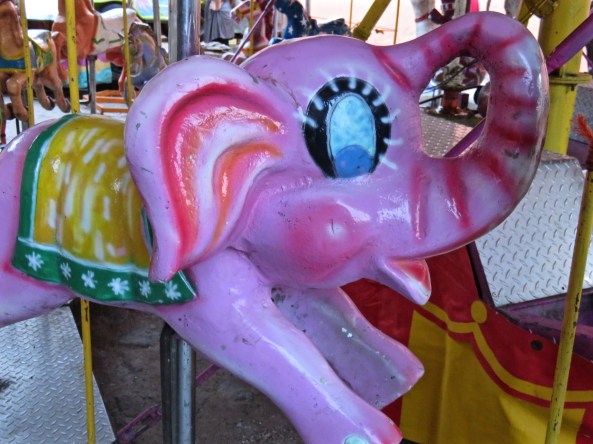
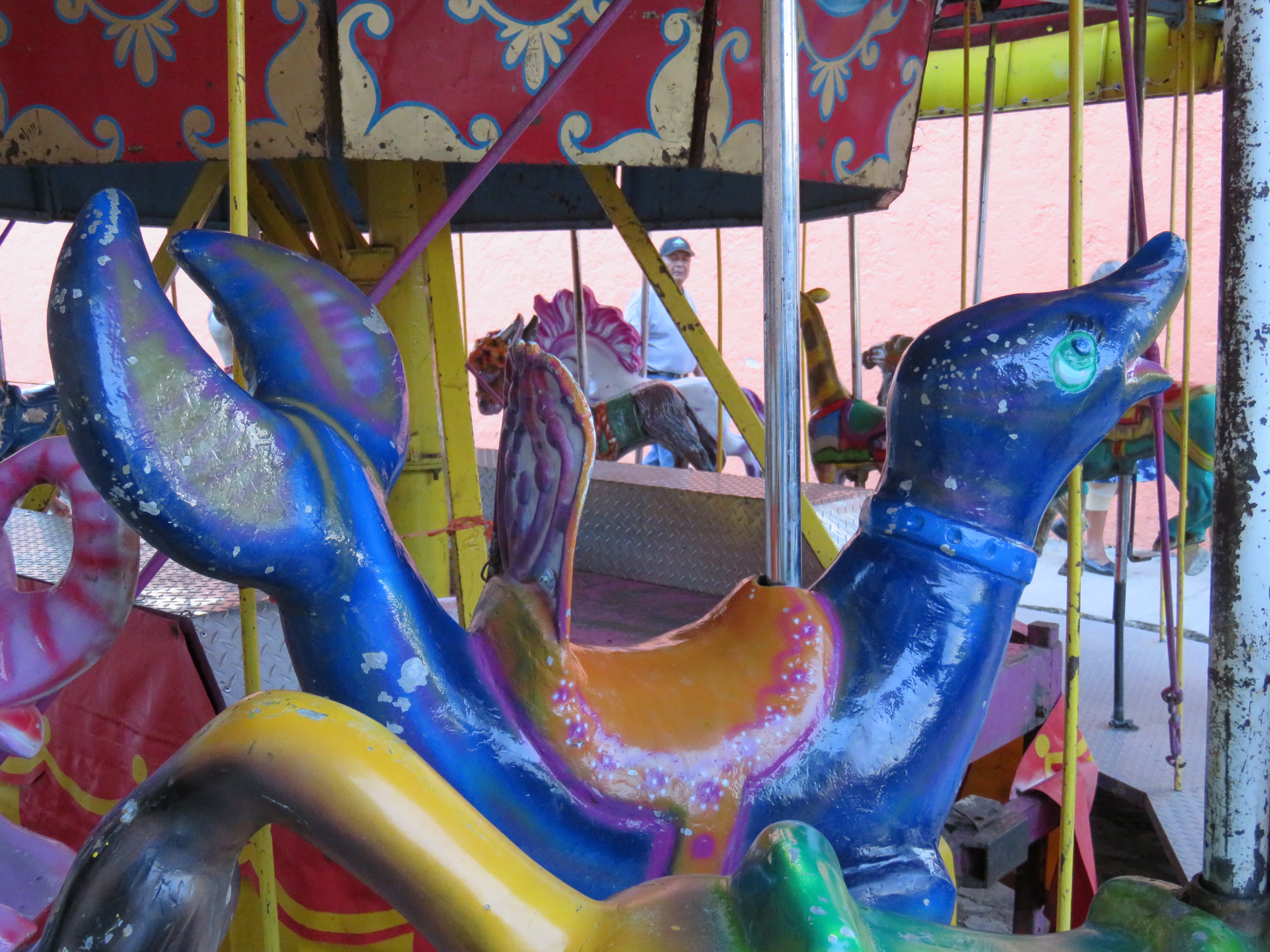
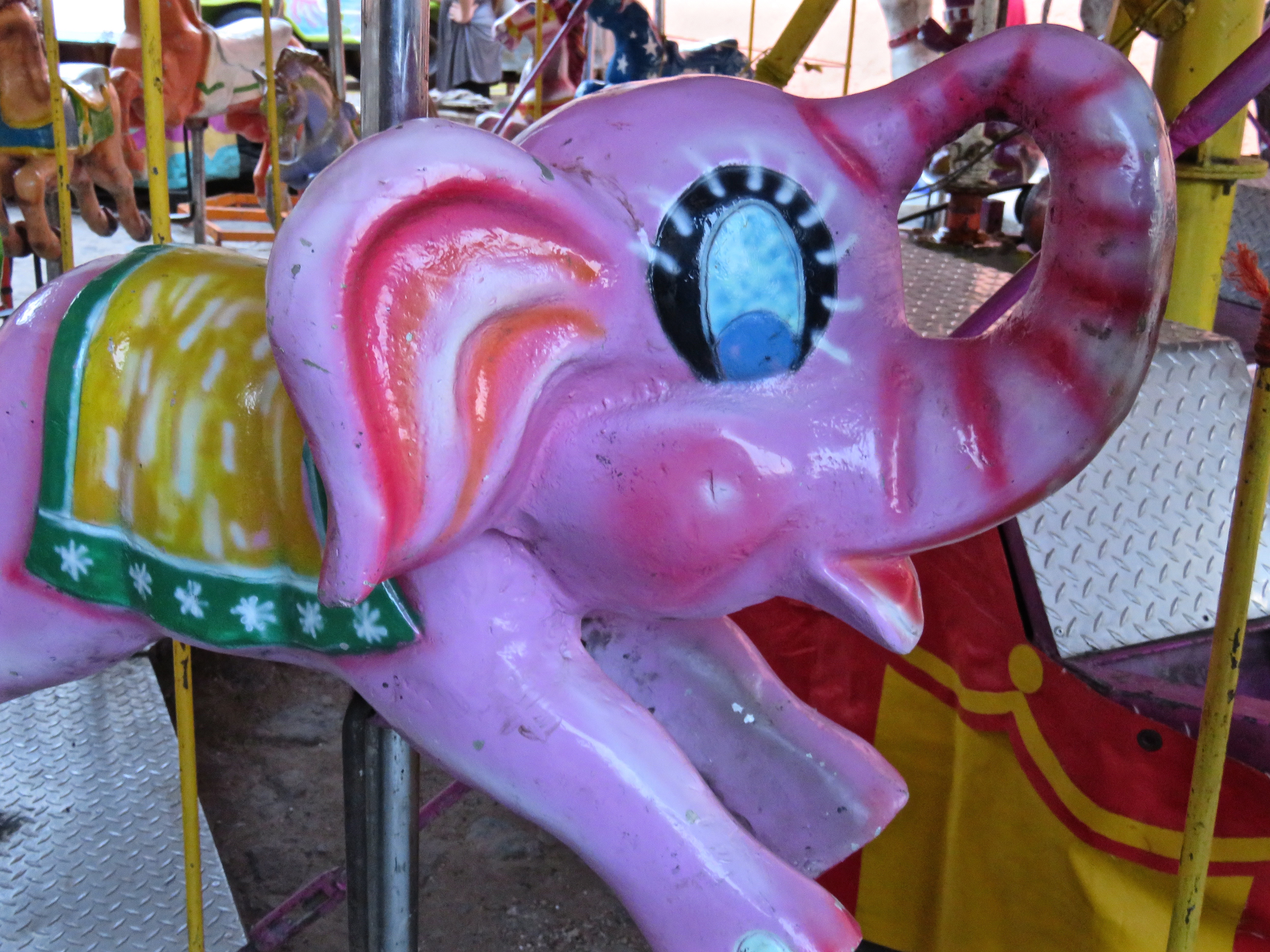
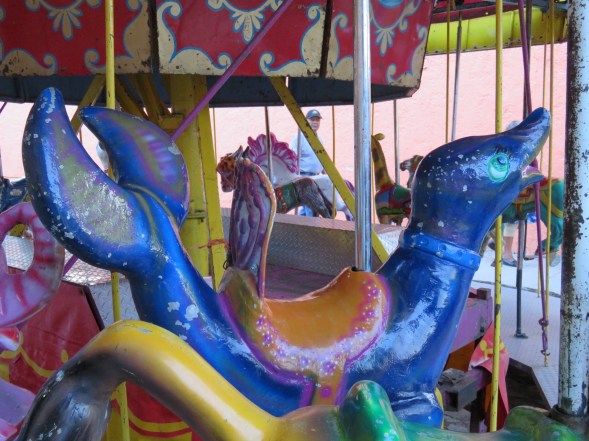
Some of my favorite memories when I was small involved the traveling carnivals and circuses that would set up in my small town.  The rides seemed incredibly large, thrilling and exotic to me.  I loved being turned upside down and jerked this way and that and spun around in circles on merry-go-rounds and more adventurous rides by the name of  “Tilt-a-Whirl” and “The Bullet.”
IMG_1061 IMG_1062

There were strange sights sealed up in tents that my mother never let me go into, but I overheard her discussions with her friends of just what shocking sight they had seen.  It wasn’t until I read Truman Capote and other southern authors that I first heard the term “geek show,”  but coming from  a northern state, I never would have heard these shows referred to by this pejorative term.
IMG_1072 IMG_1073 IMG_1118 IMG_1113

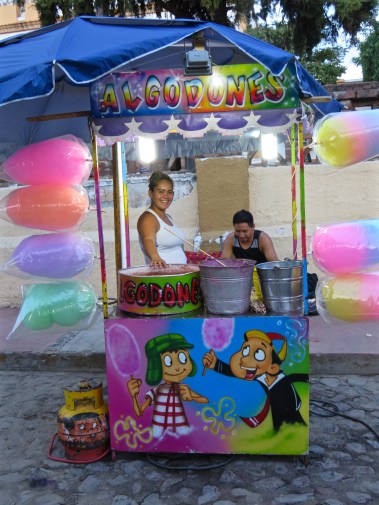
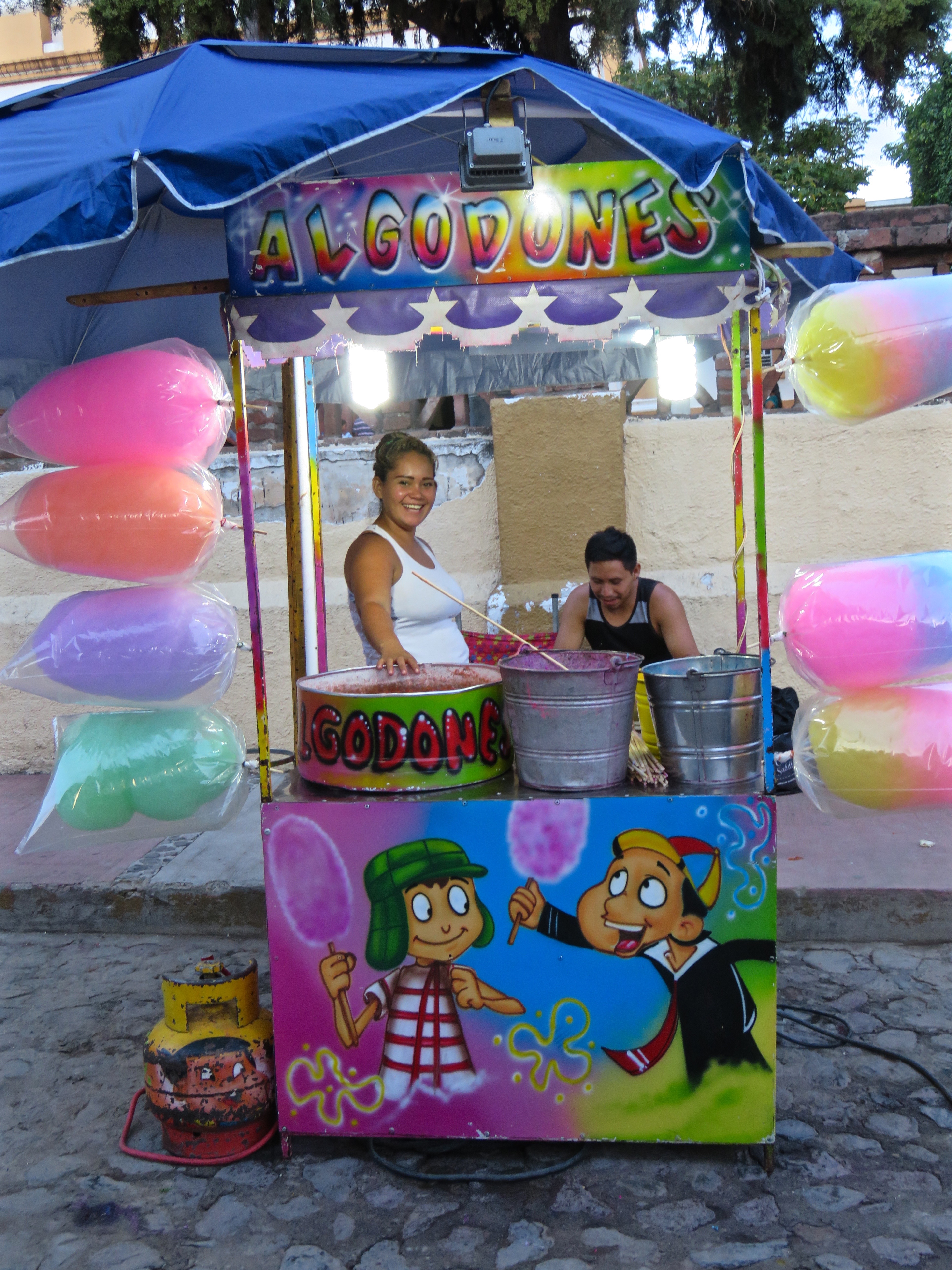
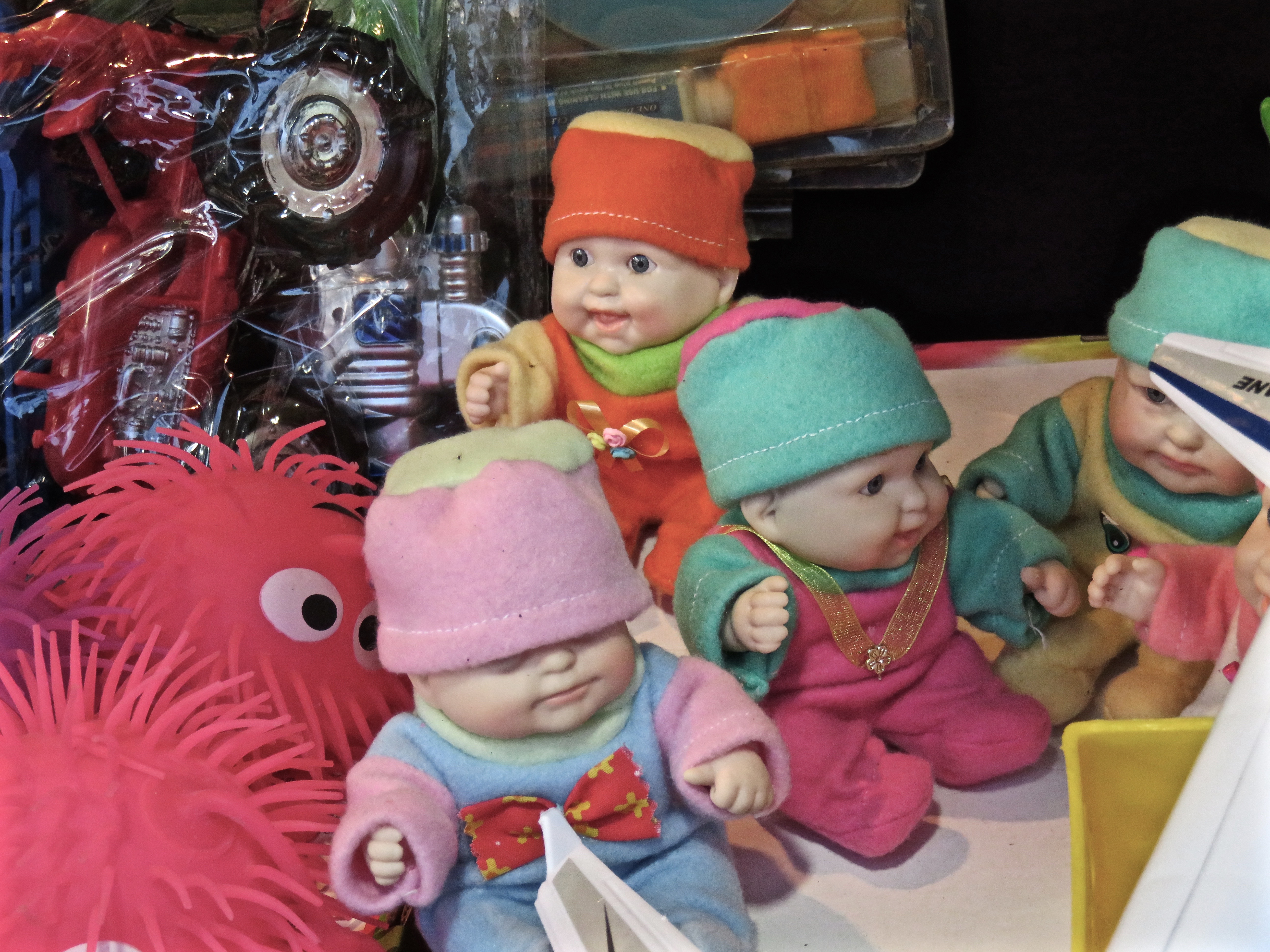
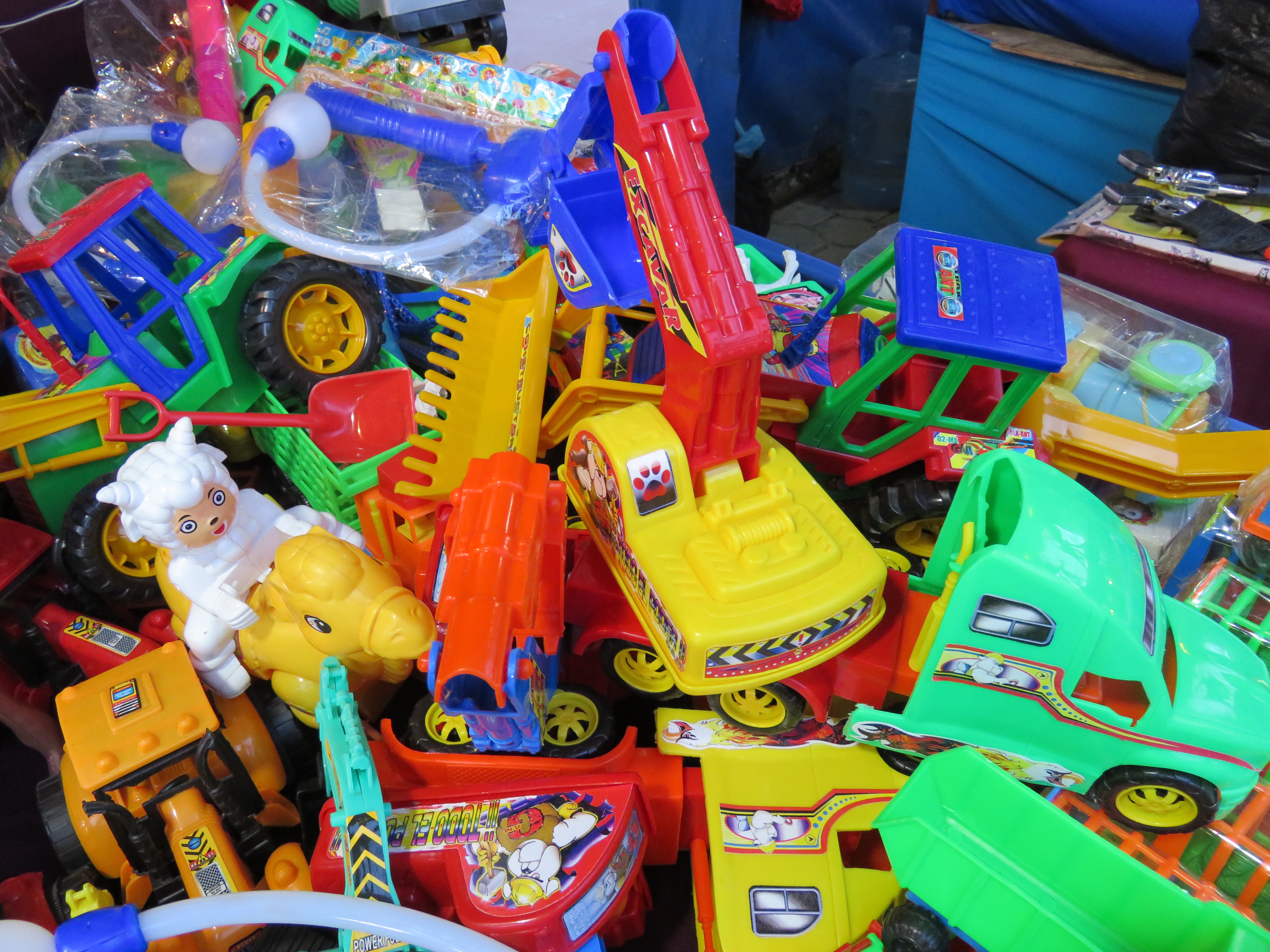
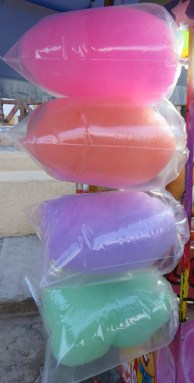
There was cotton candy and candied apples, be-feathered kewpie dolls made of plastic so thin that you could dent them if you squeezed them too hard during the thrills of the ferris wheel. There were nickels skimmed across carnival glass plates with carnival glass bowls and cups as prizes for getting one to stay on a plate.
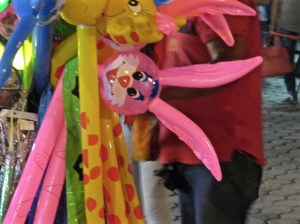
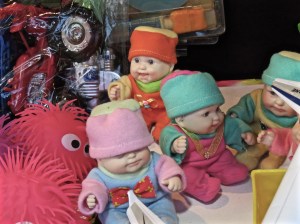
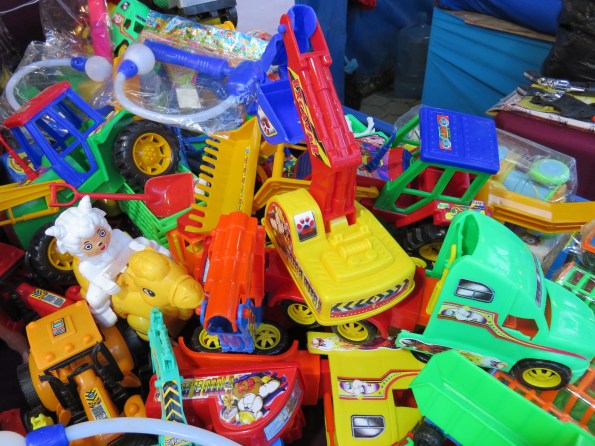
IMG_1105 IMG_1089 IMG_1086There were cheap toys, cheap thrills and, as we grew into our preteen and teen years, exotic carnies from out of town.  We looked beyond their grubby clothes, grease-encrusted fingernails, ruffled too-long hair and too-wise leers to imagine them as romantic gypsies or James Dean come to discover us in our small prairie town.  Nothing ever came of these dreams, for we ran at the first suggestion of anything remotely sexual, but they fueled our dreams as surely as the Saturday night show and Emily Loring romances.

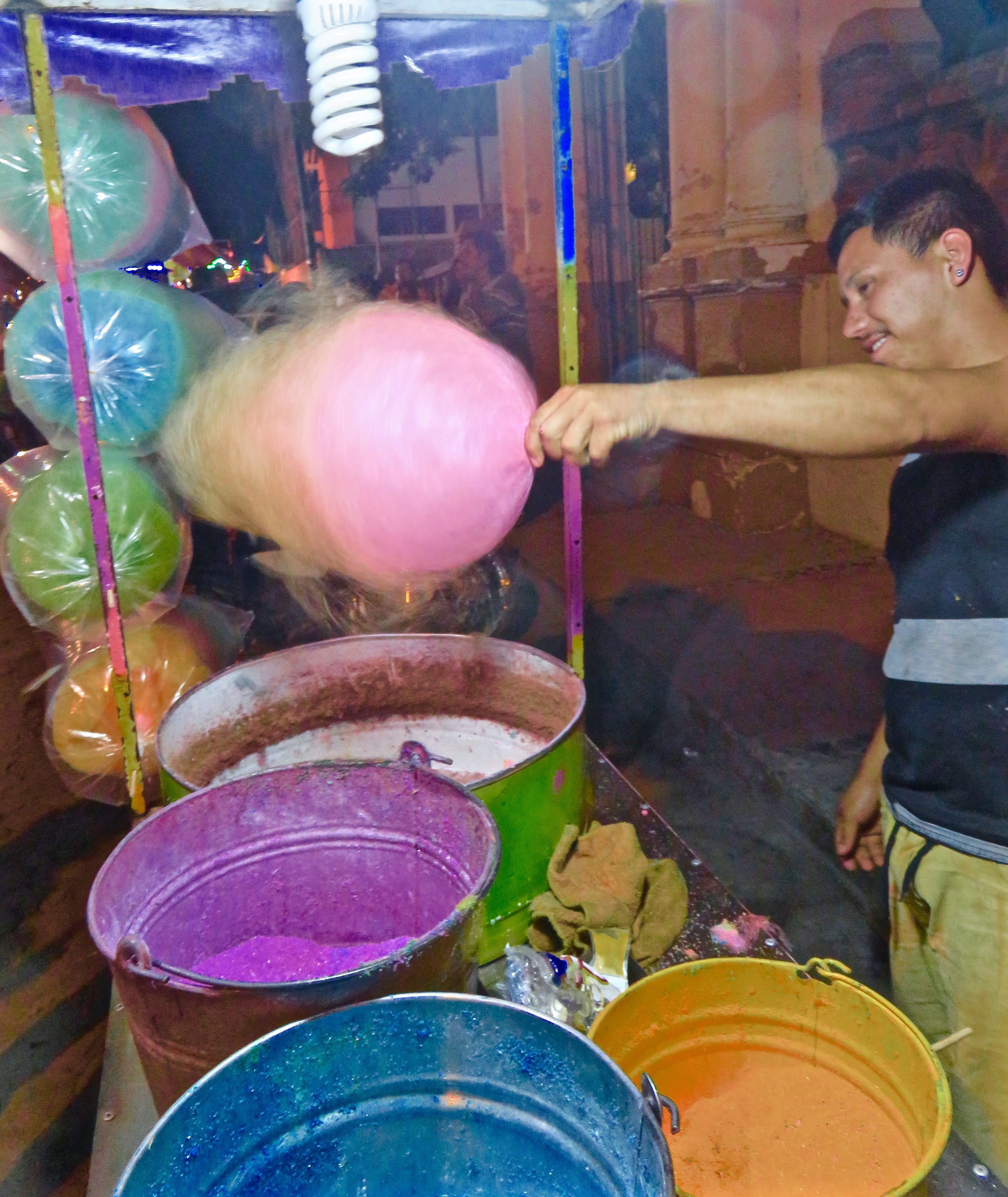
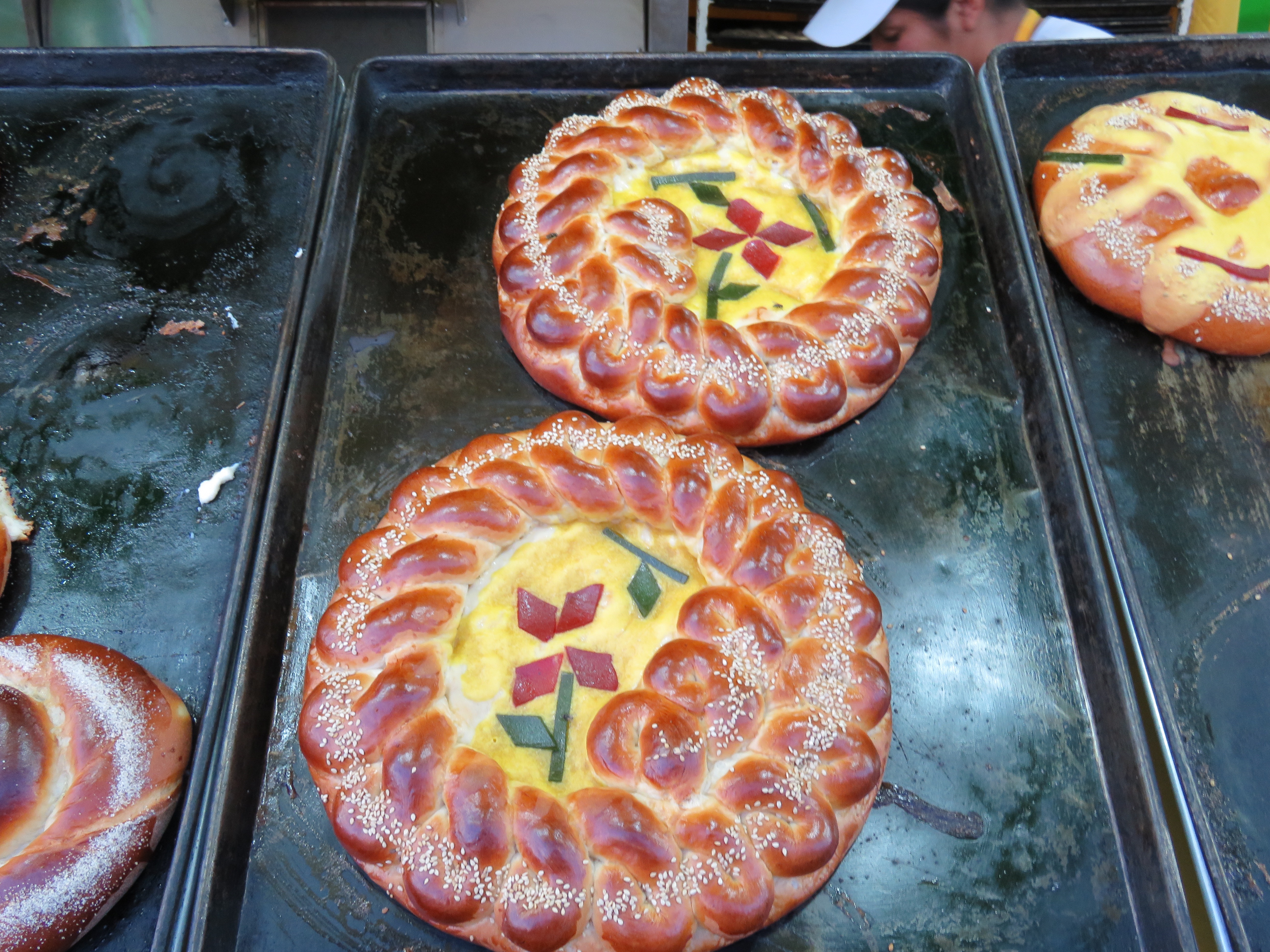
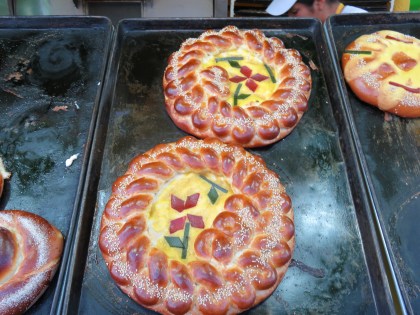
These memories are fueled by a festival of a different sort, and these pictures were in fact taken last night when my friend and I strolled through the streets of San Juan Cosala during their 11-day yearly religious fiesta in honor of Saint John the Baptist, the patron saint of the pueblo.  We ate pizza cooked in gas ovens on the spot, waffle cones filled with galleta ice cream and strawberry ices and churros–the Mexican extruded donuts–dipped delicious from their vat of hot oil and rolled in sugar.  We passed over the micheladas, tacos, tamales, the thick hot pancakes and the egg bread that was as much of an art form as a comestible.
IMG_1082

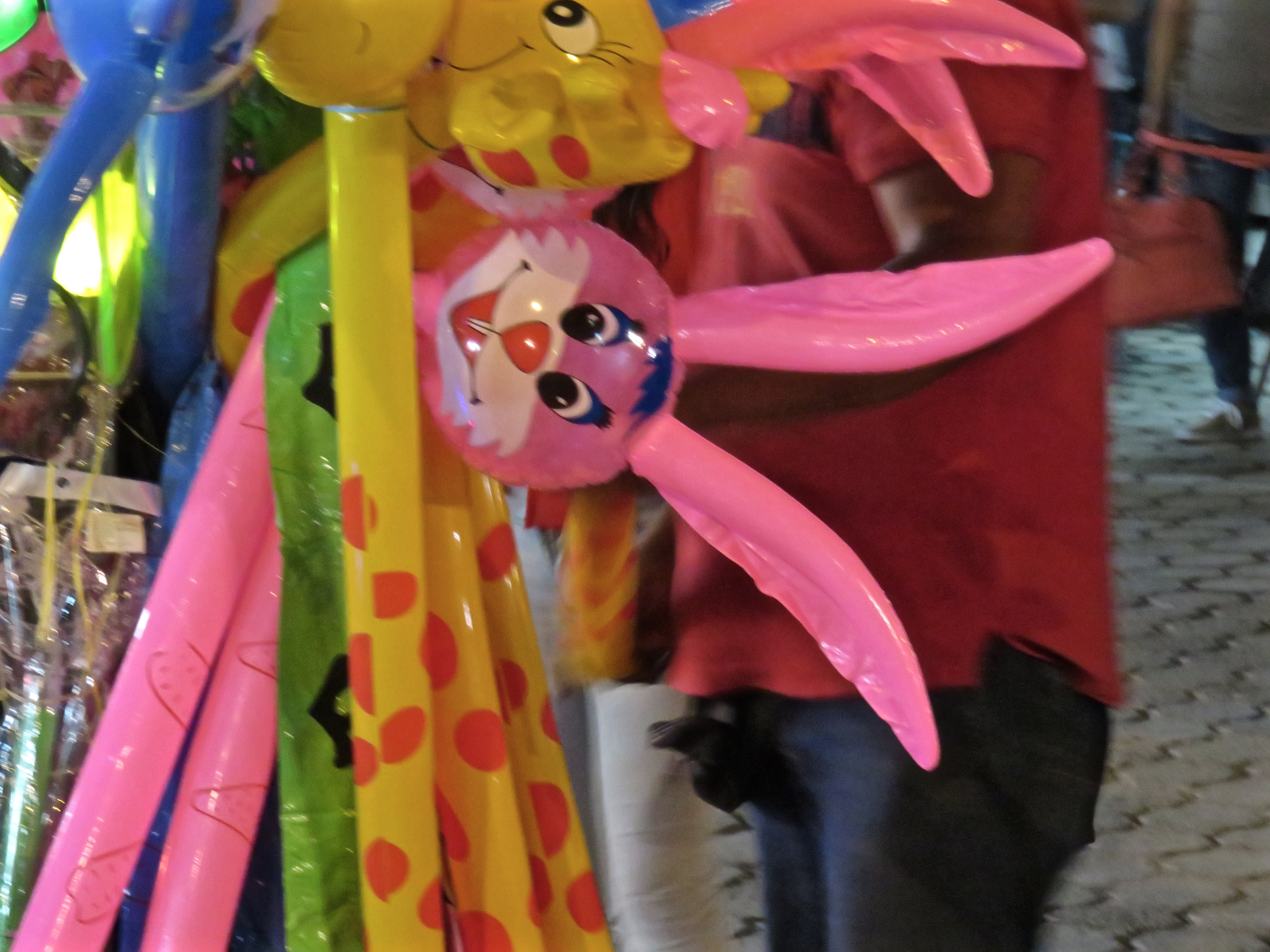
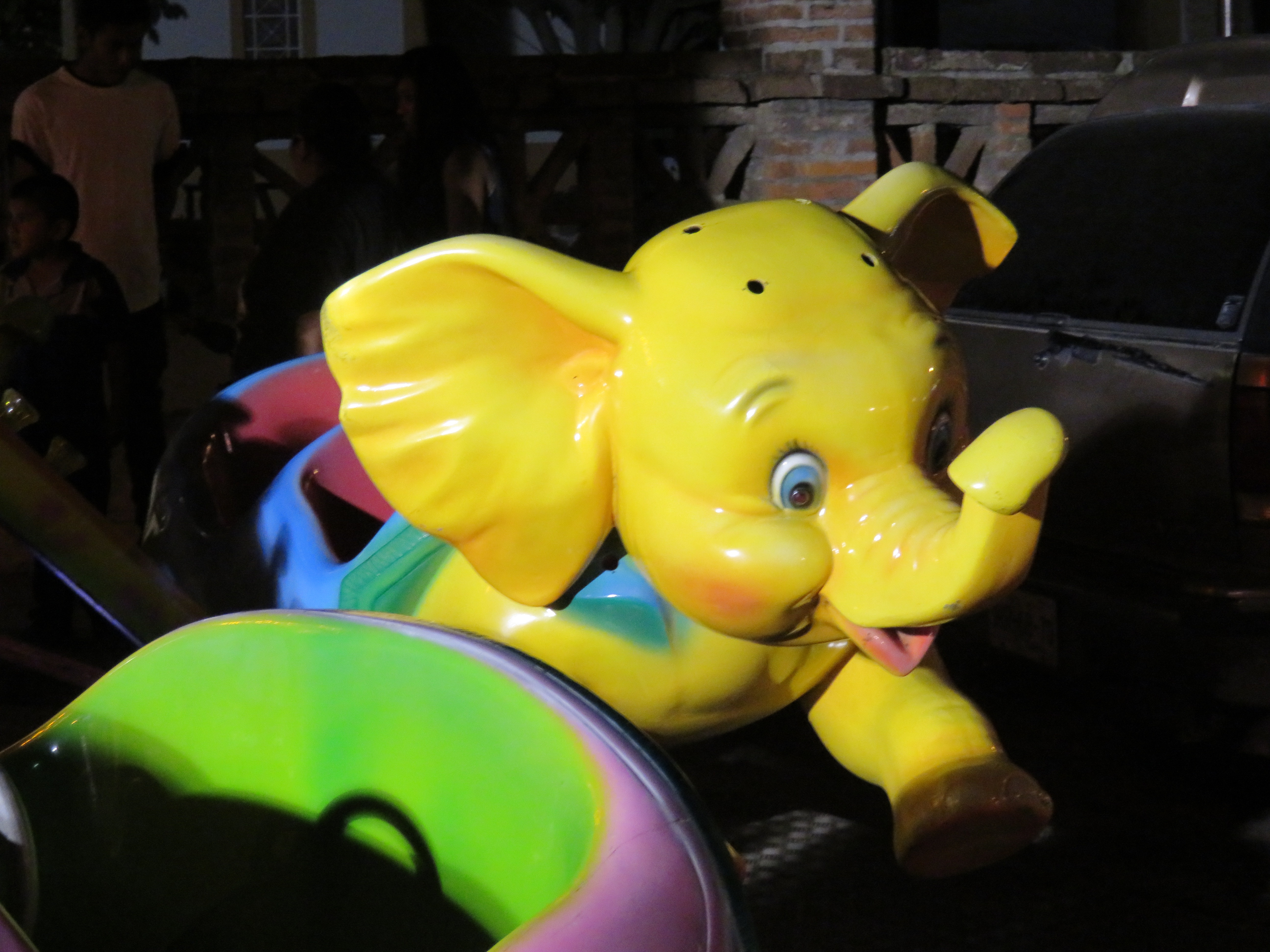
We did not throw darts at balloons or ride toy cars or swirl through the night on Dumbo or plastic giraffes.  We were tempted by the bumper cars, but could not bring ourselves to bump the small children who were their only other occupants.
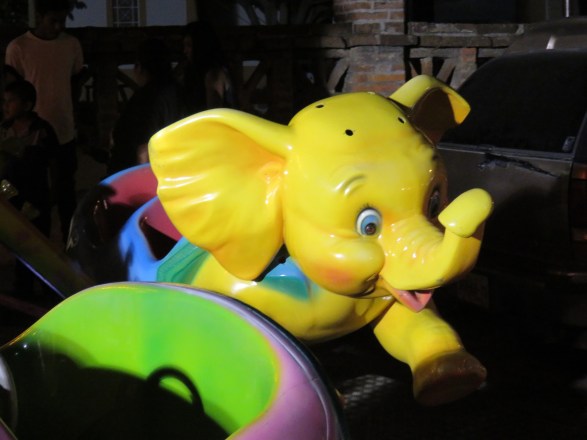
IMG_1123

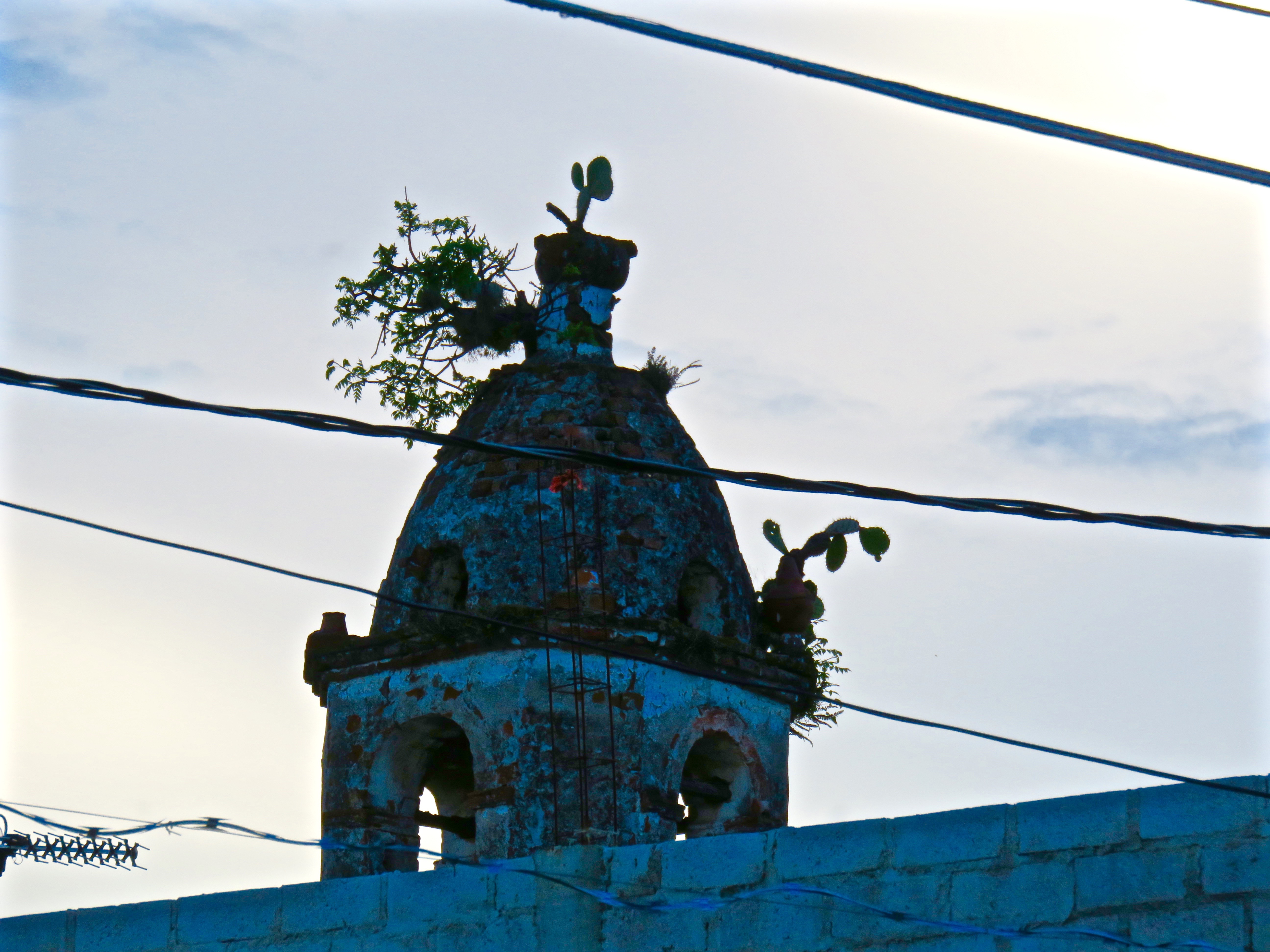
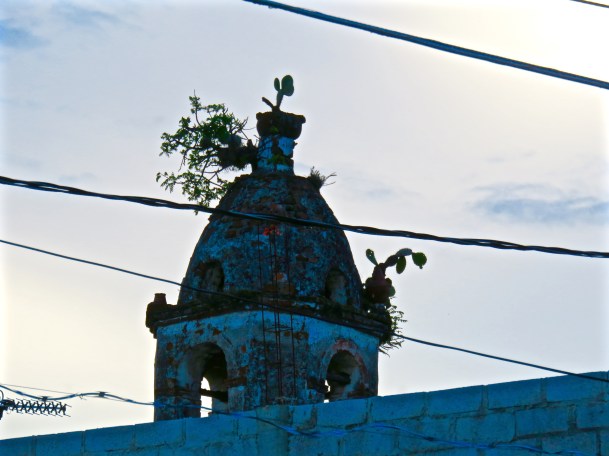
Instead, we strolled by the Hospitalito–the remains of one of the oldest churches in Jalisco, whose ruins now consist of merely this dome with cacti growing out of it and the one remaining broad wall that supports it.
IMG_1080

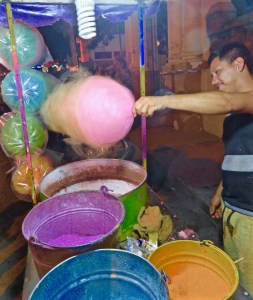
One sinister detail of the otherwise image-filled night was the small girl–perhaps 10 or 11 years old, who peered over my shoulder, coming very close as I photographed the cotton-candy spinner.  “She must be interested in photography,” my friend told me, “because she was looking so closely at your camera.”  As we walked away, she followed us, and asked a question of me that neither of us could understand.  She was not asking for money.  We asked again what she wanted, but again could not understand what she said.  As we walked away she followed–down row after row of booths offering toys, cookware, cosmetics, religious statues and games and eatables of many varieties.  Finally, it grew sinister.  We would spin and face her and walk in the opposite direction and she would spin and walk after us.  I finally refused to walk to the end of any rows, preferring to stay in more frequented areas.  I kept hands in pockets over my money and camera.

My friend, too, felt strangely threatened.  She revealed that while at the cosmetics booth, the girl had crowded her close on one side while a seedy-looking man had come up close on her other side.  When she looked at him, he feigned an interest in the lipsticks in front of him, picking one up and examining it closely.  Not very convincing, this interest in women’s cosmetics. My friend said she backed up quickly and walked away.  The girl  continued to follow her.  The man didn’t.

The calm demeanor of this girl came to feel specter-like.  She was a ghost child following us through cobblestone streets, never speaking, never varying her distance. We started to devise excuses to look behind us, but we needn’t have bothered.  She was always there.  After 45 minutes of being followed, we devised a plan to spin around and face her and walk in the opposite direction.  We did this four times in rapid succession, but she just calmly turned around and followed us each time.  When I paid for a purchase, she looked closely at how much money I took out of my pocket. I was very aware of her interest, as she followed closely with no obvious attempt to talk to us and making no effort to escape our notice.

Finally,  my friend said, “Why don’t you ask her why she is following us?”  Instead, I had another idea. Turning around so quickly that she almost ran into us, I said in Spanish, “Do you know where the police are?  I need the police!”  My friend said she saw a brief emotion flick over the girl’s face before she looked to the right and looked to the left, as though she really was looking for the police.  Then I looked at the vendors in the booths near by and asked the same question–very loudly.  One woman said they would be there later that night.

Both my friend and I did not see the girl leave.  It was as though she’d been conjured and simply disappeared.  We did not see her again that night, but we continued to scan the crowd for her as we sat on the steps of the plaza surveying the crowd and eating our guilty pleasures.  At one point, another small girl and her smaller brother approached me and asked a question.  Again, she used a term I’d never heard before, and my friend did not understand either.

“She is asking you for the time, said the woman frying churros.”  “Ten after nine,” I told the small girl, in Spanish, and she walked away.  “I think that’s what the other girl was asking us,” I said, and eyed my watch, glad to still be wearing it. I squeezed my pocket as well.  I was still in possession of my camera.  We took the best-lit route back to my car and went home perhaps an hour before we would have chosen to, but suddenly the night had turned just the slightest bit sinister again.  We sought the comfort of locked doors and the short drive home.

(Disclaimer:  I need to add here that this is the first time in 14 years that I’ve ever felt targeted in my pueblo or perhaps anywhere in Mexico.  It was complicated by the fact that this child looked like a well-mannered little girl who would be a teacher’s pet–the smartest girl in the class–one you’d choose to babysit your kids.  That she was the accomplice in some little robbery scheme was rather heartbreaking.)

https://dailypost.wordpress.com/dp_prompt/toy-story/

Home Rule

Home Rule

The laws of society, made by such a complicated process, are ones that we seldom set about trying to change.  We follow some laws and break others. We pay our taxes and do not steal or litter, but we speed now and then, smoke a little pot in the wrong place, as decreed by state law, and sometimes stray onto private land.  These are small departures from the law which, not taken to excess, hurt no one including ourselves.

The bigger consideration for me is the rules I set for myself.  I often over-complicate my life by the intricacies of these rules.  Whether they are set up  because of the expectations of others or myself is something I’ve been examining at great length lately.  Why, when I entertain, is it so important to me to create a complicated meal worthy of company?  Why must I fuss over the table setting, the music, getting the house just right?  I know in the back of my mind that such things do not matter as much to those invited as they do to me, and yet I feel driven to stage the occasion, to create a memorable event–a happening of sorts.

This is a rule I somehow made for myself long ago and I can’t break the habit.  This is a need for me that over-complicates life and makes me less willing to entertain since to do so demands so much time.  Am I capable of slapping a pot of chili on the table along with a stack of bowls and some spoons and letting others help themselves?  Can I point at the fridge and ask them to choose their pleasure? Use paper napkins and mismatched glasses? Put a bottle of salad dressing or ketchup on the table rather than putting them into a bowl?  Would doing so detract from the pleasure of guests?  Would it even detract from my own?

I fuss and fuss with everything.  My art pieces are added to and subtracted from for weeks or months before I finally make a decision, choosing from thousands of objects stowed away in compartmentalized drawers.  Perhaps this is why I love traveling and making art with what I find around me.  Given fewer choices, I fuss less.  I long for a simpler life, yet seem unable to break the rules I set for myself long ago.

My newest fantasy is to stage a huge garage sale and to sell off jewelry, clothes, excess art objects stowed under beds and in closets and even, I admit, behind a painting in my seldom-used fireplace. Then I could stow the rest of my personal objects in my studio and take off for a year, living simply from a suitcase with a few clothes and a few tools and art supplies and my computer.

Where would I go and in these new places, would it be easier to break the rules, to stay simple and to concentrate on what is most important?  I’ve actually done this five times in my life, and every time I’ve ended up filling my life up fuller:  more things, more obligations, more expectations of doing it all.  Will I ever accomplish my goal of breaking these rules or will it have to be that final move that accomplishes what I’ve never managed to maintain in life–taking away all my distractions, until there remains only me?  And then, inevitably, taking away even me.

The Prompt: Breaking the Rules–Think about the last time you broke a rule (a big one, not just ripping the tags off your pillows). Were you burned, or did things turn out for the best?


True Grit

DSC01208

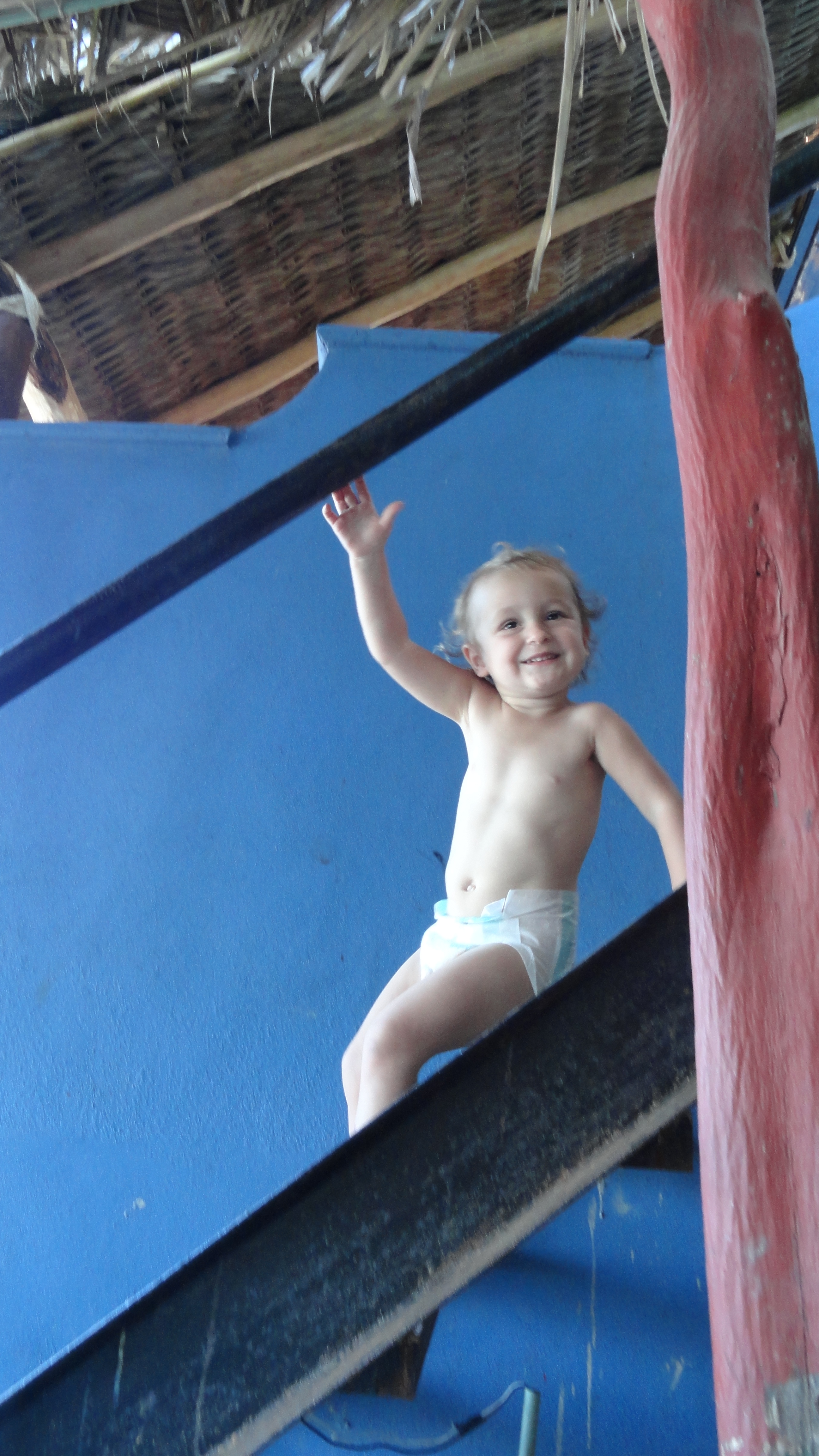
I want to be like this little girl who wandered away from her parents in the sand and into the beach restaurant where I was typing this blog. She came in to meet and entertain me, then to climb the stairs to the upstairs apartment—a dangerous enterprise with no side slats to keep her from falling. Her mom watched from nearby. I moved closer, just in case. But she made it up and down with no injuries, came over to chat a bit longer and then departed. I felt a bit happier and a bit braver myself by the end of our interlude.

The Prompt: Be the Change—What change, big or small, would you like your blog to make in the world?

True Grit

I’d like my blog to be Grit magazine, Ann Landers and the funny papers—all rolled in to one. I’d like it to be the first love comic grabbed off the shelf, the thing everyone wants to read, hot off the presses. I want it to be true, uplifting and fun to read. Entertaining. A collection of words that make people feel better after reading. I want it to be the thing you go to after reading of the last cuts to social services for the poor, the latest fool elected to public office, the last school massacre or child who mistakenly shot an adult with a gun provided to him by an adult. The thing you read when you’ve had enough of police brutality, plane wrecks, financial crashes, reverse Robin Hoods, pit bulls attacking humans, humans abusing dogs, cartels, corporations, slanted news agencies, corrupt rulers, crimes against women, drought, Ebola, HIV and dengue.

Yes, all of these ills exist and we need to know about them, but do we need to know about them ad nauseam, day and night, hour after hour? Do we need them served with our morning coffee, our evening meal, our drive to work? Need we dream them, fill our thoughts with them every hour of the day? And need those thoughts be hopeless and without remedy?

It is not that I want to avoid reality, but rather that I’d like to give that reality my twist and I’d like one major strand in that twist to be optimistic, another to be humorous, another to gentle the cruel realities, another, if it is of any influence at all, to be a catalyst to understanding and a feeling that something may be done in this world.

If you don’t remember the Grit magazine mentioned earlier in this piece, Google it. You will learn that it was formerly a weekly newspaper popular in the rural US during much of the 20th century. It carried the subtitle “America’s Greatest Family Newspaper.” It was full of human interest stories, usually with an uplifting slant. I can’t remember whether it came in the mail or whether we purchased it in the grocery story or in Mowell’s Drug, but I do remember grabbing it out of Mom’s brown paper bag when she got home from a trip down town and making off with it to my room or a grassy place in the shade of an elm tree to be the first to read it.

Perhaps you will label me as superficial if I admit that the first things I read in The Mitchell Republic—that “real” newspaper actually delivered to our front door—were Ann Landers, the comics (We called them “the funny papers”) and the crossword puzzle. I guess I wanted to be entertained, but I also wanted that assurance that something could be done about the bad things in life. Dick Tracy could solve the crimes. Mary Worth could be of worth in helping out. Ann Landers could find a solution to the ache of love and every puzzle could be eventually solved with hard work and perhaps a peek at the dictionary.

Now Google makes puzzle-solving a snap, so long as one is not shy about cheating and using that larger universal brain to solve the Sunday Cryptic Crossword, but in revealing so much, Google causes bigger problems—mainly, what to do with all of this knowledge of the world. For me, what I do with it is to write about it and within the world of my creation, to try to alter it enough to put a bit of hope into the world—to tinge it with a sense of humor or a sense of creation or a stab at a solution—however fanciful or impossible or romantic or homespun or illogical it may be.

This blog is like the biggest purse in my collection of very big purses indeed. In it lie jumbled together all my memories, dreams, hopes, heartaches, genius, stupidities, foibles, schemes, assurances, doubts, mistakes, successes, affections and affectations. The clasp I leave open for all to dip inside to see what they might find. One day, draw out a ditty, the next a tirade, the next a soggy handkerchief, soaked with my tears or an unused Kleenex to dry your own tears that were soaking your pillow when you woke up.

I want to be that thing you sneak off with before the rest of the family cottons on to its presence and take up to your bedroom to read with your back pressed up against the bolster on your bed or roll up and stick up your sleeve as you make off to the hammock or that shade in the grass beneath the tree.

And when you finish reading, it would be neither the hugest compliment nor the hugest insult you could give if you just thought, “That girl’s got grit!” I think a knowledge that she had prompted that statement would make the little girl or teenage girl who snatched that weekly magazine from the grocery sack very happy.

Risking It

The Prompt: Envelope Pushers—When was the last time you took a risk (big or small), and pushed your own boundaries — socially, professionally, or otherwise? Were you satisfied with the outcome?

Risking It

What risks are left in life at 67? That big risk of childbirth far behind me (and since I said no to it, so is the risk of my life being detoured by the products of it); travel no longer the thrill it once was; too tired to build and decorate any more houses; and love seemingly something that is going to be experienced in online spurts for the rest of my life; it seems as though the only risk left is that big one. And I fear it. Actually, resent it. I don’t want for life to ever be over.

I can’t stand the thought of fading into nothingness. Yes, my “work” might live after me, but my work is just the rumor of me. It is only the part of me I have been able to express. What about that entire unexplored rest of me? Where will it go? Will it ever have another chance? I feel the press of my own potential. Have I let it down? Will Hell really be the fleeting awareness, as I fade away, that I have left the most delicious offerings on the plate of life untasted?

I am not an athlete. I was never a mother. Although I have made some brave decisions in my life, nonetheless, I have feared too much. I fear being laughed at, rejected, passed over—so much so that at times I haven’t even tried. Like so many others, I have too often escaped. The power of books and films is that they afford us the opportunity to live vicariously those risks we put off taking in our own lives.

Then, the internet. Finally, the opportunity to control our fantasy lives—to create personalities for ourselves where we can leave out the parts we don’t want to face. We can always be 40 on the internet. Frozen at 145 pounds. Our successes are there on our cyber page for all to see and we can simply neglect to mention our failures. The internet is like a scrapbook with all of the faces we don’t want to see, ever again, relegated to Facebook, where we can block them with the push of a button.

Online, we get to think before talking, or at the very least, a chance to review and edit before hitting the “send” button. We are able to choose greater exposure with fewer risks. Or, one can opt for the “voyeur” stance—simply watching and imagining without ever taking the risk of exposing ourselves.

There is a swimmer a hundred yards off shore who swam by going in the opposite direction a half hour ago. A kayaker paddles by as close to the shore as she can safely travel without being swamped by waves. Two more kayakers come into view 500 yards out, paddling for shore.  It is not only the large decisions in life that expose us to risk, but there is risk, also, in the everyday details. You rent a kayak, yes, but how far out into the bay are you willing to paddle it? You go to potentially dangerous places, but to how much of that risk are you willing to expose yourself? We are all here at the same place at the same time, but I am sitting on my porch, well-shaded by the palapa roof.

The tern bobs just beyond the surf line, ducking his head underwater now and then, in search of any fish who are dumb enough to make it easy for him. Up above, magnificent frigate birds are executing their perpetual ballet—this time on our stage. Even clams stick their necks out now and then, albeit to their peril. Younger women and men jog by. Buxom grandmothers plod by. Children draw hopscotch patterns in the sand and poke at a large dying fish. I want to tell them to leave the fish alone as the child touches the eye, but when the fish doesn’t flinch, I hope it signals the end of its too-long death, gasping for air it can’t draw in now that it is surrounded by too much of it.  Simply by going after his own breakfast, he has taken a risk that will lead to his becoming someone else’s.

Part of taking risks is going into worlds we are not familiar with, to risk the discomfort of adjusting ourselves to that world. I think the secret is, however, to find familiar worlds within every world we take ourselves off to. It is not that we are rejecting the new, but rather that we are clinging onto those parts of ourselves that make us “us.” When I come to the beach, I occasionally meet with other writers. This keeps me reassured that I am sane to spend so much my life in recreating that life in words. It keeps me less lonely. It gives me a timeline and a goal. Without these touchstones that remind us who we are, we can all too easily become wanderers without purpose, going on to the next place in search of ourselves.

Sitting here on the porch, I am not necessarily any safer than the man or woman swimming so far offshore. It is my own risks I’m taking. I risk telling you something that will make you like me less. Something that will make me look foolish, deluded, poorly-informed, naïve, even crazy. A bigger risk is that in this writing I might see a part of myself I don’t like. This prompt today has done that: raised a question I don’t want to answer, even though I know the answer is hiding there somewhere within me. I know what the risk is that I’m afraid to take, but like the name of that acquaintance whose face I know so well but whose name suddenly eludes me, I just can’t quite put my finger on it. There is at least one risk left to take before that final risk formerly alluded to. Now I just need to set about trying to remember what it is.

Our Own Little Universes: Pains, Rips, Stars, Itineraries and Insights

DSC09009 - Version 3

DSC09008 - Version 2   DSC09008 - Version 5

DSC09008

DSC09006

DSC09016 - Version 2

DSC09016 - Version 3

Our Own Little Universes: Pains, Rips, Stars, Itineraries and Insights

Yolanda and Pasiano must have thought I was crazy when I started packing a week ago for my 2 month trip to the beach. First, all of my clothes piled on the bed in the spare room, then art and jewelry-making supplies piled on one end of the other bed, computer and photography needs piled on the other end. Bags full of other art supplies. Then two days ago, little piles of spices and kitchen tools, canned goods, disinfectant for fruit and veggies, bags of papers I’ve been wanting to sort for 13 years. (There will be time at the beach, where I know no one.)

But now it was the night before and with the car mostly packed with suitcase and bags, I still had hours more of sorting and packing to do. I knew it would probably mean a late night, and I’d have 5 or 6 hours of driving to do. Could I get enough sleep so I wouldn’t be driving sleepy, by myself, with no one to spell me?   I have been rushing around trying to get dozens of details finished before I leave and I was so tired last night, with still a half-dozen things to do, that it occurred to me that there was no law decreeing that I have to leave today!!!  So, I’m putting off leaving until tomorrow morning. That way I can finish packing at my leisure, sort out what I’m doing re/ the illustrations for the book and whether to take the scanner or not and get a full night’s sleep before driving to La Manz.

I don’t know why I get these mind sets about how things “have” to be done.  Such a relief and so glad I decided to do this because I was up three times with severe leg cramps during the night–sometimes both ankles, once my inner thigh and opposite ankle…Such agony that a hot shower couldn’t ease. If I had neighbors, they’d think I was either having the best sex of my life or that someone was killing me, because I was moaning and screaming out at great volume!  Then I thought to get in the hot tub and they eventually eased.

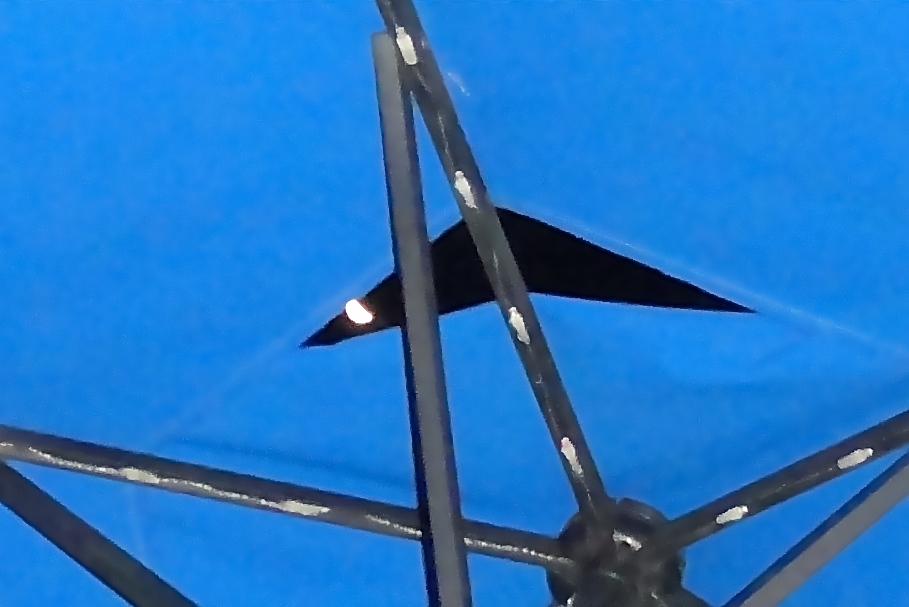
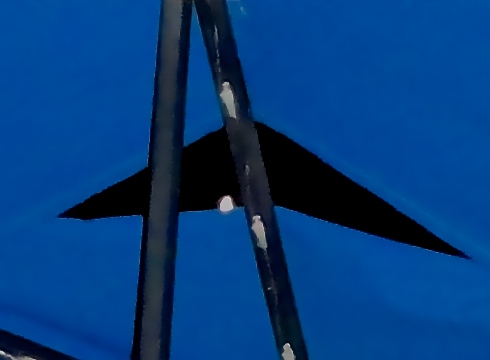
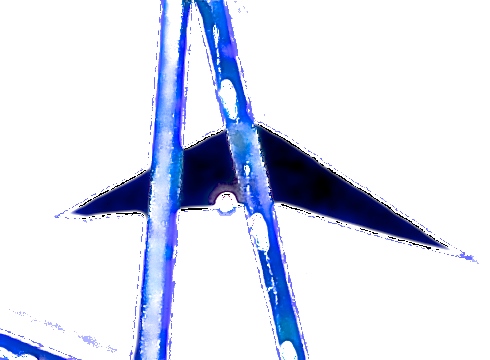
The third time this happened, about an hour ago, I almost fell asleep in the hot tub, but woke up, thought I needed to get out, and glanced up to see the quarter moon perfectly centered through a tear in the umbrella I’d positioned over a side of the hot tub.  You know what happened.  I had to get up, naked, dripping, cold, and go get my camera and then back into the hot tub to try to capture that phenomenon.

Dozens of shots later, with flash and without, I’d gotten a few barely effective shots, but realized how these pains of life sometimes lead to highly personal insights and experiences, so although the camera did not catch exactly what I’d experienced, my mind and memory had, and it might be that thing I remember in my last hour or last moment and gain strength or hope from.  So intimate, these night experiences with ourselves.  Those times when we realize we really are our own universes.  Our own little gods, having the final power over ourselves.

In short, although if I thought I had to drive alone to La Manzanilla today, I’d be so worried that I would fall asleep at the wheel, instead I don’t have to worry.  I can do my final packing today and then get a good night’s sleep.

I’ll leave tomorrow.

Wooden Heart

Wooden Heart

He handed it to me without ceremony—a small leather bag, awl-punched and stitched together by hand. Its flap was held together by a clasp made from a two fishing line sinkers and a piece of woven wax linen. I unwound the wax linen and found inside a tiny wooden heart with his initials on one side, mine on the other. A small hole in the heart had a braided cord of wax linen strung through that was attached to the bag so that the heart could not be lost. He had woven more waxed linen into a neck cord. I was 39 years old when he gave me that incredible thing I never thought I would receive: his heart—as much of it as he could give. Continue reading