Tag Archives: family memories

“I Imagine” dVerse Poets, Prose Poetry

img_1090

I Imagine

I imagine one more holiday.
My mother sits at a large picture window
looking out over a broad beach,
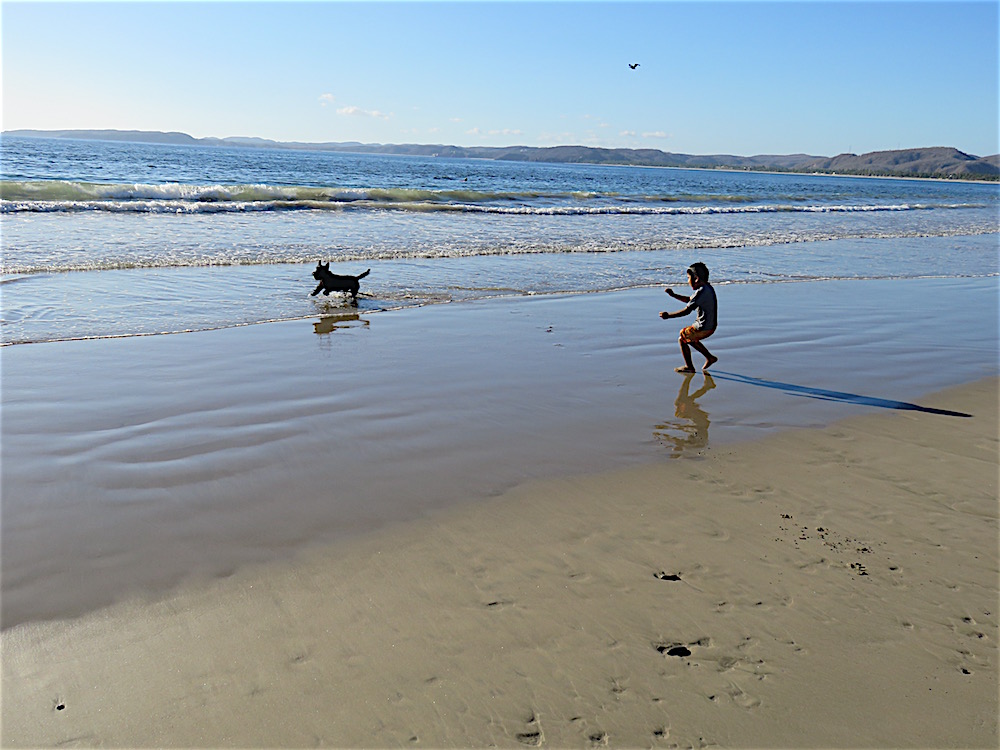
watching dogs fetching sticks.
Then, because she cannot help it,
she takes her shoes off to walk through packed sand.
I imagine her sighting the offshore rock
where puffins nest.
I imagine footprints—hers and mine
and the paw prints of the dog—
someone else’s—
who joins us for the price of a stick thrown
over and over into the waves.

My mother could count her trips to the beach
on one hand,
and most of those times have been with me.
Once, in Wales, we sat on the long sea wall
under Dylan Thomas’s boathouse.
A cat walked the wall out to us,
precise and careful
to get as few grains of sand as possible
between its paw pads.
As it preened and arched under my mother’s smooth hand,
its black hairs caught in her diamond rings.

The other time we went to the beach
was in Australia.
We stayed out all afternoon,
throwing and throwing a stick,
a big black dog running first after,
then in front of it,
my dad sleeping in the car parked at the roadside,
my mother and I playing together
as we had never played before.

My mother and the ocean
have always been so far divided,
with me as the guide rope in between.
I imagine reeling them both in toward each other
and one more trip.
My mother, me, a dog or cat.
Wind to bundle up for and to walk against.
Wind to turn our ears away from.
Sand to pour out of our pockets
to form a small  volcano
with a crab’s claw at the top.

So that years from now,
when I empty one pocket,
I will find sails from by-the-wind sailors
and shark egg casings,
fragile black kelp berries
and polished stones.
The bones of my mother. The dreams of me.

From the other pocket, empty,
I will pull all the reunions I never fought hard enough for—
regrets over trips to the sea we never made.
And I’ll imagine taking me to oceans.
Walks. Treasures hidden in and hiding sand.
Someone walking with me—
someone else’s child, perhaps,
and a dog chasing sticks.

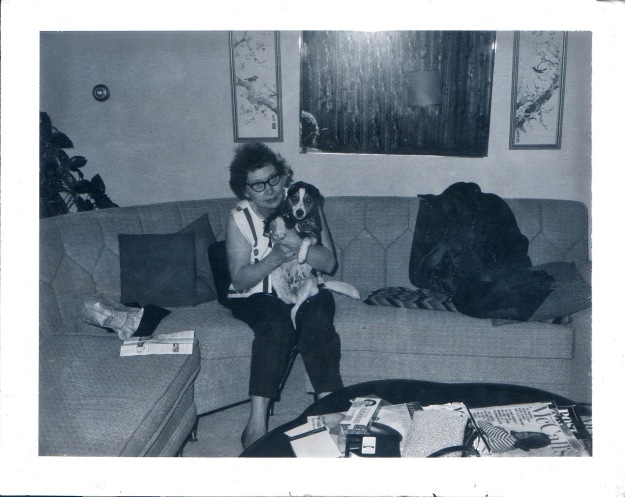
Note: I never took that last trip to the ocean with my mother, but I think of her every year when I come to stay at the beach on my own, and this year in particular, every time I throw the stick for Morrie and every time children come to play with us. Here is a link to my favorite photo of my mother, plus other stories and poems about her.

Written for the dVerse Poets prompt, Prose Poetry.To play along, go HERE.

Closeted

Please go here: https://judydykstrabrown.com/2015/12/06/uncornered/ to discover what I’ve had to say on the topics of closets!


https://dailypost.wordpress.com/prompts/closet/

What Vestige Left?

                                                              What Vestige Left?

I think what any of my ancestors would find most surprising if they were to come back is that there is so little of them left.  My paternal grandma would look for her quilts, her embroidery and her China cabinet full of glass and porcelain and would find none of them in my house.  I spent too many years traveling, so my older sister Betty Jo and my cousin Betty Jane wound up with all of grandma’s things. The one good quilt is over Betty Jo’s bed in the managed care facility where she now lives, but she knows nothing of it or of us or of her own children, being the prisoner of Alzheimer’s that she is.

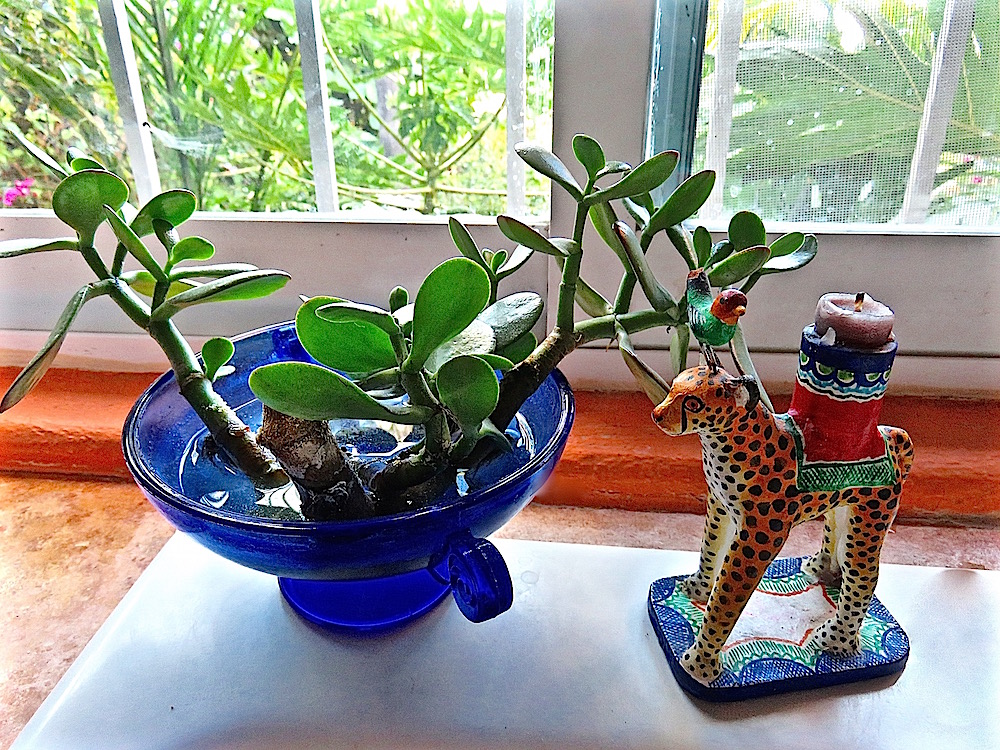
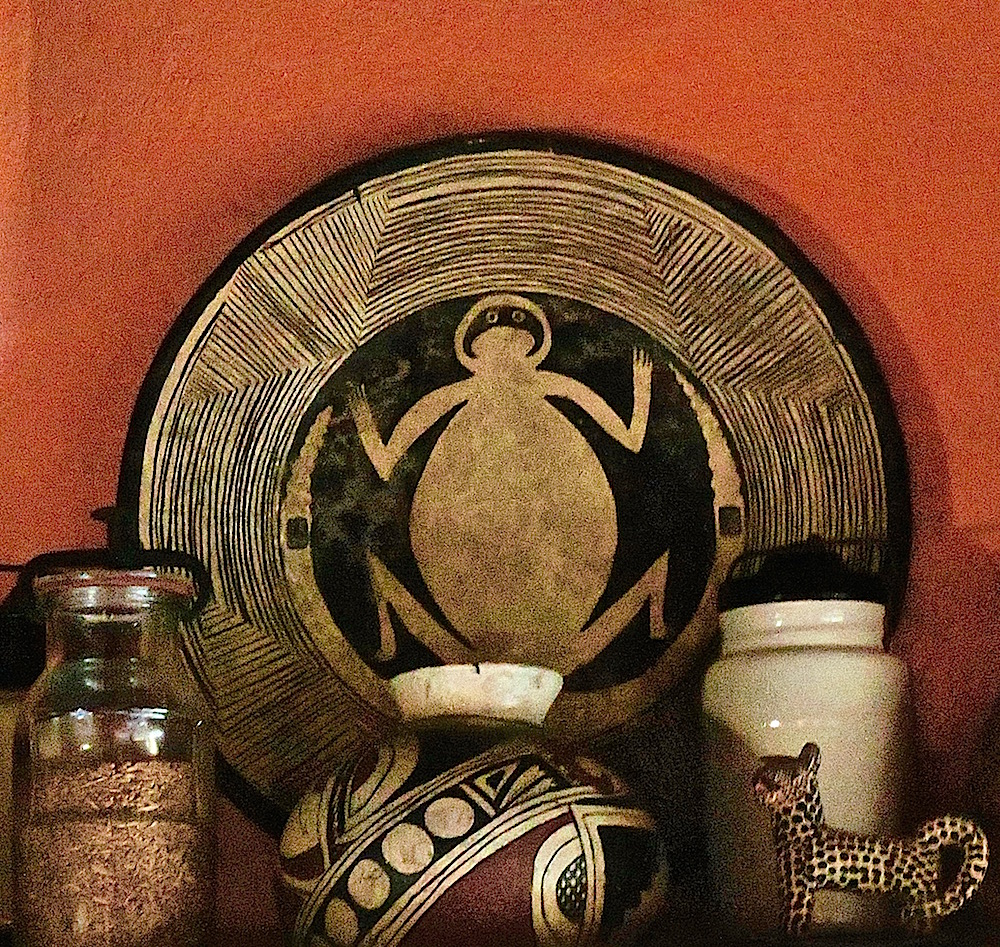
My cousin Betty Jane passed on years ago, so the China cabinet full of Grandma’s dishes is in Idaho in the house of  her second husband. What Grandma would find of herself in my house is:
IMG_1123
one blue bowl filled with jade plant cuttings by my kitchen sink,

IMG_1126
an old pottery canning jar above my kitchen cabinets––

IMG_5335
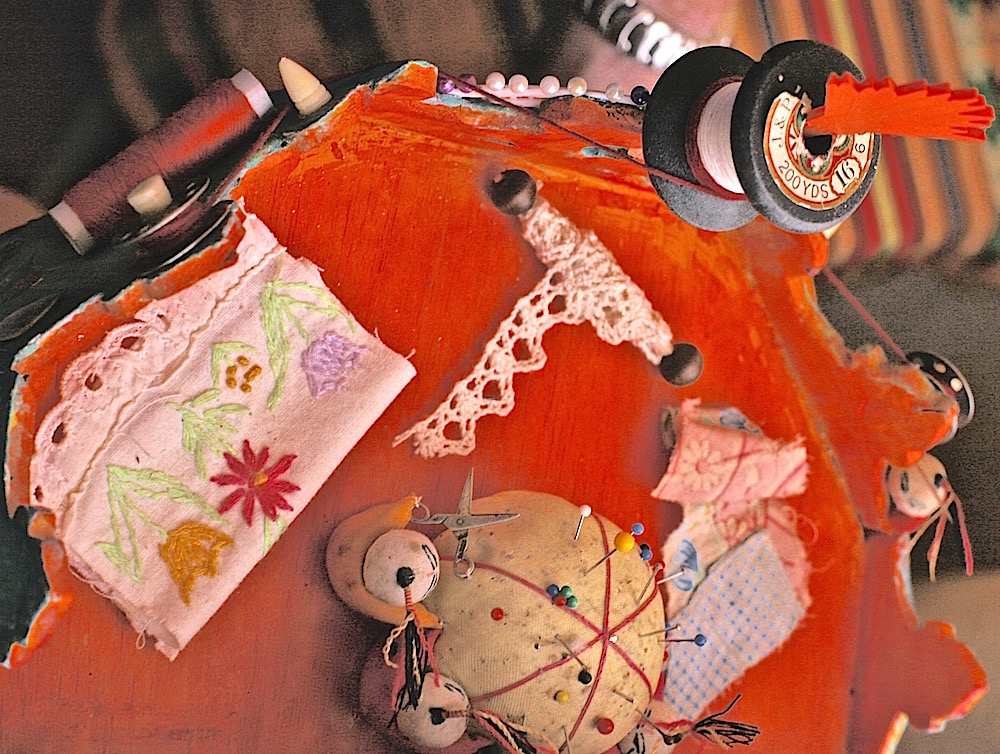
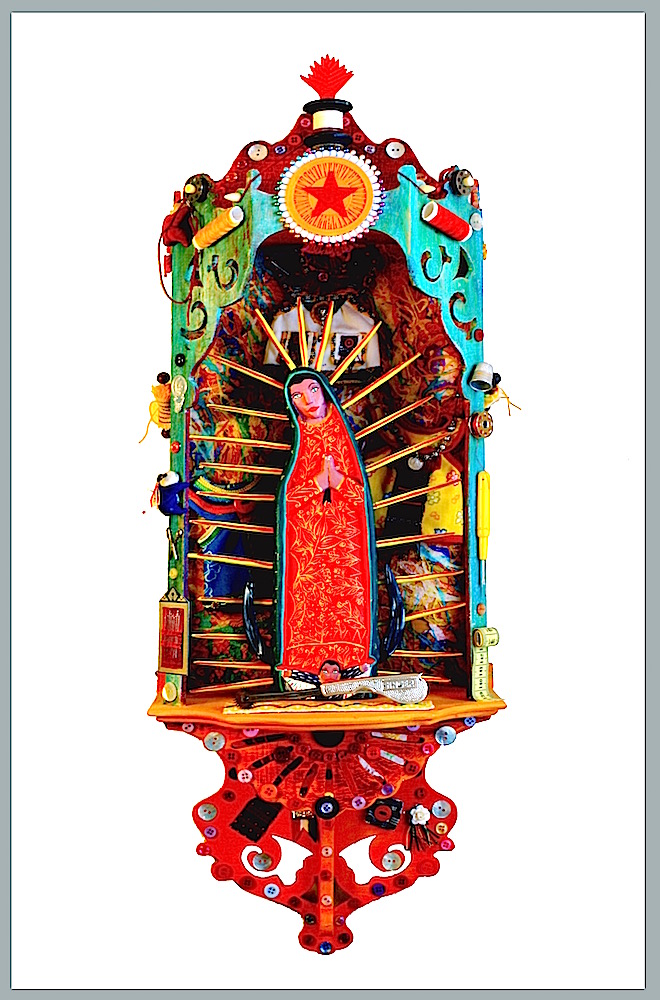
and remnants of her tatting, a small square cut from a pillowslip she embroidered and part of a quilt square that I used in a retablo entitled “Our Lady of Notions.” (The view above is looking down on the top of the retablo–details not shown because of the shooting angle in the view of the entire retablo below.)

judy 2Amazing that so little remains of her in my house when she had a house stuffed full of things.  Now that I am the one with the house stuffed full, I wonder what of me will remain after fifty years.  Perhaps just this blog or my books or my artwork.  Maybe that is why I am so compulsive about writing and doing art–that need to be remembered.

The Prompt: Modern Families––If one of your late ancestors were to come back from the dead and join you for dinner, what things about your family would this person find the most shocking?
https://dailypost.wordpress.com/prompts/modern-families/

In response to The Daily Post’s writing prompt: “Life’s a Candy Store.” You are a 6 year old again How would you plan a perfect day?

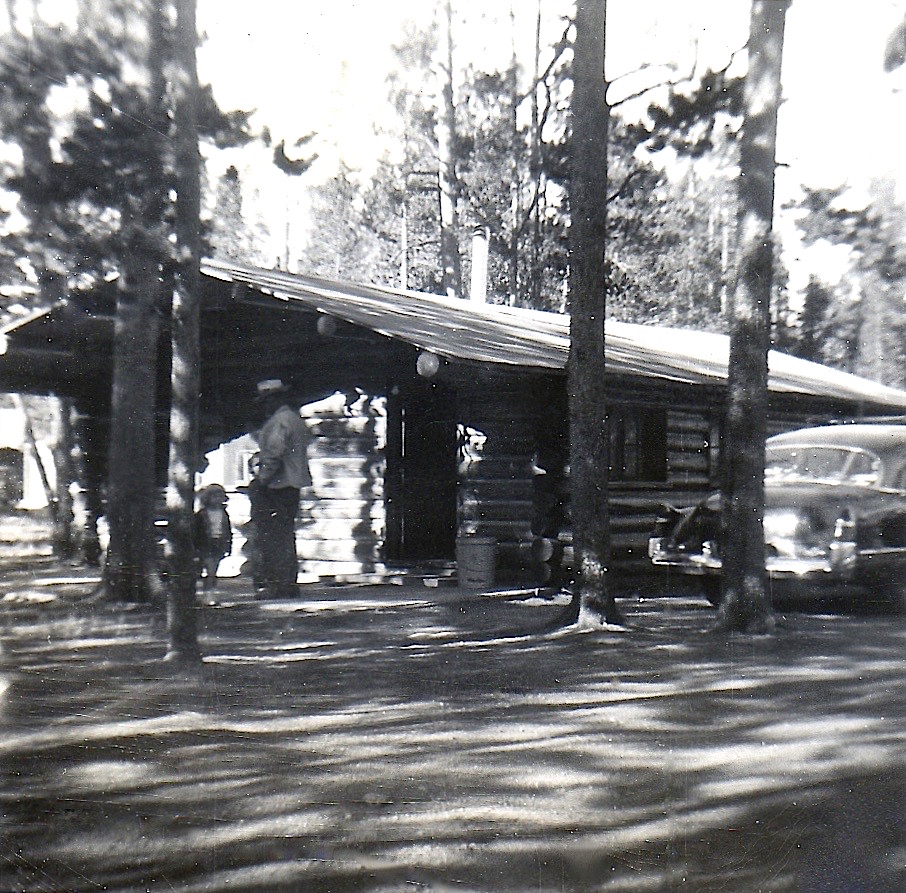
Version 2My dad and I at the Deer Huts when I was about 3.

Black Hills Reverie

My dad is coming with us–he doesn’t have to work.
Corn muffins in the oven, and coffee on the perk.
It’s orange juice for sis and me.  I take a little sip.
We woke up really early to start out on a trip.
We’re going to the Black Hills where we will spend the night.
We’ll start out just as soon as we have had a little bite.
We’ll stop to pick up my best friend who will go along
They’ve let me plan the whole long day, so nothing will go wrong.
En route we’ll stop at Wall Drug and have an ice cream cone,
then drive on through the Badlands, as dry as any bone.
My dad will sing a song for us–“Lonesome Mountain Bill”–
and let up on the gas petal as we crest the hill
to give our stomachs all a lurch and a little flutter.
My mom will say “Oh Ben!” and then my older sis will mutter.
But Rita and I love  this trick and we will urge another–
an action nixed first by my sis and then by my mother.

We’ll stop at Petrified Gardens and see the fossils there,
buy rose quartz and mica and other rock chips rare.
Then on to Reptile Gardens where they wrestle crocodiles,
to ride on giant turtles and view other reptiles.
We stop next at the Cosmos where gravity’s gone amuck.
We’re doing everything I wish. I can’t believe my luck!
On to old Rockerville Ghost town where we have our dinner.
If I resisted cherry pie I know I would be thinner,
but with a scoop of ice cream it really is delicious.
Just try to keep it from me–I’m likely to turn vicious!
Next we drive the pigtails, where the road just curls and curls
passing over and over and thrilling three small girls.
We’re going to see Mt. Rushmore–those giant perfect faces.
Perhaps we’ll buy a souvenir if we’re in Dad’s good graces.
Then on to drive Custer State park with the begging burros.
We’ve saved some treats from Rushmore–some peanuts and some churros.

Back to Rockerville we go for supper and a show.
The “Mellerdrammer” (sic) is the place where we’re going to go
to hiss the villain from the crowd, throw peanuts at his back
as he ties the heroine to the railroad track.
Then drive the seven miles to my favorite sleeping place,
though mother doesn’t like it, and she makes a funny face.
“The Deer Huts” are just cabins right up in the trees
and we have to use the outhouse to take our bedtime pees.
We get to walk with flashlights and pick our way with care,
through the ponderosas, where perchance we’ll meet a bear!
I love the moonlit shadows and the night bird calls,
being extra careful to avoid stumbles and falls.
Sometimes we fake the need to pee to take another walk,
and on the way my friend and I walk slowly as we talk
of all the things my parents have let us do today.
We both agree that this has been a perfect sort of day.

 daily life color076 (4)My sister Patti and I in the Black Hills, age 7 and 11.

 In South Dakota, lunch was dinner and dinner was supper.  For the sake of authenticity, I’ve maintained the custom in this description of a child’s perfect day.

Generational Drift

daily life color073 (2)

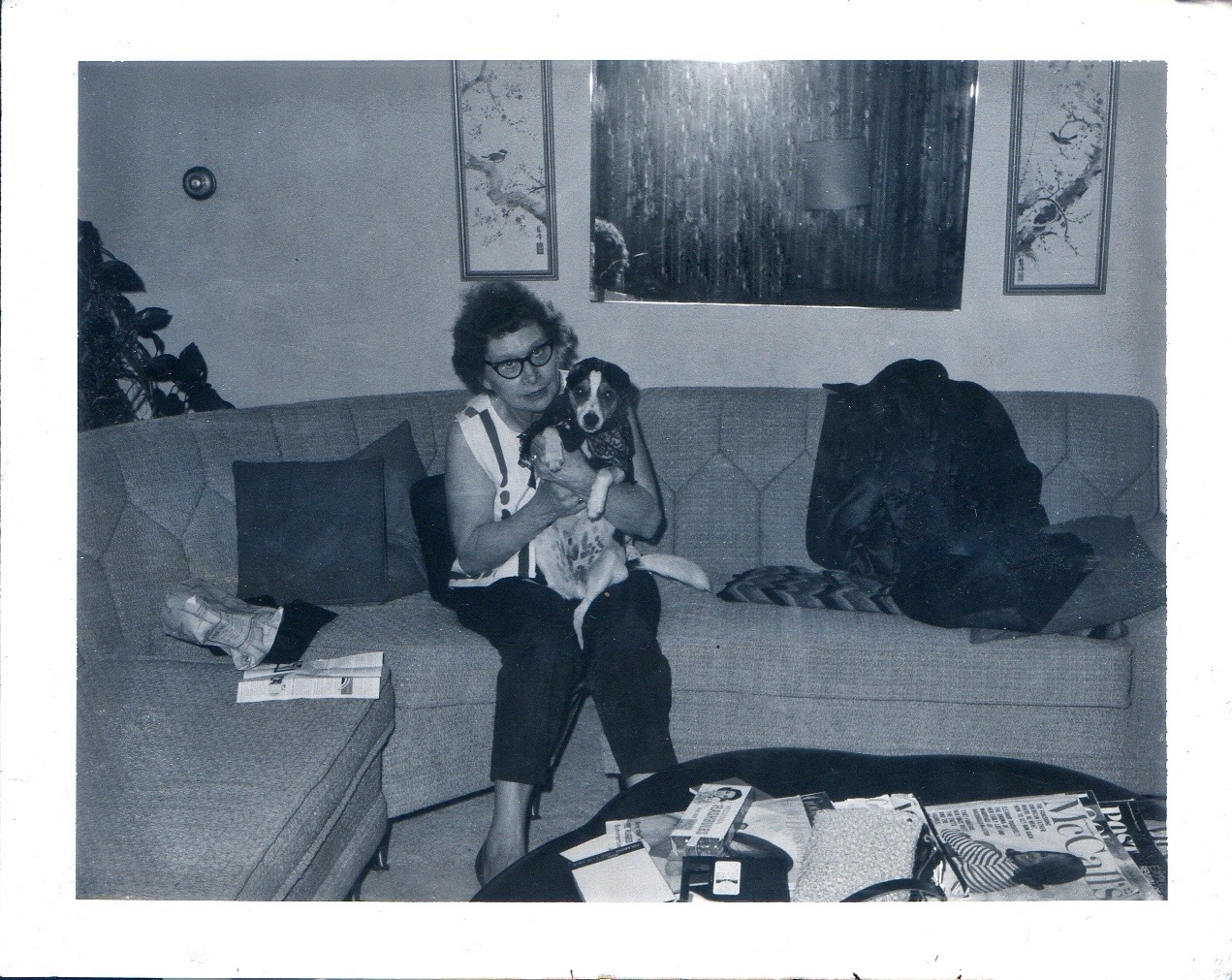
My mother and Scamp in an uncharacteristic upright position. Note reading material to their right.

                                                                Generational Drift

My mother would have been the first one to say that she was lazy.  To be fair, this wasn’t true. I had seen her iron 32 white blouses at a sittingher at our large mangle, running the fronts and the back of the garments, then the sleeves and collars through the large rollers, my sisters or I then taking our turns ironing the details near the seams and around the buttons.  We had a regular assembly (or wrinkle de-assembly) line going every Saturday morning.

She cooked every meal and kept the house reasonably clean.  But on weekends, she was the commander and we were the workers.  One vacuumed while the others dusted.  We were the window cleaners and the front walk sweepers, the table setters and dish washers when school or social activities allowed.

But there were times when a good book consumed each of our interests to a degree that weekend chores were lost in a blur of fantasy–each of us in thrall to a different book–my sisters in their rooms or on beach towels spread out in the sun of the back yard, me on on my back on the porch roof just outside my older sister’s bedroom window, and my mom flat on her back on the living room sofa.

Or sometimes it was the same book–taking turns reading 9-year-old Daisy Ashford’s memoir “The Young Visiter” [sic] as the rest of us howled–holding sore stomachs, tears running down cheeks.  At times like this, a week’s clutter might sit untouched on surfaces, that morning’s dishes still in the sink, last night’s shoes still lying like rubble in front of the t.v. or half obscured beneath piano bench or assorted chairs around the room.

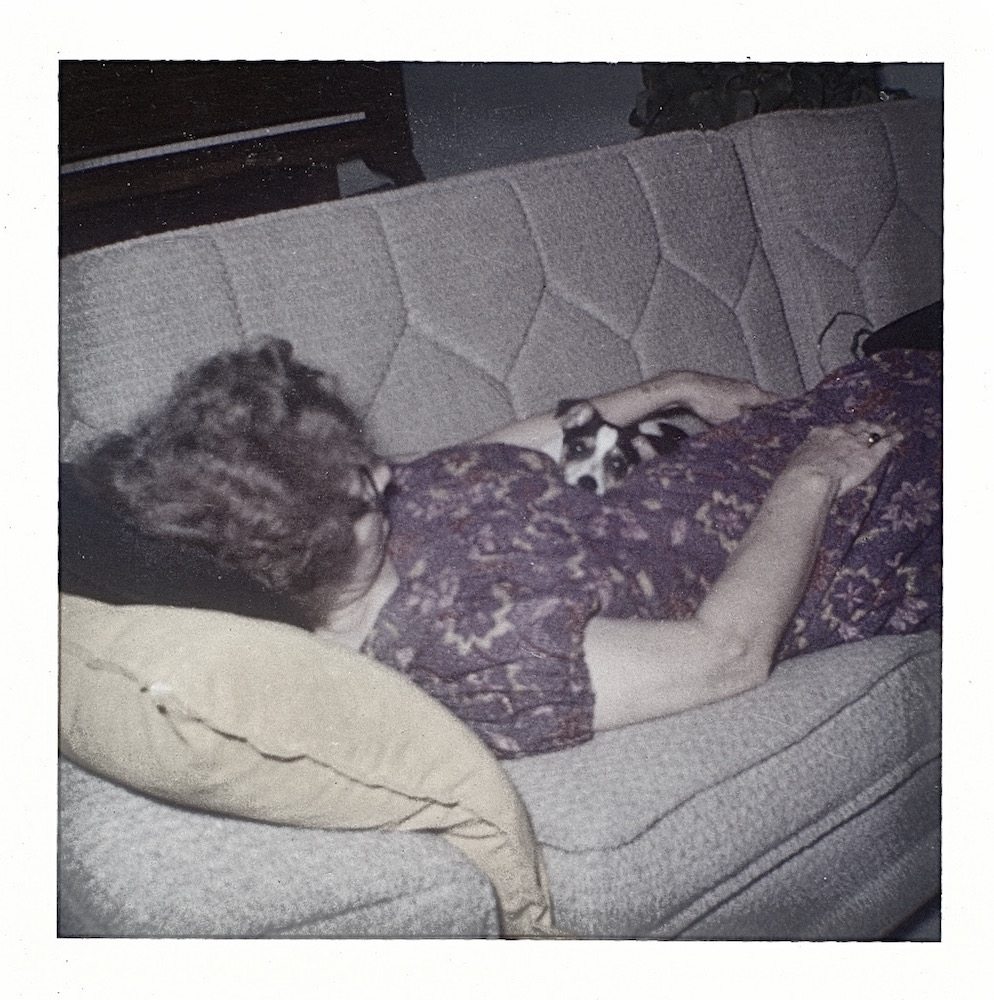
In short, housework, although generally done weekly, never got in the way of activities or a good book.  We were a family of readers, and generally this reading was done on our backs.  My mother’s spot was always the living room couch–some family pet (a tiny rabbit or raccoon, kitten, or the family terrier, Scamp) spread out between her side and the divan, my dad in “his” comfy rocking chair, feet up on the foot stool. I loved my bed or the floor or in the summer, outside under a tree.  My older sisters’ bedrooms were sacrosanct.  A closed door meant privacy.  No one entered uninvited.

This was in an age before computers, cellphones, or other texting methods.  The one telephone in our house was on the kitchen wall or counter.  It was a party line in more ways than one.  Not only were our conversations held within earshot of the entire family, but also could be “overheard” at will by the two neighborhood families who shared our party line.  Today’s technological wheel had not yet been invented.  With no TV possible until I was 11, I spent a youth devoted to two things:  my immediate surroundings and the people or book readily within sight.  If company was called for, it walked or drove to you or you drove or walked to it.  The rest of life was family, homework, housework, play or books, and my mother, luckily, considered the play and books to be equal in importance to housework.

“I’m basically lazy,” she always said, but I must repeat again that this was not true.  Our house usually assumed a state of more or less perfection at least once a week.  It is unclear the degree to which this was motivated by my oldest sister, who was an excellent commander. “Mom, we’ll do the dishes.  Patti, you wash and Judy you wipe,” she would instruct, while she herself disappeared into her room for an after dinner nap.

I do remember a certain Saturday when each of us lay on her back or sat sprawled in a different chair reading when a knock sounded at the front door.  Impossible!  No one in our small town ever dropped by uninvited.  Even sorties to or from my best friend’s house just two houses away from me were always preceded by a phone call. We remained silent, but the insistent knocking continued. I peeked out at the front door through the living room drapes and the eyes of two girls and an older woman all shifted in unison towards the drapes.  Caught!

Each of us grabbed a different pile of garments, books, shoes or ice cream dishes from a  living room surface and stashed them in a closet, drawer or cupboard as my mother answered the front door to a woman and her two daughters from a neighboring little town, just 7 miles away. They had dropped by because they were building a new house and had been told by my dad that they should stop by to see our house, which had been built a year before by a builder they were considering.

My sisters and I stayed a room ahead as my mother s-l-o-w-l-y showed them the house.  I cleared dirty dishes from the last meal into the stove as my sister hastily made beds and tossed dirty clothes into closets, sliding them closed to obscure reality as the visitors probably wondered what all the banging closets and drawers were about.

This was not the norm.  All of Saturday morning was traditionally spent cleaning floors, dusting my mother’s salt and pepper collection, neatly piling stacks of comic books on the living room library shelves, washing windows, straightening kitchen shelves.  We were not slovenly, but neither was my mother a cleaning Nazi. Life and literature often intervened.

Now, more than fifty years later, my mother has been gone for 14 years.  One sister has been lost to Alzheimer’s, the other is the perfect house keeper my mother never was.  But every morning, I lie in bed writing this blog until it is finished.  My favorite location for reading is still flat on my back, and I do not need to compete with my mother for my favorite reading spot on the living room sofa.  Sometimes Morrie, my smallest dog, spreads out beside me, and I can’t help but think of my mother–feeling as though I’ve taken her spot–stepped into the role set for me by the preceding generation.

Yes, the day’s dishes lie stacked in the kitchen sink. There are books piled on the dining room table from Oscar’s last English lesson. Papers are piled on the desk next to my computer, a pair of shoes under each of several pieces of furniture. Bags of beads and Xmas presents purchased during my trip to Guad a few days ago are still on the counter, ready to be whisked off to cupboards or the art studio below.

But my book is a good one and Yolanda will be here tomorrow, bright and early, looking for tasks to justify her three-times-a-week salary.  With no kids of my own to boss around or delegate bossing authority to, and salaries cheap by comparison here in Mexico, I have hired myself a daughter/housekeeper/ironing companion.  Sometimes we stand in the kitchen and talk, letting the dust remain undisturbed on surfaces for ten minutes to a half hour more, or go down to the garden to decide where to move the anthurium plant, to just admire a bloom I’ve noticed the day before or an orchid recently bloomed that she has noticed in the tree I rarely glance up at.

Every generation cannot help but be influenced by the last, and in spite of many differences, I am still my mother’s daughter. It is in my genes to place some priorities above housework, firmly believing that this is good for my soul as well as the souls of those around me.

daily life color073 (1)

My mother and Scamp in a more characteristic pose, resting up from reading.

In response to The Daily Post’s writing prompt: “I’ve Become My Parents.” Do you ever find yourself doing something your parents used to do when you were a kid?
DSC06905

back when we were baby birds

feeding each other
cold spaghetti worms
in grass clipping nests
empty summer stretched in front of us

stale plastic wading pools
pressing yellow circles
into grass
that smelled like wet bandaids

during a game of hide-and-seek
dust bunnies behind the chest
full of old prom dresses
in the upstairs hall

mouse droppings
in the basement
pits from sour cherries
scattered on the back steps

scraps of soggy paper
dried into small sculptures
under the weeping willow tree
revealing part of each original message

mommy is . . .
. . . ate my cookie
I hope Sharon . . .
my doll doesn’t . . . your doll . . .

summer just an empty cup
we filled each day
with the long summer rains
of daydreams.

In response to The Daily Post’s writing prompt: “In the Summertime.” What has been the highlight of your Spring or Summer?

To see my other post today, go HERE.

“Holy Beginnings”

Holy Beginnings

I always wanted a set of those panties that had a day of the week embroidered on each one, but I grew up in an era when kids didn’t ask for things.  I know my mom would have bought them for me if she’d known, or my grandma would have ceased her endless activity of sewing sequins on felt butterflies or crocheting the edges of pillow shams long enough to embroider the days of the week onto the baggy white nylon panties jumbled into my underwear drawer. I never asked, though.  Never told.

So it was that on Sunday I’d arise and put on the same old underpants, cotton dress with ruffle, white socks, patent leather shoes. I’d take a little purse no bigger than the makeup case in the suitcase-sized purse I now carry. Into it I’d drop a quarter my dad had given me for the collection, a hanky and the lemon drop my mother always put inside just in case of a cough. I never coughed, but always ate the lemon drop, sucking on it during Sunday School and sometimes asking for another from the larger supply in her purse during church.

Why my mom never sang in the choir I don’t know.  She had a fine true voice.  Both of my older sisters did and so did I, once I was in high school.  I remember when I was little watching the choir in their fine robes that looked like they were graduating every Sunday.  They sat facing us, in three rows to the preacher’s left, as though checking up on us to make sure we didn’t misbehave or yawn or chew gum.  In addition to lemon drops, my mother always carried Wrigley’s Spearmint Gum in her purse.  Sometimes the gum was a bit red  from the rouge she always had on her fingertips on days she applied makeup. It seemed to me like the rouge flavored the gum a bit.  It tasted of clove and flowers.

“Just hold it in your mouth,” my mother instructed, my sister and me; and if we chewed, she would take it away from us. “Just chew it enough to make it soft and then hold it in your mouth.”  This was an almost impossible challenge for a child and actually even for a teenager.  By then, we’d learned to crack the gum and to blow bubbles even when it wasn’t bubble gum.  That fine pop and final sigh of air as the bubble broke–so satisfying. The threat and memory of everything we could be doing with that gum resided in each small wad of it held in our cheeks as we sat lined up like finely dressed chipmunks listening to the minister drone on.

Hymns were like the commercial breaks on television–a chance to move around a bit and look at something other than the preacher–to ponder the curious lyrics such as, “Lettuce gather at the river,” “Bringing in the sheets” and “Let me to his bosom fly.”  (Just what was a bosom fly and what had lettuce and collecting sheets from the clothesline to do with religion? Once again, we didn’t ask.)

Then we’d sit down again for the Apostle’s Creed or a prayer or benediction or the interminable expanse of the sermon–half an hour with no break.  I’d listen to the drone of the flies buzzing in circles at the window, or the sound of cars passing in the summer, when the front and back doors were left open to encourage  breeze where no breeze existed.

Now and then a curious dog would wander in and be ushered out by the man who stood at the door to hand out church programs.  Everyone would hear the scramble of dog toenails on the wooden aisle and turn to watch and laugh.  Even the minister would laugh and say say something like, “All of God’s creatures seek to commune with him upon occasion.”  Then everyone would laugh softly again before he turned his attention back to telling us what was wrong with us and how to remedy it.

That afternoon, Lynnie Brost and I were going to play dress up and have a tea party under the cherry trees and bury a treasure there.  We’d already assembled it: my mom’s old ruby necklace, a handful of her mom’s red plastic cancer badges shaped like little swords with a pin at the back to put on your collar to show you’d given to the campaign,  my crushed penny from the train track, her miniature woven basket from South America that her missionary sister had brought her, a tattered love comic purloined from her older sister. (We’d “read” it first–which at our age meant looking at the pictures.)

I fell asleep thinking of what else we could add to our cache, to be dug up again in ten years or for as long later as we could stand to put off exhuming it. I leaned against my mother as I slept, and if she noticed, she did nothing to awaken me.  She shook me a bit, gently, as the congregation stood after the sermon, singing “Onward Christian Soldiers” as the minister marched down the aisle, smiling and greeting parishioners and the choir followed him, as though they were being let out early for good behavior.  At the door, we greeted the preacher again, standing in line to shake hands and be blessed, then ticked off his mental list of who had been among the faithful on this fine summer day when they could have been out mowing the grass or rolling in the piles of grass emptied from the clipping bag.

Then we drove the block home, for no one ever walked in a small town.  Well done rump roast for dinner, as we called the noon meal. Mashed potatoes, brown gravy, canned string beans, a salad with homemade Russian dressing and ice cream or jelly roll for dessert.  All afternoon to play. Another small town South Dakota Sunday of an endless progression strung out from birth to age eighteen, when I departed for college and the rest of my Agnostic life.

In response to The Daily Post’s writing prompt: “The Early Years.”  Write page three of your autobiography.

Clouded

Version 5

Clouded

How many family albums have been thrown away
to make room for Tonka trunks and ruffled dresses,
Tinker Toys scattered across closet shelves?

Of what use are lives lived fifty years ago or more?
Store them neatly on computers,
sealed behind glass for all to easily see,
taking up space
only somewhere
in a cloud–floating above

so if the cloud is ever broken,
they will float down like rain
to soak white sheets hanging on clotheslines,
or onto windshields to be scraped away
by wiper blades–
like fine gnats or raindrops–

vertical memories
floating onto our horizontal world,
bringing the past to soak into the present.
Falling action becoming forward motion,
carried to the future.  All things indivisible.

Everything still here–
even if as ash
from burning albums,
curling crisply
and blown away.

The Prompt:  Do Not Disturb–How do you manage your online privacy? Are there certain things you won’t post in certain places? Information you’ll never share online? Or do you assume information about you is accessible anyway?

Up Against the Wall

Up Against the Wall

 Wall_Drug_Sign

If you haven’t heard of Wall Drug, you probably have never been to South Dakota.  Signs for one of the world’s oldest and best known tourist traps are spread out across the state and surrounding states as well as such far-flung locations as Antarctica, Afghanistan and Italy.  For me, it was an exciting stop along the only vacation route taken by my family for most of my young life, for Wall was stationed smack dab on Highway 16 between my even smaller town of Murdo, South Dakota and the Black Hills, where our summer vacation usually consisted of an overnight stay in “The Deer Huts” after taking one of my older sisters to the Methodist Youth Camp a few miles away.

The excitement of the Deer Huts consisted mainly of the fact that the bathrooms were all outside–little wooden enclosures marked by a half moon that my mother hated and I adored.  I loved the nighttime trip up the hill with a flashlight and the strangely reassuring sound of what had once been a part of my body making its dark descent down the long vertical tunnel–as though it was having an adventure of its own.  I loved the threat of animals watching me in the dark as I made my way back to the log cabin.  It was about as exotic as my life ever got before I finally left home for college at age eighteen and life really began. But I digress, for the true adventure that wound up at the Deer Huts always began when we got to the badlands–a series of sandstone hills and gullies that furnished the background for many a cowboy movie of the fifties.  Then, shortly after the badlands, came Wall Drug!.

You can read the full story of Wall Drug HERE.   If you are pressed for time, however, I will give you the shortened version. The whole phenomena of a drugstore in a small town of under 300 on a godforsaken prairie  in the middle of nowhere started in 1931 with a suggestion by the wife of the owner that they put up signs offering free water.  From there, the promotions grew into singing automated cowboy orchestras, stuffed longhorn cattle, a life-sized dinosaur, chapels, souvenir shops, other automated scenes, a restaurant offering such South Dakota fare as hot beef sandwiches complete with mashed potatoes and white bread swimming in brown gravy, homemade rolls, cherry pie and 5 cent cups of coffee with  free coffee and donuts offered to soldiers, ministers, and truck drivers.

I have pictures of me at age eight and age sixty-six, standing by a huge stuffed longhorn steer, bravely touching the horn.  The last picture was taken as my childhood friend Rita and I took our last long nostalgic trip across South Dakota. In the Wall Drug Cafe, we shared a hot beef sandwich, a cinnamon roll and a piece of cherry pie for old time’s sake, put a quarter in the slots to see the singing cowboys creak into action, still in tune after almost sixty years.

In this more sophisticated age, folks still stop at Wall Drug.  It’s possible their teenagers remain in the car, texting their friends or playing computer games with the air conditioning cranked up to dispel the scorching South Dakota summer sun, but I bet the little kids as well as the bigger kids who are their folks or grandfolks still wander the block-square expanses of Wall Drug, looking for thrills from another age and time. And somewhere within its cluster of rooms and passageways, Grandma can still buy an aspirin or get a prescription filled, then get a free glass of water to swallow it down with, Grandpa can still get a five cent cup of coffee and a little kid can taste his first delicious mouthful of South Dakota Black Angus beef, swimming in gravy and surrounded by reassuring slices of Sunbeam white bread and mashed potatoes.

The Prompt: Tourist Trap: What’s your dream tourist destination — either a place you’ve been and loved,https://dailypost.wordpress.com/dp_prompt/tourist-trap/ or a place you’d love to visit? What about it speaks to you?

Take Me Back

 Take Me Back

I was born and raised in South Dakota, and every summer both of my older sisters went to MYF camp in the Black Hills. For as long as I could remember, I would ride along as my parents drove them to camp and always, at our first sighting of the Black Hills peeking up from the flat Dakota prairie, we would sing this song. Eventually, it was my turn to go to camp from age 11 to 18 and into my early twenties, when I became a camp counselor. To this day, long after we’ve moved away, my sister and I still sing this song every time I cross the state line back into South Dakota:

The Prompt: Cue the Violins—If your life were a movie, what would its soundtrack be like? What songs, instrumental pieces, and other sound effects would be featured on the official soundtrack album?