Syncopated Poesy
An iamb becomes a trochee and an anapest a dactyl.
Spondees get less pointed and the pyrrhics turn more tactile.
Syncopated Poetry turns everything around.
Loud words get hushed down and the quiet words pick up sound.
“By the shores of Gitcheegoomie” loses all its zing.
That’s what comes from meddling with a verse’s swing.
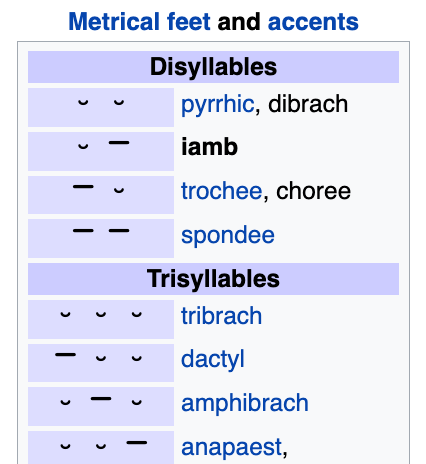
The Daily Spur post for the day is syncopate. In case you’ve forgotten, below are the metrical feet of poetry: iamb ul, trochee lu, dactyl luu, anapest uul, spondee //, pyrrhic uu
Syn·co·pate:to displace the beats or accents in (music or a rhythm) so that strong beats become weak and vice versa. Or, to shorten (a word) by dropping sounds or letters in the middle, as in symbology for symbolology, or Gloster for Gloucester.
 lifelessons - a blog by Judy Dykstra-Brown