Author Archives: lifelessons

Unknown's avatar

About lifelessons

My blog, which started out to be about overcoming grief, quickly grew into a blog about celebrating life. I post daily: poems, photographs, essays or stories. I've lived in countries all around the globe but have finally come to rest in Mexico, where I've lived since 2001. My books may be found on Amazon in Kindle and print format, my art in local Ajijic galleries. Hope to see you at my blog.

For Becky’s Squares Red Challenge

Today I went for my second doctor’s appointment in Peoria and when my doctor and his nurse had left the room, they said for me to remain and a social worker came in to interview me to make sure I was not in duress, or being bothered by anyone…first time this had ever happened. But as she interviewed me, I became hypnotised by this pattern on the garment that covered her right knee.  With my
macular degeneration, the circular lines seemed to be spinning around in a spiral.

She was a colorful figure both in appearance and personality and we had a nice conversation in spite of the fact I had no need for a social worker.  She gave me permission to publish her pictures. Here is the rest of her.  A lovely lady.

For Becky’s Square Challenge the prompt was Red.  This photo just seemed to be predestined to appear in it.

“When It Comes to Meeting Dragons,” For Wordle 715


When It Comes To Meeting Dragons

Inside the skins of dragons churn secrets I know well,
but things I glimpse inside of them are stories I can’t tell.
They cradle dark illusions that when exposed to light
stir emotions that give birth to horror and to fright.
These feelings stage a battle, drawing into the game
flashes of trepidation–and feelings I won’t name.
So when it comes to meeting dragons,please remain on the fringe,
for in close proximity,  you’re sure to get a singe!!!

Word prompts for Wordle 715 are: churn secret battle names glimpse cradle skins dragons stir flash fringe illusion.   Photo by Ravit Sages on Unsplash.

The Numbers Game #82, Please Play Along, July 21, 2025

Welcome to “The Numbers Game #82”  Today’s number is 204. To play along, go to your photos file folder and type that number into the search bar. Then post a selection of the photos you find that include that number and post a link to your blog in my Numbers Game blog of the day. If instead of numbers, you have changed the identifiers of all your photos into words, pick a word or words to use instead, and show us a variety of photos that contain that word in the titleThis prompt will repeat each Monday with a new number. If you want to play along, please put a link to your blog in comments below. Here are my contributions to the album.

“Hairlooms” for Cellpic Sunday


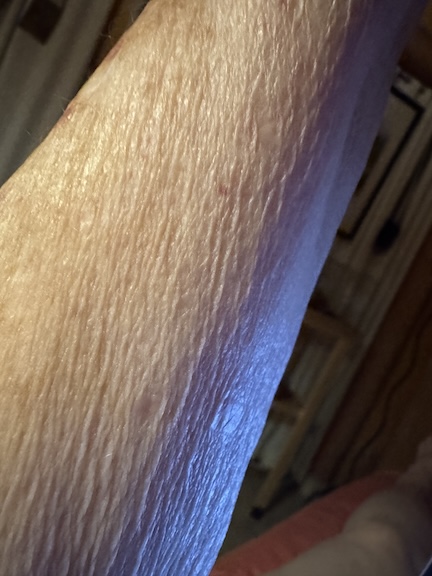
I know.. weird photo…I just like it.  I took it to accompany a poem I was planning to put on Youtube along with an oral reading of the below poem from my soon-to-be published book, If I Were Water and You Were Air. I am reconsidering even doing the audio posting of poems on youtube, so will make use of it here and include the poem as an explanation of the photo.

Long Weekend

Her shoes on the floor next to the pot-bellied stove
do not have holes in them, as her father said,
but rather triangles and rectangles
and everyone is wearing them
laced up to below the ankle.
Her friend Marjorie, who has lots of shoes,
has pink ones
and Sheryl has a white pair
and even my new stepdaughter’s real mother
has shoes like this.

Her used Band-Aid lies in fetal position
on the new white sofa cushion,
her hair twister on the kitchen counter
along with a handful of pens she grabbed from my desk
and then abandoned.
Her clothes, like crumbs of her,
lie scattered down the hall.

She is asleep in the loft of my study,
in the nest she has chosen
for a place to stash herself, along
with those collected objects of my past
that have captured her fancy as she helped
with our unpacking of boxes.
With them, she has created a little world within our world:
a painted blown egg from the Tucson street fair,
assorted brushes and antique hair rollers,
hair combs I bought in Peking, African baskets to put them in,
a beach chair, a sheepskin rug, and her stuffed dog.

Stealing into my study to find paper and my one remaining pen,
I hear her gentle snores from the high space
at the top of the ladder on the wall behind my desk.
My new daughter––with us for our first weekend
as we open boxes in our new house.

The bouquet of wildflowers on the bookcase––
California poppies, creeping Jenny, sprays of honeysuckle––
she has learned all their names, along with moss roses, aloe vera and lobelia,
collecting them in her sorties out to the deck
to scare away the jays, feed peanuts to the squirrels.

She loves this house and wanted to unpack one more box
before bedtime––my bathroom box that held handy hair rubbers
and the tiny Chinese combs––both of them speedily added to her purloined collection.

She calls me Mom, her knee sticking through her Christmas tights.
She is a girl I can’t keep together––
already a hole in the turquoise top we bought together yesterday––
four tops, four pairs of tights
and a pink jacket.
Socks, next visit.

When she leaves to go back home, I plant dahlias and purple salvia.
I find the hidden box of toothbrush, toothpaste, and acne medicine
she has secreted in her loft above as though staking her claim.
I find cups to put them in,
put them on the counter in the bathroom next to ours.

For Cellpic Sunday

“Day is Done” for RDP, July 20, 2025

Dry lakebed. Once again revealed

                                            Dry lakebed. Once again revealed

Interloper (Day is Done)

The year was 1913. I’d had a very busy day and I didn’t get around to taking my walk until about an hour before sunset, and I finally finished this poem at around 11 PM.  The lady I talked about who spread her skirts under the extinct volcano known as Señor Garcia is Lake Chapala, the usually beautiful lake whose shores I have lived upon since 2001. Ringed by the Sierra Madre mountains, she reclines in the heart of Mexico, about an hour from Guadalajara. When I moved here, they thought the lake would be completely dried up within five years due to low rainfall and three big dams further upstream which drew off most of the water. At that time, the sixty-mile long lake had shrunk to a point where people often took a taxi from the Chapala pier to get out to the water! It was at this time that I started to take my daily walks on the part of the lakebed that was once under water. This land had sprouted a new civilization of herds of horses left to wander free, cattle, burros, wild dogs, flower nurseries, fishermen’s shacks, small palapa restaurants, huge thickets of willow trees and acres and acres of tall cattails. A few years later, when the lake filled up again, all of this was lost. Of course, it was fortunate that rains and legislation concerning water usage swelled the dying lake; so although I missed my old walking ground, I did not mourn it. Unfortunately, by 2913, the lake was again in dire straits. It had once again shrunk, but this time it left a wasteland of rocks, dead tree stumps and a beach littered with fresh water shells and abandoned graveyards of soda bottles. This was the first time in a long time that I’d walked in my old walking grounds and it was a somewhat depressing experience that nonetheless contained some hopeful signs toward the end.

Interloper

If you live long enough,
what others consider history
will become your life.

Twelve years ago,
I walked for hours every day
on this dry lake bottom,
in places the lake
a mile further out
from its usual banks.

Then, five years
from its supposed extinction,
the rains came.
The floodgates
of the dams upstream
opened as well
and the lake swelled to its former girth.

My old walking trails
through the cattails
and the willows
became suffused in a watery world.
Tree tops became the perches for egrets
scant inches above the waterline,
and the lake became once more
the private property
of homes and landowners who fronted
on the water.

But now, again,
the water has retreated,
and for the first time
in eleven years,
I am again walking
on what was once lake bottom.
I see for myself how this
venerable lady
who spreads her skirts under the mountain
known as Señor Garcia,
has done so in a curtsy,
before beating a hasty retreat.

Freshwater shells pave the dry silt.
Discarded soda bottles , moss-covered and corroded,
lie in a pile as though emptied like catch from a fisherman’s net.

Coots and grackles replace the white pelicans
who have circled over in their last goodbye
like other snowbirds heading north.
Sandpipers whistle their reedy pipes,
as if to rein in the small boy
who runs with a rag of kite
streaming out behind him,
creating his own wind.

A man in red shorts wades out
to a bright yellow boat,
lugging a five gallon gas container.

The kite pilot
and his two brothers,
as tattered as their kite,
walk past,
then circle as though I’m prey,
to sit behind me on an archipelago
of large stones
that form a Stonehenge
around the sheared-off skeletons of willows.

I wrote about these willows in their prime—
when the villagers had come to clear and burn them
eleven years ago,
not knowing they would not grow back.

What had been foremost in their prayers for years would soon happen.
The lake would rise
again to her former banks.

But now she once again
beats a hasty retreat,
leaving the stubs and skeletons
of trees revealed again.
It is a wasteland
stripped of
the life of water or of leaves.

“Rapido!” the boy in the green shirt
demands of his brother.
Their sister pulls the bones of the kite
from their plastic shroud.
Rags turn back to rags,
their flight over.

The brother in the black Wesley Snipes T Shirt
winds the coil of string as though it is valuable
and can’t be tangled or lost.

The sun is half an hour from setting.
“Be off the beach by nightfall,”
a man had warned me
as I set off for my walk.
He was a gringo,
yet still I am ready
to start back.
I remember the banks of blackbirds
that used to settle in clouds in the reeds—
acres and acres of cattails—
enough to get seriously lost in.
At sunset, the birds would lift in funnels
by the thousands–
a moving tornado of winged black
that moved as one.
But they are history, now.

La Sangerona—
that bright yellow boat
whose name translates
as “the annoying one”
does not disappoint.
Despite her fresh infusion of fuel,
she has to be pulled manually ashore.
She is like a princess
being towed
up the Nile.
She expends no energy
to further her own movement.

A red dog,
wet sand to his high tide mark,
settles politely in the sand beside me.
Like iron filings drawn to their pole,
the children gather closer.
They pull at the rocks
as though mining for worms—
prod at the packed sand,
casting eyes up, then away.
Curious but silent.

Now, all run away.
I am left with one grackle,
three sandpipers
and fourteen coots,
drawn out by the waves
and pushed back in,
over and over
in a lullaby.

As I climb to the malecon,
the sun dissolves
into the mountains
to the west.
Shadows of palms
are blown in a singular direction,
all pointing north.
Below them,
the skirts of lesser trees,
as low as bushes
but lush in their fullness,
toss with abandon,
as though this lower wind
did not know its own direction.
I have a hunch, go closer and examine.
I am rewarded.
They are willows,
swaying to obscure
a fresh stand of cattails,
once again beginning their
long march of dominance.
The water that was interloper
is history. And I am part of it.


Freshwater shells revealed by retreat of lake
      Freshwater shells revealed by retreat of lake 

DSC07741
                                 The Kite
 DSC07719

palms point northwards in the sunset breeze
   Palms point northwards in the sunset breeze

The first surprise. New willows!
The first surprise. New willows, and, below, cattails!!!

DSC07751

A lake sunset

A lake sunset

This is a poem that covers the phases of the lake from 2001 to 2013, when these photos were taken. The lake has continued to shrink and swell for the 12 years since then, but luckily has not shrunk to its former much-depleted size. I am sharing this poem for the For the Sunday RDP prompt: Done

The Brick Throwers, for dVerse Poets, July 19, 2025

for dVerse Poets Open link Night, the image of rooftops reminded me of this poem written long ago:

The Brick Throwers

The Prompt: Reviving Bricks—You just inherited a dilapidated, crumbling-down grand mansion in the countryside. Assuming money is no issue, what do you do with it?

The Brick Throwers

They were five in a chain from truck to rooftop,
each throwing the piles of adobe bricks
in stacks of four, from hand to hand
up from the bottom of the truckload
now nearly emptied.
Two of them waved me on
when I tried to park near,
my trunk full of heavy wall sculptures
to deliver to a gallery just half a block away.

And when I tried to park farther along the block,
again and again, they waved me away
until I was a block away and safe, I guess,
from straying bricks or errant cars that swerved
too far to the right to avoid the bricks or truck that held them.
They were a cheerful lot, and when I passed,
walking towards the gallery
carrying one sculpture after another,
they waved, and on my final trip back to the car,
again, the man second in the chain
who stood balanced on the highest level of the brick pyramid
that remained within the truckbed,
seemed to intuit my purpose, waving from me to them
as I drew my camera from my purse.
They all posed for minutes, miming their labor
as I tried to get them to actually throw, as before,
those piles of bricks, hoping to catch them
flying through the air between two pairs of hands.

Finally understanding, they threw and threw,
asking me for a prompt to help me catch that flight
I feared I’d never catch.

(more)

DSC07054

Minutes later, I turned to leave
and they, cheering and smiling in their fame,
turned back to that labor which is an art in Mexico:
giving bricks wings before mortaring them
into a permanency that holds them rigid for lifetimes
until they crumble back into that soil that was their nativity.

This poem should be a metaphor for something
and probably is.
Some future day, when I am moldering in my grave
like some lesser Ozymandius,
some graduate student or scholar of mediocre
Twenty-First-Century poetry might publish a treatise
revealing it.
And they will dig this website from the rubble
of the Internet and find
I wrote it as a daily prompt
and if such records still exist,
find how I hired those men to build a monument
from that crumbling manse of brick
that was my prompt on the Daily Post
and tell how they spent their lifetimes restoring it
and how their children and their children’s children
have benefited from catcalls
and instructions to move on down the line
and the clicking of a camera lens
and from one who follows blindly
where each prompt leads her.

DSC07049

To read other dVerse Poets poems, go HERE.

For MVB “Verify,” July 19, 2025

Simple Inspiration

I’ll verify a dozen ways that  I’m in the pink,
but I’m not as together as some folks may think.
The course I plod is littered by words I’ve thrown away,
hoping that I’ll come across some better ones some day.

I use no means nefarious to prod words into being.
My syllabic yield is rather based on what I’m seeing.
And so I am a plagiarist of wind and rain and flowers,
recording what is sweet in life and also much that sours.

The MVB prompt today is “Verify.”

New Political Era

Thanks, Forgottenman, for bringing this to my notice.

South Dakota Gumbo, for Flashback Friday

When Fandango published a story about glorious mud for  Flashback Friday, I commented that I had a story of mud, but unfortunately I had not published it on this exact day in an earlier year as the prompt directed,  and so blogged  another story published on July 18, 2028.  Fandango wrote back and told me to publish it anyway, so here it is.  See, Fandango? I always follow directions.

South Dakota Gumbo

South Dakota Gumbo

When the rains came in hot summer,  wheat farmers cursed their harvest luck, for grain sodden by rain just days before cutting was not a good thing; but we children, freed from the worry of our own maintenance (not to mention taxes, next year’s seed fees and the long caravans of combines already making their slow crawl from Kansas in our direction) ran into the streets to glory in it.

We were children of the dry prairie who swam in rivers once or twice a year at church picnics or school picnics and otherwise would swing in playground swings, wedging our heels in the dry dust to push us higher. Snow was the form of precipitation we were most accustomed to–waddling as we tried to execute the Xs and Os of Fox and Geese bundled into two pairs of socks and rubber boots snapped tighter at the top around our thick padded snowsuits, our identities almost obscured under hoods and scarves tied bandit-like over our lower faces.

But in hot July, we streamed unfettered out into the rain.  Bare-footed, bare-legged, we raised naked arms up to greet  rivers pouring down like a waterfall from the sky.  Rain soaked into the gravel of the small prairie town streets, down to the rich black gumbo that filtered out to be washed down the gutters and through the culverts under roads, rushing with such force that it rose back into the air in a liquid rainbow with pressure enough to wash the black from beneath our toes.

We lay under this rainbow as it arced over us, stood at its end like pots of gold ourselves, made more valuable by this precipitation that precipitated in us schemes of trumpet vine boats with soda straw and leaf sails, races and boat near-fatalities as they wedged in too-low culvert underpasses.  Boats “disappeared” for minutes finally gushed out sideways on the other side of the road to rejoin the race down to its finale at that point beyond which we could not follow: Highway 16–that major two-lane route east to west and the southernmost boundary of our free-roaming playground of the entire town.

Forbidden to venture onto this one danger in our otherwise carefree lives, we imagined our boats plummeting out on the other side, arcing high in the plume of water as it dropped to the lower field below the highway.  It must have been a graveyard of vine pod boats, stripped of sails or lying sideways, pinned by them.  We imagined mind soldiers crawling out of them and ascending from the barrow pits along the road to venture back to us through the dangers of the wheels of trucks and cars.  Hiding out in mid-track and on the yellow lines, running with great bursts of speed before the next car came, our imaginary heroes made their ways back to our minds where tomorrow they would play cowboys or supermen or bandits or thieves.

But we were also our own heroes.  Thick black South Dakota gumbo squished between our toes as we waded down ditches in water mid-calf.  Kicking and wiggling, splashing, we craved more immersion in this all-too-rare miracle of summer rain.  We sat down, working our way down ditch rivers on our bottoms, our progress unimpeded by rocks.  We lived on the stoneless western side of the Missouri River, sixty miles away. The glacier somehow having been contained to the eastern side of the river, the western side of the state was relatively free of stones–which made for excellent farm land, easy on the plow.

Gravel, however, was a dear commodity.  Fortunes had been made when veins of it were found–a crop more valuable than wheat or corn or oats or alfalfa. The college educations of
my sisters and me we were probably paid for by the discovery of a vast supply of it on my father’s land and the fact that its discovery coincided with the decision to build first Highway 16 and then Interstate 90.  Trucks of that gravel were hauled  to build first the old road and then  the new Interstate that, built further south of town, would remove some of the dangers of Highway 16, which would be transformed into just a local road–the only paved one in town except for the much older former highway that had cut through the town three blocks to the north.

So it was that future generations of children, perhaps, could follow their dreams to their end.  Find their shattered boats.  Carry their shipwrecked heroes back home with them.  Which perhaps led to less hardy heroes with fewer tests or children who divided themselves from rain, sitting on couches watching television as the rain merely rivered their windows and puddled under the cracks of front doors, trying to get to them and failing.

But in those years before television and interstates and all the things that would have kept us from rain and adventures fueled only by our our imaginations, oh, the richness of gumbo between our toes and the fast rushing wet adventure of rain!

Writer’s note:  I know my sister Patti is going to read this and cry, and so I want to present you with this mental picture of her, college age, Levi cuffs rolled up above her knees, surrounded by five-year-old neighbor kids, enjoying her last big adventure out into the ditches of Murdo, South Dakota, during a July rain.

But wait!  A mere two hours of digging and another hour of editing has produced this proof of my former statement, so to augment your mental image, here is the real one:

Patty in mud 001-001

Not quite the gusher depicted in the childhood vignette, but nonetheless, Patti’s final puddle adventure. She had taken my visiting niece out. The next day the neighborhood kids rang our doorbell and asked my mom if Patti could come back outside to play! Ha.

Dining Alone, for Fandango’s Flashback Friday, July 18, 2025

For Fandango’s Flashback Friday, we were asked to reblog a blog written on a previous July 18. This one was first published on July 18, 2018

DSC07819

Dining Alone at the Maria Bonita Restaurant Bar

Señor Garcia is smoking today.
Below him,
Maria Phoenix lies on satin sheets
on the wall of Maria Bonita Restaurant Bar.

DSC07822

It is a small palapa restaurant––soft orange front with
hot pink trim–– that I’ve driven by hundreds of times before;
and every time, I’ve wanted to come in, but haven’t.
Now today, suddenly,
I don’t want to go home
and so my car turns in across the carretera.

DSC07818

I am the lone customer.
The cook and waiter
spring to action.
Totopos for him to bring,
a fire for her to light.
This is a fish restaurant
and I am a non-fish
eater, choosing between
quesadillas and beans
or a hamburger and fries.
Needless to say, I’m not here for the food.

I am here for the view and the limits
imposed by eating alone in an otherwise empty
restaurant/bar. I have a poem to write
and need the discipline imposed by a place
where there’s nothing else to do.
My only distraction is the view,
which forms the subject of my poem
and so is anything but a distraction.

DSC07823

The smoke from a dozen fires
rises into the air from the entire eastern slope
of Mount Garcia across the lake.
Whether by accident or by the hand of farmers
lighting fires to clear last year’s stubble from the fields,
the effect is that this extinct volcano
has somehow come to life,
springing leaks.

Fanned by a recent wind, the smoke grows denser, rises higher.
Below the slopes, a patchwork quilt of strawberry and raspberry
fields, covered with plastic sheets,
spawn fruit for the tables of El Norte.

Maria, that other smoldering beauty, lies suspended all around me––
long canvas banners reflecting her screen loves and her roles.
She looks over one shoulder, wears a rebozo or a mariachi’s sombrero.
Cantinflas, that beloved clown, shares her wall but is never in a shot with her.
They are opposites: the sexual symbol and the comic. One raises tension
and the other seeks to dispel it.

Maria Phoenix

I am in between, a mere observer, I know.
In every case it’s likely that the fire has been lit by means unnatural,
but nonetheless, it ignites my imagination.
I am surrounded by it.
“Blue Bayou” plays on the sound system.
Sleepy eyes.
My eyes sting from the smoke
that has filtered toward me
from eight miles or so across the lake.
The tears in my eyes are from the smoke,
not from memories of the departed one
I used to come with to these fish restaurants.

They are not the place for gringos.
Word is out about the sanitation
or where the fish comes from
or who might be encountered here.
A few restaurants down, there was a cartel killing
just about a year ago––perhaps more, perhaps less.
At any rate, Americanos and Canadians are rarely found here.

Today, no one else is found here.
“There’s no exception to the rule”
plays on the sound system.
“Everybody plays the fool.”
Feeling a stranger in the place where I live
is a feeling pleasurable to me––
an emotion I do not feel foolish for pursuing.

The waiter, as though I’m a repeat customer,
brings an entire bucket of ice
and fills my glass each time he passes.
They have my brand of rum.

DSC07821

I have always known this place could be my place.
The pleasure of knowing it to be so warms me
as much as the second jigger of rum.
Shall he pour it for me? Do I want it all?
Just half, I tell him, and fill the glass with Coke.
I like it weaker, so I can spread it out.
Like the fire.

Smoldering.