Category Archives: Arts/Crafts

Wooden Heart

Wooden Heart

He handed it to me without ceremony—a small leather bag, awl-punched and stitched together by hand. Its flap was held together by a clasp made from a two fishing line sinkers and a piece of woven wax linen. I unwound the wax linen and found inside a tiny wooden heart with his initials on one side, mine on the other. A small hole in the heart had a braided cord of wax linen strung through that was attached to the bag so that the heart could not be lost. He had woven more waxed linen into a neck cord. I was 39 years old when he gave me that incredible thing I never thought I would receive: his heart—as much of it as he could give. Continue reading

Hard Drive

The Prompt: Buyers, Beware? The year is 2214, and your computer’s dusty hard drive has just resurfaced at an antique store. Write a note to the curious buyer explaining what he or she will find there.

DSC01454

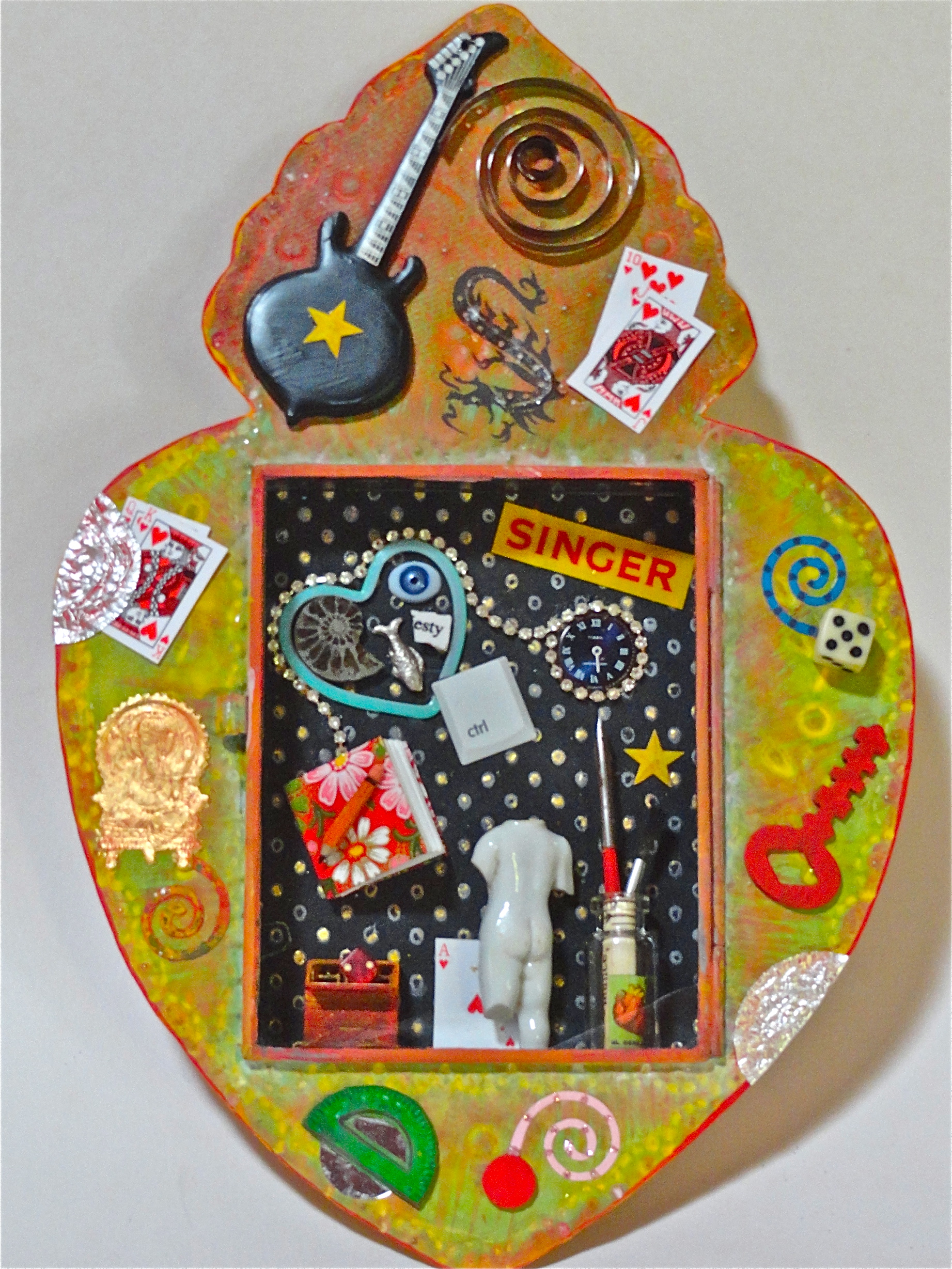
My Retablo, “Autobiography”

Hard Drive

If you long for mystery,
poems, facts and history,
long perambulations
and wild exaggerations,
recipes and letters and
episodes of Homeland,
Elementary, Sherlock, Friends,
a blogging site that never ends,

Emails, Youtube, Facebook notes,
starts of novels, copied quotes,
OkCupid pictures of
possibilities for love,
notes from nice guys, threats from creeps,
notes from guys who play for keeps,
friends who only write when drunk,
chain e-mails, jokes and other junk,

two hundred drafts of my third book,
(each one different, have a look),
kids stories and their illustrations,
the Christmas plans of my relations,
photographs of my whole life—
its happiness and pain and strife—
some successes but also follies,
fireworks, insects, gardens, dollies,

travel snaps and friendly faces,
rooms at home or foreign places,
birds and children, beaches, skies,
the camera lens is true and wise
and not as given to fraud and lies
as writings filtered through the eyes
of one who feels the joys or pains
of what she witnesses, then deigns

to try to change her reader’s mind
to accord with the type or kind
of thoughts she carries deep inside:
pride’s cutting edge, love’s waning tide—
things lovely, funny, jarring, rare.
So read this hard drive if you dare,
but if you fear a life laid bare,
I have one word for you. Beware.

Leftovers


Leftovers

When my father died forty years ago, it was in Arizona, where my parents had been spending their winters for the past ten years.  They maintained houses in two places, returning to South Dakota for the summers. But after my father died, my mother never again entered that house in the town where I’d grown up.

Our family had scattered like fall leaves by then—my mother to Arizona, one sister to Iowa, another to Wyoming. Both the youngest and the only unmarried one, I had fallen the furthest from the family tree. I had just returned from Africa, and so it fell to me to drive to South Dakota to pack up the house and to decide which pieces of our old life I might choose to build my new life upon and to dispose of the rest.

My father’s accumulations were not ones to fill a house. There were whole barns and fields of him, but none that needed to be dealt with. All had been sold before and so what was to be sorted out was the house. In that house, the drapes and furniture and cushions and cupboards were mainly the remnants of my mother’s life: clothes and nicknacks, pots and pans, spice racks full of those limited flavors known to the family of my youth—salt and pepper and spices necessary for recipes no more exotic than pumpkin pies, sage dressings and beef stews.

Packing up my father was as easy as putting the few work clothes he’d left in South Dakota into boxes and driving them to the dump. It had been years since I had had the pleasure of throwing laden paper bags from the dirt road above over the heaps of garbage below to see how far down they would sail, but I resisted that impulse this one last run to the dump, instead placing the bags full of my father’s work clothes neatly at the top for scavengers to find—the Sioux, or the large families for whom the small-town dump was an open-air Goodwill Store.

It was ten years after my father’s death before my mother ever returned again to South Dakota. By then, that house, rented out for years, had blown away in a tornado. Only the basement, bulldozed over and filled with dirt, contained the leftovers of our lives: the dolls, books, school papers and trophies. I’d left those private things stacked away on shelves—things too valuable to throw away, yet not valuable enough to carry away to our new lives. I’ve been told that people from the town scavenged there, my friend from high school taking my books for her own children, my mother’s friend destroying the private papers. My brother-in-law had taken the safe away years before.

But last year, when I went to clear out my oldest sister’s attic in Minnesota, I found the dolls I thought had been buried long ago–their hair tangled and their dresses torn—as though they had been played with by generations of little girls. Not the neat perfection of how we’d kept them ourselves, lined up on the headboard bookcases of our beds —but hair braided, cheeks streaked with rouge, eyes loose in their sockets, dresses mismatched and torn. Cisette’s bride dress stetched to fit over Jan’s curves. My sister’s doll’s bridesmaid dress on my doll.

It felt a blasphemy to me. First, that my oldest sister would take her younger sisters’ dolls without telling us. Her own dolls neatly preserved on shelves in her attic guest bedroom, ours had been jammed into boxes with their legs sticking out the top. And in her garbage can were the metal sides of my childhood dollhouse, imprinted with curtains and rugs and windows, pried apart like a perfect symbol of my childhood.

Being cast aside as leftovers twice is enough for even inanimate objects. Saved from my sister’s garbage and cut in half, the walls of my childhood fit exactly into an extra suitcase borrowed from a friend for the long trip back to Mexico, where I now live. I’ll figure out a new life for them as room décor or the backgrounds of colossal collages that will include the dolls I’m also taking back with me.

Mexico is the place where lots of us have come to reclaim ourselves and live again. So it is with objects, too. Leftovers and hand-me-downs have a value beyond their price tags. It is all those lives and memories that have soaked up into them. In a way, we are all hand-me-downs. It’s up to us to decide our value, depending upon the meaning that we choose to impart both to our new lives and these old objects. Leftovers make the most delicious meals, sometimes, and in Mexico, we know just how to spice them up.

The prompt: Hand-Me-Downs—Clothes and toys, recipes and jokes, advice and prejudice: we all have to handle all sorts of hand-me-downs every day. Tell us about some of the meaningful hand-me-downs in your life.


NaPoWriMo Day 1: Ode to Picasso

Time for NaPoWriMo again.  The challenge is to write a poem a day.  Today’s challenge is this:

“The prompt for all you early birds is an ekphrastic poem – a poem inspired by or about a work of art. There are no rules on the form for an ekphrastic poem, so you could write a sonnet or a haiku or free verse. Some well-known ekphrastic poems include Rilke’s Archaic Torso of Apollo and Keats’ Ode on a Grecian Urn. But ekphrastic poetry is alive and well today, too, as your efforts today will reflect.”

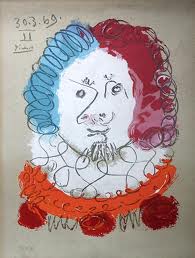
Here is the lithograph I based my poem on:
Picasso

And here is my poem:

On Picasso’s Imaginary Self-Portrait

Is it conceit or self-knowledge
that makes you paint yourself
in the ruffed collar
of Shakespeare
or a clown?

Satyr, young at heart,
your merry countenance
masks darker moods and behaviors,
the bright pigments
hiding a more somber undercoat.

Picasso,
your children
and your mistresses
might paint you as master:
stern, egotistical,
but always with the backlit inspiration
of genius.
Yet, old goat,
you paint yourself a clown.

Scissors, Tissue Paper and General MacArthur

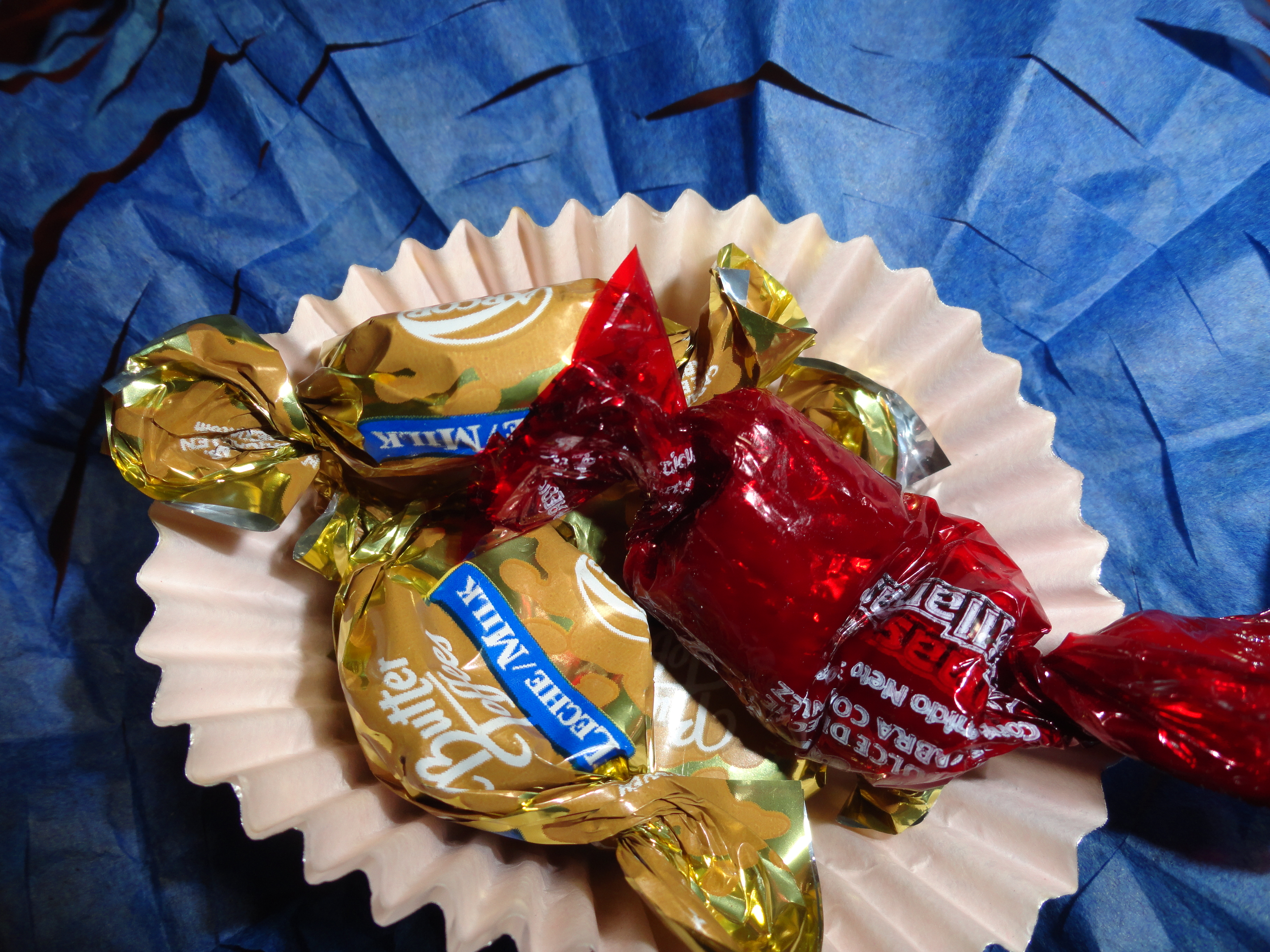
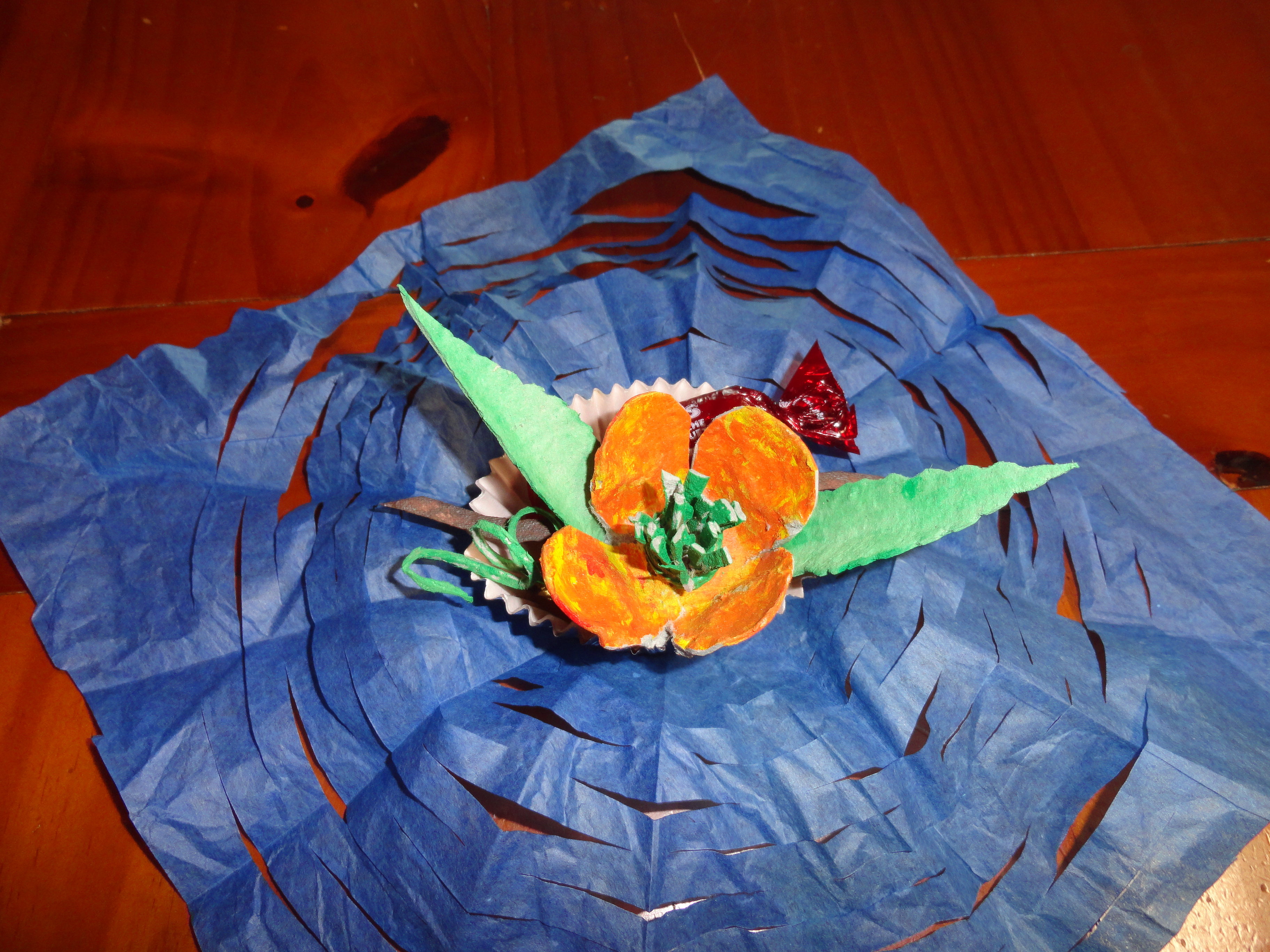
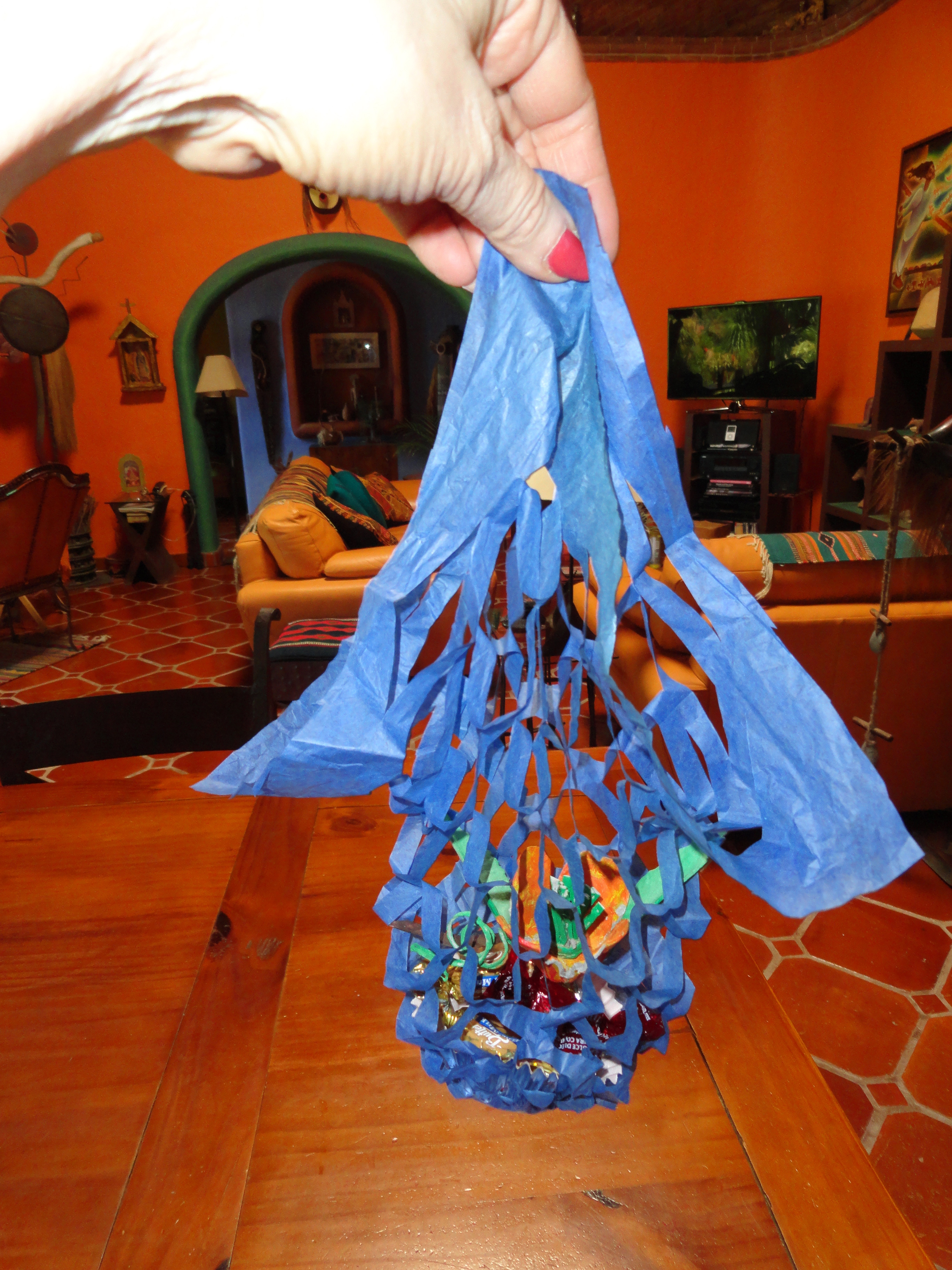
DSC08186 DSC08162  DSC08184 DSC08180l

Every year, my mom helped us make May baskets to fill with candy and leave on the doorsteps of our friends. As mentioned in an earlier post, we’d ring the doorbell and run. If the recipient caught us, they could kiss or pinch us—their choice.

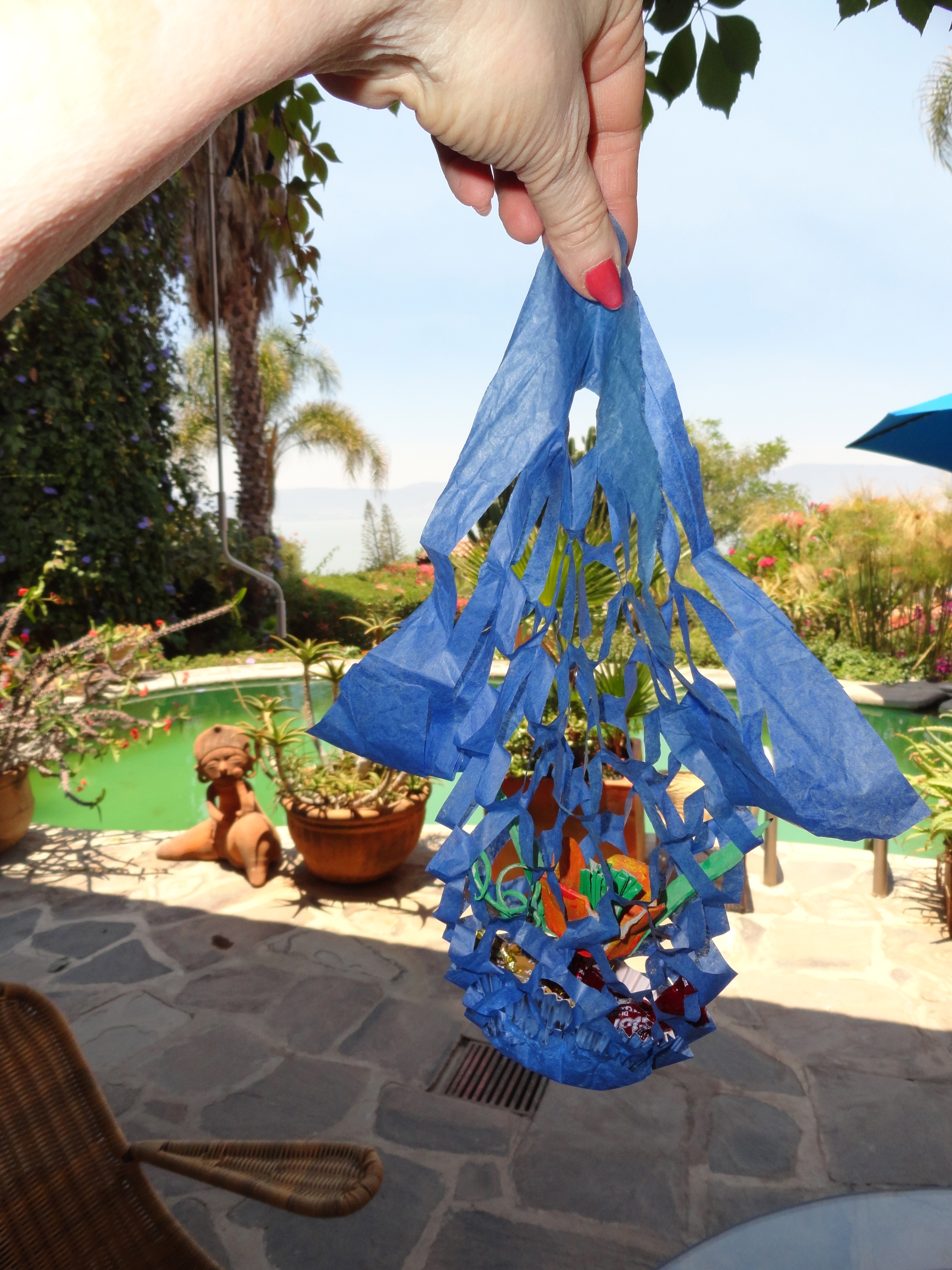
Some years we bought fancy handled nut cups from the dime store and used them, but I liked best to make my own. One year, my mother showed us something special to use for May baskets. Her family knew how to make these incredible tissue-paper ornaments that, with a cupcake liner filled with candy glued into the bottom, hung down in a web-like form. We’d pin them at the top and when you held them up they would fall down in a lacy accordion effect so they were a foot or two high. The only way you could really get the effect was to put them on the floor and hold up the top part or hang them from something.

She didn’t remember whether it was her mother or one of her seven older siblings who taught her how to make them, but about five years ago, when I went to the International Music festival in Adelaide, Australia, I went into one of the tents on local cultures around the world and saw my mom’s May baskets hanging all over the tent! It seemed surreal. The tent was displaying handicrafts from the Philippines, and it turns out that my mom’s May baskets were actually hand-cut Philippine lanterns. Suddenly, it all made sense.

My mother’s older sister had married an army officer who served under General MacArthur and my aunt had become a very good friend of Jean MacArthur. She told a funny story about going to a ball and not having a dress to wear and either Jean persuaded my aunt to wear one of Jean’s very fancy satin nightgowns or vice versa. (Wish I’d written down all these family stories when they were fresh.) Anyway, when MacArthur was sent to the Philippines during the war, he took my Uncle Tubby with him.

Jean MacArthur elected to stay in the Philippines with her husband and at one point, my Aunt Betty was there as well. She talked of journeying through headhunter country and other adventures I have forgotten and that she had perhaps embellished, but the point of this circuitous story is that obviously, it was my Aunt Betty who brought the tradition of hand-cut Philippine tissue paper lanterns back to Junction City, Kansas, creating a family tradition that I must remember to hand down to my three nieces—the last surviving members of the family who might be remotely interested in how to create three-dimensional beauty from a flat piece of tissue paper.

I’m going to stop now and go to find two sheets of contrasting color tissue paper and a pair of scissors, to see if I even remember how!!! I’ll post a picture if I figure it out. (I, alas, could find only one piece of tissue paper, so I’ll have to post a less-spectacular example of this family craft that after three tries, I finally remembered.)

Now, I’d love for you to pass along a story about one of your own special family memories, handicrafts or recipes by posting it on my blog.

Happy Mayday, five days late. Happy family memories and here’s to passing them on.