Category Archives: Beauty

NaPoWriMo Day 6: Mexico Saves Daylight

We go on and off Daylight Saving time later than they do in the U.S., so this morning was the morning we lost an hour. Our prompt was to look out our window and record what we saw and heard, then to write a poem using these images. It was still dark here when I arose, so I went outside to sit first on my terraza and then in my gazebo which sits at the edge of my property overlooking the hillside that leads down to Lake Chapala. I had never looked at this scene this closely from this time perspective, so it was a unique viewing of a familiar scene for me.
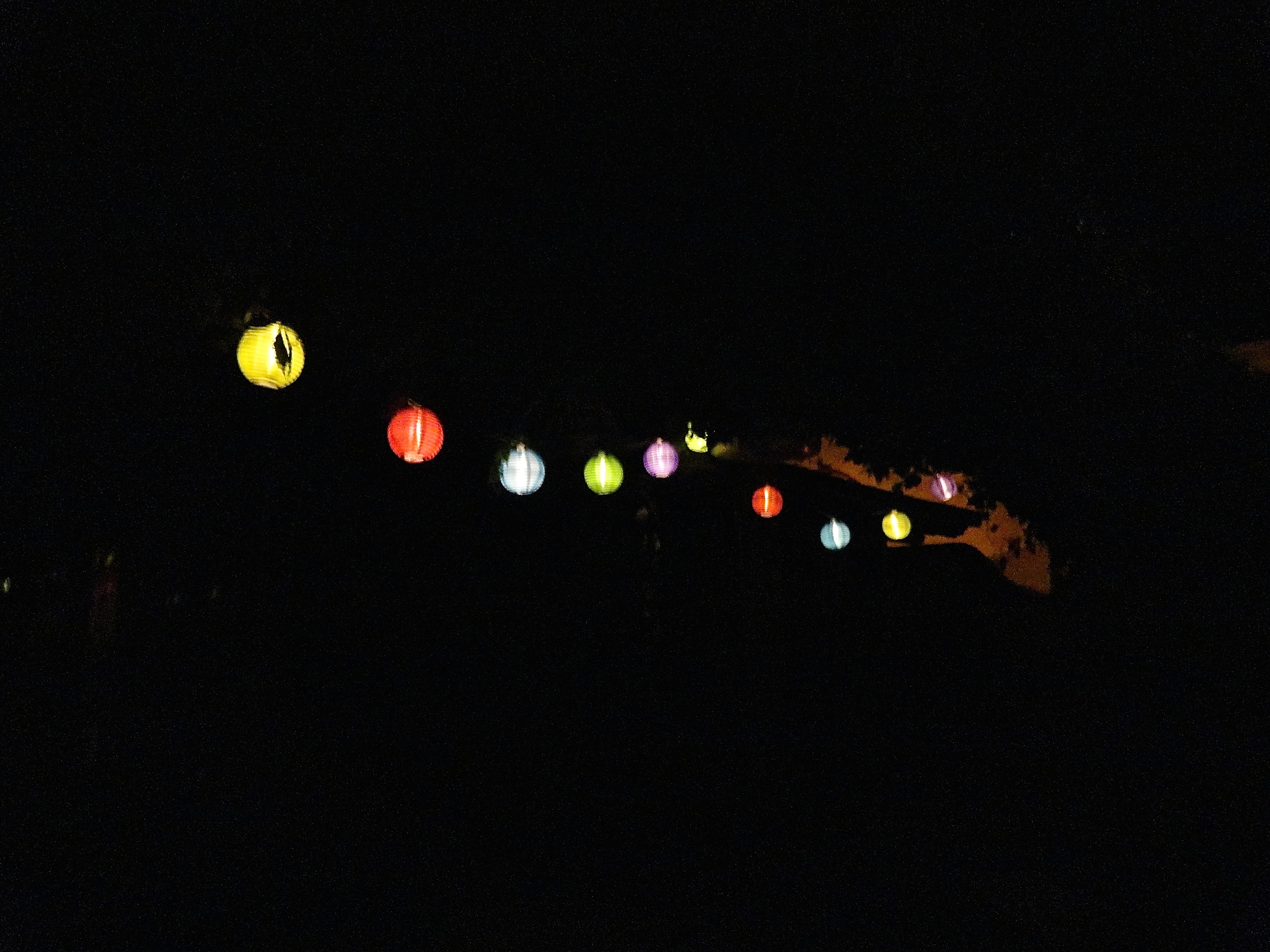
These Chinese Lanterns are solar and await the darkness to shine!

These Chinese Lanterns are solar and await the darkness to shine!

Mexico Saves Daylight

Nobody knows
what this new day
has in store for us.
The colors stolen by night
have not come back yet––
only the string of miniature Chinese lanterns
strung on the patio
glow their soft tones:
lavender, yellow, peach, rose, lime green.
Powered by energy stolen from the sun,
they light up this very early morning darkness
otherwise lit by the random stars of
streetlights undulating over roads that wind up foothills.

The mountain peak named Señor Garcia
stands against the gray predawn sky.
Colima volcano peers over his shoulder,
half-obscured by mist and clouds.
My day emerges.

Scatterings of lights twinkle
from the small pueblos across the lake.
Bats swoop and dart
after the last insects of the night,
then speed impossibly into second-story tejas
for their communal day’s rest.

The hot tub cover,
submerged a few inches beneath the water’s surface,
forms a mirror for the wild hair of palm trees.
Dried leaves rest on the water,
swirling in the breath of morning.
Roosters crow.
A cacophony of bird calls:
“Me hee hee hee hee hee. Me hee hee hee hee hee Me.”
scolds the most persistent of the lot.
Mourning doves answer in a register from another time.
The grind of trucks accelerating on the roadway far below
too small for trucks.
Church bells speak their language,
tolling the morning hour.

The round
subtle drone
of unseen bees
takes precedence
over all other sounds
as I move to the gazebo.
I picture a whole hive
moving to new quarters,
starting that process over again,
busy giving birth to their new home,
perhaps in the stark Guamuchil tree
that survives like a dinosaur
among the castor beans
in the jungled houseless lot next door.

Like one of those internet birthday cards
where an invisible hand
yields a brush
over a black and white drawing,
slowly, colors lost to the black night
emerge through the fog
of earliest morning blues and grays.
Rose pink of the first hint of sunrise.
Colors of houses on the mountains:
vivid orange and gold,
lime green and blue.

Bougainvillea silhouettes give way
to curly detail and bright color:
fuchsia, orange, peach, gold, brilliant white.
Three green foam noodles lie abandoned poolside,
caught in the arms of aloe vera
and by the crown of thorns.
Green washes the hillside
around the gold and brown
of last year’s corn stalks.

The diverse calls of grackles
join the morning conversation.
Quetzacoatl spreads his sinuous frame
over the entire wall above my bedroom doors
as though stretching his kinks out for the day ahead.
7:30 am April 6, 2014,
announces the computer screen
glowing on my bedside table.
Coral sheets and a blue pillowcase.
A large watercolor of a woman
with birds perched on her shoulders
and her hands.
I yearn to go back to bed,
but time changed here
in the very early morning.
It is an hour later
than it was
the same time
yesterday.
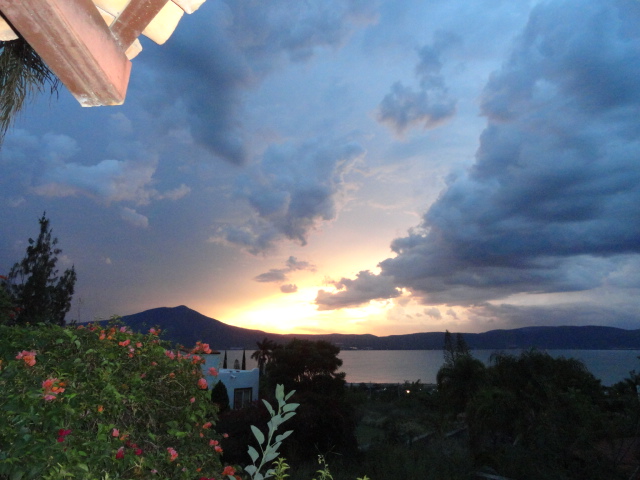
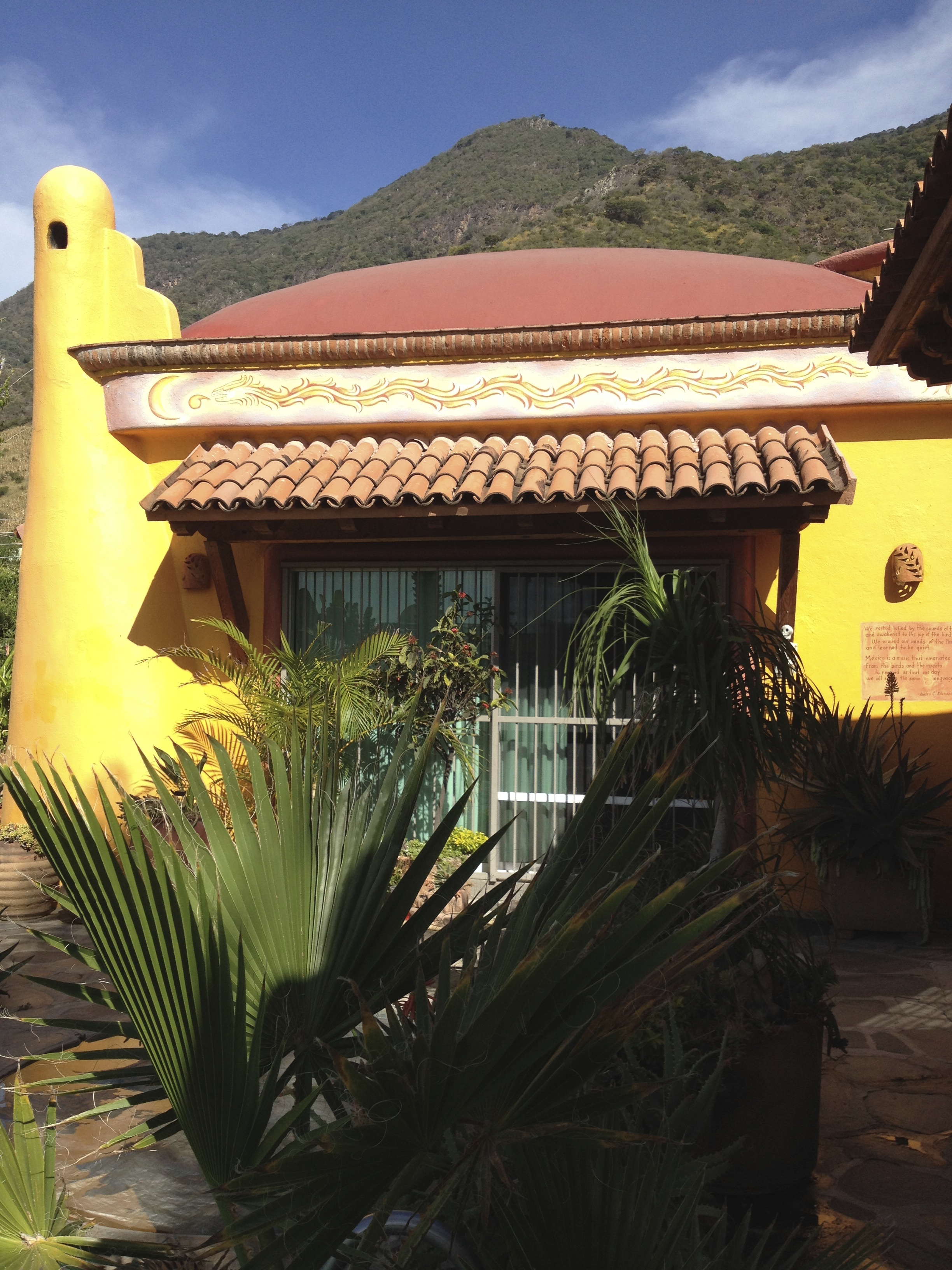
Mount Senor Garcia from my gazebo
Mount Senor Garcia from my gazebo

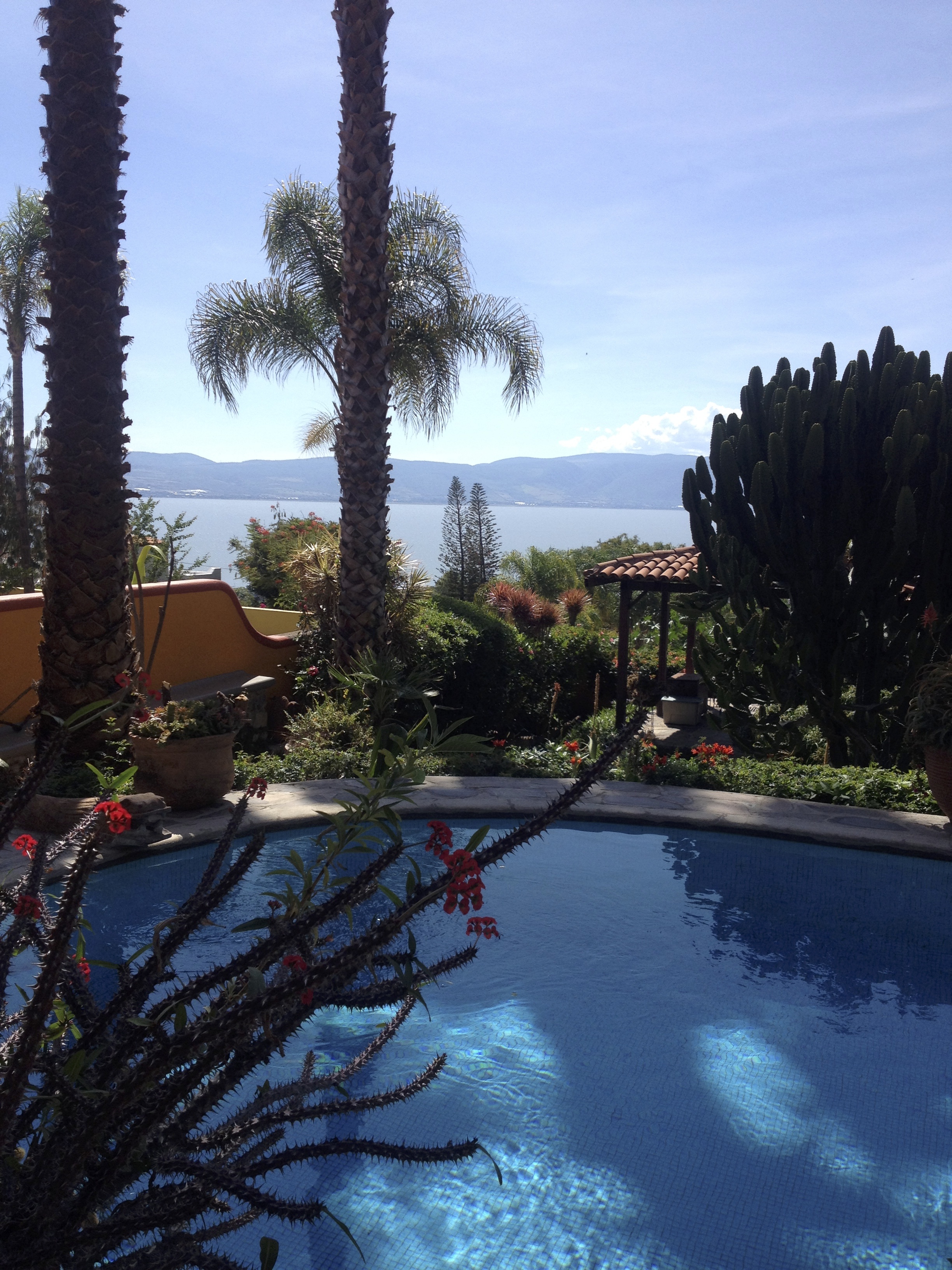
Backyard overlooking Lake Chapala.
Backyard overlooking Lake Chapala.

Quetzacoatl Mural Over Door to Bedroom
Quetzacoatl Mural Over Door to Bedroom
Give Me Blue

Image

Give Me Blue

If it is a blue with no sadness in it:
the blue of the sky above Colima Volcano
with no other clouds in it except one puff
of earth’s hot breath becoming visible
in the cool morning air.

If it is a blue
with no middle ground of safety,
nothing that makes it ordinary.
No hue of boredom
or gray cast of age.
No tint of ever ending––
just pure blue
holding its mood in,
letting you feel however you want to feel.
The blue of glass that reflects the sky.
Iris blue and periwinkle.
Cerulean and cobalt.

If it is a blue with not a smudge of green in it,
or yellow or white or black.
Blue-blue like my sister’s daughter’s eyes
and like the color that a blueberry Popsicle
should be its blue dusted by nature
as though frosted, even in the heat of summer.
Like blue caught in icicles.
The color of a jellyfish
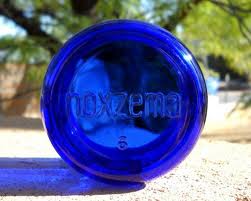
or Noxzema jar.
Bluebottle fly, tenacious,
only its color not annoying.
Blue as a shiver. Blue as blood. Blue as Hawaii.

Not the blue of a heart before forgetting.
Not that blue with a lot of
dullness soaked into it.

But if you have Blue as in Australia.
Blue as in a first place ribbon.
Sky blue,
true blue,
never blue.
Blue that if it’s ever had one gram of sadness in it,
doesn’t show it.
If you have that blue,
and you want to give it to me,
then, sure.

Give me blue.

Dichotomy

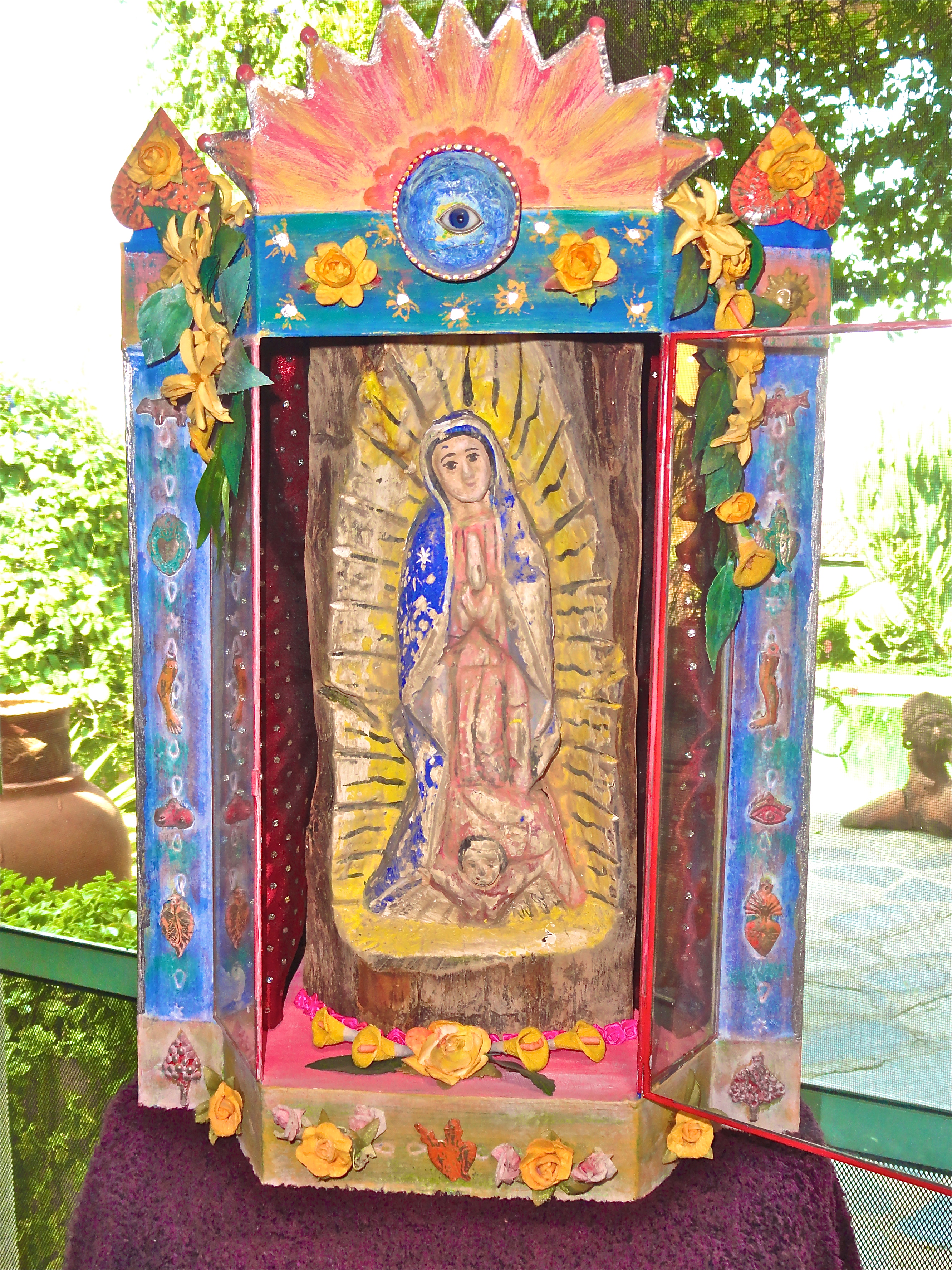
Someone on a social site I post on once stated that he couldn’t understand the contradiction between my statement that I was an agnostic and the fact that a number of my retablos made use of images of the Virgin of Guadalupe.

One side of the Mexican coin as well as the Universal coin.

One side of the Mexican coin as well as the Universal coin. (click on images to make larger.)

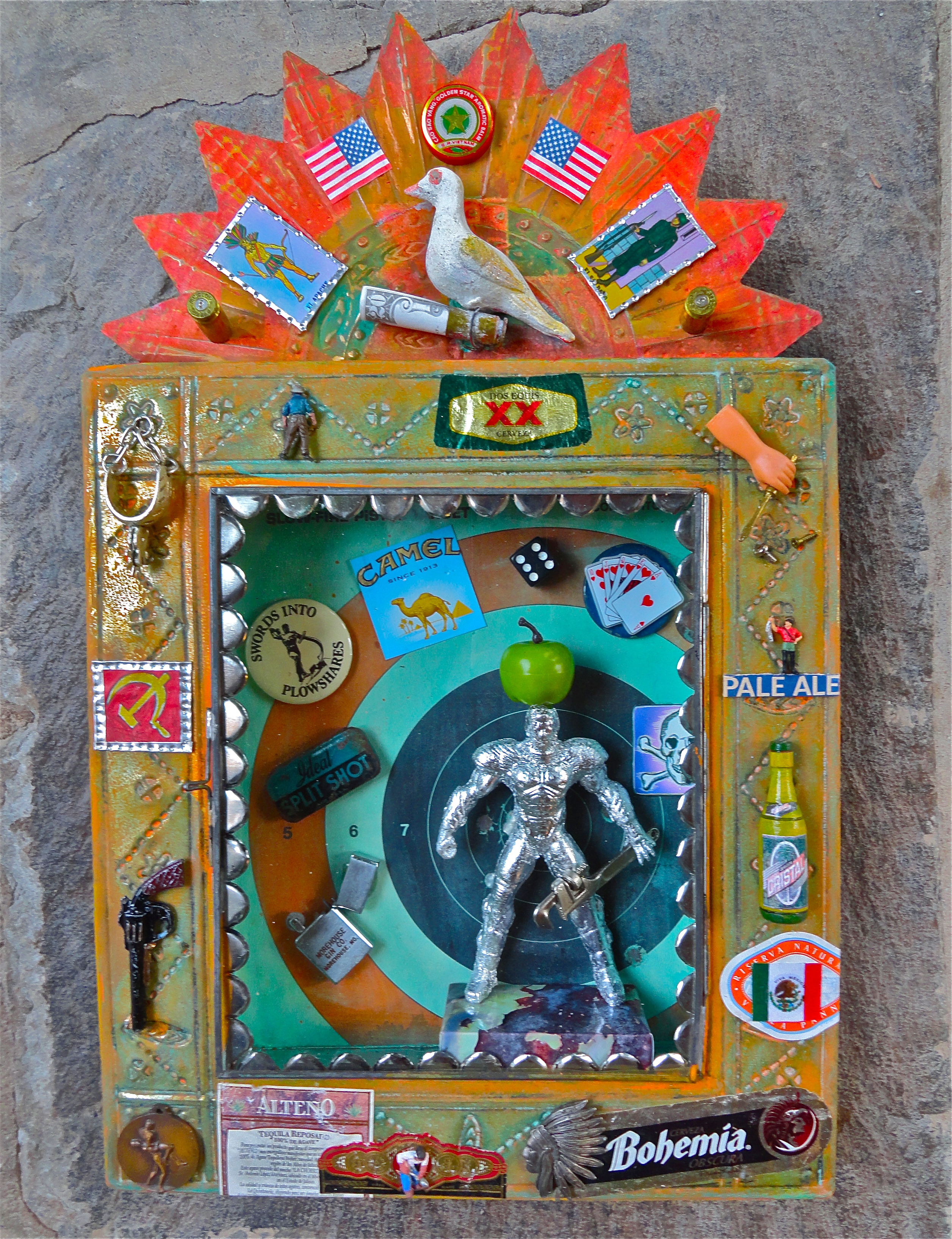
I answered that for me, she was a symbol of that gentle, loving, peaceful, motherly, female side of Mexico that balanced the macho, warlike, violent male side. He didn’t understand this and actually ended our correspondence—a perfect example of that force I sought to counterbalance. I have just finished a retablo entitled “Macho” that demonstrates the male side of the dichotomy.


My newest retablo deals with the dichotomy between the masculine and the feminine in both Mexico and the world.

My newest retablo deals with the dichotomy between the masculine and the feminine in both Mexico and the world.

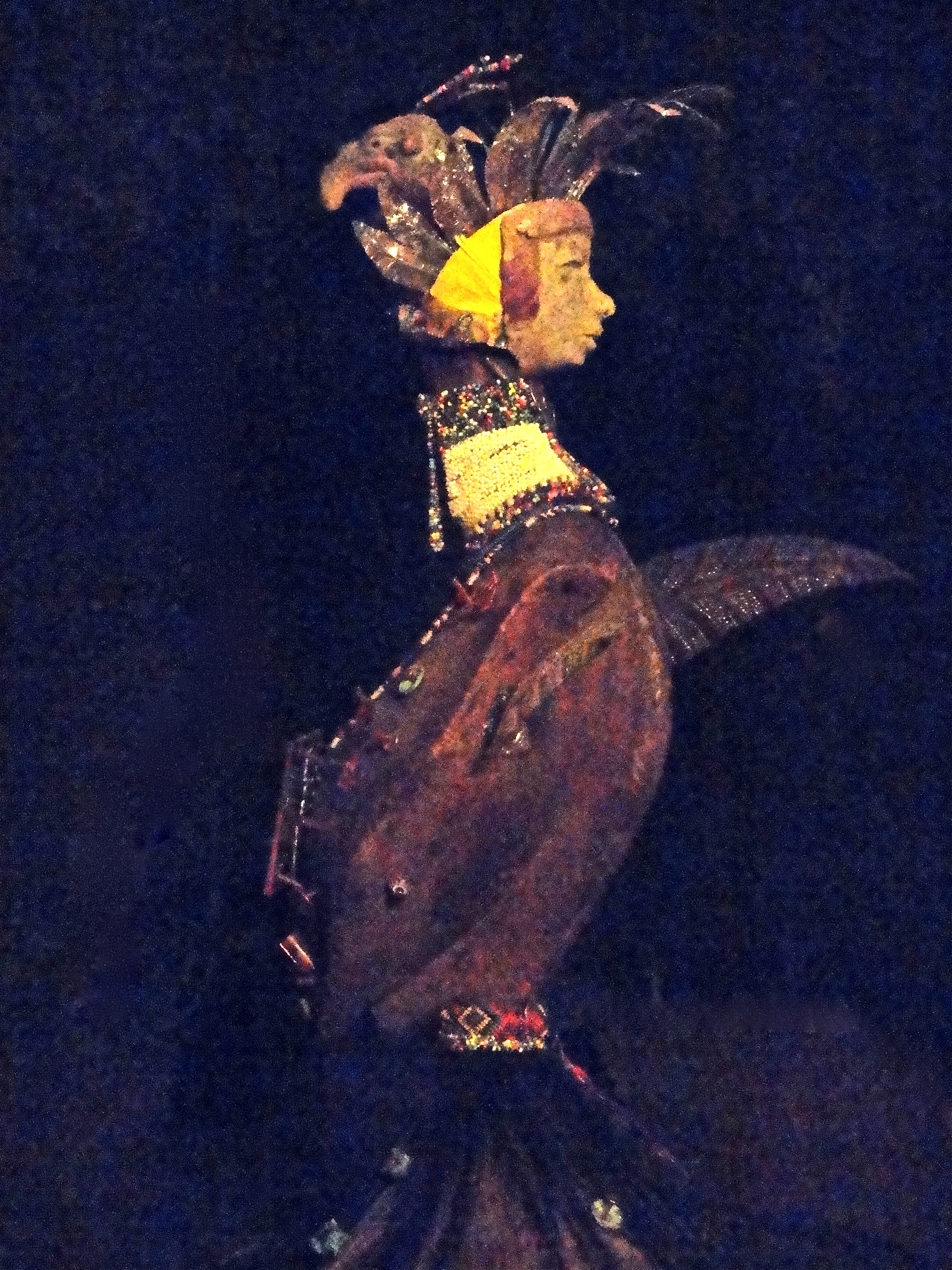
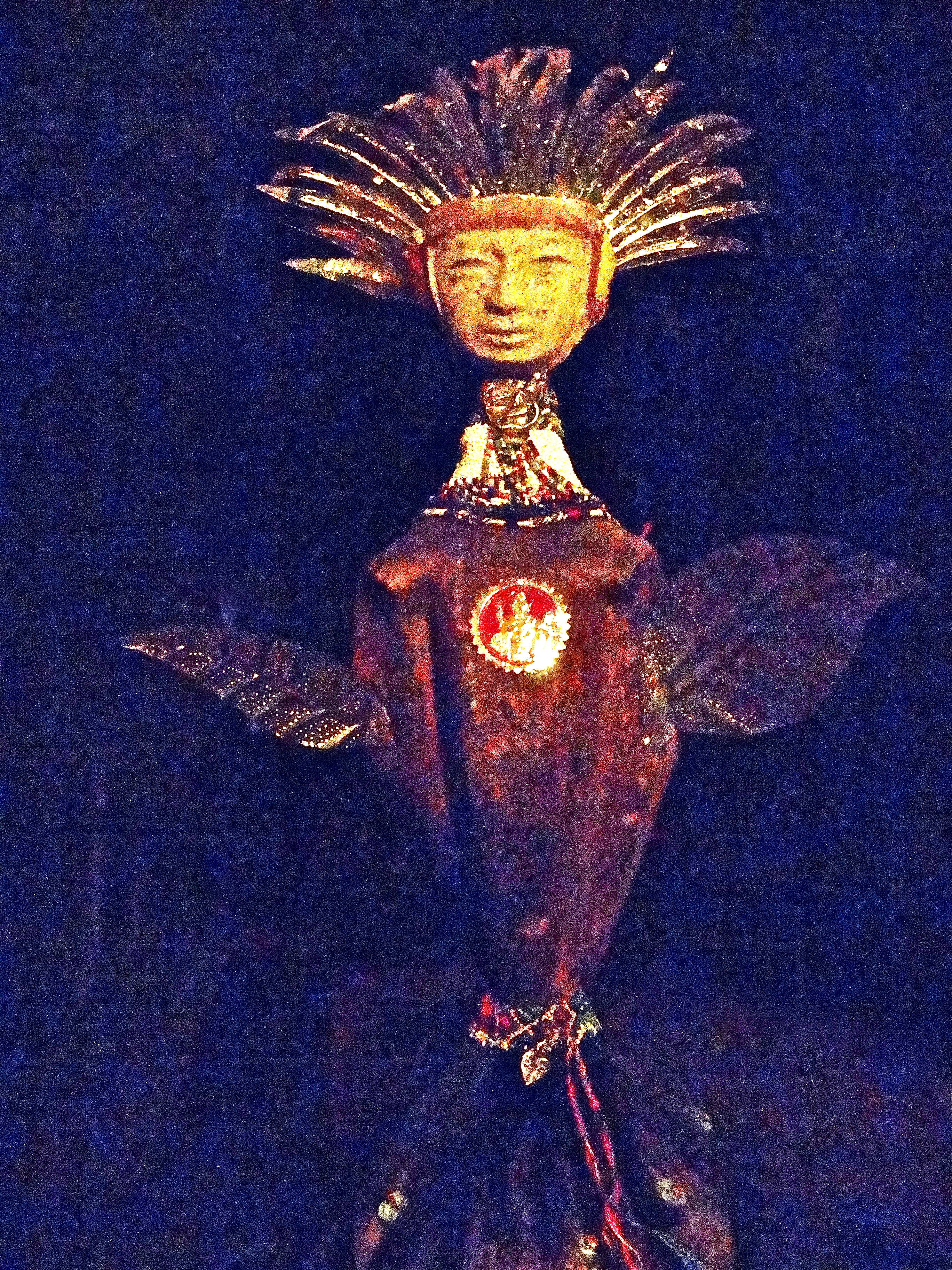
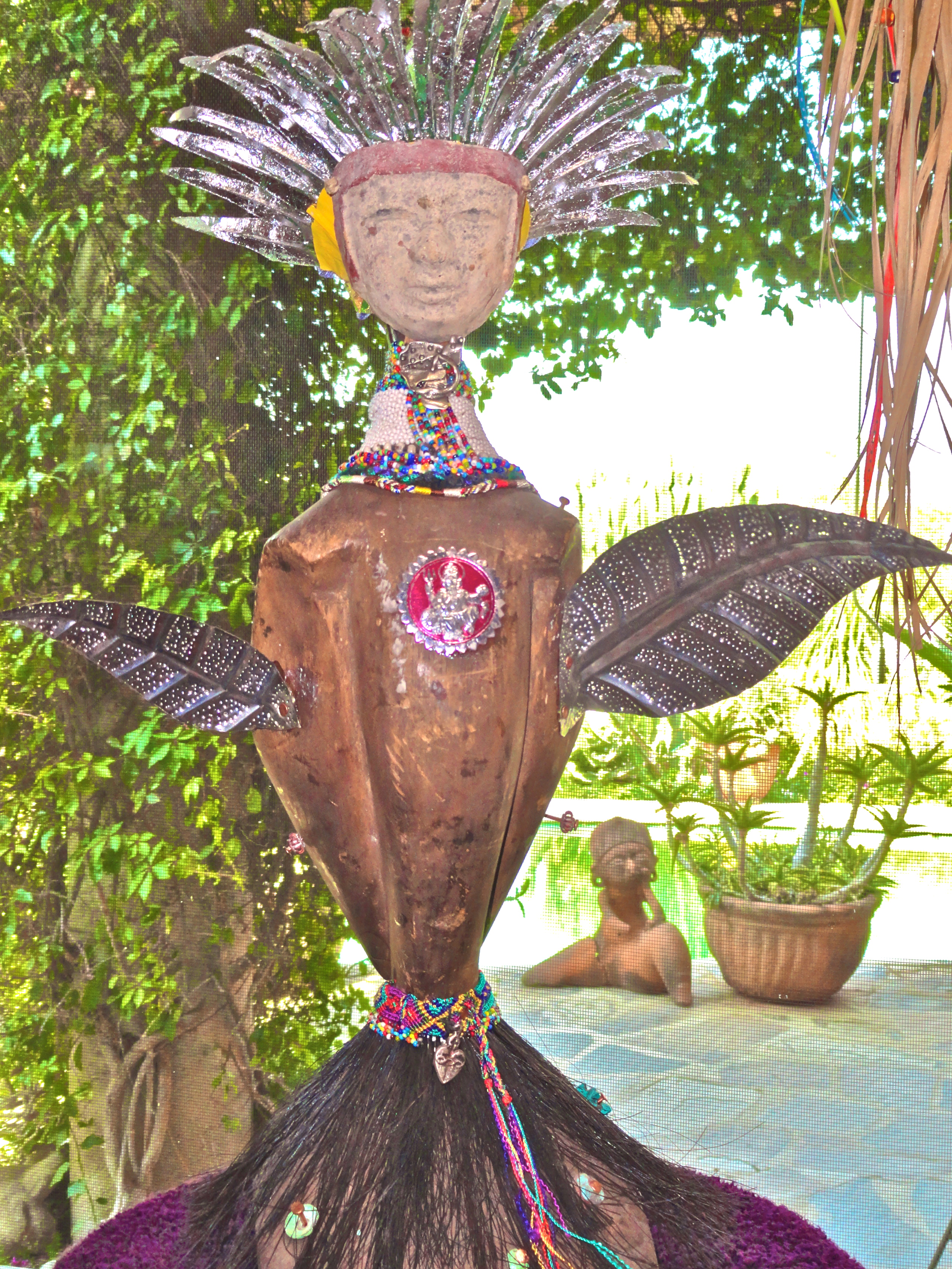
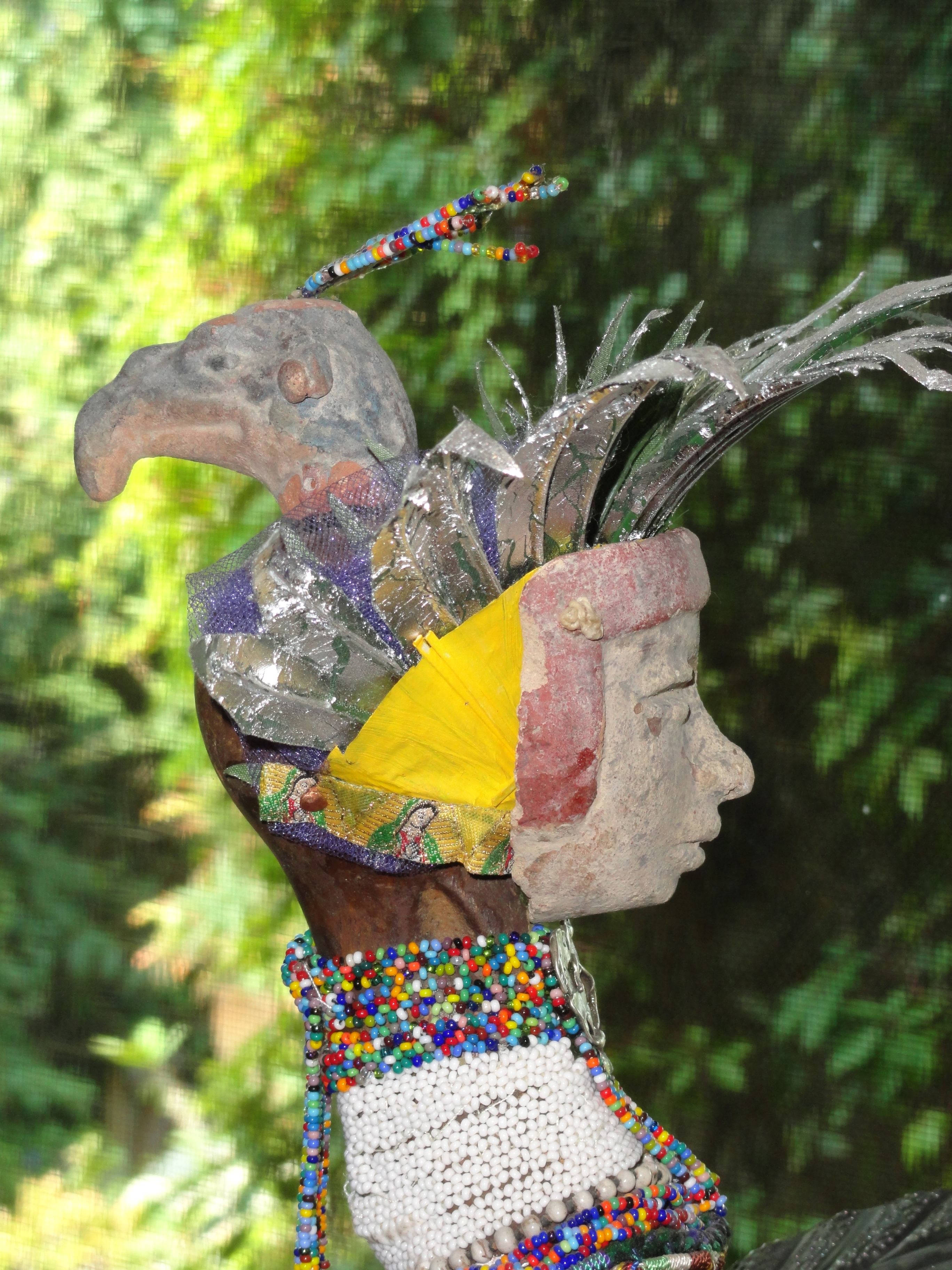
I also have a sculpture I completed over a year ago entitled, “Anima/Animus.”

ANIMA/ANIMUSSHADOWED ANIMA

Since first reading Jung 32 years ago, I have been almost constantly engaged in examining that force which seems to drive the world—that shifting between anima and animus that the I Ching might call yin and yang and that religion might classify as good and evil. Not that either the anima or  animus is purely good or evil, but certainly all is a matter of trying to balance.  This is a simplistic statement of a very complex matter, but one I often deal with in my work.  This statement is being made after the fact as I very rarely have a concept in mind when I begin a work.  I like to see where each piece leads me and I’m as surprised as the viewer may be at where I am led by the process.

ANIMA/UNSHADOWED

ANIMA/UNSHADOWED

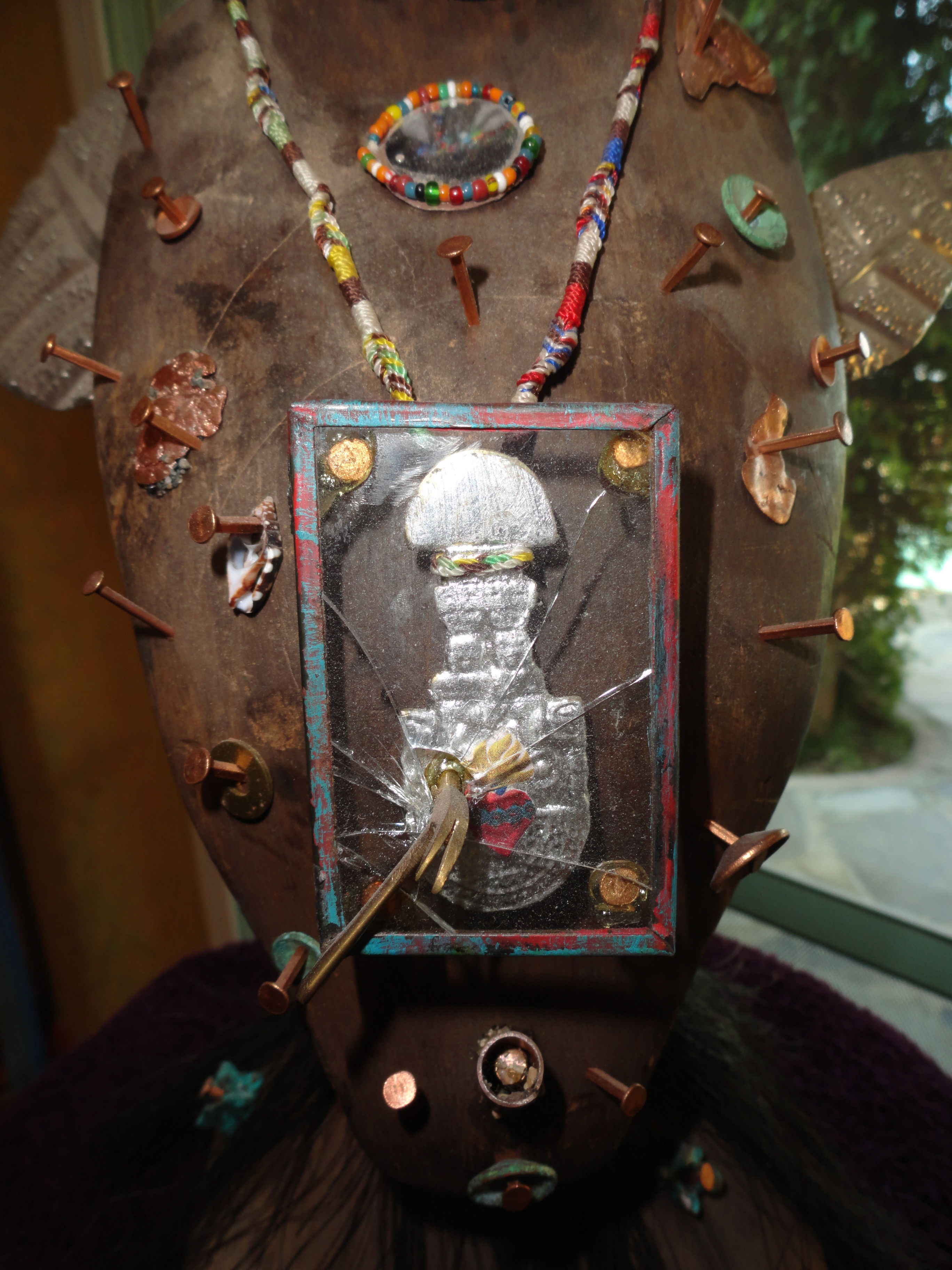
ANIMUS/ANIMA CLOSEUP

This detail symbolizes the shattering of the male side of the ego by a feminine consciousness.  The gold object in the glass case is a small replica of the instrument used to sever the head in sacrificial prehispanic temple ceremonies.  The hammer shattering the glass is meant to symbolize the gentling effect of the feminine on the msculine.

This detail examines the shattering of the male side of the ego by a feminine consciousness. The gold object in the glass case is a small replica of the instrument used to sever the head in sacrificial prehispanic temple ceremonies. The hammer shattering the glass is meant to symbolize the gentling effect of the feminine on the masculine.

Scissors, Tissue Paper and General MacArthur

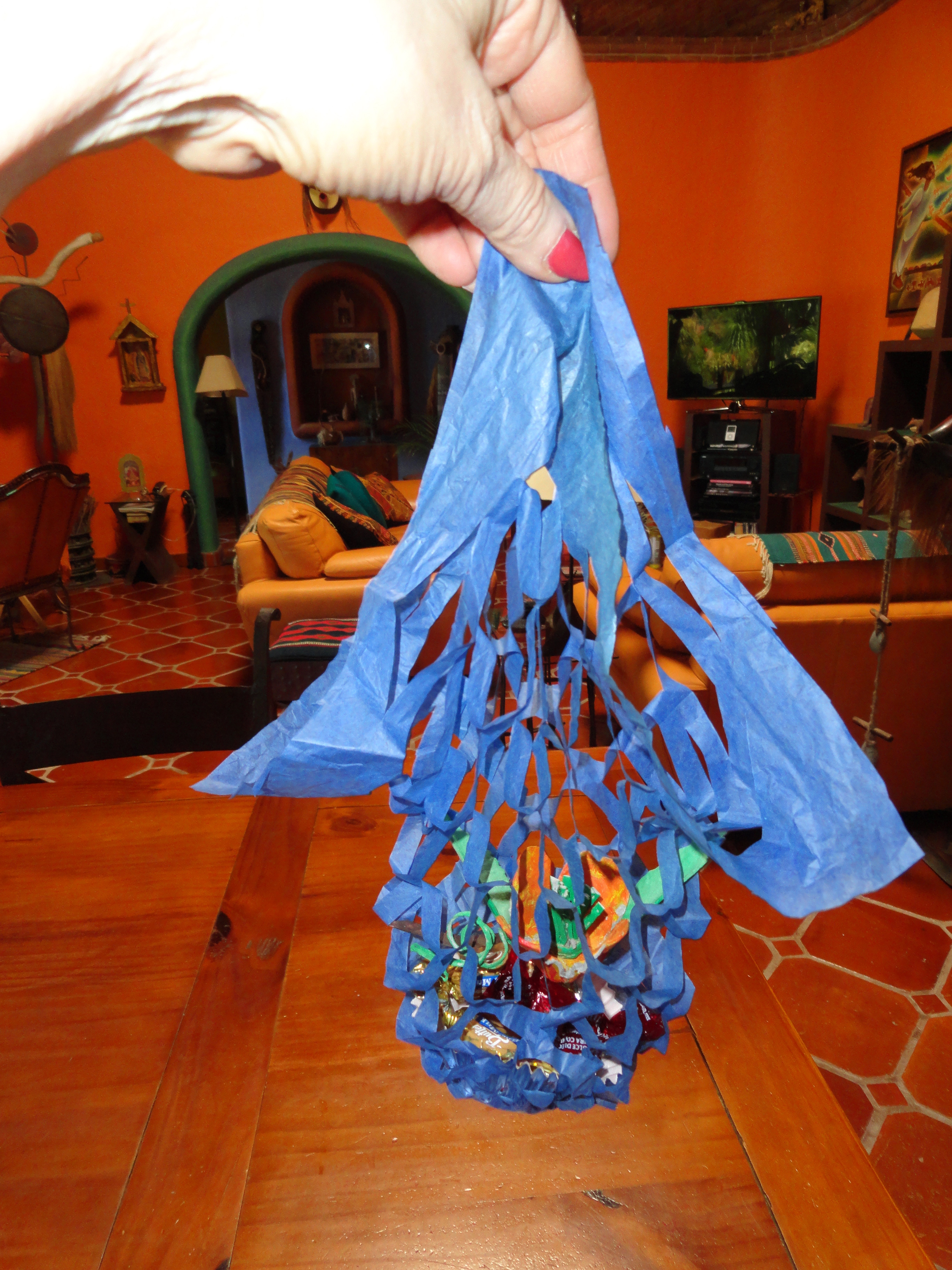
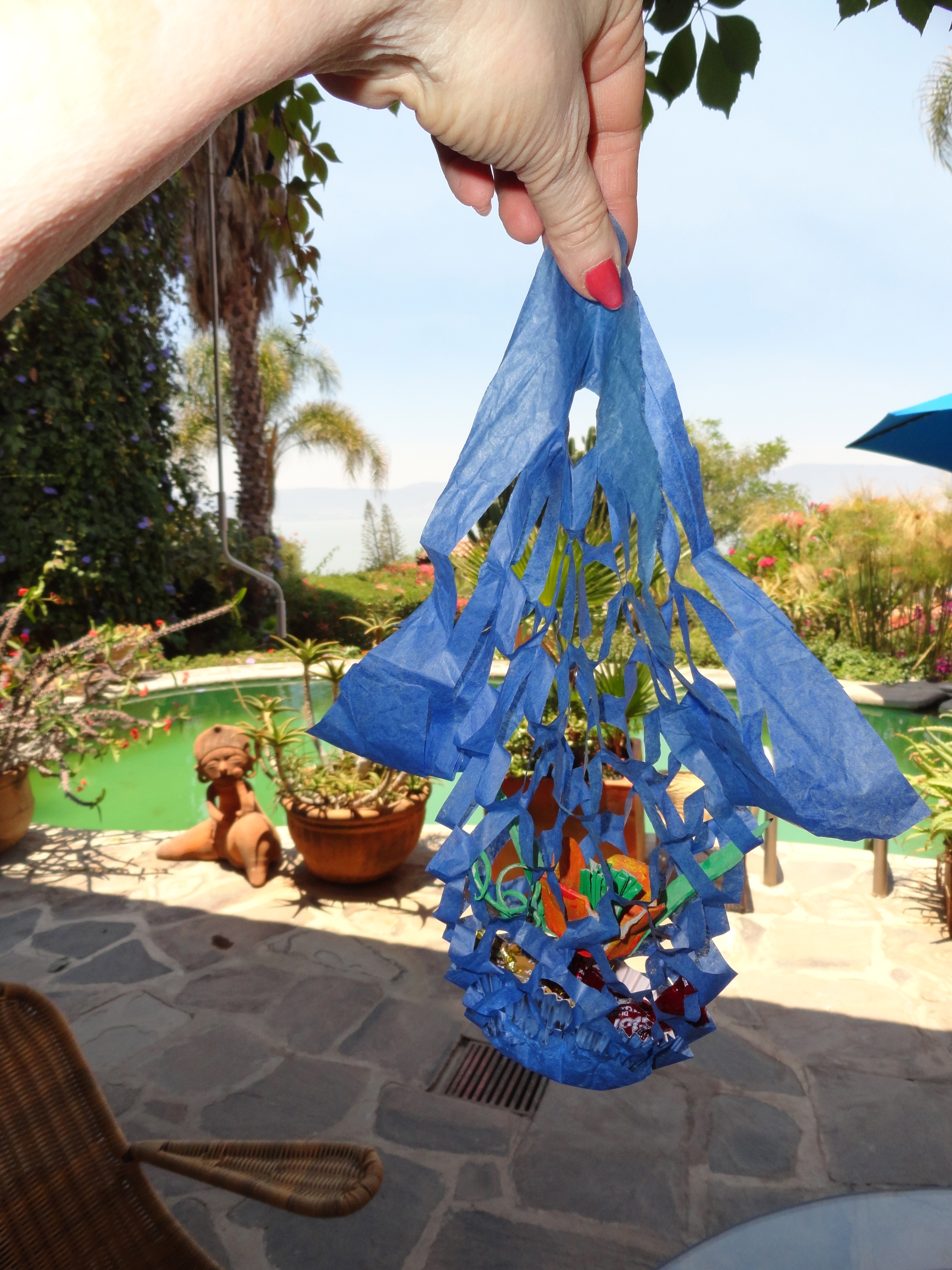
DSC08186 DSC08162  DSC08184 DSC08180l

Every year, my mom helped us make May baskets to fill with candy and leave on the doorsteps of our friends. As mentioned in an earlier post, we’d ring the doorbell and run. If the recipient caught us, they could kiss or pinch us—their choice.

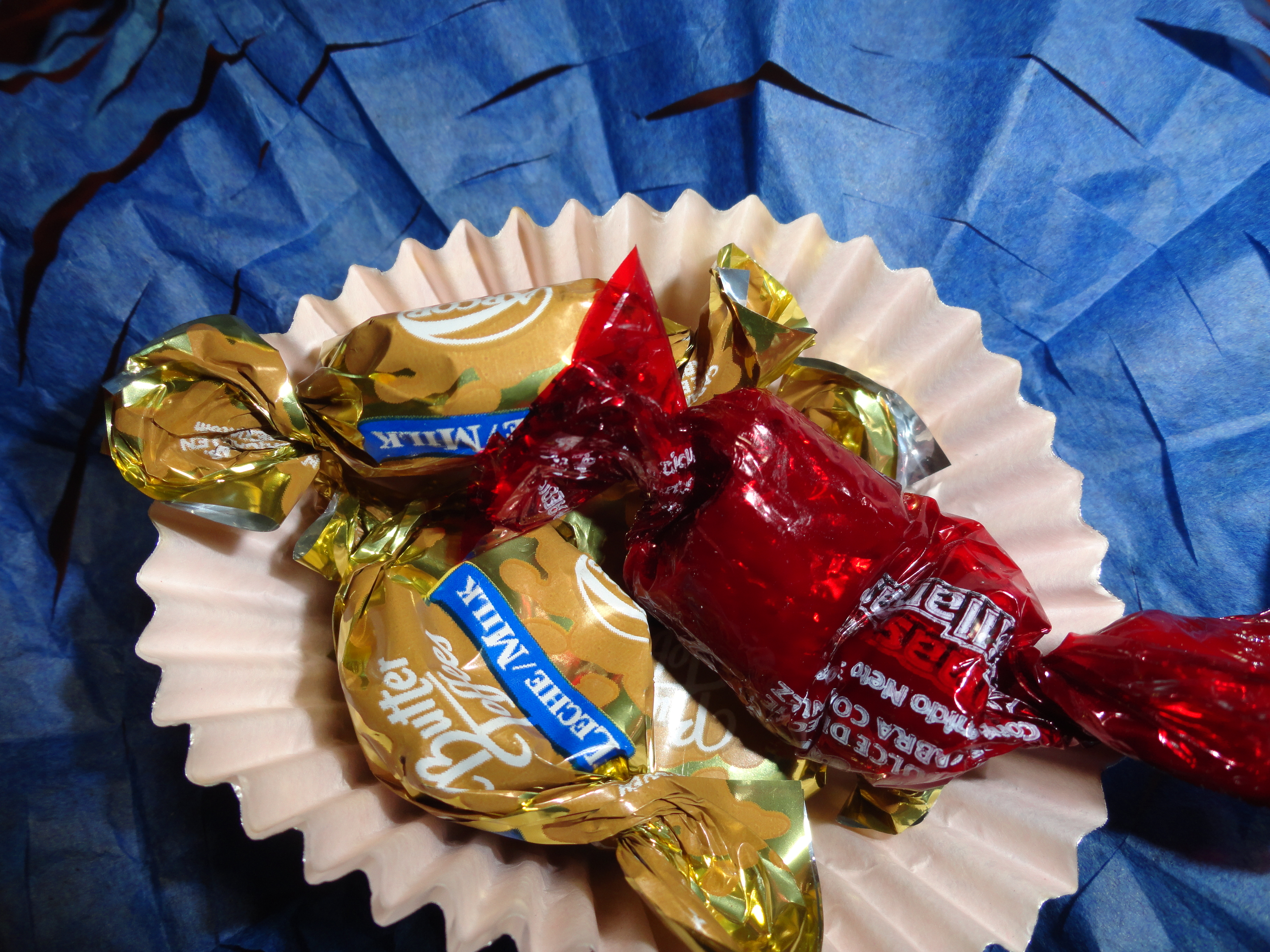
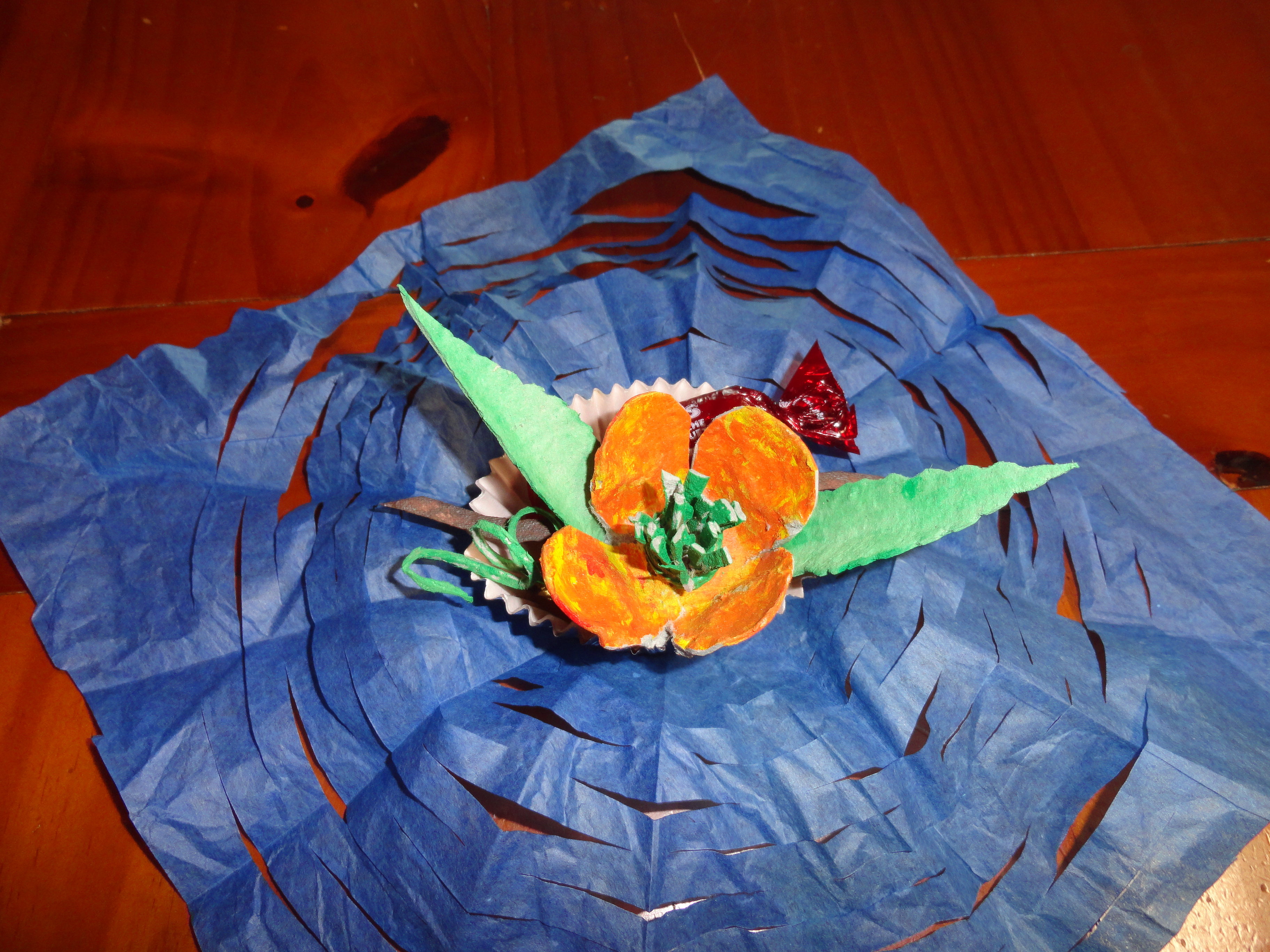
Some years we bought fancy handled nut cups from the dime store and used them, but I liked best to make my own. One year, my mother showed us something special to use for May baskets. Her family knew how to make these incredible tissue-paper ornaments that, with a cupcake liner filled with candy glued into the bottom, hung down in a web-like form. We’d pin them at the top and when you held them up they would fall down in a lacy accordion effect so they were a foot or two high. The only way you could really get the effect was to put them on the floor and hold up the top part or hang them from something.

She didn’t remember whether it was her mother or one of her seven older siblings who taught her how to make them, but about five years ago, when I went to the International Music festival in Adelaide, Australia, I went into one of the tents on local cultures around the world and saw my mom’s May baskets hanging all over the tent! It seemed surreal. The tent was displaying handicrafts from the Philippines, and it turns out that my mom’s May baskets were actually hand-cut Philippine lanterns. Suddenly, it all made sense.

My mother’s older sister had married an army officer who served under General MacArthur and my aunt had become a very good friend of Jean MacArthur. She told a funny story about going to a ball and not having a dress to wear and either Jean persuaded my aunt to wear one of Jean’s very fancy satin nightgowns or vice versa. (Wish I’d written down all these family stories when they were fresh.) Anyway, when MacArthur was sent to the Philippines during the war, he took my Uncle Tubby with him.

Jean MacArthur elected to stay in the Philippines with her husband and at one point, my Aunt Betty was there as well. She talked of journeying through headhunter country and other adventures I have forgotten and that she had perhaps embellished, but the point of this circuitous story is that obviously, it was my Aunt Betty who brought the tradition of hand-cut Philippine tissue paper lanterns back to Junction City, Kansas, creating a family tradition that I must remember to hand down to my three nieces—the last surviving members of the family who might be remotely interested in how to create three-dimensional beauty from a flat piece of tissue paper.

I’m going to stop now and go to find two sheets of contrasting color tissue paper and a pair of scissors, to see if I even remember how!!! I’ll post a picture if I figure it out. (I, alas, could find only one piece of tissue paper, so I’ll have to post a less-spectacular example of this family craft that after three tries, I finally remembered.)

Now, I’d love for you to pass along a story about one of your own special family memories, handicrafts or recipes by posting it on my blog.

Happy Mayday, five days late. Happy family memories and here’s to passing them on.

Time Temporal (Final Day––Day 30––Of NaPoWriMo)

The prompt on this last day of National Poetry Month is to find a shortish poem that you like, and rewrite each line, replacing each word (or as many words as you can) with words that mean the opposite. I chose Sonnet 18 by Shakespeare.

Time Temporal

by Judy Dykstra-Brown

Shall I contrast thee to a winter’s night?
Thou art less lovely and more tempestuous.
No wind disturbs November’s empty stalks,
Oe’r which the winter hath too long a power.
Sometimes the too-cold moon lies sheathed in clouds.
And rarely does its pitted face shine forth.
Yet light from dark may rise. We’re proof of that,
Spurred on by fate or providence’s  plan.
But thy short winter soon shall pass away,
Restore to thee the homeliness of death.
Nor shall that birth that brought you forth to light
Still claim thee when time curtains you with night.
As men lose breath and eyes  give up their sight,
So dies this poem, and you echo its plight.

Sonnet 18

by William Shakespeare

Shall I compare thee to a summer’s day?
Thou art more lovely and more temperate.
Rough winds do shake the darling buds of May,
And summer’s lease hath all too short a date.
Sometime too hot the eye of heaven shines,
And often is his gold complexion dimmed;
And every fair from fair sometime declines,
By chance, or nature’s changing course, untrimmed;
But thy eternal summer shall not fade,
Nor lose possession of that fair thou ow’st,
Nor shall death brag thou wand’rest in his shade,
When in eternal lines to Time thou grow’st.
So long as men can breathe, or eyes can see,
So long lives this, and this gives life to thee.

Beholding Beauty (Day 27 of NaPoWriMo)

The prompt was to think of a proverb or axiom, to Google it and write a poem inspired by
what you read about that phrase. I chose, “Beauty is in the eye of the beholder.”

Beholding Beauty

You are more beautiful than you think you are,
but we don’t tell you because
it is such a pleasure to see you unaware of it,
doing everyday things in such graceful ways.

You are the Burmese cat, stepping high
over the small sculptures
on the wall where he is fed,
his tail curving into a delicate hook.

You are vibrating leaves on the hibiscus tree
adding the contrast of green
to the one exquisite yellow bloom
with its fuchsia sunset middle.

You are a child whose violet eyes
open wider to each wonder––innocent,
never knowing yourself to be more beautiful
than what you observe.

You are music, harmonious, played
on the spur-of-the-moment with no rehearsal,
fingerpaints on the wall in an incredibly wild pattern
that could not have been planned.

You are the gourmet meal
made of leftovers from the fridge,
the wonderful costume gathered
from hangers at the thrift store.

You have a beauty
you were not born to––
one that is an amalgam
of every choice you make in life.

Beauty is in the eye
of the beholder, many say,
but it is impossible to imagine
a beholder who couldn’t see it in you.