Category Archives: Disasters

Fire on the Mountain

Fire on the Mountain

The smell of burning leaves us only when we sleep,
the hills above us aflame for weeks as the wind
catches the upraised hands of a dozen fires
and hurries them here and there.

It is like this every year
at the end of summer,
with the dry grass ignited by
light reflected by a piece of glass
or careless farmers burning off their fields.

The lushness of the rainy season
long since turned to fodder by the sun,
the fires burn for weeks along the ridges
and the hollows of the Sierra Madre—
raising her skirts from where we humans
puddle at her ankles.

Imprisoned in their separate worlds,
the village dogs bark
as though if freed
they’d catch the flames
or give chase at least.

The distracting smell of roasting meat
hints at some neighborhood barbecue,
but only afterwards do we find
the cow caught by her horns in the fence
and roasted live.

Still, that smell of roasting meat
pushes fingers through the smoke of coyote brush
and piñon pines and sage,
driving the dogs to frenzy.

The new young gardener’s
ancient heap of rusting Honda
chugs up the hill like the rhythm section
of this neighborhood banda group
with its smoke machine gone crazy
and its light show far above.

The eerie woodwinds
of canine voices far below
circle like children
waiting for their birthday cake,
ringing ‘round the rosy,
ringing ‘round the rosy
as ashes, ashes,
it all falls down.

I discovered a new prompting site. The prompt for this poem was to write down the following, then to use all six in a poem that begins with “The smell of burning leaves….” (I had a different take on that first line.)

Something you buy in a bakery. (Birthday cake)
A smell in a diner. (Roast beef)
A make of automobile. (Honda)
Something people do to relieve stress. (Sleep)
An unusual musical instrument. (Quena flute. I felt the actual name of the instrument distracted from the poem, so I used the more generic “woodwind.”)
A child’s game. (Ring around the Rosy)

Here is the link for that site if you want to follow the prompt or see other poems written to this prompt.

Interlude

Disclaimer Notice:  This is a work of fiction, not of fact!!!!

Interlude

I have been dieting for months and I’m in fine fettle. I can see the admiring looks of several men as I enter the restaurant, along with the slightly irritated stares of their wives or girlfriends. I’m fresh from the beauty parlor: newly coiffed, manicured and pedicured, wearing a size smaller than I wore a month ago and several sizes smaller than a year ago. Feeling buff, I slide into a booth, fanning both hands over the smooth surface of the Formica table top, admiring my French manicure.

He enters the restaurant shortly after I do. Taking the long way around the aisle that runs between the tables in the center and the booths along the four sides, he scans the faces of diners with a curiosity that signals an interest in life. He is tall and intelligent-looking with a quirky doorknocker beard and mustache and a Hawaiian shirt—all elements of his appearance that call out for notice. I do not disappoint.

I watch him as he draws nearer, but drop my eyes as he approaches my booth. So it is that I am surprised when he stops in front of me and says, “May I ask you what you name is?”

I bring my eyes up to meet his. Is this the Cinderella story I’ve been waiting for my whole life? Quickly, my mind fills in the prior details. He noticed me on the road and followed me here. Or, he was driving by when he saw me enter the restaurant and, on a whim, seized the day and came in search of me. Or, this is an old and long-forgotten flame, someone from my past—a college or high school friend I haven’t seen for twenty years.

Without asking why or giving a smart answer, for once I merely answer the question. “Judy. Judy Dykstra-Brown,” I purr in a humorous, slightly sexy voice, not once looking away from his clear hazel eyes.

He does not disappoint. “I’ve been looking for you,” he says.

“I’ve been looking for you, too—for a very long time,” I answer in my best low flirtatious tone.

He reaches out toward me, and I extend my hand toward him as well; but in place of his own hand, he places something soft and warm in my palm.

“You must have dropped your wallet in the foyer,” he says to me, “You’re lucky that the right person found it.” He turns then and walks across the room to sit down at a table with a lovely woman in a white sundress and two darling tanned children. They are like a commercial for a Hawaiian vacation.

I open the wallet to see that all the money is intact, the driver’s license just slightly askew from where he must have withdrawn it to see the picture of its owner, and my mind replays his final words to me.  “You’re lucky.”

“Welcome to Perkins!” The waitress interrupts my thoughts in a perky voice, living up to the name of her place of employment. I take the menu she proffers and order humble pie.

The Prompt: Greetings, Stranger—You’re sitting at a café when a stranger approaches you. This person asks what your name is, and, for some reason, you reply. The stranger nods, “I’ve been looking for you.” What happens next?


Justification

Justification

I spent all day in town today for business and for pleasure,
so by the time I got back home, I felt I’d had full measure
of driving-selling-trying on, shopping-eating-walking;
so I just thought I’d have some time that didn’t include talking.
I put my suit on thinking I would jump right in the pool,
but then the cat began to whine, the dogs commenced to drool—
sure signals it was feeding time—in this they were united.
They’ve learned their human serves their supper faster when invited.

The problem was, the dog food was still up in the car,
so I ran out to get it. (It wasn’t very far.)
I fed the dogs and cat, then found new flea collars I’d bought,
and so, of course, I had to put new collars on the lot.
Then, finally, the pool was mine—aerobic exercise
kept my body busy while a movie wooed my eyes
to disregard the time that passed while bending, kicking, flopping,
for when I am distracted, I am less intent on stopping.

With no prompt to finish early, I just went on and on.
Two hours passed so quickly that the setting of the sun
(and the ending of the movie—I guess I must admit)
finally gave the signal that it was time to quit.
But as I climbed the ladder, something poked my breast—
something sharp and lumpy that had made a little nest
there between my cleavage all my hours in the pool;
and when I drew it out you can’t image what a fool

I felt like, for this faux pas cannot help but win the prize
of all the times that I’ve done stupid things in any guise.
As teacher, daughter, writer, artist, sister, lover, friend,
I’ve committed stupid acts impossible to mend.
But this one takes the cake, I’m sure, as stupidest by far.
I’ve told you how I went to get the pet food from the car,
then fed and put flea collars on protesting dogs and cat.
(I doubt you’d do much better when dealing with all that!)

When I went out to do all this, I didn’t want to lose ‘em.
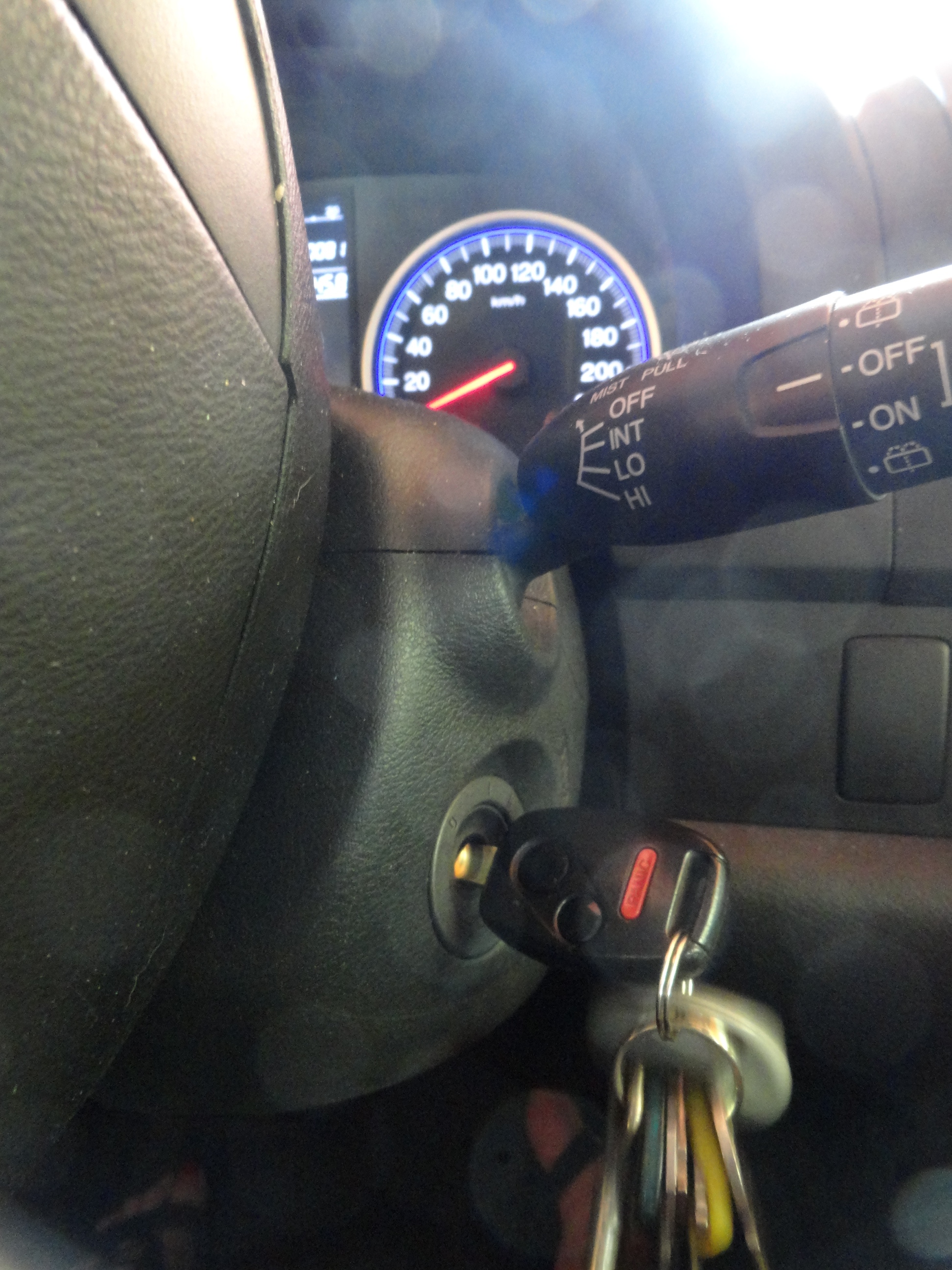
That’s why my car keys (with remote) wound up within my bosom!


Try as we may, those little indicators of age will sneak up on us.  There is no plastic surgery for a sagging memory!!!  (The Prompt today was:  “Age is just a number,” says the well-worn adage. But is it a number you care about, or one you tend (or try) to ignore?”)

DSC07216
Wonder of wonders, when I put the key in the ignition the next morning, it worked!!! Saved on this one!

Hail, Hail

                                                                        Hail, Hail 

My farmer/rancher father’s boots grew older with him, their wrinkles—like the back of his neck—born of weathering: rain, snow, mud and hot Dakota sun. They were so much a part of him that when he died, they were all my pre-teen nephew asked for, and he wore them out the rest of the way, until the soles peeled back and the leather with patina already long worn off, began to crack along the wrinkles and peel off.

Those boots reflected my father’s life, where things wore out. His clothes, his favorite chair—none were replaced for aesthetics or style alone—this practicality motivated neither by penury nor cheapness, but by growing up in a house where “making do” was a necessity.

But as in most things, there was one defining vain compulsion in my father’s life that broke him free from his mold. He loved new cars, as much for the pleasure of making the deal as for the smell of new leather and metal. The car dealers learned to call him when they got a car fully loaded, the way he liked it: automatic windows, power steering, power brakes, seats that tilted and slid back and forth and up and down by the touch of a switch. Whatever automatic feature was new that year, my father was up for it—big cars with fins, when they were in style, of every color.

The car salesmen would wait until the wheat crop had been harvested and then make the call, driving the car for sixty miles over the prairie to bring it to him for his perusal, like a new bride brought to a shah. They knew him well, and so when the bargaining began, they would accept his peccadillos. It was not the price he quibbled over, but rather the trade-in. “Well, I’ve got a combine that I need to trade in.” Once, three horses. And they learned this joy of trading was often what sealed the deal.

Later, when my sister married, her husband claimed my dad traded in his cars whenever they needed washing, but this was not true. Three years was a car’s usual shelf life, before he’d hand it down to whichever daughter of driving age needed a car the most. Packards and Cadillacs and Pontiacs were his choices of brands. For some reason, he reviled Fords. So that July of my thirteenth year, when the salesman brought the bright green Oldsmobile for my dad to view, we were sure this was the car he would turn down. My mother was not sure about the color and my dad was not sure about buying an Oldsmobile. He had no real reason. It was just a brand he’d never considered before, but it had all the bells and whistles. I think it was the first year that cruise control was offered, so it possessed that allure of new technology. And so it was that the car made it past any first inhibitions on both my mother’s and father’s parts and when the salesman drove away, it was in our “old” Cadillac and the shining green Oldsmobile became the new resident of our garage.

My oldest sister was married and gone, my middle sister seventeen—a year past legal driving age. Summer camp in the Black Hills was nearly 200 miles away, but over easily-navigated straight roads through bare prairie, the wheat having been cut early that year. So it was that my mom, worn pliable from 20 years of driving daughters hundreds of miles to doctor appointments and eye appointments and ball games and church rallies and singing contests and summer camps, decided my sister could drive me to camp that year.

My sister Patti and her best friend Patty Peck piled into the bench front seat. My best friend and I piled into the back. The trunk was full of two weeks worth of camping clothes. The pleasures of riding in a brand new car, just one week removed from its purchase, equaled the thrill of being off on our own. We rolled down the windows, stuck out our arms and let the hot July air stream through our fingers, stopped at Wall Drug for milkshakes, sang at the top of our lungs, and when our bare legs started sticking to the vinyl seats, closed the windows and enjoyed the air conditioning.

Three hours later, the black outlines of the hills that were our destination grew close enough to define the ponderosa pines that gave them their name. We cruised past Rockerville Ghost Town—a tourist trap where my oldest sister had worked a few years before—and turned off into Coon Hollow. My sister steered the car carefully over the dirt roads, fearing chipped paint or a chipped window from the occasional rock in our path. “Take Me Back to the Black Hills” we crooned, as we always did when we approached our favorite vacation spot. We rolled down windows once again to enjoy the scent of ponderosas and to hear the gurgling of the water as it rushed down the small river that paralleled the course of the dirt road that led back to the campsite.

“Black Hills Methodist Camp” read the sign. We stopped to take a picture before veering off onto the divided dirt road, and we had just caught site of the large log cabin that served as the mess hall when the first loud “Whump!” occurred. Then another and another and another. Terrified, my sister steered the car off into the trees as the hail grew larger and larger. We were facing the creek, which had grown wild with the churning of the hailstones hitting the water. They grew rapidly from quarter-sized to golf ball-sized to baseball-sized. The front window began to shatter. When one large hailstone seemed to pierce the roof of the car and land in my lap, I was out of my seat and over the back of the front seat onto the seat between the two Pattys before I could even think about it. As I remember it, I somehow managed this shift in position without ever removing my seat belt, but this, perhaps, is an exaggeration that occurred more in memory than in actuality. My friend, still in the back seat, held up the white ceiling light cover that had popped off when a huge hailstone had hit directly on top of it—showing that the rooftop was still unbreached

The entire hailstorm probably occurred over no more than a ten-minute period, but at the end of it, the stream in front of us was completely white with floating hailstones and the ground was covered. We climbed from the car, pushing through the hailstones in a shuffling motion to avoid slipping and falling on the huge balls of ice. The front windshield was completed marbled, every inch of our shining new car dimpled with deep depressions that equaled our own depression over what was going to happen when our mom and dad saw their brand new car! We were teenagers all and accustomed to that guilt that arose from a whole string of iniquities: dropping our mom’s favorite crystal bowl, staying out an hour past curfew, eating the last piece of pie. My sister backed the car out of the little turnoff she’d turned into hoping for some scant shelter from the hail and drove me and my friend the rest of the way to the registration in the mess hall, then she and her friend drove away. On the way home, they encountered a plague of grasshoppers that coated the windshield and they had to use bottles of Squirt to dissolve them from where they had become embedded into the marbled windshield; so this stickiness, dried in puddles on the hood of the car, added to the total devastation that greeted my dad’s eyes when his new “baby” was returned to him.

The feared recriminations never occurred. “Accidents happen. It wasn’t your fault,” said my dad. “I never really liked that color of green anyway,” said my mom. When my folks came to pick me up at camp, it was in a brand new rose-colored Pontiac Bonneville with a cream-colored top—the most beautiful car we ever owned. We met with no disasters on the way home, and four years later, it was the car I drove off to college six hundred miles away. My parents’ newest brand new car was a beige Buick that possessed none of the charm of the car now relegated to me, but did possess several new electronic features that I’m sure, for my dad, compensated completely.

The Prompt: You’re at the beach with some friends and/or family, enjoying the sun, nibbling on some watermelon. All of a sudden, within seconds, the weather shifts and hail starts descending form the sky. Write a post about what happens next.
Daily Post: The Avid Student

Today’s Prompt:  You can choose any person from history to teach you any topic you want. Who’s your teacher, and what do they teach you?

The Avid Student

Mrs. O’Leary, teach me how
please oh please, to milk a cow.
I won’t leave here till you do.
I’m bored today, and feeling blue.
Yesterday I baked a cake
with that new baker, name of Jake.
It didn’t rise.  It tasted awful.
Couldn’t eat but one small jaw full.
Day before I went to see
Joe the tailor.  Him and me
made a dress of chambray lace
but when I held it near my face
I found it itched me terrible.
To wear it was unbearable.
So I went on to see the preacher.
Wanted him to be my teacher.
But when it came the time to pray,
he found he hadn’t much to say.
I fear that I destroyed his faith.
I left him white as any wraith,
but found the cobbler in a pew
and asked him how to make a shoe.
He’d witnessed what the preacher did
and so he ran away and hid.
So Mrs. O’Leary, it’s up to you
to show me something I can do.
I know it’s dark, but I need right now
to know just how you milk your cow.
I brought a lantern.  I’ll hold it high.
It’s not real light, but we’ll get by.
I’ll just sit on this straw bale.
You fetch the cow and fetch the pail.
I love the way the hot milk steam
swirls around the rising cream.
I love the rhythm and the pomp
of my light squeeze and Bessie’s stomp
whenever I let loose her tit.
I cannot get enough of it!
But now we’re done and I can see
that bucket’s much too much for thee
to lift,  I’ll put the lantern down and
come with thee to give a hand.
I’ll come right back and close the barn.
Tomorrow, I’ll have quite a yarn
for everyone I want to tell
I finally did something well!!!!

For those of you unacquainted with Mrs. O’Leary, I include this description of The Great Chicago Fire of 1871:

“The summer of 1871 was very dry, leaving the ground parched and the wooden city vulnerable. On Sunday evening, October 8, 1871, just after nine o’clock, a fire broke out in the barn behind the home of Patrick and Catherine O’Leary at 13 DeKoven Street. How the fire started is still unknown today, but an O’Leary cow often gets the credit.

The firefighters, exhausted from fighting a large fire the day before, were first sent to the wrong neighborhood. When they finally arrived at the O’Leary’s, they found the fire raging out of control. The blaze quickly spread east and north. Wooden houses, commercial and industrial buildings, and private mansions were all consumed in the blaze.

After two days, rain began to fall. On the morning of October 10, 1871, the fire died out, leaving complete devastation in the heart of the city. At least 300 people were dead, 100,000 people were homeless, and $200 million worth of property was destroyed. The entire central business district of Chicago was leveled. The fire was one of the most spectacular events of the nineteenth century, and it is recognized as a major milestone in the city’s history.”