Category Archives: Judy Dykstra-Brown poems

Deep Voice


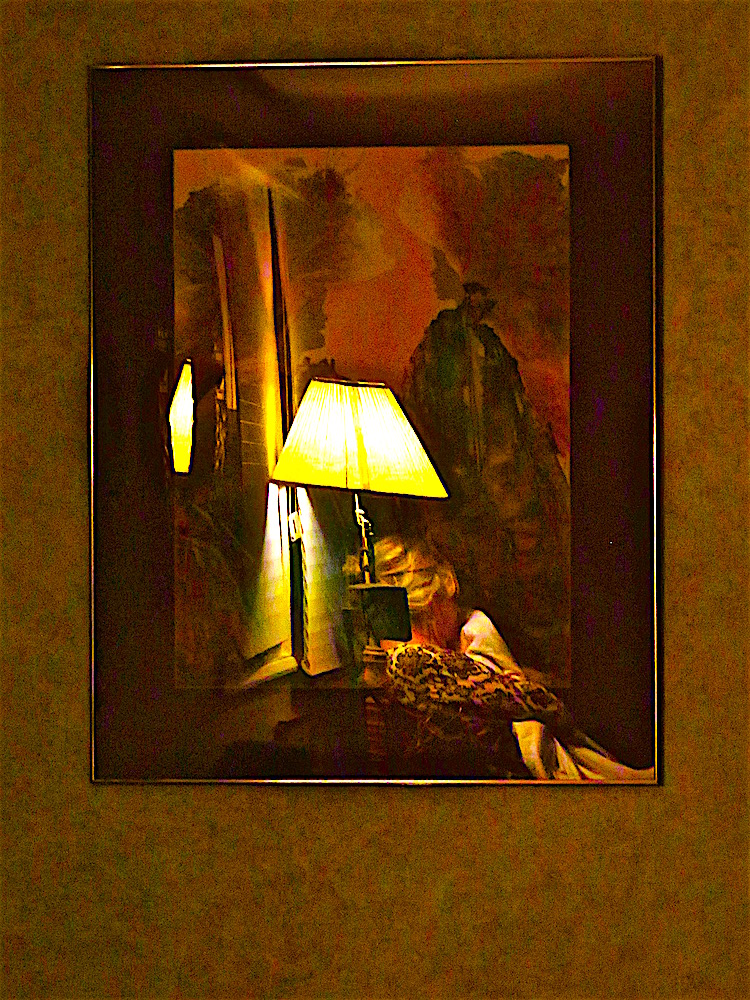
DSC09534jdbphoto


Deep Voice

The stranger on an airplane in the seat next to me
never said a single word, and so I let her be
until our arrival, when I prepared to stand
and she produced a paperback—put it in my hand.

“It’s time for you to read this,” she said, then went away.
I didn’t say a word to her. Didn’t know what to say.
That book, however, changed my life and attitude and choices—
encouraged me to listen close to interior voices.

Buscaglia, Jampolsky and all of Carl Jung’s books
drew my mind away from appearances and looks
and into that finer world of instinct and of mind;
then drew me westward to the sea and others of my kind.

After a writer’s function, a stranger sent to me
“The Process of Intuition,” which I read from A to Z.
I read it twenty times or so, then sent it to a friend.
Then bought up every copy left to give as gifts and lend.

I don’t remember talking to the one who sent it to me,
but if I need a proof of faith, I guess that this will do me.
For I believe there is some force that draws the next thing through me
and if I follow instincts that hint and prod and clue me,

they are the truths that guide me on the path towards the new me.
The signs are there in all our lives if we choose to see.
No, I don’t believe a God guides our destinies.
I don’t believe in lifelines or spirits within trees.

I don’t believe in any faith that has a name or church.
I do believe, however, that I’m guided in my search
by something that unites us and sets our pathways right
so long as we listen to our own interior sight

that urges us to follow the right side of our brain
even though those choices are logically inane.
I know that it takes many types of brains to run the world,
but for me it’s intuition that when carefully unfurled

guides me best—towards art and words and unplanned days and oceans
and prompts me make a Bible of what others may call notions.
And so to simplify I’d say that I must have faith in
that voice we’re all a part of that speaks to us from within.


If you haven’t already viewed it, Word Press would not let me link to their Weekly Photo site yesterday, so please view also: https://judydykstrabrown.com/2018/02/08/tending-house/

This is a rewrite of a post from four years ago. The prompt today was simplify.
Wallpaper

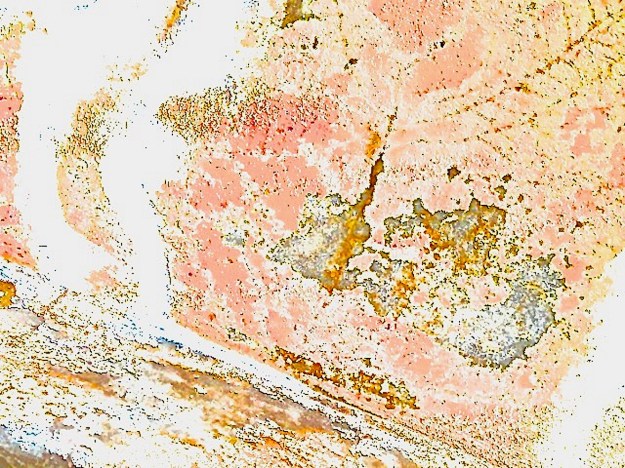
DSC09880


Wallpaper

Clinging to the wall
like an old wallpaper scrap
are the words
I want you, I want you, I want you, I want you.

Their refrain slides up and down
the musical scale—
an old country tune,
plaintive and clear.

Why do I want you?

The first time I met you,
there was something about the curl of your hair.
Your eyes, so familiar­—puzzled, as though
you, too, were trying to remember.

After that, it was
the set of your shoulders—
the arm stretched between your seat and mine
with your hand on the back of my seat.

All of your restraint an aphrodesiac.

The truth is
that I pined
for two days after I left,
then went on with my life.

Still, that scrap
of wanting
comes up early in the morning
as I waken

and my mind walks,
looking for someone to pin it to,
and every time
it stops at you.

The prompt today is puzzled.

Dark Against Light


Dark Against Light

The universe’s fine maquette

is light on dark and dry on wet—
her quietness and stillness set
against the thrum of castanet.
It is a sort of etiquette:
opposite versus opposite.
Victory gauged against regret.
Sunrise followed by sunset.
Every lottery and bet
boundless riches as well as debt.
It does no good to fuss and fret.
This irony is all we get—
nature one pure brightness set
as backdrop to our silhouette.


Want more views of this sunset?  Go HERE.
The prompt today is one of the prettiest words in the English language: silhouette.

Double Betrayal


Double Betrayal

Her thoughts in parting were most candid,
her emotions, clearly branded
on her face. They reprimanded
him for how he cruelly stranded
her within their love affair—
how he left her standing there
alone, heartbroken, vulnerable.
How he’d burst her true love’s bubble.
Thus was her earlier promise broken
before a single word was spoken
when she met them, face to face,
engaged in intimate embrace—
that one who was to be her mister
with her faithless younger sister.


The prompt today is candid.

In the Blood (Entertainment?)

In the Blood!!!

Don’t you just love football—the running and the tackling?
The sounds of hamstrings pulling and the crunch of femurs crackling?
We sit up in the bleachers eating hot dogs, drinking beer,
comfortably viewing blood sport—the kind we hold so dear.

Aren’t dogfights lovely–the growling and the whining?
Too bad they aren’t more elite, so we could watch while dining.
So amusing watching canines being dished their due.
Dying is so entertaining when it isn’t you!

Better still are bullfights, though they’re few and far between.
The bull so lithe and dangerous, the matador so lean.
The best part of the sport is that the dying is so slow.
I feel its thrill suffuse me from my head down to my toe.

We adore big game hunting in such exotic lands–
our chance to prove our manliness with our own two hands–
handing over money to those trackers in the know
who guarantee an easy kill with rifle or with bow.

Easy on the hunter, but not the animal,
for just because he’s hit the prey’s not guaranteed to fall.
We get more for our money if he’s hard to track,
and war games are more pleasant when one’s foe doesn’t shoot back!

All these minor titillations just a prelude to
the main event and the most major way of counting coup.
Once all the good old boys are finding life is just a bore,
they round up all the younger men and send them off to war.

See how the valiant struggle, see their stripes and purple hearts–
apt pay for missing arms and legs and other blown off parts.
Lucky to be home at last and lucky to be living–
the products of that blood sport that just somehow keeps on giving

Repost of a poem from 3 1/2  years ago.  Crocodile photo new!  More to follow. The prompt today is entertain.

The Willow Cutters

The Willow Cutters.

They gather in circles as the day ends.
Men sit in one circle, closer to the lake.
Women, still standing, cluster laughing around a ribald tale.
They’ve been cutting old willow, then burning it for weeks to clear the mud flats.
Now new willow, red-veined with opalescent skin, springs up from the graves of the old.
The teeth of slender leaves cup up to catch the far-off whirr of rain bugs in the hills.
Every night louder, their repetitious whirr is as annoying
a
s the temperature, which  grows hotter every day.

The birds all seek their evening perches—
night heron on the fence post in the water,
blackbirds in orderly evening strings,
swallows in frenzied swooping snarls.
A young girl lies on her back in the short cool grass
that in the past few weeks has sprung from the cracked mud.
With her baby in arms, she rolls over to face the red sun and in her journey,
sees the ones from her pueblo who burn off last year’s growth.

Sees also t
he gringa who cuts the tender willow.
She is an interloper who watches birds, and as she watches,
is watched—the bright colors of her clothes drawing eyes.
She is the one for whom being a foreigner isn’t enough—
an ibis among herons, a cuckoo among blackbirds,
Now and then, all flock here.

As mother with child  stands to go,
the willow cutter, too, straightens her back
and trudges heavy, arms filled with willow,
toward her car far up the beach.
As  sun like a cauldron  steams into the hill,
horses stream smoothly back to claim their turf,
and the other willow cutters circle longer, telling stories, moving slow.
Children run races with the night as sure as new willows
grow stubbornly from the ground of parents
uprooted, but victorious.


This is a poem written the year I moved to Lake Chapala, sixteen years ago.  Every day for two years, I walked on land that had formerly been lake. There were acres of willow that I later learned townspeople were hired to clear before Semana Santa, when hordes of tourists from Guadalajara always descended.  I was there to cut willow to make lamps. When the lake came up to its former banks a few years later, all of those willows, that grew back yearly, were destroyed.  Only their bones now stick up when the lake recedes a bit again every year.  They make perfect roosting places for birds. I rarely walk on the lakeside anymore. The lake has remained high enough so all of my former walking places are under water.  Instead, I stay home and write poems and post blogs. As usual, click on any photo to enlarge all.

Adventures with Animals in my Careless Youth

img021 2

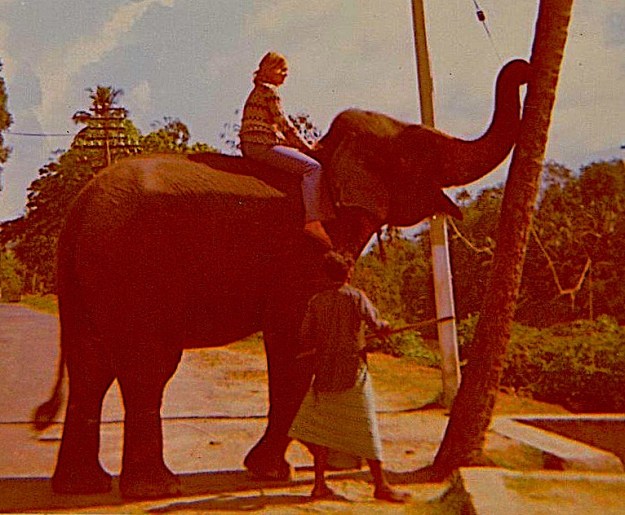
“No, no, no,” I said, “I can’t”
ride upon that elephant.
The creature lowered to one knee,
leg bent to make a step for me,
and seconds later, I was in air.
Was it courage or a dare?

Each  leg gripped on a massive shoulder,
balanced on that giant boulder
of a back, somewhat nonplussed
as his handler swore and  cussed
to not take down that massive tree
so long as he was bearing me!

Whereupon, once told “You can’t,”
this timber-working elephant
turned to descend the river bank.
I gave the rope a mighty yank.
(That was all I had to hold
as this leviathan grew bold,

intent on giving me a bath.)
His trainer ran to bar his path
and none to soon, in my opinion,
relieved this mammoth of his minion.
Soon after we had said adieu,
I faced adventures that were new.

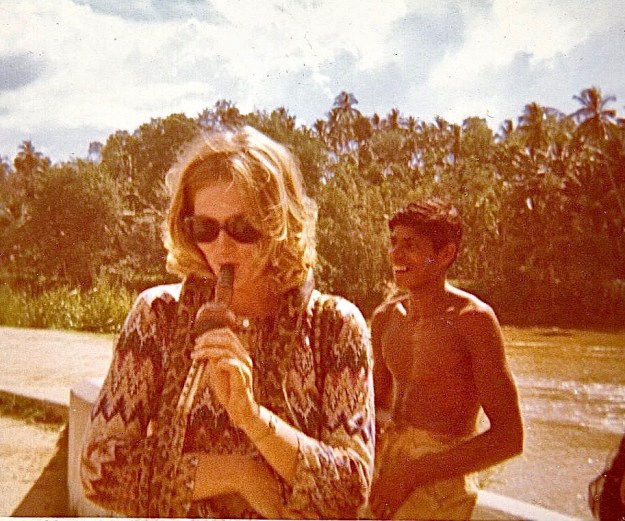
It’s hard to see what I had there
around my neck, beneath my hair.
That snake wrapped loosely around me
hung writhing down below my knee.
I blew the pungi, hoping harm
would be abated by its charm.

What possessed me, I don’t know,
to agree to this viper show.
I wasn’t squeezed, I wasn’t bitten.
The snake was docile as a kitten.
I was a foolish girl back then.
What wild adventures way back when.

img019

I’m pretty sure this is a python around my neck. I don’t think I would have been foolish enough to drape myself in a cobra, still, his owner had a pungi, which is what snake charmers use, usually to “charm” vipers or cobras. (Actually, it is the motion of the instrument, not its sound that weaves the spell.) I had on a top that was perfect camouflage  for the reptile. Both of these photos were taken in Sri Lanka in 1973.

The Silence of the Iambs

DSC07116


The Silence of the Iambs

Anapests sing lullabies while dactyls gallop on.
Trochees beat a drum beat that’s heard hither and yon,
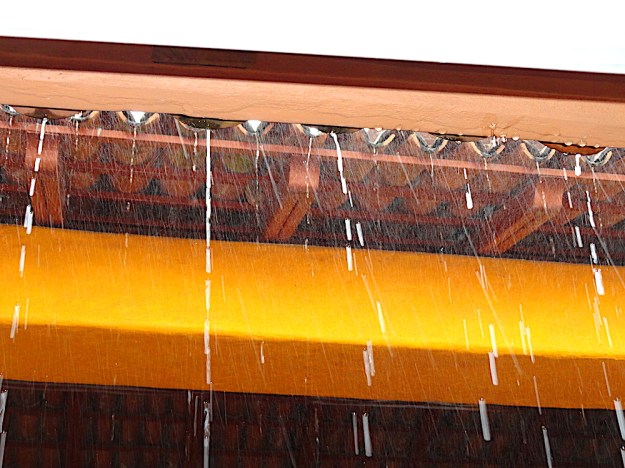
but raindrops speak in iambs, dripping from the eaves
as the torrent lessens and cups itself in leaves.
All the small feet hushed now, we can fall asleep.
We can find our dreams inside a silence that’s so deep.


The title, by the way, is talking about iambs, not lambs.  Hard to tell when it is capitalized.

The loud rhythms of the unseasonal rain that awakened me so early this morning have ceased, leaving only the faint drip of water off the eaves. This poem may be one that only another poet could appreciate, but for those of you who aren’t poets and who didn’t pay attention in your lit class, it is about metrical feet—the syllable rhythms within a poem and even within our everyday speech and nature itself.  A trochee (the rhythm of a native American drumbeat replicated in the poem “Hiawatha”) is an accented or long syllable followed by a short one. An iamb is the rhythm in the English we speak every day––a short syllable followed by a long one. An anapest is the rhythm of a lullaby. (short short long) whereas a dactyl (the rhythm of a horse’s gallop) is its opposite (long short short).


The prompt today is silent.

“Gorge”ous


“Gorge”ous

Everyone is cognizant that
runway models gone to fat
will very promptly get the axe
for appetite control grown lax.

Alas, it is a tragic truth
that larger forms are viewed uncouth.
Plus-sized is not viewed as “in,”
within a world that’s based on thin.

Designers never seem to feel
that models who enjoy a meal
do their fashions adequate
justice in the hips and butt.

Their hungry models  stroll and strut
with tiny waist and taut-stretched gut,
looking very lank and lean
and also just a little mean.

No doubt from hunger––their daily fate.
While as we watch, those overweight
have found a way to compensate.
We gain revenge by chocolate!

For the WordPress Daily Prompt: Gorge.

Lush Night (Erasure Poem for dVerse Poets)


Lush Night

That delicious
middle
of the gravel road.
Safe sun coming up.
The first time
pleasures
of a night owl—
finding time
everyone else was wasting
on dreams.

An aficionado of night
ever since.
Poems written
in the dark
while cities slept.

Time for yourself
with magic happening.
Ever afterwards,
you have survived
on as little sleep as possible.

Party years,
dancing and drinking until three,
then breakfast with the single crowd
and driving straight to school at six.
Invulnerable.

Even married,
sneaking out of bed
to your basement studio
all night long,
back to bed before he awakened,
feeling that little terror,
like a vampire caught by light.

At 54, with no more husband,
above ground,
no longer hidden,
watching light go out
as you sat piecing art—
until suddenly,
impossibly,
light after light went on again
so you were going to bed
as your neighbor was arising
to start his day.

Romance at 62
entered your midnight afterworld.
Serenaded by a night-addicted lover bard,
Skype your love letters
and your trysting spot.
Night that intimate invisible union
through the magic
which now joins you
in that single space
within you
you keep separate
from the world.

At night,
you know exactly
what it is you want
and live it
with no world
to lead you elsewhere.

This poem was written to a prompt by dVerse Poets. The idea is to take a found poem and to erase parts to create a new poem.  I used my own poem, Lush Night. This is what it looked like before the erasures:

Lush Night

Remember that delicious
walking, arms linked,
down the middle
of the gravel road
in your pajamas
at five in the morning
when you were twelve?
That first slumber party
in your safe small town
when you all stayed up all night
for the first time in your lives?
That eerie first sight
of the sun coming up
when your head had never hit a pillow
since it went down?

And then you knew for the first time
the pleasures
of being a night owl—
of finding time
that everyone else was wasting
through dreams.

And you have been
an aficionado of night
ever since.
All of your term papers
and exams studied for
at the last minute,
all night long.
Books written, poems written
mostly in the dark
while towns and cities around you slept.
That power of having all of your time for yourself
with not a chance of phones ringing.
Some magic happening
once you had the world to yourself
so ever afterwards
you have survived
on as little sleep as possible.

During your party years,
dancing and drinking till three,
then going for breakfast with the single crowd
and driving straight to school at six.
You were invulnerable.

Even married,
sneaking out of bed once he’d fallen asleep
and working in your basement studio all night long,
sometimes sneaking back to bed before he awakened,
at other times caught.
“It’s nine in the morning! Have you been up all night again?”
Feeling that little terror, like a vampire caught by light.

Then at 54, with no more husband,
no more job necessary,
with a new country and a new studio
above ground,
guilty pleasures no longer needed to be hidden—
watching light after light go out
as you sat piecing art together
in your studio—until suddenly,
impossibly,
light after light went on again
so you were going to bed
as your neighbor was arising
to start his day.

Then, improbably, at 62, internet romance
entered your midnight-and-after world.
Every night serenaded to sleep
from 1500 miles away
by an equally night-addicted lover bard
at two or three or four a.m.—
or whenever pillow talk led to it.

Skype became your love letters
and your trysting spot
now and then all day long;
but still, night better swaddled
that intimate invisible union
through the dark air
that has always been magic for you,
but which now joins instead of
sending you into the single space
where you unite with that within you
which you keep separate from the world.

At night, united or alone,
you know exactly what it is you want
and live it,
with no world
to lead you elsewhere.