Category Archives: Lake Chapala

Good Still Exists Everywhere!!

DSCF8675

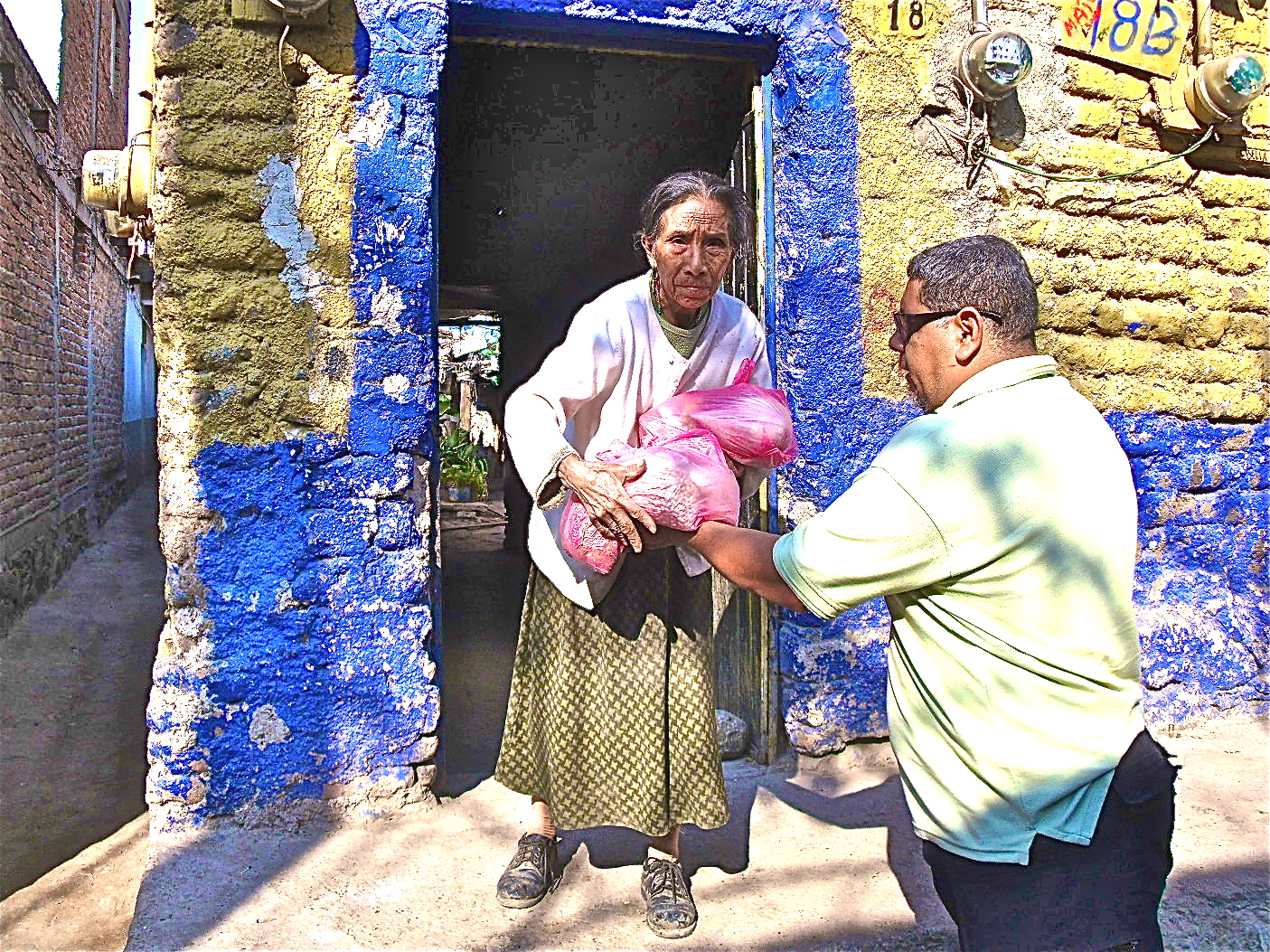
Operation Feed is a local organization that distributes food weekly to 92 families in San Juan Cosala, Jalisco, Mexico. This year they’ve added meat, fresh vegetables and fruit to the staples formerly provided.

                                                      Good Still Exists Everywhere!!!


In response to The Daily Post’s writing prompt: “Pay It Forward.”Tell us about a time when you responded to an act of kindness with one of your own.

Today, for some reason, I did something I have never done before.  Instead of writing to this prompt, I decided to read what others had written first.  Why this was so, I don’t know.  Perhaps it was because I had the feeling many probably had that it is embarrassing to talk about this subject.  How in the world do you write about it without sounding (and being) narcissistic or self-congratulatory?  There is no way to talk about our own good acts without sounding either falsely humble or like a braggart.

I say perhaps this is the reason, because I was not even conscious of registering what the prompt was.  I just went to the first page listed on the Daily Prompt page and clicked on the first square I saw.  Unfortunately, it was at this exact moment that I got called away by Yolanda to talk about some household matter, and when I came back, I saw these words by Marilyn Armstrong:

“In Judaism, you lose points for telling anyone about your good deeds. The only ones that really count are the ones you do in secret. Pity that has never really caught on :-)”

Thinking it was her blog I was reading, I responded with this comment:

“I have never heard this before, Marilyn, but it sounds like it would make a great theme for a story or poem. I think we need to hear about the positive things that happen in the world. We are all so weighted down by the terrible ones. But perhaps the secret is to broadcast the good acts of others rather than your own. If you look at blogs like Mark’s or several others whose names have slipped my mind, they are often publicizing gross wrongs in the world and encouraging people to draft letters of protest or sign petitions or to give their support by other means. He is not blowing his own horn, but speaking out of a desire to effect change in the world. These are acts we can all see and in promoting them and him, we can spread the word of positive acts not our own. I am not disputing what you say, understand. I agree that people who constantly tell you of all their good works are irritating. On the other hand those who merely demonstrate their own good works by their actions are such wonderful role models that they have no need to blow their own horns.”

But now, the plot thickens.  After hitting the “Send” button, I scrolled up to realize that the blog I was writing on was really The happy Quitter’s blog.  The statement by Marilyn was just a comment!  So, it became necessary to fire off this comment to its author, nonsmokingladybug!

“Darn. Ladybug, I came back to my computer and saw Marilyn’s comment and thought it was her blog I was writing on so addressed this comment to her! I can’t erase it from your blog, but please do if you wish to. This is what happens when I let life interfere with blogging..Ha. I think you also requested I not give you links, which I no longer do. Your point about blowing one’s own horn is a good one as you can see from my response above. Please do erase it if you wish.”

To this, she graciously replied that she saw no reason to erase it as I’d made some good points. She went on to say, in a different comment,

“The long comment won’t matter to Marilyn, since you made it on my blog (grin).
If I might answer that. I think the world is full with good, but many of us don’t see it anymore, because their focus has shifted. Do we need to point out the good in the world? I don’t think so, I think we have to point out that it is still existing everywhere.”

to which I answered:

“What is the difference between pointing out the good in the world and pointing out that it is still existing everywhere? I think they are one and the same thing.  I get so depressed when I see the violence reported in the news, and sitting at home and merely reading about terrible act after terrible act, we are drawn into depression and deluded into thinking there is nothing we can do about it. But when we get  active on a local level, we can see firsthand what wonderful things are being done by so many–and the changes they are effecting.  These messages of how the world can be and is being healed need to get out as well. As you say, this is going on around us all the time.  This is what encourages people to try to effect changes themselves.”

I live in a community where there are incredible numbers of people–both Mexican and expat– getting involved to make life better for kids, older people and the pueblos in general.  I feel so lucky to live in a place where the positive natures of people can so easily be seen.  I know when most people see the name MEXICO, they think of cartels and corrupt politicians, but there is so much love and positive energy here as well.  These are the things we are more likely to see in our daily lives than in the news.  As you say, good is still existing everywhere.”

At this point, I realized that in these two comments I had actually written a complete blog post, so instead of sending the last comment to nonsmokingladybug, I decided to publish it here.

If you’d like to see The happy Quitter’s original statement that prompted this confused chain of messages, please go HERE.

For news of wonderful things going on in my community, you might want to read these stories:

https://judydykstrabrown.com/2014/11/02/agustins-story/
https://judydykstrabrown.com/2015/07/21/camp-estrella/
https://judydykstrabrown.com/2015/07/23/the-boy-in-the-blue-feathered-mask/
https://judydykstrabrown.com/2015/07/26/camp-estrella-final-show/
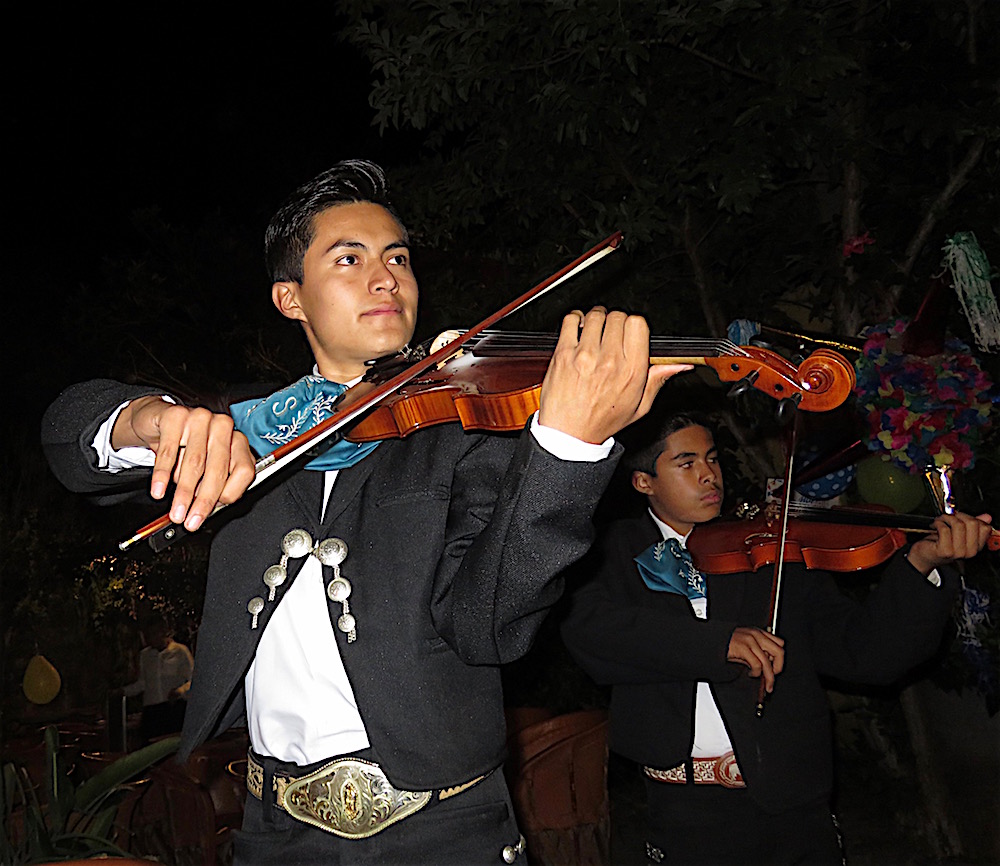
There is Always Music


This is the young man who was absolutely world class but who can’t read a note of music!

There is Always Music

The music of Mexico is composed of a cacophony of sounds—all of them loud! Trumpets, drums, violins, guitars, tubas and trombones are backed up by fiesta revelers, insects, burros, cattle, roosters, fireworks, church bells, air brakes, stone drills and vendors driving the street with loudspeakers announcing gas, produce, knife-sharpening or bottled water for sale.

Living in Mexico is like living in a place where one or another of your neighbors celebrates a party every other day of the week. Patriotic holidays, weddings, saints days, baptisms, funerals, fifteenth birthdays—all are occasions for fiestas of often grand proportions; and although these parties do not always take place in your own neighborhood, the lake and mountains act as a sounding board which makes it sound as though they do.
Recently, it has become the style to set off fireworks from a boat positioned mid lake to celebrate nuptials. Then loud music and loudspeaker shouts proceed far into the night. Tonight as I got home a half hour before midnight, the music was so loud that it could have been coming from the house next door, but it was coming from a large hall on the carretera a half mile away. It was a wedding party I had seen the beginnings of earlier in the day, now grown into a full-scale bash.

The loudest celebrations are held on saints’ days or national holidays. These celebrations are frequent, as in addition to the usual holidays such as Dia de la Independencia and Aniversario del Revolución, each town has a ten-day celebration of the town’s patron saint. During one week-long celebration in the nearby town of Ajijic, it is rumored that 10,000 bottle rockets were set off, each of them launched into the air and exploding at the decibel level of a cherry bomb.

To demonstrate the frequency of such celebrations, take the six-day period of April 30 to May 5. The most famous Mexican holiday in the U.S. is Cinco del Mayo, but in Mexico, but in Mexico it is a celebration of minor importance. There are four other major holidays in the five days leading up to it, all of them more important. The week starts out on April 31 with El Dia del Nino, a celebration and parade for the day of the child, followed the next day by labor day—Dia del Trabajo—the day of the laborer. After a day’s vacation from holidays, there is Dia de Santa Cruz, followed two days later by Cinco de Mayo, the commemoration of the Battle of Pueblo. All of these celebrations bring with them the sounds of revelry: loud banda music, fireworks, guns fired into the air and the accompanying barks of protesting dogs and encouragement of human revelers.

In December, Christmas is preceded by the week-long commemoration of the Virgin of Guadalupe, which in my village is the occasion for hundreds of plant-decked altars to be set up along the streets in front of houses, garlands over the street and cobblestones strewn with fresh alfalfa. One day in early December, a neighbor came by to visit. Later, we went for a walk in the San Juan Cosala main plaza. The most beautiful feature of the square was a large faded portrait of the Virgin of Guadalupe that stood near the church. Flowers and lights surrounded it in preparation for her saint’s day. Unfortunately, one of the strings of colored lights that swathed the portrait was a musical strand. In the fifteen minutes we took to traverse the square, we heard nasal computer-like renditions of, “I Wish You a Merry Christmas,” “Santa Claus is Coming to Town,” and “Rudolph the Red Nosed Reindeer.”

There is always music. Now the steady hum of the pump which recycles water from the jacuzzi to water the plants stops and I hear the steady whisk whisk whisk of the gardener’s broom on the stone patio. Outside hundreds of bees hum around the Virginia creeper that blankets the awning over the patio.
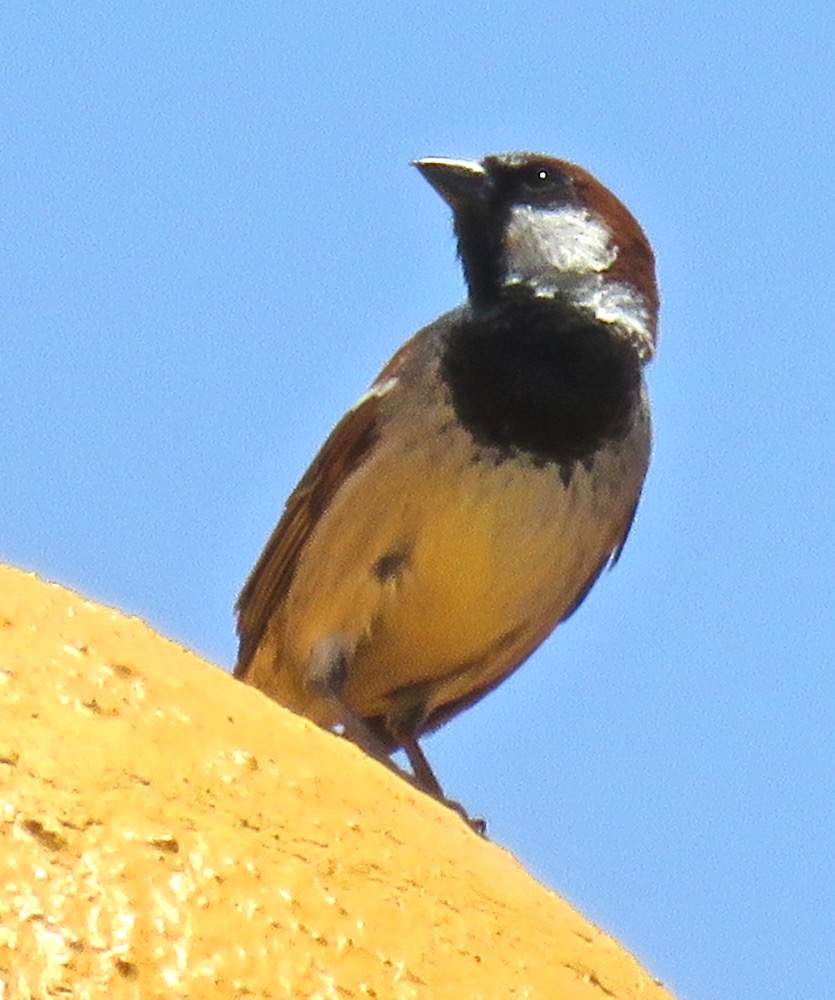
Birds furnish a counterpoint harmony to these domestic arias. In the few months that I have been living here, I believe I’ve heard whippoorwills, Baltimore orioles, grackles, and tanagers. I have heard the mysterious night call of a bird with a voice disguised as an interloper whispering, “Pssssst. Pssssst.” (I have since learned that this is probably an insect.) I have never seen either this bird or the bird whose call sounds like a squeegee being scraped against a chalkboard, but I did eventually see the ubiquitous insect called a rainbird (local name for a cicada) whose voices (by the thousands) proceed from a few seconds of castanet sounds to the buzz saw melody that fills the hills and trees around my house with their mating music in May and June .

In my first six months living lakeside, my solitude has been broken by few people other than my housekeeper, gardener, workers and repairmen who make daily pilgrimages to my house to correct problems at about the same rate as they create them. When now and then they switch off the loud competing blarings of their individual radios, I hear music in the noises of their industry as they administer to the house and grounds like neophytes to a high priestess. It is the house that is the god here, not me. I sit in another part of it making my own music on the keys of my laptop.

This morning, I awoke to the chink chink chink of the gardener’s shovel as he dug concrete chunks from the flowerbed beside my pool. He used neither of the new shovels I bought him, but instead the flat edged old shovel with the handle broken in half. I have stopped demanding or even suggesting that anyone do things the easy way. The squeegee sits dry in the storeroom along with the dried out sponge mop. Nearby are the damp rags and buckets are are actually used to wash the windows; and in the living room, I can hear the rhythmic slosh of Lourdes moving the string mop that is used so frequently that it rarely dries out.

On Monday, as Lourdes ironed in the spare room, I asked if she wished to listen to my Spanish/English tapes. If it is true that she will soon go to join relatives in the States, she should know some English. She nodded yes enthusiastically, but after one cycle, she removed the tape and switched to the radio. I could hear her singing along even two rooms away through two closed doors. She sang slightly off key, in a happy voice, unaware that anyone listened. In the afternoon, she ironed 30 garments, even though I had asked her to iron only three. As she ironed, she sang.

Every day I learn more about Mexico. On this day I have learned this. The pool man may be missing, there may be no water in the aljibe (cistern), and you can be sure that if you need hardware, the hardware store will be closed for comida (the afternoon meal). If you want to go to the restaurant you have passed twenty times, on the day you go it will be closed. There is a page-long list of things my house needs that I cannot find. But on this day, I learned of one thing that you can always find. In Mexico, there is always music.
                                                                                                                   –by Judy Dykstra-Brown


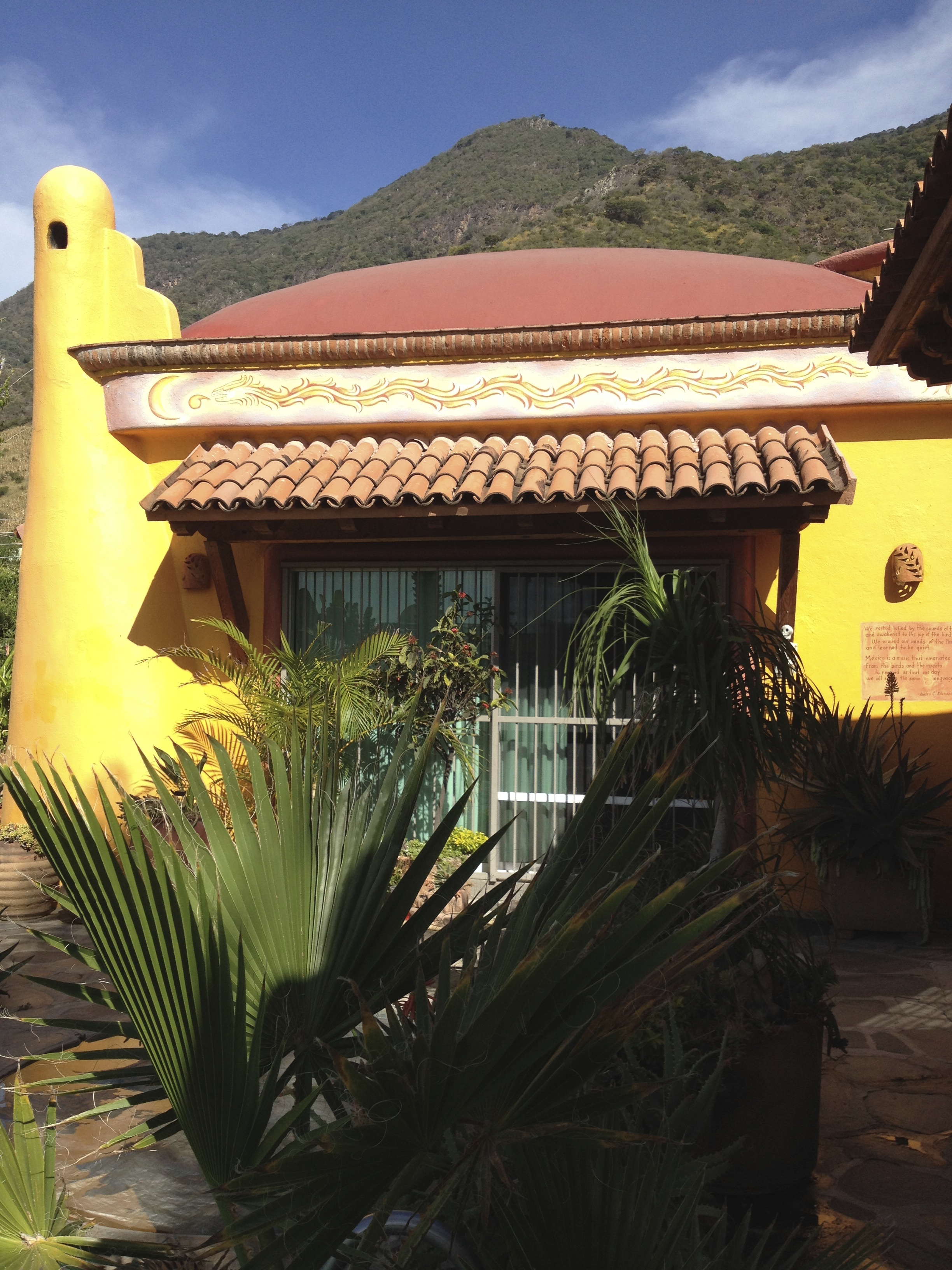
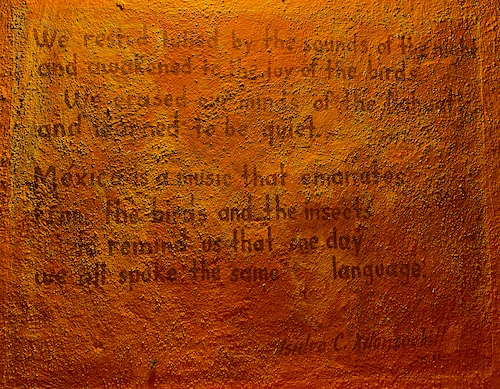
Twenty years ago when I moved to Mexico, I wrote the above piece for a local magazine and when the time came that I wanted a local artist, Isidro Xilonxochitl, to paint a mural on my outside wall, I asked him to use the themes from my essay.

He painted a wall covered by birds and insects, but also wrote a poem in Spanish that I translated into English.  Wall damage made it necessary to paint over the mural years ago, but the poem is still painted on my wall.  If you can’t make it out from the photo, I’ve rewritten it below. (Note: Nahuatl is a language of the Uto-Aztecan language family.)

We rested lulled by the sounds of the night
and awakened to the joy of the birds.
We erased our minds of the Nahuatl
and learned to be quiet.

Mexico is a music that emanates
from the birds and the insects
to remind us that one day
we all spoke the same language.

                                  — Isidro C. Xilonsochitl


This post is for Sam, because he asked.

NaPoWriMo Day 24: Building Walls

Our prompt today was to write a poem that features walls, bricks, stones, arches, or the like.

Building Walls

The new neighbors are not friendly.
From their side of my wall,
they have reached over my wall to sever the vines
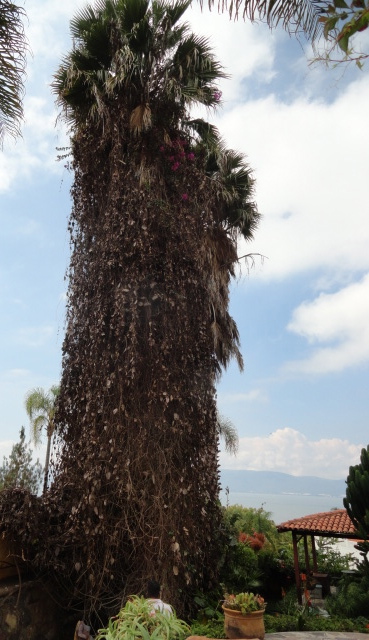
that have covered my tall palms
that abut the wall
that has separated our properties
for thirteen years—
those maroon bougainvillea vines,
stretched ten feet wide
by covering layers of blue thunbergia,
formed a community that housed families
of birds and possums and possibly
a very large but harmless snake.
I saw it cross my patio once,
the dog and I turning our heads toward each other,
exchanging looks of surprise
like characters from a stage play or a comic book,
her so startled and curious that she followed,
nose to the ground, to the brush beside the
wall the snake had vanished into,
but never issued a bark.

At night the palm trees
and their surrounding cloaks
would give mysterious rustlings that
aroused the barking of the dogs
and I’d let them in—the pup to sleep
in the cage that was his security
and my security as well—against chewed
Birkenstocks and ruined Oaxacan rugs
and treats purloined from the little silver
garbage can that held the kitchen scraps
saved for Yolanda’s pigs.

Along with the vines,
the new neighbors cut the main stalk of the bougainvillea
that grew to fifteen feet on my side of the wall
and furnished privacy from the eyes
of those standing on their patio,
ten feet above mine,
so that now their patio looks directly down
on my pool and hot tub and into my bedroom,
their new bright patio light shines all night long
into my world formerly filled
with stars and moonlight and tree rustlings.

The old wall has revealed its cracks and colors
from several past paintings
that were later made unnecessary by its cloak of vines.
Now an ugly wall that  separates  neighbors,
it echoes the now-dead vines that stretch 80 feet up
to the fronds of the palms.
It takes three men three days to cut the refuse of
the dry vines down from the trees,
two truckloads to bear the cuttings away.

The dogs still bark, but the possum and the birds
have gone to some other haven,
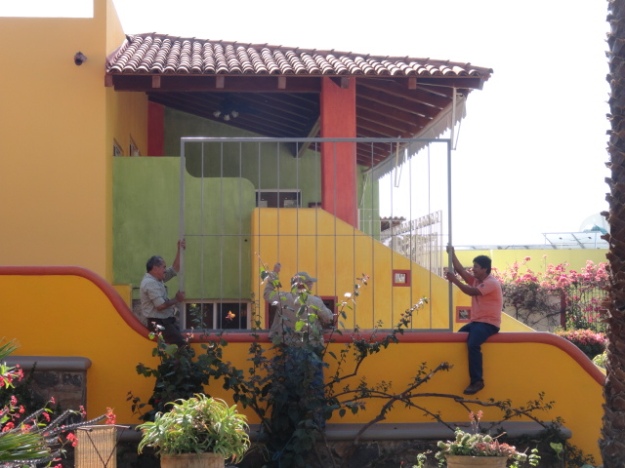
and the men come to erect the metal trellis,
12 feet high, above the top of my low wall.
I hope the bougainvillea will grow
to cover it this rainy season,
building a lovelier wall
between neighbors who still have not met
by their preference, not mine,
causing me to wonder
if I really am as welcome in this country
as I have felt for all these years.
“My neighbors are the same,” my friend tells me.
“They do not really want us here,
and if you think they do,
you are deluding yourself.”

Thirteen years in Mexico. I miss my old neighbors,
best friends who would come to play Mexican Train at 5 minutes notice.
I miss their little yipping dog and the splash of their fountain
that the new neighbors ripped out and threw away
and the bougainvillea that drooped over my wall into their world.
“Scorpions!” the new neighbors decreed, and lopped it off wall-high.
It was a wall more than doubled in its height
by a vine as old as my life in Mexico
that can now be peered over
even from their basement casita.

With old walls gone,
higher walls of misunderstanding
have been constructed.
Each weekend their family streams in from Guadalajara.
Children laugh, adults descend the stairs
to their hot tub down below.
When I greet them, they do not smile.
I have painted the old wall,
now so clearly presented to view,
and I have taken to wearing a swimsuit in my hot tub,
waiting for my new wall to grow higher.

Before detail of tree vine

“Before” detail of tree vine and hedge.

"After" detail of tree vine.

“After” detail of tree vine.

DSC09288

Constructing a higher wall to limit their view into my yard.

DSC09907

Trimming the dead vines after their gardener reached over the wall to cut it’s main trunk.

DSC09878

Detail of my wall with the dead vines stripped away, prepped for repainting.

(Happy Ending: Eight years after writing the poem you have just read, I now have new neighbors, the bougainvillea and thunbergia have grown to cover the new trellis wall, and they love the vines that actually flower more profusely on their side than mine.)

NaPoWriMo Day 6: Mexico Saves Daylight

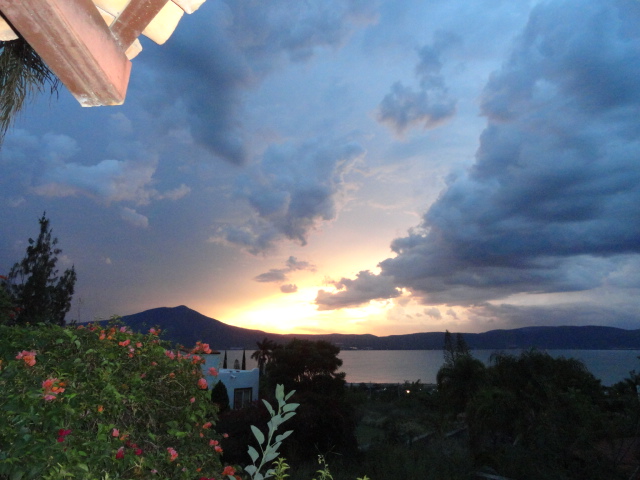
We go on and off Daylight Saving time later than they do in the U.S., so this morning was the morning we lost an hour. Our prompt was to look out our window and record what we saw and heard, then to write a poem using these images. It was still dark here when I arose, so I went outside to sit first on my terraza and then in my gazebo which sits at the edge of my property overlooking the hillside that leads down to Lake Chapala. I had never looked at this scene this closely from this time perspective, so it was a unique viewing of a familiar scene for me.

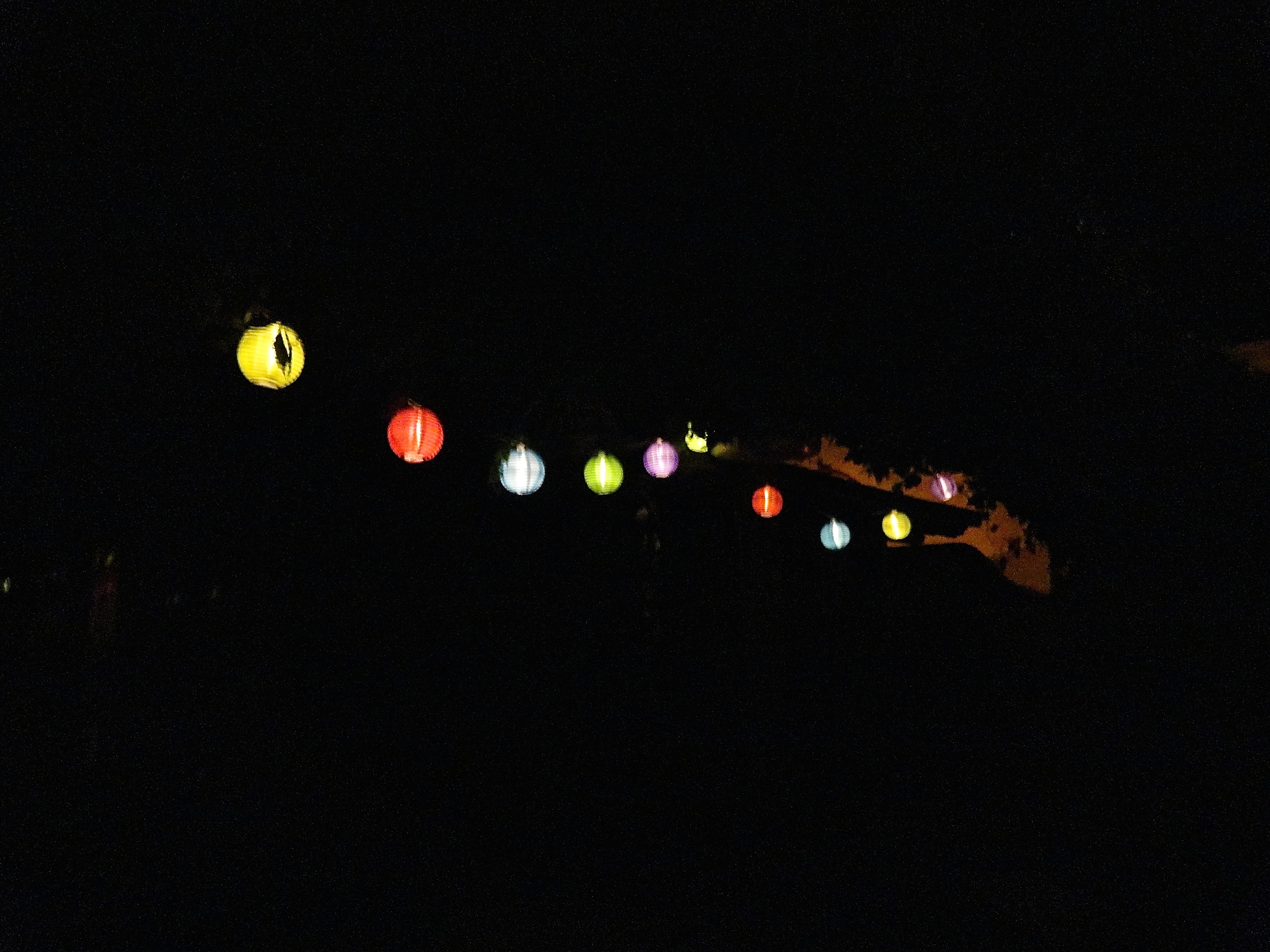
These Chinese Lanterns are solar and await the darkness to shine!

These Chinese Lanterns are solar and await the darkness to shine!

Mexico Saves Daylight

Nobody knows
what this new day
has in store for us.
The colors stolen by night
have not come back yet––
only the string of miniature Chinese lanterns
strung on the patio
glow their soft tones:
lavender, yellow, peach, rose, lime green.
Powered by energy stolen from the sun,
they light up this very early morning darkness
otherwise lit by the random stars of
streetlights undulating over roads that wind up foothills.

The mountain peak named Señor Garcia
stands against the gray predawn sky.
Colima volcano peers over his shoulder,
half-obscured by mist and clouds.
My day emerges.

Scatterings of lights twinkle
from the small pueblos across the lake.
Bats swoop and dart
after the last insects of the night,
then speed impossibly into second-story tejas
for their communal day’s rest.

The hot tub cover,
submerged a few inches beneath the water’s surface,
forms a mirror for the wild hair of palm trees.
Dried leaves rest on the water,
swirling in the breath of morning.
Roosters crow.
A cacophony of bird calls:
“Me hee hee hee hee hee. Me hee hee hee hee hee Me.”
scolds the most persistent of the lot.
Mourning doves answer in a register from another time.
The grind of trucks accelerating on the roadway far below
too small for trucks.
Church bells speak their language,
tolling the morning hour.

The round
subtle drone
of unseen bees
takes precedence
over all other sounds
as I move to the gazebo.
I picture a whole hive
moving to new quarters,
starting that process over again,
busy giving birth to their new home,
perhaps in the stark Guamuchil tree
that survives like a dinosaur
among the castor beans
in the jungled houseless lot next door.

Like one of those internet birthday cards
where an invisible hand
yields a brush
over a black and white drawing,
slowly, colors lost to the black night
emerge through the fog
of earliest morning blues and grays.
Rose pink of the first hint of sunrise.
Colors of houses on the mountains:
vivid orange and gold,
lime green and blue.

Bougainvillea silhouettes give way
to curly detail and bright color:
fuchsia, orange, peach, gold, brilliant white.
Three green foam noodles lie abandoned poolside,
caught in the arms of aloe vera
and by the crown of thorns.
Green washes the hillside
around the gold and brown
of last year’s corn stalks.

The diverse calls of grackles
join the morning conversation.
Quetzacoatl spreads his sinuous frame
over the entire wall above my bedroom doors
as though stretching his kinks out for the day ahead.
7:30 am April 6, 2014,
announces the computer screen
glowing on my bedside table.
Coral sheets and a blue pillowcase.
A large watercolor of a woman
with birds perched on her shoulders
and her hands.
I yearn to go back to bed,
but time changed here
in the very early morning.
It is an hour later
than it was
the same time
yesterday.

Mount Senor Garcia from my gazebo

Mount Senor Garcia from my gazebo

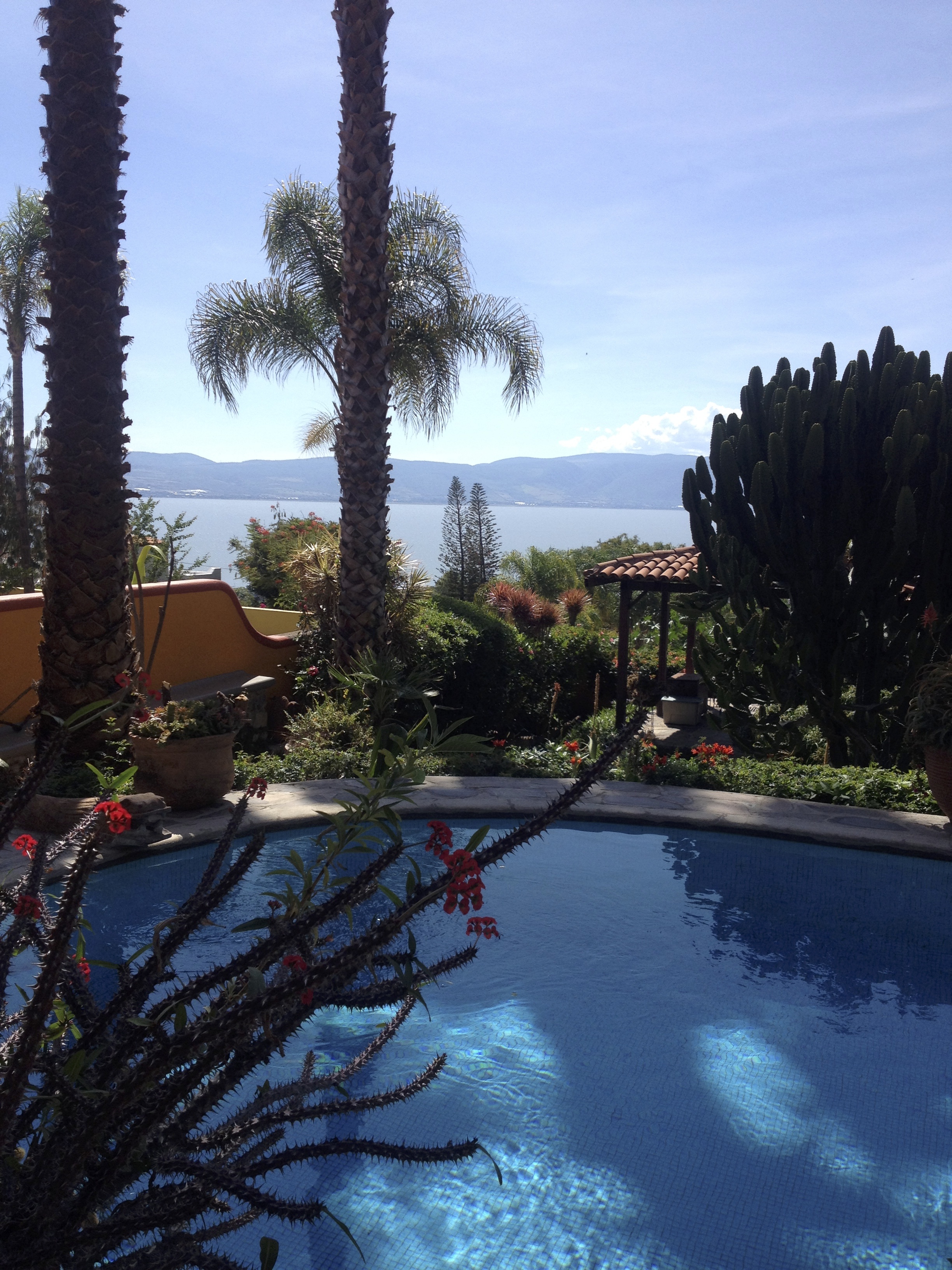
Backyard overlooking Lake Chapala.

Backyard overlooking Lake Chapala.

Quetzacoatl Mural Over Door to Bedroom

Quetzacoatl Mural Over Door to Bedroom

Poem written after the Celebration of Life for Nina and Eduardo

 The ceremony for Eduardo and Nina was full of the loving thoughts of friends, details about their lives given from many perspectives, a few tears but even more laughter from remembering the good times.  It was only on the road home that the contrasts in the peaceful happy setting I saw around me and the events of a week before hit me.  The first lines of this poem ran over and over again through my thoughts and I had to pull over by the side of the road and write this poem.  Part of me wonders if it is exploitative to write about this sad event, but I’ve found that many of my writer friends who were friends of Nina and Eduardo have been driven to do the same.  It is as though I no longer know how to think about things unless I do so through my writing or my art.  Somehow, the only way to process a hard truth of life is to make use of it creatively and to try to create a message that makes sense even though the deed never will.

After the Ceremony: Driving Home

The streets are filled

With ice cream and cerveza

and the wildly patterned legs

of senoritas.

It is a day

of sunlight and red flowers

and fuschia flowers and blue.

A slight wind

 strums the swaying branches

of the palms,

but no other sounds

compete with the passing hum

of oncoming traffic streaming

 from the city to our shores,

 seeking safety, quiet,

the gentle lap of water against willow,

hypnotic bobbing of the pelicans

between the undulating liria––

a lazy day away

from the cares of urban life.

I pull to the side of the road to watch

 these visitors to our world.

 Have they not heard or

have they just forgotten

the breaking glass,

the knife, the club,

the red screams

slicing the midnight air?

The ones who were the screamers

 are very quiet now––

part of the calmness

of this afternoon.

Their darkness

is dispersed by sunlight.

Yet all of their fear and pain––

the terror of their leaving––

now gone from them,

is kept like a souvenir

within the hearts of friends

whose turn it is to remember

for a while what we, too,

had forgotten.

Our happy world

lies like a blanket

over a bed made messy

by pain and loss.

It is the world’s bed,

and deny it as we will,

we all have lain in it

and will again.

                                                                              –Judy Dykstra-Brown      February 24, 2014

A Celebration of Life for Nina Discombe and Eduardo Kular

A Celebration of Life for Nina Discombe and Eduardo Kular will be held on Monday, February 24, beginning with coffee served at 10 a.m. in the Oasis Cloud Café and followed by a community healing/guided meditation from 10:30-10:45 in the garden. The guided meditation is for those in the community who wish to focus on how to cope with grief and loss of dear friends who were killed violently. Beginning at 11 a.m. will be readings from Nina’s work and personal sharing of memories of both Nina and Eduardo. You are invited to participate in this celebration with your own special memories of Nina and Eduardo.

The location is the Oasis Cloud at Calle San Luis #330, Riberas del Pilar.

Directions from Ajijic: Take the Carretera toward Chapala. Turn right on San Diego, which is the first street after Mirasol, and then take the first left on San Luis. The Oasis Cloud is one and a half blocks down San Luis on the right at #330.

Directions from Chapala: Take the Carretera toward Ajijic. Turn left on San Mateo, which is next to the 7 Eleven, and then take the first right onto San Luis. The Oasis Cloud is one and a half blocks down San Luis on your left at #330.

Those who wish to bring flowers, photos or special objects for the altar are encouraged to do so shortly before 10 a.m. We are asking friends who want to contribute cookies, scones or pastries for the coffee hour to contact Patricia Hemingway at (patriciahemigway@gmail.com) to tell her what you are bringing and the quantity. Please bring them before 10 a.m., or arrange to give them to Patricia ahead of time. Patricia is also looking for a few coffee makers to use for making the coffee and hot water for tea. She will need the coffee makers by Sunday, the 23rd. (You can take them home with you after the ceremony.)

If you would like to share a memory or anecdote about Nina or Eduardo or have any questions, please contact Judy Dykstra-Brown at (jubob2@hotmail.com). If you are unable to attend the event and wish us to present your thoughts, we would be glad to.

We have no idea how many people will attend this event. The Oasis Cloud has 50 chairs, but if you want to assure seating for yourself, it is best to bring a folding chair. It might also be smart to carpool as parking is limited.

A Special Start to My Day

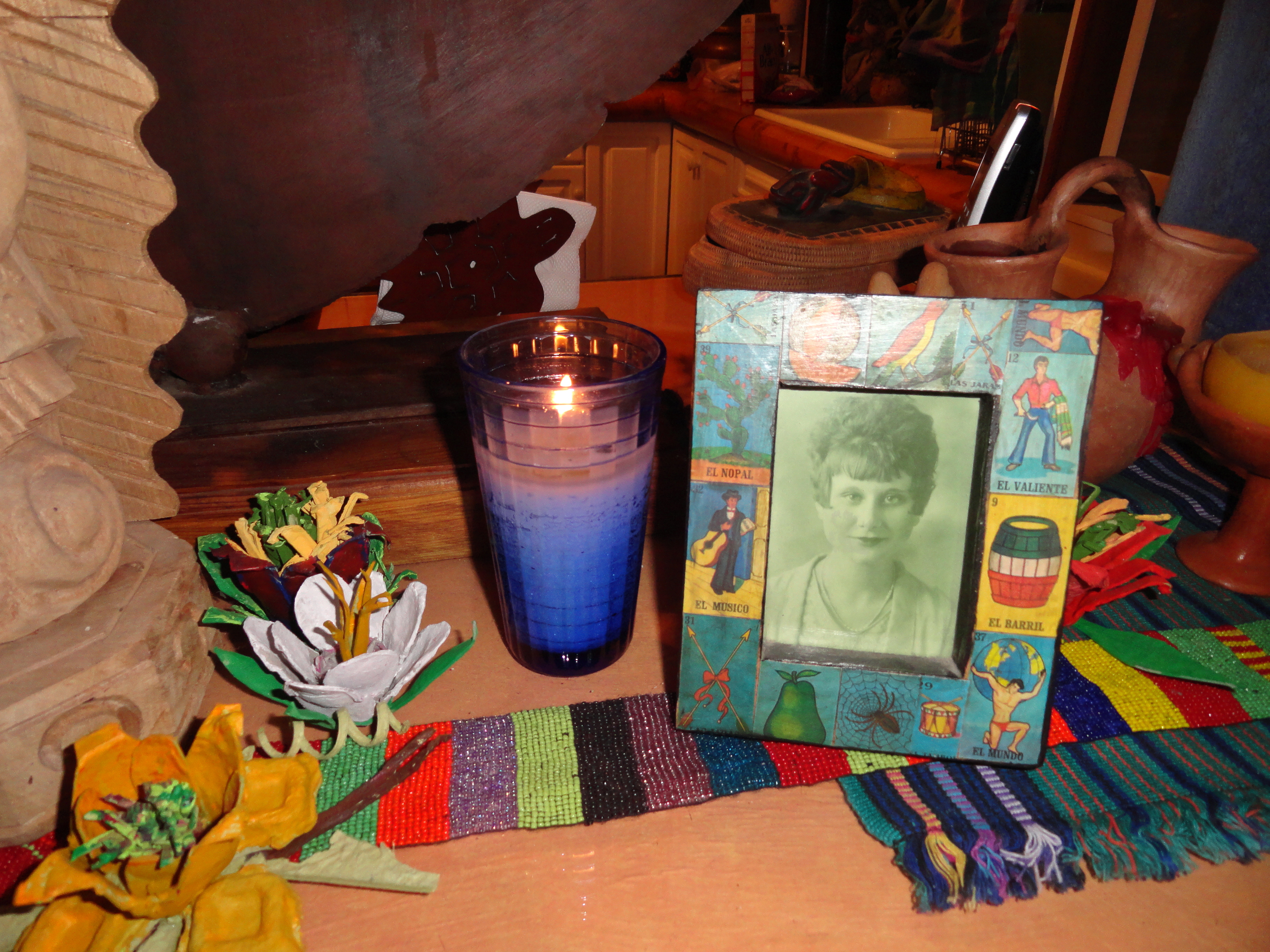
When I came into the kitchen to make our smoothies this morning, I noticed there was a candle burning next to the virgin of Guadalupe statue on the island divider between my kitchen and dining room.  I didn’t say anything about it, but later, Yolanda said, “I lit a candle for your mother today.”  Today is mother’s day in Mexico.  So sweet.  I went and got a pic of my mom to put next to it. This is one of the things I would miss so much if I ever left Mexico.  What would replace this special sweetness in the States?  My life is so enriched by it.

Image

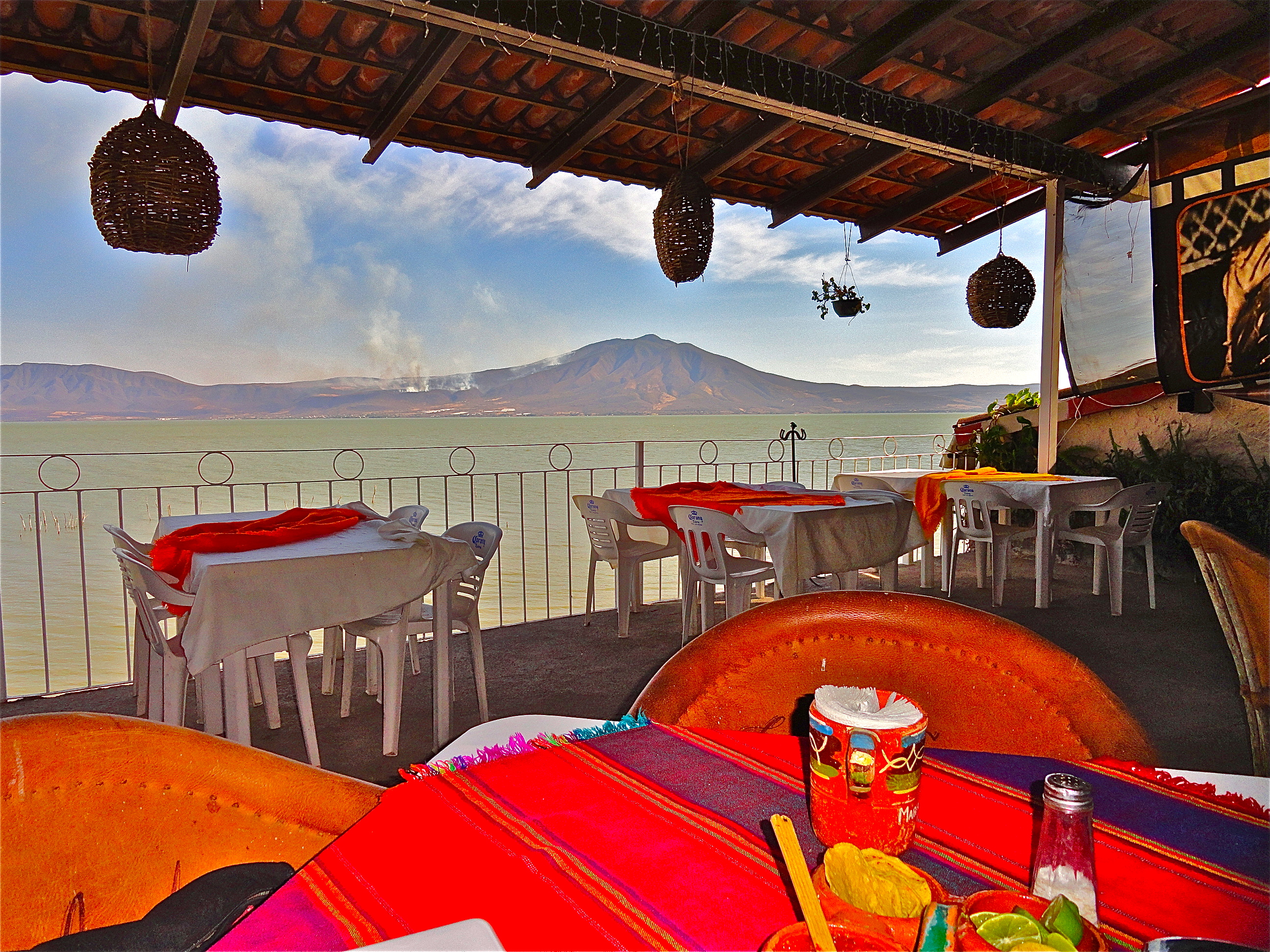
Dining Alone at the Maria Bonita Restaurant Bar (Day 18 of NaPoWriMo)

The Prompt today was to write a poem that begins and ends with the same word.

DSC07819

“Dining Alone at the Maria Bonita Restaurant Bar”

Smoldering.

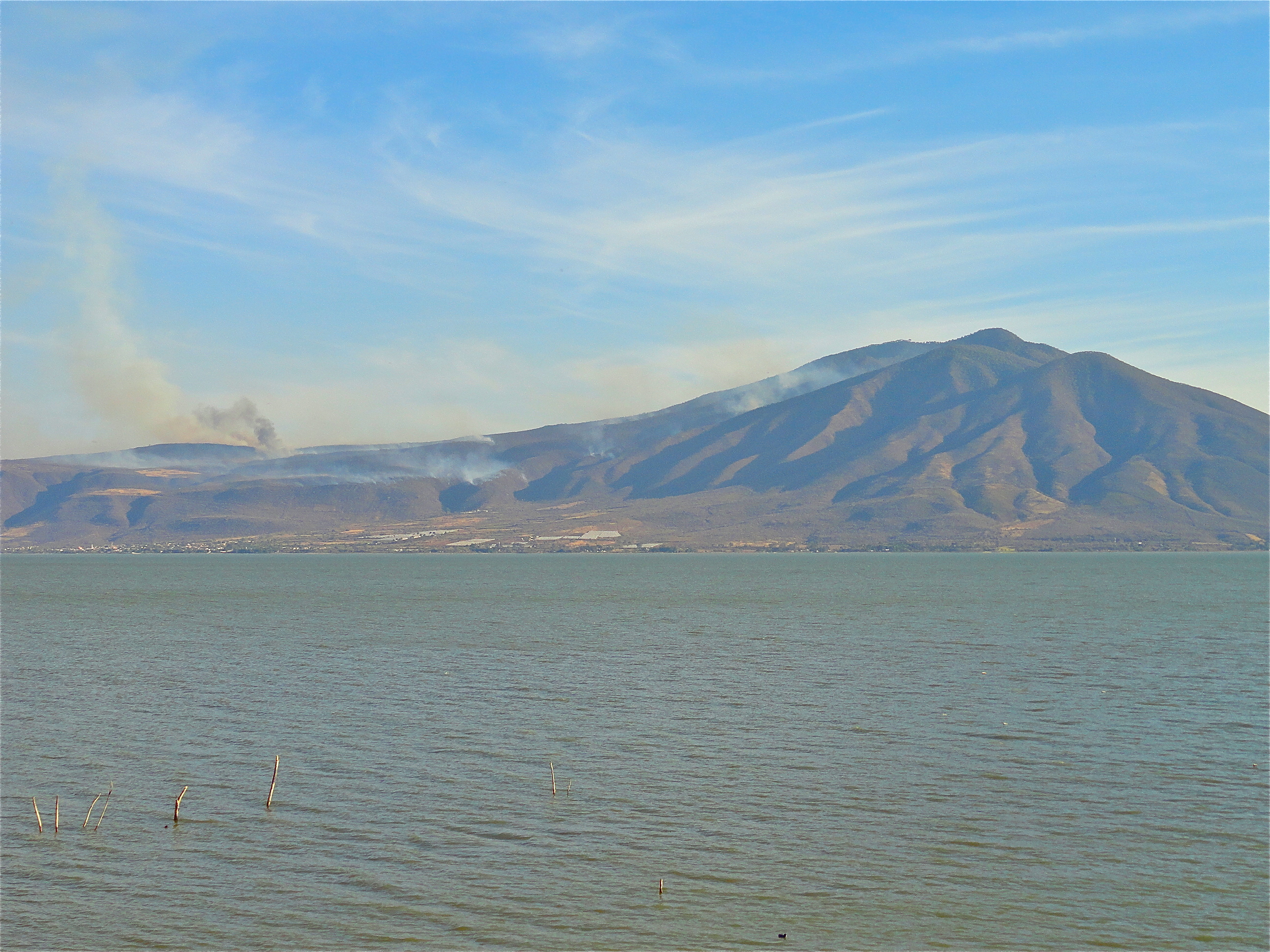
Señor Garcia is smoking today.
Below him,
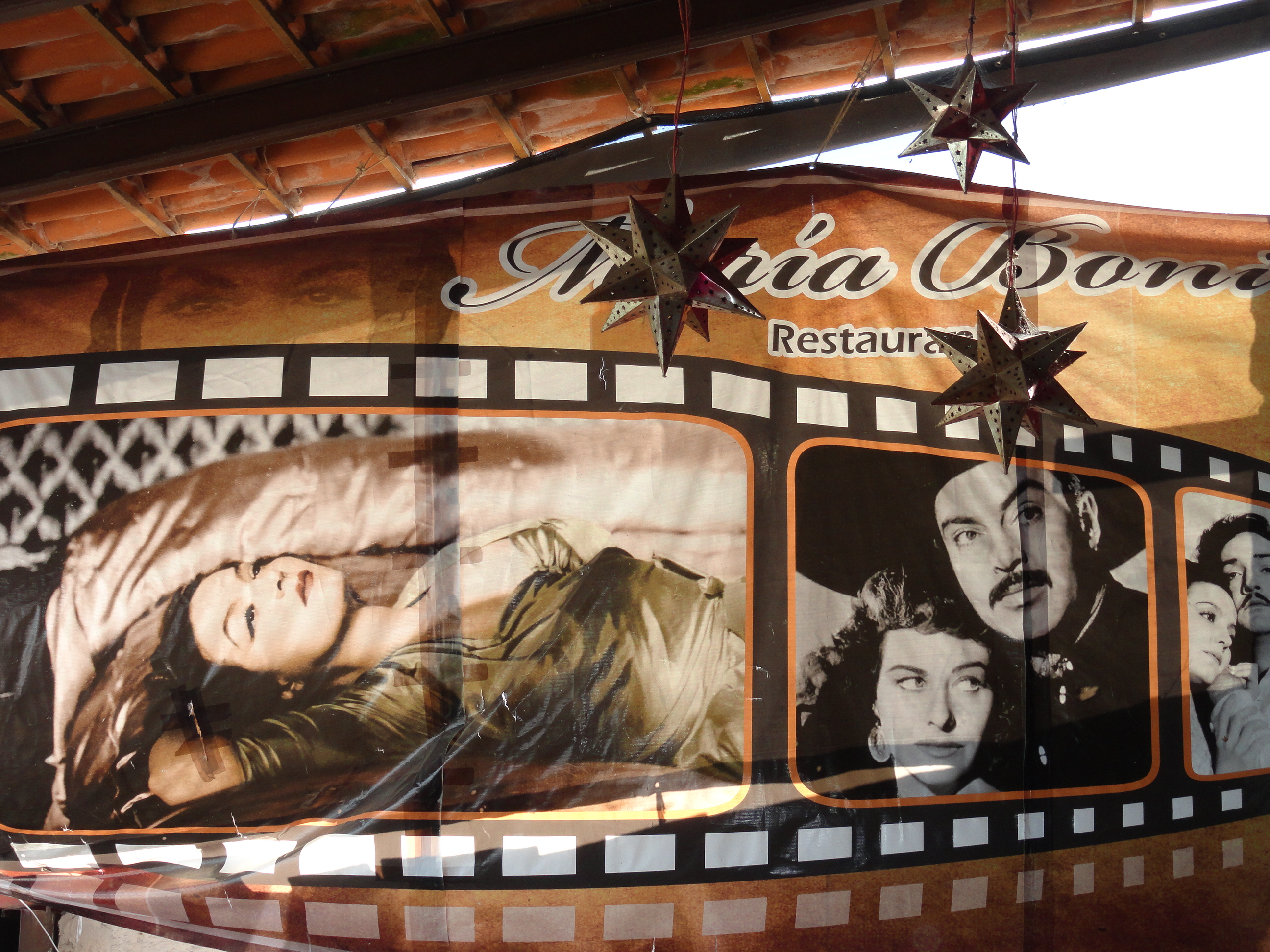
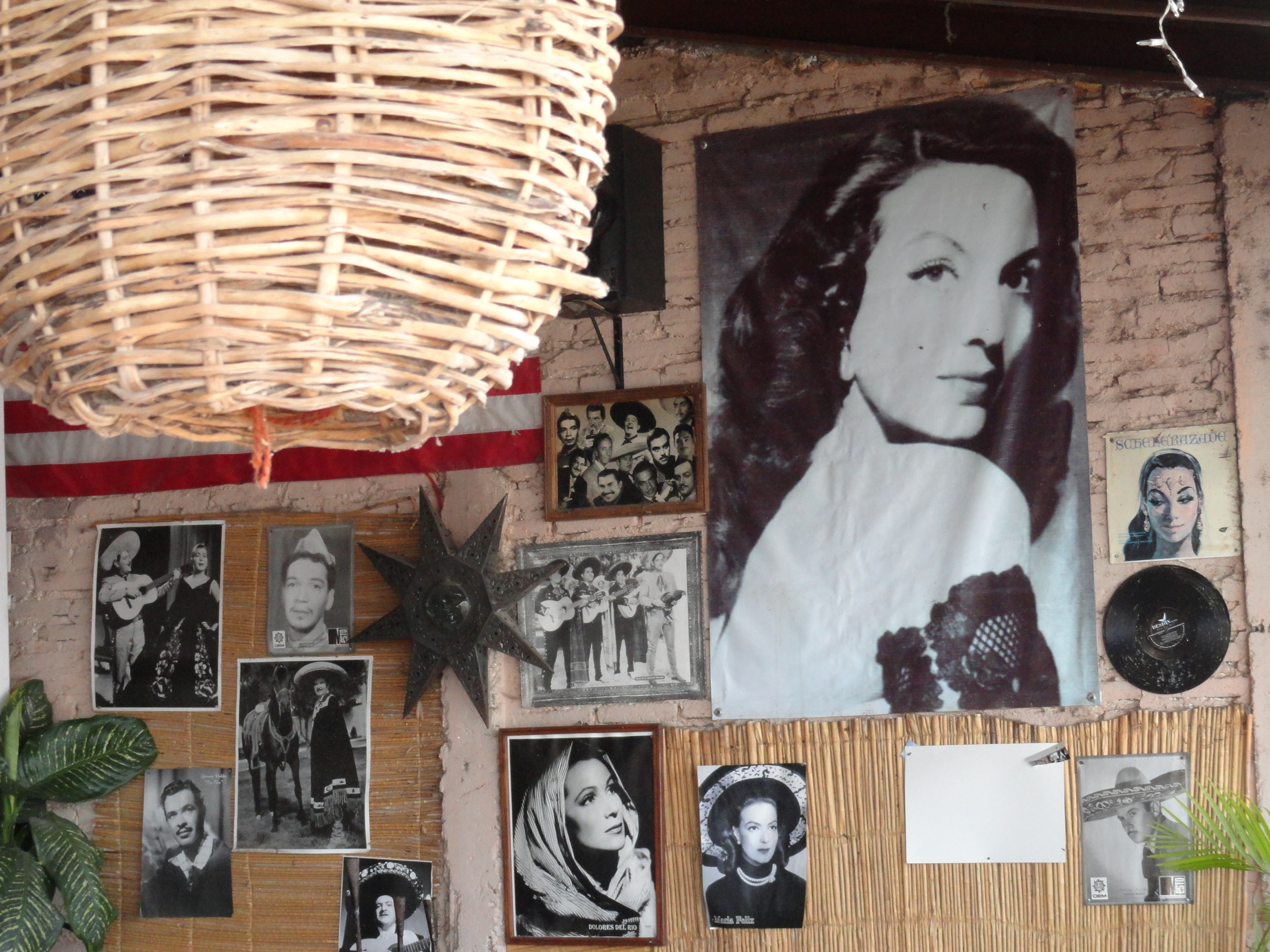
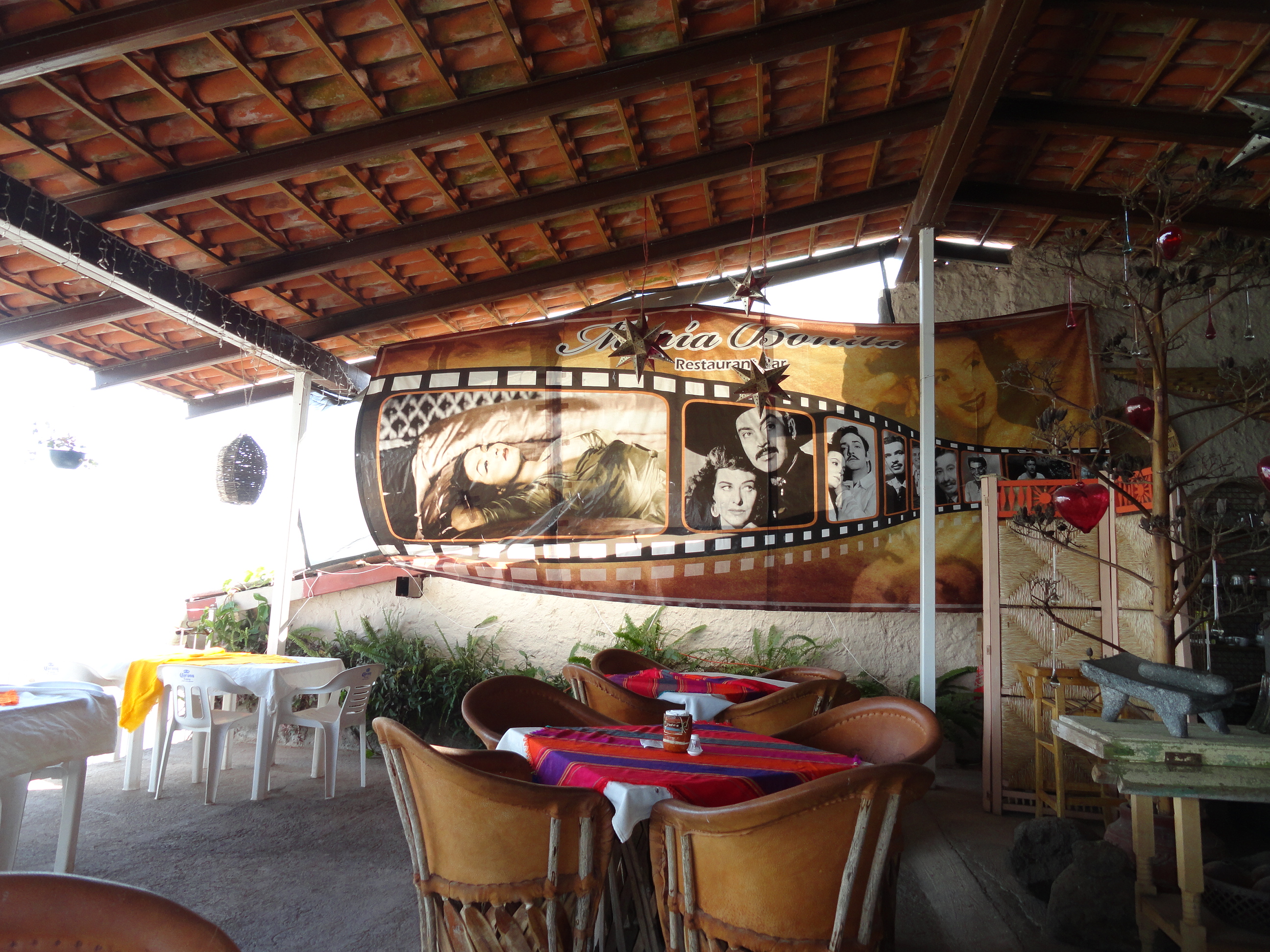
Maria Phoenix lies on satin sheets
on the wall of Maria Bonita Restaurant Bar.

DSC07822

It is a small palapa restaurant––soft orange front with
hot pink trim–– that I’ve driven by hundreds of times before;
and every time, I’ve wanted to come in, but haven’t.
Now today, suddenly,
I don’t want to go home
and so my car turns in across the carretera.

DSC07818

I am the lone customer.
The cook and waiter
spring to action.
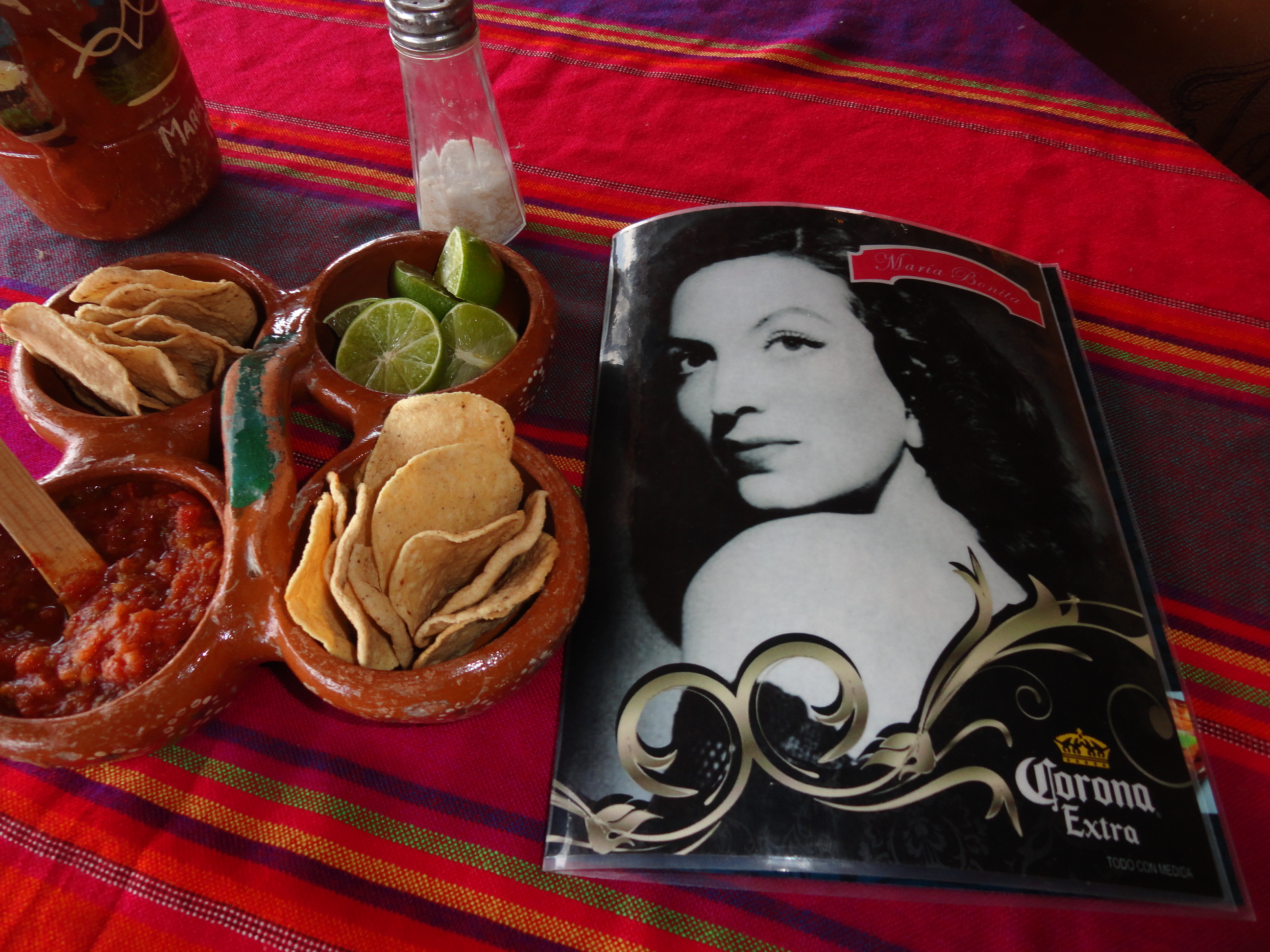
Totopos for him to bring,
a fire for her to light.
This is a fish restaurant
and I am a non-fish
eater, choosing between
quesadillas and beans
or a hamburger and fries.
Needless to say, I’m not here for the food.

I am here for the view and the limits
imposed by eating alone in an otherwise empty
restaurant/bar. I have a poem to write
and need the discipline imposed by a place
where there’s nothing else to do.
My only distraction is the view,
which forms the subject of my poem
and so is anything but a distraction.

DSC07823

The smoke from a dozen fires
rises into the air from the entire eastern slope
of Mount Garcia across the lake.
Whether by accident or by the hand of farmers
lighting fires to clear last year’s stubble from the fields,
the effect is that this extinct volcano
has somehow come to life,
springing leaks.

Fanned by a recent wind, the smoke grows denser, rises higher.
Below the slopes, a patchwork quilt of strawberry and raspberry
fields, covered with plastic sheets,
spawn fruit for the tables of El Norte.

Maria, that other smoldering beauty, lies suspended all around me––
long canvas banners reflecting her screen loves and her roles.
She looks over one shoulder, wears a rebozo or a mariachi’s sombrero.
Cantinflas, that beloved clown, shares her wall but is never in a shot with her.
They are opposites: the sexual symbol and the comic. One raises tension
and the other seeks to dispel it.

Maria Phoenix

I am in between, a mere observer, I know.
In every case it’s likely that the fire has been lit by means unnatural,
but nonetheless, it ignites my imagination.
I am surrounded by it.
“Blue Bayou” plays on the sound system.
Sleepy eyes.
My eyes sting from the smoke
that has filtered toward me
from eight miles or so across the lake.
The tears in my eyes are from the smoke,
not from memories of the departed one
I used to come with to these fish restaurants.

They are not the place for gringos.
Word is out about the sanitation
or where the fish comes from
or who might be encountered here.
A few restaurants down, there was a cartel killing
just about a year ago––perhaps more, perhaps less.
At any rate, Americanos and Canadians are rarely found here.

Today, no one else is found here.
“There’s no exception to the rule”
plays on the sound system.
“Everybody plays the fool.”
Feeling a stranger in the place where I live
is a feeling pleasurable to me––
an emotion I do not feel foolish for pursuing.

The waiter, as though I’m a repeat customer,
brings an entire bucket of ice
and fills my glass each time he passes.
They have my brand of rum.

DSC07821

I have always known this place could be my place.
The pleasure of knowing it to be so warms me
as much as the second jigger of rum.
Shall he pour it for me? Do I want it all?
Just half, I tell him, and fill the glass with Coke.
I like it weaker, so I can spread it out.
Like the fire.

Smoldering.

Interloper (Day 13 of NaPoWriMo)

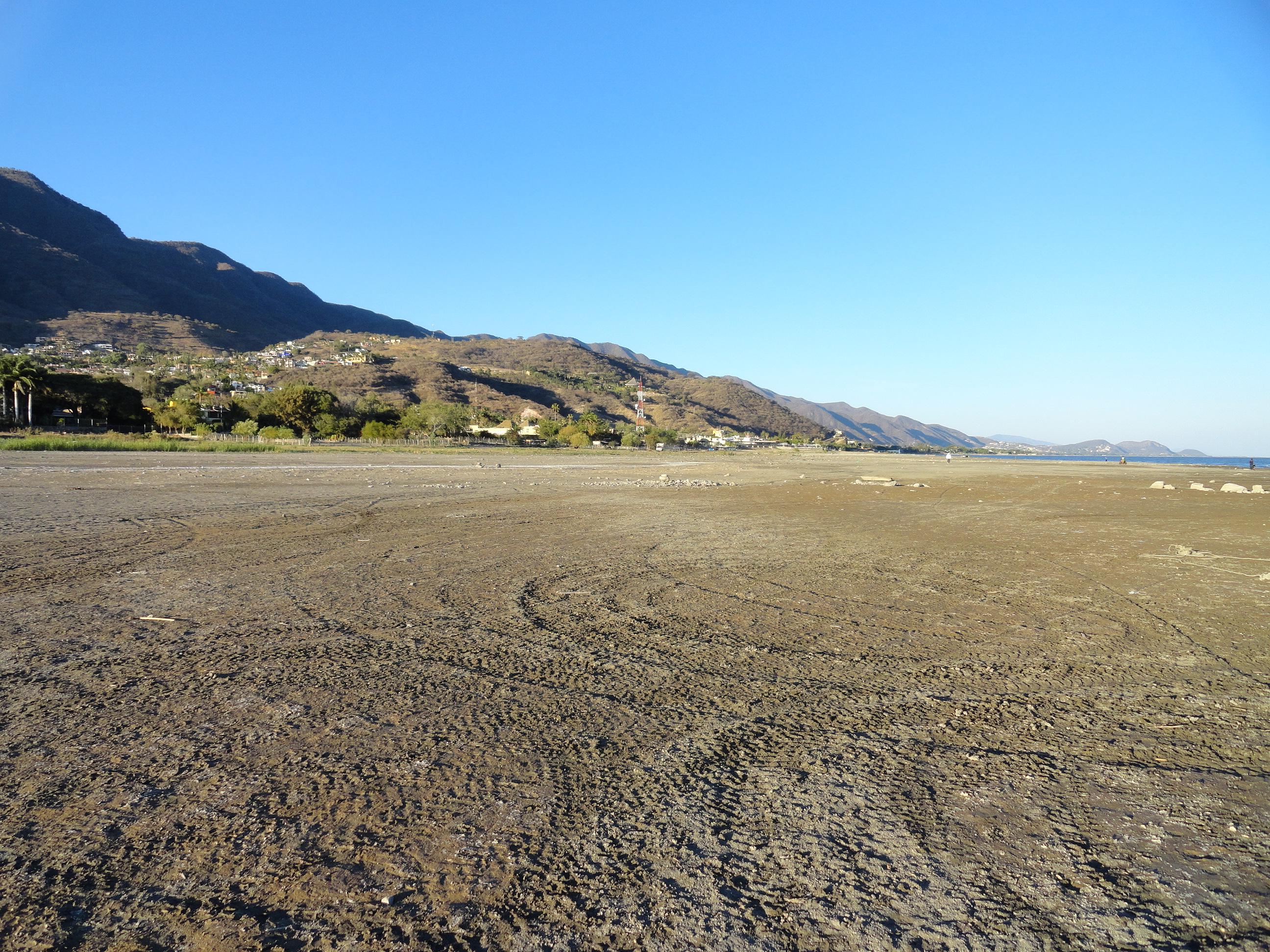
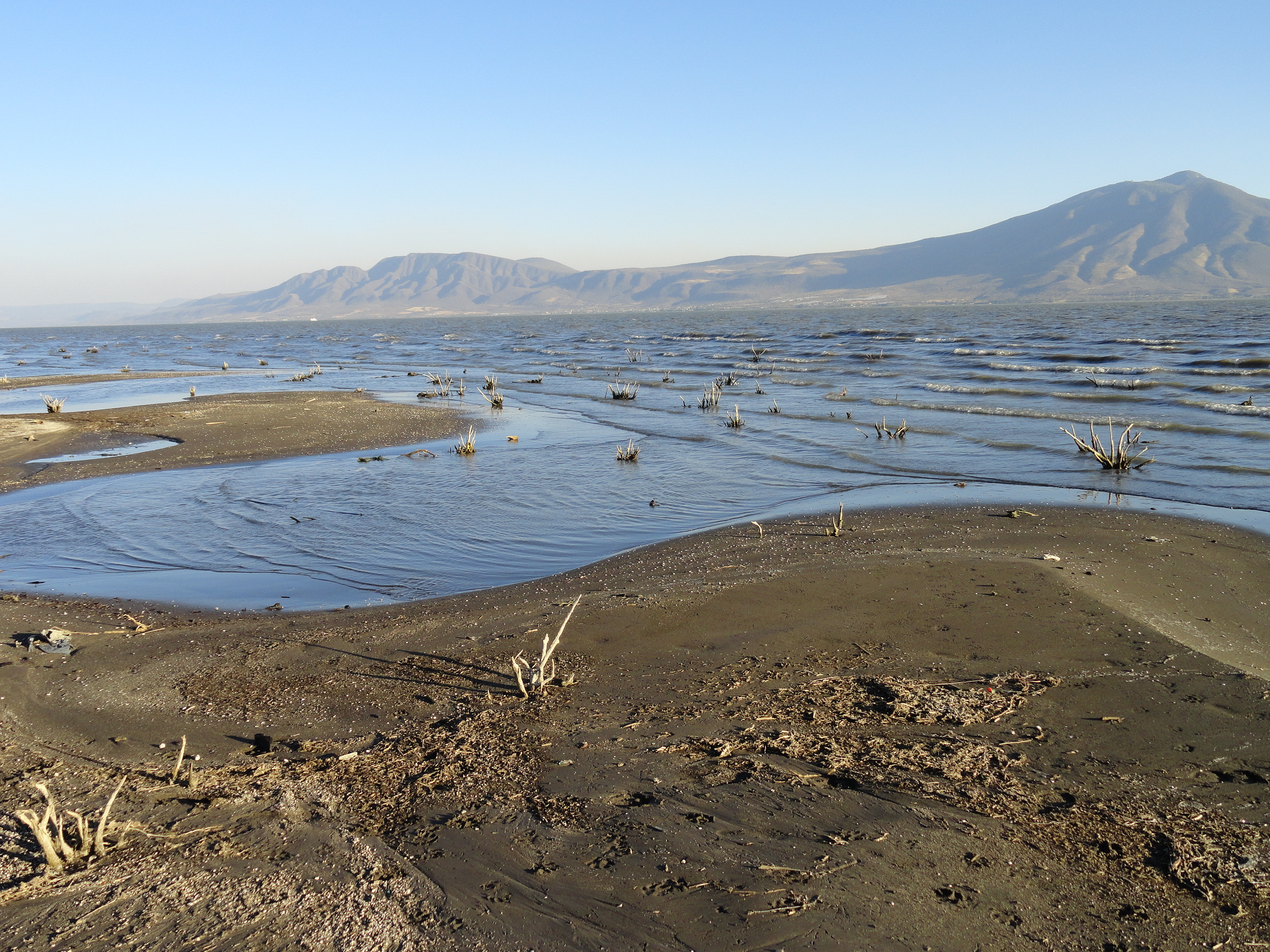
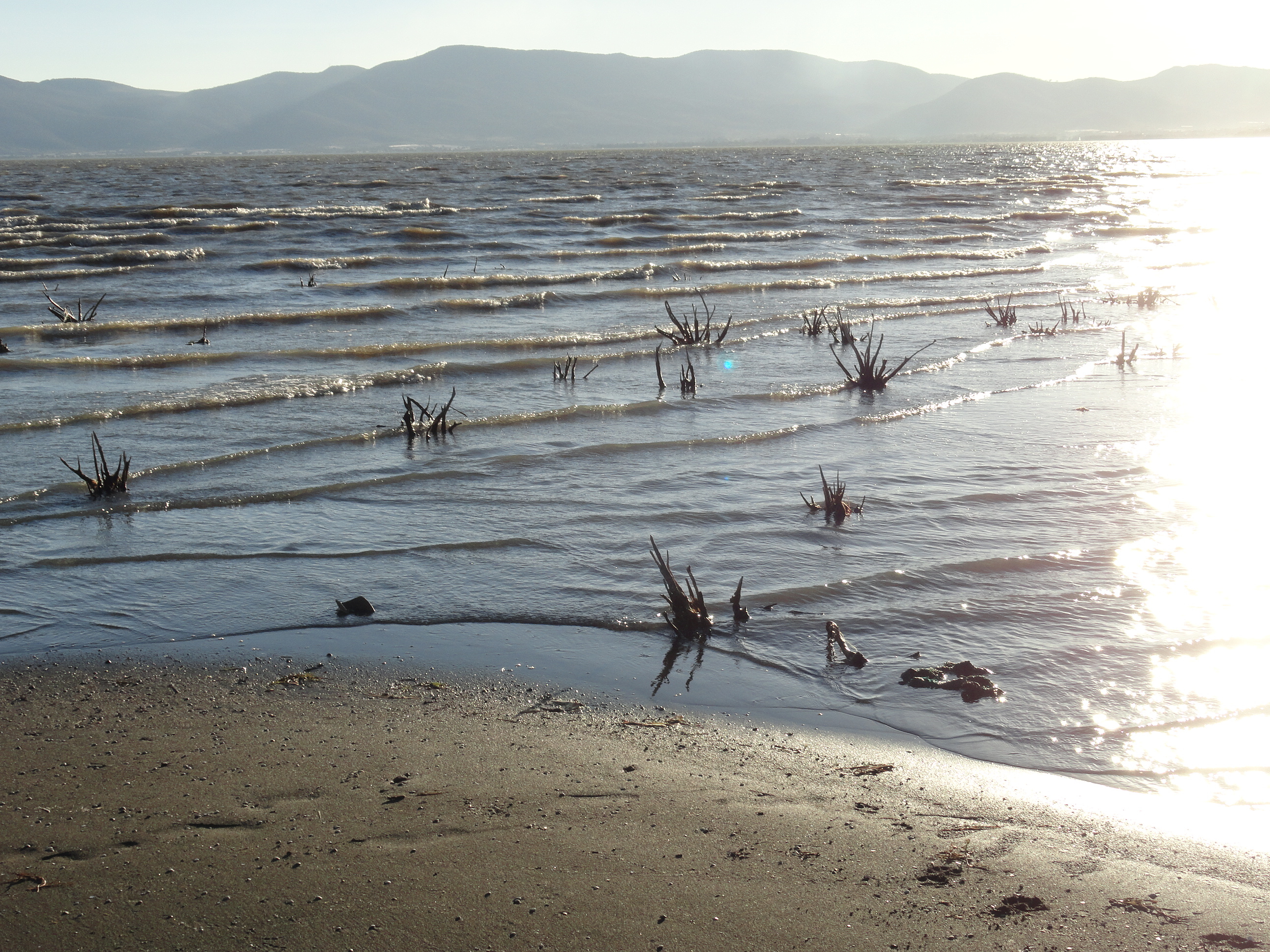
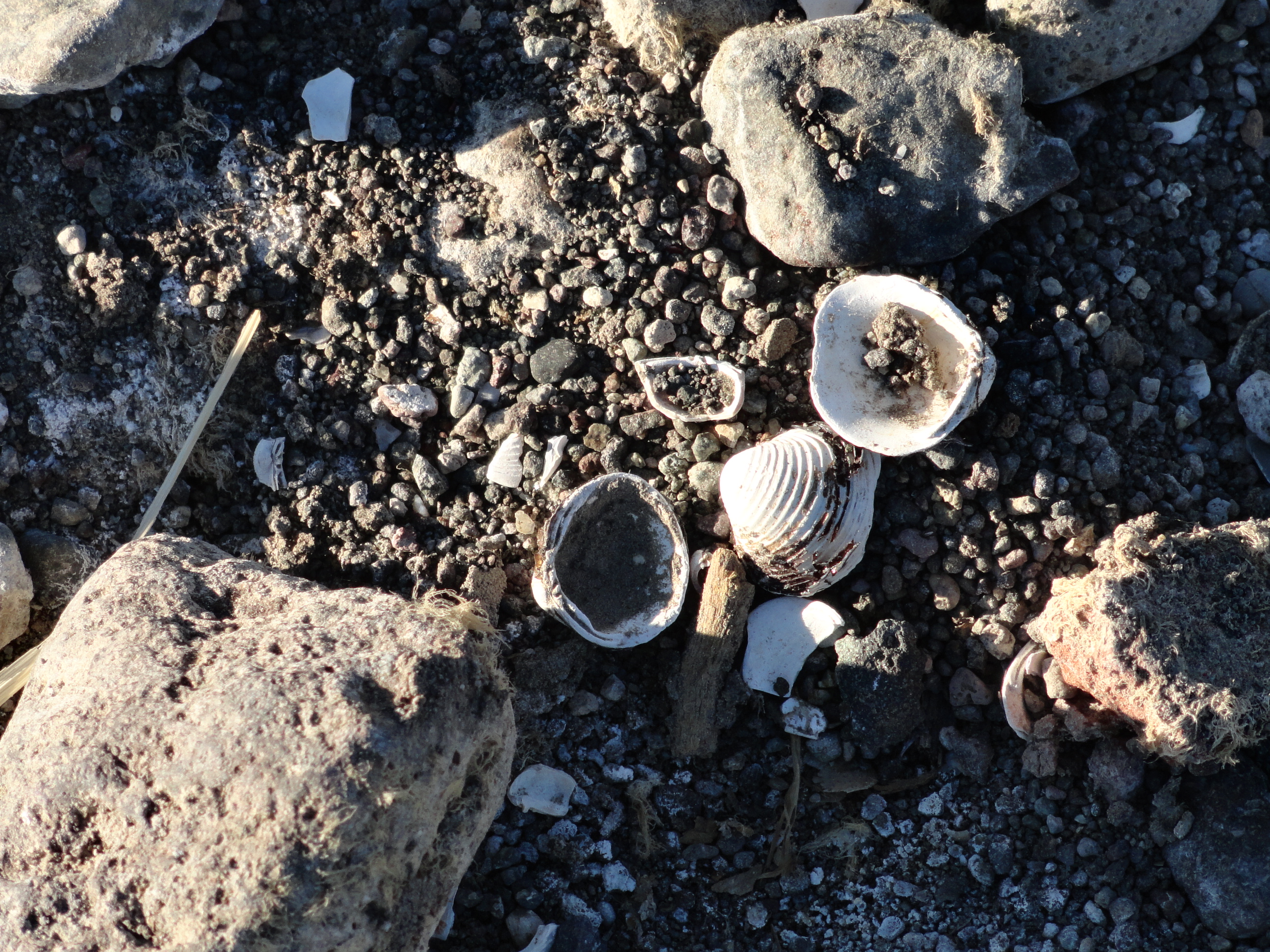
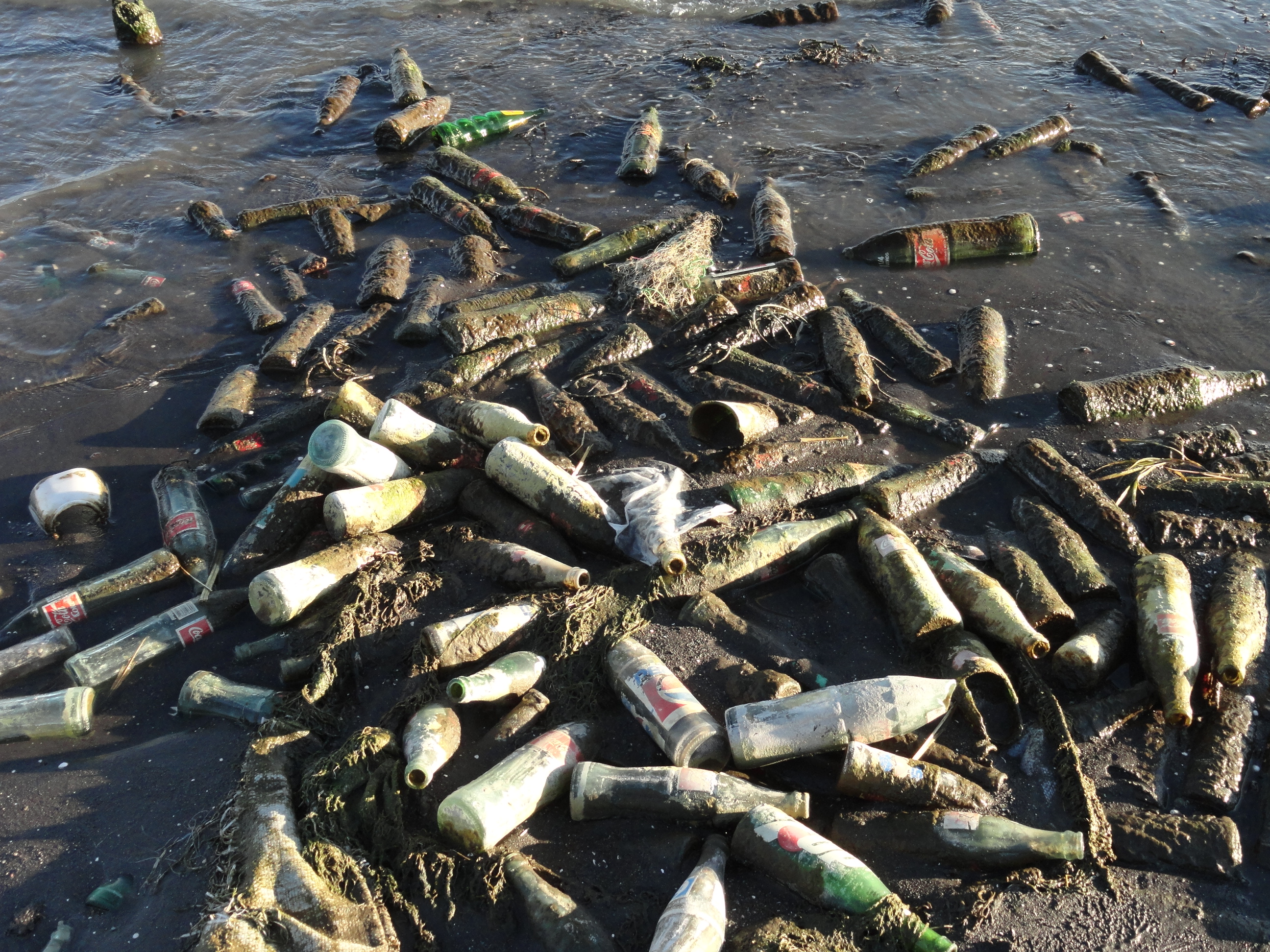
The assignment today was to take a walk and to translate that experience into a poem. It was a very busy day and I didn’t get around to taking my walk until about an hour before sunset. I finally finished my poem at around 11 PM. An hour to spare! Takes the pressure off a bit. The lady I’m talking about who spreads her skirts under the extinct volcano known as Señor Garcia is Lake Chapala, the usually beautiful lake whose shores I have lived upon for twelve years. Ringed by the Sierra Madre mountains, she reclines in the heart of Mexico, about an hour from Guadalajara. It is a view of her from Tony’s porch that graces the cover of our book. When I moved here twelve years ago, they thought the lake would be completely dried up within five years due to low rainfall and three big dams further upstream which drew off most of the water. At that time, the sixty-mile long lake had shrunk to a point where it was actually necessary to take a taxi from the Chapala pier to get out to the water! It was at this time that I started to take my daily walks on a lakebed that was once under water. This land had sprouted a new civilization of herds of horses left to wander free, cattle, burros, wild dogs, flower nurseries, fishermen’s shacks, small palapa restaurants, huge thickets of willow trees and acres and acres of tall cattails. A few years later, when the lake filled up again, all of this was lost. Of course, it was fortunate that rains and legislation concerning water usage swelled the dying lake; so although I missed my old walking ground, I did not mourn it. Unfortunately, the lake is again in dire straits. It has once again shrunk, but this time it has left a wasteland of rocks, dead tree stumps and a beach littered with fresh water shells and abandoned graveyards of soda bottles. This was the first time I’d walked in my old walking grounds and it was a somewhat depressing experience that nonetheless contained some hopeful signs toward the end. I hope to include some pictures to accompany this piece.

Interloper

If you live long enough,
what others consider history
will become your life.

Twelve years ago,
I walked for hours every day
on this dry lake bottom,
in places the lake
a mile further out
from its usual banks.

Then, five years
from its supposed extinction,
the rains came.
The floodgates
of the dams upstream
opened as well
and the lake swelled to its former girth.

My old walking trails
through the cattails
and the willows
became suffused in a watery world.
Tree tops became the perches for egrets
scant inches above the waterline,
and the lake became once more
the private property
of homes and landowners who fronted
on the water.

But now, again,
the water has retreated,
and for the first time
in eleven years,
I am again walking
on what was once lake bottom.
I see for myself how this
venerable lady
who spreads her skirts under the mountain
known as Señor Garcia,
has done so in a curtsy,
before beating a hasty retreat.

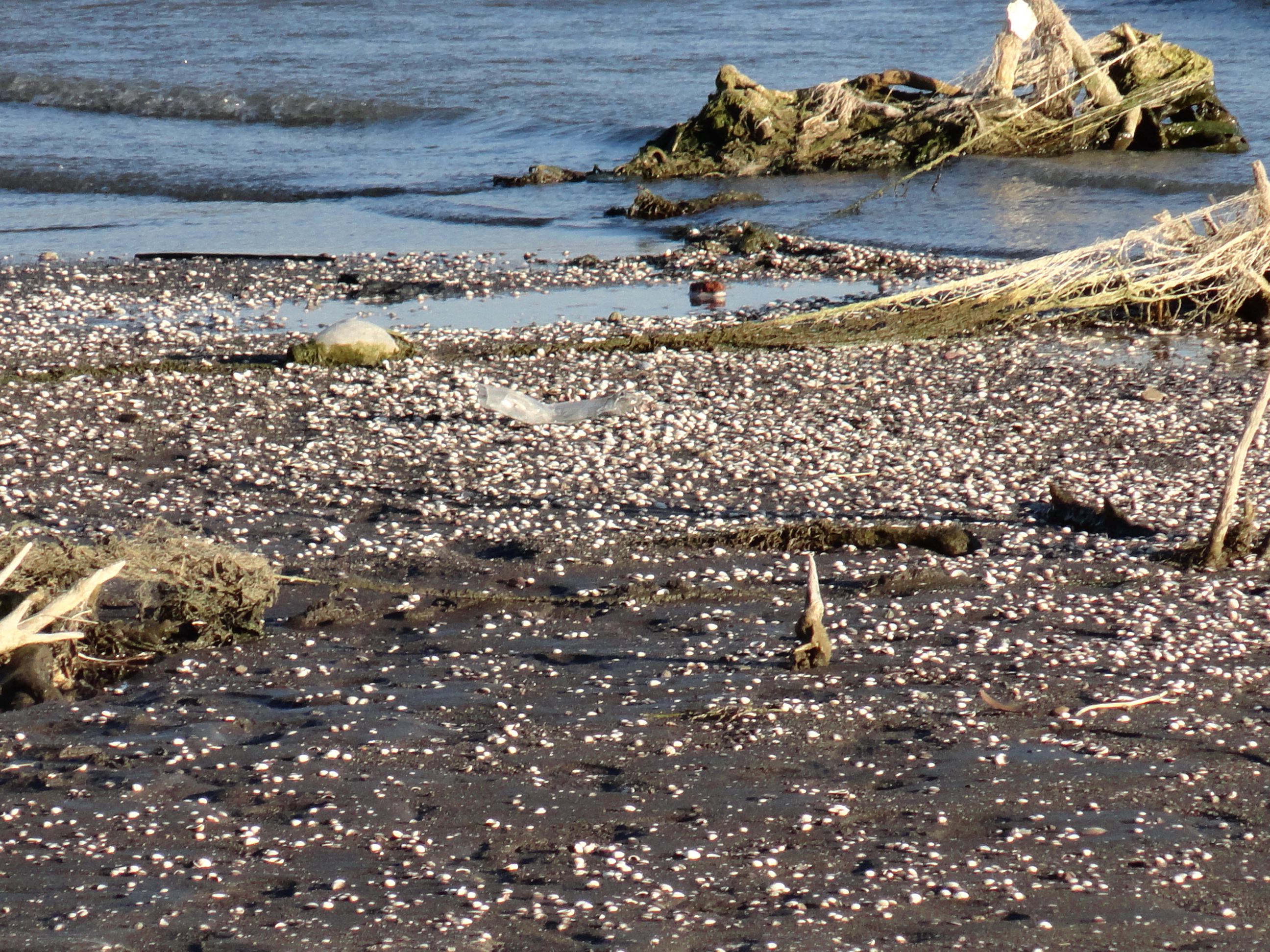
Freshwater shells pave the dry silt.
Discarded soda bottles , moss-covered and corroded,
lie in a pile as though emptied like catch from a fisherman’s net.

Coots and grackles replace the white pelicans
who have circled over in their last goodbye
like other snowbirds heading north.
Sandpipers whistle their reedy pipes,
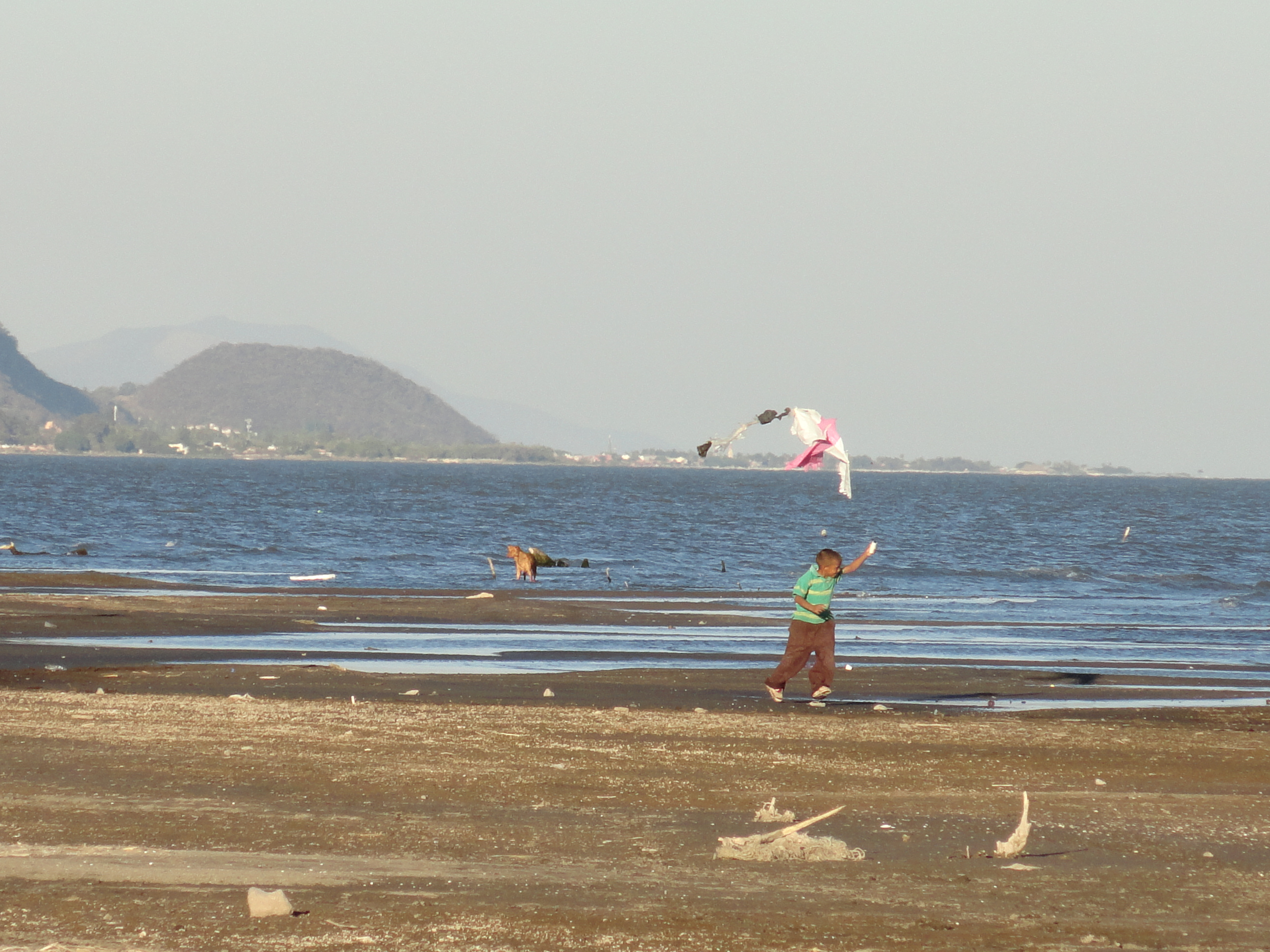
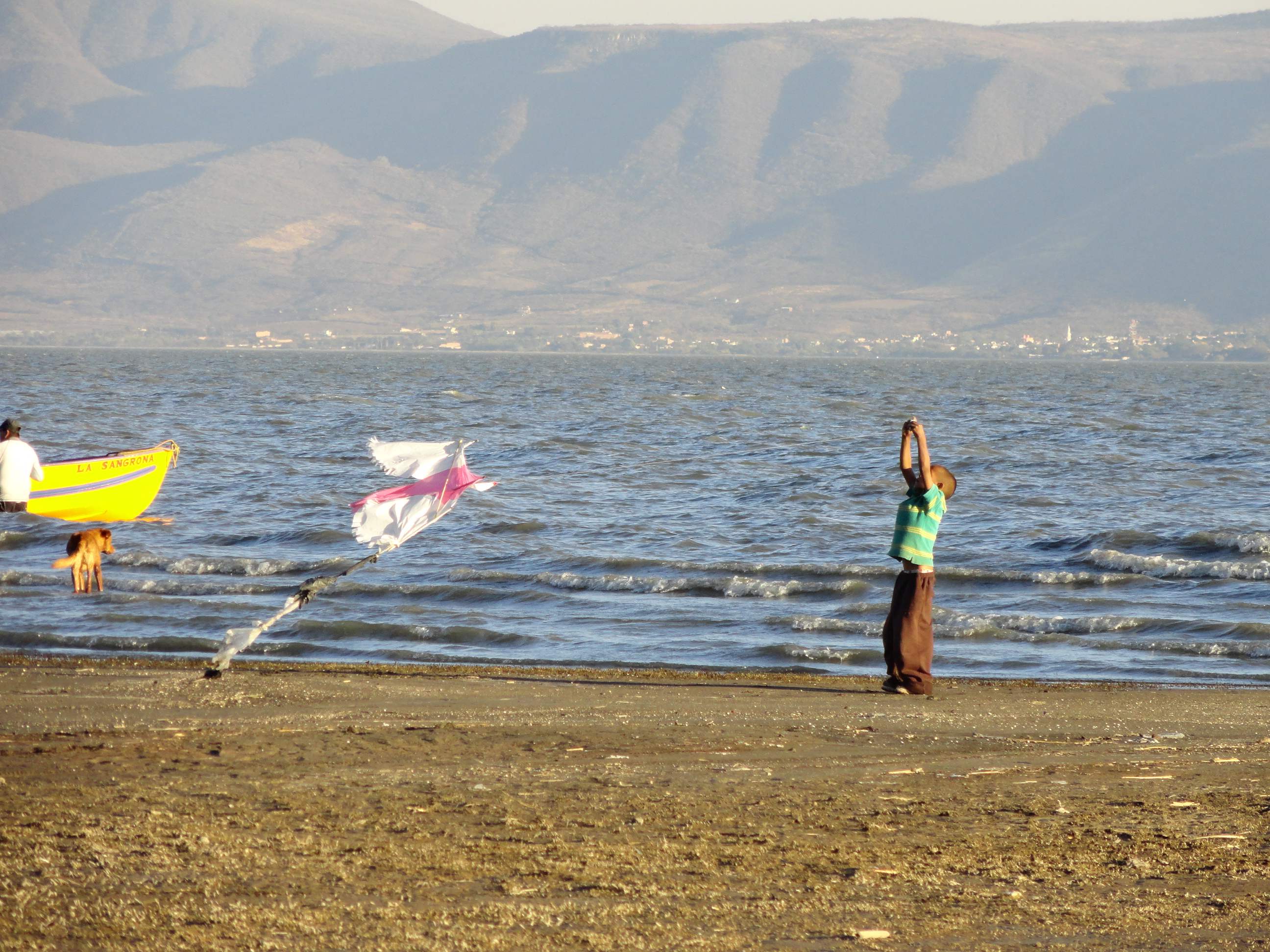
as if to rein in the small boy
who runs with a rag of kite
streaming out behind him,
creating his own wind.

A man in red shorts wades out
to a bright yellow boat,
lugging a five gallon gas container.

The kite pilot
and his two brothers,
as tattered as their kite,
walk past,
then circle as though I’m prey,
to sit behind me on an archipelago
of large stones
that form a Stonehenge
around the sheared-off skeletons of willows.

I wrote about these willows in their prime—
when the villagers had come to clear and burn them
eleven years ago,
not knowing they would not grow back.

What had been foremost in their prayers for years would soon happen.
The lake would rise
again to her former banks.

But now she once again
beats a hasty retreat,
leaving the stubs and skeletons
of trees revealed again.
It is a wasteland
stripped of
the life of water or of leaves.

“Rapido!” the boy in the green shirt
demands of his brother.
Their sister pulls the bones of the kite
from their plastic shroud.
Rags turn back to rags,
their flight over.

The brother in the black Wesley Snipes T Shirt
winds the coil of string as though it is valuable
and can’t be tangled or lost.

The sun is half an hour from setting.
“Be off the beach by nightfall,”
a man had warned me
as I set off for my walk.
He was a gringo,
yet still I am ready
to start back.
I remember the banks of blackbirds
that used to settle in clouds in the reeds—
acres and acres of cattails—
enough to get seriously lost in.
At sunset, the birds would lift in funnels
by the thousands–
a moving tornado of winged black
that moved as one.
But they are history, now.

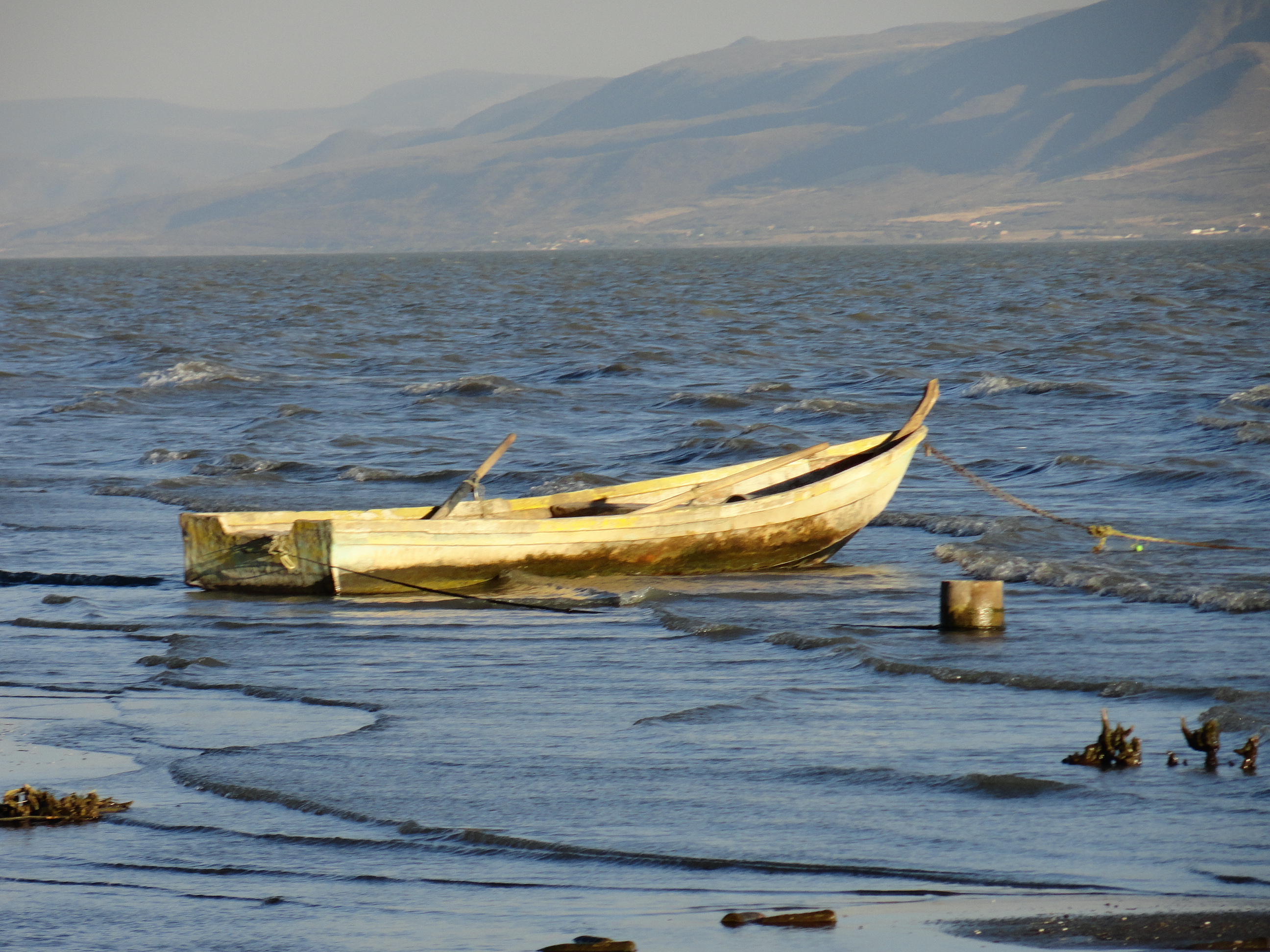
La Sangerona—
that bright yellow boat
whose name translates
as “the annoying one”
does not disappoint.
Despite her fresh infusion of fuel,
she has to be pulled manually ashore.
She is like a princess
being towed
up the Nile.
She expends no energy
to further her own movement.

A red dog,
wet sand to his high tide mark,
settles politely in the sand beside me.
Like iron filings drawn to their pole,
the children gather closer.
They pull at the rocks
as though mining for worms—
prod at the packed sand,
casting eyes up, then away.
Curious but silent.

Now, all run away.
I am left with one grackle,
three sandpipers
and fourteen coots,
drawn out by the waves
and pushed back in,
over and over
in a lullaby.

As I climb to the malecon,
the sun dissolves
into the mountains
to the west.
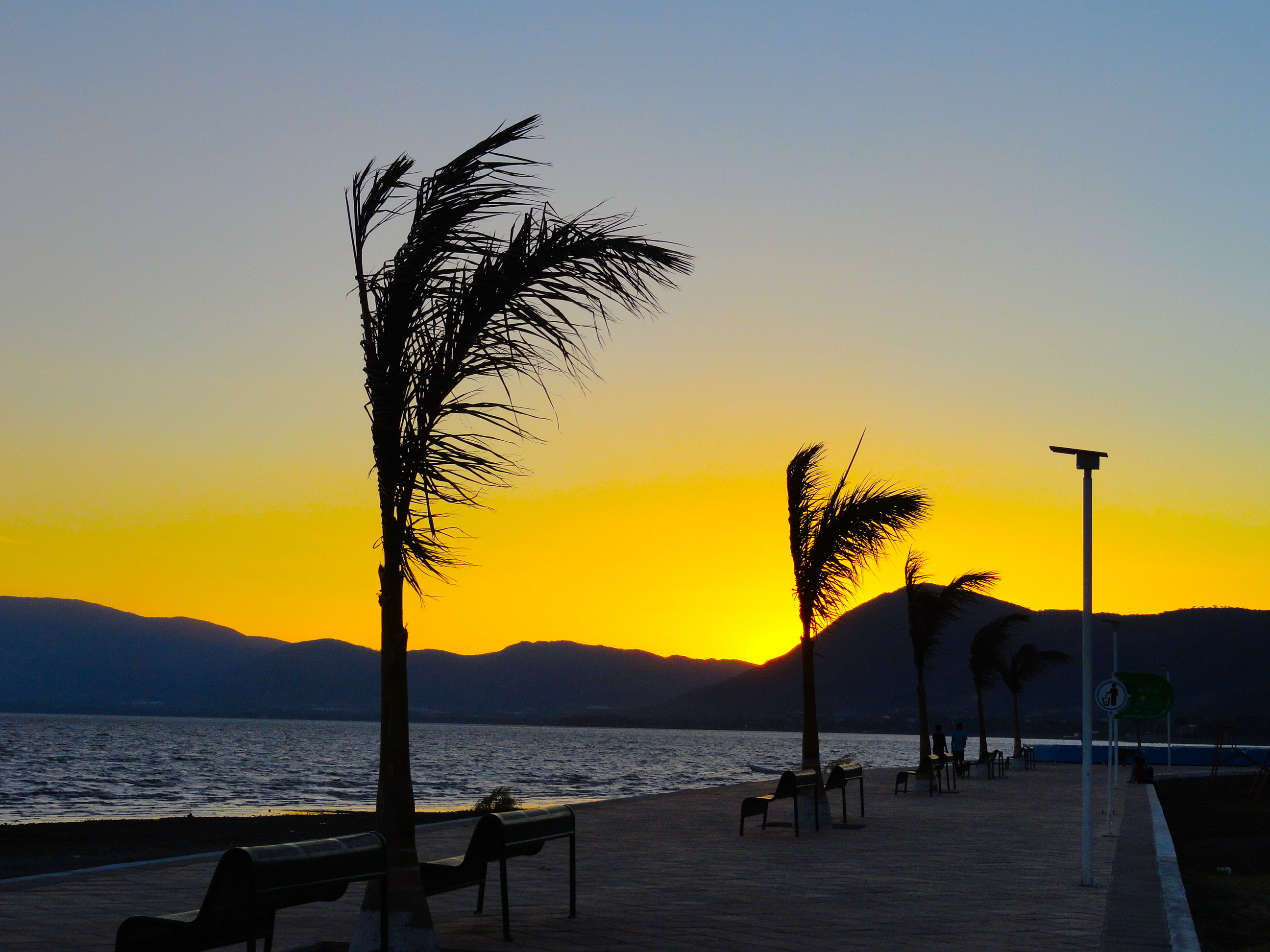
Shadows of palms
are blown in a singular direction,
all pointing north.
Below them,
the skirts of lesser trees,
as low as bushes
but lush in their fullness,
toss with abandon,
as though this lower wind
did not know its own direction.
I have a hunch, go closer and examine.
I am rewarded.
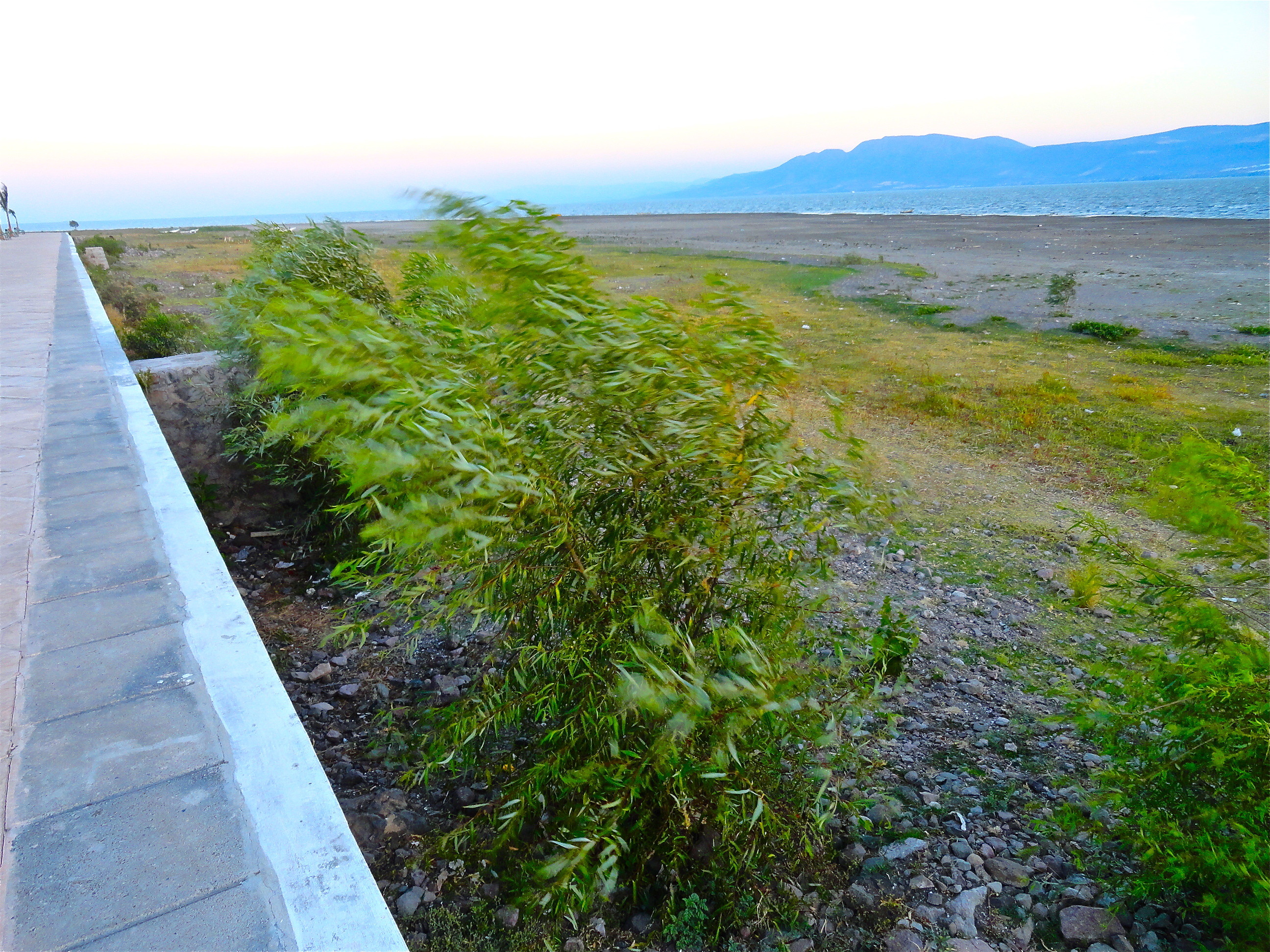
They are willows,
swaying to obscure
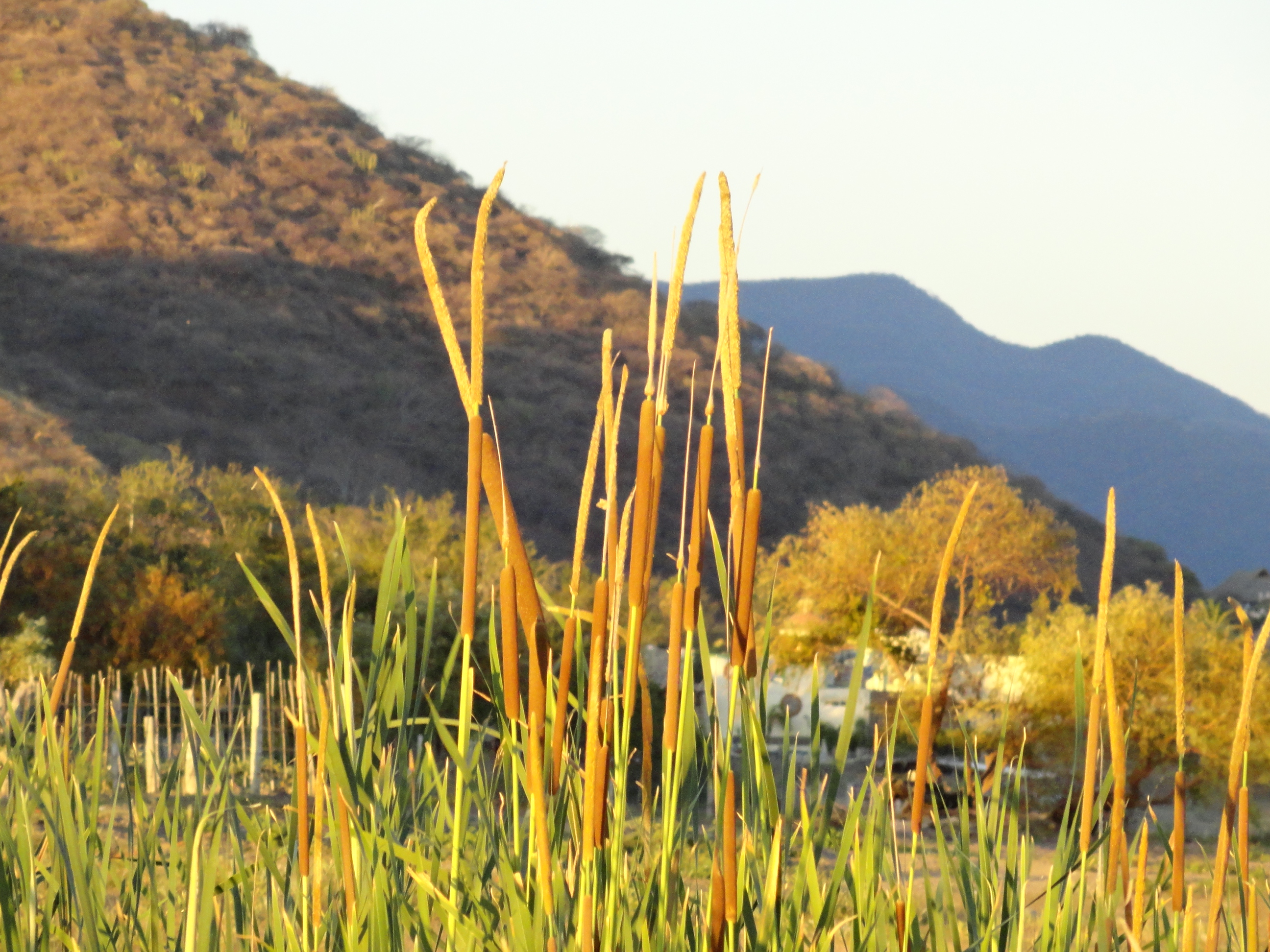
a fresh stand of cattails,
once again beginning their
long march of dominance.
The water that was interloper
is history. And I am part of it.

Dry lakebed.  Once again revealed

Dry lakebed. Once again revealed   (CLICK PHOTO TO ENLARGE)

Freshwater shells revealed by retreat of lake

new serpentine shoreline

bones of the old willows again revealed

closeup of freshwater shells

closeup of freshwater shellsFresh catch!Fresh catch!

DSC07734Creating a breeze

DSC07741The kite flyer

DSC07719

palms point northwards in the sunset breeze

palms point northwards in the sunset breeze

The first surprise.  New willows!

The first surprise. New willows, and, below, cattails!!!

DSC07751

A lake sunset
A lake sunset

“Web of Night” April 2 Post

I’m participating in this program where I’ve taken an oath to write a poem a day.  Here is today’s poem!  I need a website to link to their website, so I’m using the only one I have–this one.  By the end of the month, there will be 30 poems here…


Web of Night

We have been talking online for hours
and, as usual, lost track of time.
Now, after his good-bye,
it would be easier to go to bed
than to act on his reminder
that there should be hot water
in my hot tub tonight,
pumped in earlier from the volcanic depths,
left to cool all day.

I am living in sub-tropical Mexico
where things like volcanoes are everyday things.
I drink the volcano.
I swim and soak in it.
I absorb its heat,
draw from its power,
grow stronger.

This is the fountain of youth, I’ve often said.
Too long away from it, I start to grow creaky and old––
reversing those effects only by coming home again
to lie in its steaming bath.

I look up from it now
at a night sky unlike any other––
only the major stars distinct, like light seen through
irregularly perforated steel. The stars standing out individually,
between them the remarkable floss of clouds stretched
sparse as angel hair on a Christmas tree
to reveal the ornaments
between.

No one else awake in this morning hour
so early that it is really still the night before.

2 AM. Neither a dog’s bark nor a burro’s bray.
No harsh staccato though the cool night air
of air brakes of trucks
too wide for the two-lane carretera.
down below.

Alone in my world.

The clouds, while I’ve been thinking blind,
have obscured the stars
behind a thicker web of cotton wool.

I think of love so far away,
wishing it nearer but feeling it close
as the keyboard in the room behind me.
There are many of us
caught in this Web of internet romance.
Here we need not fear
the loss of a love
that is a part of an addiction
to the mystery of absence
yet words so close
they are almost
but not quite
touch.