Category Archives: Other kinds of Loss

Daily Post: Play Date

Image

Play Date


My sister’s house has sold and they are cleaning out her attic. My niece and I make one trip more and I find my old dollhouse, collapsed, in the garbage can. I take the pieces out—some of them—and stash them in her trunk. I’d thought them gone forty years ago when the tornado took the roof off my parents’ house, but now, here they are like the leaves of memory blown miraculously back to me.

When she sees I’ve taken them, my niece asks what she should do with the dolls she found in the back recesses of her mother’s attic storage room—the one I hadn’t got to on my last visit—perhaps because of the roofing nails sticking through the wood which made reaching back behind the eaves a physical danger.

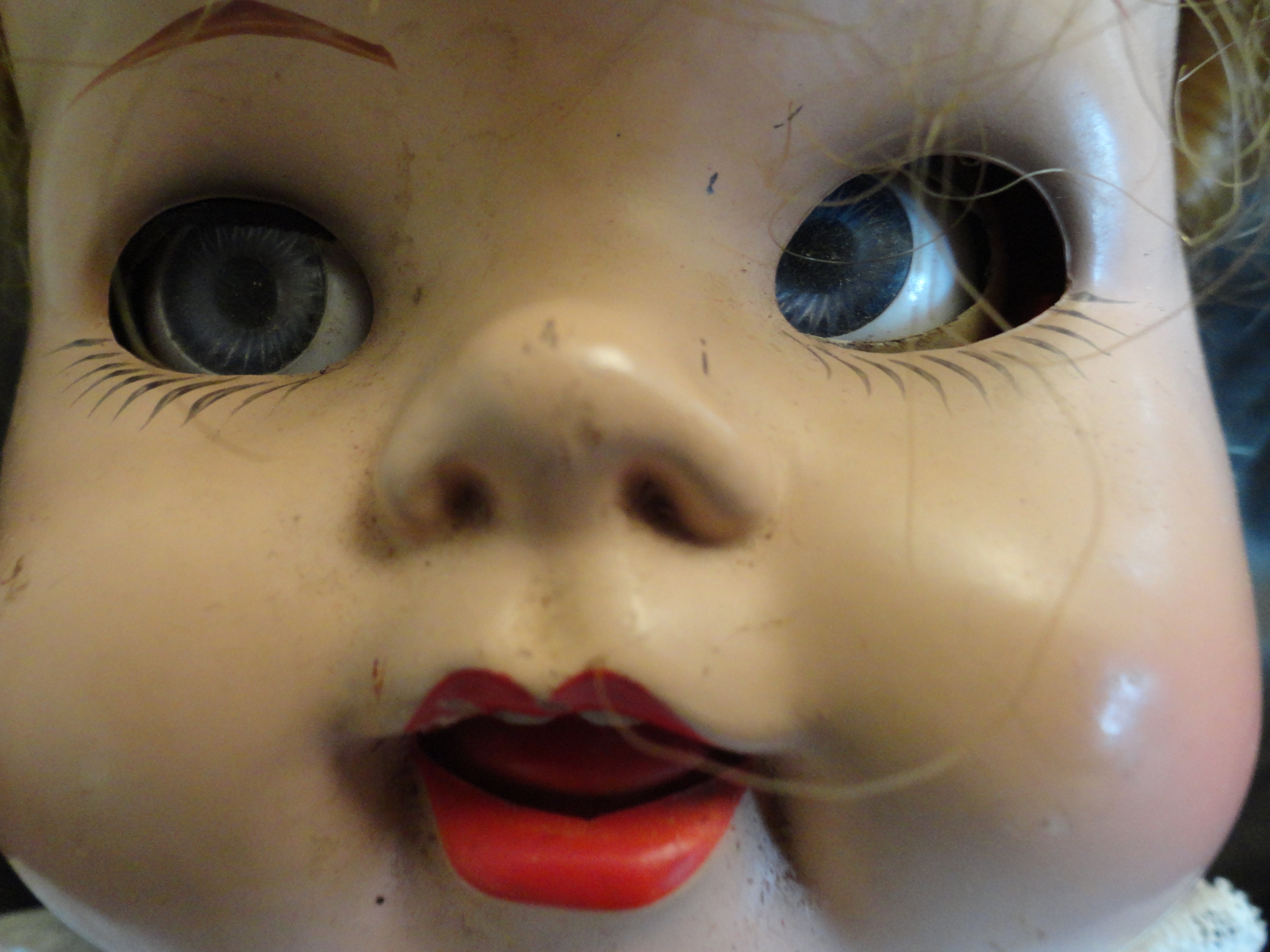
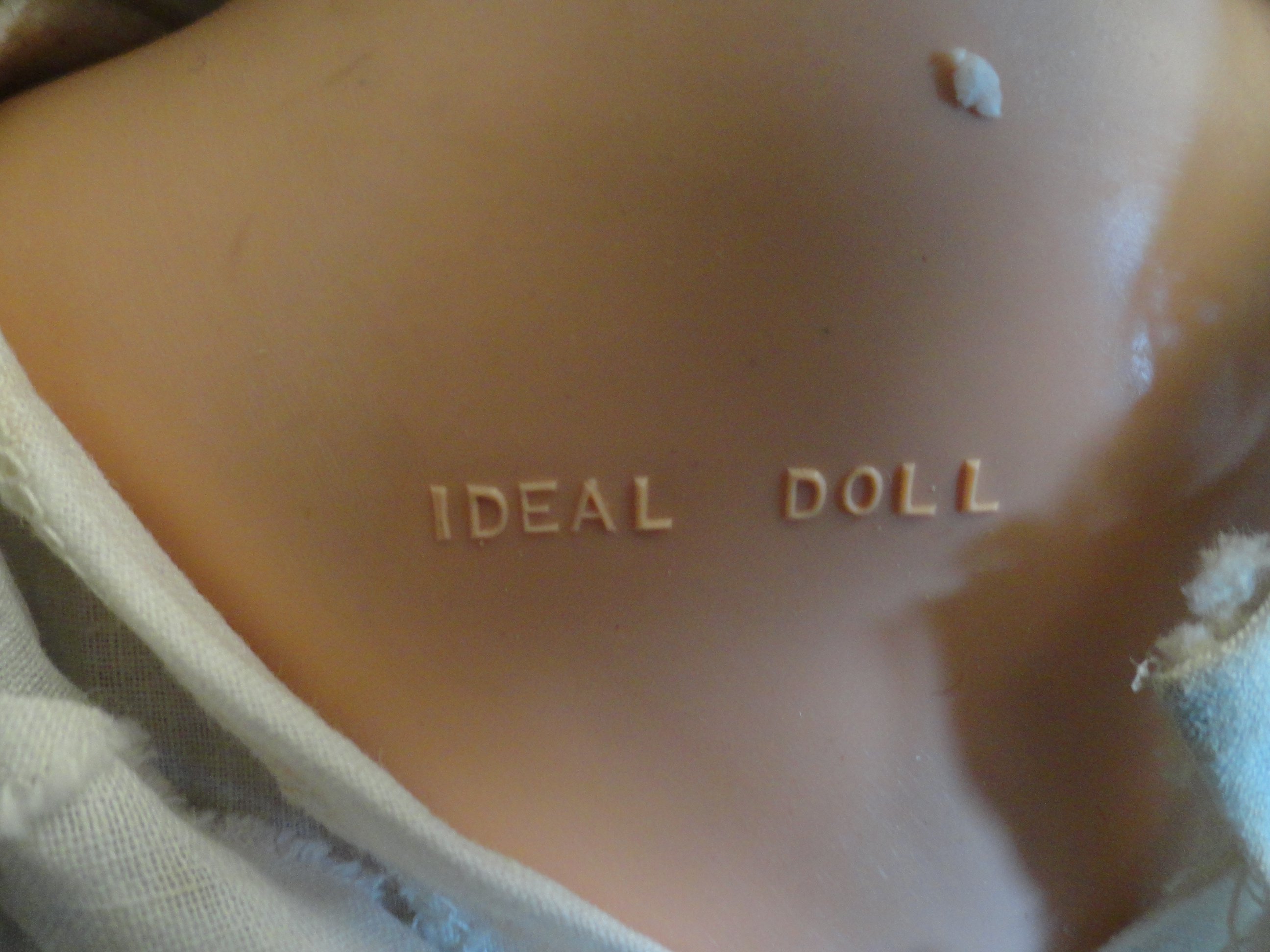
I find them where she has stashed them In a suitcase in her garage, and when I open the case and see the first doll staring up at me, I think it is a “find” from some antique store, like the dishes in my sister’s China cabinet or the tiny figures on her shelves. One rubber arm, sticky with age, has burst open and streams kapok like a froth of bleached and fermented blood. Other limbs have decayed to nothing but empty puddles of congealed rubber. Only the torso, held in place by a sagging pink fancy gown; and the face, stained red in places from some surface it’s been pressed against for too long, are still intact. As I lift the first doll from the suitcase, the other doll—the size of a toddler—stares up at me, one eye unhinged, her hair in pigtails sealed with rubber bands. When I lift her by one arm, her head turns, her legs pump and I realize this is my Ideal walking doll. When you raise her arms, one at a time, she walks toward you and her head swings, side-to-side. Hard and beautiful, she was not a doll to cuddle and she would not sit. She stood propped up against one corner of my room, rarely played with. What, I wonder, has happened to the bright blue dress she wore? Then I look closer and see that she’s still wearing it—faded to paleness even in the dark. What is here is original—her hair, her limbs, her dress, her petticoat—but her shoes and socks have been lost to another little girl, perhaps, or have jiggled off in some trunk and been left behind.

I’m 1500 miles away from home, yet I load the child-sized dollies into my boyfriend’s trunk: my sister’s doll in it’s fancy pink floor-length formal, my doll with her eye gone wild in its socket. They won’t make it home to Mexico in my suitcase this time, but it is impossible to leave them there in the suitcase to be thrown away by someone who has no memory of them. They are not collector’s items. They have been too neglected in their lives since they stood propped up in the corners of our rooms, then in the corners of our closets, the basement, my sister’s trunk and then her attic 800 miles from where they called us their owners and stimulated our imaginations to the extent they were able.

They’ll now reside in my boyfriend’s garage in Missouri until the time comes when I can carry them back in an extra suitcase or he can mule them down for me. If they were miniatures, I could include them in a retablo or a memory box, but each head is larger than the largest assemblage I’ve ever made. The closets of my house are full and overflowing, as are the wall-to-ceiling cabinets in my garage and studio and every area of my house where I’ve had room to build a closet. But I must use them. Give them some purpose for still existing other than to fill up room in some box on some cupboard shelf.

I imagine a memory box of gigantic proportions and suddenly, I have to make it, even if it takes up all the work room of my studio, and I start to plan how I could take my own doll back with me and what I’ll have to leave: the case of books that I’ve just had printed or my clothes or all the cartridges for my laser printer? If I wear a baby carrier, will they believe it is my baby, sound asleep? And what sensation will I cause when I try to stuff her into the overhead rack?

When I start to plan what else will go in the memory box with her, I remember the metal dollhouse sides and suddenly, I’m planning another trip back to Missouri, where I will make the mother of memory boxes—four feet square—and I wonder how my boyfriend will react to this and what I’ll do with it when it is finished. But somehow all these practicalities do not matter, because this dolly, relegated to corners for its whole life, is finally going to get played with!!!


The Prompt: Antique Antics: What’s the oldest thing you own? (Toys, clothing, twinkies, Grecian urns: anything’s fair game.) Recount its history — from the object’s point of view.

 

Image

Daily Post: The Avid Student

Today’s Prompt:  You can choose any person from history to teach you any topic you want. Who’s your teacher, and what do they teach you?

The Avid Student

Mrs. O’Leary, teach me how
please oh please, to milk a cow.
I won’t leave here till you do.
I’m bored today, and feeling blue.
Yesterday I baked a cake
with that new baker, name of Jake.
It didn’t rise.  It tasted awful.
Couldn’t eat but one small jaw full.
Day before I went to see
Joe the tailor.  Him and me
made a dress of chambray lace
but when I held it near my face
I found it itched me terrible.
To wear it was unbearable.
So I went on to see the preacher.
Wanted him to be my teacher.
But when it came the time to pray,
he found he hadn’t much to say.
I fear that I destroyed his faith.
I left him white as any wraith,
but found the cobbler in a pew
and asked him how to make a shoe.
He’d witnessed what the preacher did
and so he ran away and hid.
So Mrs. O’Leary, it’s up to you
to show me something I can do.
I know it’s dark, but I need right now
to know just how you milk your cow.
I brought a lantern.  I’ll hold it high.
It’s not real light, but we’ll get by.
I’ll just sit on this straw bale.
You fetch the cow and fetch the pail.
I love the way the hot milk steam
swirls around the rising cream.
I love the rhythm and the pomp
of my light squeeze and Bessie’s stomp
whenever I let loose her tit.
I cannot get enough of it!
But now we’re done and I can see
that bucket’s much too much for thee
to lift,  I’ll put the lantern down and
come with thee to give a hand.
I’ll come right back and close the barn.
Tomorrow, I’ll have quite a yarn
for everyone I want to tell
I finally did something well!!!!

For those of you unacquainted with Mrs. O’Leary, I include this description of The Great Chicago Fire of 1871:

“The summer of 1871 was very dry, leaving the ground parched and the wooden city vulnerable. On Sunday evening, October 8, 1871, just after nine o’clock, a fire broke out in the barn behind the home of Patrick and Catherine O’Leary at 13 DeKoven Street. How the fire started is still unknown today, but an O’Leary cow often gets the credit.

The firefighters, exhausted from fighting a large fire the day before, were first sent to the wrong neighborhood. When they finally arrived at the O’Leary’s, they found the fire raging out of control. The blaze quickly spread east and north. Wooden houses, commercial and industrial buildings, and private mansions were all consumed in the blaze.

After two days, rain began to fall. On the morning of October 10, 1871, the fire died out, leaving complete devastation in the heart of the city. At least 300 people were dead, 100,000 people were homeless, and $200 million worth of property was destroyed. The entire central business district of Chicago was leveled. The fire was one of the most spectacular events of the nineteenth century, and it is recognized as a major milestone in the city’s history.”

In the Open

DSC08727

In the Open

The day is balmy
with segmented clouds.
The African tulip tree
spreads its boughs wide
over the seated ones
as well as the one who stands in front of us,
leading us to ground our feet,
relax our arms with hands palms up
and to go inside ourselves
to watch our breath
and be in the now,
in the state that she calls openness.

To be in the future is not openness, she says,
and to be in the past is not openness.
Only the now is really living.
And it occurs to me
that when I think I want a cup of coffee
and leave my studio to go in search of it,
then, in the kitchen,
can’t remember what I’m there for,
(and the reason why so many
friends my age are doing the same)
is because we are in this state of openness
more frequently
as we get older.

Wanting a cup of coffee is in the future,
and remembering we wanted a cup of coffee
a few minutes ago
is having to remember the past.
Standing here in the kitchen
listening to the baby birds’
loud cheeps
from their nest in the kitchen overhang
is being in the now.

And so it is that all of us, as we age,
are in the deepest stages of meditation
most of the time
and should not worry so much
about Alzheimer’s or dementia,
because we are where Tibetan monks
and ladies leading meditation
would have us be.
Open. Living the now
with increasingly
less memory
for what was
or was to be.

NaPoWriMo Day 24: Building Walls

Our prompt today was to write a poem that features walls, bricks, stones, arches, or the like.

Building Walls

The new neighbors are not friendly.
From their side of my wall,
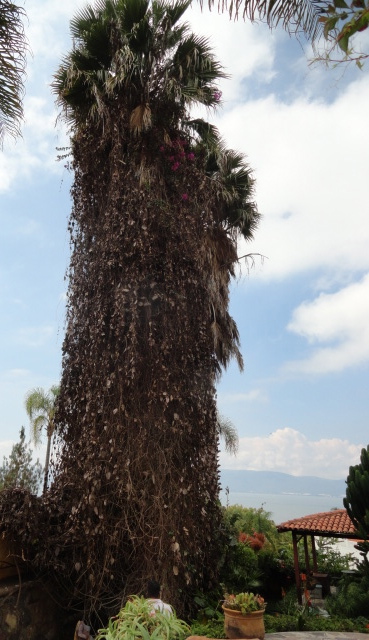
they have reached over my wall to sever the vines
that have covered my tall palms
that abut the wall
that has separated our properties
for thirteen years—
those maroon bougainvillea vines,
stretched ten feet wide
by covering layers of blue thunbergia,
formed a community that housed families
of birds and possums and possibly
a very large but harmless snake.
I saw it cross my patio once,
the dog and I turning our heads toward each other,
exchanging looks of surprise
like characters from a stage play or a comic book,
her so startled and curious that she followed,
nose to the ground, to the brush beside the
wall the snake had vanished into,
but never issued a bark.

At night the palm trees
and their surrounding cloaks
would give mysterious rustlings that
aroused the barking of the dogs
and I’d let them in—the pup to sleep
in the cage that was his security
and my security as well—against chewed
Birkenstocks and ruined Oaxacan rugs
and treats purloined from the little silver
garbage can that held the kitchen scraps
saved for Yolanda’s pigs.

Along with the vines,
the new neighbors cut the main stalk of the bougainvillea
that grew to fifteen feet on my side of the wall
and furnished privacy from the eyes
of those standing on their patio,
ten feet above mine,
so that now their patio looks directly down
on my pool and hot tub and into my bedroom,
their new bright patio light shines all night long
into my world formerly filled
with stars and moonlight and tree rustlings.

The old wall has revealed its cracks and colors
from several past paintings
that were later made unnecessary by its cloak of vines.
Now an ugly wall that  separates  neighbors,
it echoes the now-dead vines that stretch 80 feet up
to the fronds of the palms.
It takes three men three days to cut the refuse of
the dry vines down from the trees,
two truckloads to bear the cuttings away.

The dogs still bark, but the possum and the birds
have gone to some other haven,
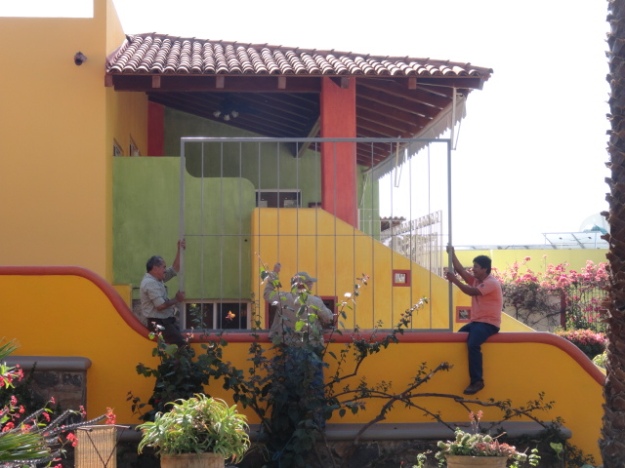
and the men come to erect the metal trellis,
12 feet high, above the top of my low wall.
I hope the bougainvillea will grow
to cover it this rainy season,
building a lovelier wall
between neighbors who still have not met
by their preference, not mine,
causing me to wonder
if I really am as welcome in this country
as I have felt for all these years.
“My neighbors are the same,” my friend tells me.
“They do not really want us here,
and if you think they do,
you are deluding yourself.”

Thirteen years in Mexico. I miss my old neighbors,
best friends who would come to play Mexican Train at 5 minutes notice.
I miss their little yipping dog and the splash of their fountain
that the new neighbors ripped out and threw away
and the bougainvillea that drooped over my wall into their world.
“Scorpions!” the new neighbors decreed, and lopped it off wall-high.
It was a wall more than doubled in its height
by a vine as old as my life in Mexico
that can now be peered over
even from their basement casita.

With old walls gone,
higher walls of misunderstanding
have been constructed.
Each weekend their family streams in from Guadalajara.
Children laugh, adults descend the stairs
to their hot tub down below.
When I greet them, they do not smile.
I have painted the old wall,
now so clearly presented to view,
and I have taken to wearing a swimsuit in my hot tub,
waiting for my new wall to grow higher.

Before detail of tree vine

“Before” detail of tree vine and hedge.

"After" detail of tree vine.

“After” detail of tree vine.

DSC09288

Constructing a higher wall to limit their view into my yard.

DSC09907

Trimming the dead vines after their gardener reached over the wall to cut it’s main trunk.

DSC09878

Detail of my wall with the dead vines stripped away, prepped for repainting.

(Happy Ending: Eight years after writing the poem you have just read, I now have new neighbors, the bougainvillea and thunbergia have grown to cover the new trellis wall, and they love the vines that actually flower more profusely on their side than mine.)

NaPoWriMo Day 20: Gray Walls with Boxes

Our prompt today was to write a poem in the voice of a member of our family.

Gray Walls with Boxes

Once I knew words that fit together.
Now my mind still has the answers,
but rarely lets me in to find them.

People who seem to know me
bring pizza in a box
and we eat it in front of another box I’ve forgotten the name for––
a small world with other people moving in it that I don’t know.
Sometimes words appear in a ribbon on the bottom edge of that box
and I wonder if I understood them
if they ‘d tell me what I’m supposed to do.

On the walls are other flat boxes
with people frozen in them
and I think it is my fault.
There is something I am supposed to be doing.
“They are your pictures, Mother.
They’re there for decoration—
for you to enjoy,”
a woman tells me
when I ask her
if she’d like to take them
home with her.

I don’t belong here.
My high school boyfriend
must be wondering
where I’ve gone
and my daughter is as confused as I am,
claiming to be her own child;
and then one day my sister comes
and I have to laugh because they all
look so much alike—
my sister and her niece and her niece’s daughter
whom they try to convince me
are my daughter and my granddaughter––
so many layers of daughters
that it is too hard to keep them
all in mind.

But then that floats away
and I am trying to remember
when I am leaving this hotel
and I feel I’m not suited to run for president
although all those people
cheering at that big convention in that little box
want me to––
that little box they turn off and on each day,
sometimes before or after I’m ready
to have it turned off.

And they take me to that large room
where all those silent older people sit.
I do not want to go into this room,
but I am lucky, and we move through it.
Someone’s daughters have come to put me
into a box that moves us through the world
without walking. At first, I am so surprised by it,
then I remember what it is
but can’t remember the word for it.
As we sit in it, the world moves by
too fast, scaring me, and I try
to weep unnoticed.
But then they take me out of it,
give me popcorn
and lead me into a very large room
with many people sitting down
and an entire wall with larger people
moving on it, and it is so confusing, like déjá vu,
for I remember being in a room like this before,
but I don’t know if I’m supposed to
make them do something other
than what they are doing
or if I’m already controlling them with my thoughts
or if I’m supposed to be
up there on the wall with them.
I can’t remember whether these people
on either side of me are my sisters
or my children or strangers,
sitting chair after chair down the long aisle.

Most days, I am so sad all day long,
but sometimes my real self
comes to visit and I think,
how did I become a martyr like my grandmother
and why can’t I stop myself from crying, just like her?
One gray wall meets another at the corner
and I’m sure
that I am being punished
for things I did but can’t remember.

That blank face
in the mirror
has me in it,
but I can’t get out
and for a moment I know, then forget
that this is why I cry
and cry and cry
and cry.


NaPoWriMo Day 8: Slack One Lying On the Cobblestones

Our prompt today is to write a poem based on another famous poem. The poem suggested is this one written by Cesar Vallejo and translated by Robert Bly:

Black Stone Lying On A White Stone

I will die in Paris, on a rainy day,
on some day I can already remember.
I will die in Paris–and I don’t step aside–
perhaps on a Thursday, as today is Thursday, in autumn.

It will be a Thursday, because today, Thursday,
setting down these lines, I have put my upper arm bones on
wrong, and never so much as today have I found myself
with all the road ahead of me, alone.

César Vallejo is dead. Everyone beat him
although he never does anything to them;
they beat him hard with a stick and hard also

with a rope. These are the witnesses:
the Thursdays, and the bones of my arms,
the solitude, and the rain, and the roads. . .

This is my version of Vallejo’s self-eulogy:


Slack One Lying On the Cobblestones

I will die in Mexico, on a zany day,
on some day when memory fails me.
I will die under the feet of a burro––as I don’t step aside––
perhaps on market day, as today is market day, in a fall.

It will be a market day because today, market day,
buying new shoes, I have put them on
the wrong feet, and never so much as today do I find myself
having problems negotiating all the cobblestones ahead of me, alone.

Remi is dead. That burro walked on her
although she never did anything to him;
he tromped her hard with his hooves and hard also

with his trailing rope. This is what was left:
her shopping bag, the bones of her dignity,
her bolillos, her new huaraches, and the road. . .

(Note:  Remi is my preferred name to be called by friends, although few consent to do so.)

Letting the Media Replace the Heart

I wrote this on Facebook in response to a friend who thanked me for telling what she called the “true story”:  “I’ve posted some untrue info as well, but then the next day it turned “true” again. We all want to know and yet after awhile it becomes an obsession and we get so caught up in the soundbites that we forget what they are really about. Guess this is our world in microcosm. We need to remember that it all started because we lost two friends. I know there are those much closer to Edward and Nina than I was. I knew her for many years and was in three different writing groups with her where I heard her read her writing, which is sometimes the best way to get to know someone. Edward contacted me to ask if I’d like him to read and comment on my grief book before it went to the printer even though we were just friendly acquaintances. I think it would have been hard for someone even closer to do what I’ve been doing. No one else did and that’s why I have. Somehow, I got caught up in the middle. At any rate, for all of their even closer friends, I hope the hype stops and we turn to more comforting matters. As soon as I have official word from the venue, I’ll post information about the memorial. If you want to do true tribute to Nina, buy her book. That would have made her so happy.”  You can find her book, “The Leprous Veil of Love” on Amazon. She also has stories in a women’s anthology “Agave Marias” which is available in Mexico and online with secondhand book dealers. (This information was requested by someone who read this blog.)

The Dogs Are Barking (May 19,2013)

The Dogs Are Barking

They break the morning––a daily rite.
It’s just a warning. The dogs won’t bite.
Two strangers talk but pass unseen.
I doze, they walk, with a wall between.
I lie here posed between thought and sleep.
My eyes still closed. I’m swimming deep.

I resist the trip––that journey up––
preferring to sip from the dreaming cup
whose liquid darker and bitter thick
reveals a starker bailiwick
than schedules, crafts, menus, schemes.
Much finer draughts we quaff in dreams.

I try to sink back into sleep,
once more to drink of waters deep;
but the dogs still bark. They leap and pace.
My dreams too dark for this morning place.
Those dreams lie deep and intertwined,
wanting to creep back up my mind.

But its slippery slope is much inclined
and provides small hope that I will find
again, that world well out of sight
where truth lies curled, still holding tight––
as oysters cleave and then unfurl
with mighty heave, the priceless pearl

of that other mind that slips the knife
beneath the rind of our daily life.
Time is a brew of present, past
and future, too—whatever’s cast
to stew and steep the story rare
that’s buried deep in dreams laid bare.

Dreams are stories we tell ourselves
that draw our quarries to bookstore shelves.
Pinned to the page, they reach their height
and bring our sage self to the light.
But the dogs are barking. They’re hungry, cross.
When I rise to feed them, the poem is lost.

Uncaught, dismembered, it blows away.
Like petals, scattered in the light of day.

Ghosts

Ghosts

It floated off to the side,
disappearing when I turned to face it head-on.
It hadn’t his features, really,
but I felt his presence a dozen times after—
something floating just off the corner of reality.

Then, weeks later, in the bedroom—a bat.
It flickered against the white curtain and then disappeared.
Moments later, there it was again.
I jerked my head quickly around, flipped the curtain out,
examined its other side.
Moments later, there it was again.
Then a circle floated across to join it.
A hair floated down from above and stuck, center-vision.

A few hours later, the fireworks started—
flashing corollas of light just to the right of me,
like subtle flashbulbs going off.

This was when I decided I needed to see a specialist.
Yes, a retinal detachment, he agreed,
but not yet perforated.
Now, my movements curtailed,
I await that new cloudy ghost
that will be a harbinger
of surgery.

Every tope, every cobblestone
brings a new flash of light—
a signal to still myself.
No jumping. No Zumba.
No jogging. No lifting.

I wait, inactive, watching floaters
move to the center of my vision
and off to the side again.
I practice various levels of exertion,
waiting for the flash that signals rest.

I wait for words to float
across my vision,
to rend my inactivity
and prompt me
to pin them to the page––
to stitch them together
into a clearer sight
of what is there, invisible,
inside me, waiting for the tear
to let it out.
They are the ghosts
of the future
and I am the one
who seeks to gather them,
to mend the tear
and anchor
these slippery ghosts.

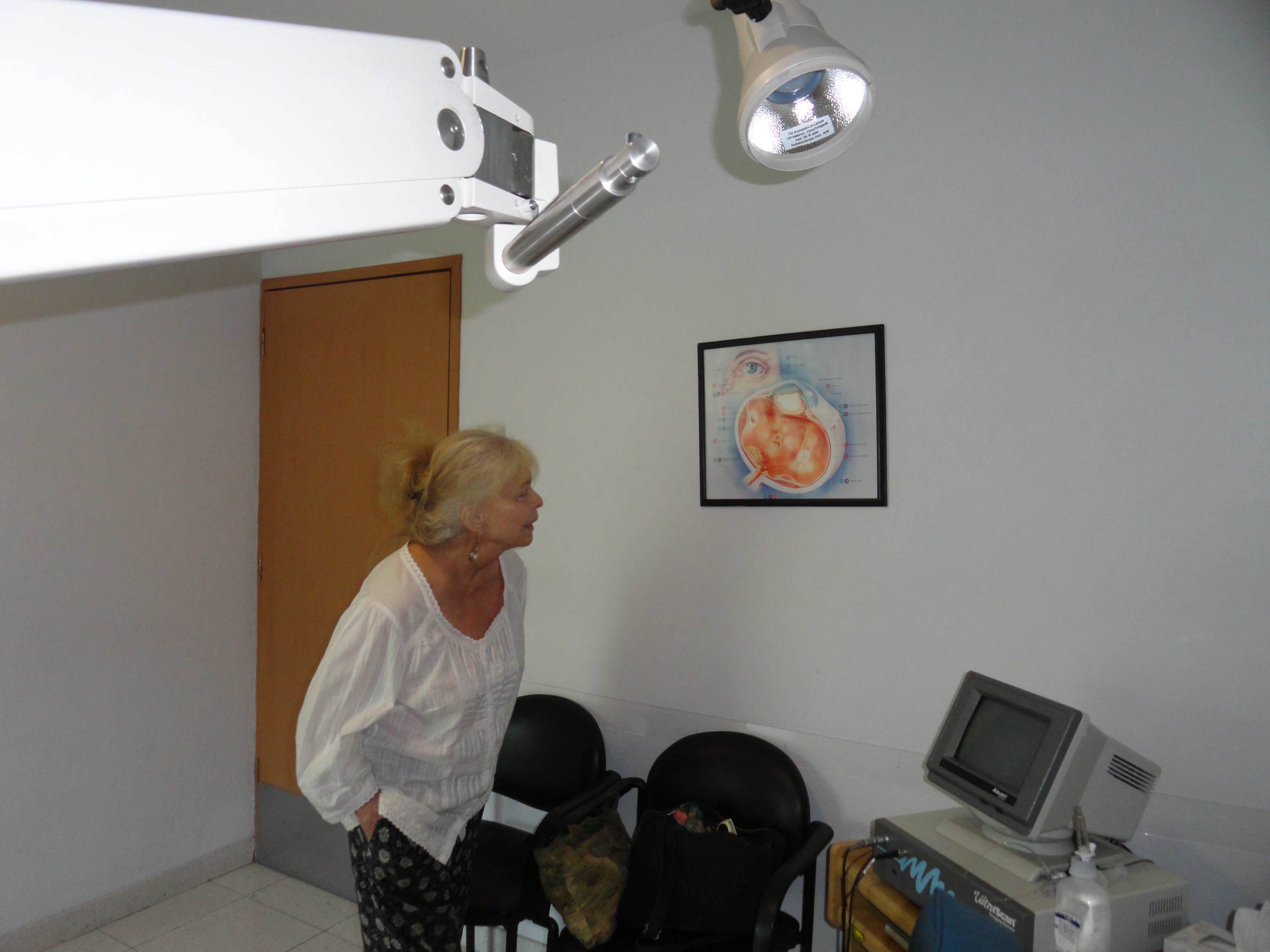
As we sat in the waiting room waiting (of course) for my eyes to fully dilate so the dr could do his tests, Gloria asked what the red dot was on my blouse. I hadn't noticed it, but the nurse said, "Oh we put that on her to show she'd been dilated!"  Two hours later, I was still waiting for the dot to turn green so I'd know my eyes had returned to normal!!!!

As we sat in the waiting room waiting (of course) for my eyes to fully dilate so the dr could do his tests, Gloria asked what the red dot was on my blouse. I hadn’t noticed it, but the nurse said, “Oh we put that on her to show she’d been dilated!” Two hours later, I was still waiting for the dot to turn green so I’d know my eyes had returned to normal!!!!

Red Dot Syndrome

Red Dot Syndrome

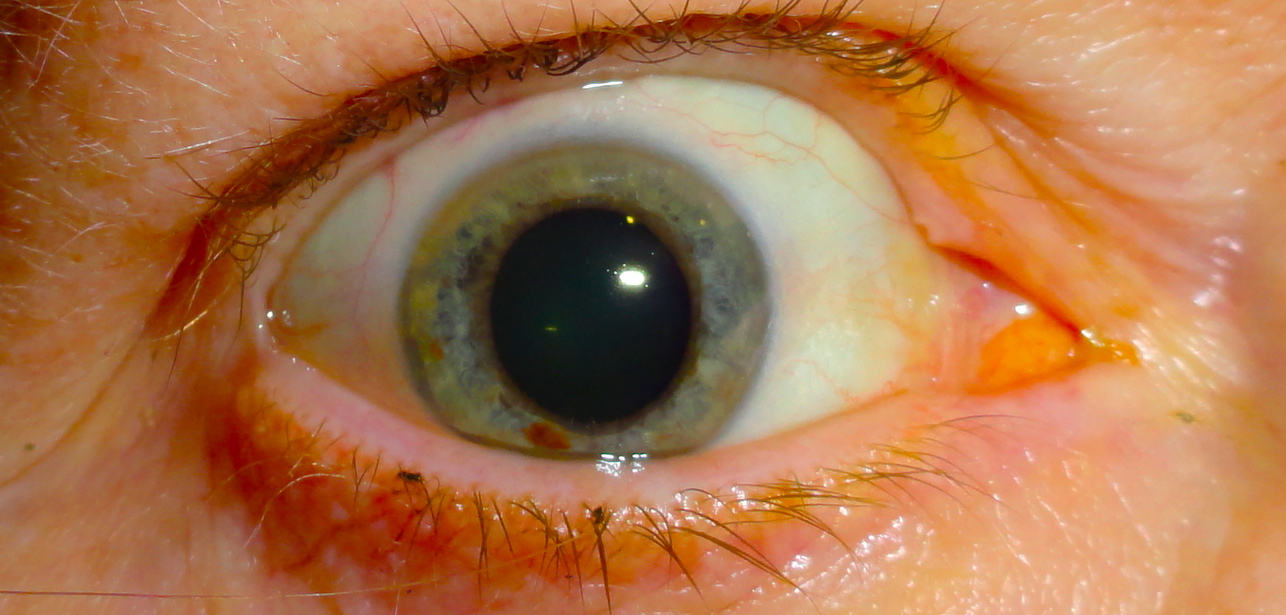
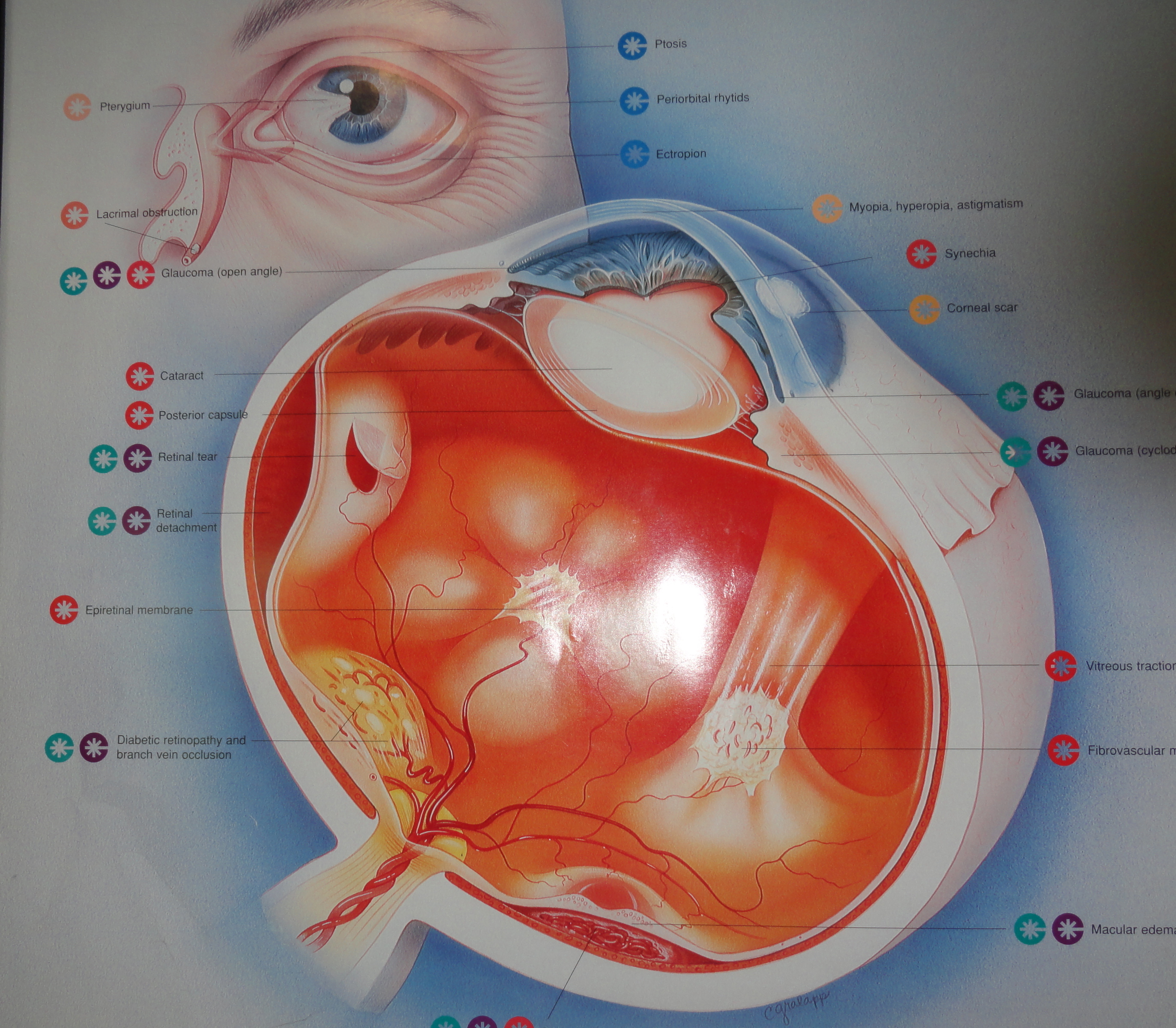
Artist's rendering of my retinal disfunction.

Artist’s rendering of my retinal disfunction.

Gloria, contemplating my fate.

Gloria, contemplating my fate.

Retina specialist humor.

Retina specialist humor.

An undashing pirate wench

An undashing pirate wench

My reward!!! Gloria got to share.

My reward!!! Gloria got to share.

Time Temporal (Final Day––Day 30––Of NaPoWriMo)

The prompt on this last day of National Poetry Month is to find a shortish poem that you like, and rewrite each line, replacing each word (or as many words as you can) with words that mean the opposite. I chose Sonnet 18 by Shakespeare.

Time Temporal

by Judy Dykstra-Brown

Shall I contrast thee to a winter’s night?
Thou art less lovely and more tempestuous.
No wind disturbs November’s empty stalks,
Oe’r which the winter hath too long a power.
Sometimes the too-cold moon lies sheathed in clouds.
And rarely does its pitted face shine forth.
Yet light from dark may rise. We’re proof of that,
Spurred on by fate or providence’s  plan.
But thy short winter soon shall pass away,
Restore to thee the homeliness of death.
Nor shall that birth that brought you forth to light
Still claim thee when time curtains you with night.
As men lose breath and eyes  give up their sight,
So dies this poem, and you echo its plight.

Sonnet 18

by William Shakespeare

Shall I compare thee to a summer’s day?
Thou art more lovely and more temperate.
Rough winds do shake the darling buds of May,
And summer’s lease hath all too short a date.
Sometime too hot the eye of heaven shines,
And often is his gold complexion dimmed;
And every fair from fair sometime declines,
By chance, or nature’s changing course, untrimmed;
But thy eternal summer shall not fade,
Nor lose possession of that fair thou ow’st,
Nor shall death brag thou wand’rest in his shade,
When in eternal lines to Time thou grow’st.
So long as men can breathe, or eyes can see,
So long lives this, and this gives life to thee.