Tag Archives: childhood memories

“One Day” for Weekly Prompts 15


One day, Yolanda’s little girl Yoli was here and I dragged out all my old 9-inch dolls––precursors to Barbie.  Jill, Jan, Jeff and Cissette. (Although I couldn’t find Jeff.  Evidently they had a separation.) Yoli dressed them all wrong and past midnight a few nights later, I found myself seated in front of my sewing table, where I’d set Yoli up with the dolls and my Jill and Jan closet and the box of clothes she’d neglected to put away.  After choosing the “right’ clothes for each and dressing her, I hung all the other clothes neatly in the closet, replaced their detached doors, and posed them for best effect.  By then it was about 1:30 a.m. and I closed down the play date with myself and went to bed.  The next day, they had chosen to assume the same position I left them in. They’ve been there for a few weeks, but I have a party tonight and decided it was time for them to go back into seclusion in my art studio.  Makes me kind of sad, though


Weekly Prompts The One Day Prompt (15 )

South Dakota Gumbo, for Flashback Friday

When Fandango published a story about glorious mud for  Flashback Friday, I commented that I had a story of mud, but unfortunately I had not published it on this exact day in an earlier year as the prompt directed,  and so blogged  another story published on July 18, 2028.  Fandango wrote back and told me to publish it anyway, so here it is.  See, Fandango? I always follow directions.

South Dakota Gumbo

South Dakota Gumbo

When the rains came in hot summer,  wheat farmers cursed their harvest luck, for grain sodden by rain just days before cutting was not a good thing; but we children, freed from the worry of our own maintenance (not to mention taxes, next year’s seed fees and the long caravans of combines already making their slow crawl from Kansas in our direction) ran into the streets to glory in it.

We were children of the dry prairie who swam in rivers once or twice a year at church picnics or school picnics and otherwise would swing in playground swings, wedging our heels in the dry dust to push us higher. Snow was the form of precipitation we were most accustomed to–waddling as we tried to execute the Xs and Os of Fox and Geese bundled into two pairs of socks and rubber boots snapped tighter at the top around our thick padded snowsuits, our identities almost obscured under hoods and scarves tied bandit-like over our lower faces.

But in hot July, we streamed unfettered out into the rain.  Bare-footed, bare-legged, we raised naked arms up to greet  rivers pouring down like a waterfall from the sky.  Rain soaked into the gravel of the small prairie town streets, down to the rich black gumbo that filtered out to be washed down the gutters and through the culverts under roads, rushing with such force that it rose back into the air in a liquid rainbow with pressure enough to wash the black from beneath our toes.

We lay under this rainbow as it arced over us, stood at its end like pots of gold ourselves, made more valuable by this precipitation that precipitated in us schemes of trumpet vine boats with soda straw and leaf sails, races and boat near-fatalities as they wedged in too-low culvert underpasses.  Boats “disappeared” for minutes finally gushed out sideways on the other side of the road to rejoin the race down to its finale at that point beyond which we could not follow: Highway 16–that major two-lane route east to west and the southernmost boundary of our free-roaming playground of the entire town.

Forbidden to venture onto this one danger in our otherwise carefree lives, we imagined our boats plummeting out on the other side, arcing high in the plume of water as it dropped to the lower field below the highway.  It must have been a graveyard of vine pod boats, stripped of sails or lying sideways, pinned by them.  We imagined mind soldiers crawling out of them and ascending from the barrow pits along the road to venture back to us through the dangers of the wheels of trucks and cars.  Hiding out in mid-track and on the yellow lines, running with great bursts of speed before the next car came, our imaginary heroes made their ways back to our minds where tomorrow they would play cowboys or supermen or bandits or thieves.

But we were also our own heroes.  Thick black South Dakota gumbo squished between our toes as we waded down ditches in water mid-calf.  Kicking and wiggling, splashing, we craved more immersion in this all-too-rare miracle of summer rain.  We sat down, working our way down ditch rivers on our bottoms, our progress unimpeded by rocks.  We lived on the stoneless western side of the Missouri River, sixty miles away. The glacier somehow having been contained to the eastern side of the river, the western side of the state was relatively free of stones–which made for excellent farm land, easy on the plow.

Gravel, however, was a dear commodity.  Fortunes had been made when veins of it were found–a crop more valuable than wheat or corn or oats or alfalfa. The college educations of
my sisters and me we were probably paid for by the discovery of a vast supply of it on my father’s land and the fact that its discovery coincided with the decision to build first Highway 16 and then Interstate 90.  Trucks of that gravel were hauled  to build first the old road and then  the new Interstate that, built further south of town, would remove some of the dangers of Highway 16, which would be transformed into just a local road–the only paved one in town except for the much older former highway that had cut through the town three blocks to the north.

So it was that future generations of children, perhaps, could follow their dreams to their end.  Find their shattered boats.  Carry their shipwrecked heroes back home with them.  Which perhaps led to less hardy heroes with fewer tests or children who divided themselves from rain, sitting on couches watching television as the rain merely rivered their windows and puddled under the cracks of front doors, trying to get to them and failing.

But in those years before television and interstates and all the things that would have kept us from rain and adventures fueled only by our our imaginations, oh, the richness of gumbo between our toes and the fast rushing wet adventure of rain!

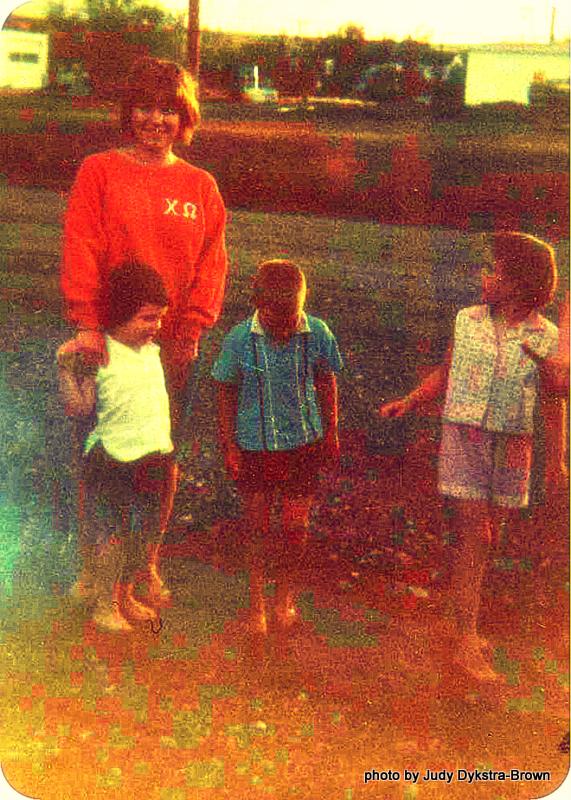
Writer’s note:  I know my sister Patti is going to read this and cry, and so I want to present you with this mental picture of her, college age, Levi cuffs rolled up above her knees, surrounded by five-year-old neighbor kids, enjoying her last big adventure out into the ditches of Murdo, South Dakota, during a July rain.

But wait!  A mere two hours of digging and another hour of editing has produced this proof of my former statement, so to augment your mental image, here is the real one:
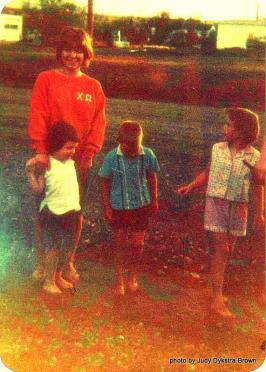
Patty in mud 001-001

Not quite the gusher depicted in the childhood vignette, but nonetheless, Patti’s final puddle adventure. She had taken my visiting niece out. The next day the neighborhood kids rang our doorbell and asked my mom if Patti could come back outside to play! Ha.

The Blue of a Heart before Forgetting, For dVerse poets

The Blue of a Heart before Forgetting

First thing in the morning, when I’m fresh from dreams,
your memory cuts so sharply through the day’s beginning that I wake.
Once, in that long dream of childhood­­, days were not over half so soon.
Early in September, below the slippery slide,
the steady beat of dribbling basketballs.
So many acts of bravery lost—
“Annie I Over” and “New Orleans.”
Way back in our salad years,
it was so very easy to trap wonder in a box.
The dominoes going head to toe.
All those nights of passion, those years spent in desire.
More in the air than possibility.
You would think there would be some remnant left.

Enough, I say!
It was the beginning of the end.
I’m counting steps from one to ten across my heart, then back again.
What you blindly get into in youth can be the end of you.
I must ask, is it me alone—
this bald horizon line, the teeth of far-off cliffs?
The tide comes in each morning.
That isn’t my heart beating with wild abandon.
I scream, I cry, I moan, I curse.
The rain is falling drop on drop.
All day long, the rain comes down,
writing this poem with water on cobblestones.

The moon like an animal hovers over and around our houses.
My life catches in its static house.
I am an ally of the truths that lie the whole world over,
though some of them are ill-begotten.
Since it is true, I must report.
Every day since birth, I have been emptying the cup.
My past drifts away from me.
I seem to fit my life now. I’m cozy in my skin.
Is it gain or loss to feel contentment?
A woman should be shrouded, silent, pregnant, dumb.
You crane your necks and stand and gawk.
Clap hands, you say, Clap hands to the music.
The act of creation is the greatest art.


For dVerse Poets, we were to make a poem from the first lines of one poem we published each month in 2023.  Finding it almost impossible to sort through over a thousand posts made in the past year, I instead went through my file where some poems from past years are filed alphabetically. Selecting some poems from poem files A to D, I recorded first lines that seemed  to be possible lines in a poetic compilation, then set about reordering them.  This is the poem I came up with.  The lines are exactly as they were in the 40 poems I borrowed the first lines from. The only changes made concerned punctuation and capital letters. The title is also from a first line.

To read other poems written to this prompt, go HERE.

Memoirs of a Frequent Flyer, May 5, 2023

Memoirs of a Frequent Flier

It was in the spring of 1953 when I first realized that I could fly. It had been coming on by degrees—first in dreams, where I would hold my arms straight out, crucifixion style, and then pump them straight up and down until I rose from the ground to float through the air, feet hanging straight down below me, swimming through the air propelled by those pumping arms.

In the dreams, no one ever noticed me.  Not the other kids playing “New Orleans” in my yard below me, not my dad out mowing the grass or my mom hanging clothes on the line. Birds flew by in their usual manner without changing their course, whizzing by so close to my ears that I became convinced that I was invisible to all nature–man and beast.

I was never stung by mosquitos when I was in flying mode, and for some reason, even during that long summer two years later when I was eight years old and flying every day, it never rained when I was flying. A few times the first raindrop fell just as my feet came into contact with the ground and I had to shift my mind to remember how to move my legs to propel myself and avoid getting soaked to the skin by one of those July rainstorms so dreaded by farmers trying to get their  summer wheat crop combined before the heavy rain, or even worse, hail.

Hail! What would happen if it were to hail while I was flying? Would I be able to soar above the hail—to watch it fall to the earth below me–a wall of white water stones creating themselves just inches below my toes and falling straight down away from me? Could I see them forming? Turning to ice where seconds before there had been nothing, each one of millions a little miracle in itself?

I don’t remember how old I was when I stopped flying. All I can remember is one day remembering that I used to fly, long before, and wondering if the whole experience of that long summer when I was eight and less frequently in the years afterwards were just memories stitched together from dreams. Like so many other things, I can remember clearly when they began but have no memory of when they stopped. Perhaps they haven’t. Perhaps only the memory of this talent unique to me has faded, daily, as soon as my feet touch earth.

But I wonder, in these days of drones so easily and cheaply purchased on the internet, if flight such as mine has become an impossibility. With more people looking up at the sky, what is my likelihood of avoiding being noticed and if I were noticed, what effect would it have on my life? All the news agencies would call. Then Oprah and perhaps even the president. Perhaps Donald Trump would call wanting to make me into a reality show. Perhaps I’d be encouraged to launch a blog penned from above. How high up does Wi-Fi go, I wonder, and would I have to attach a Wi-Fi antenna to a beanie on my head and post the blog orally as both hands would be necessary for my flight, to prevent my plummeting to earth?

No, better that this miracle of flight be left behind with other marks of my adolescence: pimples and wet dreams and all those insecurities of coming of age. Perhaps they were what prompted my need to raise myself above it all. Now that I am well past being fully matured and in fact have embarked on that course that will eventually result in my sinking back into that earth I once rose above, I can make do with pleasures of that earth—chocolate and fresh ripe figs and a 5 o’clock Martini enough to raise me above the norm. And that truth that once I was unique is enough to assure that I still am—here in my Barclay Lounger with my New Yorker Magazine, my feet up on the step stool and commands that I can give through air simply by a push of the finger via remote control. Checking in to Oprah to see who she has found to fill my place this week. Keeping my secret. Knowing how thrilled she would have been. Rating my potential story against theirs. And in my own mind, I know that I would rise above them all.

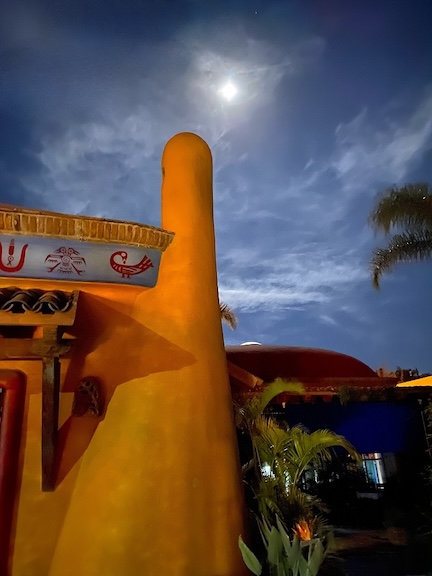
For the Cosmic Photo Challenge: Out in the Country

Spinning Tales

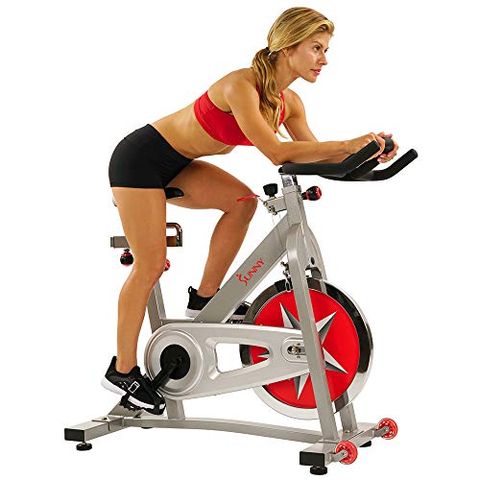
When I talkied about my laptop computers not lasting much longer than five years, Martha Kennedy commented “Same here. All one (of mine) does is play YouTube I project on my TV monitor for riding the Bike to Nowhere.”  When I commented that I’d like to steal, with attribution, that phrase “Bike to Nowhere” and write a poem about it, she generously agreed, so here it is:

Spinning Tales

As I go spinning on the bike to nowhere,
imagination knows no bounds.
Earlier adventures catch up to me,
jump on the handlebars and  hitch a ride.

Riding the highway shoulders
north and south and east—
gravel corridors with their destinations
too far away to ever be reached.

Lunch in a brown paper bag,
top twisted in the bike’s basket.
My tan Hiawatha,
my best friend’s blue Schwinn.

Passed up by boys
with fishing rods
fastened to rear fenders,
somewhere to go revealed
by their hurry to get there.

Our kick stands
useless i
n the soft dirt,
our bikes lie toppled over
beside us.

As we lie flat-backed in the grass
beside the North Dam,
we hear them cast their lines, again and again,
into the fruitless water.

My ham salad, her peanut butter,
potato chips in a twist-tie baggie—
all I remember of earlier rides
almost lost to memory.


Sue Bee Honey: Wordle 538, Jan 30, 2022

Sue Bee Honey

Once a year, their trucks would leave trails through our fields of sweet clover and my father returned from the fields with  combs of honey still in their wooden frames, dripping rich streams that blackened the dust of  the sidewalk between the back driveway and the porch, where he propped them up against the porch railing to drain into huge clay bowls.

Sue Bee Honey, rich and golden and speckled with tiny corpses of the bees who made it. Those two purloined combs were the price he exacted for allowing them to put their hives onto our land. I swear I could smell that honey on the wind long before he brought it back to share with the family—our year’s supply that we would filter through screens to remove broken bits of wax and bee bodies and pour into bottles to line a foot-long space on the narrow shelves of the pantry.

I remember breaking off a piece of the broken comb to chew like sugared gum—sweet July memories of summer as well as later memories of the silken feel of that honey trailed onto hot buttered corn muffins in the morning. It solved my winter hunger for sweet and fueled me up for a morning of  books and chalkboards and sharpened pencils on blue-lined rough yellow paper.


The prompt words  for  The Sunday Whirl, Wordle 538 are: broken silk dust leaving truck family sign hunger wind books honey and black. Two of the images are by  Alisa Reutova and Mariana Ibanez  on Unsplash.

Liquid Yolk


Liquid Yolk

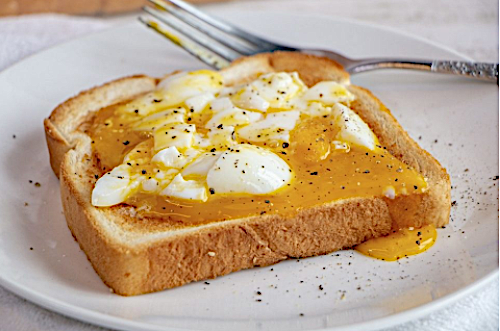
He holds the hot egg in one hand, turning it as he taps it gently with the knife edge in a perfect horizontal line, and lifts the top off like a skull cap to reveal the molten golden lava of the half-congealed yolk. It spills out in a river as he moves his spoon around the shell to remove the white in one solid unblemished half-oval—shining, still steaming from the boiling water it has so recently been surrounded by. 

The egg rests on the square of toast and is soon joined by its equally perfect other half, mashed
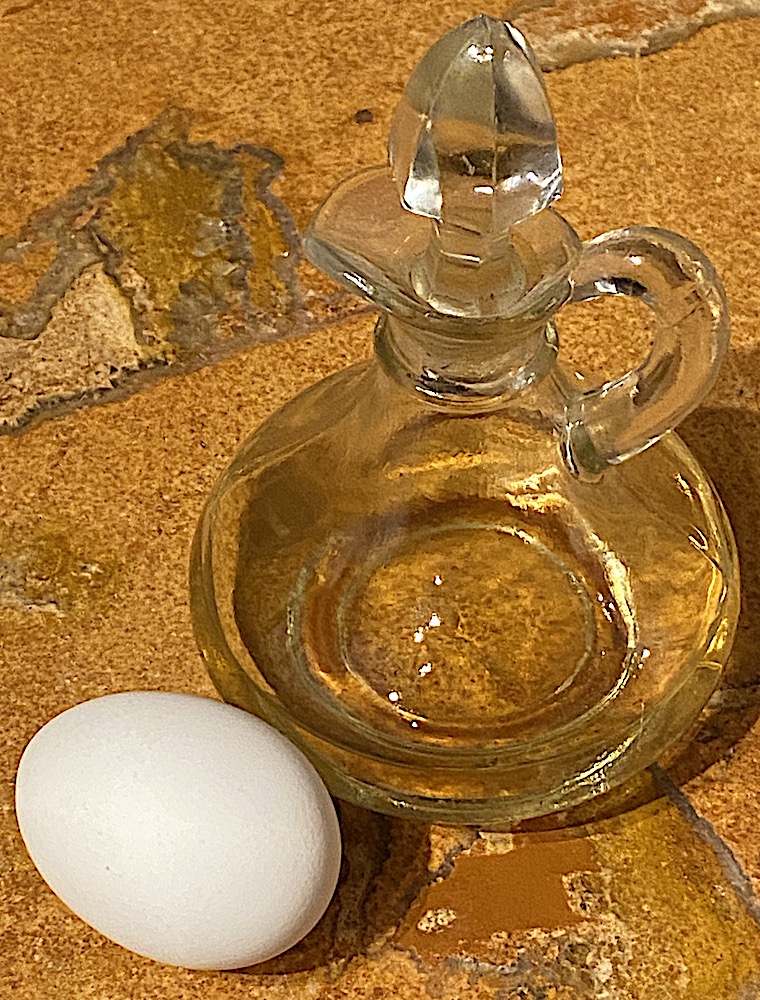
onto the toast to be lightly sprinkled with salt, dusted with black pepper. Then, the final perfect ingredient to this gracefully executed breakfast favorite—one delicate sprinkle of cider vinegar from the tiny stoppered glass vinegar cruet and the neat slicing with fork and knife, the lifting to lips, the dabbing of yolk from the plate with another triangle lifted  from the toast plate.

The final smacking of lips and the long satisfied sigh as he places his knife and fork across his empty plate. My father, a large man with work-hardened hands, is like an artisan in his neat and graceful maneuvering of the utensils, his napkin blotting any errant egg from his lips before raising, at last, the coffee cup to his lips to wash it all down.

Soft boiled eggs, toast and coffee. Bright yellow, white and brown are the colors of the morning as the school bell rings and I am off in a mad dash to slide into my seat in my schoolroom across the street before its last peal.  This memory of my father eating soft boiled eggs was early morning poetry that I have not forgotten half a century and more later. It is the little things, the small beauties, that stick like liquid yolk to our memories.


For dVerse Poets prompt: food

My father put vinegar on everything from cabbage to eggs. I loved to watch him eat, for it was at the table that he was transformed from  a hard-working farmer-rancher with wheat in his pants cuffs to a cultured gentleman with impeccable table manners. In this prose poem I try to replicate my father’s artistry in disassembling a soft-boiled egg. The cruet above is one of the few objects I claimed when I went to pack up our house after my father’s death. I still use it for cider vinegar, and think of my dad every time I open the cupboard and see it on the shelf.

Total Recall


Total Recall

The world of our grandmother has been subsumed
by modern conventions but is exhumed
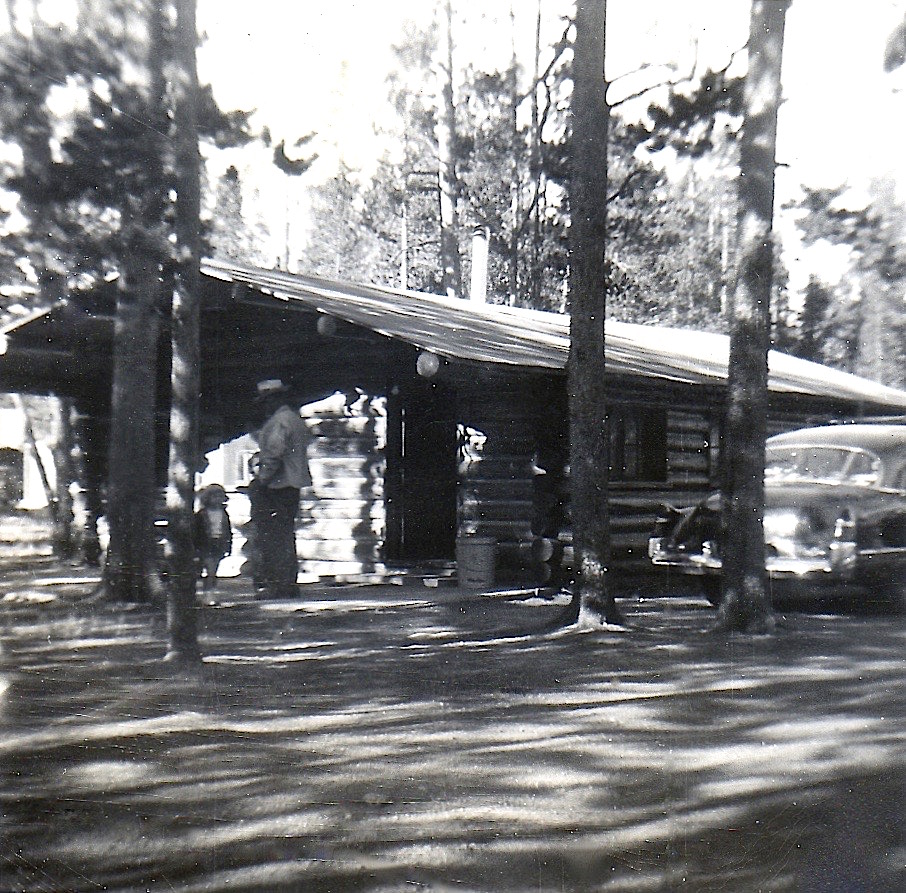
when remembering the cabin where all our relations
 joined us each year for summer vacations.

Ping-pong and campfires and dunks in the lake.
Muddy dirt beaches on which we would bake
and turn brown in the sun, turning over in turns
to inspect our tan lines and moderate burns.

S’mores over campfires and mulligan stew
cooked on the coals and trips to the loo
making our way in the moonlight at night,
battling mosquitos and all things that bite.

Slapping our necks and our arms and our knees
at chiggers and ticks and horseflies and fleas.
Such glorious penance to pay for the fun
of cousins and swimming holes, horses and sun.

Vacations contemporary just don’t equal
those trips of our youth that have no modern sequel.
They live in our memories where we remember
Pleasures of July we recall in December.


Prompt words today are ping-pong, contemporary, cabin, subsume and grandmother.
Again, this is fiction. The camping memories were actually from church camp in the Black Hills
where I went every year. Loved it.

Noises in the Night

Noises in the Night

She was six years old and alone in a room that had noises in the wall. She would curl up into a tight little ball under the covers and concentrate on the friendly sounds––the tapping of the pendulum of the clock which hung on the wall beside her bed and the water gurgling through the heating pipes. The muffled voices of her parents down below in the living room. She liked these noises. They made her think that she wasn’t alone.

But she could hear other sounds of the summer night–– the sudden loud popping noise that she thought was a gun until daddy told her that it was only houses settling, or the sound of the elm tree outside her window scraping against the brick on the chimney or the wind as it whined through her screens, making the venetian blinds scrape against their wooden window frames. She could hear things in the walls, too––noises that sounded like people walking and high shrieking noises that daddy said were just mice and not robbers.

The sheet felt muggy on her bare legs and she kicked it off and rolled over. She lay on her stomach and slipped her hand beneath the pillow, sliding it back-and-forth against the trapped coolness of the percale. She glanced at the noisy pendulum clock Santa had brought her for Christmas to help her learn to tell the time. It was her first real clock and it was in the shape of a Shmoo.  She could just make out where its hands were from the light of the streetlamp shining through her window. It wasn’t very late.

She flipped over and slid her legs over the side of the bed, feeling the slight stickiness of the linoleum on her feet as she walked to the window. The air had cooled a bit and it had started to rain. A slight breeze tickled the hairs on her arm and sifted the rain onto her nose as she pressed it close to the screen to smell the mustiness of the wet night grass.

She wondered when her older sisters would get home and come up to bed. It was lonely in a room all alone in the upstairs of a house that had robbers in the walls.


For MMM’s Sunday Writing Prompt

Loam

Loam

My roots are in the soil of the place I once called home
and still I feel a part of that South Dakota loam.
It had rich humus that gave life to all that seeded me,
clay to hold my memories and sand to set me free.

Lest I give the impression that they’re gone without a trace,
a myriad of memories lie rooted in that place.
They flit like prairie moths through everything I do,
then sink back down into my heart like rich Dakota goo.


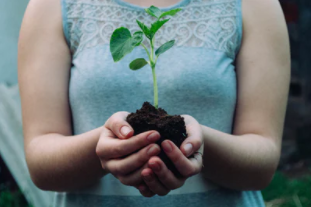
Prompts for today are impression, myriad, flit and home. (Loam is a fertile soil of clay and sand containing humus.) Photo by Nikola Jovanovic on Unsplash. Used with permission.