Tag Archives: Ethiopia

Hoarding Pennies, For The Sunday Whirl Wordle (Wordless?) 734

The rain lies hidden in the clouds, ready to rinse from this day my guilt for all of those words I imagined I would finally foster––drawing them out from that thick thicket of memory where they have hung for fifty years, waiting to explode. Sorted  one-by-one into piles, each lies like a single undetonated bomb, barely ticking after all these years, ready for me to sink into them to stage that final act by which they will earn their freedom. I am a criminal of omission––that fake author of the lessons they might teach. Fearing their truth or perhaps their half-truths, I hoard them  now like worthless pennies in their stacks. Too late, too late I fear, to spend them.

Below is a photo of the manuscript I started 50 years ago, at its present stage. Behind are piled the research, letters, notes and timelines I have assembled to attempt to bring the manuscript up to the present. I have come to an isolated spot in Quintana Roo for a month to do so, but I fear the daunting deed might go undone! Laziness or an inability to face the truths and to deal with them again, after all these years? Three weeks to go. Time will tell.

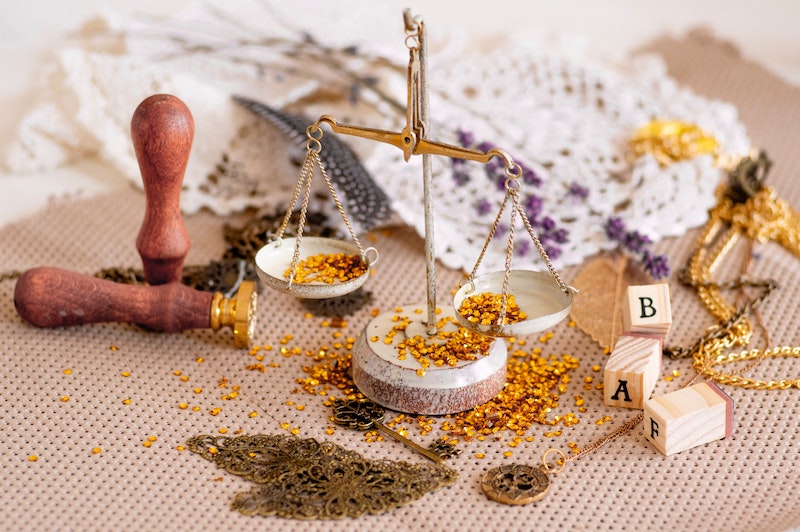
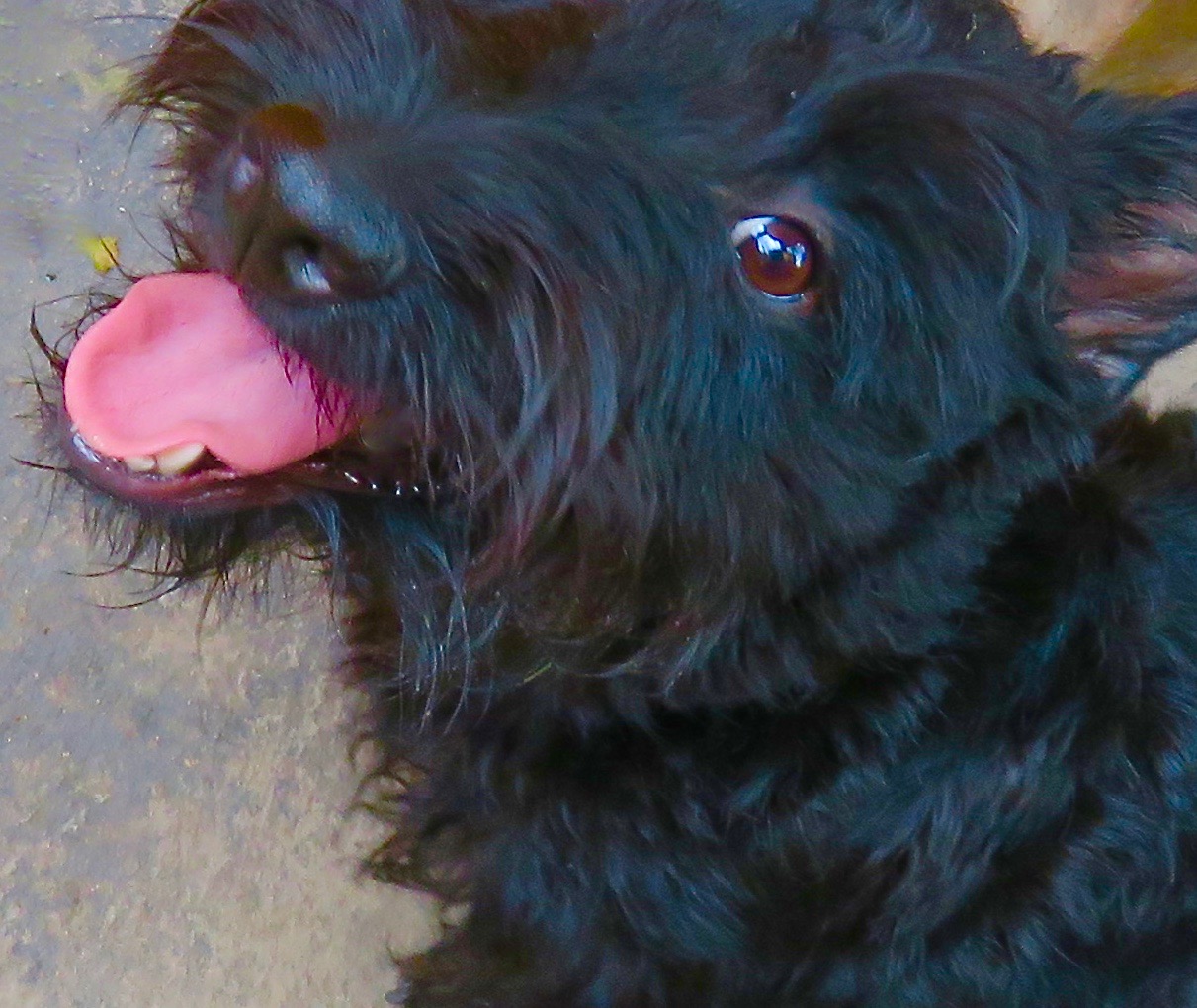
For The Sunday Whirl Wordle 734, the  prompts are: rinse days still thicket bomb fake criminal imagine foster lies sky sink First two images done aided by AI, third photo my own.

Leaves in a Dry Wind: NaPoWriMo 2024, Day 20

 Leaves in a Dry Wind

I was in Ethiopia in the drought years of 1973 and 74. I saw the sacks of grain for sale in the market in Addis Ababa that said, “Gift of the people of the United States of America.” The grain was being sold and the money pocketed by government ministers. One month the teachers in my school (Medehane Alem T’mhrtebet) elected to forego our salaries and use the money to buy food and hire trucks to take it to the drought areas. I was on the committee set up to deal with this transfer, but the government said it could not allow private citizens (or expats such as myself) to handle the money or the distribution. What actually happened was that the government did hold back the money, but they merely used it to pay our next month’s salary. Not a penny of that money was ever used for drought relief.

Many people at that time were not even aware of the drought because the starving people were not allowed to migrate into the cities but were held back by military. We were only aware because we traveled out in the country via bus. Dead cattle dotted the countryside and in places people formed human chains across the road to stop the buses. This was in Wollo Province, enroute from Addis to Dessie. We threw all the food and money we had out of the windows of the bus, but then traveled on. There didn’t seem to be anything being done at that time nor any means for anyone to deal with the problem.

There was one relief agency and I can’t remember whether it was Swiss or Swedish, where the aid was brought to Africa and distributed by the country it was being sent from. I had a friend who was employed by this organization and I traveled with him at one point. He told me that this was the only aid that was actually getting to the people and that no other country actually sent people to insure that the aid was being distributed to the people who needed it. This was a long time ago and my memory is spotty, but I am thinking that they were setting up schools that he was inspecting, but it may have been other agencies.

We traveled from Addis past Bahir Dar and Lake Tana (source of the Blue Nile) and Gondar, up to Asmara. This was through the Semian mountains, noted for shiftas (robbers) and we traveled by caravan with armed guards as actually I had earlier when I had come out of the Lalibela region and back into Addis. Other trips were to the Awash Valley and then later to Gambela, to camps where Sudanese refugee camps had formerly been set up. My friends were Ethiopian nurses there.

When we traveled to Harrar, it was because all of the schools in Addis had been closed down due to student demonstrations and strikes. They had started stoning buses. The rumors were that the buses were all owned by members of the royal family, but I don’t know if this was true. In spite of the fact that almost no students were still attending school, we teachers were told that so long as one student showed up for class that we needed to show up. On my last day of school, I was on a bus that was stoned. A large stone shattered the glass near the window where I was standing, as the bus was full. The next stone whistled past just grazing my ear. After that, the buses all stopped running and they closed down my school. We had been wanting to go to Harrar, so we traveled by train. The trains were totally full with people standing and sleeping in the aisles as well. At times we would see people standing by the side of the tracks with camels. Someone from the train would open one of the doors and throw huge sacks of smuggled goods out to these desert nomads who were contraband runners.

After a few days in Harrar, we rode the train back into Addis and as we rode into the city, we saw the students swarming over the tracks behind us. I think we were on the last train back into Addis. The revolution had been going on for some time but we were just seeing it as student protest. The military later took over the airport and the night of my birthday and good-bye celebration, (my sister and I were due to leave the next day to travel further in Africa and then to go back to the states to see my father who was very ill) the coup was staged. The military had used the students to start the revolution but in the coming years, most of the young people I knew were killed by one wave of revolutionaries after another. They had more or less been used by the military for their own purposes and my only friends who made it through that period alive were ones who came to the U.S. or Canada.

My boyfriend who was shot defending me the first day after the coup miraculously survived a bullet that went all the way through his body and out the other side. I stayed for another month until he was out of hospital, then came back to the United States and have never returned to Ethiopia. My boyfriend became involved in politics and two years later, he was warned to leave Ethiopia by yet another wave of revolutionaries espousing a different branch of communism. When he refused, he was assassinated in the road right outside the hospital where we had spent our last month together.

I blindly stumbled through this very sad and violent slice of Ethiopian history not fully understanding all that was going on. My efforts to write about it since have always been stopped by my realization that I really didn’t fully comprehend the magnitude of everything that was happening and probably still don’t. But, for sure, I realize that my experiences in no way equalled those of Ethiopian citizens caught within those circumstances. They could not just travel blithely through them as I did. And few of them lived to tell the story I am telling only sketchily, according to my own experience and probably faulty memory.

I was there for that lavish celebration staged for Haile Selassie’s birthday. When members of the royal family were arrested after the coup, they were put in the prison that was on the other side of the garden wall of my house near Mexico Square.

In my years in Ethiopia, I had seen Selassie riding around the countryside in the backseat of his Rolls Royce, sitting on a jumper seat to raise him up enough to see and be seen through the windows, his Chihuahuas running back and forth in the back window. Everyone along the roads bowed as he passed and Andy tried to pull me down into a bow. “It is for respect for our emperor,” he told me, but I told him I refused to bow to this man who lived in a palace and rode through his country in a Rolls and walked through the marketplace dispensing birr notes to the people when other subjects were starving. If he saw us, and if he saw the little Volkswagen bug parked at the side of the road, little did he know that one day he would be driven away in a car exactly like it.  History can be chilling and its stories full of ironies that, known by few, blow away like leaves in the winds of the next event and the next and the next.

For NaPoWriMo day 20, we are to relate an historical event.

Throwback Thursday, Bati Market, Ethiopia, 1973

Click on photos to enlarge

The year was 1973. I traveled through this area where highland farmers met and traded with lowland caravans who traded camel dung as fuel and other goods for food grown by the farmers. I ended up living in Ethiopia for a year and a half, mainly in Addis Ababa.


For Throwback Thursday–a glimpse into the past.

Poor Sport


Poor Sport

From the Rockies to the Tetons, I’ve avoided climbing rocks.
They crumble as I climb them and wind up in my socks.
I do not like their labyrinths that make you find a way
to snake up on their surface without a game of play.
Don’t expect me to climb mountains. Don’t even think to ask.
I’ll sit here in the shade and watch and sip upon my flask!


Prompts for today are labyrinth, snake, flask and Tetons.

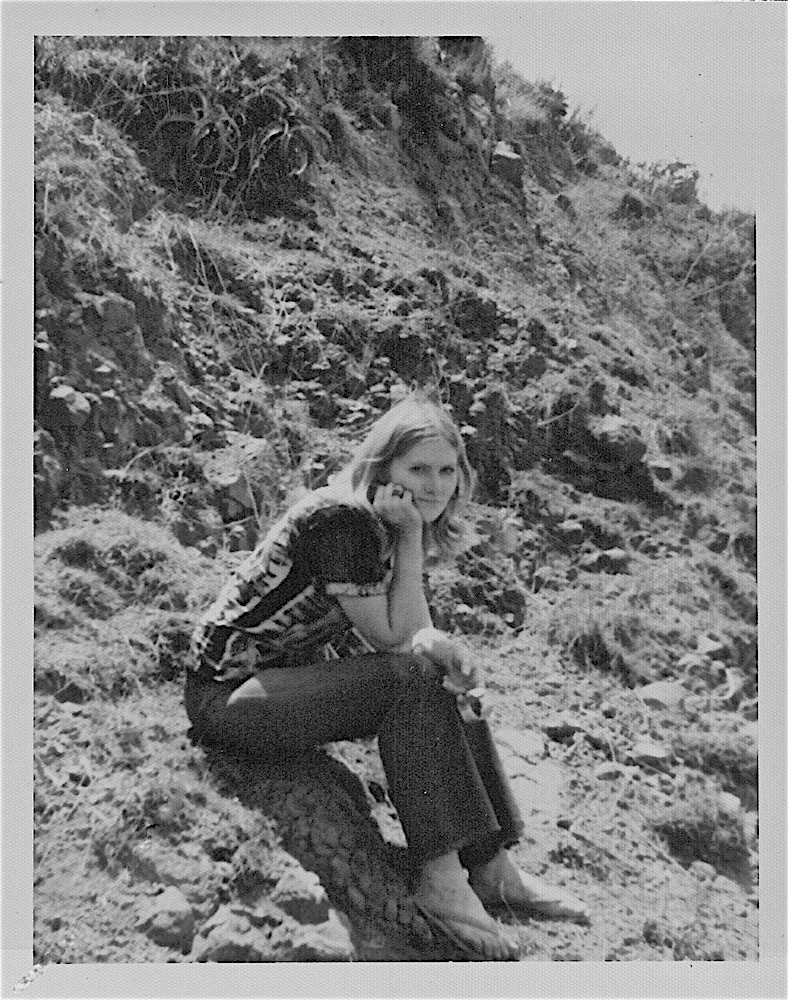
That’s me back in 1973. I didn’t climb mountains then, either. You can tell by the shoes. This was taken in Lalibela, Ethiopia, a very mountainous place. Didn’t make any difference. I flew in on a tiny plane  and  rode a mule up one or two. That’s as far as I went.

Wax and Gold


Wax and Gold

(This is the introduction to a book I have been trying to finish for years.
It is about what I experienced while  living and working in Ethiopia
during the fifteen months
leading up to the revolution.)

One of the aspects of the rich Ethiopian Tradition that has always been most interesting to me is that linguistic oddity of the Amharic language that has been described as wax and gold. It is an allusion to the lost-wax system of creating jewelry, wherein the brooch or ring or earring is first carved in wax, then surrounded by a plaster mold. Molten gold is then forced into the mold by a process involving centrifugal force. The gold melts the wax, which it displaces as the wax melts and then evaporates or flows out.

When a person versed in the Amharic language—a person such as a lay singer or a lawyer who depends upon the use of words as a profession—or a teacher or scholar or anyone who just loves words—when such a person speaks, it is often a statement of levels. The primary level is the utilitarian one, where he says what he means. He is hungry. He is given food. But for one in love, that simple statement “I am hungry” can have an additional meaning. On a symbolic level, it can mean that he wishes for the company of the one he loves, or for a kiss or for some other act that will slake this deeper hunger.

In these two examples, we have two of the levels of words. But there is yet a deeper level. This is the level at which words acquire the richness of gold. It is a subtler layer that dips into philosophy, allusion, an almost archetypal world where those meet who are cognizant of a world of deeper meaning that can be expressed by words. On this level, there is a more complicated comprehension of not only words, but also actions. How the action of one person may affect the whole. How words may express things beyond the justice of set laws. It is the place where minds play, but also, often, where they weep.

In the years that I’ve been writing many shorter pieces about Ethiopia and considering turning them into a book, I have considered many titles, but it is this title, Wax and Gold, that I keep coming back to. It most clearly represents the story of how the most precious events and memories of a lifetime may come from a time of extreme pressure or danger or threat. It is in times like these that we sometimes empty ourselves out and redefine ourselves and are jettisoned into a life much richer in significance than we ever might have imagined.

Of further significance is the suggestion of a hidden meaning beneath what seems to be, and certainly, when I journeyed to Ethiopia in my twenties, I was totally oblivious to what lay below the surface. In the forty -eight years since I left Ethiopia, I have told a few stories about my life there. How I came to be there. How I came to stay for a year and a half when I’d meant to be there for a few weeks at most. How it came to be a period that has influenced the rest of my life.

Many have asked why I have written six other books and thousands of poems, stories and essays when this is the story that I should be telling. I always tell them that it is because I still haven’t made sense of the story. Still have not, perhaps, seen the truth of it. Perhaps it is also true that I’ve been running from the story and from what may have been my part in bringing about the death of at least one whom I have held dearest in my life.

Only recently, when four separate people have asked me, explicitly, to please finish my story, have I begun to see its telling in another light. I have often said I don’t know what I think or believe until I write or say it. Perhaps this is also true of what happened during those years of my life when I ran away from home to try to find a world where I felt comfortable, or if not comfortable, at least acceptable. I wanted to use those parts of myself that no one in my experience had ever seemed to either understand or find valuable. Perhaps I was looking for my own tribe, but to me it seemed as though I was looking for adventure and experiences and a strangeness I had sought during my entire life of living in places where strangeness seemed neither to reside nor to be tolerated. In retrospect, I realize that I was wax , waiting to be transformed into gold.

For RDP: Waxy
Image thanks to Elena Mozhvilo on Unsplash.

I’ve excerpted a number of other chapters from the book on this blog. If you want to read it and can’t find them, I’ll establish links here. Just ask.

My answers to Nosy Questions #2

  1. Tell us how you met your partner. Please be specific in telling your tale. He was reading his poetry at a coffee shop in Santa Monica, California. I was 38 years old and had never been married but when I saw him, I immediately recognized him as the man I’d been waiting for. I didn’t go up to the stage afterwards as there was a crush of other women there wanting to talk to him. I was going to the University of Iowa that summer for their writing program, but when I got there, I thought, “What am I doing here when the man I’m supposed to marry is back in CA?” So I walked out of the dean’s office without registering  and went back to CA. A few months later, he came to one of my poetry readings (I still hadn’t met him at this point) and I saw him in the audience and changed the poem I was going to read to read one that dealt with my breakup with my boyfriend so he’d know I was available. It worked. He came right up to me after the reading and a year later we were married. It was my first marriage and his third. I had no children. He’d had 10!!! Four were still small and I helped raise them for the 15 years before his death.
  2. What is your most romantic experience, again with details? I fell in love with a man in a very remote spot in Africa. After about a week, we decided it was not going to work and I left to work my way northwards and to eventually make it to England, where I would find work. Events, however, made it necessary for me to stay on and not to immediately leave for Khartoum, where I was to meet a travel companion. In a few weeks, the matter that had detained me taken care of, I was ready to leave on a plane the next day when a letter arrived for me in poste restante. It was from my lover. In it he said it was the biggest mistake of his life sending me away and that I should come back and live with him until we were driven out by the rainy season and that then we would travel to all the places we had discussed and eventually get married. There were no phones in the remote area where he worked and so I had no way to reach him, but I cancelled my flight to Khartoum and got a flight on a small plane to fly to where he was. When I climbed down the stairs of the plane, there he was… his arms full of flowers. Later, when I asked his friend how it was that he knew I was coming, he said, “Judy, he met the plane with his arms full of flowers every day for a week. The Seven Olives hotel gave us permission to cut flowers from their garden.”  That night we went to dinner at the Seven Olives, the only small hotel in town. To get to the dining room, we had to walk through their gardens. They were totally devoid of flowers!”
  3. What is the most extravagant purchase you’ve ever made, and why did you buy it? A Jaguar SJ6. I’d met a man, a poet, at the Santa Barbara Poetry Conference. He was a man who got along on a lot of charm and very little money, which did not both me, but when he came down to visit me in Huntington Beach, he very quickly  wore out his welcome. He was getting grouchy and demanding, so one day we drove to Newport Beach and on the way stopped by the Jaguar agency to test drive a car just for the fun of it. This was supposed to be a lark. I’m sure he thought I was as down on my luck he was as I was staying in my friend’s guest room and, having run away from my life in Wyoming and come to the coast by train with one suitcase, I seemed to have very few worldly goods. But unbeknownst to him, I had just sold my house in Wyoming and had few expenses as my old friend’s estranged husband was paying for half her very low house payment and I was just splitting the other half with her, so when the salesman started negotiating, I bought the car, writing out a check for the full amount. My “friend’s” jaw dropped and his face was still frozen in a flabbergasted expression as we drove home in it. On the way home, I asked him when he was heading back to Santa Barbara. He left that night and I never saw him again but I surely did enjoy that car.
  4. What is your favorite swear word or expression, and when are you most likely to use it? “Asshole!” I’ve used it a lot since Trump came into office. Prior to that, I’d reserved it purely for rude drivers!!
  5. What is your favorite kind of pie? With or without ice cream? Chocolate pie with vanilla ice cream.
  6. While we’re on the subject, what is your favorite ice cream, and where did you last eat it? Pistachio Gelato. I last had a double dip at the Laguna Mall food court in Ajijc a few weeks ago.
  7.  Who is your most unique friend and why? (May be someone from the past.) My most unique friend is Forgottenman. He has the cleverest and quickest mind of anyone I’ve ever met. He’s quirky and loyal and corrects my apostrophe errors on my blog. And I love his bald head.
  8. What is your most irritating habit? My sister would say it is humming under my breath.
  9. Who was your favorite teacher and why? I’ve written about him HERE.
  10. Do you like being alone and if so, what would you probably be doing? Yes. I would be blogging or doing art or playing spider solitaire or in the pool, throwing balls for Morrie to fetch.
  11. What is the most outlandish thing you’ve ever done? Rented a WWII tank carrier to sail around the coast of Portuguese Timor through waters inhabited by Bugis pirates.I was young and stupid. you can read about it HERE.
  12. What superstition do you always follow? I never walk under ladders and if a black cat crosses my path when I’m driving, I turn around and go in the opposite direction for a block or so before going around the block and continuing on my way. I do not dislike black cats. I think they are beautiful and I would have one as a pet., just as I would climb a ladder. I just don’t walk under them or cross the path of a black cat. I also throw spilled salt over my left shoulder. Always.
  13. What famous person or animal have you met? Tell us about the meeting. HERE is my story about meeting John Wayne.


These are my answers to my own question Challenge, Nosy Questions.

Ta Da!!! Finished. Now you tell me your stories!!!!!

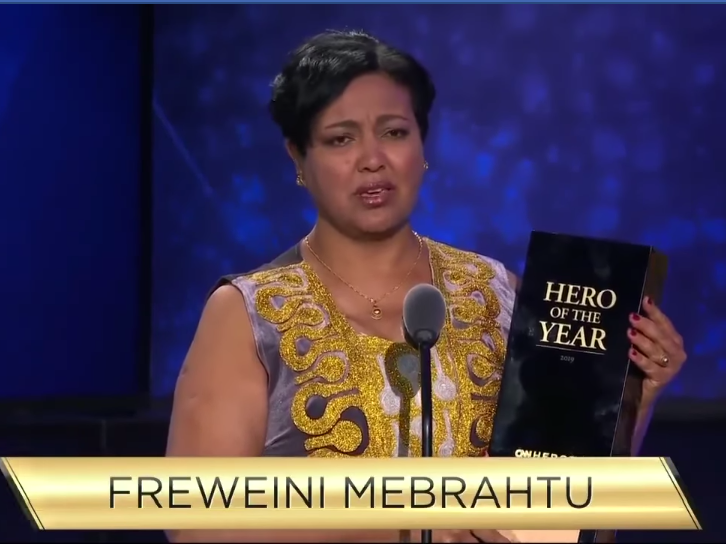
CNN Hero of the Year for 2019: Freweini Mebrahtu

https://edition.cnn.com/videos/world/2019/05/02/cnnheroes-mebrahtu-mixed.cnn


Work in Progress


 ForgottenMan gave me permission instructed me gave me his blessing said it might be a good idea … to inform you about the project I’m working on. He added this photo of me in Ethiopia in 1973. The book I’m writing is about this period during which the Ethiopian Marxist revolution was brewing. My friend Leslie offered to come over for a three day intensive where we would both work only on our books. It worked so well that we’re doing it again for four days, starting tomorrow. Here are a few shots of last week’s session. I’ll see you on Monday! (Click on first photo to enlarge all and read captions.)


Coffee with No Ceremony

daily life  color014

Coffee With No Ceremony

I lived in Addis Ababa adjoining Mexico Square.
I ate injera every day. Had cornrows in my hair.
I thought I knew it all, and though my language skills were poor,
I knew enough Amharic to get by in any store.

Seated in a circle, on low stools around a flame,
We watched Demekech fan the fire—this ritual the same
in every house and every village all throughout the land.
The thick and sludgy coffee was always ground by hand.

Boiled in a clay carafe, then set aside to brew
as in another little pot, some corn kernels she threw.
The popcorn taken from the flame, the colo nuts were next.
Except—we found that we had none, and we were sorely vexed.

The coffee jug was sealed up with a fresh-wound plug of grass
ready for the pouring, but one aspect of our mass
was missing, so I said I’d go to buy some at the souk,
lest our hospitality give reason for rebuke.

These little shops were many, lining both sides of the street;
and at each one, I knew the custom—always did I greet
the owner with proper respect, and always, he said, “Yes!”
when I asked if he had colo, but I couldn’t guess

why no one ever seemed to want to sell any to me.
Always the same reaction—first the shock and then the glee.
So, finally, I walked back home. My failure I admitted.
Departing, I had felt so smart, but now I felt half-witted.

What had I done wrong? I knew that every shop had colo.
The problem must have been that I had gone to get them solo!
Returning empty-handed, I felt I was to blame.
Coffee without colo was a pity and a shame.

But my roommate and our guests and cook were really most surprised.
I must have asked for something else than colo, they surmised.
What did I ask for? When I told them, they dissolved in laughter.
They said that I was lucky not to get what I asked after.

For colo had two meanings, depending on the stress
put on the first syllable, and I had made a mess.
Instead of nuts, they told me (and this was just between us,)
I had asked each souk owner—if he had a penis!

(This is a true story of only one of the gaffes I became famous for in the year and a half I taught and traveled in Ethiopia in the period leading up to the revolution that deposed Haile Selassie.) I published this four years ago but I think few were around then to read it, so here it comes again as I think it is a good example of how far I’m willing to go to extend a little hospitality.


The Ragtag prompt today is hospitable.

Footnote to the Revolution

Footnote to the Revolution

The red clay from the cane field in your hair,
leaves pressed into my neck from lying in the tall stalks,
we heard in the trees
the movements of the shepherd
who had watched.
Later, at the Filowaha baths,
we washed ourselves from each other
and slept in a room
rattled
by the eucalyptus.
I would have wanted you more in that room
if I’d known about the bullet
already starting its trajectory through the minds
of men spending youth fresher than ours
in revolution.
I remember watching your shave
in the lobby barber shop,
your face mummied by the steaming towels.
I tasted bay rum afterwards
as we shared cappuccino.
Parked at the roadside near enough to hear our parting,
I imagine they drank katikala,
its bite sealing brotherhood
your blood would buy in the street
outside the Filowaha baths.


In 1973-74, I journeyed to and lived in Ethiopia. It was not my original intention to do any more than visit and pass through, but fate had a different plan in mind. I was first detained by violence, then by love. The Filowaha baths in Addis Ababa, Ethiopia, were probably the equivalent of the “No Tell Motels” in Mexico, but for Andy and me, they were a place to be alone, to soak in hot water together and to make love with no listening ears. I guess that is what they were to everyone who visited, but there was nothing illicit in our relationship. We were both single and in what at the beginning we thought was a committed relationship that would end in marriage. His family had accepted this. My parents, thousands of miles away, had long ago given me the message that they did not want to know anything that, as my mother had stated, “would make them feel bad.” My sister knew, but they never did.

This poem actually chronicles two different visits to the Filowaha baths–one near the beginning of our relationship and the other our last night before I departed to fly back to the United States. On this second visit, we both knew we would probably never see each other again. Once again, we had figured out that the relationship wasn’t going to work, and our own feelings were complicated by the revolution that was already raging around us. We had both just spent a month in the hospital–Andu Alem recovering from the bullet that had gone all the way through his body as he defended me from a man whose intention was to kill me. Not able to return to my house, I had stayed in the hospital with him so we could both be guarded by his father’s soldiers.

Years later, when I made my first assemblage boxes, I made this music box that told the story I’d already told in the poem years before. The song it plays is “The Way We Were.” I’m now trying to tell the story a third time in a book. Now that I know the true ending to our story, I might have changed the poem, but I leave it as I once thought it was. There are many truths in our lives, according to which vantage point we are telling them from.  This story is as true as the very different story I will eventually tell, if I have the courage to face up to it. Please enlarge the photos go see the details which should be self-explanatory. The hand I sculpted out of clay. I photographed the assemblage box on the table where I had been rereading letters I’d written home from Ethiopia as well as letters Andu Alem and other friends living in Ethiopia had written me once I returned to the states.