Tag Archives: foreign language

Vernacular Confusion

Vernacular Confusion

When he says I have puissance he means I have power.
Why must he go on like this, hour after hour?
I don’t understand his schoolbook French.
In Yiddish, I cannot tell shiksa from mensch.
I fumble with Spanish and flunked at Italian.
An onion’s an onion. When you call it scallion,
it’s all Greek to me and I don’t have the energy
to combine languages. What’s with this synergy
that creates Tex Mex, Pig Latin and Spanglish?
I have enough problems just pronouncing Anglish.
I don’t catch your meaning when you say “Que tal?”
This method of talking means nothing at all
to one not versed in languages. So, when you call,
please don’t say,”Salut!” Just say, “Howdy, y’all!”

Prompt words today are fumble, synergy, catch, puissance and method.

Baby Talk


Baby Talk

They are not merely drivel, these noises that you coo.
You accent their importance with everything you do.
Your waving arms and thrashing feet, your pooched lips all implore
that we try to learn your language to see what they are for.

I guess it is inevitable that our efforts fail
to try to learn your lingo beyond giggle, frown and wail,
for although we’re sympathetic, we do not get your gist.
So please forgive our ignorance of messages we’ve missed.

We’ll shoulder all the blame for this lack of understanding,
knowing all too well that by the time that you are standing
you’ll have learned our language, making you the fastest starter—
proving once again that you are by far the smarter.


Prompt words today are inevitable, sympathetic, drivel and shoulder.

Lucky at Languages, Unlucky at Love

Image from freeimages.com            

This poem is pretty silly, but I like the challenge of using only one rhyme for an entire poem. More of a puzzle than anything else.

Lucky at Languages, Unlucky at Love

The night was warm and balmy and he was a man in uniform.
She was adept at languages from French to Greek to Cuneiform.
They met one balmy evening on the Eiffel Tower.
He aided her in climbing, then offered her a flower.
She thanked him first in French and when it drew a puzzled glance,
she surmised he must be from a place other than France.
She tried again in English, in Spanish and in Greek.
She would have tried her Chinese, but her Mandarin was weak.
She pointed to his medals, his ribbons and his bars—
all his decorations. She counted all his stars,
but could not find the language to express admiration.
And thus the evening ended, I fear in consternation.
The moral of the story? Put your horse before the cart. 
It’s best to know love’s language before you give your heart.


The prompts today were uniform and balmy. Here are the links:

https://ragtagcommunity.wordpress.com/2018/12/03/rdp-monday-uniform/
https://wordofthedaychallenge.wordpress.com/2018/12/03/balmy/

Foreign Tongues

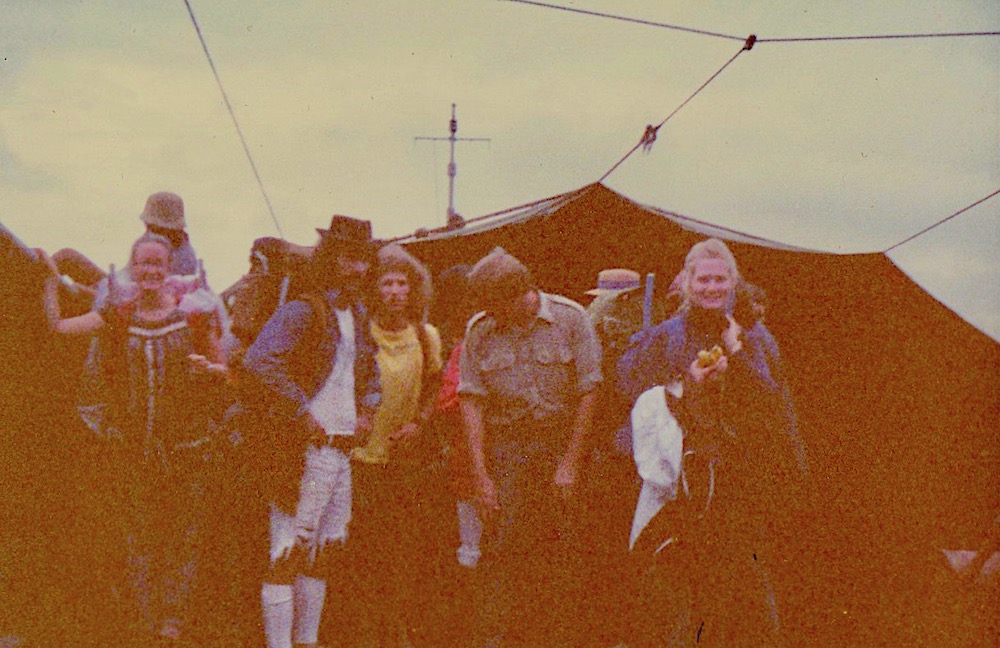
Portugese Timor, 1973, Setting off on a WWII Troop barge into the Timor Sea

Ciao, Adios, Auf Wiedersehen, Adieu

When I was young, I traveled far
from Germany to Zanzibar.
Australia, Bali, France and Spain,
to Africa and back again.

And though I mostly loved them all,
from Venice to the Taj Mahal,
as my departure time grew nigh
I had to voice a sad goodbye.

To Ethiopia I strayed.
For eighteen months I stayed and stayed;
and when I had to leave too soon,
I had to say “dehena hun.”

In college days, when I was young,
German was my foreign tongue;
but when to Frankfurt wir mussten gehen
I just remembered, “Auf Wiedersehen.”

The French were rude and cold and snotty.
They mocked my accent and were haughty,
so while I had to bid “adieu,”
I’d have preferred to say, “pee-ew.”

Florence thrilled me from the start.
Their lasagna is a work of art.
When I left, they all said, “Ciao.”
Their kitties, though, all said, “Miao.”

I never went to Israel
but nonetheless, I’m proud to tell,
the rabbi books? Read every tome.
So I know how to say “Shalom.”

Though “Arigato” is bound to do
when you want to say thank you,
Sayonara” is the way to go
to bid farewell in Tokyo.

Bali’s full of dance and art
that treat your eyes and fill your heart.
I must admit, I had a ball
before I said “Selamat tinggal.”

Mexico was saved for last
And now I fear my lot is cast
Since “Adios” I cannot say,
I’ve decided I will stay!

The prompt today is foreign.


IMG_4812
We Fill in the Blanks

I write notes three times weekly in my limping Spanish for Yolanda, not because I won’t see her, but because I probably won’t remember by then what  I need to tell her. She has asked me to order more vacuum cleaner bags from the states. I use the words I know, and tonight the word for vacuum has escaped my memory. So I leave this note on the kitchen island, taped to a filter I’ve found in the laundry room:

“Is this the bag for the machine for clean the floor?”
Es este la bolsa para la machina para limpiar el piso?

Then, taped to the stove top:

I’m sorry, Yolanda, but a potato broke in my oven  and it is very bad! I worked for one hour and a  half but it is still bad now.”
Lo siento, Yolanda, pero una papa romper in me estufa y es mui malo!  Trabajo por una hora media pero es malo ahora.

A potato broke in my oven?  I don’t know the word for exploded, but I think it must put a bit of levity into her morning to try to interpret what I have said.

Later, she will go home and report today’s pleasure.  “The senora?  Today she broke a potato in the oven. She tried to clean it for awhile, then went to write another poem.”

There will be no rancor in her statement, for the humor of the unlearned words that still stand between our total comprehension of each other will be gentled by the total understanding that compensates for those lost words.
IMG_4815

In response to The Daily Post’s writing prompt: “Handwritten.” When was the last time you wrote something by hand? What was it?

Now, go HERE to read the poem based on this essay that I have written for dVerse Poets on Sept. 11, 2018!

Foreign Tongues

I wrote this poem that answers this prompt so long ago that few who are now following me have ever read it.  If you have read it, perhaps you have forgotten it, as I had..

Foreign Tongues

When I was a child, I thought as a child.
In short, I didn’t think.
My faulty reasonings were piled
like dishes in a sink.

While other children responded to
“What do you want to be?”
with “Cowboy! Teacher!” (right on cue),
these answers weren’t me.

When it came to having career talks,
I fear I was a purist.
My answer was less orthodox.
My aim? To be a tourist!!

I thought tourists then to be
a sort of gypsy pack.
Jobless, they were wild and free,
their luggage on their back.

Or in their cars, packed front and back,
traveling evermore––
a footloose, wandering, feckless pack
unsettled to the core.

I saw them passing on the road
just one block south of where
my family hunched in their abode
year after passing year.

I had to wait for 19 years
to earn my traveling shoes––
to assuage my parents’ groundless fears,
abate their travel blues.

I took off on a sailing ship
to visit foreign lands.
When foreign words evaded lip,
I merely used my hands!

Back home, the English seemed to me
common––sorta dowdy.
Instead of “Moshi, moshi”
I had to murmur, “Howdy.”

As soon as school was over,
I hopped upon a plane.
I’d pass my life a rover.
Inertia was inane!

I packed up my regalia
with neither tear nor sob
to head out to Australia
for my first teaching job.

I thought that English I would teach.
It was our common tongue.
Enunciation would I preach.
Oh Lord, I was so young!

My first day there, I heard the word
“Did-ja-‘ave-a guh-die-mite?”*
I found it all to be absurd.
They were joking. Right?

Don’t come the raw prahn on my, mite”**
was next to meet my ear.
What foreign language did they cite?
It puzzled me, I fear.

I rode, I walked, I sailed the seas
and ended up in Bali.
Said my “Terimakasih’s”
And then, “Selamat Pagi.”

My move to Africa was one
that some folks found quixotic,
but “amasaganalu
was a word I found exotic.

After two years, I went home.
Wyoming was the next
place that I agreed to roam,
though I was sorely vexed.

For though the words were all the same
I’d learned at my mom’s knee––
(I’m sure that I was all to blame)
they all seemed Greek to me!

California was where I hung
my hat for many-a-year.
There Español was half the tongue
that fell upon my ear.

I liked its cadence, liked its ring.
The words ran fluid and
their foreignness was just my thing
in this bilingual land.

So Mexico is where I’m bound.
I’ve reasons numbering cien.
The main one is, I like the sound
of “Que le via bien.”

 * The American accent version is “Did you have a good day, mate?”

**  “Don’t come the raw prawn on me, Mate!”  This strange retort is similar in meaning to: “Don’t try to pull the wool over my eyes.” Many Australians have told me they’ve never heard this phrase, but I swear I did–more than once.

The Prompt: Futures Past: As a kid, what did you want to be when you grew up? How close or far are you from that vision?