Tag Archives: Love poem

Footnote to the Revolution

Footnote to the Revolution

The red clay from the cane field in your hair,
leaves pressed into my neck from lying in the tall stalks,
we heard in the trees
the movements of the shepherd
who had watched.
Later, at the Filowaha baths,
we washed ourselves from each other
and slept in a room
rattled
by the eucalyptus.
I would have wanted you more in that room
if I’d known about the bullet
already starting its trajectory through the minds
of men spending youth fresher than ours
in revolution.
I remember watching your shave
in the lobby barber shop,
your face mummied by the steaming towels.
I tasted bay rum afterwards
as we shared cappuccino.
Parked at the roadside near enough to hear our parting,
I imagine they drank katikala,
its bite sealing brotherhood
your blood would buy in the street
outside the Filowaha baths.


In 1973-74, I journeyed to and lived in Ethiopia. It was not my original intention to do any more than visit and pass through, but fate had a different plan in mind. I was first detained by violence, then by love. The Filowaha baths in Addis Ababa, Ethiopia, were probably the equivalent of the “No Tell Motels” in Mexico, but for Andy and me, they were a place to be alone, to soak in hot water together and to make love with no listening ears. I guess that is what they were to everyone who visited, but there was nothing illicit in our relationship. We were both single and in what at the beginning we thought was a committed relationship that would end in marriage. His family had accepted this. My parents, thousands of miles away, had long ago given me the message that they did not want to know anything that, as my mother had stated, “would make them feel bad.” My sister knew, but they never did.

This poem actually chronicles two different visits to the Filowaha baths–one near the beginning of our relationship and the other our last night before I departed to fly back to the United States. On this second visit, we both knew we would probably never see each other again. Once again, we had figured out that the relationship wasn’t going to work, and our own feelings were complicated by the revolution that was already raging around us. We had both just spent a month in the hospital–Andu Alem recovering from the bullet that had gone all the way through his body as he defended me from a man whose intention was to kill me. Not able to return to my house, I had stayed in the hospital with him so we could both be guarded by his father’s soldiers.

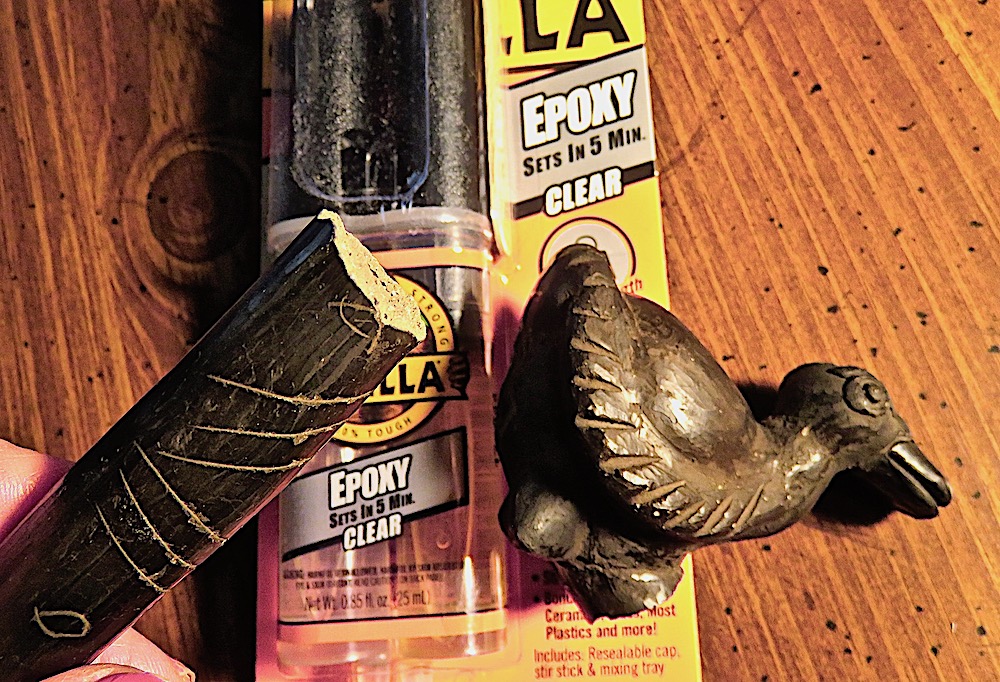
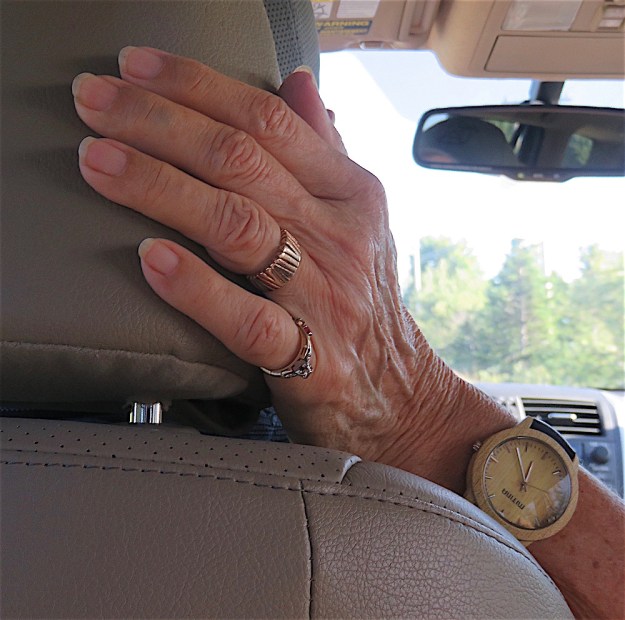
Years later, when I made my first assemblage boxes, I made this music box that told the story I’d already told in the poem years before. The song it plays is “The Way We Were.” I’m now trying to tell the story a third time in a book. Now that I know the true ending to our story, I might have changed the poem, but I leave it as I once thought it was. There are many truths in our lives, according to which vantage point we are telling them from.  This story is as true as the very different story I will eventually tell, if I have the courage to face up to it. Please enlarge the photos go see the details which should be self-explanatory. The hand I sculpted out of clay. I photographed the assemblage box on the table where I had been rereading letters I’d written home from Ethiopia as well as letters Andu Alem and other friends living in Ethiopia had written me once I returned to the states.
The Betrayal

IMG_9344

The Betrayal

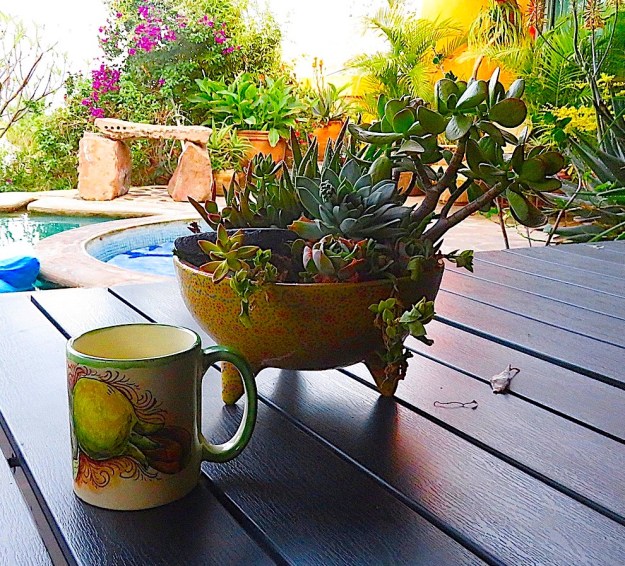
There is a story hidden
In the majolica mug
that sits on the
terraza table.

Pasiano the gardener
drinks 
echinacea tea
with honey

from this cup,

coughs loudly
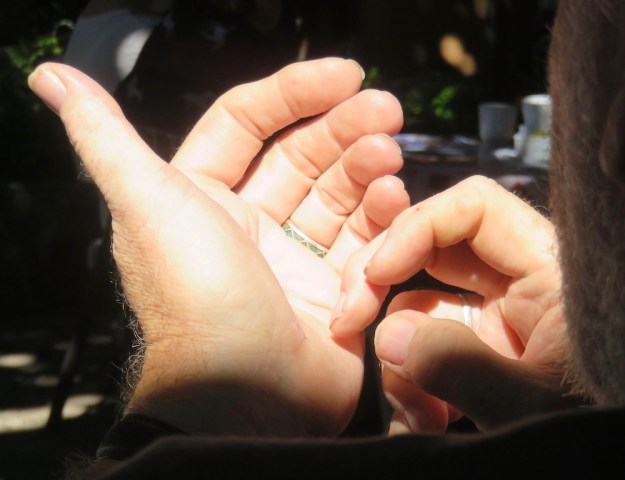
behind the hand

that does not cradle
a telephone.

His sly smile
betrays a love story

as clearly as the small child
who sometimes
accompanies him to work.

Some senora’s, he tells me,
but the child has
his eyes and solid legs,
his shy manner,

lives with his mother
and her husband,
but sits on my steps
with a sugar cookie––

betraying
no more secrets

on purpose
than his father does.


This is a rewrite of a poem written 5 years ago. The prompt word today is betrayed.

Parts of Him

IMG_2191

Parts of Him

You look so like him on our passing—
that strongly muscled arm,
his hair brushing your shoulder,
but you do not have his charm.

Your hands curl in a gesture
so familiar in its kind,
but they do not form the magic
his hands mold within my mind.

Your smile is so like his—
that chortle when you laugh—
but I see you cannot be him
as we pass upon the path.

Your stance is his, your bearing
when I see you from afar.
It’s just as we draw nearer
I see who you really are.

These long years since his passing,
I still look for him in places
where in the crowds I search him out
in unsuccessful faces.

Each similar demeanor
reaches out a tentacle
to draw me to a likeness
that, alas, is not identical.

The prompt today is identical.

Unopened: Haibun for dVerse Poets


Unopened

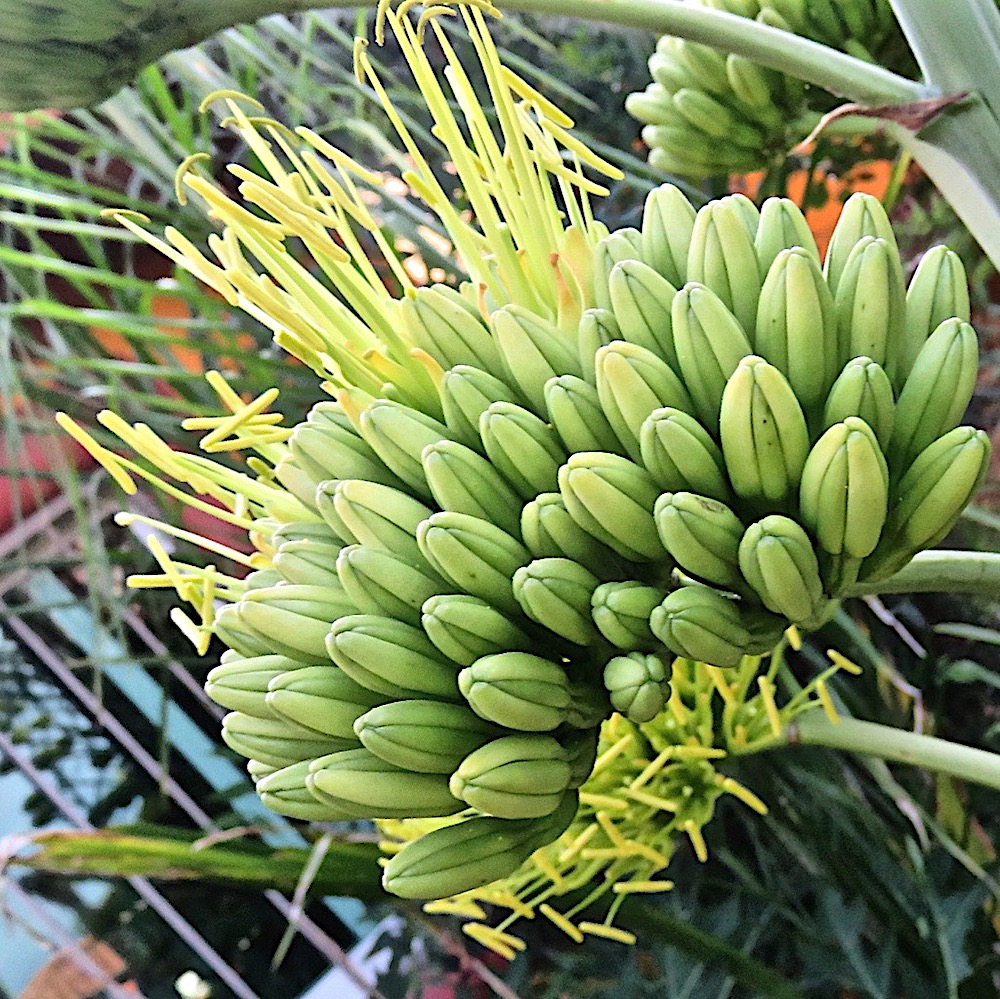
Every situation, every human relationship contains a number of possibilities. No person could guess them all. When we are too hasty in our judgements and our reactions, we cut ourselves off from all of those potential realities.

Your face a closed bud
hiding what might have flowered
had I been your sun.


For dVerse Poets haibun challenge.

Jar of Hearts

IMG_8473

Jar of Hearts

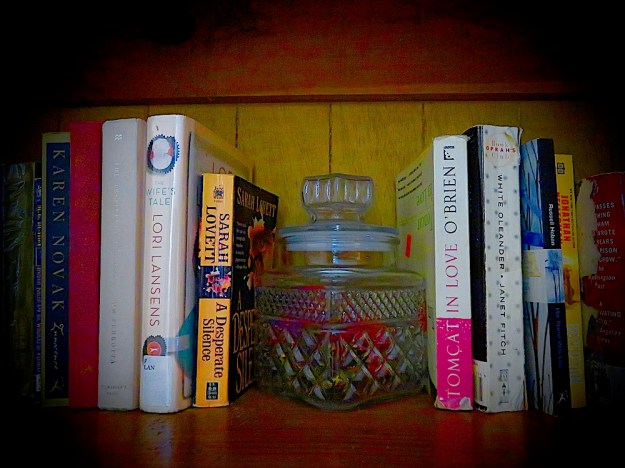
When I came into the room
the bookcase, too heavily laden by far,
had tipped and spilled our picture to the floor.

Its glass gathered with a broom,
the torn remains of us now saved here in a jar
I have neatly filed between fantasy and lore.


The “assignment” is to write a poem depicting a certain emotion or feeling without naming the emotion. And for the readers to say what emotion or feeling is being depicted in their comments. I have done my part, now you do yours!!! For dVerse poets pub

Rich Harvest

© Sharon Knight
I saw this photo by Sharon Knight on Sascha Darlington’s blog and knew it was the perfect photo for this poem as well.  Thanks to both Sharon Knight and Sascha as well as dVerse poets, who sponsored this prompt. Like Sharon Knight, I grew up in the midwest and this photo could easily have been taken in my home state of South Dakota, a bit before the harvest time described in my poem.

Details from retablo “The Gleaners.” Painting by Anna O’Neglia, retablo and photo by jdb (Click on any photo to enlarge all)

Rich Harvest

The night that we brought in the wheat,
our weeks of labor now complete,
we raised our voices, beat our feet,
and in that stifling prairie heat,
weary and arm-sore, yet replete
with satisfaction for jobs well-done
earned in the dust and chaff and sun,
we ceased our labors and had some fun.

Hank gave the prim schoolteacher a treat
by lifting her from her safe seat
to move her to the fiddler’s beat.
Soon, her hairpins met defeat,
her wild hair anything but neat,
 and Hank was heard to woo the miss
and then to plant a tender kiss.
She remembers all of this

now that their family’s complete
with Rita, Sarah, and little Pete.
Now every harvest, when you greet
each townsperson you chance to meet,
chances are they will repeat
how Hank brought in the wheat that year
and afterwards, conquered his fear
and dared to call the school marm, “dear.”

The prompt today is treat.

Torn Love

Torn Love

Still standing close,
each on our own side of this terrible rending,
how can we see things so differently?
This little flap of skin
you keep pulling open
wants to close.

This is how cancers start—
this worrying and worrying of an old injury.
My darling. Leave it alone
and let us heal.
This is only a biopsy
of our changed love affair.

If it is cut out of us,
it will be by your decision;
and no number of late-night arguments
will ever change that fact.
What you need to remember
the next morning,
you will remember.

If it were up to me,
we would still be friends,
but if you need an enemy
to console you in your actions,
I guess I must be that too.
I always was a figment
of your imagination.
Believe that
if it makes this easier for you.

II

Cicatrix

I know better than you
what lies buried under
my healed-over self.

The raised part of me
grown to protect the wound
creates this distance
that I once warned you of.

I need to thicken that part of me
where part of you remains,
and if for this time you gasp for air,
it is my thick skin growing over you,
like an orb spider winding you in my web

until you become
the one in me hidden so deep
that even you
believe you’ve disappeared.


Yes, another reprint of a poem from over four years ago. The prompt today was torn.

The Taste of Love

The Taste of Love

If love were a savor, a flavor or a taste,
a sauce or certain gravy, a marinade or paste,
Cupid could write a menu and we could order in
with romance as an appetizer, sealed up in a tin.
We could order lovers as others order food
according to our appetite, according to our mood.
I’d start out with Greek salad to titillate my palate.
Then move on to fresh lobsters beaten with a mallet.
A juicy steak would be served next with T-bone still inside.
I’d savor all the tender flesh with French fries on the side.
Dessert would be rich chocolate cake washed down with ginseng float
to make it slide so smoothly, smoothly down my throat.
There would be no tears, dear, and not one broken heart
if love came from a menu, to order à la carte.


Wit and the Art of Courtship


IMG_3888


Wit and the Art of Courtship

I simply do not care a whit
so long as you have brains and wit
whether you have looks or fame,
degreed initials by your name,
yachts, mansions or limousines.
These things are surely not the means
to win my heart and claim my hand.
I would not wear a wedding band
for cash or notoriety.
It must be given you for free.
If our minds have found a fit,
my heart will go along with it.


The prompt today was witty.

Foreshadowing

img_7866

Foreshadowing

Why does the loveliest flower have the sharpest thorn
so you had to pay the tariff of young flesh pierced and torn
by the most splendid ornament that you had ever worn
as he clasped you to the music of the saxophone and horn?
It’s been true each day you’ve lived, was true when you were born,
and your father brought fresh roses—your bedside to adorn.
And it will go on being true on that future morn
when roses will be carried by those saddened and forlorn
as they place your ashes where you’ve asked that they be borne:
back to that same rose bush that so long ago was shorn
of the roses that you carried when your wedding vows were sworn.


The prompt today is thorny.