Category Archives: Childhood Angst

In Cold Blood

IMG_9290.jpg

                                                        In Cold Blood

I’m sure that the horrible, violent and senseless murders described in Truman Capote’s book In Cold Blood captured the imaginations of most of us in the U.S. Unaccustomed to such vivid descriptions of such violent acts, what small town family did not start locking their doors at night?

The slaughter of the rural farm family occurred on Saturday night, November 14, 1959; and although Capote’s book was not published until 1966, the press made much of it at the time it happened and I was well aware of most of the details of the murder of the father, wife and teen-aged children—a boy and a girl––as well as the capture of the two men who had murdered them. I was especially affected by the sad detail of the discovery of the girl’s Sunday School money tucked into her shoe in the closet. Whether she heard the men breaking in and hid the money so it would not be found or whether she placed it there so she wouldn’t forget, the detail has the same poignancy

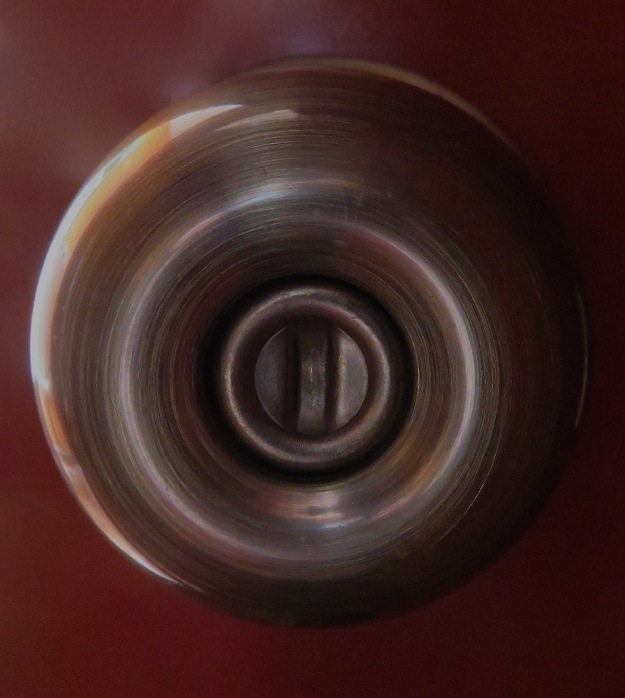
After the murder, as I lay in bed at night––especially on summer nights when I found it even harder to surrender to sleep than during blustery cold nights in the winter––I often thought to get up and check the doors again: the front door, the door to the garage, the door from the garage to the mud room, the door to the basement and the back door off the pantry that led to the back porch. All had push-locks accessed by a key from the other side.
On one night in particular, that summer that I turned 13, I lay awake listening to the night sounds that streamed in through my screened window. My window adjoined the front door stoop and it suddenly occurred to me that anyone could slice the screen and easily enter. I got up from bed to close the window and open the air conditioning vent in the floor under it. While I was up, I decided to check all the doors again. All were securely locked except for the lock to the back “porch” which was really just a platform four or five feet wide with a hand railing that ran the entire length of the house from the back garage entry to the pantry/kitchen area.

The pantry held a sink for my dad to wash up in when he came in from the ranch, and since we rarely locked our house, many times he would just walk along this platform/porch and enter the house from the back where he pulled off his boots and emptied his cuffs off the back porch so he wouldn’t track wheat chaff or mud or other souvenirs of his day’s work through the house. Then he’d wash his hands and neck and face in “his” special sink and make his way to his rocking chair in the living room, where he’d spend the rest of the day resting until supper and reading before bed.

This platform/porch was actually quite a distance above the ground because our lot was on a small hill that sloped from front to back and right to left. This enabled the windows in the basement to be above ground level, whereas there were no windows at all in the front of the basement. On this particular night, I stepped out onto this roofless sideless porch platform. I could see the big dipper and part of the little dipper and the thousands of other stars in the summer sky, but I didn’t know the names of any of the other constellations.

I could smell the newly cut grass that my mother had mowed in the early evening of that day, after the sun had gone low in the sky. I remembered when I was little how my dad was less tired by the time he got home and so he’d mow the huge lawn around the old house. My mom would come after him with the lawn sweeper that collected the grass cuttings in a huge canvas cube open at the top to dump the grass into a huge pile by the gravel road where we kids would build nests and play bird. I was the baby bird fed imaginary worms or, if we’d had the right dinner, sauceless spaghetti, by my older sister.

By my teen years, however, my dad would be too tired when he got home from a day that started at 5 or 6 in the morning and often didn’t end until 8 or 9 at night if they were cutting wheat. His life was a hard one and I often wondered if he resented coming home to daughters reading on their beds or talking on the phone to friends.

Did it seem unfair to him that he worked so hard to support daughters and a wife who had such a life of ease? Although I had not yet started to really write, except for a diary I once kept for a few months or assignments for school, I did have an active imagination; and from a very early age, I had concocted elaborate stories all involving imaginary selves of the future.

Now on this night, I wondered why that door that I had checked before coming to bed to read was now open! Who and why would anyone open a locked door? As I lay thinking, I heard the door to my parents’ bedroom farther down the hall open. I could hear my father’s heavy barefoot tread turning not to his right—to the bathroom between their room and my sister’s––but instead to the left. Down the long hall to my room, the entrance hall, the kitchen, the mudroom and the back porch. I could hear the door opening and a few minutes’ delay before he padded down the hall again and closed his door.

Chill. I felt it zoom down my spine, hit my tailbone and ricochet back up to my brain where it froze the back of my head. I waited. For five minutes, and ten. Barely breathing. I cracked my door and when I could again hear my father’s loud snores, I sneaked back out to the door to the back porch, which was once again unlocked. As quietly as possible, I pushed the button lock in, then returned to bed where I remained vigilantly awake for the rest of the night. Twice more, my father got up to unlock the door. Twice more, I got up to relock it.

During all those long hours before dawn, I imagined the scenario. My father, formerly my protector, allowance provider and generous benefactor to the pleasures of my life—turned in my mind into plotter. He, too, had read all of the coverage of the Kansas murders, and it had given him ideas.  He had hired a man to sneak in, to bind him up and leave him helpless and then to kill us all. He wanted to be free. He was tired of his idle daughters, tired of his wife.

My father had, previous to this, gone through one of his week long silent periods where we knew he was upset about something—cattle prices, the threat of hail before harvest, my mother or us. We never knew what caused these silent periods where he would speak to none of us and sometimes even move to the basement to sleep. They never lasted over a week and afterwards he would be our same joking, generous, hard-working dad. But during those times, we tiptoed. We tried to cajole and charm, but it didn’t work. If we asked if he wanted his head rubbed, we were met with a curt sideways bob of the head or a “Not tonight!”

This was unheard of at other times, when we’d ask for money for a new dress or the show and he’d answer with, “Ya. Rub Pa’s head!” We’d do so, and then the wallet would come out. Not that we didn’t rub his head gratis as well. It just got to be a joke—this returning of favor for favor. Then he’d hand us his wallet and put his hand over his eyes, like he didn’t want to see what we’d take. We’d always show him, though. Was this okay? It always was.

At times other than his silent periods, he was our loving dad. Proud of us. Funny around guests, and talkative, but when home alone with us, usually tired––sleeping or reading one of the piles of magazines and books that lay on the long coffee table beside his chair. I mention the silent periods as an explanation of why I might even in my most fertile imagination conceive of an idea that my dad would be capable of planning to “off” his entire family.

But, imagine it I did. I became the protector of our family that summer, lying awake for as long as I could to listen for my father’s footsteps down the hall. And this was not the only night that he got up once or twice to unlock that back door. I never said a word to my mother or sister. I perhaps told my best friend, thinking if my protective efforts failed, at least one person could point the way to insuring the perpetrator of my demise came to justice.

In later years, I forgot about that terrifying summer and went back to loving and admiring my dad almost as much as before, but by then there was a difference. Whether it was caused by radical ideas picked up in my sixties college life and my need to define myself as more modern than my parents—who were themselves quite liberal––or a vestige of that summer of distrust, I’ll never know.

By the time my dad died eleven years later, they’d sold the house in town and moved to a smaller house they built a mile out of town. It was to escape town taxes, my dad always said, but I’ve always thought that for him it was a return to his early homestead days in another house with nothing in view but prairie grasses and a big weathered barn. This new “country” house built by my parents after I left high school was closer to town than the homestead of my grandparents, but was within sight of the big red barn of a farm he’d bought years ago for a hired man and his family to live in and afterwards rented out. The barn sat squarely between my parents’ new modern modular and the old farmhouse. There was a small lake nearby with otters and where the wild geese landed overnight in their migrations.

It was one summer night when I was home from college for vacation that my dad got up from where he’d been sleeping in his chair and walked through the hall and kitchen and out the back door of the house.

“Where do you think he’s going?” I asked my mother.

“Oh, he likes to go out to sniff the night air and have a pee in the dark,” she said with a chuckle. “He loved to pee off the back porch of the house in town at night, even though it was so much farther away than the bathroom. I never could convince him not to do it. I worried that the neighbors would see him. But I think he thought it saved water, or perhaps it just reminded him of his youth—peeing out the back door of the house into the night air.”

This post was written in response to Elyse’s scary babysitting piece which you can read here:  http://fiftyfourandahalf.com/2012/08/01/all-the-cool-kids-are-doing-it/


Freudian Slip

Freudian Slip

IMG_7741 (1)
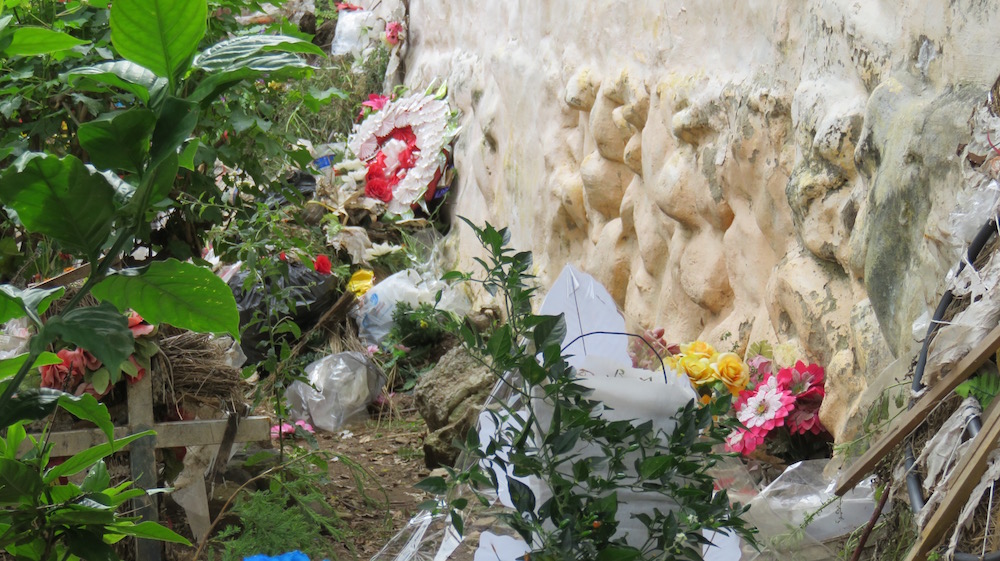
Caught in the tangles of last year’s castoff wreaths in our local cemetery, I found the following words. They were scrawled in  a frenzied adult handwriting in fading purple ink on a curled yellowing slip of lined  paper with one jagged edge, as though it had been ripped from a journal:

Behind the door of my dream, I heard a knocking. I walked down a tree-lined corridor to the door at the end. As I drew nearer, the knocking grew louder and more frenzied. I struggled with the bolt, which would not open, but as I finally drew it back, there was an explosion of sound—organ music playing a dirge in such a joyful manner that it sounded like a celebration instead of the reflection of death.

As the door creaked open, I heard the crash of glass breaking and then the tinkle and scrape of this glass being ground down to shards and powder as the door opened over it. There was such a bright light shining from behind the figure standing on the other side of the door that I could make out only her silhouette—a woman with an elderly stance wearing a long skirt. She was large of bosom and had thin wisps of hair piled untidily on top of her head. In one hand, held down to her side, was a basket. In the other hand was a jar.

I drew closer to the woman, to try to get her body between my eyes and the source of the bright glare—to try to see who she was. When I was but six inches from her, I finally recognized her as my grandmother. She was wearing the same navy dress with pearl buttons and gravy stains down the front that she had been wearing the last time I remember seeing her. In the basket was a mother cat with three kittens nursing. In the jar was chokecherry jelly, if its handwritten label was to be believed.

As I drew up to hug her and kiss her cheek, she started humming a song—some church hymn, perhaps “Jesus Loves the Little Children.” It was hard to recognize because she hummed it under her breath—with little inward gasps at times that made it sound like she was eating the song and then regurgitating it.

Her eyes were vacant as she looked over my shoulder. “Grandma, it’s me!” I said, but she still didn’t look at or acknowledge me.

“Do you want to play Chinese Checkers?” I asked. It was the one activity I could remember that both my grandma and I enjoyed.

She expressed a long intake of breath, shook her head no and held out the basket to me.

“Is this a gift?” I asked.

“No, it is an obligation,” she hissed, and as the basket passed from her hand to mine, she seemed to deflate—whooshing backwards out of sight—until only the basket of cat and kittens and the jar of chokecherry jelly lying sideways on the trail she had vanished down gave testimony to her presence.

“Bye, Grandma,” I called wistfully down the trail she had vanished down. “I love you.”

But I didn’t love her. I had this memory of sleeping with her in her feather bed and almost smothering trapped between the thick feather pillow and comforter. I have an explicit memory of holding the pillow over her face and her struggling to get free. It was a joke and I hadn’t meant to smother her, really, but there was such power in the fact that she could not fight off an 8-year-old girl that it made me hold the pillow over her face for a few seconds longer than I wanted to or should have. She was all right. Just frightened as I had been frightened so often by her stories of poor little Ella and all the wrongs done to her in her lifetime. It was as though I had to choose sides—her side or the side of the people who had done mean things to her. And like the little devil she always made me out to be—I chose the other side.


The Prompt: Everything Changes––You encounter a folded slip of paper. You pick it up and read it and immediately, your life has changed. Describe this experience.https://dailypost.wordpress.com/prompts/everything-changes/

When I Grow Up

 When I Grow Up

daily life  color096 (1)

Blank Page

It stretches forever in front of me.
There, no future happens until I create it.
And that is the power of words
that rub like pieces of gravel in my shoe.
I become less of a child in bearing them,
grow to adolescence as I pry them from my shoe.
In storing them on the page, I become my own creator—
writing a new world with each decision of word.
On the page, I can, if I so choose,
grow up again and again.
Each page filled or every edit of the last
becomes another part of me
that tells the same story:
that growing enough to fill the space inside of me
never happens.

Yes, one or two of you have seen it before, but since I had totally forgotten this poem, it’s clear that one advantage of growing up is that you get to enjoy the same things over again with very little memory of them!  This applies to books, movies and even first spouses remarried!

https://dailypost.wordpress.com/prompts/ballerina-fireman-astronaut-movie-star/

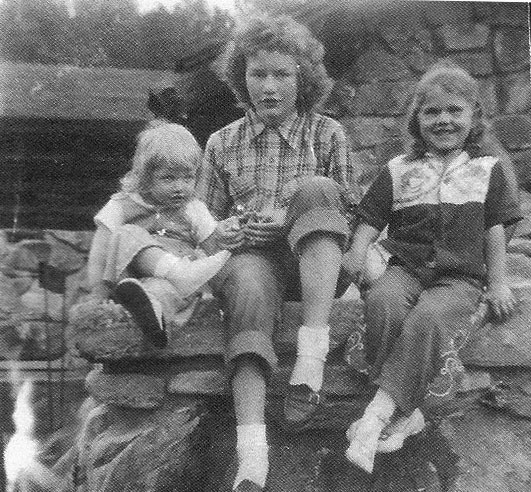
girls on wall
My sisters Betty, Patti and me, back in my pre-crush years. I remember being very proud that my legs had finally grown long enough to cross! Not too successfully, by the look of me.

Crushed!

When I was very small, I was notorious for hating boys.  My eleven-years-older sister once came into the living room and I was running around and around a big chair.  “What are you doing?” she asked. “Chasing boys!” was my answer. My sister was at an age when “chasing boys” meant something else entirely, but she got my drift.

When I was six, a lovely southern lady moved to town who enlivened the entire town.  She taught ballet and acrobatics to the girls and square dancing to everyone age 6 to 76.  This only lasted for a year or two, but twice a month most of the town would gather in the fairgrounds meeting room to do-se-do and alamand left.  I was usually paired with a little boy who was in my first grade class.  One night, after an especially invigorating “trade your partner,” when I was once again hand-in-hand with him, he gave me a big kiss.

I can’t remember my reaction, but I certainly remember his mother’s.  Abandoning her “trade your partner,” she came flying across the dance floor to shake her finger in his face.  “Shame on you, Brian!” she said, “Shame on you!”  (Not his real name.)  She then grabbed him by the upper arm and jerked him off the dance floor to go sit in a chair by the wall.  I was left without a partner and so had to dance with Will Prater, a grown man who was jerky and severe in his movements and who nearly dislocated my shoulder every time he swung me around.

Brian’s mother’s fervor in upbraiding him worked.  He never dated a girl, let alone kissed one, for his entire grade school and high school life.  He did ask me to the prom my sophomore year, but unfortunately I had accepted a date with another boy the night before.  By then I had a pretty big crush on him, fueled by his third grade tauntings of ‘Mayor’s daughter, mayor’s daughter,” when my dad was, indeed, mayor of the town, as well as a lifetime of torments in study hall, where he would break my pencils or pass me notes upbraiding me for scoring higher than he did on chemistry tests .  In my town, teasing was foreplay, but unfortunately in this case, the foreplay led to nothing, since he never repeated his offer of a date, in spite of his dad’s best efforts.

By my junior year, I was dating a boy from out of town.  “What are you doing dating that White River boy?” chided Brian’s dad every time I ran into him on the street or in our little town’s one  general store where I had gone to run an errand for my mom or to buy penny candy or a bag of Russian peanuts (our name for sunflower seeds.) “There are plenty of good boys right here in your own town!”

I knew he meant his own son, and had I not been in the throes of first lust with that “White River boy,” that would have been fine with me, as my longtime crush had continued.  But, alas, Brian never heeded his dad’s hints, either, until my sophomore year in college when, both home for the summer from college in different states, he finally asked me out. There is no crush like the one where contact is long delayed. I remember one very hot and heavy kissing session before we both went back to our separate lives.

We both married older people with children.  Both became swamped in our own lives.  I see him now and then at school reunions and of course crushes rarely survive a combination of reality and the passage of years.  But everyone needs a first crush, and perhaps he doesn’t remember that I might have been his, but he has the distinction of being mine.  I wonder if he would be surprised.

In response to The Daily Post’s writing prompt: “First Crush.” Who was your first childhood crush? What would you say to that person if you saw him/her again?<

Off-Day: Cee’s Odd Ball Challenge 2015, Week 33

Version 5
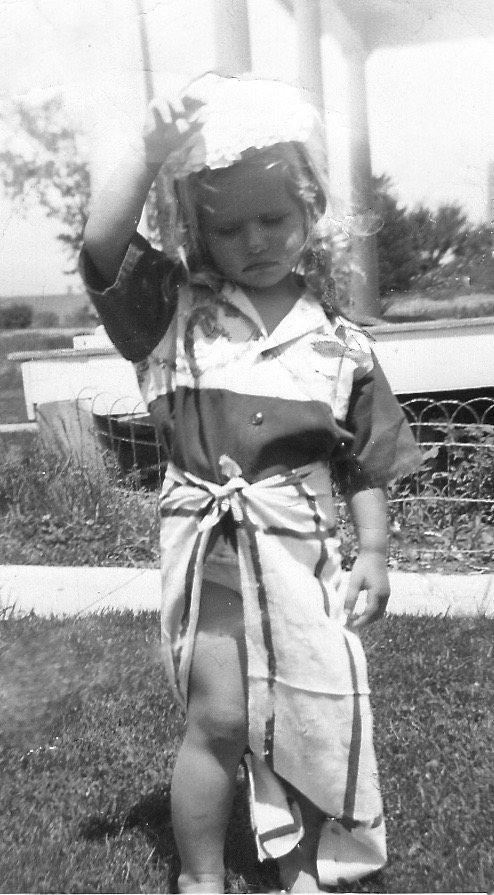
                                                                Off-Day

Definitely an off-day, both in choices of costume and mood. I’ve recently been going through old photographs.  This one was undoubtedly taken by my 11-year-older sister Betty Jo.  I’ve been trying to remember what may have prompted my mood. Maybe I detected that she was not overwhelmed by what my mother would have called my “funny little outfit.” My sister Patti and I heard this term countless times over the years, usually when we thought we looked just fine.

This photo was checked with creases and cracks, and although I tried to deal them, I finally had to resort to cropping or it would have taken me all day with the means I had at hand.  At any rate, here it is–an early odd ball side of myself.

http://ceenphotography.com/2015/08/16/cees-odd-ball-photo-challenge-2015-week-33/

Creepy Critters

1913688_1136038367865_7037617_n

This little girl looks like she’s already had too much Halloween candy.

1913688_1136038087858_6027993_n

You scream. I scream. We all scream for ice cream!

1913688_1136038007856_1648819_n

What do you mean you’re out of Snickers bars?

1913688_1136037767850_5683525_n (1)

Can’t wait until I grow up and don’t have to do this kid stuff.

1913688_1136038287863_5588685_n

Will trick and treat for Kleenex

1913688_1136038167860_1696102_n 1913688_1136038127859_5133796_n

1913688_1136037727849_5594428_n

You only have apples left????


https://dailypost.wordpress.com/dp_photo_challenge/creepy/

Hearts and Flowers: cees-odd-ball-photo-challenge-2015-week-31/

                                                              Hearts and Flowers

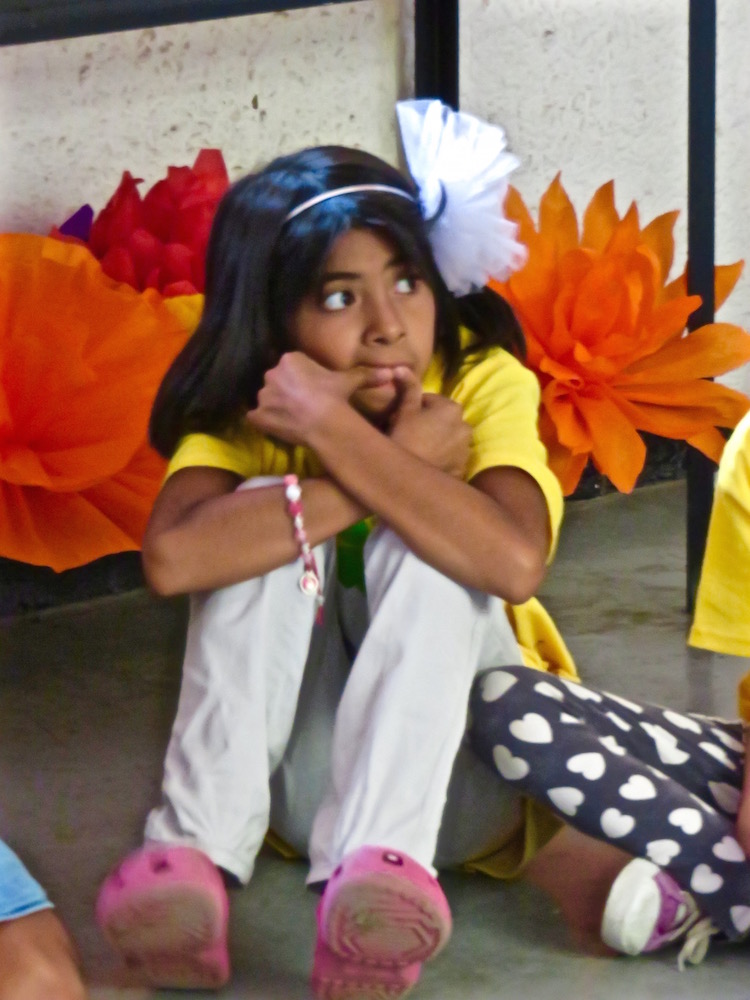
The combined effect of the hair ribbon and the flowers behind her that looked like wings, plus her interesting body arrangement gives this shot a sort of oddball charm, at least in my opinion!

I linked another oddball to the wrong  place (called it week 30, which I don’t think existed and linked it to week 29, where I had already posted,) so  if you didn’t see it, go HERE for another oddball.

IMG_2962http://ceenphotography.com/2015/08/02/cees-odd-ball-photo-challenge-2015-week-31/

Second Chance

I wish that I’d been wilder and freer in my day.
Had imaginative friends to join me in my play.
I wanted to stage circuses and playact vivid scenes,
but schemes like this were always far beyond my means.
There wasn’t enough zaniness in anyone I knew
to dream my dreams or want to do what I yearned to do.

We’d play school or hospital or house when we were smaller,
but this imagination palled as we grew taller.
I wish there had been classes in writing and in art
to allow  that side of me to flourish from the start.
Instead, I had to search for whatever it might be,
never finding anyone who seemed at all like me.

What was it I was lacking? Where was the rest of me?
I didn’t have a clue about what I was meant to be.
Half of my life I think that I was trying to fit in
to places and activities where I’d never win–
achieving just enough to make my life appear successful,
yet still I felt unsatisfied–unfulfilled and stressful.

Since I was nobody’s mom, nobody’s loving wife,
at thirty-one I ran away to find another life.
I quit my job and sold my house and caught a westbound train.
Perhaps I’d find in water what was lacking on the plain.
So I went to California and took a writing class.
Then another and another, until it came to pass

that I finally found the playmates lost to me in youth.
They were irreverent, creative, clever and uncouth.
Here, at last, I finally felt like I had found it all.
Words were the playthings that we tossed among us like a ball.
My own life now surrounded me–securely, like a bowl.
Here I felt a part of things–a section of the whole.

Later, I discovered I was an artist, too,
All my life, I hadn’t known.  Hadn’t had a clue.
It took someone just guessing and pushing me that way.
Then I had two mediums for saying what I say.
Art filled out the rest of me ’til I was full at last.
It took almost forty years to find how I was cast.

And then all of those playmates lost to me as a child
began to pull me out with them–out into the wild
to paint myself and write myself anew each dawning day–
discovering those hiding parts in what I sculpt and say.
Every day, like hide-and-seek, I find another part–
all those portions of me I’ve been seeking from the start.

I know that second childhood is a derisive term,
but I have found in fact it is the apple, not the worm.
It is the food I feed upon, the fruit I’ve always sought.
It is simply what I am instead of what I’m not.
It’s filled with messy, juicy things like paint and flux and glue.
Explosive things like nouns and all those verbs like “am” and “do.”

What I missed in childhood, I found when I was thirty,
and it was simply glorious: naughty, messy, dirty.
I rolled around in words and paint with others of my ilk–
these artful things more nourishing than bread or mother’s milk.
At forty, fifty, sixty, I’ve become what I can be–
found what I lacked in childhood: friends that are like me!

The Prompt: is there anything you wish had been different about your childhood? https://dailypost.wordpress.com/dp_prompt/childhood-revisited-2/

NaPoWriMo 2015, DAY 14: The Holy Apewoman of Mexico

th-8th-9th-6

The Prompt: Write a poem that takes the form of a dialogue. My dialogue takes place between my 7 year old self and my 67 year old self who, ironically, is writing this in Mexico.


Childhood Dreams

7
The mysteries
of Grandma’s barn
and basement–
whole lost worlds down there.
Our own attic–that door held down
by a gravity never challenged.

I wanted to see
the hanging gardens of Babylon,
Mexico and Africa–
all these places from books,
their pieces jumbled together
like puzzle pieces
in the deep recesses of my closet,
scattered,
but ready for assembly
some day
when I would
make my future memories
happen.

67
I crouch with myself at seven–
sharing imagined dangers
in deep closets,
trying to conjure the world.
So many small town stories
overlooked
while I dreamed of living
in those fairy tale places
of Bible stories
that stood on a shelf
sandwiched between
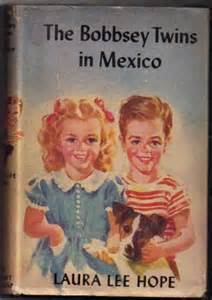
the Bobbsey Twins
and Tarzan.

Some of us spend our lives
trying to be like books,
then spend our old age
trying to remember childhood,
mainly remembering
childhood’s dreams.

*

True Grit

DSC01208

I want to be like this little girl who wandered away from her parents in the sand and into the beach restaurant where I was typing this blog. She came in to meet and entertain me, then to climb the stairs to the upstairs apartment—a dangerous enterprise with no side slats to keep her from falling. Her mom watched from nearby. I moved closer, just in case. But she made it up and down with no injuries, came over to chat a bit longer and then departed. I felt a bit happier and a bit braver myself by the end of our interlude.

The Prompt: Be the Change—What change, big or small, would you like your blog to make in the world?

True Grit

I’d like my blog to be Grit magazine, Ann Landers and the funny papers—all rolled in to one. I’d like it to be the first love comic grabbed off the shelf, the thing everyone wants to read, hot off the presses. I want it to be true, uplifting and fun to read. Entertaining. A collection of words that make people feel better after reading. I want it to be the thing you go to after reading of the last cuts to social services for the poor, the latest fool elected to public office, the last school massacre or child who mistakenly shot an adult with a gun provided to him by an adult. The thing you read when you’ve had enough of police brutality, plane wrecks, financial crashes, reverse Robin Hoods, pit bulls attacking humans, humans abusing dogs, cartels, corporations, slanted news agencies, corrupt rulers, crimes against women, drought, Ebola, HIV and dengue.

Yes, all of these ills exist and we need to know about them, but do we need to know about them ad nauseam, day and night, hour after hour? Do we need them served with our morning coffee, our evening meal, our drive to work? Need we dream them, fill our thoughts with them every hour of the day? And need those thoughts be hopeless and without remedy?

It is not that I want to avoid reality, but rather that I’d like to give that reality my twist and I’d like one major strand in that twist to be optimistic, another to be humorous, another to gentle the cruel realities, another, if it is of any influence at all, to be a catalyst to understanding and a feeling that something may be done in this world.

If you don’t remember the Grit magazine mentioned earlier in this piece, Google it. You will learn that it was formerly a weekly newspaper popular in the rural US during much of the 20th century. It carried the subtitle “America’s Greatest Family Newspaper.” It was full of human interest stories, usually with an uplifting slant. I can’t remember whether it came in the mail or whether we purchased it in the grocery story or in Mowell’s Drug, but I do remember grabbing it out of Mom’s brown paper bag when she got home from a trip down town and making off with it to my room or a grassy place in the shade of an elm tree to be the first to read it.

Perhaps you will label me as superficial if I admit that the first things I read in The Mitchell Republic—that “real” newspaper actually delivered to our front door—were Ann Landers, the comics (We called them “the funny papers”) and the crossword puzzle. I guess I wanted to be entertained, but I also wanted that assurance that something could be done about the bad things in life. Dick Tracy could solve the crimes. Mary Worth could be of worth in helping out. Ann Landers could find a solution to the ache of love and every puzzle could be eventually solved with hard work and perhaps a peek at the dictionary.

Now Google makes puzzle-solving a snap, so long as one is not shy about cheating and using that larger universal brain to solve the Sunday Cryptic Crossword, but in revealing so much, Google causes bigger problems—mainly, what to do with all of this knowledge of the world. For me, what I do with it is to write about it and within the world of my creation, to try to alter it enough to put a bit of hope into the world—to tinge it with a sense of humor or a sense of creation or a stab at a solution—however fanciful or impossible or romantic or homespun or illogical it may be.

This blog is like the biggest purse in my collection of very big purses indeed. In it lie jumbled together all my memories, dreams, hopes, heartaches, genius, stupidities, foibles, schemes, assurances, doubts, mistakes, successes, affections and affectations. The clasp I leave open for all to dip inside to see what they might find. One day, draw out a ditty, the next a tirade, the next a soggy handkerchief, soaked with my tears or an unused Kleenex to dry your own tears that were soaking your pillow when you woke up.

I want to be that thing you sneak off with before the rest of the family cottons on to its presence and take up to your bedroom to read with your back pressed up against the bolster on your bed or roll up and stick up your sleeve as you make off to the hammock or that shade in the grass beneath the tree.

And when you finish reading, it would be neither the hugest compliment nor the hugest insult you could give if you just thought, “That girl’s got grit!” I think a knowledge that she had prompted that statement would make the little girl or teenage girl who snatched that weekly magazine from the grocery sack very happy.