Category Archives: Loss

First Friends

DSC07187

The Prompt: Do you — or did you ever — have a Best Friend? Do you believe in the idea of one person whose friendship matters the most? Tell us a story about your BFF (or lack thereof).

First Friends

I am three years old, lying in my Mom’s room taking a nap. I can hear voices in the front room. The world comes slowly back to me as I rouse myself from the deep sleep I swore I didn’t need. I hear my mom’s voice and the voice of a stranger. I slide my legs over the side of the chenille-covered bed, balancing for a moment like a teeter totter before giving in to gravity and letting my feet slide through space to the floor below. I creak open the door, which had been left ajar. My mom’s voice gets louder. I smell coffee brewing and hear the chink of china coffee cups in the living room.

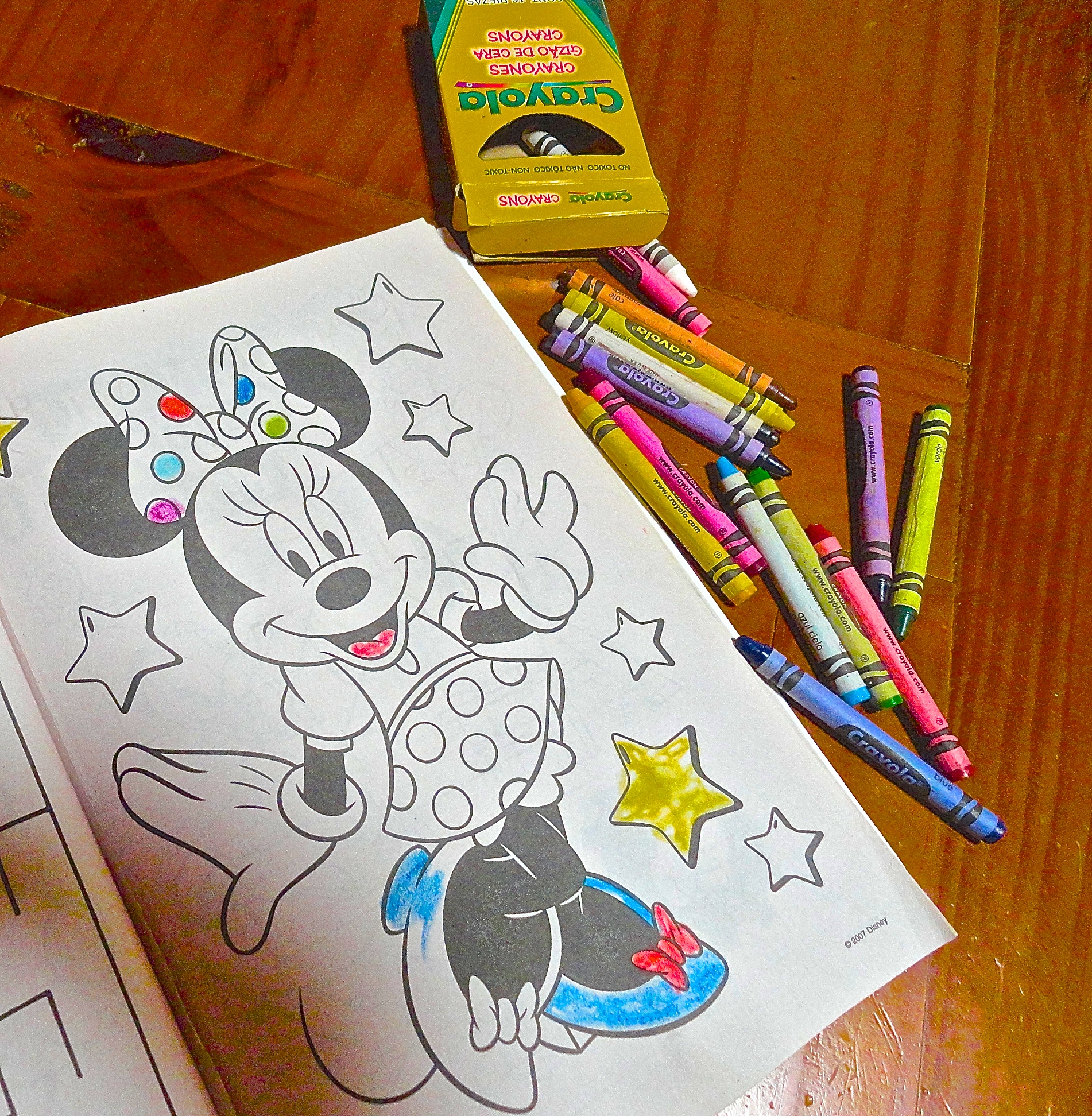
I hear a dull rubbing sound and move toward it—through the kitchen to the dinette, where a very small very skinny girl with brown braids is sitting at the table coloring in one of my coloring books. She is not staying in the lines very well, which is crucial—along with the fact that she is coloring the one last uncolored picture in the book which I’ve been saving for last because it is my favorite and BECAUSE I HAVE IT PLANNED SO THERE IS SOMEWHERE IN THAT PICTURE TO USE EVERY LAST COLOR IN MY BOX OF CRAYOLAS!

I sidle past her, unspeaking, aflame with indignation. Who could have—who would have—given her the authority to color in my book? I stand in the door of the living room. My mom is talking to a mousy gray-haired lady—tall, raw-boned, in a limp gray dress. My mom sees me, and tells me to come over and meet Mrs. Krauss. They are our new neighbors. They are going to live in Aunt Stella and Uncle Werner’s house two houses down. Did I meet their daughter Pressie in the kitchen? She’s just my age and Aunt Stella and Uncle Werner (who are not actually related to us, but just friends of my folks) are her real aunt and uncle.

The gray lady calls Pressie in to meet me. She is quiet and I am quiet. Then we go back to color at the table together. We drink orange juice and eat potato chips. We will be best friends for what seems like a lifetime but what is really only until we approach adolescence. I will have a love-hate relationship with her mother, who will continually set up competitions between Pressie and me to see who will win. She will try to coach Pressie first; but still, I will always win.

Pressie and I will play hollyhock dolls and dress-up. We play, sometimes, with Mary Boone; but her parents are too religious and don’t think we’re nice enough to play with her very much. I want to put on neighborhood plays and circuses, but none of the other kids want to perform. I want to play store and school, but Pressie eventually goes home to help her mother varnish the floors.

Pressie’s house is full of loud brothers and a sulky teenage sister. It is full of high school-aged cousins who tease us unmercifully and old ladies who come to play Scrabble with her mother. It is full of a missionary sister who comes back from South America and married brothers who come from Florida with babies that Pressie and I take charge of.

Pressie’s house is full of slivery floors that are always in the process of being varnished or de-varnished. There is one drawer in the kitchen full of everybody’s toothbrushes, combs, hairpins, hair cream, shampoo tubes, old pennies, crackerjack toys, rubber balls, lint, hairballs, rolled up handkerchiefs and an occasional spoon that falls in from the drain board above it. They have no bathroom—just the kitchen sink and a toilet and shower in the basement, across from the coal bin and the huge coal furnace. Their toilet has a curtain in front of it, but the shower is open to the world.

Sometimes when I am peeing, someone comes down to put coal in the furnace or to throw dirty clothes in the washtub next to the wringer washer. I pull the curtain tight with my arms and pray that they won’t pull it back and discover me, my panties down to the floor, pee dripping down my leg from my hurried spring from the toilet to secure the curtain. To this day, I have dreams about bathrooms that become public thoroughfares the minute I sit down. To this day, I get constipated every time I leave the security of my own locked bathroom.

Pressie babysits with the minister’s kids for money. I go along for free. She spanks them a lot and yells a lot. I think I can’t wait until I’m old enough to have kids so I can yell at them, but when Pressie is gone and the minister’s wife asks me to babysit, I don’t yell at them.

At Christmas I can’t wait to have Pressie come see my gifts: a Cinderella watch, a doll, a wastebasket painted like a little girl’s face, complete with yarn braids, books and toilet water from aunts, a toy plastic silverware set from my sister, stationery from my other aunt, playing cards, sewing cards, paint by numbers, a new dress. I run over through the snow to Pressie’s house to see her presents: a new pair of pajamas, a coloring book and new crayons, barrettes and a comb. In her family, they draw names. Quickly we run to my house, but she doesn’t pay much attention to my presents. She is funny sometimes, kind of crabby. The more excited I get, the more withdrawn she gets.

Later, I want to make snow angels in the yard and feed leftover cornmeal muffins to the chickadees, but Pressie wants to go home. Pressie always wants to go home. What she does there, I don’t know. She doesn’t like to read. None of us will have television for another five years. She doesn’t much like games or cards. I don’t know what Pressie does when she isn’t with me.

When she is with me, we take baths together and sing the theme music from “Back to the Bible Broadcast,” washing our sins away in the bathtub. We play ranch house in our basement. We pull the army cot against the wall and put old chairs on either side of it for end tables. We upend an old box in front of it for a coffee table. My grandma’s peeling ochre-painted rocking chair faces the army cot couch. We sneak into the hired man’s room and steal his Pall Mall cigarettes and sit talking and smoking. We rip the filters off first, which is what we think you’re supposed to do.

Pressie will always stay longer if we smoke. I blow out on the cigarette, but Pressie inhales. We smoke a whole pack over a few weeks’ time and then go searching for more. When the hired man starts hiding his cigarettes, we discover his hiding place and learn to take no more than four at a time so he doesn’t miss them. When he has a carton, we take a pack and hide it under the mattress on the army cot. My mother wonders where all the filters are coming from that she sweeps from the basement floor, but never guesses our secret.

Pressie spends more time with me than before, drops by almost every morning and always wants to go to the basement to play and smoke. Then the hired man finds another room and moves out and when Mrs. Church’s granddaughters come to visit, I will want to play with them but Pressie won’t. Then we will pair off—Pressie with Sue Anne, the girly one, me with Kate, the boyish one. We have a little war—mainly instigated by the sisters.

When the new farm agent moves in with two daughters—one a year younger than Pressie and me, the other a year younger than my sister Addie—I want to ask the girl our age to play with us, but Pressie won’t. I have a slumber party for everyone—all the girls we know. I invite the new girl, whose name is Molly, but no one talks to her much. She is shy and doesn’t push herself on us. No one else ever wants to include her. I go play with her anyway and spend the night at her house. Her mother is nervous, her dad cocky. Her older sister laughs nervously under her breath a lot, as does her mother.

Many years later, by the time we are in high school, everyone has accepted them. By then, all of those girls have parties where I’m not invited. They are always a little reserved when I come up to speak to them. Maybe they’re always reserved. How would I know how they are when I’m not around? Later, they all got to be pretty good friends. But in the beginning, I was everyone’s first friend.
Unstarched


Unstarched

My ladies writing group is classy—never crass or gaudy.
Imagine my surprise, then, when I found they can be bawdy!
Just one impromptu potluck and a few bottles of wine
turned their metaphoric minds to matters far less fine.
For Jenny had just mentioned that a friend had lately lent her
a rather naughty film that nonetheless had really sent her
off into the paroxysms of unbridled laughter—
the kind that take you wave-on-wave and leave you aching after.
I’d been needing that for months—my life had been sedate
since my old gang had moved away and left me to my fate
of no last-minute games of train and late-night jubilation,
for though I still have good friends here, I lack that combination
of friends that I enjoy who all enjoy each other, too,
enough to create silliness to make my nights less blue.

“Bad Grandpa” was the film we watched, and though I must admit
I watched behind spread fingers for at least a fifth of it,
still the antics had us all just rolling on the floor
—starting with a snicker and then ending with a roar.
Scatology is not my thing, nor are pratfalls or shtick,
yet still I must admit to you, I got a real big kick
from this film filled with all of them, and so did all the others;
so as we watched, it felt like we were all sisters and brothers.
And as they left, I think we knew we’d shared a priceless treasure,
for there’s nothing that unites us like a mutual guilty pleasure!

The Prompt: When was the last time you watched something so scary, cringe-worthy, or unbelievably tacky — in a movie, on TV, or in real life — you had to cover your eyes?

Hail, Hail

                                                                        Hail, Hail 

My farmer/rancher father’s boots grew older with him, their wrinkles—like the back of his neck—born of weathering: rain, snow, mud and hot Dakota sun. They were so much a part of him that when he died, they were all my pre-teen nephew asked for, and he wore them out the rest of the way, until the soles peeled back and the leather with patina already long worn off, began to crack along the wrinkles and peel off.

Those boots reflected my father’s life, where things wore out. His clothes, his favorite chair—none were replaced for aesthetics or style alone—this practicality motivated neither by penury nor cheapness, but by growing up in a house where “making do” was a necessity.

But as in most things, there was one defining vain compulsion in my father’s life that broke him free from his mold. He loved new cars, as much for the pleasure of making the deal as for the smell of new leather and metal. The car dealers learned to call him when they got a car fully loaded, the way he liked it: automatic windows, power steering, power brakes, seats that tilted and slid back and forth and up and down by the touch of a switch. Whatever automatic feature was new that year, my father was up for it—big cars with fins, when they were in style, of every color.

The car salesmen would wait until the wheat crop had been harvested and then make the call, driving the car for sixty miles over the prairie to bring it to him for his perusal, like a new bride brought to a shah. They knew him well, and so when the bargaining began, they would accept his peccadillos. It was not the price he quibbled over, but rather the trade-in. “Well, I’ve got a combine that I need to trade in.” Once, three horses. And they learned this joy of trading was often what sealed the deal.

Later, when my sister married, her husband claimed my dad traded in his cars whenever they needed washing, but this was not true. Three years was a car’s usual shelf life, before he’d hand it down to whichever daughter of driving age needed a car the most. Packards and Cadillacs and Pontiacs were his choices of brands. For some reason, he reviled Fords. So that July of my thirteenth year, when the salesman brought the bright green Oldsmobile for my dad to view, we were sure this was the car he would turn down. My mother was not sure about the color and my dad was not sure about buying an Oldsmobile. He had no real reason. It was just a brand he’d never considered before, but it had all the bells and whistles. I think it was the first year that cruise control was offered, so it possessed that allure of new technology. And so it was that the car made it past any first inhibitions on both my mother’s and father’s parts and when the salesman drove away, it was in our “old” Cadillac and the shining green Oldsmobile became the new resident of our garage.

My oldest sister was married and gone, my middle sister seventeen—a year past legal driving age. Summer camp in the Black Hills was nearly 200 miles away, but over easily-navigated straight roads through bare prairie, the wheat having been cut early that year. So it was that my mom, worn pliable from 20 years of driving daughters hundreds of miles to doctor appointments and eye appointments and ball games and church rallies and singing contests and summer camps, decided my sister could drive me to camp that year.

My sister Patti and her best friend Patty Peck piled into the bench front seat. My best friend and I piled into the back. The trunk was full of two weeks worth of camping clothes. The pleasures of riding in a brand new car, just one week removed from its purchase, equaled the thrill of being off on our own. We rolled down the windows, stuck out our arms and let the hot July air stream through our fingers, stopped at Wall Drug for milkshakes, sang at the top of our lungs, and when our bare legs started sticking to the vinyl seats, closed the windows and enjoyed the air conditioning.

Three hours later, the black outlines of the hills that were our destination grew close enough to define the ponderosa pines that gave them their name. We cruised past Rockerville Ghost Town—a tourist trap where my oldest sister had worked a few years before—and turned off into Coon Hollow. My sister steered the car carefully over the dirt roads, fearing chipped paint or a chipped window from the occasional rock in our path. “Take Me Back to the Black Hills” we crooned, as we always did when we approached our favorite vacation spot. We rolled down windows once again to enjoy the scent of ponderosas and to hear the gurgling of the water as it rushed down the small river that paralleled the course of the dirt road that led back to the campsite.

“Black Hills Methodist Camp” read the sign. We stopped to take a picture before veering off onto the divided dirt road, and we had just caught site of the large log cabin that served as the mess hall when the first loud “Whump!” occurred. Then another and another and another. Terrified, my sister steered the car off into the trees as the hail grew larger and larger. We were facing the creek, which had grown wild with the churning of the hailstones hitting the water. They grew rapidly from quarter-sized to golf ball-sized to baseball-sized. The front window began to shatter. When one large hailstone seemed to pierce the roof of the car and land in my lap, I was out of my seat and over the back of the front seat onto the seat between the two Pattys before I could even think about it. As I remember it, I somehow managed this shift in position without ever removing my seat belt, but this, perhaps, is an exaggeration that occurred more in memory than in actuality. My friend, still in the back seat, held up the white ceiling light cover that had popped off when a huge hailstone had hit directly on top of it—showing that the rooftop was still unbreached

The entire hailstorm probably occurred over no more than a ten-minute period, but at the end of it, the stream in front of us was completely white with floating hailstones and the ground was covered. We climbed from the car, pushing through the hailstones in a shuffling motion to avoid slipping and falling on the huge balls of ice. The front windshield was completed marbled, every inch of our shining new car dimpled with deep depressions that equaled our own depression over what was going to happen when our mom and dad saw their brand new car! We were teenagers all and accustomed to that guilt that arose from a whole string of iniquities: dropping our mom’s favorite crystal bowl, staying out an hour past curfew, eating the last piece of pie. My sister backed the car out of the little turnoff she’d turned into hoping for some scant shelter from the hail and drove me and my friend the rest of the way to the registration in the mess hall, then she and her friend drove away. On the way home, they encountered a plague of grasshoppers that coated the windshield and they had to use bottles of Squirt to dissolve them from where they had become embedded into the marbled windshield; so this stickiness, dried in puddles on the hood of the car, added to the total devastation that greeted my dad’s eyes when his new “baby” was returned to him.

The feared recriminations never occurred. “Accidents happen. It wasn’t your fault,” said my dad. “I never really liked that color of green anyway,” said my mom. When my folks came to pick me up at camp, it was in a brand new rose-colored Pontiac Bonneville with a cream-colored top—the most beautiful car we ever owned. We met with no disasters on the way home, and four years later, it was the car I drove off to college six hundred miles away. My parents’ newest brand new car was a beige Buick that possessed none of the charm of the car now relegated to me, but did possess several new electronic features that I’m sure, for my dad, compensated completely.

The Prompt: You’re at the beach with some friends and/or family, enjoying the sun, nibbling on some watermelon. All of a sudden, within seconds, the weather shifts and hail starts descending form the sky. Write a post about what happens next.

Dreaming A Path

Dreaming A Path

Dream, Fri. Oct 18, 2013

We were at a booth in a café. It was a huge room with booths on every side and each booth had a clock, or at least I thought they did. I don’t think I ever looked. Our alarm started going off and there was no way to turn it off. It was by me and I tried and tried but couldn’t get it off. I said I was just going to unplug it, but Patti said perhaps it was timed with all the other clocks at tables and then it wouldn’t match. I said couldn’t they just reset it when we left? Someone agreed, but still we didn’t unplug it and it went on and on and on. Very annoying. Our booth came equipped with a little dog. It was tiny and light with long very curly white hair that was in loose corkscrew very long ringlets. It was so adorable and affectionate. I held it most of the time. It had legs like wires that went straight down..very skinny…and it jumped a lot. When the waitress came, we told her about the alarm and she said yes, she’d noticed that it was going off…but she didn’t do anything about it. We told her how cute the little dog was and she said yes…but then it seemed like it was the little dog who had the alarm that was going off. We ordered and afterwards I was wanting a dessert but thought I shouldn’t order one. Patti was to my right and I suddenly realized she was eating a very rich chocolate dessert—a sort of fudge flan or very moist slippery cake that was hot with a hot fudge sauce over it. She offered me a taste. It was a very small rectangle…not very big…but I tasted it and immediately said I’d have one, too. It was incredible. Still, the alarm went off. It was driving me crazy! Then I woke up and realized it was my own bedside alarm. I reached up with my eyes still closed and tried to turn it off, but couldn’t find the control. Finally I picked it up, opened my eyes and found the control. It was 8:10. The alarm had been going off for 10 minutes!!!!

My interpretation:

I found this dream in a folder on my computer. I have no memory at all of having dreamed it, and perhaps that distance makes it easier for me to interpret it. In a few weeks, I turn 67. For the past year, I’ve thought repeatedly about death and the fact that if I’m lucky, I probably have only 30 years left. For some reason, that awareness is very stressful. I feel a need to finish everything I’ve started and never completed. Earlier, that consisted of a lot of sorting, construction of storage spaces and weeding out of the contents of my house. That effort is ongoing. What also happened, however, is that I have an incredible drive to get everything published that has been lying around in file cabinets for many many years as well as a need to write new work and somehow disseminate it. My blog is part of that effort, as are my efforts to get all my books on Amazon and Kindle.

Seeing this dream as if for the first time, I clearly see that theme of time running out coupled by a sense of alarm that I need to do something about it. The little dog shows the attractive quality (adorable and affectionate) of finally dealing with all these loose ends—(note all his corkscrew hairs). Those wiry little legs that kept him always active certainly reflect the urgency I’ve been feeling to write write write.

One aspect of this awareness in my real life for a time consisted of my fear that I will stop breathing. This often gets me up gasping at night to run outside to try to breathe. For some reason I haven’t had any of these panic attacks since I started writing every morning. What I interpreted as a growing fear of death and a dread of ceasing to exist was perhaps a fear of not living and creating while I am alive.

I think the interplay between my sister Patti and me in the dream reflects a number of things. One is a difference in our approaches to life. I think in a way, she is more of a rule-follower and since she was my immediate pattern for most of my earlier life, I think a part of me feels this same need, but this is coupled with an equal and stronger need to create my own path in a direction unique from my two older and very competent sisters and to break a few rules to do so. At a very early age, much as I admired and imitated my sisters, I felt the need to prove myself. To find something to know that they didn’t already know. I found this route when I started venturing out at an early age to find new ground where they had not gone before me. It led me first into the homes of friends and strangers where I saw life being acted out in a manner entirely different from my own home. The road led further—to summer camp where I was a stranger to all and vice versa. I loved being the stranger. In choosing a college, I fell back on the reliability and comfort of attending the same school my sister had attended, but in my Jr. year I took my first big leap—a trip around the world on World Campus Afloat. That early adventure in seeing dozens of new and strange cultures set my life path. I’ve been traveling ever since and have been living in Mexico for the past 13 years.

I believe this dream depicts the sense of urgency I’ve had my entire life to “do” something with experience. My art and writing allow me to turn off the alarm for the hours in which I practice them. That small dessert might symbolize the rewards of doing what I need to do to do so.

P.S. An interesting insight I have had just as I started to post this: (And, interestingly enough, wordpress will not accept my blog entry. Perhaps it is insisting I add this P.S. before it does so.) I just got back to Mexico from a visit to the states wherein I visited my oldest sister Betty who is now in the depths of the world of Alzheimer’s. While I was there, she seemed increasingly distressed by the fact that she can no longer communicate, but one day as we were sitting in the living room portion of her small apartment in a managed care Alzheimer’s wing, she motioned to the middle of the floor and said, “Look a that cute little white thing there—that fluffy little white dog!” This was the first incidence that I know of of her actually hallucinating visually, and for some reason it popped into my mind in relation to the little dog in my dream. All of these images—of our dreams as well as our daily life—remind us to live while we can and to do what is most important to us. In my case as well as my sister’s—to communicate. Too late for her, although she continues to try. Not too late for me.

P.S.S.  By the way, the instant I completed the above P.S., the wordpress page that had continued to not allow me to post this blog entry flashed the message:  What do you want to post?  Text? Picture?  I chose text and and you have just read it.

The prompt: Freudian Flips. Do you remember a recent dream you had? Or an older one that stayed vivid in your mind? Today, you’re your own Freud: Tell us the dream, then interpret it for us! Feel free to be as serious or humorous as you see fit, or to invent a dream if you can’t remember a real one.

Note in response to this prompt: (When I think of dreams, I think of Jung, not Freud, and he continues to influence my thoughts and actions much more than Freud ever did.)


NOSTALGIA: POPCORN AT THE NICKELODEON

POPCORN AT THE NICKELODEON

The Nickelodeon Theater in Santa Cruz, CA, is the only theater I’ve ever known where one can literally just show up and watch whatever movie is coming up next and not be disappointed. (And unlike most modern theaters, starting times for movies are staggered so no matter what time one arrives, it is never necessary to wait longer than 20 or 30 minutes for a movie to start.) An old building with some of the viewing rooms so small that they only accommodate 60 people, others the size of a regular small theater, they show foreign and independent films as well as films suggested by viewers in a big book left in the lobby for customers to record their comments.

Santa Cruz is a small town on the ocean where new hippies are still being born—a town whose university is built on a mountainside covered with redwood trees. The school boasts an organic farm, a succulent garden, and running tracks where joggers are known to have encountered jaguars. It is the town where deadheads used to hang out between tours and where a local restauranteer went to jail countless times for opening up a free soup kitchen for the homeless on the street and another man went to jail for routinely putting quarters in the lapsed parking meters of strangers.

Obviously, the town government was not always in sync with the thoughts of its citizens, but the Nick always was. This is where I watched “My Life as a Dog” and “Bagdad Cafe” three times each, as well as “Killer Klowns from Outer Space” and “The Lost Boys”—two bizarre little films shot in Santa Cruz and featuring familiar locations such as the boardwalk and beach. A small town girl who traveled for 4 years after graduating from college and who then moved to another small town, I had never lived in a town with alternative theaters until I moved to California, and although I had occasionally seen art and independent films, in an era before computers and savvy television made the whole world of film available to viewers, the Nickelodeon was a mind-expanding experience.

Now I live in Mexico, where what foreign and art films are available tend to be dubbed in Spanish. Yes, one can get almost any film on one’s computer now, but it is not the same as sitting in a small room chuckling and crying, surrounded by an audience of 60-300 of one’s peers, munching giant tubs of popcorn covered with brewer’s yeast (offered in shakers right next to the salt)—a tub that comes along with promises of a free refill for those with an unlimited appetite for popped corn.

A year after I Ieft Santa Cruz, The Nick bought the Del Mar—a regular theater with three much larger viewing rooms. That theater continued the tradition of showing movies unavailable in other venues and had the same policies, but the smaller theater continued to function and whenever I went back to Santa Cruz—once for a wedding and other times just to visit friends—it is the original theater I headed for. Some things just can’t be improved upon. The Nick has now expanded its family to include the Aptos Theater. All three theaters continue the tradition of showing wonderful indie, art and foreign films.

I love Mexico, but other than friends from El Norte, the Nick is probably the thing I miss most about my former home. In a minute, it is the feature or landmark I’d choose first to have transported to Ajijic. I’d position it near our own malecón that runs along the lakeside near the pier and I would happily leave my own big screen Smart TV and drive for 15 minutes to join once again with others ready to be delighted by whatever offerings it presented.

Daily Prompt: City Planners. If you could clone one element from another city you’ve visited — a building, a cultural institution, a common street food, etc. — and bring it back to your own hometown, what would it be?

Daily Post: Play Date

Image

Play Date


My sister’s house has sold and they are cleaning out her attic. My niece and I make one trip more and I find my old dollhouse, collapsed, in the garbage can. I take the pieces out—some of them—and stash them in her trunk. I’d thought them gone forty years ago when the tornado took the roof off my parents’ house, but now, here they are like the leaves of memory blown miraculously back to me.

When she sees I’ve taken them, my niece asks what she should do with the dolls she found in the back recesses of her mother’s attic storage room—the one I hadn’t got to on my last visit—perhaps because of the roofing nails sticking through the wood which made reaching back behind the eaves a physical danger.

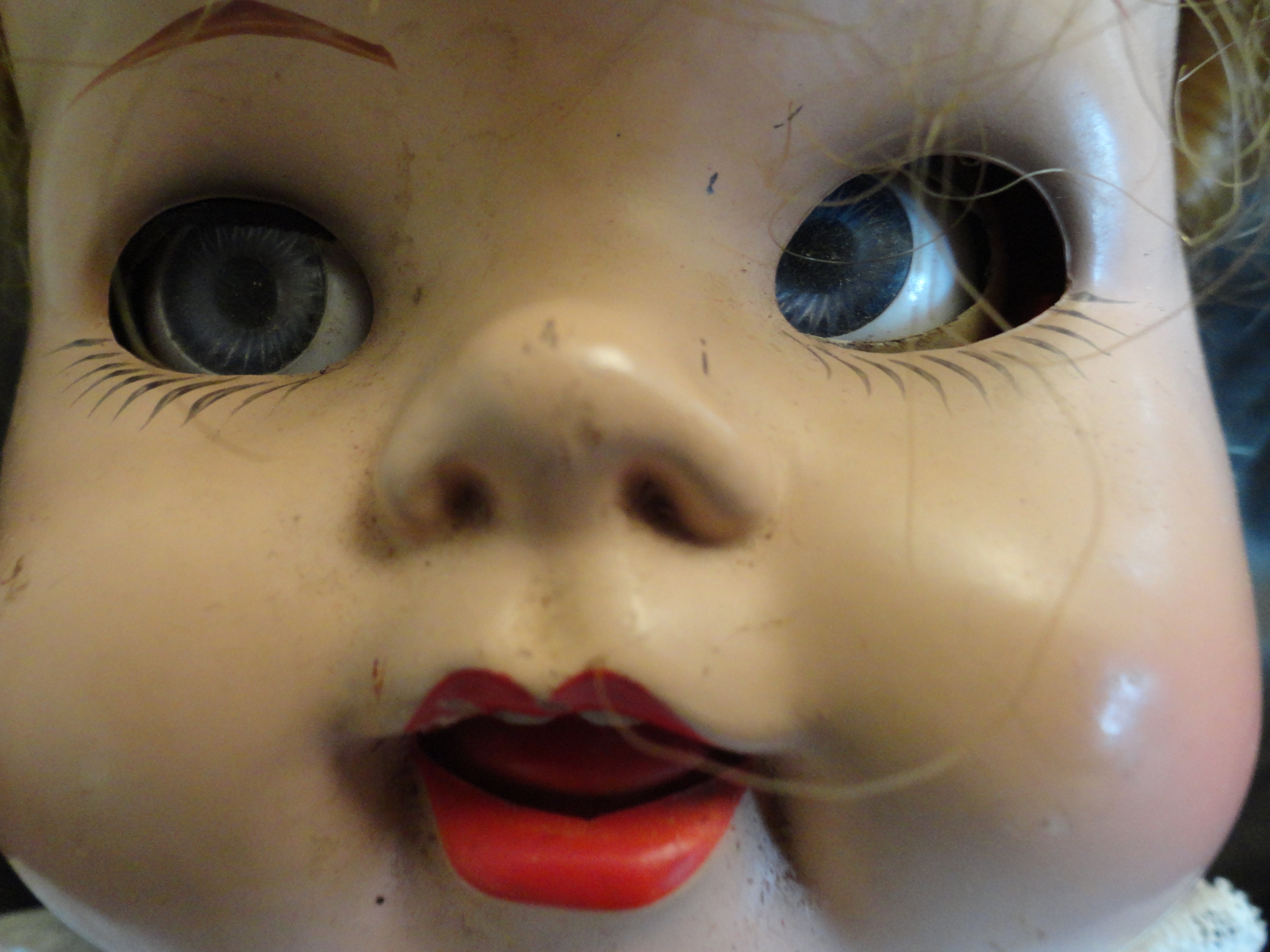
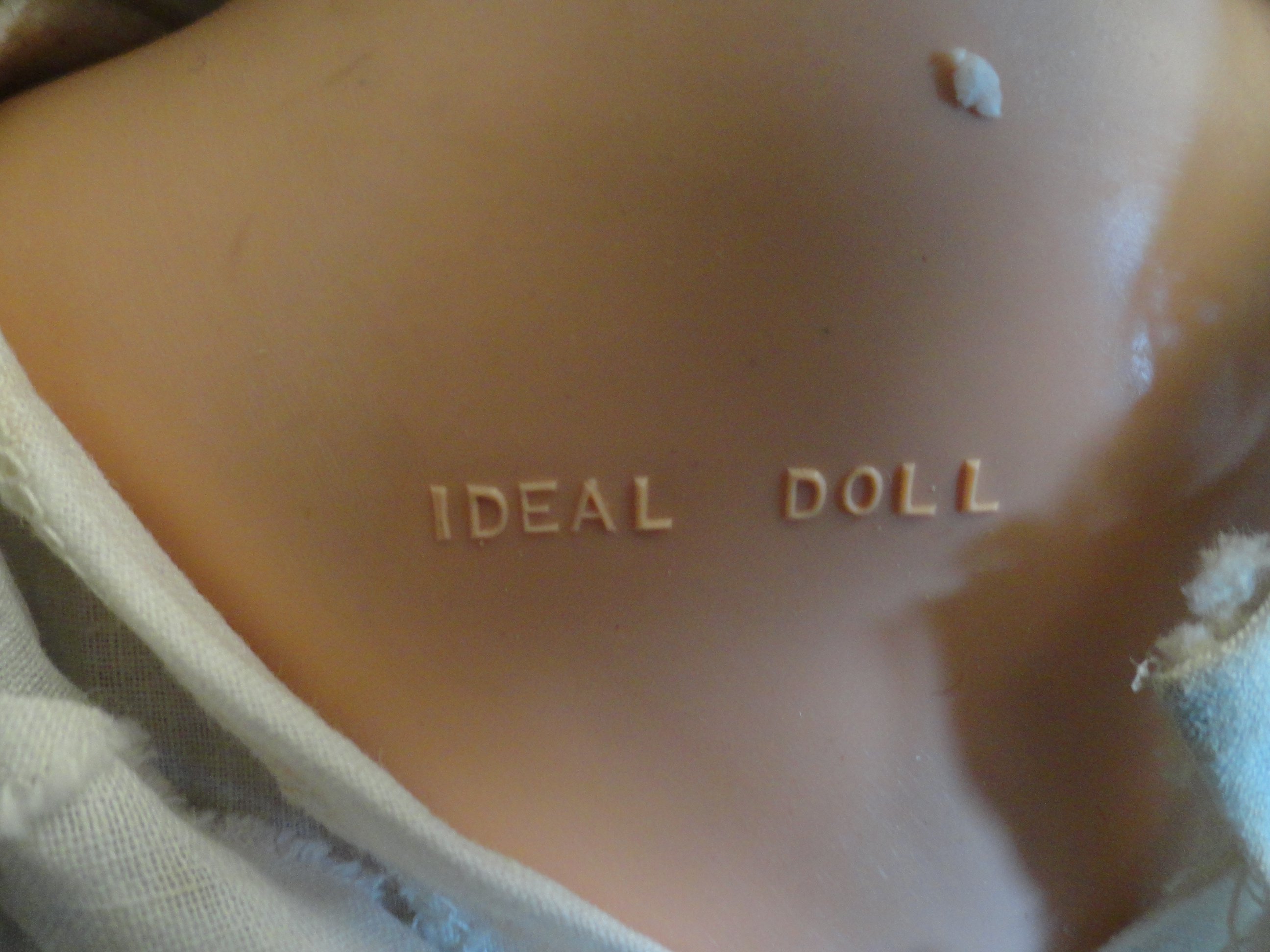
I find them where she has stashed them In a suitcase in her garage, and when I open the case and see the first doll staring up at me, I think it is a “find” from some antique store, like the dishes in my sister’s China cabinet or the tiny figures on her shelves. One rubber arm, sticky with age, has burst open and streams kapok like a froth of bleached and fermented blood. Other limbs have decayed to nothing but empty puddles of congealed rubber. Only the torso, held in place by a sagging pink fancy gown; and the face, stained red in places from some surface it’s been pressed against for too long, are still intact. As I lift the first doll from the suitcase, the other doll—the size of a toddler—stares up at me, one eye unhinged, her hair in pigtails sealed with rubber bands. When I lift her by one arm, her head turns, her legs pump and I realize this is my Ideal walking doll. When you raise her arms, one at a time, she walks toward you and her head swings, side-to-side. Hard and beautiful, she was not a doll to cuddle and she would not sit. She stood propped up against one corner of my room, rarely played with. What, I wonder, has happened to the bright blue dress she wore? Then I look closer and see that she’s still wearing it—faded to paleness even in the dark. What is here is original—her hair, her limbs, her dress, her petticoat—but her shoes and socks have been lost to another little girl, perhaps, or have jiggled off in some trunk and been left behind.

I’m 1500 miles away from home, yet I load the child-sized dollies into my boyfriend’s trunk: my sister’s doll in it’s fancy pink floor-length formal, my doll with her eye gone wild in its socket. They won’t make it home to Mexico in my suitcase this time, but it is impossible to leave them there in the suitcase to be thrown away by someone who has no memory of them. They are not collector’s items. They have been too neglected in their lives since they stood propped up in the corners of our rooms, then in the corners of our closets, the basement, my sister’s trunk and then her attic 800 miles from where they called us their owners and stimulated our imaginations to the extent they were able.

They’ll now reside in my boyfriend’s garage in Missouri until the time comes when I can carry them back in an extra suitcase or he can mule them down for me. If they were miniatures, I could include them in a retablo or a memory box, but each head is larger than the largest assemblage I’ve ever made. The closets of my house are full and overflowing, as are the wall-to-ceiling cabinets in my garage and studio and every area of my house where I’ve had room to build a closet. But I must use them. Give them some purpose for still existing other than to fill up room in some box on some cupboard shelf.

I imagine a memory box of gigantic proportions and suddenly, I have to make it, even if it takes up all the work room of my studio, and I start to plan how I could take my own doll back with me and what I’ll have to leave: the case of books that I’ve just had printed or my clothes or all the cartridges for my laser printer? If I wear a baby carrier, will they believe it is my baby, sound asleep? And what sensation will I cause when I try to stuff her into the overhead rack?

When I start to plan what else will go in the memory box with her, I remember the metal dollhouse sides and suddenly, I’m planning another trip back to Missouri, where I will make the mother of memory boxes—four feet square—and I wonder how my boyfriend will react to this and what I’ll do with it when it is finished. But somehow all these practicalities do not matter, because this dolly, relegated to corners for its whole life, is finally going to get played with!!!


The Prompt: Antique Antics: What’s the oldest thing you own? (Toys, clothing, twinkies, Grecian urns: anything’s fair game.) Recount its history — from the object’s point of view.


Image

Daily Post: The Avid Student

Today’s Prompt:  You can choose any person from history to teach you any topic you want. Who’s your teacher, and what do they teach you?

The Avid Student

Mrs. O’Leary, teach me how
please oh please, to milk a cow.
I won’t leave here till you do.
I’m bored today, and feeling blue.
Yesterday I baked a cake
with that new baker, name of Jake.
It didn’t rise.  It tasted awful.
Couldn’t eat but one small jaw full.
Day before I went to see
Joe the tailor.  Him and me
made a dress of chambray lace
but when I held it near my face
I found it itched me terrible.
To wear it was unbearable.
So I went on to see the preacher.
Wanted him to be my teacher.
But when it came the time to pray,
he found he hadn’t much to say.
I fear that I destroyed his faith.
I left him white as any wraith,
but found the cobbler in a pew
and asked him how to make a shoe.
He’d witnessed what the preacher did
and so he ran away and hid.
So Mrs. O’Leary, it’s up to you
to show me something I can do.
I know it’s dark, but I need right now
to know just how you milk your cow.
I brought a lantern.  I’ll hold it high.
It’s not real light, but we’ll get by.
I’ll just sit on this straw bale.
You fetch the cow and fetch the pail.
I love the way the hot milk steam
swirls around the rising cream.
I love the rhythm and the pomp
of my light squeeze and Bessie’s stomp
whenever I let loose her tit.
I cannot get enough of it!
But now we’re done and I can see
that bucket’s much too much for thee
to lift,  I’ll put the lantern down and
come with thee to give a hand.
I’ll come right back and close the barn.
Tomorrow, I’ll have quite a yarn
for everyone I want to tell
I finally did something well!!!!

For those of you unacquainted with Mrs. O’Leary, I include this description of The Great Chicago Fire of 1871:

“The summer of 1871 was very dry, leaving the ground parched and the wooden city vulnerable. On Sunday evening, October 8, 1871, just after nine o’clock, a fire broke out in the barn behind the home of Patrick and Catherine O’Leary at 13 DeKoven Street. How the fire started is still unknown today, but an O’Leary cow often gets the credit.

The firefighters, exhausted from fighting a large fire the day before, were first sent to the wrong neighborhood. When they finally arrived at the O’Leary’s, they found the fire raging out of control. The blaze quickly spread east and north. Wooden houses, commercial and industrial buildings, and private mansions were all consumed in the blaze.

After two days, rain began to fall. On the morning of October 10, 1871, the fire died out, leaving complete devastation in the heart of the city. At least 300 people were dead, 100,000 people were homeless, and $200 million worth of property was destroyed. The entire central business district of Chicago was leveled. The fire was one of the most spectacular events of the nineteenth century, and it is recognized as a major milestone in the city’s history.”

In the Open

DSC08727

In the Open

The day is balmy
with segmented clouds.
The African tulip tree
spreads its boughs wide
over the seated ones
as well as the one who stands in front of us,
leading us to ground our feet,
relax our arms with hands palms up
and to go inside ourselves
to watch our breath
and be in the now,
in the state that she calls openness.

To be in the future is not openness, she says,
and to be in the past is not openness.
Only the now is really living.
And it occurs to me
that when I think I want a cup of coffee
and leave my studio to go in search of it,
then, in the kitchen,
can’t remember what I’m there for,
(and the reason why so many
friends my age are doing the same)
is because we are in this state of openness
more frequently
as we get older.

Wanting a cup of coffee is in the future,
and remembering we wanted a cup of coffee
a few minutes ago
is having to remember the past.
Standing here in the kitchen
listening to the baby birds’
loud cheeps
from their nest in the kitchen overhang
is being in the now.

And so it is that all of us, as we age,
are in the deepest stages of meditation
most of the time
and should not worry so much
about Alzheimer’s or dementia,
because we are where Tibetan monks
and ladies leading meditation
would have us be.
Open. Living the now
with increasingly
less memory
for what was
or was to be.

NaPoWriMo Day 28: Looking Glass Menagerie

Looking Glass Menagerie

I am trying to escape the menagerie—
all those selves I hold in front of me
as well as the ones I have let escape.
Those that run ahead—
the ones that are my future selves—
are here, hidden in the portrait that you see.
Domineering, perhaps. But seasoned with
an awareness of what might have produced
all of the parts of myself I try to reign in.
This has produced a certain slowness to connect.
The natural is seasoned with a desire to honor dreams
of what I hope to be. When I look in the mirror,
I see them all: my mother and my grandmother
and my sisters. We demand, are stubborn.
Sometime we are martyrs, stifling tears.
Then suddenly, I pass them by like memories
of nightmares: all the anxiety attacks,
illnesses and heartbreak.
We are all wonderful performers,
using bad luck to fuel good.
The belles of our own ball,
we push back the grim news
of what we fear we really are.
Headstrong, we reach for what we can be.
Utterly addicted to change,
Tony or no Tony,
we are the stars of our own lives.

The prompt today was “to find a news article and to write a poem using (mostly, if not only) words from the article! You can repeat them, splice them, and rearrange them however you like. Although the vocabulary may be “just the facts,” your poem doesn’t have to be — it doesn’t even have to be about the subject of the news article itself.”

With massive tornadoes, politician campaign funding fraud, murder and mayhem being the main stories of the day, I was hard-pressed to find any good news to write about. Finally, I chose a very long theater review in the NY Times which I picked at like a foraging chicken, picking a word here, a word there. Above is the resulting poem.

Here is a link to the NY Times article from which  I drew words : NY Times Article

NaPoWriMo Day 25: She

She

She was fingers drumming lightly on my arm while I fell asleep,
a box of candy that my dad had to hide or it would be gone by morning,
fingerprints of bright coral rouge staining the top of her powder puff.
She was a girl’s rhymed diary that told of filling the church elders’ hats full of Bon Ami powder.
A fatherless girl sleeping with her sisters on a sun porch in Kansas.
A sister of a girl who wore a nightgown to a ball,
the sister of a man who couldn’t stop drinking,
the sister of a girl who died in the great flu epidemic of 1918
and of a father who died in the great flu epidemic of 1918.
She was the sister of a woman who died in childbirth
and the sister-in-law of a man she did not marry to raise her sister’s child.
A woman who liked radish and onion sandwiches
and cornbread and orange Jello with shredded carrots and pineapple.
She was a girl late to marry who lied about her age until in her nineties.
A woman who never told her real name to daughters
until her daughters were women as well.

She was a good friend who never revealed secrets.
A woman who finished her housework quickly to lie on the divan and read.
A woman with a mangle who ironed the body and arms of shirts
while her daughters ironed the collars and cuffs.
A member of the Progressive Study Club who wrote all the plays for State Conference.
The woman who wrote the play, “The Hillbilly Wedding”
that started out, “Ye critters and Ye varmints, we are are gathered here today
to wed this man and woman in hillbilly sorta way.
H’ebenezer, Hannabella, do ye promise to be true and always love each other?”
“We do, We do.”
She was the mother who played silly tricks on her pre-teenage daughter
and hid in the closet to see if they worked.
The woman who had all her teeth pulled on the same day and nearly bled to death.
A town girl who lived in a tiny trailer with my father on the empty prairies of Dakota
and traveled from dam building site to site with him the first year they were married.
The town girl with no bathroom, so they had to park by service stations to use theirs.
The girl who counted to see how long she could hold her hand in the oven
to determine when the heat was right to bake cakes in her wood-burning oven
and who swam with her mother-in-law in a large stock tank.

She was the woman who took her daughter out on summer nights to look for U.F.O.’s.
The woman who never learned how to play the piano
but insisted her daughter take lessons for 8 long years,
and the woman whose daughter never really learned how to play the piano.
She was the trainer of dogs and parakeets and baby bunnies
rescued from the prairie by my dad.
The assembler of Halloween costumes and the decorator of Christmas trees.
She was the woman whose Christmas decorations one year were entirely silver and pink
and who made an elaborate chandelier ornament out of sprayed coat hangers.
The woman who drove her daughters 60 miles to buy saddle shoes
and 150 miles in the opposite direction to see an eye doctor.
She was the woman whose husband loved babies—
the woman who collected spare babies in restaurants
to take them to her husband to hold
while their mothers finished their meals.

She was the woman who showed her daughters how to make
Philippine lanterns to use as May baskets.
The woman who dressed up as a witch for Halloween and was so good in her role
that she sent children screaming down the sidewalk.
The woman who took off her mask for the rest of the night.
She was the woman who made up long rhyming poems about what pieces of the body
were being handed around the circle in a darkened room on Halloween:
a peeled grape, a bowl of spaghetti, a piece of liver.
She was the woman who covered lamps with sheets and pinned on
paper ghost eyes, nose,mouth.
and who collected corn stalks for decorations.
She was the woman who loved Halloween
but loved Christmas even more.
The woman who hid grass nests full of jelly beans and sugar eggs
all over the house every Easter.
The woman who found one of her own nests when decorating for Christmas.

She was the woman who loved to read who could read her daughters like a book.
The woman who could sometimes read her husband like a book—
the woman who said, “What did you do? You brought home another animal, didn’t you?”
the day my dad entered the living room with a sheepish look,
even though he’d left the rubber boot with the tiny puppy inside in the mud room.
She was the woman who had said the same thing
when he brought home the bunnies, the kittens, the tiny mole, the raccoon and the magpie.
She was the woman with the quilted satin robe with the long train
that the baby bunny hopped up on for a ride around the house.
The woman who taught Chipper, the parakeet, to say,
“Hello, Betty Jo. Judy Kay. Judy Kay. Patti Adair. Gee you’re cute!
Gimmee a kiss (kissing sounds). Baaaaaaad Benny!”
She was the woman named Pat whose husband was named Ben.
They were the couple whom later we later learned were really
Eunice Lydia and Gerben Sylvanus.
She was the wife of a rancher but gave him three girls.
They were the ones to insist all three girls go to college.
She was the mother whose travels had extended from Kansas to South Dakota to Iowa
who gave permission for her daughter
to set out to travel around the world
when she was still in her teens.
She was the woman who convinced her husband to move to Arizona
the year her youngest went off to college.
The woman who sold her mangle and became a fashion plate again in her 50’s.
She was a woman with four swimsuits
who did 1,000 exercises in her Arizona pool every day.
A woman who went dancing every Friday night,
who tried to take up golf and failed,
who lay on her chaise on her patio and read books
while her husband went to the corner café to regale his new audience with old stories.
She was the woman who flew to Australia to visit her daughter.
The woman who traded houses every few years
for the fun of buying and decorating a new one.
She was the grieving wife who said, “Ben always hated that clock!”
and watched it fall off the wall.
She was a girl and woman and old woman who believed in ghosts
and who slept near Hadrian’s Wall in the haunted room
of an eleventh century Abbey in Scotland.
She was a woman who played with a cat on Dylan Thomas’s sea wall
and who slept in a room over a pub as well as the Grosvenor House in London,
where she saw Garfunkel walk across the hotel lobby.

She was a woman who liked to sit and look at the decorations in her living room.
An old woman who drank aloe vera and vinegar
and did leg exercises in her bed each morning.
An old woman who got a machine to help her read.
An old woman who listened to the news all day when her eyesight failed.
A woman who bought a breathing machine when her breath failed
and walked around her condo trailing a long rubber oxygen tube.
An old woman who lived to be 91
and who lived alone till the day she died.
A woman who put on makeup and jewelry and who dressed up
every day until the day she died.

I was her collaborator in writing silly rhyming poems to send to my sisters in college.
I was her collaborator the day she dressed like an old woman
and sat in my dad’s chair,
setting him up by saying, “Dad, there’s an old woman here,
and I can’t get her to say anything.”
When she sat hunched over in her white wig,
her shoulders shaking with suppressed laugher,
he said, “We’d better call the sheriff. I think she’s having a fit.”
She was the one who actually never grew old in my father’s eyes.
The one who lived alone for nearly 30 years after he died.
She was the one who wanted a boyfriend to take her dancing whom she didn’t have to kiss.
The one who wore the Evening in Paris perfume
I bought her every mother’s day
until I was in my teens.
The one who fed the baby coon with a doll bottle
and bathed and baby powdered it every day
and put it underneath my covers when I had the measles.
The one who went from matronly house dresses
to wearing my castoff college clothes.
The one who created a whole new life
when her children left and pulled my father after her.

She is the one who has been gone for 13 years.
The one who very rarely passes through my thoughts.
The mother who did what the best mothers always do.
Who released her children into the world and let them go.

Here is a link to the photo of my mother I wanted to use with this poem three years ago when I wrote it but couldn’t find then : https://judydykstrabrown.com/2018/08/01/parental-support/

Today’s prompt was to write a poem using Anaphora–a literary term for the practice of repeating certain words or phrases at the beginning of multiple clauses or, in the case of a poem, multiple lines.