Category Archives: Self-development

First Friends

DSC07187

The Prompt: Do you — or did you ever — have a Best Friend? Do you believe in the idea of one person whose friendship matters the most? Tell us a story about your BFF (or lack thereof).

First Friends

I am three years old, lying in my Mom’s room taking a nap. I can hear voices in the front room. The world comes slowly back to me as I rouse myself from the deep sleep I swore I didn’t need. I hear my mom’s voice and the voice of a stranger. I slide my legs over the side of the chenille-covered bed, balancing for a moment like a teeter totter before giving in to gravity and letting my feet slide through space to the floor below. I creak open the door, which had been left ajar. My mom’s voice gets louder. I smell coffee brewing and hear the chink of china coffee cups in the living room.

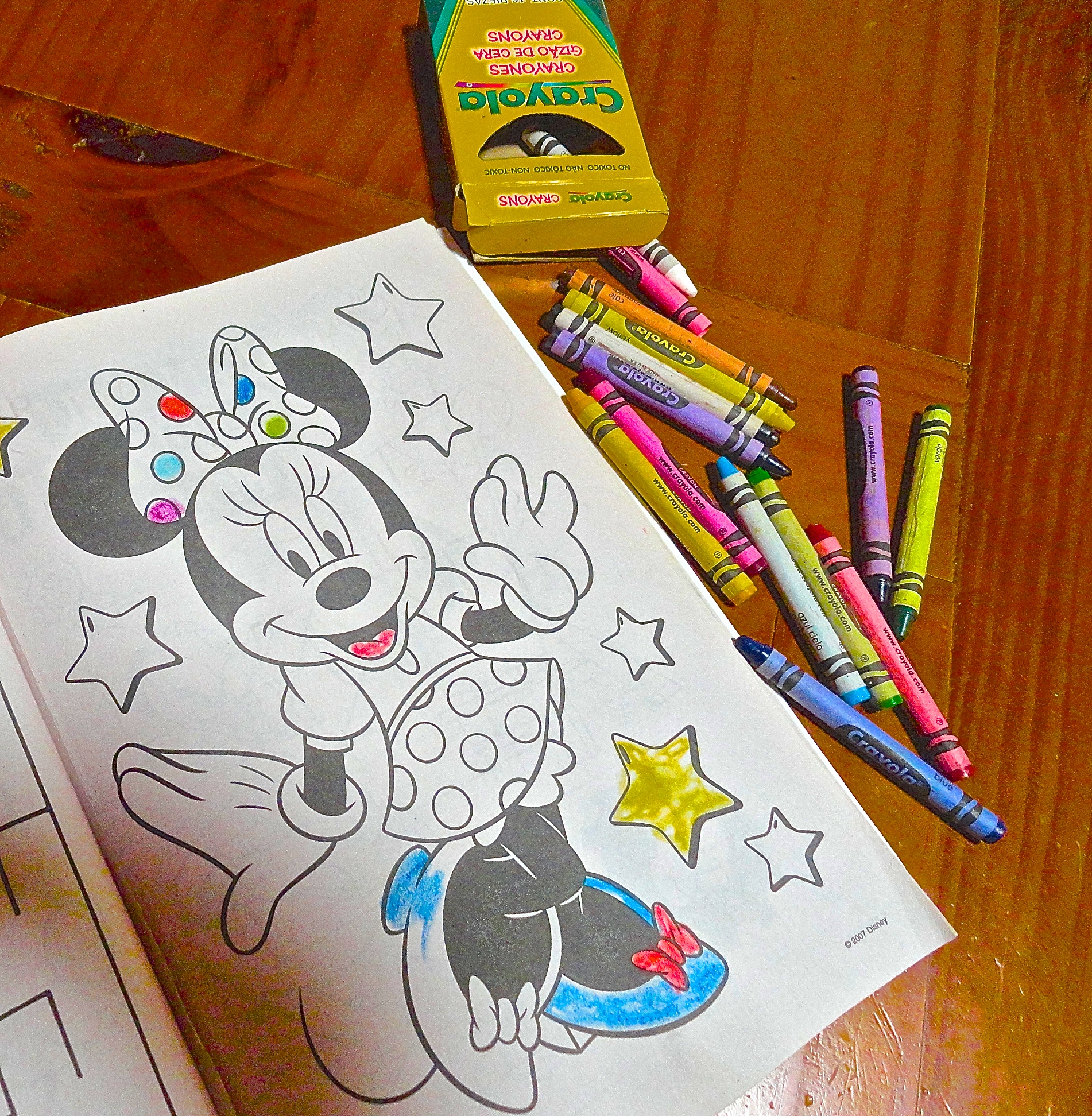
I hear a dull rubbing sound and move toward it—through the kitchen to the dinette, where a very small very skinny girl with brown braids is sitting at the table coloring in one of my coloring books. She is not staying in the lines very well, which is crucial—along with the fact that she is coloring the one last uncolored picture in the book which I’ve been saving for last because it is my favorite and BECAUSE I HAVE IT PLANNED SO THERE IS SOMEWHERE IN THAT PICTURE TO USE EVERY LAST COLOR IN MY BOX OF CRAYOLAS!

I sidle past her, unspeaking, aflame with indignation. Who could have—who would have—given her the authority to color in my book? I stand in the door of the living room. My mom is talking to a mousy gray-haired lady—tall, raw-boned, in a limp gray dress. My mom sees me, and tells me to come over and meet Mrs. Krauss. They are our new neighbors. They are going to live in Aunt Stella and Uncle Werner’s house two houses down. Did I meet their daughter Pressie in the kitchen? She’s just my age and Aunt Stella and Uncle Werner (who are not actually related to us, but just friends of my folks) are her real aunt and uncle.

The gray lady calls Pressie in to meet me. She is quiet and I am quiet. Then we go back to color at the table together. We drink orange juice and eat potato chips. We will be best friends for what seems like a lifetime but what is really only until we approach adolescence. I will have a love-hate relationship with her mother, who will continually set up competitions between Pressie and me to see who will win. She will try to coach Pressie first; but still, I will always win.

Pressie and I will play hollyhock dolls and dress-up. We play, sometimes, with Mary Boone; but her parents are too religious and don’t think we’re nice enough to play with her very much. I want to put on neighborhood plays and circuses, but none of the other kids want to perform. I want to play store and school, but Pressie eventually goes home to help her mother varnish the floors.

Pressie’s house is full of loud brothers and a sulky teenage sister. It is full of high school-aged cousins who tease us unmercifully and old ladies who come to play Scrabble with her mother. It is full of a missionary sister who comes back from South America and married brothers who come from Florida with babies that Pressie and I take charge of.

Pressie’s house is full of slivery floors that are always in the process of being varnished or de-varnished. There is one drawer in the kitchen full of everybody’s toothbrushes, combs, hairpins, hair cream, shampoo tubes, old pennies, crackerjack toys, rubber balls, lint, hairballs, rolled up handkerchiefs and an occasional spoon that falls in from the drain board above it. They have no bathroom—just the kitchen sink and a toilet and shower in the basement, across from the coal bin and the huge coal furnace. Their toilet has a curtain in front of it, but the shower is open to the world.

Sometimes when I am peeing, someone comes down to put coal in the furnace or to throw dirty clothes in the washtub next to the wringer washer. I pull the curtain tight with my arms and pray that they won’t pull it back and discover me, my panties down to the floor, pee dripping down my leg from my hurried spring from the toilet to secure the curtain. To this day, I have dreams about bathrooms that become public thoroughfares the minute I sit down. To this day, I get constipated every time I leave the security of my own locked bathroom.

Pressie babysits with the minister’s kids for money. I go along for free. She spanks them a lot and yells a lot. I think I can’t wait until I’m old enough to have kids so I can yell at them, but when Pressie is gone and the minister’s wife asks me to babysit, I don’t yell at them.

At Christmas I can’t wait to have Pressie come see my gifts: a Cinderella watch, a doll, a wastebasket painted like a little girl’s face, complete with yarn braids, books and toilet water from aunts, a toy plastic silverware set from my sister, stationery from my other aunt, playing cards, sewing cards, paint by numbers, a new dress. I run over through the snow to Pressie’s house to see her presents: a new pair of pajamas, a coloring book and new crayons, barrettes and a comb. In her family, they draw names. Quickly we run to my house, but she doesn’t pay much attention to my presents. She is funny sometimes, kind of crabby. The more excited I get, the more withdrawn she gets.

Later, I want to make snow angels in the yard and feed leftover cornmeal muffins to the chickadees, but Pressie wants to go home. Pressie always wants to go home. What she does there, I don’t know. She doesn’t like to read. None of us will have television for another five years. She doesn’t much like games or cards. I don’t know what Pressie does when she isn’t with me.

When she is with me, we take baths together and sing the theme music from “Back to the Bible Broadcast,” washing our sins away in the bathtub. We play ranch house in our basement. We pull the army cot against the wall and put old chairs on either side of it for end tables. We upend an old box in front of it for a coffee table. My grandma’s peeling ochre-painted rocking chair faces the army cot couch. We sneak into the hired man’s room and steal his Pall Mall cigarettes and sit talking and smoking. We rip the filters off first, which is what we think you’re supposed to do.

Pressie will always stay longer if we smoke. I blow out on the cigarette, but Pressie inhales. We smoke a whole pack over a few weeks’ time and then go searching for more. When the hired man starts hiding his cigarettes, we discover his hiding place and learn to take no more than four at a time so he doesn’t miss them. When he has a carton, we take a pack and hide it under the mattress on the army cot. My mother wonders where all the filters are coming from that she sweeps from the basement floor, but never guesses our secret.

Pressie spends more time with me than before, drops by almost every morning and always wants to go to the basement to play and smoke. Then the hired man finds another room and moves out and when Mrs. Church’s granddaughters come to visit, I will want to play with them but Pressie won’t. Then we will pair off—Pressie with Sue Anne, the girly one, me with Kate, the boyish one. We have a little war—mainly instigated by the sisters.

When the new farm agent moves in with two daughters—one a year younger than Pressie and me, the other a year younger than my sister Addie—I want to ask the girl our age to play with us, but Pressie won’t. I have a slumber party for everyone—all the girls we know. I invite the new girl, whose name is Molly, but no one talks to her much. She is shy and doesn’t push herself on us. No one else ever wants to include her. I go play with her anyway and spend the night at her house. Her mother is nervous, her dad cocky. Her older sister laughs nervously under her breath a lot, as does her mother.

Many years later, by the time we are in high school, everyone has accepted them. By then, all of those girls have parties where I’m not invited. They are always a little reserved when I come up to speak to them. Maybe they’re always reserved. How would I know how they are when I’m not around? Later, they all got to be pretty good friends. But in the beginning, I was everyone’s first friend.
“Adult”ery


JudycurlsJudycurls - Version 2

Unfortunate hairstyles of the past


“Adult”ery

I don’t remember, as a child, ever really thinking about what it would be like to be an adult in terms of where I would live or what I would choose as a profession. I do remember, however, two things I worried about.

First of all, I worried about what instrument I would play in the school band. I had two sisters, one eleven years older and the other four years older, who both played saxophone. As a matter of fact, there being 7 years difference in their ages, they both played the same saxophone! When I entered the sixth grade and was old enough to play in the starter band, I knew two things. #1: I had to play in the band because both of them had done so. #2: I had to find a way to be unique in doing exactly what they had done, and so I had to find a different instrument. This resolve was strengthened by the fact that my sister Patti was still using the “family saxophone.” As long as I was being different, I decided to stretch my uniqueness as far as it would go. No one in either the starter or the regular band had ever played a flute. It was exotic and not very heavy to carry. I would play a flute!!! Or rather, I would attempt to play a flute.

I faked it for two years, blowing energetically into the little hole as we sat in the band loft at games or marched along behind the regular band, practicing for parades or football games; but I never really developed much of a tone and my memory of which note was which was limited. It was really easy, though, to carry that little case about as large as a large pencil case the two blocks to the auditorium where our band practice occurred. My band instructor could not afford to be picky as there were only 200 students in the entire school system—grade school and high school combined—so every warm body available was required to flesh out the physical body of the band. If a few were miming, so be it. As long as they could stay in step for the marching band and didn’t play any really loud false notes, who would ever know?

When my sister left for college, she left the sax behind; and when I headed out for my first band practice as a high school freshman, I left that dread flute behind as I took sax in hand to continue the family tradition. I was not a whole lot better at it, but found something held between the lips and teeth was a lot easier than something held sideways and blown across and although the sax was heavier, it was held in a much more sustainable position than the flute, which was an exercise in arm isometrics as I held it aloft!!

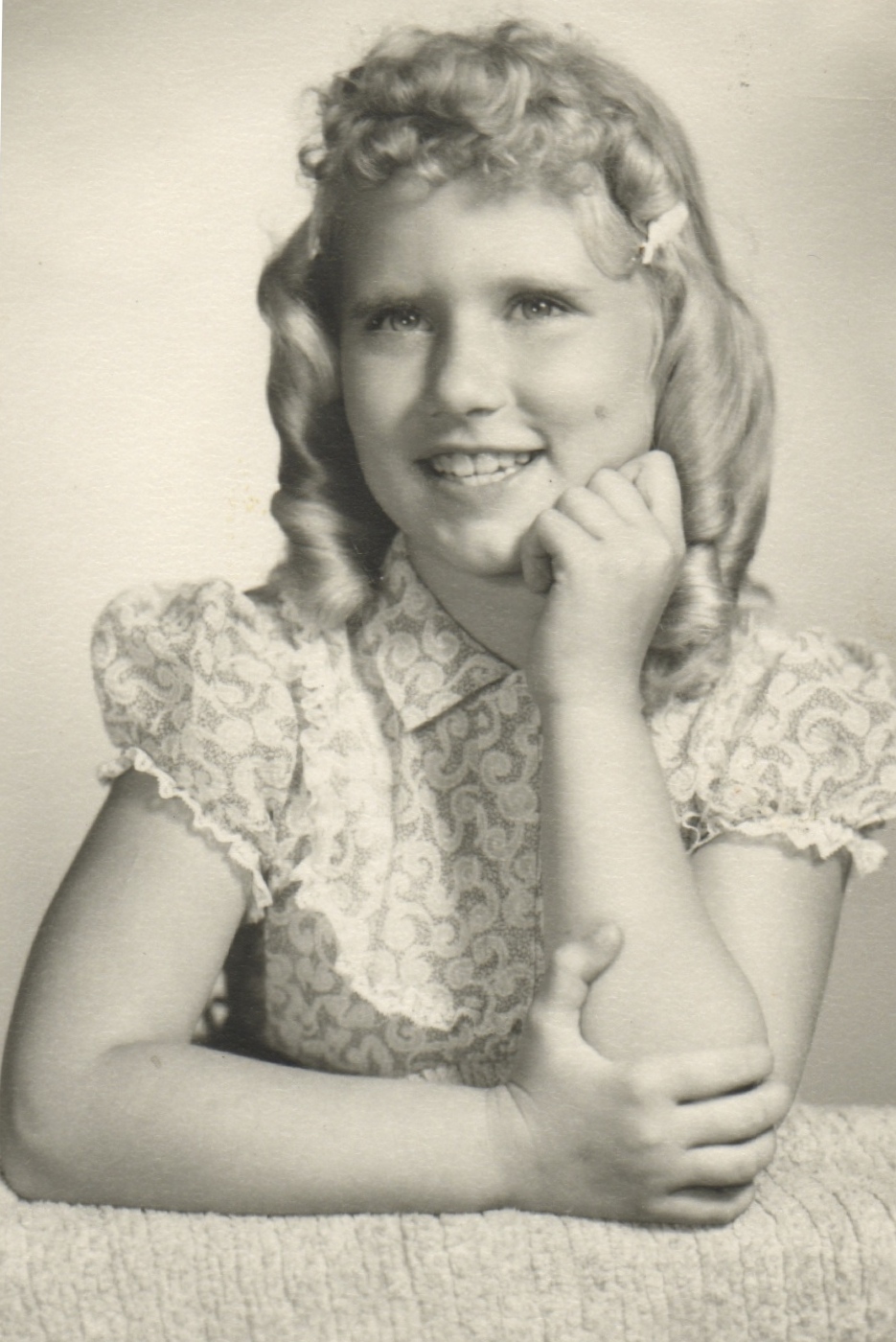
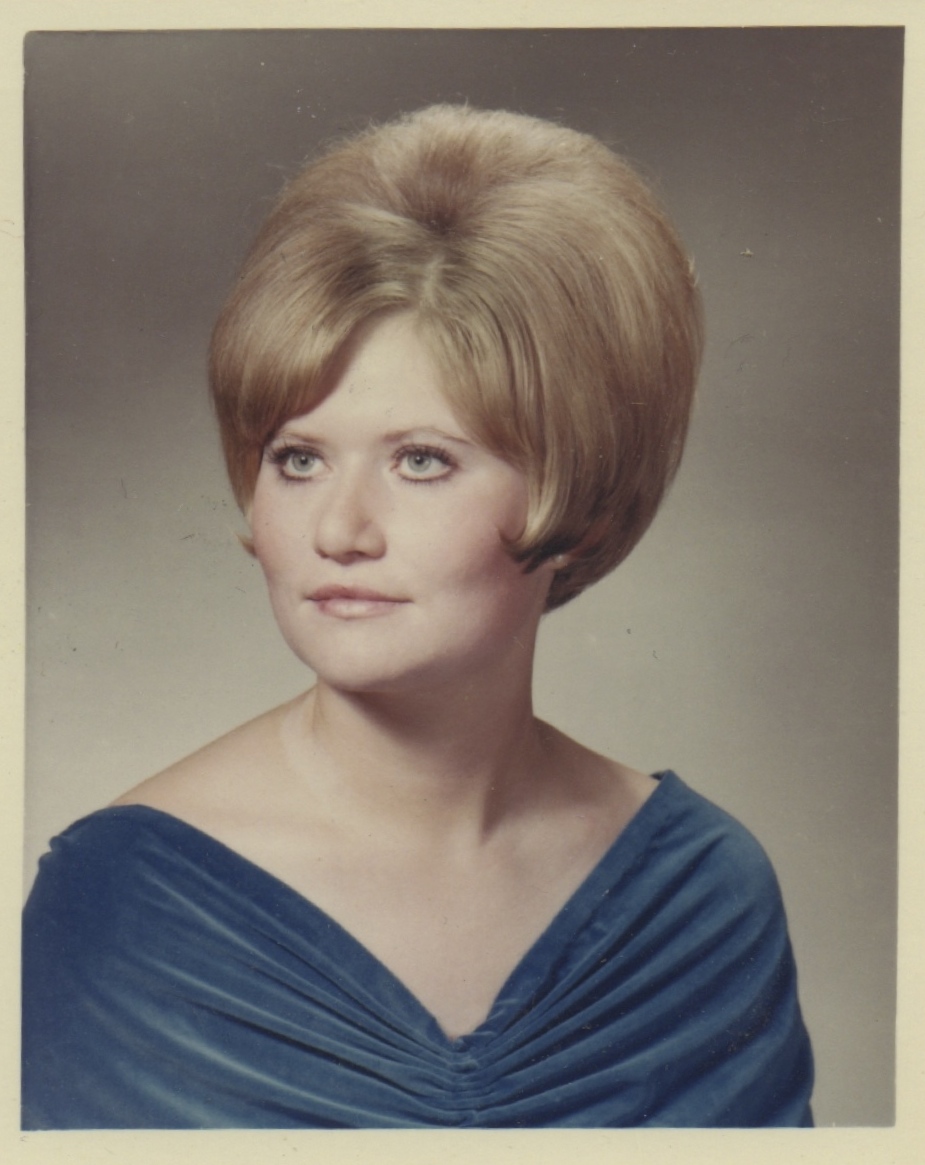
The second worry I had about growing up was how I would wear my hair. I would lie awake nights worrying about what hairstyle I would adopt when I could no longer sport the sausage curls my mother formed around her finger each morning. Shirley Temple, who had already grown to adulthood, needed to be replaced! My hair was too long, however, to duplicate Shirley’s bouncy little curls. It hung in fat tubes down beside my cheeks, offsetting my tight little bangs curled up each night in pink rubber curlers. For some reason, both my mom and I thought this made me look real good, and I am not exaggerating when I admit that there were nights when I’d lie in bed, tears streaming down my cheeks, worrying about what I would do when I grew up and could no longer wear curls!!

So now you know why I dropped the saxophone as soon as I graduated high school and why I had to move to Mexico to escape the shame of all those years when I allowed my mother to shape my esthetic sense of hair. I haven’t owned a curler of any type for 20 years. That saxophone was handed on to the next generation of my family and its mouthpiece, at least, met its demise when it snapped in two as my niece tried to grip it with the fourth pair of teeth in three decades. With a new mouthpiece, it survived four more years—hopefully this time with someone with more talent than I. I know not where it ended up. Probably in some second hand store or donated to some child who couldn’t afford an instrument. I hope it wound up with some talented individual who could restore its pride in itself.

Now that I have been an adult for many many years, I have conquered most of its demands. I have found many hairstyles, only a few of them more ridiculous than sausage curls (see my college picture above as an illustration of this fact) and attempted only one additional instrument, the guitar. Having played only solo or in duet with a college friend who tried to mold me into Joan Baez but failed, I did learn about seven chords and learned to adapt a whole succession of seventies songs to fit into those seven chords. I played for sing-alongs with the kids I counseled at summer camp and for groups of little neighbors around the world, who would come to my house on Saturday mornings to sing silly songs. And I have that guitar to this day. But I haven’t played it for years and harbor no illusions about my prowess. It is there for visiting friends who want to play for me and as a big, cumbersome, hard-to-store reminder that I can choose my own failures as surely as my own successes.

I am an adult like other adults—growing more childish year-by-year, but in my regression toward soft food and adult diapers, I will never sink so low as to repeat some mistakes of my youth. Never ever more sausage curls or flutes held aloft like punishment. And never again will I try to be different just to be different. “The Far Side” has shown that this is nothing that really needs to be aimed for. We all grow odd enough just following the path of nature, thereby furnishing the humor for all the generations that follow us.

The Prompt: As a kid, you must have imagined what it was like to be an adult. Now that you’re a grownup (or becoming one), how far off was your idea of adult life?

P.S. Thirty years after high school, when I was doing an art show in Oregon, a man walked by my display and then did an about-face and came back and said, “You’re Judy Dykstra, aren’t you?”  I admitted the fact and asked him how he knew me.  He said he was 5 years behind me in school in the small South Dakota town where I grew up.  He was a country boy and since we’d never been in school together, I didn’t recognize him but did recognize the family name.

“How in the world did you even know what I looked like, let alone recognize me thirty years later?” I asked.

“Well, a bunch of us used to collect in the the school library and look at old annuals,” he said.  “I recognize you from your high school picture.”  Suddenly, it all came clear.

“You used to look at them to laugh at all the funny hairstyles, didn’t you?”   Sheepishly, he laughed and admitted it.  I had hit the nail (or the girl?) right on the head!!!!

Old Friends

I was running from the time I woke up this morning until about 10:15 tonight. My guests have now gone and I’ve had 45 minutes to work on this prompt. It certainly isn’t my favorite, but I felt compelled to finish the assignment, lest it be the first day since April 1 that I failed to post! So, for what it is worth, here’s my near-answer to today’s prompt!!! Please note that much as you might feel you see yourself in this poem, the characters are purely fictional!!!

Today’s Prompt: Long Exposure—Among the people you’ve known for a long time, who is the person who’s changed the most over the years? Was the change for the better?

Old Friends

Our world turns and all of us
without much fanfare or much fuss
change constantly from day to day
in such a subtle sort of way,
we barely notice we have changed
until we find we are estranged
from those once near who now are far,
reaching for a different star.

While once we shared the usual aim
of husband, family or fame,
each thinks the other achieved less
though neither one could ever guess
that each achieved just what she wanted
sailing through her life unhaunted
by regrets of what she’s missed:
the shore unclaimed, the cheek unkissed.
One scored the ring and husband first.
The other sought to quench her thirst
for travel and remained unmarried
satisfying interests varied
from what most others chose to do—
each year her world began anew.

No little hand in hers, no need
to clothe and comfort, wash and feed
anyone except herself.
She sat alone upon the shelf
of life, unchoosing and unchosen—
well-preserved and slightly frozen.

The other birthed, lifted and carried
in a life both full and harried.
With kids and husband in her home,
she was rarely there alone.
Kept busy by her obligations
to neighbors, friends and her relations,
her life proceeded till near its end,
she chanced to come upon her friend
from long ago and tarried there
while both of them let down their hair.

Each found the place where she belonged
and neither feels unduly wronged.
One found her place in family—
contented in their company.
The other is quick to aver
she found her place inside of her.

No Fear

No Fear

We know within our hearts that personality
often cancels out what we can clearly see.
We all have known the men who, homely to the eye,
still have personalities sweet as cherry pie,
who win the ladies with their charm and humor that is wry,
causing them to line up for chances with this guy.

And the girl who’s plain until she starts to talk—
her face just so enlivened, you have to stand and gawk.
Made lovely by expression, intelligence and wit,
“beautiful” and “lovely” become the words that fit
when trying to describe this attractive little lass
who simply doesn’t bother with a looking glass.

Both have learned to conquer all their crippling fear—
to find the other side of doubt and kick it in the rear.
To face the world on their own terms and face it unafraid.
To take their rightful placement at the front of the parade.
But though we see what they have done, we do not always take
the road that for another seems to be a piece of cake.

You may find this poem to be most adolescent,
yet the feelings of our past most usually are present
throughout our lifetimes, though we seem to hide what we must feel,
leaving it to novelists and poets to reveal
the truths of all our agonies, the facts of all our fears—
all those things we’ve meant to face but yet hold in arrears.

I long ago discovered that writing must be true.
The only worthwhile topics are the things that bother you.
The lacks you find in others and the lacks within yourself
are what divide the poems in hand from poems on the shelf.
And so I must admit that fear’s my greatest hidden vice.
And since we all could do with taking our own sage advice:

I’ll say that with no fear, I would burn candles at both ends—
be as free with lovers as I am with friends.
I would have burned fingers, but an unbound heart.
All those lovely men, disregarded from the start
because I was too zaftig or not smart enough?
I’d face them nose-to-nose, and then I would call their bluff.

Today’s Prompt: Fearless Fantasies—How would your life be different if you were incapable of feeling fear? Would your life be better or worse than it is now?

Dreaming A Path

Dreaming A Path

Dream, Fri. Oct 18, 2013

We were at a booth in a café. It was a huge room with booths on every side and each booth had a clock, or at least I thought they did. I don’t think I ever looked. Our alarm started going off and there was no way to turn it off. It was by me and I tried and tried but couldn’t get it off. I said I was just going to unplug it, but Patti said perhaps it was timed with all the other clocks at tables and then it wouldn’t match. I said couldn’t they just reset it when we left? Someone agreed, but still we didn’t unplug it and it went on and on and on. Very annoying. Our booth came equipped with a little dog. It was tiny and light with long very curly white hair that was in loose corkscrew very long ringlets. It was so adorable and affectionate. I held it most of the time. It had legs like wires that went straight down..very skinny…and it jumped a lot. When the waitress came, we told her about the alarm and she said yes, she’d noticed that it was going off…but she didn’t do anything about it. We told her how cute the little dog was and she said yes…but then it seemed like it was the little dog who had the alarm that was going off. We ordered and afterwards I was wanting a dessert but thought I shouldn’t order one. Patti was to my right and I suddenly realized she was eating a very rich chocolate dessert—a sort of fudge flan or very moist slippery cake that was hot with a hot fudge sauce over it. She offered me a taste. It was a very small rectangle…not very big…but I tasted it and immediately said I’d have one, too. It was incredible. Still, the alarm went off. It was driving me crazy! Then I woke up and realized it was my own bedside alarm. I reached up with my eyes still closed and tried to turn it off, but couldn’t find the control. Finally I picked it up, opened my eyes and found the control. It was 8:10. The alarm had been going off for 10 minutes!!!!

My interpretation:

I found this dream in a folder on my computer. I have no memory at all of having dreamed it, and perhaps that distance makes it easier for me to interpret it. In a few weeks, I turn 67. For the past year, I’ve thought repeatedly about death and the fact that if I’m lucky, I probably have only 30 years left. For some reason, that awareness is very stressful. I feel a need to finish everything I’ve started and never completed. Earlier, that consisted of a lot of sorting, construction of storage spaces and weeding out of the contents of my house. That effort is ongoing. What also happened, however, is that I have an incredible drive to get everything published that has been lying around in file cabinets for many many years as well as a need to write new work and somehow disseminate it. My blog is part of that effort, as are my efforts to get all my books on Amazon and Kindle.

Seeing this dream as if for the first time, I clearly see that theme of time running out coupled by a sense of alarm that I need to do something about it. The little dog shows the attractive quality (adorable and affectionate) of finally dealing with all these loose ends—(note all his corkscrew hairs). Those wiry little legs that kept him always active certainly reflect the urgency I’ve been feeling to write write write.

One aspect of this awareness in my real life for a time consisted of my fear that I will stop breathing. This often gets me up gasping at night to run outside to try to breathe. For some reason I haven’t had any of these panic attacks since I started writing every morning. What I interpreted as a growing fear of death and a dread of ceasing to exist was perhaps a fear of not living and creating while I am alive.

I think the interplay between my sister Patti and me in the dream reflects a number of things. One is a difference in our approaches to life. I think in a way, she is more of a rule-follower and since she was my immediate pattern for most of my earlier life, I think a part of me feels this same need, but this is coupled with an equal and stronger need to create my own path in a direction unique from my two older and very competent sisters and to break a few rules to do so. At a very early age, much as I admired and imitated my sisters, I felt the need to prove myself. To find something to know that they didn’t already know. I found this route when I started venturing out at an early age to find new ground where they had not gone before me. It led me first into the homes of friends and strangers where I saw life being acted out in a manner entirely different from my own home. The road led further—to summer camp where I was a stranger to all and vice versa. I loved being the stranger. In choosing a college, I fell back on the reliability and comfort of attending the same school my sister had attended, but in my Jr. year I took my first big leap—a trip around the world on World Campus Afloat. That early adventure in seeing dozens of new and strange cultures set my life path. I’ve been traveling ever since and have been living in Mexico for the past 13 years.

I believe this dream depicts the sense of urgency I’ve had my entire life to “do” something with experience. My art and writing allow me to turn off the alarm for the hours in which I practice them. That small dessert might symbolize the rewards of doing what I need to do to do so.

P.S. An interesting insight I have had just as I started to post this: (And, interestingly enough, wordpress will not accept my blog entry. Perhaps it is insisting I add this P.S. before it does so.) I just got back to Mexico from a visit to the states wherein I visited my oldest sister Betty who is now in the depths of the world of Alzheimer’s. While I was there, she seemed increasingly distressed by the fact that she can no longer communicate, but one day as we were sitting in the living room portion of her small apartment in a managed care Alzheimer’s wing, she motioned to the middle of the floor and said, “Look a that cute little white thing there—that fluffy little white dog!” This was the first incidence that I know of of her actually hallucinating visually, and for some reason it popped into my mind in relation to the little dog in my dream. All of these images—of our dreams as well as our daily life—remind us to live while we can and to do what is most important to us. In my case as well as my sister’s—to communicate. Too late for her, although she continues to try. Not too late for me.

P.S.S.  By the way, the instant I completed the above P.S., the wordpress page that had continued to not allow me to post this blog entry flashed the message:  What do you want to post?  Text? Picture?  I chose text and and you have just read it.

The prompt: Freudian Flips. Do you remember a recent dream you had? Or an older one that stayed vivid in your mind? Today, you’re your own Freud: Tell us the dream, then interpret it for us! Feel free to be as serious or humorous as you see fit, or to invent a dream if you can’t remember a real one.

Note in response to this prompt: (When I think of dreams, I think of Jung, not Freud, and he continues to influence my thoughts and actions much more than Freud ever did.)


In the Open

DSC08727

In the Open

The day is balmy
with segmented clouds.
The African tulip tree
spreads its boughs wide
over the seated ones
as well as the one who stands in front of us,
leading us to ground our feet,
relax our arms with hands palms up
and to go inside ourselves
to watch our breath
and be in the now,
in the state that she calls openness.

To be in the future is not openness, she says,
and to be in the past is not openness.
Only the now is really living.
And it occurs to me
that when I think I want a cup of coffee
and leave my studio to go in search of it,
then, in the kitchen,
can’t remember what I’m there for,
(and the reason why so many
friends my age are doing the same)
is because we are in this state of openness
more frequently
as we get older.

Wanting a cup of coffee is in the future,
and remembering we wanted a cup of coffee
a few minutes ago
is having to remember the past.
Standing here in the kitchen
listening to the baby birds’
loud cheeps
from their nest in the kitchen overhang
is being in the now.

And so it is that all of us, as we age,
are in the deepest stages of meditation
most of the time
and should not worry so much
about Alzheimer’s or dementia,
because we are where Tibetan monks
and ladies leading meditation
would have us be.
Open. Living the now
with increasingly
less memory
for what was
or was to be.

Poetry by Prescription: “Alone”

DSC06650

Alone

Alone is not lonely
And single’s no sin.
Solo is only
a state I am in
because I need time
to do what I do.
To scan and to rhyme,
to create and to stew
both poems and soups
without watching the clock
or jumping through hoops
or having to talk.

I really like cooking
dishes for one.
I’m simply not looking
for “coupley” fun.
I like doing art
far into the night.
This freedom is part
of traveling light.
Going solo is groovy.
Single-handed is fun,
and it might behoove you
to try being “one”

instead of a brace
or a duet or pair.
You’ll have all this space.
You’ll have all this air.
Your closet’s your own
to fill up with shoes.
No sharing a phone
and no bathroom queues.
You won’t have to fiddle
with left or with right.
You’ll sleep in the middle
every night!

You’ll eat what you want to
and dine when you wish.
You’ll get to eat tofu
and never eat fish.
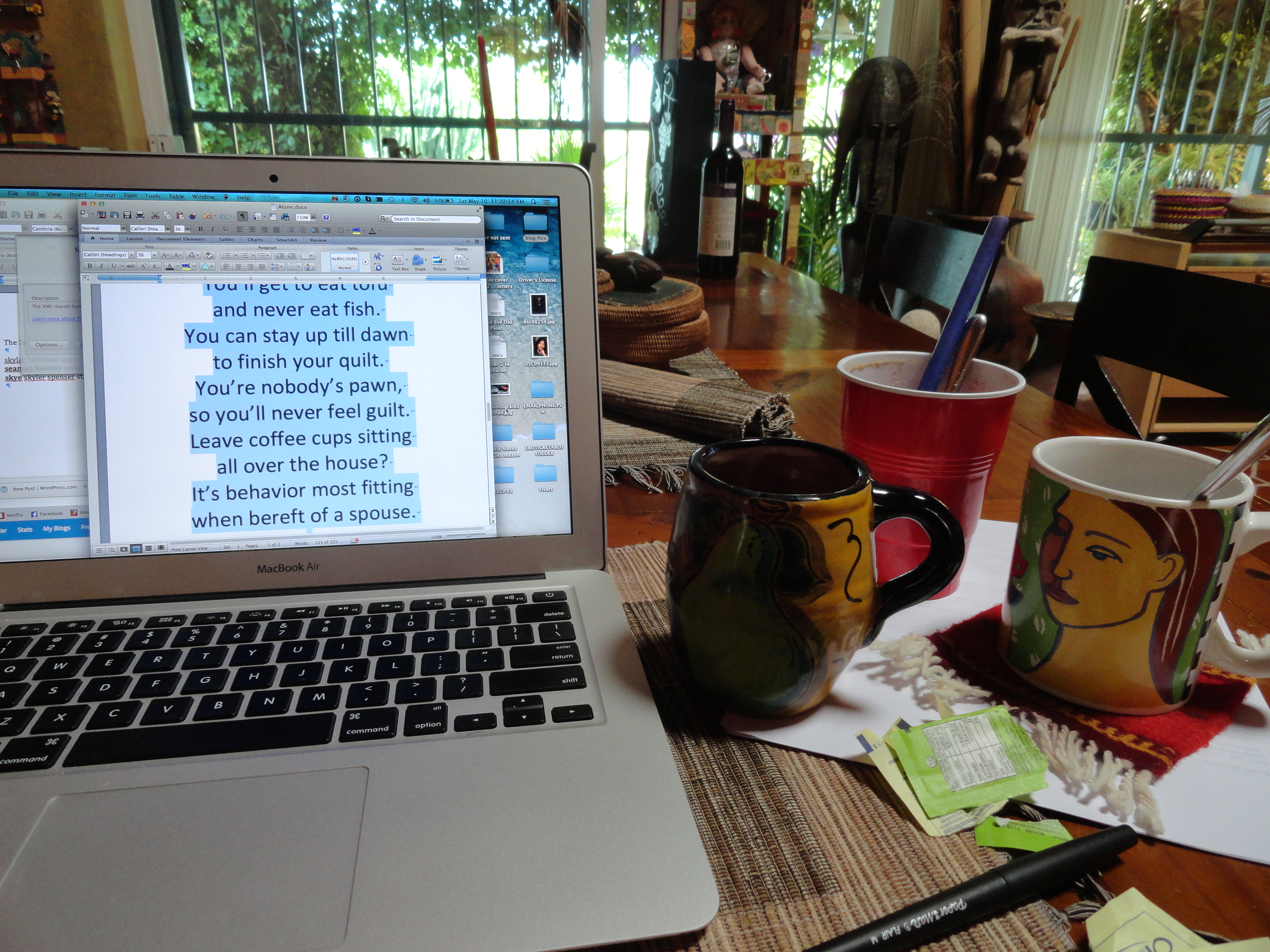
You can stay up till dawn
to finish your quilt.
You’re nobody’s pawn,
so you’ll never feel guilt.
Leave coffee cups sitting
all over the house?
It’s behavior most fitting
when bereft of a spouse.

Pop bonbons and read
all day in your bed.
You can meet every need
when you’re no longer wed.
On the other hand though,
you must walk your own dog
and when water comes slow,
must unclog your own clog.
When you blow out a fuse
and your lawn goes unmown,
there are no “honey do’s”
when you’re all on your own!


Today’s “prescription” came from my friend Betty Petersen, a wonderful artist, who asked me to write a poem about the single life. If you have a topic you’d like me to write about, please post it on my blog or send it via Facebook or email.


NaPoWriMo Day 29: Chew the Train

Chew the Train

A metaphor is a freight train
that gets us within 30 miles
of our final destination,
but we still have to catch a taxi to get all the way there.
And a simile is just a metaphor whose brakes have failed.
If we know that peanut butter
is like a circus on a tired tongue,
does it bring us any closer to the smell of peanut butter?
Elephants and sawdust
and sequined camisoles flavored
with the sweat of 100 performances?
Is that what peanut butter smells like?
Does it taste like candy apples
and too-bitter mustard
on stale buns
and hot dogs turned too long
upon the rollers of their grill?
Does peanut butter feel
like the unoiled bump of the Ferris wheel?
Does it sound like a calliope
or look like an ice cream cone?
Peanut butter is peanut butter.
I rest my case.

So how am I going to write a poem
without metaphors and similes?
How can I write verse
while telling the pure unadulterated truth?
How can I make you taste a poem
that is only itself?

How can I be Janis Joplin
when I’ve been taught to be Joni Mitchell?
A Rose is a Rose is a Rose,
said Gertrude Stein,
predating my insight
by a generation or two.
But this isn’t Paris,
and folks in Mexico
want a dollop of figurative language
in their poetry.

So let me say
that my mind is a busy beaver,
trying to fulfill this impossible task
of twenty little things.
I’m expected to imagine
how peanut butter sounds.
The sucking gumbo sound
of South Dakota mud
or thick mucus of a cold?
Anything but appetizing.
Ay, Caramba! you might say,
but if you were Australian,
you would say, “Don’t come the raw prawn on me, mate,”
and you would mean
“Don’t try to pull the wool over my eyes,”
or “Don’t try to con me, man.”

So let me just say that peanut butter is made
by grinding peanuts so finely
that all the oil comes out
and it acquires the consistency of butter.
It isn’t like butter
nor is it butter.
It acquires the consistency of butter.
This is literal fact.
But to know the taste of peanut butter,
you will need to spread a bit upon a cracker
and have a taste, or grab a finger full.
What you will taste will be peanut butter.
The truth of it. Its reality.

And only then will I tell you
that literal truth doesn’t always tell
the whole truth.

My friend says
it is the peyote leached into the soil
the corn grows from
that gives Mexicans
such a remarkable sense of color.
The bright pigments of imagination
flood his canvasses.
His peyote dreams leak out into the real world
and wed it to create one world.
“Peyote dream” becomes its opposite—
a freight train taking us into the universal truth.
A larger reality.
This stalk of corn, this deer,
this head of amaranth,
all beckon, “Climb aboard.”

So when you bite into a taco
or tamale, when the round taste of corn
meets your tongue, and pleasure tries to flow
like a lumpy river down your throat,
look up at the poet standing in the shadows.
She’ll call herself Remi if you ask,
but do not ask. Instead, look deeper
into the shadows she wears around her like a cloak
and see that it is light that creates shadow.
See the many colors that create the black.
Follow where the corn beckons you to go––
into the other world of poetry and paint
and dance and music. Hot jazz with a mariachi beat.
Chew that train that takes you deeper. Hop aboard
the tamale express and you will ride into your
new life. It will be like your old life magnified
and lit by multicolored lights and the songs of merry-go-rounds
and when you bite into your taco, it will taste
like cotton candy and a snow cone
and your whole life afterwards will be a train that takes you nowhere
except back into yourself—a Ferris wheel
spinning you up to your heights and down again, with every turn,
the gears creaking “Que le vaya bien.”
I hope it goes well with you
and that you see the light
within the shadow
and the colors
in the corn.

glass-gem-corn-2-460

Today’s prompt is called the “Twenty Little Poetry Projects,” and was originally developed by Jim Simmerman. Here are the twenty little projects themselves — the challenge is to use them all in one poem:

1. Begin the poem with a metaphor.
2. Say something specific but utterly preposterous.
3. Use at least one image for each of the five senses, either in succession or scattered randomly throughout the poem.
4. Use one example of synesthesia (mixing the senses).
5. Use the proper name of a person and the proper name of a place.
6. Contradict something you said earlier in the poem.
7. Change direction or digress from the last thing you said.
8. Use a word (slang?) you’ve never seen in a poem.
9. Use an example of false cause-effect logic.
10. Use a piece of talk you’ve actually heard (preferably in dialect and/or which you don’t understand).
11. Create a metaphor using the following construction: “The (adjective) (concrete noun) of (abstract noun) . . .”
12. Use an image in such a way as to reverse its usual associative qualities.
13. Make the persona or character in the poem do something he or she could not do in “real life.”
14. Refer to yourself by nickname and in the third person.
15. Write in the future tense, such that part of the poem seems to be a prediction.
16. Modify a noun with an unlikely adjective.
17. Make a declarative assertion that sounds convincing but that finally makes no sense.
18. Use a phrase from a language other than English.
19. Make a non-human object say or do something human (personification).
20. Close the poem with a vivid image that makes no statement, but that “echoes” an image from earlier in the poem.


NaPoWriMo Day 28: Looking Glass Menagerie

Looking Glass Menagerie

I am trying to escape the menagerie—
all those selves I hold in front of me
as well as the ones I have let escape.
Those that run ahead—
the ones that are my future selves—
are here, hidden in the portrait that you see.
Domineering, perhaps. But seasoned with
an awareness of what might have produced
all of the parts of myself I try to reign in.
This has produced a certain slowness to connect.
The natural is seasoned with a desire to honor dreams
of what I hope to be. When I look in the mirror,
I see them all: my mother and my grandmother
and my sisters. We demand, are stubborn.
Sometime we are martyrs, stifling tears.
Then suddenly, I pass them by like memories
of nightmares: all the anxiety attacks,
illnesses and heartbreak.
We are all wonderful performers,
using bad luck to fuel good.
The belles of our own ball,
we push back the grim news
of what we fear we really are.
Headstrong, we reach for what we can be.
Utterly addicted to change,
Tony or no Tony,
we are the stars of our own lives.

The prompt today was “to find a news article and to write a poem using (mostly, if not only) words from the article! You can repeat them, splice them, and rearrange them however you like. Although the vocabulary may be “just the facts,” your poem doesn’t have to be — it doesn’t even have to be about the subject of the news article itself.”

With massive tornadoes, politician campaign funding fraud, murder and mayhem being the main stories of the day, I was hard-pressed to find any good news to write about. Finally, I chose a very long theater review in the NY Times which I picked at like a foraging chicken, picking a word here, a word there. Above is the resulting poem.

Here is a link to the NY Times article from which  I drew words : NY Times Article