Category Archives: Story

The Skunk Saga Continues: March 17, 2025

Thank you to Yolanda and Yoli and Carmen and Oscar for being such wonderful friends and taking on my problem as their own!!!  Click on photos to enlarge and read captions.

I intended to just publish these photos of Yolanda, Carmen and Yoli helping  to deal with the damage the skunk had wrought the night before, but as you will see if you read to the end, there was an interesting twist that lead to my relating another skunk story from 24 years ago. . If you haven’t already read it, to read Monday’s story, go HERE,  Then return to this page to read the rest of the story.

On the morning after the great skunk attack, Carmen and Yoli arrived  for their usual  English lesson, but instead, generously bathed and rebathed the dogs in a solution of hydrogen peroxide, dish soap and baking soda while Yolanda washed their cages and pads.

After an hour’s efforts and another hour of lessons, when I returned to my blog, I found these comments by Annie and my responses

When I had published the story of my dogs being sprayed by a skunk in the early morning of March 17,  I could not remember the Spanish name for skunk and every time I looked it up in a translator, it gave the traslation “Mofeta” which I had never heard of. It was Yolanda, arriving for work the next morning, who reminded me that skunk in Spanish was zorillo (as in that other fictional midnight visitor Zorro.)

So it was with some surprise that when I finally found time to look at comments for my blog that had described the encounter,  I found these comments from Annie H: (I’m repeating them here, along with my comments durring the two-day conversation that ensued:)

Annie H March 17, 2025 at 4:42 AM:  Zorrillo = skunk. Mofeta is more of a badger-type of animal, still stripey but not a skunk

Judy: March 18, 2025 at 6:40 AM: This is uncanny, Annie. How did you happen to mention a mofeta? I blanked out on the Spanish name for skunk and every time I tried to look it up in a translator on either my phone or computer, it said the translation was mofeta. I knew this wasn’t right, but just tried again and it said the same thing. It was the next day when Yolada finally clued me in that it was zorrillo! I never did mention the word mofeta in my blog, however, so your mentioning it seemed a bit of mental telepathy. Is your AI reading the mind of my AI?

Annie H March 18, 2025 at 7:09 AM:  I like a challenge, even if it was nearly midnight here!Mofeta rang a bell and as we don’t have skunks in Europe, I checked it out. This is where common names become confusing, and I had to look at the Scientific names. Both Mofeta and Zorillo are Spanish names for Skunk.Then I found this:”The Spanish word Mofeta for skunk originates in Europe but skunks are not native to Europe. In French is mouefette and in Italian it’s moffetta. It could be a corruption of the word Italian word muffa which means – mildew, mould, must or mustiness. All of which smell bad, generally.Skunks are also called polecats. There is a member of the badger/marten family here called a polecat, it is one of the smelliest of that family. And is occasionally referred to as a skunk. Ignore my previous comment about Mofetta being a relative of badgers. So, I was confused, especially at midnight when I was thinking of going to bed! Once zorillo came up, I thought – that’s it, I’ve heard that one before. I include westerns in my reading material, so that’s where I’d heard it.

Judy, March 18: Even more amazing, Annie, that you should mention polecat. I’m going to reprint a story in my blog that is a chapter of a book I published 8 years after my husband’s death. Look at today’s post to read it.

:And here is the story that Annie’s comments prompted me to retell:

Finding Spirit through the Sense of Smell.

         Lourdes wants to throw away the used up Virgin of Guadeloupe candle glasses on the mantle, but I stop her.  It seems dishonorable, like abandoning  friends who have sustained injuries while acting in your service.

These candles have been burning almost continuously since I arrived in Mexico.  One is by Bob’s picture on the window ledge in the kitchen and the other by his picture in the large locket propped up on the chimney mantle in the bedroom.  The candle  that would be hardest to throw away was  purchased on a kayaking trip to Baja California a few years ago.  I’ve burned it on special occasions ever since and have used its last few inches to keep a vigil for Bob.

It is not that Bob is around me all the time.  It’s that he’s there when I need him, like my own personal spirit.  I don’t even know if I think he’s really aware of me.  The point is that I’m aware of him and appreciative of the valuable things he brought to my life.

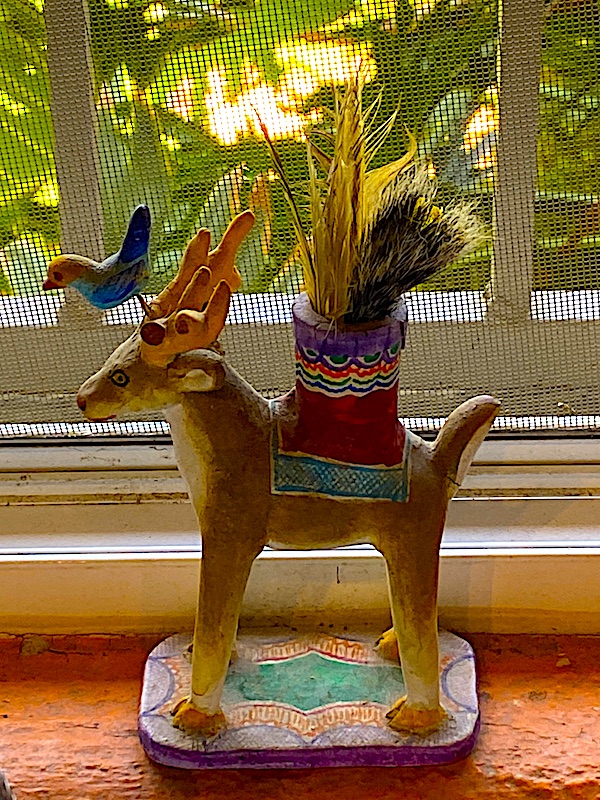
On that day in early December, after Pasiano the gardener left, I was overcome by a longing for Bob to be seeing the shadow of the tree outside the frosted glass of the bathroom window with the primitive Mexican sculpture on the window ledge, along with the blue glass jar full of papyrus.  I was so overcome by the beauty of the house and the view every single day.  With my heart, I wished that Bob could see it. With my brain, I knew that if he could see it now, as spirit, it would be unimportant to him.  When he needed to have seen it was while he was still in his body, still human enough to find beauty one of the most important things.

The day Rita and I moved my things into the house, Mario and I had moved Bob’s tall plasticine figure from the van up the steps to the second story studio.  He had made the figure in San Miguel and we had stored it in a storage facility here in Ajijic.  He had intended to cast it in Bronze, but in moving it, it had been much damaged.  I was not fond of it before.  I found it’s large feet somewhat silly–like a “Keep on Truckin’” figure.  Now I wondered about the integrity of changing it into something I liked  before casting it.  I feel the need to have his undone things finished for him–as I had done for 14 years.  His son Jeff had taken the only large metal sculpture which was not yet finished.  In the studio loft, I had found all of the molds for his sculptures.  Perhaps I would have them cast in Mexico.  Since we had worked so much together, even on the sculptures he finished in his life, it did not bother me to think of embellishing his bronzes in the way he had always done–each one different.

Bob had not been always with me since I moved to Mexico, but he had been much with me.  And although he seemed to be indicating to me what might be wise to do, his presence seemed more humorous than sinister.

On the day he died, skunks moved in under our house in California for the first time in 14 years.  The house was full of Bob’s kids and their wives, everyone working on a different project to honor Bob for his memorial celebration.  We could smell the faint odor of skunk, but were too busy to deal with it.  Maybe it would go away, we thought.  But on the day of his memorial celebration, we woke to an all-pervasive scent.  Debbie, our daughter-in-law, feared that we would have to cancel the celebration, but by afternoon the scent had wafted away.

A week or so later, I finally called the skunk removal man.  I had awakened in the middle of the night to a scent of skunk so strong that it brought me from a dead sleep.  “Bob,” was my first thought when I awoke, and before I fell back to sleep I expressed the deep sobbing sorrow I had expressed only a few times in the days since his death.  When I awoke, the scent  was gone.

Every day in the weeks before I finally left for Mexico, I smelled the odor of skunk.  We found seven different tunnels under the foundation into the dirt-floored part of the basement.  We sprayed, we trapped, we filled in.  In addition to three skunks, I managed to trap a mouse, a jay and three baby raccoons, who made such a racket that I thought I’d trapped a cougar.  As I opened the trap, they came tumbling out screeching, wrestling with each other,  frenzied in their need to be free.  But the moment they were a few feet from the cage they stopped, looked at me, then ambled back in my direction, more curious than frightened.

As I drove away from my home of fourteen years, I had more than skunks on my mind.  For four months, I had been packing, arranging documents, moving and storing and selling two lifetimes of accumulations.  I had closed down six studios, cleared out the two annexes to the wood studio, moved and sold and given away numerous tools.  I had engineered two moving sales with the help of friends, nursed Bob through two months of illness and three weeks of dying, talked to every friend either of us had ever made in our lives, written dozens of thank-yous.  Now I was about to drive alone to Phoenix to pick up the friend who would drive with me to Mexico.  But I was so bone weary that I could not keep my lids open.  The drive to L.A. was torturous as I bit my lip, slapped my face, jiggled my legs, turned the air conditioning on high, pounded my arms on the steering wheel until they were black and blue.  Somehow, I managed to keep myself awake.  When I dropped into bed in a motel north of L.A., I  fell immediately asleep.  The next day was just as bad.  Now and then through both days of driving, I would again catch the odor of skunk.  It was the cat, I’d think, but he was so buried in the mound of objects that filled the van that it seemed unlikely.  True, he had picked up the faintest odor of skunk from just being in the proximity of the odor for so long, but this scent that I smelled would come and go, whereas he was always present in the car.

Once in Mexico, the skunk theme persisted.  On my trip down with Bob, we had seen dead horses, dead burros, dead cows, dead cats and dead dogs in the road.  Once we had seen a possum, another time what appeared to be a badger.  But we had seen not one skunk.

On this trip down with Rita, however, we must have seen at least two dozen dead skunks in the road–probably many more.

Rita was in San Juan Cosala with me for about 4 days before having to return to the States.  After she left, the odor of skunk returned.  Every day I would catch a whiff –just one–of skunk odor.  Usually it was in the sala, but once it was in the bedroom.  Then a few nights after Rita’s departure, I awoke in the middle of the night to a pervasive odor of skunk.  I sat up, moved to the door to open it and smell the outside air.  Nothing.  When I returned to my bed, the odor was gone.  On the mantle, the candle by Bob’s picture flickered once, twice, three times.

The next day, I asked Celia if she believed in spirits.

“But of course,” she said. “What is important is that you learn to enjoy them.”

When I told her about the skunk odor, she said, “But if you had a candle burning, you should not have been able to smell the skunk. It is true, the candle it makes you not to smell the skunk.”

I then told her that that very day I had found the bag of Bob’s ashes in the closet.  The night before I left the states, my friends Dan and Laurie had brought over the seed-shaped urns for his ashes.  The plan was to fill each of ten urns with ashes, to seal them with wax,  and when the kids all came in May, to give each an urn to scatter as they wished and to scatter mine in the back yard.  His sister Barbara would get the remaining urn.  But I didn’t want to distribute the ashes by myself, so I had decided to wait until my friend Sharon came in December.  So, although Bob’s pictures resided in places of honor, his ashes were relegated to obscurity in the closet.

“Oh, we must bring Bob out of the closet,” said Celia.  “Tomorrow when we go to Guadalajara, it will be the first thing we do.”

And so within 24 hours, Bob was residing on the mantle in a terra cotta cookie jar with white spirals.  Next to him were the seed pod urns which seemed to number 11 instead of 10.  I knew this was for a reason, but I guessed that reason would reveal itself later.  After that time, there was no odor of skunk for two days.  Then came the day that my new friend Robert appeared at the gate.  It was the day that we went to the San Juan Cosala square and heard the computerized Christmas music at the shrine to the Virgin of Guadeloupe.  The day I met Michael and Nan.  The day we went for hamburgers in San Antonio.  My relationship with Robert was completely innocent.  There had never been a whisper of flirtation or sexual energy.  Yet when Michael called him “Bob,” it caused a shock wave to go up my spine.  It had occurred to me that his name was Robert and that Bob’s real name was Robert, but It had never occurred to me that this new Robert was a Bob as well.  My eyes teared over a bit, as they were wont to do at the strangest times.  Sometimes these chance mentions of something I associated with Bob would bring about a brief spell and then be over, but  at other times I seemed not to be able to contain the emotion, which would spill over in tears and sometimes sobs–especially in the presence of a sympathetic soul.  This was one of the times when the sensation passed quickly.

What would Bob think if he could see me out with another man?  Would he believe that it was innocent?  It was true that I felt still tied to him.  When the man at the Fiesta had asked me to have a drink with him, it was not just the fact that I was with Celia that held me back. I had answered him as a married woman might.  If Bob as spirit was aware of my actions in the world, surely he was also aware of my true feelings.  Perhaps more than I was.  So why was it that as we opened the car doors to go into the restaurant, that the familiar smell wafted over us?

“Huh, skunk!” said Michael, dispelling for once and for all the feeling that all of these aromas  might reside only in my imagination.

What I have written is the unexaggerated truth.  Perhaps a string of coincidences, but I prefer to call them synchronicities, and if I draw a measure of comfort from labeling this string of synchronicities as spirit–then what is the harm of it?

As Bob lay dying he yearned for me to accept his philosophy of life after death, in fact was angry with me for most of the last day we had alone together.  If I did not believe in his concept of a heaven where we could be together, then it made that union impossible.  He could not accept the fact that it could occur even though I had a different definition of life after death.  That I couldn’t accede to his dying wish is the thing that could torture me most if I would let it.  His irritation with me as I tried to nurse him and help him seemed just an outgrowth of his natural temperament and the intense pain he was going through.  The same thing had happened to my father.  Yet I wondered if part of the irritation was tied to what he saw as my stubborn refusal to accept his faith.  Over and over again he had asked me to read Swedenborgian literature.  I had tried, but the reading was so torturous for me and brought me so far from where he wanted it to bring me that I just couldn’t do it.  When I asked him instead to explain the philosophy in his own words, he couldn’t do it.  It was as hard for him to break through his wall of silence as it was for me to read boring pedantic words.

In this we were worlds apart–always were.  I needed to experience firsthand anything before seeing the truth in it.  For Bob, it was more a matter of reading about it and then spending long hours staring into space and thinking. I learned by talking or writing or doing.  He learned by reading and thinking.  He could never believe that  I could come to the same wisdom by experience that he came to through reading.  Nor did I ever feel that he had as much confidence and comfort in his faith as I had in mine. A few days before dying, he had approached the topic in his own way when he said to me, “I can’t believe that someone who professes not to believe in God could live her life so much as though she did.”  Now as I think about this I see that it is an exact statement of the difference between us.  He was coming so close to an understanding of  the similarity of our faith but his own faith kept him from seeing it as anything but a difference.

Somehow, as I lived on without him, I felt like this question of our communication was still being worked upon, each of us in our own way, with our own degree of dedication to the matter.  I continued to work out in life what he needed to figure out as pure abstraction.  That this could happen without either of us being kept from progressing on in the stage of life we were proceeding through did not seem impossible to me.  I was letting myself be led by Celia as well as the mystic happenings that continued to happen now and then.  In giving my whole life over to this new country, new friends, new experiences, I was trying to proceed along the path which would lead to what came next.  I had to believe that what ever path I took, I would carry Bob with me.   And it was appropriate to his personality that the messenger who brought me back to what I should remember was a bit of a stinker–insistent, beautiful, tenacious, impossible to deny with the senses.

It was my sister who reminded me a month or so ago that my dad’s nickname for me as a child had been “Polecat.”  I could imagine the two of them–Bob and Dad, who never met in life, meeting for the first time as spirits and coming up with this joint joke on me.  I hope it is true.  But unlike Bob, I don’t have total faith that it could be.  I just take the part of it I can hold on to.  And I hold on.

Judy’s note: I guess that what goes around comes around. Do you agree? There is a further tale to be told about my father and Bob’s otherworldly relationship that I discovered not long ago when going through Bob’s journals, but I may or may not tell it in the future.
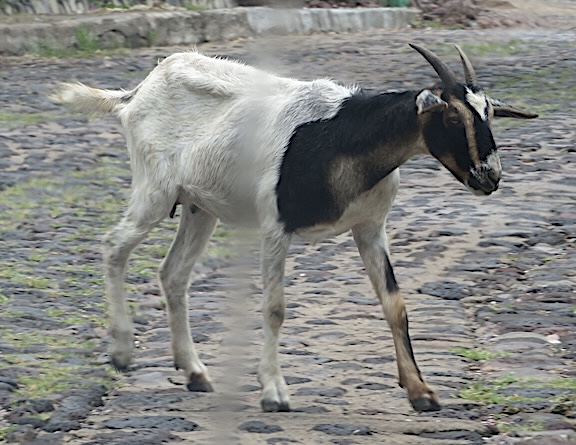
 

El Chupacabra, for RDP, Jan 7, 2025

El Chupacabra
(From “chupar”–to suck,  “cabra”–a female goat)

The Chupacabra–dread goatsucker, floats in the clouds. He is waiting for the sweet girl goat who trips home over the bowed bridge behind the Three Billie Goats Gruff.

One gruff Billie “Baaaaaaahs about heartburn. One more gruff Billie “Billllllleeeeees on about taxes. And the last gruff Billie “Maaaaaaahs about greener grass on the other side of the river––which may be reached, of course, only by crossing the bowed bridge.

From our removed vantage point, we can see, crouching under this bridge,
the Troll. He is poised to catch #1 Billie, then #2 Billie, then #3 Billie, and
as fast as he catches them, he gobbles them up.

Now, he is about to grab sweet Baby Girl Goat when––out of the clouds swoops the Chupacabra! His horns are sharp, his face is green. With whiskers for eyebrows, long hose mouth with suckers, thorns extruding from the suckers, eyes the color of a poinsettia flower flashing purple fire, mouth dripping saliva, claws flashing, opening, lowering to grab up Sweet Missy Goat Girl.

“Noooo,” we scream.  “Run!” we beg. “Look up!” We groan. But sweet silly Goatgirl only pumps her tail goat-fashion and lifts one hoof to raise it up to bridge level.  She shivers flies off her tender flanks, tossing her silken goat tresses as she does, bats her baby browns and trips onto the bridge, wondering, “Where is Uncle Billie?” And then, “Where is other Uncle Billie?” And then, “Where is Uncle Billie 3?”

As she reaches the bridge apex, she peers over and sees her own shadow only. She does not see the Troll’s long arm reaching up behind her. She does not see the shadow of the Chupacabra spreading larger over the bride around her. She turns her head sideways, wondering where her grumbling Billies have gone off to, and in the water sees another pretty goat girl leaning toward her. She leans forward toward the water girl, leans farther, until one well-turned goat hoof only supports her weight upon the bridge. Then, just as the Troll’s hand tries to close upon her arm, she tumbles over into deep cool water, and the Chupacabra, reaching out his long neck to drink her, sinks his suckers instead into the Troll.

The Troll, reaching in vain for the retreating Goodie Goat shape, feels the sweet piercing hot flowing of his black Troll blood into the Chupacabra.  Then the Chupacabra, tasting the blood, stops. Sputters. Withdraws his stickers. Distends his hose mouth. Spits. Spits bitter Troll blood. Reaches down to drink the river. Then spits out, drinks again, spits out again, draining the river until, his attempts to escape the results of his own actions executed too late, the Troll blood poison pulls him down to perish on the bridge, one claw touching the shoulder of the fast-fading Troll, one arm draping over a furry Troll paunch.

And they die in a monster embrace while down below, our sodden Goat Deb rolls over in the streambed emptied by the suckers of the Chupacabra, shakes mud from her curly coat, wipes hooves on the riverbank grass, trips daintily over pebbles to the other streamside, and gallops down the path.

And, the moral of the story? According to one troll scholar, it is:
–Don’t let some old Troll get your goat

Whereas Chupacabra experts say the moral to the story is:
–Once a goatsucker, next a moatsucker.

But I, after all, am the teller of this story, and I say the true moral to the story is:
–Be you a Billie Goat Gruff or a Chupacabra, never ask for whom the bridge trolls. It trolls               for thee!

For RDP Tuesday


Little Duck (for 99 Word Story)

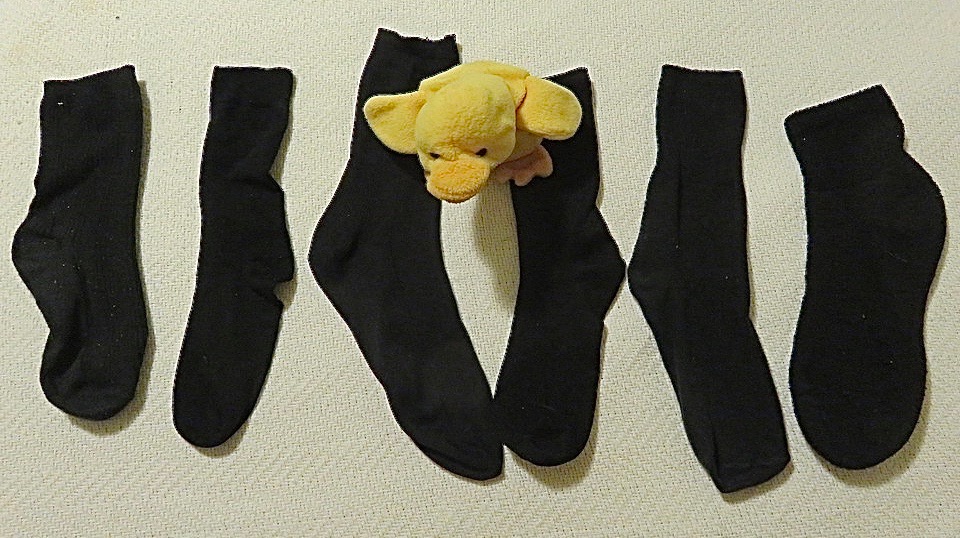
Little Duck can’t believe it any more than I can.  Out of eight socks taken out of the dryer, six of them are mismatched—which means each of them matches none of the others! You may think some look like they match, but none of them remotely do. If they are the same length, one is heavy and the other see-through. I cannot figure it out as I have even purchased two new pairs of black socks since I left Mexico. Mismatched socks are a Bummer!!! We may have to go buy me some new ones to console ourselves.


I think I’m too late to submit to this 99-word challenge, but here are some other Duckie stories from folks who discovered the challenge on time: https://carrotranch.com/blog/


Everybody Knows V: The Day that Death Came to Town

The Day That Death Came to Town

I do not know how long ago it was that the first person died. I was not told if it was a woman or a man, an adult or a child. I was told only that the person lived in the first house on the east side of town. Then, every day for 30 days, a new person died, always  on the same street in a straight line from the first death to the last, as Death visited house by house. Sometimes he would skip a house or three or five, but every day, he would visit a new house on that street, moving always Westward until at last, a month later, he passed out of town. Ever since, people have remembered the day the first death occurred as “The day that Death came to San Juan Cosala.”  I was told this story by someone who came late to San Juan, but she lived in the town for three years and she was told this story and repeated it to me.


Photo by lilartsy on Unsplash. “Everybody Knows” stories are supposedly true town stories passed down to me by different mouths.

What is Gained by What is Lost

A hummingbird’s wing on the mat near the cat food bowls too tardily filled is a morning heartache, as was the tiny squirrel tail weeks ago.  “It must have been a baby,” said the neighbor who had lately asked me to trim my brush below in my lower lot that has been a refuge for squirrels. They climb over the wall, across his broad expanse of lawn, to intrude onto his high terrace porch. They dine on his nuts set out for guests. Nibble the flowers in his flower boxes.

I offered him the tail as a gift from my cats, but he flinched and rejected their offering. The means to our ends are not always the choices we would make, but nature bows neither to mercy nor wishes. Things happen that other things may happen after them. Death births progress. Progress sometimes ironically breeds death.

Life is a circle even though our own pursuit of it may be a line—winding or straight, even or jagged. Seen in the great expanse of things, if such things could be seen, a molecular part in the circle that is beyond our imagining.

Too late, I scoop the kibble into their bowls. Take the small tail rejected as an offering and tuck it into an arrangement on my windowsill that it may continue to serve as part of the beauty of this world.


Innocents in Mexico, Chapter 21

San Miguel Desert Botanical Gardens (Click on Photos to Enlarge)

Innocents in Mexico

Chapter 21

            For the next three days, we packed as many explorations of San Miguel into our days as possible.  We took another tour of the botanical gardens, this time taking a longer path which wound down to the bottom and to the furthest edges of the ravine.  We explored ancient ruins, watched goats grazing near the water far below, watched boys diving into the water from the muddy banks.  Men stuccoing bovedas on rooftops  across the ravine caught sight of us and waved.  We ended up on the path that wound right up to the huge mansion which clung to the cliffside at the furthest edge of the botanical gardens.  Its inhabitants were the owners of the most popular restaurant in San Miguel.  When other restaurants were empty, theirs was always full.  When the city had prevailed upon him to give the land for the botanical gardens, the owner had complied, but when they had asked for the house, he had refused.  “You don’t give away your dreams,” he said.  Politicians had put on pressure, denied him access to city water for years, but he had held out.  Now the pathways of the desert gardens came within feet of his house, but he was still there.  His view was the best in San Miguel:  The city in the distance, the ravine and aqueduct and ruins below him, around him the beautiful virgin desert, much of it still blooming as we walked its various paths. 

A huge bird circled overhead.  Lizards and a brightly striped snake crossed our path.  Hummingbirds, bees, millions of giant red ants.  The ubiquitous black grackles, moving their widely fanned tails like rudders, swifts gliding and darting,  and those voluminous white clouds in the vivid blue sky.  The neighborhood we had narrowed our wishes down to adjoined the botanical gardens land,  but when we inquired about the price of lots, they were as much as we’d planned on spending for an entire house with lot. What Bob had decided he’d like to spend, that is.  He had settled on $80,000—the price that the stabbed woman had put on her house, lowering it because, after all, who wants to live in the same neighborhood with a man with a knife and a proclivity to use it? I was humoring him, sure that we’d never find anything for that price that we would want to buy. He loved looking at houses, and so did I. I just didn’t want to buy another one before we sold ours!

          A few days later, when Jim offered to rent or sell us his house for a figure within our budget, we switched our focus back again to reality.  We could finish the compound wall, build a studio, finish tiling the house, but when we asked a builder for estimates of what this would  cost, we figured  that it would end up costing about what any of the  places closer to the jardin would cost.  In Jim’s house, we’d have privacy, a larger lot, a bigger studio,  but in a neighborhood where it would be harder to sell in the future.  If we didn’t want to buy, he offered us the option to rent for a year or two so he could go to South America with his girlfriend, and if we couldn’t find another house to rent for a year and a half, this was the option I preferred

            On the plus side, it would get Bob’s mind off wanting to buy a house. On the minus side, our next door neighbors on one side were rowdy, the street in front of their house a gathering place every weekend for men with beer bottles and loud voices.  The neighbors to our rear and other side were both metalsmiths, who often worked into the evening.  One of their sons was a drummer who practiced daily on a large oil drum.  The other was a whistler.  True, so far, we had not been bothered by these sounds of activity, but, who knew how we would feel months or a year from now? 

            We loved the sounds of children playing on the huge empty field across from us.  We loved watching people crisscross the field to and from Gigante.  However, trucks and jeeps also  used it for four-wheeling, and it was strewn with garbage:  Coke bottles, water bottles, plastic bags, old tires, mounds of broken bricks, stone and cement dumped after building projects, tangles of barbed wire, tin cans, burned logs.

             Every unoccupied lot in San Miguel became a repository for the rubbish of the neighborhood.  Everyone drank Cokes and bottled water, and when the plastic bottles were emptied, they were tossed:  out of car windows, into window grids, onto spare lots, onto city streets, into ravines and lakes and rivers.  There was garbage collection and women faithfully walked to the curbs to hand over their household garbage, but when walking or driving or riding, the custom was to toss it.  Highways nationwide––or for as far as we had seen––were rimmed with garbage.  Coca Cola had done more to ruin the scenic beauty of Mexico than any single force.  If it wasn’t their huge billboards or graffiti-like paintings on brick buildings city wide and country wide, it was the solid  expanse of empty plastic bottles which paved the desert, the grass or the shoreline which bordered every road. 

            San Miguel was a beautifully preserved colonial town with strictly regulated ancient buildings, churches,  monasteries and cobblestones.  Its central zocalo––known as the jardin––was the place where lovers met and musicians played and children frolicked.  Here benches lined the square and people sat to watch children, lovers, tourists, toy venders, beggars, neighbors, students, ice-cream eaters, scooter riders, ball bouncers, survey takers, shoe polishers, Spanish practicers and fruit sellers.  Overhead was the dense foliage of trees.  Around the outside of the square were the buildings hundreds of years old. 

            Within the jardin, sidewalks formed a square within a square with intersecting crisscrosses.  Every twenty feet or so there arose a bronze stake.  Antique, curlicued, topped with a rubbish container shaped vaguely like a mailbox, but patinaed, ornamented, lovely until you saw it from the front.  There, emblazoned over the slot where the rubbish went in, in six inch high letters, was that ubiquitous script. “Coca Cola “it said, on each rubbish bin.  Dozens of them marched the jardin like town criers, reminding us, “Never forget.”

             The most constant presence in Mexico was Coca Cola.  On one expanse of road,  I spotted eight building-sized signs for Coca Cola and  two for Pepsi Cola within a one block area.  And in the ditches country-wide lay discarded bottles, like stepping stones between the few blades of grass that poked between them.

            True, there seemed to be some awareness of litter as a problem.  Here and there, you see a sign “No tire basura” (Don’t throw trash) on a spare lot or along the roadway, but  few heeded them.  They had become invisible.  City dumps, more often than not, were located right next to major roadways.  Handier that way, I guess. 

            As we were discussing the possibility of visiting Mexico and then moving there for a year or more, Bob had started reading what material was available in that pre-internet age. In addition to San Migel de Allende, he had been attracted to two areas, mainly because they were situated by very large lakes.  He had often told me that he had always wanted to live by a lake, and now he suggested that in the couple of weeks we had left before we had to be back for my mother’s memorial, that perhaps we should take a weekend off and investigate both of them: Lake Patzcuaro and then the largest lake in Mexico, Lake Chapala, Then, coincidentally, at a restaurant with tables placed too close to each other to avoid becoming conversational with one’s neighbors, we entered into a discussion with a couple from Ajijic who I had heard discussing the fact that public outcry had caused local politicians to decide to move the dump from a much-used cut-off road between two of the most popular towns on the lake to a more hidden location.  They said, in fact, that along the whole expanse of the lake, rubbish seemed to be less of a problem than usual.  As the lake shrank away from its banks, hundreds of yards of lake bottom were exposed.  Here cattle grazed, four-wheel-drive vehicles turned wheelies in the dried dirt, boats lay earthbound, blocks from the nearest water.  On weekends, locals thronged to makeshift palapas constructed on the former lake bottom to drink beer or Cokes or Fanta.  Yet there was very little rubbish.

           In one subdivision, double oil barrels were placed on each block along the road to serve as trash receptacles, but elsewhere, even where there were no rubbish bins, there seemed to be vastly less littering.  Construction crews still piled their leftover stones, dirt, concrete, bricks and rebar  on spare lots, to be dealt with by the next building crew, but piles of stone and brick and wood seemed less intrusive than thousands of plastic corpses of drink containers and shopping bags.  Also in this area, as in the area around Lake Patzcuaro, there seemed to be more people out along the road searching for recyclable bottles.  Why, in this era when so many items––from clothing to deck materials––are made out of recycled plastic, can some program not be started in Mexico, which could make it profitable for people to collect this unsightly litter and turn it from a liability into an asset?
          It seemed a sign. Bob used this conversation as a springboard and once again suggested that we at least quickly investigate the other two towns that had intrigued him in his reading about Mexico.  So it was that we decided to head off for a short sortie into the wilds of Mexico.  First Patzcuaro, then Chapala, before signing the year-and-a-half lease for the San Miguel house. We still had a few weeks before we needed to be back in the states for my mom’s memorial in South Dakota. Why not spend them making sure that San Miguel was really the place for us?

For Chapter 22, go HERE.

Innocents in Mexico, Chapter 18

Innocents in Mexico

Chapter 18: Rooftops

            First of all, in Mexico, almost everyone has them:  flat rooftops.  They are reached by stairs or by wrought iron ladders attached to the side of the buildings or by  tightly spiraled metal staircases.  Many serve the purpose of a security system by serving as home for the family “roof dog.”  These dogs, not as plentiful nor as vocal as in Oaxaca, nonetheless exist in San Miguel as well, where they  live their entire lifetimes on the roof.  When people pass by on the street, they bark.  When fireworks go off and other roof dogs bark, they bark back.  Should anyone attempt to climb onto the roof to gain access to the house, they bark louder. 

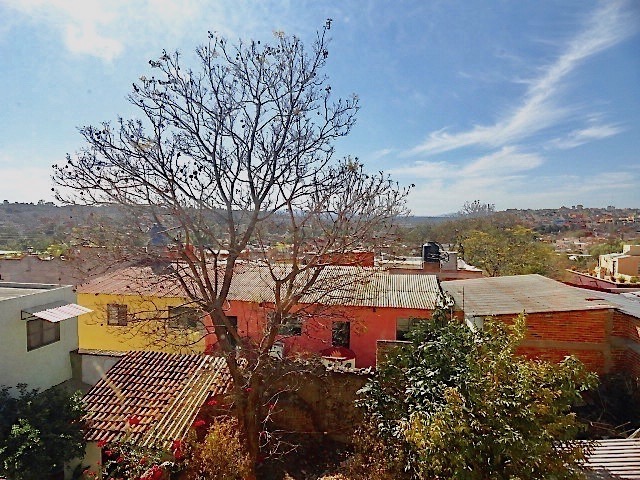
            Since we had rented by far the tallest house in the neighborhood, we got to look down on all of the other rooftops.  We tended to go up on the roof at least once a day––usually to observe the sunset, or fireworks, or to just look at the incredible panorama of 360 degrees of blue sky dotted with white clotted clouds.  These San Miguel skies astounded us.  We had lived in the California redwoods for too long.  We’d forgotten what it was like to see the horizon. 

            Other people seemed to use their roofs for other things.  On each and every one, there was a stack of old lumber, twisted wire and bricks.  On many were piles of curved clay roof tiles.  From the tops of the brick columns at each side of the house and at intervals along the walls extended the bumpy heavy wires of rebar.  Like particularly tough bristles, they sprouted  from the tops of the houses in clusters, ready and waiting for the next story, to be added as the money appeared to build it.  This was an ever-present activity in San Miguel.  In no place where we’d stayed in the past weeks had we been freed from the sounds of construction.  After men came home from work, they would go to the roof and add a few bricks.  The pounding of their mallets to set the bricks extended far into the evening. 

            The other purpose of roofs seemed to be to store pop bottles.  On most of the roofs spread below us were case after case of Coke bottles.  Why they hadn’t cashed these in, we had no idea, since a considerable amount of the price of each bottle of coke or beer covered the price of the bottle.  For a liter bottle of Corona, a third of the price was the bottle deposit.  Perhaps this was their bank––hoarded Coke bottles on the roof.  Perhaps they were waiting for the price of Coke bottles to go up––like the peso.  Or perhaps they were waiting to cash them in to buy drinks for their next fiesta.

            Other rooftops displayed geraniums in clay pots.  We never saw them being enjoyed or tended to.  They were just there.  For our pleasure, perhaps, since no one else ever went to the rooftops except to shovel roof dog poop.  One night, as we stood watching the sunset, we saw two women climb the stairs up to their own rooftop.  So people did watch the sunset here, too, I thought, but for the half hour they were on the roof, they sat on chairs talking, their backs to the setting sun.

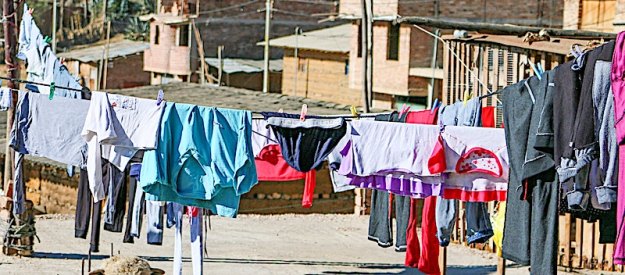
            Aside from Coke bottles, geraniums and construction materials, rooftops were proper storage places for:  old bicycles, extra flowerpots, broken and sound, shovels,  pickup bed covers, folding chairs, half-used buckets of paint, old bed springs, rain barrels, extra tires and purloined shopping carts from Gigante which were upended and appeared to be used as some sort of kennel, although we never saw any animal inside.  It was well into our second week in the house when I thought to go up on the roof during the day.  It was then that I saw activity, for women had stung clotheslines in the bright late morning sun and were hanging clothes.  From rooftop after rooftop, the bright flags of socks, undershorts, pants and shirts hung like fiesta decorations across half the rooftops within vision.


Photo of rooftop washing day by Gwendolyn Anderson on Unsplash

For Chapter 19. go HERE.

Innocents in Mexico, Chapter 15

Innocents in Mexico

Chapter 15

            Mexico was a libertarian’s dream.  Although major roads were maintained when the potholes got big enough to cause accidents,  government maintenance of lesser roads were rarely dealt with promptly, if at all.  Here, if a neighborhood wanted a paved road, they got together to buy the cobblestones and hired someone to lay them, or pitched in to build it together.  Rules were few.  Although there were stop signs, few stopped at them.  Not even the police.  Here whole families rode in the backs of pickups, perched on the sides or on the floor with grandma on a folding chair.  Here people lit up in restaurants. (Although smoking laws twenty years later have been changed.)  Fireworks went off every night at all hours––the sign of a fiesta, the death of a child, or any public or private celebration.  Downtown, church bells rang loudly throughout the night.  There was a rule that no one could construct a window that overlooked their neighbor’s property, so all windows were on the fronts of the houses, but there were no rules for noise.  Our neighbors pounded anvils, operated buzz saws and set bricks with a mallet far into the night. 

            Last night, there had seemed to be a fiesta complete with music and firecrackers going on into the early hours right by our front gate.  When we returned from the video premiere,  the number of people who were sitting on the curb in front of our house had surprised us, but we had no clue that  the purpose for their being there went beyond a Friday night stroll and gossip session.  Perhaps they were conducting ceremonies to expel the new foreigners.  We had no way of knowing.  When we told Steve about it, he said, “Oh yes, two fiestas a week.”  His meaning was cryptic.  We would, no doubt, find out what he meant. 

            In the mid-afternoon, Bob motioned for me to look out of the second story window.  From our neighbor’s rooftop, strings of flags and fringed streamers descended across the street to light poles opposite.  Perhaps there would be yet another fiesta tonight.  This time, I would go to see what was happening.  

            It began in the afternoon, when I could hear a band some distance away.  It sounded like a group of first year band students who had assembled to practice both their marching and their music with many false starts and stops.  As it got nearer I went out to the street, but saw nothing.  Then I saw them––a strung out bunch in white shirts wending their way through the field that crossed to the Gigante.  A few men sat on the curb to my left as I left our compound, a few women to my right.  A woman passed and I said, “Buenos tardes.”  She answered me, but I could see her glance at my bare legs.  My Sausalito Art Festival T-shirt was extra-large and extra-long, and covered my shorts.  Just as well, as they were covered with smiling skulls, more appropriate for Day of the Dead, no doubt, than whatever festival was going on.  To her, it probably appeared that I had on nothing under the T-shirt.  More streamers with banners had    gone up in the street.  They were strung from the houses on either side of us out to a wire that someone had strung from light pole to light pole.  It was a few feet lower than the electrical wires and seemed to have been strung for just this purpose.  Now several houses up and down the street sported streamers.  As the day progressed, I could hear the band practicing from some direction far to our right––along the main road that led from town, perhaps. 

            In the very late afternoon, the true activities began.  At first, we heard the music––this time louder and more in unison.  We drew chairs out to the sidewalk in front of our compound.  Along the street, a number of our neighbors were assembled.  In the distance, to our right, we heard wild drums, cries and shouts.  The beat was primitive––more Native American or African than Mexican.  Then around the bend in the road they came––young men and old men in pre-Columbian Aztec dress.  Bare chests, leather loin flaps.  The drummer had so much white face paint on that I thought he was Anglo.  Their heels held high, they executed three leaps to the left, then three leaps to the right, then twirled and twisted and yelped.  In the front were the best dancers.  We tapped our feet and moved our shoulders to their rhythms.  Impossible not to.  At the back of the troupe came the young dancers––one so young that his mother marched along at the side to keep watch over him.  She called out to him as one man veered too close to him.  Behind these modern day reminders of the old religions came the new:  six pre-adolescent girls in white dresses carrying a flower-heaped platform.  Rising up from its middle was a cross.  As they passed us, one girl handed over her rear position on the carrying pole to another girl and rubbed her shoulder.  An older woman supervised the hand-over and kept the girls carrying the cross and their relief squadron, who marched behind them, in line and in sync.  When one girl lowered the pole, the woman reached out to raise the platform to even it out. 

            Behind the girls came the band I had been hearing all day.  They were still not perfect in harmony or rhythm, but they were much louder, which did a lot to improve their sound.  The procession moved by our house and down the street.  As we carried our chairs into our compound, Bearcat dashed out into the cobblestoned street––a daring move for a cat who a week ago wouldn’t come out from under the bed. I called him back in and he minded. 

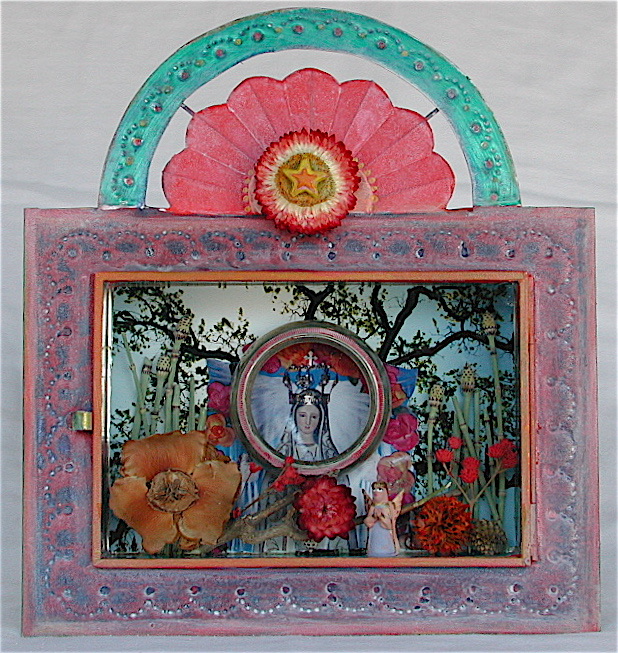
             I spent the day making retablos.  I had purchased the tin and glass boxes in the artisans’ market a few days before, intending to give them as gifts when I returned home.  But after they lay on the living room cot for a few days, I couldn’t resist opening them to see what I’d bought.  The afternoon was hot and I set up my “studio” on the small table of the patio which held the clothes washer.  My tool boxes and cases full of art supplies sat on the patio around me.  By late afternoon, I was surrounded by strips from cut up photographs, cloth, beads, snips of waxed linen.  Each glass fronted box was some degree of its way toward being a retablo.  One was dedicated to Bearcat, another to the Virgin of Guadalupe,  the third a tribute to life in general––seeds, greenery, birth.  With my limited supplies, it became necessary to search the household for things we’d brought that could contribute to the shrines.  A container of popcorn contributed fertility and life bursting forth to the Madonna shrine.  An old peso brought to me by neighbors who visited Mexico in the 50’s, now worthless, was beautiful when the raised parts were buffed with fine sandpaper.  Feathers, beads, charms, seeds, bits of cloth, cut up bits of the photos I’d taken so far in Mexico.  Bob awoke from his siesta in the late afternoon and set up his easel––a tall ladder––in the courtyard.  He assembled his paints, prepared his palette––and the rain started.  Moving his materials quickly to the patio where I sat surrounded by my midden of art supplies, he propped his canvas against the table.  Restful large blobs of color covered the canvas.  They reminded me of the bougainvillea.  His usual bright primary colors had been abandoned for the more subtle colors of the garden and house that surrounded us. 

            By 9:30, we sat on the deck eating our dinner when the band started in again––coming from a direction about half a block away to the rear of our house.  Kids’ voices called out excitedly.  I imagined a pinata being broken.  Then the fireworks started.  They were the spectacular chrysanthemums and huge falling fountain fireworks of  a fourth of July celebration.  At first we went out to the compound to see them.  Then Bob said we should go up on the roof, but by the time we had climbed up the circular staircase with our plates, the fireworks had stopped.  We stood at the edge of our roof, our plates balanced on the adobe pillars on the sides of the patio.  Up here it was cool, and the food lost its heat quickly.  Although it was too dark to see our food, in the moonlight, we could see puffs of smoke ––the ghosts of the earlier fireworks.  We could hear a loud “thwack, thwack, thwack” and children screamed and laughed.  The band started up, died down, started up––like long spaced hiccups. 

            An hour or so later, when we were about to go to bed, the activity again moved to the street in front of our house.  The band, much improved, came marching firmly down the street from our left.  They seemed to have been replaced by another band, for now their music was sure and robust.  They seem to have swelled in numbers, as well.  They came more quickly than before down the street and stopped two doors away from us.  Some of them carried bottles, which they took fast swigs out of before raising their instruments.  They played a rousing song before one of the men pulled a man from the house and brought him out to dance with him.  He encircled his body with his arms and they danced like lovers to the music.  Then the music stopped and the entire band––maybe 15 or 20 strong––streamed into the house.  Earlier, as I stood on the roof, I had seen women in that compound making tortillas in the back yard.  I had wondered why they would choose early evening to do so, then figured it was to escape the heat of the day.  Now I wondered if they were for the musicians, who did, indeed, stay in the compound for the rest of the night, playing music which echoed up the brick walls of their compound directly in through our windows.  It was then that the really loud fireworks started and continued for an hour or so.  We drifted off to sleep.  Was it midnight or 1 a.m.?  It made no difference.  The fiesta was over and we slept.

            Boom!  An explosion like a land mine ripped through our open window.  Then another and another.  Some streamed up into the air, some exploded on the ground.  These explosions were cherry bomb sized, then hand grenade sized, then, to our very early morning ears, \ground-to-air missile-sized.  Amazing that the cat only stirred slightly in the bed.  Just a week ago he would start and run at the rustle of the cat food bag.  Explosion after explosion went off. 

            “What time is it?” I asked Bob, but he couldn’t see his watch.  By this time, at least a couple dozen explosions had gone off.  Since it was still dark, perhaps the purpose was to bring out the sun.  By now the roosters were crowing, so the  fireworks had done their job.  But they didn’t stop.  After one ear-splitting retort, our car alarm went off, adding to the festivites.  Bob rolled out of bed and fumbled in his shorts pocket for the keys.  I moved to the bathroom and by the time I got back, the car alarm had gone off again. 

            “Just turn it off.  I think this is going to go on all day.”  I flipped on the light.  6:15 a.m.  Church bells began to toll. 

            By eight o’clock, all was quiet.  The sounds I could hear seemed muffled––either in comparison with the fireworks or due to them.  Roosters crowing, the acetylene torch sound of the water heater coming on, trucks and buses on the road, the beautiful cries of grackles.  Ceiling fans whirred.  Bob slept on in the huge bed on the balcony across from where I sat in the office.  This bed was the largest either of us had every seen.  It had to be bigger than king-sized.  I could stretch out my arm fully from where I slept and still not find him.  The cat could sleep sideways between us and not touch either of us. 

            “We need another person for this bed,” Bob had said as we slipped into bed the night before. I suggested that we could both just roll over to the middle, so we did.

For Chapter 16, go HERE.

Chapters 1-14 are availble in daily blogs for the past two weeks. 

Ladle Rat Rotten Hut

Before the below words are imputed to be of my crafting, I must say though I am hugely partisan to their genius, I did not, alas, write them. The story below is full to the brim with creativity and good humor—its word choice both spry and original, and although the plot line may at first seem indecipherable, I trust that your mind will soon snap in line and make transliteration on my part unnecessary.

Although H.L. Chace wrote Ladel Rat Rotten Hut seven years before my birth, my folks were still quoting it when I became old enough to memorize it myself.  After 70 years, I can still quote lines of it by heart.  I want to quote a bit of it here with a link to its online source. Hopefully, it won’t require transliteration:

Ladle Rat Rotten Hut

by H. S. Chace

Wants pawn term, dare worsted ladle gull hoe lift wetter murder inner ladle cordage, honor itch offer lodge, dock, florist.  Disk ladle gull orphan worry putty ladle rat cluck wetter ladle rat hut, an fur disk raisin, pimple colder Ladle Rat Rotten Hut.

Wan moaning, Ladle Rat Rotten Hut’s murder colder inset.

“Ladle Rat Rotten Hut, heresy ladle basking winsome burden barter an shirker cockles. Tick disk ladle basking tutor cordage offer groin-murder hoe lifts honor udder site offer florist.  Shaker lake! Dun stopper laundry wrote! Dun stopper peck floors!  Dun daily-doily inner florist, an yonder nor sorghum-stenches, dun stopper torque wet strainers!”

“Hoe-cake, murder,” resplendent Ladle Rat Rotten Hut, an tickle ladle basking an stuttered oft.  . . . .

To read  (and hear) the rest of the story, go to https://www.exploratorium.edu/files/exhibits/ladle/


Prompt words today are brim, spry,  partisan, impute, craft and transliterated.  (Transliteration changes the words from one language or alphabet into another corresponding, with similar-sounding letters with different characters.) Image by Šárka Jonášová on Unsplash.

Doggie Drama


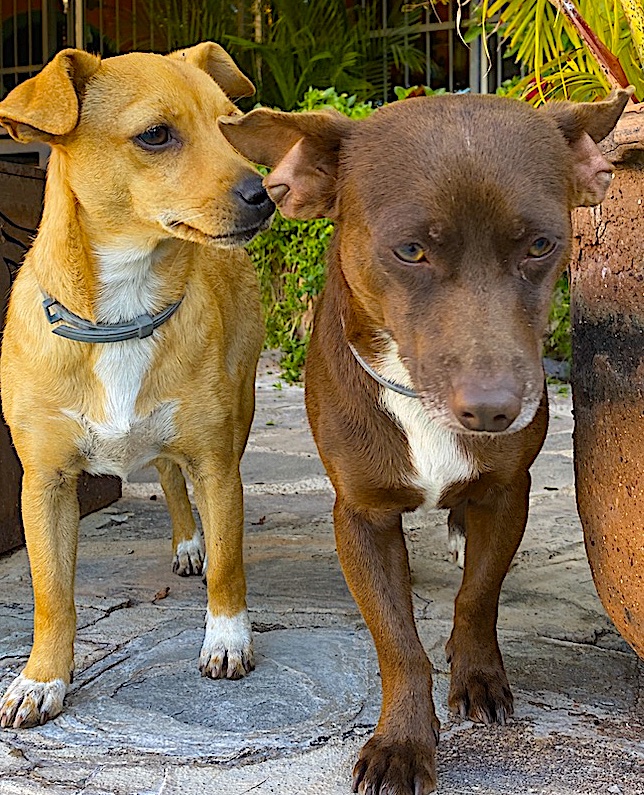
What are the chances that I would capture this action while I was exercising in the pool? But, I had noticed a large golden-orb weaver spider on my neighbor’s wall and although I knew it was too far away to get a good photo, I was listening to an Audible book and the phone was in reaching distance, so I thought I’d try. Coco and Zoe jogged over to check out my action and this is what resulted. Since i was holding the camera in my hands, I captured most of it, other than the recovery action which meant I had to set the camera down. Please click on photos to enlarge and read the story.