


Click on Photos to enlarge.
For Thursday Trios


Click on Photos to Enlarge.
I loved watching these birds bathing in this pool. Unfortunately, the photos of their actually splashing around didn’t come out as well as the ones of them perched on the rocks before or afterwards.
For the Whatsoever is Lovely Challenge


Click on photos to enlarge.
Animals are such agreeable friends—they ask no questions; they pass no criticisms.”–George Eliot
For Wednesday Quotes #163–The inspiring world of animals.


Click on Photos to enlarge.
Trying to meet this challenge made me realize how little brown there is in my world–let alone walnut brown! I had to search through thousands of photos to find these photos that could be classified in the category of “walnut brown.”


Many birds, but all seen on Nov 28 on a trip out to Scorpion Island in Lake Chapala.
For the Birds of the Week prompt


Click on photos to enlarge.
For Cee’s Which Way: Animals prompt.


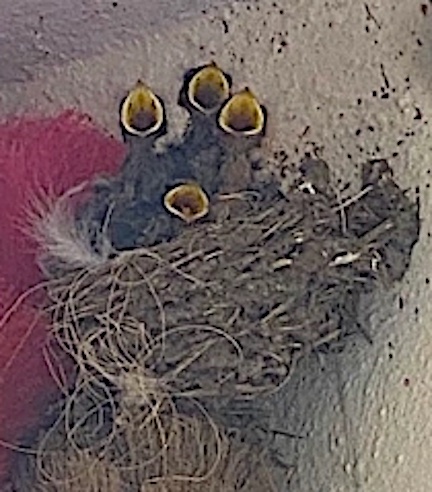
Remember my post about the hungry nest of just-hatched swallows in my neighbors’ garage? HERE is a link to it if you didn’t see it. Well, above are four current photos of the hatchlings, who have now flown the nest. Photos taken on their terrace by my neighbor David Bershad.
Here are the same birdies before in a photo taken by me in their garage:
This is one of the best blogs I’ve seen in my 13 years of blogging every day so had to share it with you! Please click below to go to their site and see their other remarkable photos. You won’t be sorry! View original post 958 more words
CAVITY
About 85 species in North America make nests using cavities, birdhouses, gaps in structures or holes found in tree hollows, telephone poles, abandoned buildings and more.
Of the birds that use nest cavities, most woodpeckers (Picidae) including the northern flicker [Colaptes auratus] and red-naped sapsucker [Sphyrapicus nuchalis] tend to be the species that do the hard work of excavating many of the tree cavities. Fewer birds excavate their own holes in trees. But of those that do, the woodpeckers are by far the best known. The cavity using opportunists include bluebirds (Sialia), chickadees (Paridae), house sparrows, house wrens [Troglodytes aedon], nuthatches (Sitta), the bridled titmouse [Baeolophus wollweberi], violet-green swallows [Tachycineta thalassina], many parrots, and even some small owls such as the northern saw-whet owl [Aegolius acadicus]. Red-cockaded woodpeckers nest in cavities that can take years to construct in a living tree. They live in groups and will have as…
View original post 958 more words


Click on photos to enlarge.
From Lake Chapala to La Manzanilla to Alabama to Wyoming to the rainforests of Peru, I never met a bird I didn’t have to photograph. Here are a few of the long-legged ones, as directed by the prompt! Yes, I got carried away a bit.


