Tag Archives: Daily Post

Pressed for Words

lifelessons-stats

Pressed for Words

9:22 on a Thursday night,
keeping my MacBook screen in sight.
I agree, it’s superficial.
I should do something beneficial;
but instead, I sit and count
as my blog views slowly mount.

Today, so far, one hundred four.
(Yesterday’s count and then one more.)
With some hours left , I do not know
how much higher it might go.

Yesterday I took great care
to write an essay on my hair.
(About my hair, I should explain,
to write “on” hair would be a pain,
for in the shower or under rain,
my words would go right down the drain!)

Judy, stop!!! Get back on track!
(I’m turning into such a hack.)
Today I sluffed off all day long—
just posted Leon Redbone’s song.
Yet here I am at 10:03
with three more viewers viewing me.
Two more hours and then no more
to tally up this blog day’s score.
Already, though, its clear to me
what the lesson learned must be.

It’s clear this truth I must compute.
My viewers like me better mute!!!

“Adult”ery


JudycurlsJudycurls - Version 2

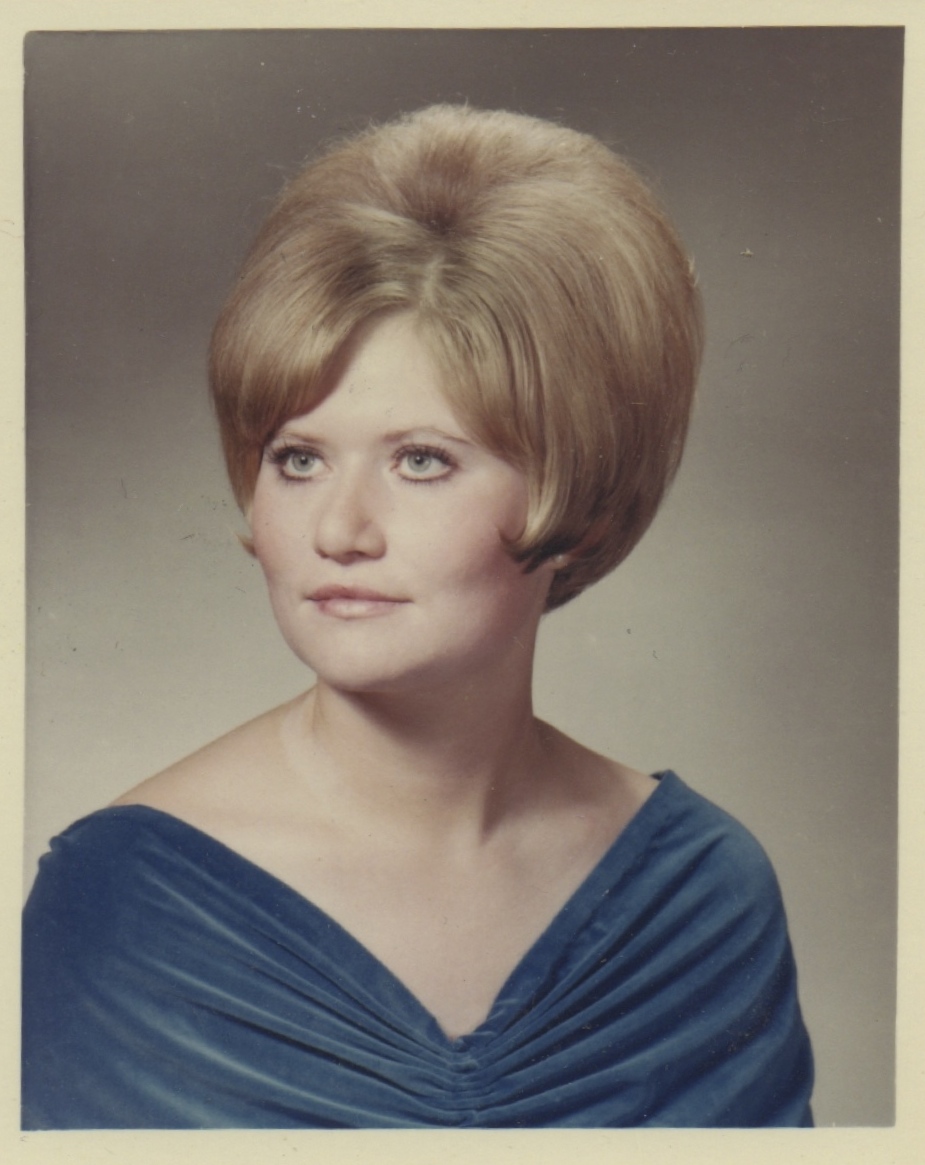
Unfortunate hairstyles of the past


“Adult”ery

I don’t remember, as a child, ever really thinking about what it would be like to be an adult in terms of where I would live or what I would choose as a profession. I do remember, however, two things I worried about.

First of all, I worried about what instrument I would play in the school band. I had two sisters, one eleven years older and the other four years older, who both played saxophone. As a matter of fact, there being 7 years difference in their ages, they both played the same saxophone! When I entered the sixth grade and was old enough to play in the starter band, I knew two things. #1: I had to play in the band because both of them had done so. #2: I had to find a way to be unique in doing exactly what they had done, and so I had to find a different instrument. This resolve was strengthened by the fact that my sister Patti was still using the “family saxophone.” As long as I was being different, I decided to stretch my uniqueness as far as it would go. No one in either the starter or the regular band had ever played a flute. It was exotic and not very heavy to carry. I would play a flute!!! Or rather, I would attempt to play a flute.

I faked it for two years, blowing energetically into the little hole as we sat in the band loft at games or marched along behind the regular band, practicing for parades or football games; but I never really developed much of a tone and my memory of which note was which was limited. It was really easy, though, to carry that little case about as large as a large pencil case the two blocks to the auditorium where our band practice occurred. My band instructor could not afford to be picky as there were only 200 students in the entire school system—grade school and high school combined—so every warm body available was required to flesh out the physical body of the band. If a few were miming, so be it. As long as they could stay in step for the marching band and didn’t play any really loud false notes, who would ever know?

When my sister left for college, she left the sax behind; and when I headed out for my first band practice as a high school freshman, I left that dread flute behind as I took sax in hand to continue the family tradition. I was not a whole lot better at it, but found something held between the lips and teeth was a lot easier than something held sideways and blown across and although the sax was heavier, it was held in a much more sustainable position than the flute, which was an exercise in arm isometrics as I held it aloft!!

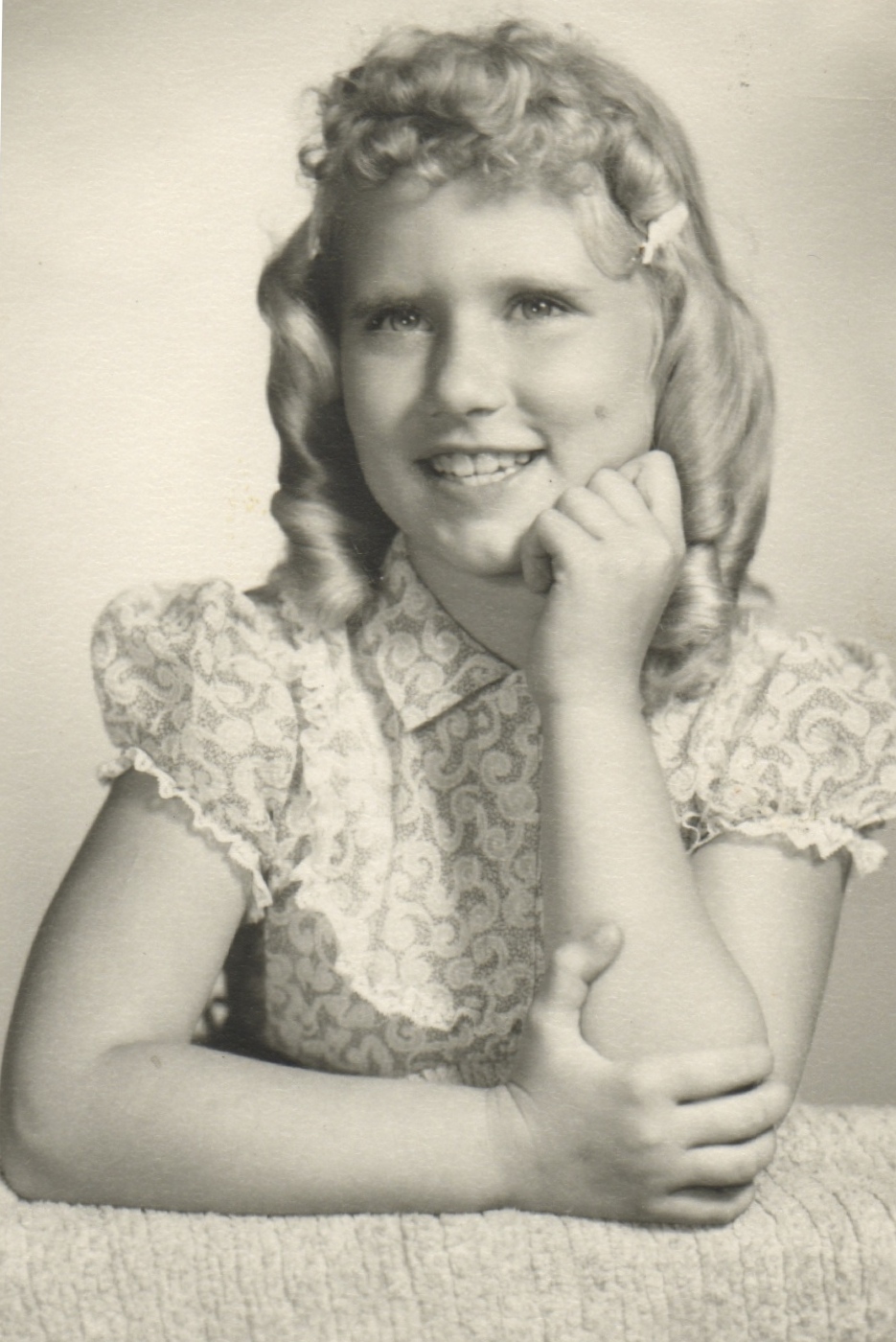
The second worry I had about growing up was how I would wear my hair. I would lie awake nights worrying about what hairstyle I would adopt when I could no longer sport the sausage curls my mother formed around her finger each morning. Shirley Temple, who had already grown to adulthood, needed to be replaced! My hair was too long, however, to duplicate Shirley’s bouncy little curls. It hung in fat tubes down beside my cheeks, offsetting my tight little bangs curled up each night in pink rubber curlers. For some reason, both my mom and I thought this made me look real good, and I am not exaggerating when I admit that there were nights when I’d lie in bed, tears streaming down my cheeks, worrying about what I would do when I grew up and could no longer wear curls!!

So now you know why I dropped the saxophone as soon as I graduated high school and why I had to move to Mexico to escape the shame of all those years when I allowed my mother to shape my esthetic sense of hair. I haven’t owned a curler of any type for 20 years. That saxophone was handed on to the next generation of my family and its mouthpiece, at least, met its demise when it snapped in two as my niece tried to grip it with the fourth pair of teeth in three decades. With a new mouthpiece, it survived four more years—hopefully this time with someone with more talent than I. I know not where it ended up. Probably in some second hand store or donated to some child who couldn’t afford an instrument. I hope it wound up with some talented individual who could restore its pride in itself.

Now that I have been an adult for many many years, I have conquered most of its demands. I have found many hairstyles, only a few of them more ridiculous than sausage curls (see my college picture above as an illustration of this fact) and attempted only one additional instrument, the guitar. Having played only solo or in duet with a college friend who tried to mold me into Joan Baez but failed, I did learn about seven chords and learned to adapt a whole succession of seventies songs to fit into those seven chords. I played for sing-alongs with the kids I counseled at summer camp and for groups of little neighbors around the world, who would come to my house on Saturday mornings to sing silly songs. And I have that guitar to this day. But I haven’t played it for years and harbor no illusions about my prowess. It is there for visiting friends who want to play for me and as a big, cumbersome, hard-to-store reminder that I can choose my own failures as surely as my own successes.

I am an adult like other adults—growing more childish year-by-year, but in my regression toward soft food and adult diapers, I will never sink so low as to repeat some mistakes of my youth. Never ever more sausage curls or flutes held aloft like punishment. And never again will I try to be different just to be different. “The Far Side” has shown that this is nothing that really needs to be aimed for. We all grow odd enough just following the path of nature, thereby furnishing the humor for all the generations that follow us.

The Prompt: As a kid, you must have imagined what it was like to be an adult. Now that you’re a grownup (or becoming one), how far off was your idea of adult life?

P.S. Thirty years after high school, when I was doing an art show in Oregon, a man walked by my display and then did an about-face and came back and said, “You’re Judy Dykstra, aren’t you?”  I admitted the fact and asked him how he knew me.  He said he was 5 years behind me in school in the small South Dakota town where I grew up.  He was a country boy and since we’d never been in school together, I didn’t recognize him but did recognize the family name.

“How in the world did you even know what I looked like, let alone recognize me thirty years later?” I asked.

“Well, a bunch of us used to collect in the the school library and look at old annuals,” he said.  “I recognize you from your high school picture.”  Suddenly, it all came clear.

“You used to look at them to laugh at all the funny hairstyles, didn’t you?”   Sheepishly, he laughed and admitted it.  I had hit the nail (or the girl?) right on the head!!!!

Reading

This post has been removed as a stipulation for submitting it in a poetry contest.

The Prompt: Middle Seat—It turns out that your neighbor on the plane/bus/train (or the person sitting at the next table at the coffee shop) is a very, very chatty tourist. Do you try to switch seats, go for a non-committal brief small talk, or make this person your new best friend?


Unstarched


Unstarched

My ladies writing group is classy—never crass or gaudy.
Imagine my surprise, then, when I found they can be bawdy!
Just one impromptu potluck and a few bottles of wine
turned their metaphoric minds to matters far less fine.
For Jenny had just mentioned that a friend had lately lent her
a rather naughty film that nonetheless had really sent her
off into the paroxysms of unbridled laughter—
the kind that take you wave-on-wave and leave you aching after.
I’d been needing that for months—my life had been sedate
since my old gang had moved away and left me to my fate
of no last-minute games of train and late-night jubilation,
for though I still have good friends here, I lack that combination
of friends that I enjoy who all enjoy each other, too,
enough to create silliness to make my nights less blue.

“Bad Grandpa” was the film we watched, and though I must admit
I watched behind spread fingers for at least a fifth of it,
still the antics had us all just rolling on the floor
—starting with a snicker and then ending with a roar.
Scatology is not my thing, nor are pratfalls or shtick,
yet still I must admit to you, I got a real big kick
from this film filled with all of them, and so did all the others;
so as we watched, it felt like we were all sisters and brothers.
And as they left, I think we knew we’d shared a priceless treasure,
for there’s nothing that unites us like a mutual guilty pleasure!

The Prompt: When was the last time you watched something so scary, cringe-worthy, or unbelievably tacky — in a movie, on TV, or in real life — you had to cover your eyes?

Hail, Hail

                                                                        Hail, Hail 

My farmer/rancher father’s boots grew older with him, their wrinkles—like the back of his neck—born of weathering: rain, snow, mud and hot Dakota sun. They were so much a part of him that when he died, they were all my pre-teen nephew asked for, and he wore them out the rest of the way, until the soles peeled back and the leather with patina already long worn off, began to crack along the wrinkles and peel off.

Those boots reflected my father’s life, where things wore out. His clothes, his favorite chair—none were replaced for aesthetics or style alone—this practicality motivated neither by penury nor cheapness, but by growing up in a house where “making do” was a necessity.

But as in most things, there was one defining vain compulsion in my father’s life that broke him free from his mold. He loved new cars, as much for the pleasure of making the deal as for the smell of new leather and metal. The car dealers learned to call him when they got a car fully loaded, the way he liked it: automatic windows, power steering, power brakes, seats that tilted and slid back and forth and up and down by the touch of a switch. Whatever automatic feature was new that year, my father was up for it—big cars with fins, when they were in style, of every color.

The car salesmen would wait until the wheat crop had been harvested and then make the call, driving the car for sixty miles over the prairie to bring it to him for his perusal, like a new bride brought to a shah. They knew him well, and so when the bargaining began, they would accept his peccadillos. It was not the price he quibbled over, but rather the trade-in. “Well, I’ve got a combine that I need to trade in.” Once, three horses. And they learned this joy of trading was often what sealed the deal.

Later, when my sister married, her husband claimed my dad traded in his cars whenever they needed washing, but this was not true. Three years was a car’s usual shelf life, before he’d hand it down to whichever daughter of driving age needed a car the most. Packards and Cadillacs and Pontiacs were his choices of brands. For some reason, he reviled Fords. So that July of my thirteenth year, when the salesman brought the bright green Oldsmobile for my dad to view, we were sure this was the car he would turn down. My mother was not sure about the color and my dad was not sure about buying an Oldsmobile. He had no real reason. It was just a brand he’d never considered before, but it had all the bells and whistles. I think it was the first year that cruise control was offered, so it possessed that allure of new technology. And so it was that the car made it past any first inhibitions on both my mother’s and father’s parts and when the salesman drove away, it was in our “old” Cadillac and the shining green Oldsmobile became the new resident of our garage.

My oldest sister was married and gone, my middle sister seventeen—a year past legal driving age. Summer camp in the Black Hills was nearly 200 miles away, but over easily-navigated straight roads through bare prairie, the wheat having been cut early that year. So it was that my mom, worn pliable from 20 years of driving daughters hundreds of miles to doctor appointments and eye appointments and ball games and church rallies and singing contests and summer camps, decided my sister could drive me to camp that year.

My sister Patti and her best friend Patty Peck piled into the bench front seat. My best friend and I piled into the back. The trunk was full of two weeks worth of camping clothes. The pleasures of riding in a brand new car, just one week removed from its purchase, equaled the thrill of being off on our own. We rolled down the windows, stuck out our arms and let the hot July air stream through our fingers, stopped at Wall Drug for milkshakes, sang at the top of our lungs, and when our bare legs started sticking to the vinyl seats, closed the windows and enjoyed the air conditioning.

Three hours later, the black outlines of the hills that were our destination grew close enough to define the ponderosa pines that gave them their name. We cruised past Rockerville Ghost Town—a tourist trap where my oldest sister had worked a few years before—and turned off into Coon Hollow. My sister steered the car carefully over the dirt roads, fearing chipped paint or a chipped window from the occasional rock in our path. “Take Me Back to the Black Hills” we crooned, as we always did when we approached our favorite vacation spot. We rolled down windows once again to enjoy the scent of ponderosas and to hear the gurgling of the water as it rushed down the small river that paralleled the course of the dirt road that led back to the campsite.

“Black Hills Methodist Camp” read the sign. We stopped to take a picture before veering off onto the divided dirt road, and we had just caught site of the large log cabin that served as the mess hall when the first loud “Whump!” occurred. Then another and another and another. Terrified, my sister steered the car off into the trees as the hail grew larger and larger. We were facing the creek, which had grown wild with the churning of the hailstones hitting the water. They grew rapidly from quarter-sized to golf ball-sized to baseball-sized. The front window began to shatter. When one large hailstone seemed to pierce the roof of the car and land in my lap, I was out of my seat and over the back of the front seat onto the seat between the two Pattys before I could even think about it. As I remember it, I somehow managed this shift in position without ever removing my seat belt, but this, perhaps, is an exaggeration that occurred more in memory than in actuality. My friend, still in the back seat, held up the white ceiling light cover that had popped off when a huge hailstone had hit directly on top of it—showing that the rooftop was still unbreached

The entire hailstorm probably occurred over no more than a ten-minute period, but at the end of it, the stream in front of us was completely white with floating hailstones and the ground was covered. We climbed from the car, pushing through the hailstones in a shuffling motion to avoid slipping and falling on the huge balls of ice. The front windshield was completed marbled, every inch of our shining new car dimpled with deep depressions that equaled our own depression over what was going to happen when our mom and dad saw their brand new car! We were teenagers all and accustomed to that guilt that arose from a whole string of iniquities: dropping our mom’s favorite crystal bowl, staying out an hour past curfew, eating the last piece of pie. My sister backed the car out of the little turnoff she’d turned into hoping for some scant shelter from the hail and drove me and my friend the rest of the way to the registration in the mess hall, then she and her friend drove away. On the way home, they encountered a plague of grasshoppers that coated the windshield and they had to use bottles of Squirt to dissolve them from where they had become embedded into the marbled windshield; so this stickiness, dried in puddles on the hood of the car, added to the total devastation that greeted my dad’s eyes when his new “baby” was returned to him.

The feared recriminations never occurred. “Accidents happen. It wasn’t your fault,” said my dad. “I never really liked that color of green anyway,” said my mom. When my folks came to pick me up at camp, it was in a brand new rose-colored Pontiac Bonneville with a cream-colored top—the most beautiful car we ever owned. We met with no disasters on the way home, and four years later, it was the car I drove off to college six hundred miles away. My parents’ newest brand new car was a beige Buick that possessed none of the charm of the car now relegated to me, but did possess several new electronic features that I’m sure, for my dad, compensated completely.

The Prompt: You’re at the beach with some friends and/or family, enjoying the sun, nibbling on some watermelon. All of a sudden, within seconds, the weather shifts and hail starts descending form the sky. Write a post about what happens next.

The Air Around Me

The Prompt: Object Lesson—Sherlock Holmes had his pipe. Dorothy had her red shoes. Batman had his Batmobile. If we asked your friends what object they most immediately associate with you, what would they answer?

My MacBook Air—no contest!!!!  There is not a time when I’m home that it isn’t with me…and usually not a time away from home.  I have to be able to write at any given time and my Kindle is too hard to type on.

The Air Around Me

In the morning when I wake, she’s on my bedside table
where she’s been charging all night long, so now I find I’m able
to perch her on my counter as I brush my hair and dress,
put mascara on my lashes and curl them, I confess.
I take her to the kitchen as I blend my smoothie up—
slice the fruit, add soy milk, and pour it in a cup.
To my desk we go then, to write our morning verse.
If I wrote it longhand, I fear it would be worse.

When I do pool aerobics, she sits at pool edge.
(I put her on a table that has a little ledge
to protect her from disasters that might tip her in the pool.
I never take her in with me. I’m not a complete fool.)
That hour of exercise flies by as I watch junk TV.
Old situation comedies are what I like to see!
But when I drive to town I always listen to a book.
Much better than a video, as I don’t have to look.

At the plaza café, at my favorite outside table,
I converse with favorite friends whenever I am able.
But if they’re busy I just take my laptop there with me
and talk to her with fingers whenever they are free.
When the waiter brings totopos and the sauce to dip them in,
salsa on her keyboard would be disastrous sin;
so I have to move her—our contact I must breach—
but close enough so earbuds are still within my reach.

Before I eat, I talk to her with fingers fleet and swift.
During the meal, I listen, for my food I have to lift
from plate to mouth from plate to mouth till it becomes a rite.
Then my computer talks to me. She has no appetite.
She is my secretary and my bookshelf without end.
My video library and my calendar and friend.
She is my photo album and the archives for my writing.
She corrects my spelling and she’s expert at reciting
all my words right back to me so I can see what’s wrong.
And when I need interpreting, her language skills are strong.
So perhaps it’s clear now why she’s always here with me.
For the bond that binds us both is electricity!

ESP

Daily Prompt: Full Disclosure—A mad scientist friend offers you a chip that would allow you to know what the people you’re talking to are thinking. The catch: you can’t turn it off. Do you accept the chip?

OLYMPUS DIGITAL CAMERA

ESP

I don’t really need a chip to know what you are thinking,
for when I ask, “Should I wear this?” your left eyelid starts blinking
like it does whenever you tell a little fib;
and I can tell your “It looks great!” sounds a little glib.
That’s how I know without a doubt you’re spinning a fine yarn;
and that, in fact, in this dress I must look wide as a barn.

If you say this dish is great but feed most to the dogs—
if you say I’m clever but you rarely read my blogs—
if you “want” to get together but we rarely do—
I’ve already read the clues to ascertain your view.
Yet, still I have the option to see the other side
and find a way to look at it that will preserve my pride.

Your eye might blink because a gnat got caught in it just now,
and so I do not really look as broad as any cow.
He just has a small appetite. Her eyesight might be failing.
She might be out of town and when she gets home from her sailing,
she’ll call me up and we will meet and have a laugh or two.
Without this ESP I really get to choose my view
of believing what I want to in spite of what I’ve guessed.
When it comes to friendship, less clarity is best!


Sleuthing

case 1.indd

Sleuthing

There’s a Clue in the Leaning Chimney and a Password to Larkspur Lane,
and no one will ever discover them without me, that is plain.
I’d love to go a-sleuthing, my sidekicks at my side—
George Fayne, who is so boyish and Bess Marvin who’s so wide.

Together we’d read diaries and find each hidden clue,
‘cause no one else but us has ever known quite what to do
with broken lockets, attics, tolling bells or hollow oaks;
for non-teenage detectives seem to come off like bad jokes.

They may have had the clues but never seemed to solve the crime—
these matters just too difficult for searchers in their prime.
I’d hop in my blue roadster with a picnic box from Hannah
and somehow I would wind up in Wyoming or Montana.

Interviewing cowboys is the way I’d have my fun,
returning to Ned Nickerson when all of this was done.
I don’t have other fantasies of being Peter Pan
or Goldilocks, Rapunzel, Cathy or Superman.

Those fairy tales and comic books and novels are unreal.
I’d have to be like Nancy—a character who’s real!
The only mystery I can’t solve of all her mysteries seen
is how I’ve gotten so damn old while she remains sixteen!

The Prompt: Fictional Intruder—Go down the rabbit hole with Alice; play quidditch with Harry Potter; float down the river with Huck Fin. . .If you coud choose three fictional events or adventures to experience yourself, what would they be?

Old Friends

I was running from the time I woke up this morning until about 10:15 tonight. My guests have now gone and I’ve had 45 minutes to work on this prompt. It certainly isn’t my favorite, but I felt compelled to finish the assignment, lest it be the first day since April 1 that I failed to post! So, for what it is worth, here’s my near-answer to today’s prompt!!! Please note that much as you might feel you see yourself in this poem, the characters are purely fictional!!!

Today’s Prompt: Long Exposure—Among the people you’ve known for a long time, who is the person who’s changed the most over the years? Was the change for the better?

Old Friends

Our world turns and all of us
without much fanfare or much fuss
change constantly from day to day
in such a subtle sort of way,
we barely notice we have changed
until we find we are estranged
from those once near who now are far,
reaching for a different star.

While once we shared the usual aim
of husband, family or fame,
each thinks the other achieved less
though neither one could ever guess
that each achieved just what she wanted
sailing through her life unhaunted
by regrets of what she’s missed:
the shore unclaimed, the cheek unkissed.
One scored the ring and husband first.
The other sought to quench her thirst
for travel and remained unmarried
satisfying interests varied
from what most others chose to do—
each year her world began anew.

No little hand in hers, no need
to clothe and comfort, wash and feed
anyone except herself.
She sat alone upon the shelf
of life, unchoosing and unchosen—
well-preserved and slightly frozen.

The other birthed, lifted and carried
in a life both full and harried.
With kids and husband in her home,
she was rarely there alone.
Kept busy by her obligations
to neighbors, friends and her relations,
her life proceeded till near its end,
she chanced to come upon her friend
from long ago and tarried there
while both of them let down their hair.

Each found the place where she belonged
and neither feels unduly wronged.
One found her place in family—
contented in their company.
The other is quick to aver
she found her place inside of her.

No Fear

No Fear

We know within our hearts that personality
often cancels out what we can clearly see.
We all have known the men who, homely to the eye,
still have personalities sweet as cherry pie,
who win the ladies with their charm and humor that is wry,
causing them to line up for chances with this guy.

And the girl who’s plain until she starts to talk—
her face just so enlivened, you have to stand and gawk.
Made lovely by expression, intelligence and wit,
“beautiful” and “lovely” become the words that fit
when trying to describe this attractive little lass
who simply doesn’t bother with a looking glass.

Both have learned to conquer all their crippling fear—
to find the other side of doubt and kick it in the rear.
To face the world on their own terms and face it unafraid.
To take their rightful placement at the front of the parade.
But though we see what they have done, we do not always take
the road that for another seems to be a piece of cake.

You may find this poem to be most adolescent,
yet the feelings of our past most usually are present
throughout our lifetimes, though we seem to hide what we must feel,
leaving it to novelists and poets to reveal
the truths of all our agonies, the facts of all our fears—
all those things we’ve meant to face but yet hold in arrears.

I long ago discovered that writing must be true.
The only worthwhile topics are the things that bother you.
The lacks you find in others and the lacks within yourself
are what divide the poems in hand from poems on the shelf.
And so I must admit that fear’s my greatest hidden vice.
And since we all could do with taking our own sage advice:

I’ll say that with no fear, I would burn candles at both ends—
be as free with lovers as I am with friends.
I would have burned fingers, but an unbound heart.
All those lovely men, disregarded from the start
because I was too zaftig or not smart enough?
I’d face them nose-to-nose, and then I would call their bluff.

Today’s Prompt: Fearless Fantasies—How would your life be different if you were incapable of feeling fear? Would your life be better or worse than it is now?