Tag Archives: father

It Doesn’t Get any Better than This!!!

Family Vacation


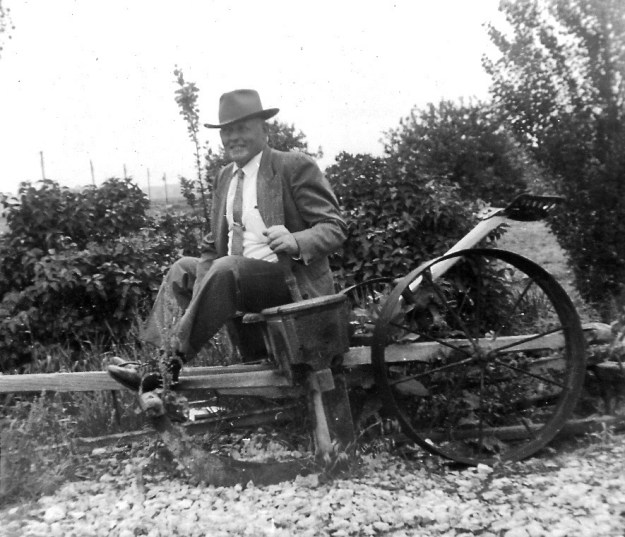
Version 6My dad in a slower mode of conveyance.

Family Vacation

My father on vacation was robotic in his thrust.
His modus operandi was to get there or to bust—
another hundred miles or so before we stopped to sup,
and we rarely got a room before the moon was up!

When he hit the highway, he became another man.

No mere roadside attraction could deflect his driving plan.
In those days of two-lane traffic and a speed limit of fifty,
he thought five hundred miles a day sounded rather nifty.

Fathers prone to threaten, who hit and rage and cuss

are, I fear, too often too ubiquitous.
But this was not my father. Rage was not his style.
He simply had addictions to mile after mile!

My dad was generous and fun. He told a story well,
but to take a trip with him was nothing short of Hell.
 His proclivity to “get there,” I fear was never curable,
and so family vacations were just barely endurable!


Version 2
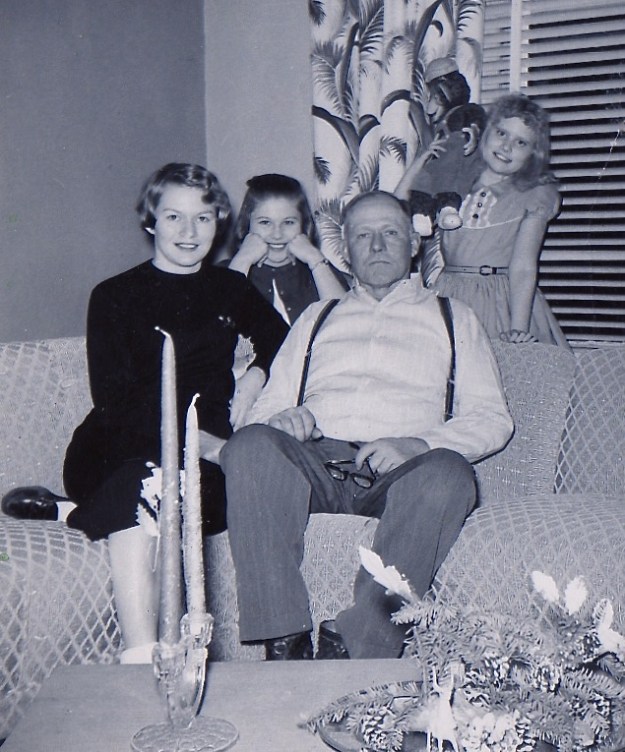
My sisters and I with my dad.  He didn’t usually look this grim!

The prompt words today are highway, durable, robot and ubiquitous. Here are the links:

https://fivedotoh.com/2018/09/01/fowc-with-fandango-highway/

https://dailyaddictions542855004.wordpress.com/2018/08/26/daily-addictions-2018-week-34/durable

https://ragtagcommunity.wordpress.com/2018/09/01/rdp-saturday-robot/

https://wordofthedaychallenge.wordpress.com/2018/09/01/ubiquitous/

Near: World Premiere of Sylvestrian Near Rhyme

Near

My father went from obscurity to a sort of small renown.
He worked hard as a rancher and the mayor of our town.
He met my mother at a dance in her sister’s borrowed gown–
both of them lonely visitors to a faraway strange town.
I’ve thought about it often since we laid him down.
Why didn’t I ask more questions? Why didn’t I write it down?

Many a calf he helped to birth and many a field he’s mown.
Avoided his mother if he could–long-suffering aged crone.
Not many highways traveled,nor many airwaves flown.
He died in his angry daughter’s arms–the two of them alone.
I’ve thought of it often till regrets have turned into a drone.

His eyes were always looking further over yon.
Over a ripening field of wheat or over a fresh-mowed lawn.
Working, often, until dark and up again at dawn.
A man of camaraderie and wit and brains and brawn.

He liked to tell a story and sing a rousing tune.
Stand on the porch at midnight to piss under the moon.
He gave me a turquoise ring, a baby rabbit and a coon.

Now that he’s very gone away.  Now that I’m very grown,
I know my flesh is of his flesh. My bone is of his bone.

And I wish that I’d asked more questions. That we’d both been less alone.

DSC02618
The form of this poem is one consisting of six stanzas, the first with 6 lines and each thereafter one less line.  Each line in each stanza rhymes with all the other lines in that stanza and each stanza’s rhyme is a near rhyme to the last. The name of this form is Sylvestrian Near Rhyme and since “Near” describes both the theme and form of my poem, it is also the name of the poem.  And yes, I did make up the form!  I’d love it if poets given to rhyming and meter would attempt the form and send me the results as comments or a link to this blog.

For dVerse Poets Pub

Dakota Dirt


Dakota Dirt

My father toiled for fifty years,
facing the worries and the fears—
the gambles that a farmer faced
when all his future he had placed
as seeds beneath Dakota dirt.
Every year, he risked the shirt
right off his back. With faith, he’d bury
his whole future in that prairie.
Sticky gumbo, that fine-grained silt
upon which his whole life was built.
Then, closer to our summer home,
near the river, in sand and loam,
he hoped he could prepare for ours:
our clothes, our college, and first cars.

Then came those years that brought the change
that altered fields and crops and range.
The rain that formerly turned to rust
plows left untended, turned to dust
that, caught up in the wind’s mad thrust
caused many a farmer to go bust
as a whole nation mourned and cussed
black clouds of dirt that broke the trust
that nature would provide for all.
What formerly fed, now brought their fall.

It broke the men who couldn’t wait
for the drought years to abate,
but my father kept his faith in soil.
Found other paying forms of toil
building dams to catch what rain
might later fall on that dry plain.
And though others thought his prospects poor,
he kept his land and bought some more.
He learned to vary furrow line,
believing it would turn out fine.

So when good fortune returned again,
bringing with it snow and rain,
he welcomed and was ready for it.
That April it began to pour, it
filled his dams and nourished what
soil remained. He filled each rut
with clover, alfalfa and wheat.
Allowed the summer sun to beat
and change them into fields of gold—
into grain and feed he sold.

Bought cattle. Planted winter wheat.
Once more secure on his two feet,
expanded and as he had planned,
bought more cattle and more land.
Some said that he had just exploited
those whose land he’d reconnoitered
and purchased after they’d given up,
empty hands transformed to cup.
He was a hero unsung, unknown,
until long after when I was grown.

At the centennial of our town,
I learned a bit of his renown
when others told to me how he
shared nature’s generosity.
He sent three daughters to university,
then shared with his community 
to build a church and give more knowledge
to those young men he sent to college.
Then made loans without fame or thanks
to other farmers denied by banks.

I’d always known how rich my life
was made by all his toil and strife—
the insurance he gave his family
that enabled us all to be free.
But, aside from daughters, wife and mother,
I’d never know of every other
soul he’d helped  to prosperous ends:
neighboring ranchers, sons of friends.
Could my father have known he’d also planned
all these other futures when he bought the land?


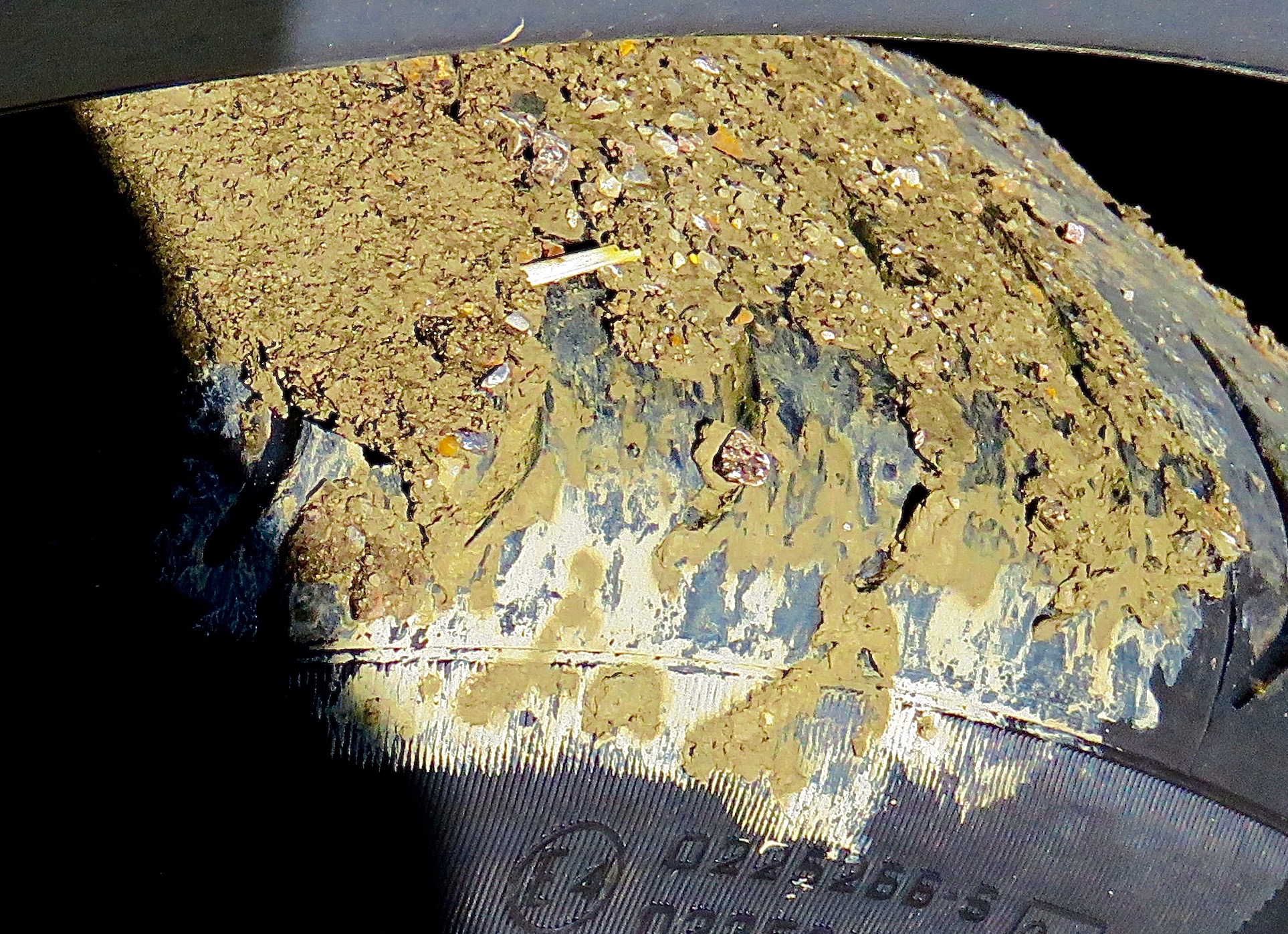
This rich Jones County gumbo on the treads of my tire at one of our all-town reunions a few years ago is what sent me to college!

Not enough dirt for you?  Check out this story: https://judydykstrabrown.com/2015/01/26/south-dakota-gumbo/

The prompt today was soil.

Locked and unlocked

IMG_5324

Locks

Locked up in my bedchamber. More than I can bear.
The beauty of my countenance, the shimmer of my hair
do me no good for no prince charming comes to find me here.
I will go unmarried––for my whole life, I fear.

My father thinks he honors me. I am his special treasure.
He worries not about my fate.  He thinks not of my pleasure.
I am but one more lovely thing he keeps for his collection––
admired for my golden locks, my flawless pale complexion.

I care not for beauty.  I care not for my tresses.
I do not treasure jewels or slippers or my ornate dresses.
A husband and a family are all that I desire.
A simple life’s the sort of life that I most admire.

From my window I look out upon the broad King’s Highway.
All roads must converge here––every path and byway.
And so I see them passing: beggars, countrymen and princes.
Vendors selling mangos, apples, oranges and quinces.

My eye is caught by sunlight flashing from his sword
as he stoops to have a sip from a vendor’s gourd.
He pays her with a small coin and thanks her most politely,
then mounts his horse with one sure leap–graceful, sure and spritely

I see him passing often and his face is full of laughter,
calling out and gesturing to companions, fore and after.
One day I wave my scarf at him as he goes passing by
and every day thereafter, I know I’ve won his eye.

At first he bows politely–a gesture I don’t miss.
and after a few weeks of this, one day he blows a kiss.
I reach out and grab it and press it to my face.
He rears his horse and races off at a faster pace.

The next day he doesn’t come, although I wait and wait.
But finally, I see him turning towards my father’s gate.
In distress, I call out that  he must not tarry here.
My father’s wrath must not be stirred.  It is what I most fear.

He does not see me gesturing. He hears not my distress.
I rue the day I waved at him, although I must confess
I also thrilled to think that he had come in search of me.
I fantasized that he would be the one to set me free.

But my prince never entered, though he tarried long and late.
Until the full moon rose above, he waited at the gate.
Although it had not opened by the time the next sun rose,
the young man sat astride his horse with hoarfrost on his clothes.

‘Twas then that I began my moan and tears sprang from my eyes.
I tore my clothes, scratched at my face.  I’d ruin my father’s prize!
My serving maids, sorely distressed, tried to stay my hand,
while my genteel companion sat with startled eyes and fanned!

When one maid put down the apple she’d begun to pare,
I grabbed the knife and severed one long lock of hair.
Lock after lock, I parted with this prison I had grown.
I’d see if father still wanted a daughter newly mown.

Then outside my chamber, I heard a deafening grate.
I flew back to the window. They were opening the gate!
At the same time, I heard a knock and my door opened wide.
I knew it was my father in the passageway outside.

I feared his consternation, his anger and his wrath,
and yet I chose to put myself squarely in his path.
In one hand I held half my locks, in the other were locks more.
All my other shorn-off glory, around me on the floor.

“I am not your possession,” I tell my father then.
I am no pretty pet that you can lock up in a pen.
You can have my beauty––” (Here I handed him my locks.)
“but you cannot seal me up in your private box.”

My father raised his hand, and I feared that he would strike me––
angered that he’d never again have a treasure like me––
but instead he circled his arm around my shoulder
and said, “This day, I have acquired a daughter who is bolder!

It was never me who kept you sealed  up in this tower.
You always had it within you to unlock your own power.
You must know this unlocking is both metaphor and literal.
The freedom that you’ve won today, both actual and clitoral.”

And that is how this princess, once set upon a shelf,
learned that the price of freedom is to win it for one’s self.
By cutting off my own locks, I opened up the gate.
My reward––the clever prince wise enough to wait!

Helen Meikle sent along this song which she said had a similar theme to my poem.  Can’t believe I’ve never heard it before…but I agree.  Listen to it HERE

https://dailypost.wordpress.com/prompts/locked/

http://www.napowrimo.net/day-twenty-one/

Hail (Re)Tale

Hail (Re)Tale

I told my hail story so long ago that I had few followers and even I had forgotten about it, so perhaps you have, too. Or, if you are a relatively new reader, you probably haven’t seen it before. As a matter of fact, the only people currently following my blog who read it were Angloswiss, Ann, Allenda and my sister. (Hi, ladies)– so  here it is again.  Please go HERE to read it.

https://dailypost.wordpress.com/prompts/sudden-shifts/

In Cold Blood

IMG_9290.jpg

                                                        In Cold Blood

I’m sure that the horrible, violent and senseless murders described in Truman Capote’s book In Cold Blood captured the imaginations of most of us in the U.S. Unaccustomed to such vivid descriptions of such violent acts, what small town family did not start locking their doors at night?

The slaughter of the rural farm family occurred on Saturday night, November 14, 1959; and although Capote’s book was not published until 1966, the press made much of it at the time it happened and I was well aware of most of the details of the murder of the father, wife and teen-aged children—a boy and a girl––as well as the capture of the two men who had murdered them. I was especially affected by the sad detail of the discovery of the girl’s Sunday School money tucked into her shoe in the closet. Whether she heard the men breaking in and hid the money so it would not be found or whether she placed it there so she wouldn’t forget, the detail has the same poignancy

After the murder, as I lay in bed at night––especially on summer nights when I found it even harder to surrender to sleep than during blustery cold nights in the winter––I often thought to get up and check the doors again: the front door, the door to the garage, the door from the garage to the mud room, the door to the basement and the back door off the pantry that led to the back porch. All had push-locks accessed by a key from the other side.
On one night in particular, that summer that I turned 13, I lay awake listening to the night sounds that streamed in through my screened window. My window adjoined the front door stoop and it suddenly occurred to me that anyone could slice the screen and easily enter. I got up from bed to close the window and open the air conditioning vent in the floor under it. While I was up, I decided to check all the doors again. All were securely locked except for the lock to the back “porch” which was really just a platform four or five feet wide with a hand railing that ran the entire length of the house from the back garage entry to the pantry/kitchen area.

The pantry held a sink for my dad to wash up in when he came in from the ranch, and since we rarely locked our house, many times he would just walk along this platform/porch and enter the house from the back where he pulled off his boots and emptied his cuffs off the back porch so he wouldn’t track wheat chaff or mud or other souvenirs of his day’s work through the house. Then he’d wash his hands and neck and face in “his” special sink and make his way to his rocking chair in the living room, where he’d spend the rest of the day resting until supper and reading before bed.

This platform/porch was actually quite a distance above the ground because our lot was on a small hill that sloped from front to back and right to left. This enabled the windows in the basement to be above ground level, whereas there were no windows at all in the front of the basement. On this particular night, I stepped out onto this roofless sideless porch platform. I could see the big dipper and part of the little dipper and the thousands of other stars in the summer sky, but I didn’t know the names of any of the other constellations.

I could smell the newly cut grass that my mother had mowed in the early evening of that day, after the sun had gone low in the sky. I remembered when I was little how my dad was less tired by the time he got home and so he’d mow the huge lawn around the old house. My mom would come after him with the lawn sweeper that collected the grass cuttings in a huge canvas cube open at the top to dump the grass into a huge pile by the gravel road where we kids would build nests and play bird. I was the baby bird fed imaginary worms or, if we’d had the right dinner, sauceless spaghetti, by my older sister.

By my teen years, however, my dad would be too tired when he got home from a day that started at 5 or 6 in the morning and often didn’t end until 8 or 9 at night if they were cutting wheat. His life was a hard one and I often wondered if he resented coming home to daughters reading on their beds or talking on the phone to friends.

Did it seem unfair to him that he worked so hard to support daughters and a wife who had such a life of ease? Although I had not yet started to really write, except for a diary I once kept for a few months or assignments for school, I did have an active imagination; and from a very early age, I had concocted elaborate stories all involving imaginary selves of the future.

Now on this night, I wondered why that door that I had checked before coming to bed to read was now open! Who and why would anyone open a locked door? As I lay thinking, I heard the door to my parents’ bedroom farther down the hall open. I could hear my father’s heavy barefoot tread turning not to his right—to the bathroom between their room and my sister’s––but instead to the left. Down the long hall to my room, the entrance hall, the kitchen, the mudroom and the back porch. I could hear the door opening and a few minutes’ delay before he padded down the hall again and closed his door.

Chill. I felt it zoom down my spine, hit my tailbone and ricochet back up to my brain where it froze the back of my head. I waited. For five minutes, and ten. Barely breathing. I cracked my door and when I could again hear my father’s loud snores, I sneaked back out to the door to the back porch, which was once again unlocked. As quietly as possible, I pushed the button lock in, then returned to bed where I remained vigilantly awake for the rest of the night. Twice more, my father got up to unlock the door. Twice more, I got up to relock it.

During all those long hours before dawn, I imagined the scenario. My father, formerly my protector, allowance provider and generous benefactor to the pleasures of my life—turned in my mind into plotter. He, too, had read all of the coverage of the Kansas murders, and it had given him ideas.  He had hired a man to sneak in, to bind him up and leave him helpless and then to kill us all. He wanted to be free. He was tired of his idle daughters, tired of his wife.

My father had, previous to this, gone through one of his week long silent periods where we knew he was upset about something—cattle prices, the threat of hail before harvest, my mother or us. We never knew what caused these silent periods where he would speak to none of us and sometimes even move to the basement to sleep. They never lasted over a week and afterwards he would be our same joking, generous, hard-working dad. But during those times, we tiptoed. We tried to cajole and charm, but it didn’t work. If we asked if he wanted his head rubbed, we were met with a curt sideways bob of the head or a “Not tonight!”

This was unheard of at other times, when we’d ask for money for a new dress or the show and he’d answer with, “Ya. Rub Pa’s head!” We’d do so, and then the wallet would come out. Not that we didn’t rub his head gratis as well. It just got to be a joke—this returning of favor for favor. Then he’d hand us his wallet and put his hand over his eyes, like he didn’t want to see what we’d take. We’d always show him, though. Was this okay? It always was.

At times other than his silent periods, he was our loving dad. Proud of us. Funny around guests, and talkative, but when home alone with us, usually tired––sleeping or reading one of the piles of magazines and books that lay on the long coffee table beside his chair. I mention the silent periods as an explanation of why I might even in my most fertile imagination conceive of an idea that my dad would be capable of planning to “off” his entire family.

But, imagine it I did. I became the protector of our family that summer, lying awake for as long as I could to listen for my father’s footsteps down the hall. And this was not the only night that he got up once or twice to unlock that back door. I never said a word to my mother or sister. I perhaps told my best friend, thinking if my protective efforts failed, at least one person could point the way to insuring the perpetrator of my demise came to justice.

In later years, I forgot about that terrifying summer and went back to loving and admiring my dad almost as much as before, but by then there was a difference. Whether it was caused by radical ideas picked up in my sixties college life and my need to define myself as more modern than my parents—who were themselves quite liberal––or a vestige of that summer of distrust, I’ll never know.

By the time my dad died eleven years later, they’d sold the house in town and moved to a smaller house they built a mile out of town. It was to escape town taxes, my dad always said, but I’ve always thought that for him it was a return to his early homestead days in another house with nothing in view but prairie grasses and a big weathered barn. This new “country” house built by my parents after I left high school was closer to town than the homestead of my grandparents, but was within sight of the big red barn of a farm he’d bought years ago for a hired man and his family to live in and afterwards rented out. The barn sat squarely between my parents’ new modern modular and the old farmhouse. There was a small lake nearby with otters and where the wild geese landed overnight in their migrations.

It was one summer night when I was home from college for vacation that my dad got up from where he’d been sleeping in his chair and walked through the hall and kitchen and out the back door of the house.

“Where do you think he’s going?” I asked my mother.

“Oh, he likes to go out to sniff the night air and have a pee in the dark,” she said with a chuckle. “He loved to pee off the back porch of the house in town at night, even though it was so much farther away than the bathroom. I never could convince him not to do it. I worried that the neighbors would see him. But I think he thought it saved water, or perhaps it just reminded him of his youth—peeing out the back door of the house into the night air.”

This post was written in response to Elyse’s scary babysitting piece which you can read here:  http://fiftyfourandahalf.com/2012/08/01/all-the-cool-kids-are-doing-it/


Near

Near

My father went from obscurity to a sort of small renown.
He worked hard as a rancher and the mayor of our town.
He met my mother at a dance in her sister’s borrowed gown–
both of them lonely visitors to a faraway strange town.
I’ve thought about it often since we laid him down.
Why didn’t I ask more questions? Why didn’t I write it down?

Many a calf he helped to birth and many a field he’s mown.
Avoided his mother if he could–long-suffering aged crone.
Not many highways traveled,nor many airwaves flown.
He died in his angry daughter’s arms–the two of them alone.
I’ve thought of it often till regrets have turned into a drone.

His eyes were always looking further over yon.
Over a ripening field of wheat or over a fresh-mowed lawn.
Working, often, until dark and up again at dawn.
A man of camaraderie and wit and brains and brawn.

He liked to tell a story and sing a rousing tune.
Stand on the porch at midnight to piss under the moon.
He gave me a turquoise ring, a baby rabbit and a coon.

Now that he’s very gone away.  Now that I’m very grown,
I know my flesh is of his flesh. My bone is of his bone.

And I wish that I’d asked more questions. That we’d both been less alone.

DSC02618
The form of this poem is one consisting of six stanzas, the first with 6 lines and each thereafter one less line.  Each line in each stanza rhymes with all the other lines in that stanza and each stanza’s rhyme is a near rhyme to the last. The name of this form is Sylvestrian Near Rhyme and since “Near” describes both the theme and form of my poem, it is also the name of the poem.  And yes, I did make up the form!  I’d love it if poets given to rhyming and meter would attempt the form and send me the results as comments or a link to this blog.

Update: Here is Sam Rappaz’s response to my challenge.

The Prompt: Fireside Chat—What person whom you don’t know very well in real life — it could be a blogger whose writing you enjoy, a friend you just recently made, etc. — would you like to have over for a long chat in which they tell you their life story?

Strangers When We Meet

The Prompt: Delayed Contact—How would you get along with your sibling(s), parent(s), or any other person you’ve known for a long time — if you only met them for the first time today?

Strangers When We Meet

If I had met my parents when we all were sixty-seven,
(before she went on oxygen, before he went to heaven,)
would we have liked each other and found something to say?
As strangers, would we walk on by or pass the time of day?

My father liked to be the one spinning out the tale.
Beside his vivid stories, I think most of mine would pale.
He wasn’t a joke-teller or a purveyor of fictions.
It was true stories of his life that fueled his depictions.

And when his friends had heard them all, he’d tell them all again.
Though they stretched with every telling, still his tales never grew thin.
If fifteen wolves pursued him—a number that is plenty,
the next time that he told the tale, I’ll wager there’d be twenty!

When I returned from Africa with stories of my own,
I found that they weren’t good enough, for all of them had grown
with all my dad’s retellings, so the rhino I had snapped
a photo of, now chased me. (In reality, it napped.)

I think perhaps my mother would like my poems the best.
She’d like the rhyme and meter, the humor and the jest.
For I learned all of it from her when I was very small,
as she was doing rhyming before I learned to crawl.

I grew up with her diaries—all of them in rhyme.
She had them in a notebook and we read them all the time.
The tales of her friend Gussie, who wasn’t allowed beaus;
so they said they went to Bible study, though it was a pose.

Gussie’s mother baked two pies, (for coffee hour, they said.)
Her father said he’d pick them up. They said they’d walk instead.
They took one of her mother’s pies to those within the church,
then took the other with them as they left them in the lurch!

Their beaus were waiting for them in a car with motor running.
Instead of Bible reading, they preferred to do some funning.
To abscond with both the pies was something that they had debated,
but in the end they left one pie–an action that they hated.

Two sisters present were their foes. They were so prim and proper.
To steal one pie was lie enough—but two would be a whopper!
Mom’s entry in her journal is one I can still tell.
(Don’t know why it’s the only one that I remember well.)

Line for line, here’s what she said in metered verse and rhyme,
though it’s been sixty years since I heard it for the first time:
“We left that crowd of greedy Dirks to feast upon our pies.
We were so mad, like Gussie’s Dad—had pitchforks in our eyes!”

My mother burned this journal when I was just a kid.
I wish she hadn’t done so, but alas, it’s true, she did.
Perhaps she didn’t want to see us following her ways.
Instead of what she did, better to follow what she says.

But I am sure if she still lived we’d have a little fun,
sitting down together when every day was done
and writing all our exploits down, relaying all our slips—
saving for posterity the words that pass our lips.

And in the meantime, Dad would tell as long as he was able,
all those stories that he’s told at table after table.
In coffee shops and golf courses, at parties or a dance,
he would go on telling them, whenever there’s a chance.

And if we all were strangers, and none of us were kids,
we could relate our stories without putting on the skids.
Each would outdo the other as we passed around the bend,
with story after story till we all came to The End!!!