Tag Archives: Mexico

Leftovers


Leftovers

When my father died forty years ago, it was in Arizona, where my parents had been spending their winters for the past ten years.  They maintained houses in two places, returning to South Dakota for the summers. But after my father died, my mother never again entered that house in the town where I’d grown up.

Our family had scattered like fall leaves by then—my mother to Arizona, one sister to Iowa, another to Wyoming. Both the youngest and the only unmarried one, I had fallen the furthest from the family tree. I had just returned from Africa, and so it fell to me to drive to South Dakota to pack up the house and to decide which pieces of our old life I might choose to build my new life upon and to dispose of the rest.

My father’s accumulations were not ones to fill a house. There were whole barns and fields of him, but none that needed to be dealt with. All had been sold before and so what was to be sorted out was the house. In that house, the drapes and furniture and cushions and cupboards were mainly the remnants of my mother’s life: clothes and nicknacks, pots and pans, spice racks full of those limited flavors known to the family of my youth—salt and pepper and spices necessary for recipes no more exotic than pumpkin pies, sage dressings and beef stews.

Packing up my father was as easy as putting the few work clothes he’d left in South Dakota into boxes and driving them to the dump. It had been years since I had had the pleasure of throwing laden paper bags from the dirt road above over the heaps of garbage below to see how far down they would sail, but I resisted that impulse this one last run to the dump, instead placing the bags full of my father’s work clothes neatly at the top for scavengers to find—the Sioux, or the large families for whom the small-town dump was an open-air Goodwill Store.

It was ten years after my father’s death before my mother ever returned again to South Dakota. By then, that house, rented out for years, had blown away in a tornado. Only the basement, bulldozed over and filled with dirt, contained the leftovers of our lives: the dolls, books, school papers and trophies. I’d left those private things stacked away on shelves—things too valuable to throw away, yet not valuable enough to carry away to our new lives. I’ve been told that people from the town scavenged there, my friend from high school taking my books for her own children, my mother’s friend destroying the private papers. My brother-in-law had taken the safe away years before.

But last year, when I went to clear out my oldest sister’s attic in Minnesota, I found the dolls I thought had been buried long ago–their hair tangled and their dresses torn—as though they had been played with by generations of little girls. Not the neat perfection of how we’d kept them ourselves, lined up on the headboard bookcases of our beds —but hair braided, cheeks streaked with rouge, eyes loose in their sockets, dresses mismatched and torn. Cisette’s bride dress stetched to fit over Jan’s curves. My sister’s doll’s bridesmaid dress on my doll.

It felt a blasphemy to me. First, that my oldest sister would take her younger sisters’ dolls without telling us. Her own dolls neatly preserved on shelves in her attic guest bedroom, ours had been jammed into boxes with their legs sticking out the top. And in her garbage can were the metal sides of my childhood dollhouse, imprinted with curtains and rugs and windows, pried apart like a perfect symbol of my childhood.

Being cast aside as leftovers twice is enough for even inanimate objects. Saved from my sister’s garbage and cut in half, the walls of my childhood fit exactly into an extra suitcase borrowed from a friend for the long trip back to Mexico, where I now live. I’ll figure out a new life for them as room décor or the backgrounds of colossal collages that will include the dolls I’m also taking back with me.

Mexico is the place where lots of us have come to reclaim ourselves and live again. So it is with objects, too. Leftovers and hand-me-downs have a value beyond their price tags. It is all those lives and memories that have soaked up into them. In a way, we are all hand-me-downs. It’s up to us to decide our value, depending upon the meaning that we choose to impart both to our new lives and these old objects. Leftovers make the most delicious meals, sometimes, and in Mexico, we know just how to spice them up.

The prompt: Hand-Me-Downs—Clothes and toys, recipes and jokes, advice and prejudice: we all have to handle all sorts of hand-me-downs every day. Tell us about some of the meaningful hand-me-downs in your life.


D-Picted (X-Rated)

                                                                               D-Picted (X-Rated)

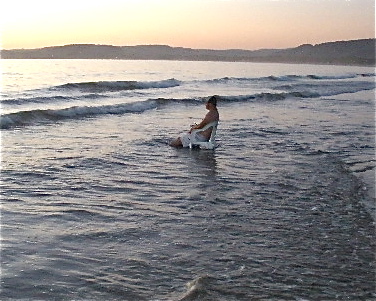
I was taking my daily sunset walk on the beach at La Manzanilla, Mexico when I came upon this idyllic scene. He was sipping a margarita and staring out to sea as the water ebbed and flowed—never reaching higher than his chair bottom. Of course, I had to comment.

OLYMPUS DIGITAL CAMERA

“Is the view good enough for you?” I queried, with a noticeable lack of originality.

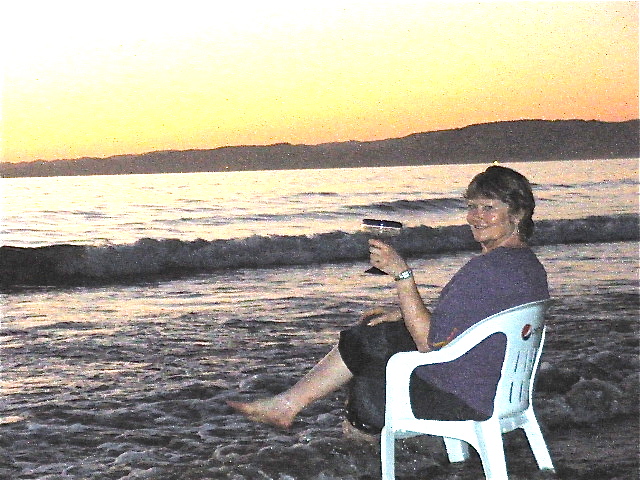
“Do you want to see for yourself?” he asked. He quickly rose from his chair and motioned for me to take his place, taking my camera from my hand as he handed me his Margarita.

OLYMPUS DIGITAL CAMERA

He told me to look his way as he turned the tide by taking a picture of me, and so I didn’t see at first a part of the landscape obvious in this next picture.

OLYMPUS DIGITAL CAMERA

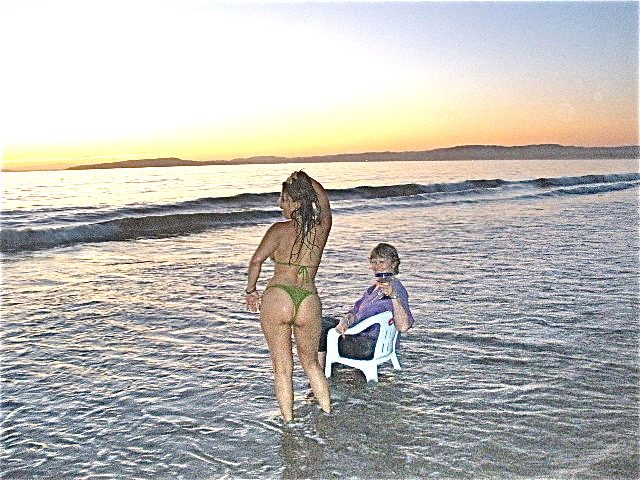
But as often happens in an evening tide, that object quickly washed ashore to enter my picture,

OLYMPUS DIGITAL CAMERA

and quickly dominate it.

OLYMPUS DIGITAL CAMERA

The End

(I promise.  This was not a staged incident.  It happened exactly as I describe it with no prompting by me.  I love getting out in the world.  No imagined story ever duplicates what happens in real life!!)

The Prompt: Edge of the Frame—We often capture strangers in photos we take in public. Open your photo library, and stop at the first picture that features a person you don’t know. Now tell the story of that person.

Special Note to viewers of my blog:  Please also see the next posting “Sur-Prize” to enter a contest celebrating my 10,000th viewing.

The Brick Throwers

The Prompt: Reviving Bricks—You just inherited a dilapidated, crumbling-down grand mansion in the countryside. Assuming money is no issue, what do you do with it?

The Brick Throwers

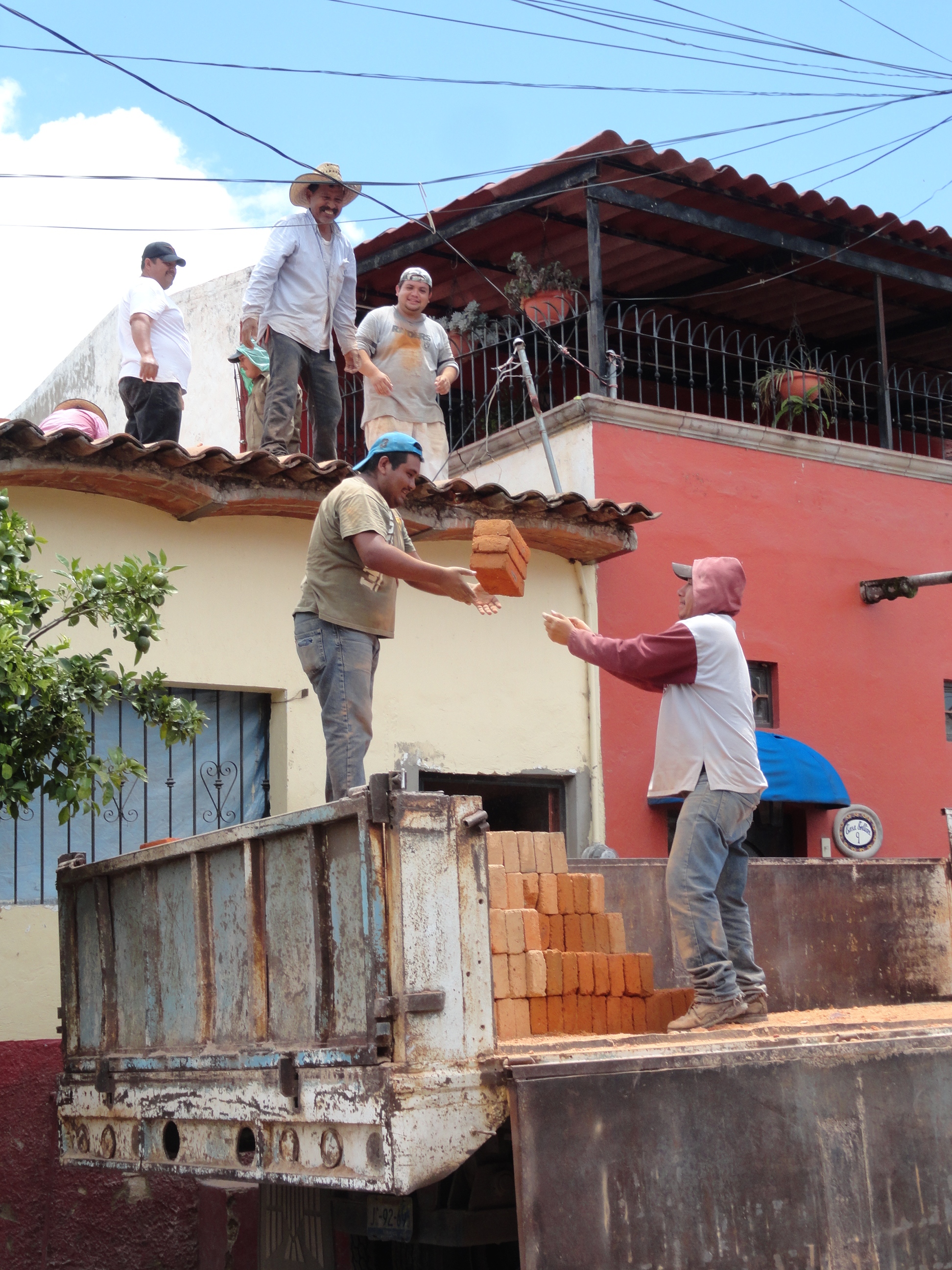
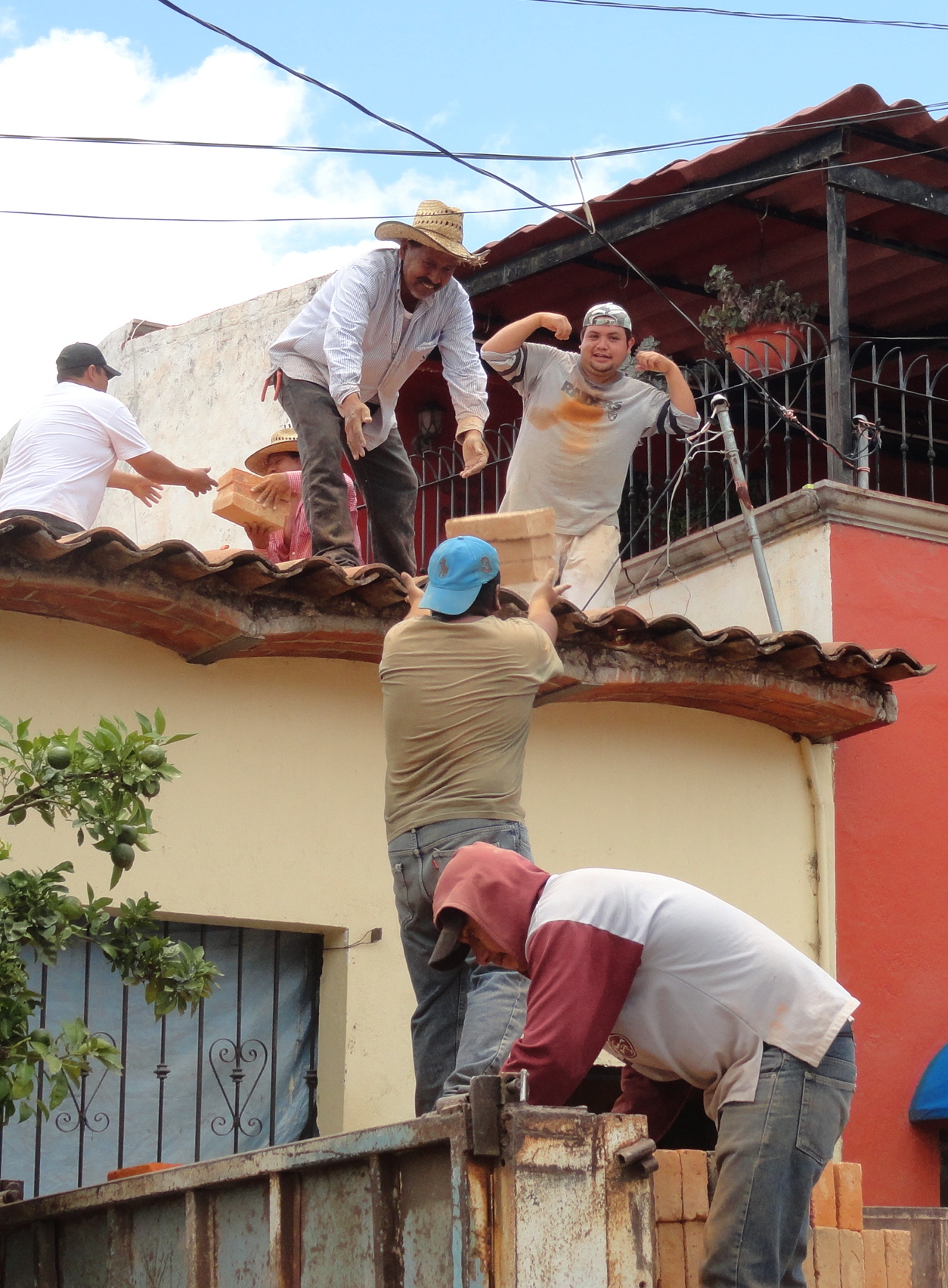
They were five in a chain from truck to rooftop,
each throwing the piles of adobe bricks
in stacks of four, from hand to hand
up from the bottom of the truckload
now nearly emptied.
Two of them waved me on
when I tried to park near,
my trunk full of heavy wall sculptures
to deliver to a gallery just half a block away.

And when I tried to park farther along the block,
again and again, they waved me away
until I was a block away and safe, I guess,
from straying bricks or errant cars that swerved
too far to the right to avoid the bricks or truck that held them.
They were a cheerful lot, and when I passed,
walking towards the gallery
carrying one sculpture after another,
they waved, and on my final trip back to the car,
again, the man second in the chain
who stood balanced on the highest level of the brick pyramid
that remained within the truckbed,
seemed to intuit my purpose, waving from me to them
as I drew my camera from my purse.
They all posed for minutes, miming their labor
as I tried to get them to actually throw, as before,
those piles of bricks, hoping to catch them
flying through the air between two pairs of hands.

Finally understanding, they threw and threw,
asking me for a prompt to help me catch that flight
I feared I’d never catch.

(more)

DSC07054

Minutes later, I turned to leave
and they, cheering and smiling in their fame,
turned back to that labor which is an art in Mexico:
giving bricks wings before mortaring them
into a permanency that holds them rigid for lifetimes
until they crumble back into that soil that was their nativity.

This poem should be a metaphor for something
and probably is.
Some future day, when I am moldering in my grave
like some lesser Ozymandius,
some graduate student or scholar of mediocre
Twenty-First-Century poetry might publish a treatise
revealing it.
And they will dig this website from the rubble
of the Internet and find
I wrote it as a daily prompt
and if such records still exist,
find how I hired those men to build a monument
from that crumbling manse of brick
that was my prompt on the Daily Post
and tell how they spent their lifetimes restoring it
and how their children and their children’s children
have benefited from catcalls
and instructions to move on down the line
and the clicking of a camera lens
and from one who follows blindly
where each prompt leads her.

DSC07049

Obscured Fourth

Obscured Fourth

In Mexico, it is the rainy season
and so the rain falls down.
The dogs refuse to leave their beds.
They curl instead, and I do, too,
listening to the steady drip of rain from tejas
and Pasiano’s more massive splashes
as he scoops water from the tub
which never empties,
constantly replenished
by the rains.

Now hot water streams
from pipes into the hot tub.
Mineral water heated by volcanic fire
steams as it meets cool water falling
from above and the cool air that carries it.

It is still morning, but even tonight I’ll find
no fireworks in Mexico on the Fourth of July,
for independence was not granted evenly around this world.
And I who love the fertile darkness of night,
but also love surprises
that the fireworks bring,
must patiently wait for independence to find
this new country I found 13 years ago.

No rains ever mar her independence
on September 16.
The rainy season over,
all necks will crane in the churchyard crush
to see the wild castillo
and its corona spinning, spinning
to lift off into the air above—
independence held back until finally
it cannot help but rise
to freedom.

Note: September 16 is Grito de Dolores (Mexico’s Independence Day)

The Prompt: It’s Your Party—Since many are marking their country’s “birthday” in the US today, we wanted to ask: How do you celebrate yours? Are you all for a big bash, or more of a low-key birthday boy/girl?

June 24th

June 24th

The rain falls
fresh as cucumbers
on cobblestones and tiles,
the dust of summer
washed from crevasses
and curves of stone and clay.

The air is cleansed
of the scent of primavera,
jacaranda
and flamboyant trees
and the whole world
breathes easily again.

Clouds dried up
by sunlight,
the silent birds
are flushed
from their covering leaves
and open in chorus

to the booming crack
of cohetes, splitting the air
in celebration
of Saint John the Baptist
who has baptized all
this day.

The Prompt: Seasonal Scents—S’mores, salty ocean breezes, veggie burgers on the grill, sweaty people on the bus — what’s the smell you associate the most with summer?


Immigration, Misspelled Inspiration and Soap Dispensers

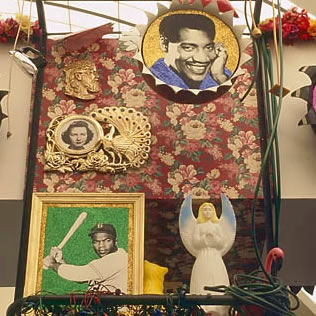
"Southern Icons of the 20th Century"  By Joni Mabe

“Southern Icons of the 20th Century” by Joni Mabe

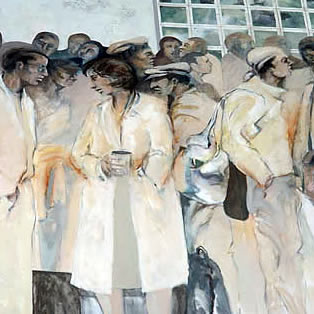
"Travelers"  By Larry Walker

“Travelers” By Larry Walker

Yesterday, I arose at 3 a.m. (after just 3 hours of sleep) to be driven by taxi to the Guadalajara airport to catch a plane to Dallas/Ft. Worth where I would catch a connecting flight on to St. Louis, MO. After visiting Mexican immigration at one end of the airport and pulling two heavy bags the length of the airport to wait in the American Airlines line for an hour, I discovered that bad weather in Dallas had caused them to cancel all flights, and would it be convenient for me to come back tomorrow? No, coming back tomorrow was not convenient! Not only was a friend waiting for me in St. Louis, but the additional two taxi fares would amount to my taxis costing more than my airline flight. American was able to schedule me onto a later Delta flight and so it is that at the hour when I should have arrived in St. Louis, I am instead in the Atlanta airport with three hours left before my flight leaves, sitting next to a man who snuffles like a pig every 30 seconds, held prisoner by the electric power strip providing juice to the loyal MacBook Air that is making it possible for me to tell you today’s story.

If you’ve ever gone through your customs and immigration check in Atlanta, you probably already know what I have discovered: that the Atlanta airport has the longest walk and most circuitous queue lines of any airport so far experienced, after which you arrive at an automatic passport check where you scan your own passport, pose for the most unflattering picture possible, then go through yet another maze that is nothing short of an endurance check/ordeal after which you wait in line forever along with 500 other travelers to again be sorted into lines by an immigration employee on the job for the first day (she told me so) who for some reason has a grudge against your line to the point that the other two lines are empty before she sees fit to select people from the pariah line to again get in line to see one of the 4 humans assigned to double check our worthiness to enter the U.S., walk for another 15 minutes to retrieve our luggage and then wait in yet another line for customs.

By the time I actually made it through customs and began my loooooooong trek to where I could catch a train to another concourse, I was as perspiration-soaked as if I had been through an hour-long workout at the gym. You will have guessed right if you are thinking that once I arrived on “B” concourse, I discovered that my gate was the last one on the concourse. Of course it was! There is, however, a fact that mitigates all of the frustration previously endured, for the corridors of the Atlanta airport leading from the plane to Immigration are lined with some of the best and most varied art I’ve ever seen in any airport exhibition and most art museums. Collage, wall sculpture and paintings made me wish the automatic walkways would stall to give me time enough to actually look at the art—with the result that I got off the moving walkway to walk back to do just that. With no hands free to record any of the names of artists, I’ll just have to leave it to Google or airport authorities to give you more specific information, but the art was whimsical, colorful, original, thought-provoking and sometimes naïf. (For certain of those outsider art pieces giving exhaustive social commentary, do not judge the artistic merit by the spelling.)

A $13 pulled-pork plate assuaged my appetite as at that time it had been 13 hours since I arose to drive to the airport and begin my long day’s journey. But it was a trip to the ladies room that assured me that I was in fact back in the good old U.S.A. Spotless cleanliness, two full toilet paper rolls, paper seat covers, a hook to hang my purse, enough room to store my carry-on rolling bag without having to squeeze myself into a corner to do so, a self-flushing toilet that actually flushed and the piéce de résistance—A SHELF TO PUT MY DRINK ON!!!! Upon my easy exit from the roomy stall, I enjoyed an automatic foam soap dispenser installed in the sink next to the warm water faucet, then found paper towels and trash can within easy reach. This of course made me remember (with no nostalgia) the new movie theater in Ajijic, Mexico—my home town for the past 13 years—where only one sink of the eight present actually works and is, of course, the one furthest away from the only towel dispenser. Ah, Atlanta airport. I forgive thee for all other sins.


Nesting (May 3, 2014)

                                                                           Nesting
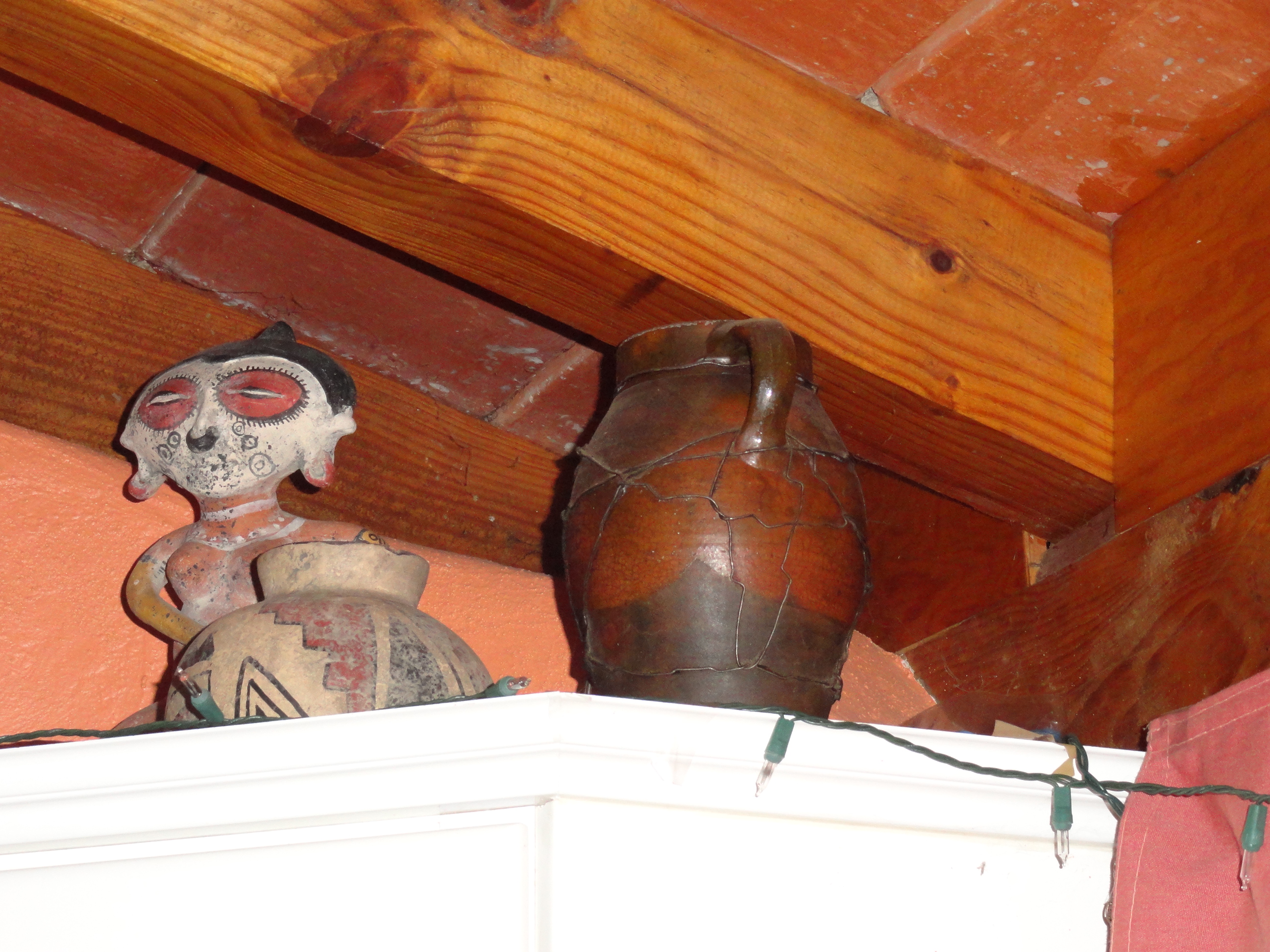
For most of the day on Thursday, I wondered at the profusion of birds whose cheeping seemed to be filling the air outside my kitchen, but as the afternoon wore on, I realized that the sounds—like a cross between a puppy’s squeeze toy and a handful of fingernails scraping across a chalk board or 5 squeegees being pulled across dry glass—was coming from my kitchen. A dining room chair served as a step up to the counter top, where I stood as I removed  the terracotta statues and pots from the top of my cupboards. The sounds seemed to be coming from there, but I found nothing but a half-inch crack between the concrete wall overhang and a triangular piece of board that had been placed in the corner to seal the gap.

Image

I went outside to see if I could locate what I now was sure was a nest of baby birds making all the racket, but I could see no place other than the half-cylindrical teja roof tiles where the nest could be. Meanwhile, every time I drew close to the corner where the sound was coming from, they grew quiet, but when I whistled for the dogs, the little chirping choir resumed, as though I’d called out to them and they were answering. The next morning, I feared the worse, as for an hour there was no sound, but when Yolanda arrived to clean, they started out again, and she was as intrigued as I was about where they could be. We got a ladder and Pasiano climbed up to inspect every inch of area on the outside of the house where they could be. He peered up a six foot long expanse of tejas but could see nothing up the tubes for as far as he could see. Yet the chirping went on for all of yesterday as well as today.

ImageImage

The biggest part of the mystery is that I have never seen a parent bird enter the tejas from any side. The babies are quiet in between chirpings, which seems to indicate a mother bird arriving with fresh nestling fuel, but I can’t figure out how she is getting to the nest—wherever it is. Needless to say, as irritating as their shrill chirpings have grown to be, I prefer them to the opposite—the silence that indicates the mother has not been coming back and that her nestlings have met with a premature demise.

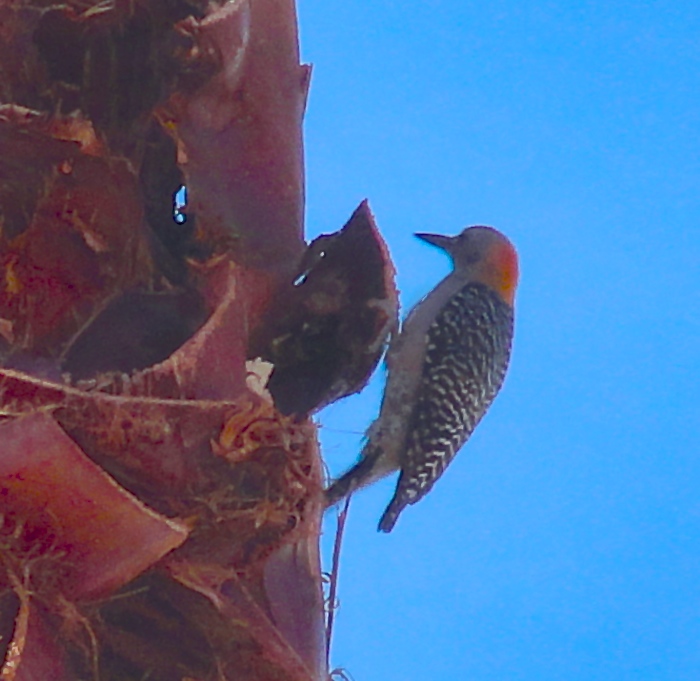
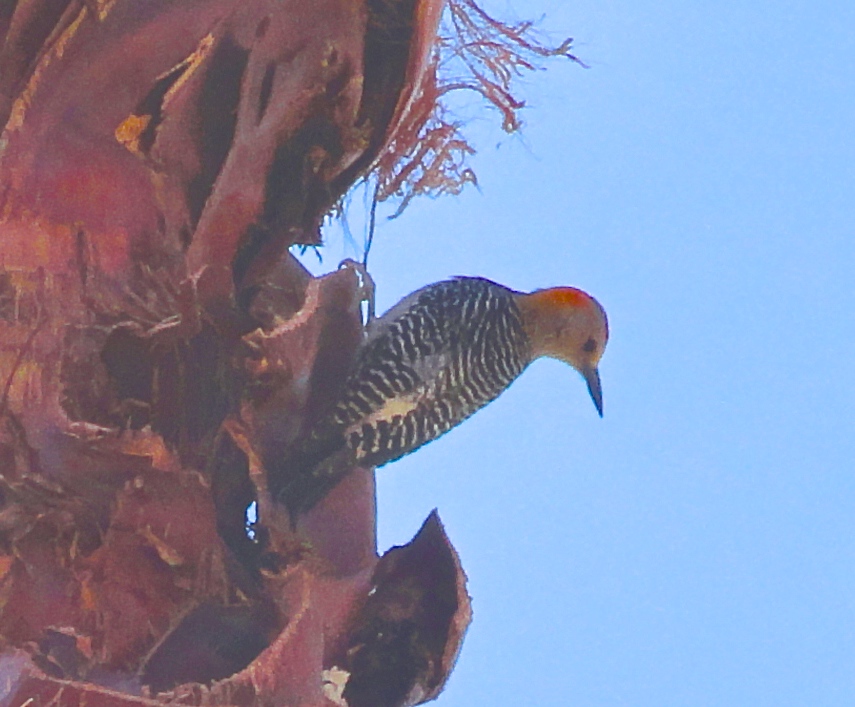
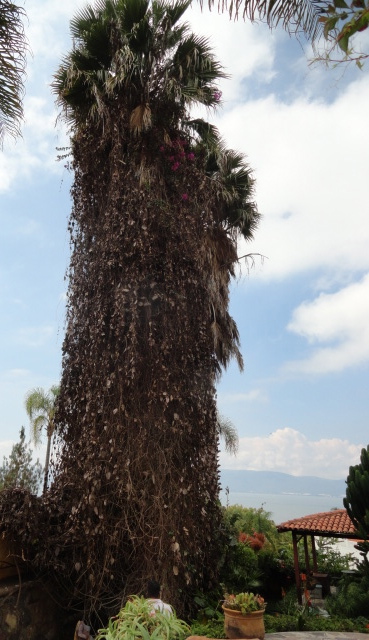
Birds abound here, if not in the same profusion as when 13-year-old vines covered every surface of the walls and palms, but this morning I was awakened by the loud peckings of three woodpeckers on the now-exposed trunks of my 80-foot-high palm trees. I scrunched my eyes up to watch them hop up and down a 20 foot expanse of palm, working their way around the circumference of the tree as well as up and down, their very loud pecking forming a percussion background to the chirping coming from the kitchen. For once, I knew where my camera was, so I snapped a few shots.

ImageImage

I had thought to spend this day in isolation to get some writing done, but sometimes the quieter our day, the more activity we find in it. Bottle rockets as loud as cherry bombs have been going off in the hills all around me for the past two hours. I don’t know what the celebration may be, but I’ve grown accustomed to their weekly if not daily presence. There is a birthday or a communion or a wedding or a quinceañera being celebrated. Or a holy day or some national holiday.

Even if I stay inside my house and do not answer the phone, the world finds me and I can’t complain, for I always have something to write about, even if it is not the topic I had planned.


NaPoWriMo Day 30: Ciao, Adios, Auf Wiedersehen, Adieu

Ciao, Adios, Auf Wiedersehen, Adieu

To NaPoWriMo we must say
a fond “Goodbye” on this last day.
I‘m able to, for I have found
the strength to say it the whole world round.

When I was young, I traveled far
from Germany to Zanzibar.
Australia, Bali, France and Spain,
to Africa and back again.

And though I mostly loved them all,
from Venice to the Taj Mahal,
as my departure time grew nigh
I had to voice a sad goodbye.

To Ethiopia I strayed.
For eighteen months I stayed and stayed;
and when I had to leave too soon,
I had to say “dehena hun.”

In college days, when I was young,
German was my foreign tongue;
but when to Frankfurt wir mussten gehen
I just remembered, “Auf Wiedersehen.”

The French were rude and cold and snotty.
They mocked my accent and were haughty,
so while I had to bid “adieu,”
I’d have preferred to say, “pee-ew.”

Florence thrilled me from the start.
Their lasagna is a work of art.
When I left, they all said, “Ciao.”
Their kitties, though, all said, “Miao.”

I never went to Israel
but nonetheless, I’m proud to tell,
the rabbi books? Read every tome.
So I know how to say “Shalom.”

Though “Arigato” is bound to do
when you want to say thank you,
Sayonara” is the way to go
to bid farewell in Tokyo.

Bali’s full of dance and art
that treat your eyes and fill your heart.
I must admit, I had a ball
before I said “Selamat tinggal.”

Mexico was saved for last
And now I fear my lot is cast
Since “Adios” I cannot say,
I’ve decided I will stay!

(for the sake of pronunciation, I have taken the liberty of adding an extra “e” to “dehna hun.”)

You might have already guessed that on this last day of the NaPoWriMo challenge, the prompt was to write a farewell poem.

NaPoWriMo Day 24: Building Walls

Our prompt today was to write a poem that features walls, bricks, stones, arches, or the like.

Building Walls

The new neighbors are not friendly.
From their side of my wall,
they have reached over my wall to sever the vines
that have covered my tall palms
that abut the wall
that has separated our properties
for thirteen years—
those maroon bougainvillea vines,
stretched ten feet wide
by covering layers of blue thunbergia,
formed a community that housed families
of birds and possums and possibly
a very large but harmless snake.
I saw it cross my patio once,
the dog and I turning our heads toward each other,
exchanging looks of surprise
like characters from a stage play or a comic book,
her so startled and curious that she followed,
nose to the ground, to the brush beside the
wall the snake had vanished into,
but never issued a bark.

At night the palm trees
and their surrounding cloaks
would give mysterious rustlings that
aroused the barking of the dogs
and I’d let them in—the pup to sleep
in the cage that was his security
and my security as well—against chewed
Birkenstocks and ruined Oaxacan rugs
and treats purloined from the little silver
garbage can that held the kitchen scraps
saved for Yolanda’s pigs.

Along with the vines,
the new neighbors cut the main stalk of the bougainvillea
that grew to fifteen feet on my side of the wall
and furnished privacy from the eyes
of those standing on their patio,
ten feet above mine,
so that now their patio looks directly down
on my pool and hot tub and into my bedroom,
their new bright patio light shines all night long
into my world formerly filled
with stars and moonlight and tree rustlings.

The old wall has revealed its cracks and colors
from several past paintings
that were later made unnecessary by its cloak of vines.
Now an ugly wall that  separates  neighbors,
it echoes the now-dead vines that stretch 80 feet up
to the fronds of the palms.
It takes three men three days to cut the refuse of
the dry vines down from the trees,
two truckloads to bear the cuttings away.

The dogs still bark, but the possum and the birds
have gone to some other haven,
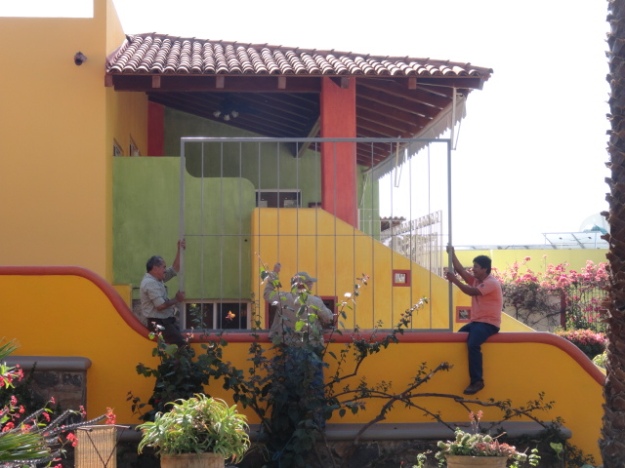
and the men come to erect the metal trellis,
12 feet high, above the top of my low wall.
I hope the bougainvillea will grow
to cover it this rainy season,
building a lovelier wall
between neighbors who still have not met
by their preference, not mine,
causing me to wonder
if I really am as welcome in this country
as I have felt for all these years.
“My neighbors are the same,” my friend tells me.
“They do not really want us here,
and if you think they do,
you are deluding yourself.”

Thirteen years in Mexico. I miss my old neighbors,
best friends who would come to play Mexican Train at 5 minutes notice.
I miss their little yipping dog and the splash of their fountain
that the new neighbors ripped out and threw away
and the bougainvillea that drooped over my wall into their world.
“Scorpions!” the new neighbors decreed, and lopped it off wall-high.
It was a wall more than doubled in its height
by a vine as old as my life in Mexico
that can now be peered over
even from their basement casita.

With old walls gone,
higher walls of misunderstanding
have been constructed.
Each weekend their family streams in from Guadalajara.
Children laugh, adults descend the stairs
to their hot tub down below.
When I greet them, they do not smile.
I have painted the old wall,
now so clearly presented to view,
and I have taken to wearing a swimsuit in my hot tub,
waiting for my new wall to grow higher.

Before detail of tree vine

“Before” detail of tree vine and hedge.

"After" detail of tree vine.

“After” detail of tree vine.

DSC09288

Constructing a higher wall to limit their view into my yard.

DSC09907

Trimming the dead vines after their gardener reached over the wall to cut it’s main trunk.

DSC09878

Detail of my wall with the dead vines stripped away, prepped for repainting.

(Happy Ending: Eight years after writing the poem you have just read, I now have new neighbors, the bougainvillea and thunbergia have grown to cover the new trellis wall, and they love the vines that actually flower more profusely on their side than mine.)

NaPoWriMo Day 18: In Defense of Poetry

An Apologia for Poesy

My gardener’s broom goes whisking light
first left, then right, then left, then right
with touch so slight I barely hear
the bristles as they take their bite.

The birds were first up and about,
and then both dogs asked to get out.
Then that broom reminded me
of one more creature left to rout.

I stir myself to go and pee,
then check the new prompt left for me
on NapoWriMo’s daily page.
Until it’s written, I’m not free.

It’s back to bed, I find it best
to go, computer on my chest,
typing words with beat and rhyme
still ensconced in my morning nest.

Searching for ideas and words,
I use the rhythm of the birds
and Pasiano’s sweeping broom
the braying burro, the bleating herds.

Noises fill this busy world
even as I’m safely curled
still abed, my senses all
alert and ready, full unfurled.

I hear the grackle far above,
the insistent cooing of a dove,
as in the kitchen, Yolanda dons
her apron and her rubber glove.

I hear the water’s swirl and flush
the busy whipping of her brush
around each glass I might have left,
careless in my bedtime rush.

Her string mop silent, I barely know
if she’s still here. Or did she go?
I find her in the kitchen still,
arranging glasses, row on row.

It’s back to bed again I trot.
Arranging glasses I am not,
but rather words I nudge and shift
here and there until they’re caught.

Glued to the page forever more––
be they rich words, be they poor––
nevertheless, these words are mine:
poems, stories, truth or lore.

We are not slothful, lazy, weak
because it’s words we choose to seek
instead of labors more obvious
like plumber or computer geek.

Words’ labors are most harrowing.
Our choice of them needs narrowing
and not unlike the farmer’s sow,
mind’s riches we are farrowing.

So blame us not if others mop
our houses or they trim and crop
our gardens for us as we write.
From morn till night, we never stop.

‘Tis April and we have this chore:
each day a poem, and what’s more
we never know till the morning’s light
just what theme they have in store.

Poets, our lives may seem effete––
not much time spent on our feet––
but those feet are busy, still,
tapping out our poem’s beat.

Cerebral though our work may be,
we are not lazy, you and me,
for though we lie in bed all day,
our writing’s labored––­­that’s plain to see!

Today’s prompt was to write a ruba’I, a Persian form comprised of a four-line stanza with a rhyme scheme of AABA. Robert Frost’s famous poem Stopping By Woods on a Snowy Evening uses this rhyme scheme. Multiple stanzas in the ruba’i form are a rubaiyat, as in The Rubaiyat of Omar Khayyam.